Start with the pouch job, not the artwork
For subscription box programs, the first sourcing decision is not the logo or the color. It is the job the pouch must do. A cotton drawstring pouch can be a low-cost insert, a reusable gift wrap, a retail-facing accessory, or a protection layer for a fragile item. Each use case changes the right fabric weight, the acceptable finish, the print method, and the packing format. If the team starts with artwork and size alone, the quote may look fine but the pouch can still perform poorly in the box.
This is where procurement buyers should think beyond appearance. A pouch that feels too thin can collapse around the contents, reveal what is inside, or read as cheap next to the rest of the box. A pouch that is too heavy can increase freight, take up more carton space, and slow packing. The goal is not maximum fabric weight. The goal is a pouch that meets the box function, supports the brand, and stays stable across reorders.
A practical rule: define the pouch role in one sentence before requesting quotes. For example, “secondary packaging for a monthly beauty insert,” “reusable pouch for a premium wellness kit,” or “displayable gift bag included in a limited-edition subscription box.” That simple statement helps suppliers choose the right GSM band, weave, cord, and decoration method without guessing. It also gives internal approvers a clearer basis for tradeoff decisions.
Once the use case is set, the rest of the spec becomes much easier to control. You can compare like-for-like options, ask for two GSM quotes on the same size, and judge whether a small cost increase is worth the gain in hand feel or durability.
- Write the pouch job statement before you request pricing.
- Treat the pouch as a controlled component, not generic filler.
- Tie the spec to the heaviest item the pouch must hold.
- Use the same use-case language in RFQs, samples, and reorder notes.
Use these GSM bands as buying thresholds
The most useful way to specify cotton pouch fabric is by finished GSM, not by vague words like light or premium. For subscription boxes, 120-140 gsm is the best starting band for most programs. It usually delivers enough body to feel intentional in the hand, stays compact for fulfillment, and supports simple branding well. In many programs this band is the best balance of cost, structure, and print clarity.
Use 90-110 gsm only when the pouch is clearly secondary packaging. That can work for sample mailers, very light inserts, or short-run programs where cost is the dominant factor. At this band, buyers should check opacity, seam strength, and whether the pouch looks semi-translucent when held to light. If the customer will see the pouch empty during unboxing, a thin fabric can look less substantial than the brand intended.
Move to 150-180 gsm when the pouch needs to hold its shape, survive more handling, or feel reusable. This range is better for premium unboxing, retail-style gift sets, and items with corners, edges, or extra weight. The tradeoff is measurable: more fabric cost, more sewing time in some factories, and higher carton weight. If the pouch is going to be kept by the customer, that added cost may be justified. If not, it may be unnecessary.
One practical benchmark is to ask the factory for two quotes on the same pouch size, one at 120-140 gsm and one at 150-180 gsm. That gives a real cost step-up instead of a theoretical one. If the heavier option raises cost only slightly but significantly improves structure, it may be worth it. If the increase is large, the team can decide whether the benefit is real enough to pay for.
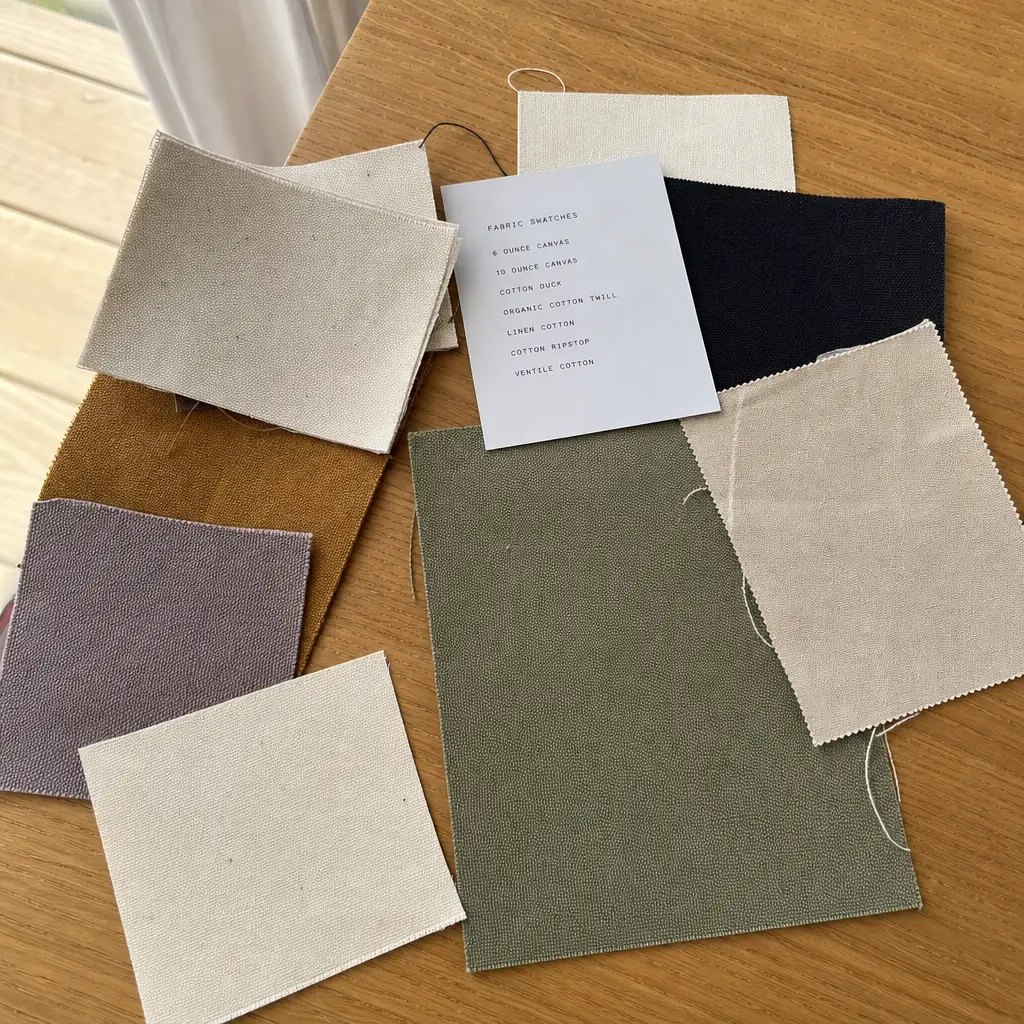
Do not compare GSM in isolation. Compare it against opacity, weave, print coverage, and the contents of the box. A 130 gsm tight weave can sometimes outperform a 150 gsm loose weave if the pouch needs sharper print and better visual consistency. Ask for a swatch, not just a photo, before locking the spec.
- 90-110 gsm: sample mailers, secondary packaging, very light inserts.
- 120-140 gsm: best all-around range for most subscription box programs.
- 150-180 gsm: reusable, premium, or heavier-load applications.
- Request two GSM quotes on the same size to expose true cost impact.
- Check opacity and print quality on the actual fabric structure, not a photo.
- Ask whether GSM is finished weight after dyeing or finishing, not just raw cloth weight.
Compare quotes on the same basis or the pricing will mislead you
A pouch quote is only comparable when the assumptions match. Two suppliers can quote the same finished size and still produce different results because one is using a wider fabric, a different cut allowance, a simpler cord, or a lighter packing method. Some factories quote by finished pouch size; others quote by cut size or flat fabric size. If the RFQ does not force that distinction, the lowest unit price can be the one that left something out.
The easiest way to avoid false comparisons is to require a quote template. Ask every supplier to state finished size, GSM, fabric width, cord type, print method, label method, carton count, and whether the price includes screens, setup, and packing. If freight and duty are part of the decision, request Incoterms or at least a clear statement of what is and is not included. The buyer should be able to compare apples to apples without rebuilding the offer from email notes.
It also helps to ask for alternates. For example, request the same pouch blank and printed; the same pouch at two GSM levels; and the same pouch with or without a woven label. That makes it obvious which part of the cost comes from fabric, decoration, or packing. Procurement teams often save more by identifying a nonessential option than by negotiating the headline price.
The best quote is often the one that explains itself. If one supplier is slightly higher but states the fabric basis, print setup, MOQ, sample path, and reorder assumptions clearly, that offer is usually less risky than a lower quote with gaps. In recurring subscription programs, predictability tends to matter more than a small first-order saving.
- Confirm whether pricing is based on finished size, cut size, or fabric yield.
- Force like-for-like comparisons: same artwork, color, cord, packing, and carton count.
- Ask what is included in the base price and what is separate.
- Request alternates for blank vs printed and 120-140 gsm vs 150-180 gsm.
- Treat vague quotes as a risk signal, not a negotiating advantage.
Write the RFQ so the factory can quote without guessing
A strong RFQ prevents silent assumptions. At minimum, list finished dimensions, target GSM, fabric color reference, weave style, cord material and diameter, label type, print method, print size and placement, fold method, carton count, and annual volume by SKU. If the pouch must fit a specific box or tray, include the internal dimensions of the receiving package. That lets the supplier check fit before cutting fabric.
Include tolerances in writing. The RFQ should specify acceptable variation in length, width, opening width, cord length, and print placement. Without tolerances, the factory may deliver pouches that function but look inconsistent in a retail-facing box. For example, a visible subscription item can show a shift of only a few millimeters when several pouches are lined up in the same shipment. That is enough to make the pack look sloppy.
Version control matters too. State the artwork file name, revision number, approved sample date, and whether reorders must match the same fabric lot or can use an equivalent lot within an agreed shade band. If a label or cord tip is part of the design, include its version as well. Buyers should avoid the common mistake of sending a logo file and expecting the supplier to infer the rest. If the spec is short, that is fine. If it is ambiguous, it is expensive.
A good RFQ is usually one page of must-haves plus one page of controlled references. The controlled references should include approved sample photos, fabric swatches, and packaging photos. That setup is far more useful than a long email thread because it is easy to audit when questions come up later.
- Use finished dimensions, not broad size names.
- Add tolerances for pouch size, cord length, and print placement.
- Include the receiving carton or tray dimensions if fit matters.
- Lock artwork revision numbers and sample dates.
- State whether same-lot reorders are required or only equivalent-lot reorders.
- Attach sample photos and swatches as controlled references.
Fabric structure can beat GSM in real-world performance
GSM tells you how much fabric there is; it does not tell you everything about how the pouch will behave. Two pouches at 140 gsm can feel different if one uses a tight plain weave and the other a looser muslin. The tighter fabric usually gives cleaner print edges and a more controlled appearance. The looser one may feel softer and more casual, but it can also show the contents more easily and make the print look less crisp. Buyers should ask the supplier to describe the weave in plain language, not just call it cotton.
Finishing also matters. Ask whether the cloth is pre-shrunk, bleached, dyed, calendered, or left in a natural finish. Shrinkage after steam or humid storage can affect fit and print placement. If the pouch is close-fitting in the box, even modest shrinkage can cause trouble. The safest approach is to ask the supplier what the fabric does after finishing, not only what it measures before production.
Color is another real procurement variable. Natural cotton, bright white, off-white, and dyed cotton behave differently in production and in the final box. Natural fabrics can show flecks or slight variation, which may be acceptable or may look too rustic depending on the brand. White can look clean but shows stains more easily. Dyed pouches can require tighter shade control across lots. For visible consumer packaging, define the acceptable shade range before sampling instead of relying on a photo reference.
For higher-risk programs, request swatches in the actual proposed cloth and color. A swatch is much better than a photo for judging weave openness, surface smoothness, opacity, and hand feel. It is a small step that can prevent a lot of rework later.
- Specify weave style or fabric construction if you want repeatable results.
- Ask whether the cloth is pre-shrunk, bleached, dyed, or calendered.
- Use swatches to check opacity, surface feel, and shade before approval.
- Set a shade tolerance for visible consumer packaging.
- Do not rely on GSM alone to predict print clarity or drape.
Choose the decoration method for durability, not just appearance
Screen printing is the most common decoration method for cotton pouches because it is relatively efficient and easy to repeat. It works well for one- or two-color logos and stable artwork. But approval should not stop at the visual proof. Ask what ink type is used, how it is cured, and whether the print passes a simple rub test after curing. A print can look fine in a photo and still smear, crack, or transfer if the cure is weak.
Embroidery can create a premium look, but it is not always suitable. On lighter GSM fabrics, dense stitching can pucker the cloth or distort a small pouch face. It also adds cost and can extend lead time, especially for multi-color logos. Woven side labels are a good option when the brand wants subtle branding and better durability. They work particularly well when the pouch is meant to be reused after the subscription box is opened.
Place the decoration where the cloth is stable. Keep artwork away from seams, fold lines, and the cord channel unless the supplier has already proven that placement on a sample. Ask for measurements from fixed edges so the print location can be checked in production. A centered artwork proof is not enough by itself; the factory needs a measurable placement rule.
If the pouch has both a print and a label, define the hierarchy. Which element is the primary brand cue? Which one is secondary? That answer changes placement, size, and acceptance criteria. It is much easier to lock that decision during sampling than to debate it after the first production lot is finished.
- Screen print is the default for repeatable one- or two-color branding.
- Embroidery should only be used when the fabric and logo geometry support it cleanly.
- A woven side label is often best for quiet, reusable branding.
- Require print placement measured from fixed edges, not only from artwork centers.
- Approve cure and rub-test performance on the actual print.
- Decide whether the print or the label is the main brand signal before bulk approval.
Sampling should prove the exact production version
The safest sampling flow is reference sample, then pre-production sample, then bulk. The reference sample confirms style, hand feel, and general construction. The pre-production sample should use the actual production fabric, final decoration method, final cord, final label, and final packing format. If those elements are not proven before production, the order is still exposed to avoidable risk. Many procurement issues start when a visually similar sample is approved but the production version uses a different lot or finishing process.
Keep the sample control record simple but complete. Mark the sample with version number, date, supplier, GSM, dimensions, print method, label type, and any special packing note. Photograph the front, back, inside, and folded state. Retain one approved sample at the buyer side and one at the factory if possible. That makes later disputes much easier to resolve because there is a physical reference, not just a memory of what was approved.
For multi-size programs, approve the hardest size first. That is usually the largest pouch or the one with the most complex branding. Larger pouches reveal seam tension, cord-channel issues, and print-placement variation more quickly. If there are multiple colors or label versions, use the most demanding variant as the control point. Once that version is stable, the simpler variants are usually easier to release.
Also define what fails at sample stage. For example: loose stitch ends, uneven drawcord pull, print shift toward a seam, puckering around a label, or fabric that reads too thin in hand. A short rejection list speeds approvals because both sides know the release threshold in advance.
- Use a reference sample for style and a pre-production sample for the exact production version.
- Record version number, date, GSM, and decoration details on the sample file.
- Photograph front, back, inside, and folded views.
- Approve the most difficult size or decoration version first.
- Keep one control sample at the buyer side and one at the factory side if possible.
QC needs measurable acceptance criteria, not broad language
Good QC starts with dimensions. Check finished length, width, opening width, and channel depth against the approved sample and the agreed tolerance. Do not rely on visual inspection alone. A pouch can look fine on the table and still be off enough to affect box fit or packing speed. For consumer-facing programs, dimensional control should be treated as a primary quality characteristic, not a nice-to-have detail.
A practical tolerance approach is to set tighter limits for visible dimensions and looser limits for non-critical internal measurements. For example, many buyers use a small millimeter range on width and opening alignment while allowing slightly more variation on drawcord tail length. The exact tolerance should match the pouch size and use case, but it must be written before production. If the supplier asks whether a defect is acceptable, the spec was not clear enough.
Inspect sewing quality by severity. Major defects include open seams, split corners, broken stitches in load-bearing areas, cord pull-through, or a label hanging loose. Minor defects may include a loose thread that can be trimmed without affecting function. Cosmetic issues such as slight stitch unevenness should be judged against the product role: a low-cost insert may tolerate more than a premium gift pouch. That distinction helps buyers keep inspections consistent and avoid subjective arguments.
For decorated pouches, check both cure and placement. A simple rub test should show no obvious cracking, smearing, tackiness, or color transfer on approved samples and production units. If the order is visible in the final box, define shade limits as well. Sampling should be taken from the start, middle, and end of the run so the team does not overrate the first cartons. It is common for early cartons to look best and later cartons to reveal drift.
If you use an inspection standard, reference the method in the RFQ and purchase order. Many buyers use an AQL-based incoming inspection, with tightened focus on major defects and visible print issues. The exact AQL number can be set internally, but the important part is that the factory knows the acceptance basis before production begins.
- Measure finished dimensions against the approved sample and written tolerance.
- Classify defects by severity: major, minor, and cosmetic.
- Inspect seams, corners, and cord exits for function-related failures.
- Use a rub test for print cure and a shade check for visible packaging.
- Sample start, middle, and end cartons to catch run-to-run drift.
- Reference your inspection method in the PO so acceptance is unambiguous.
Packing format should reduce work for the 3PL or co-packer
Packing should be designed for the receiving team, not only for freight efficiency. Subscription box operations usually want pouches flat-folded, easy to count, and consistent from carton to carton. If the fold is sloppy or the cord tails are exposed, the co-packer may need to rework each unit before use. That adds labor and creates avoidable variation. A simple fold instruction can save more downstream time than a small unit-price discount.
Inner packaging should be used only when it solves a real problem. A polybag or sleeve may be justified for dusty routes, moisture risk, or high-value white fabric. But if the pouch moves quickly from clean production to clean warehouse to insertion, extra individual packaging may only add cost and waste. The choice should be linked to storage conditions, transit risk, or premium presentation—not routine habit.
Master carton detail matters just as much. State carton count, pack order, SKU label content, lot number format, gross weight target, and pallet orientation if needed. This gives the receiving team an easier job and helps prevent miscounts or mixed lots. If the program runs across multiple fulfillment centers, standard carton marks make inventory transfers simpler and reduce retraining.
One useful specification is to require a flat-fold standard with the cord tucked in the same direction on every unit. That sounds small, but it helps the packer move faster and makes the cartons look more uniform. Uniform cartons also make visual inspection easier when the goods arrive.
- Specify the fold method and whether cord tails must be tucked inside.
- Set carton counts so receiving does not require unit-by-unit recounting.
- Use SKU, lot, and carton marks for traceability.
- Add inner packaging only when storage or transit risk justifies it.
- Define pallet orientation if warehouse handling depends on stack behavior.
Compare lead time and landed cost, not just factory price
Lead time should be broken into stages: sampling, material readiness, production, packing, and shipping. Printed pouches generally take longer than blanks because they add setup and post-print checks. Custom dyeing or special cords can add more time as well. In practice, many delays come from late artwork revisions, missing packing instructions, or changed carton labels rather than from sewing capacity alone. Complete specifications usually shorten the schedule more than aggressive follow-up does.
Landed cost is the number procurement should compare. That includes unit price, setup or screen charges, labels, cartons, freight, duty, and any receiving labor that the buyer can reasonably estimate. A lower ex-works price may disappear once carton volume and transportation are added. If a pouch is bulky or heavy, freight and warehouse cost can shift the decision. The right metric is usually cost per usable pouch received into the fulfillment center.
It can also be worth paying slightly more for a pouch that lowers downstream problems. If a heavier fabric reduces complaints about thinness or improves pack consistency, the extra cost may be justified. That is not automatic, so buyers should test the assumption with samples and a two-GSM quote. What matters is total program risk, not just the purchase price.
When a supplier can quote the same pouch in two weight bands, the buyer gets a concrete decision tool. The real question becomes: is the structure improvement enough to justify the added cost, lead time, and freight? That is a much more useful business discussion than debating fabric weight in the abstract.
- Break lead time into sampling, materials, production, packing, and shipping.
- Treat artwork and packing revisions as schedule risks.
- Compare landed cost per received pouch, not only factory price.
- Use one freight assumption across suppliers for fair comparison.
- Request two GSM options to make cost and structure tradeoffs visible.
- Consider downstream handling and complaint risk, not just unit cost.
Specification comparison for buyers
| Spec decision | Recommended option | When it fits | Buyer risk to check |
|---|---|---|---|
| 90-110 gsm cotton | Light muslin or open-weave cotton, blank or simple one-color print | Sample mailers, very light inserts, or secondary packaging where low cost matters more than structure | May read thin or semi-translucent; confirm opacity, seam strength, and whether print show-through is acceptable |
| 120-140 gsm cotton | Balanced plain weave with finished GSM stated in the quote | Most subscription box programs that need decent hand feel, better body, and controlled cost | Compare finished GSM, fabric width, and shrink allowance; do not compare yarn count alone |
| 150-180 gsm cotton | Heavier pouch with more structure and better reusability | Premium unboxing, retail-facing inserts, gift sets, or reusable travel pouches | Higher fabric cost, more sew time, and larger carton weight; check whether the extra body affects fit in the box |
| Screen print on factory line | One- or two-color logo with clear placement rules | Repeat programs with predictable decoration cost and stable artwork | Ask for ink type, cure method, and rub-test approval on a physical sample |
| Woven side label plus small print | Quiet branding for reuse-focused pouches | Premium programs where the pouch is intended to be kept and reused | Label MOQ, label lead time, and sewn placement tolerance may create a separate bottleneck |
| Direct factory sourcing | One factory manages fabric, cutting, sewing, print, and packing | Repeat subscription box orders with clear specs and disciplined sample approvals | Need strong version control to prevent silent changes in fabric, print, or packing |
| Trading company or sourcing agent | One point of contact coordinating multiple workshops | Multi-item programs, smaller buying teams, or buyers who need communication support | Margin opacity can hide actual fabric changes or subcontracting differences |
| Local decorator on imported blanks | Buy blank pouches locally and add branding near the market | Short launch timelines, test runs, or smaller volumes before scale-up | Unit price is often higher, and size/fabric customization is limited |
| Flat-folded, polybagged master cartons | Packed for 3PL or co-packer receiving with clear SKU and lot marks | Subscription box fulfillment where count accuracy and fast receiving matter | Overpacking can raise cost and carton volume if the packing spec is not controlled |
Buyer checklist before sampling
- Lock the finished pouch size, target GSM, and acceptable tolerance before requesting quotes.
- State the use case: insert-only packaging, reusable gift pouch, or retail-facing accessory.
- Specify fabric color, weave, cord type, print method, and label position in one spec sheet.
- Ask the factory to quote the same size at two GSM levels so you can compare price and structure.
- Request a sample plan: reference sample, pre-production sample, and bulk approval sample.
- Define packing: fold direction, inner polybag or not, master carton count, and carton marks.
- Confirm whether the quote includes screens, labels, cord tips, packing, freight, and duty assumptions.
- Set the reorder rule now: same fabric lot, same print files, same packing method, and revision control.
Factory quote questions to send
- What finished GSM are you quoting after any printing or dyeing, and what fabric width is used in the calculation?
- Is the price based on finished pouch size, cut size, or flat fabric size?
- How many print colors, screens, and setup charges are included in the quote?
- What is the cord material, diameter, and end finish included in the base price?
- What MOQ applies by size, color, artwork version, and label version?
- Which sample stages are included, which are charged, and what is the sample lead time?
- How will the pouches be packed inside cartons, and what is the carton count per master case?
- What changes the lead time most: higher GSM, print coverage, label sewing, dyeing, or packing inserts?
- Can you quote the same pouch with two GSM options and note the expected hand-feel or structure difference?
- What tolerance do you hold for finished dimensions, print placement, and cord length?
Quality-control points to confirm
- Finished dimensions match the approved sample within the agreed tolerance for length, width, opening, and channel depth.
- Side seams are straight, secure, and free from skipped stitches, loose threads, broken needle marks, or split corners.
- Drawcord pulls smoothly through the channel without snagging, fraying, or uneven tension.
- Cord ends are cut and finished consistently, with no pull-through risk at the exit points.
- Print placement matches the approved artwork location and stays clear of seams, folds, and the cord channel.
- Print surface passes rub and cure checks with no obvious cracking, smearing, tackiness, or color transfer.
- Color and shade stay within the accepted lot-to-lot range across cartons, especially for visible brand colors.
- Packing count, carton marks, SKU labels, and master carton weight all match the shipping plan.
- If a label is included, the label is centered or placed exactly per spec and stitched flat without puckering.
- Every approved sample is retained, marked with version number, and used as the control reference for bulk inspection.