Start with the real retail use, not the keyword spec
Liquor retailers often buy cotton drawstring backpacks for several different programs, and each one needs a different build. A bag used as a gift-with-purchase for branded accessories can be lighter and simpler than a bag intended to hold a bottle opener set, tasting guide, apparel item, and point-of-sale flyer. If the internal contents are not defined at RFQ stage, factories will quote against assumptions. That is where quote gaps begin: one supplier prices a soft 140 to 160 GSM cotton pouch-style backpack, another prices a sturdier 220 to 280 GSM canvas backpack with stronger cord and cleaner sewing.
The first buying problem to solve is use case discipline. Procurement teams should write one sentence that explains what the bag carries, how it is handed to the customer, and what visual standard the brand expects at retail. That short statement does more to improve quote accuracy than adding another line of generic wording like premium quality. A liquor retail program usually values shelf appearance, reliable print, and enough strength for repeated use, but not necessarily the heaviest fabric on the market.
- Gift-with-purchase use: focus on clean print, lower unit cost, and compact packing
- Retail resale or branded merchandise use: increase GSM and seam consistency expectations
- Accessory bundle use: define the actual packed items and total target weight
- Event or tasting program use: prioritize lead time, low MOQ route, and logo clarity
- Bottle-related use: clarify whether the backpack carries bottle accessories only or includes glass containers
Choose fabric weight by load, print look, and carton efficiency
For most liquor retail buyers, 8 oz to 10 oz cotton canvas, roughly 220 to 280 GSM, is the practical middle ground. It feels more credible than lightweight muslin, takes a solid screen print well, and still packs efficiently in export cartons. Natural cotton in this range also gives a straightforward reusable-bag look that works for whiskey, wine, craft spirits, and holiday gifting programs without making the unit cost jump too sharply.
Lighter fabrics below about 180 GSM can be suitable for low-cost event use, but they wrinkle more, show seam distortion more easily, and may not support a broad printed area cleanly. Heavier fabrics above 300 GSM can improve body and perceived value, yet they also add sewing difficulty at the drawstring channel, increase freight cost, and sometimes make the closure feel stiff. Buyers comparing prices should make sure all quotes are based on the same GSM target and the same tolerance, otherwise the lowest quote may simply be using less material.
- 160 to 180 GSM: only for low-load promotional use where budget is the main driver
- 220 to 250 GSM: common wholesale range for balanced cost and retail presentation
- 260 to 280 GSM: stronger hand feel and better structure for premium promotions
- Natural cotton usually prints more economically than custom dyed fabric
- Dyed black or dark navy can look more premium but require stronger print planning
Use size and construction details to eliminate quote ambiguity
A large share of sourcing problems comes from vague bag dimensions. One factory may quote 35 x 45 cm as a finished sewn size; another may quote it as cut-panel size before seams and channel fold. The difference can materially change usable capacity. Liquor retailers often need enough room for a folded tee, gift insert, tasting notes, branded corkscrew, or similar merchandise, but not necessarily a very oversized backpack. Standard sizes such as 35 x 45 cm or 38 x 42 cm are often efficient because they align with common cutting layouts.
Construction matters just as much as dimensions. A simple flat backpack without bottom gusset is usually the best commercial choice for wholesale orders because it reduces fabric consumption, shortens sewing time, and folds flatter for shipping. A gusset only makes sense if the retail program requires a fuller display shape or boxed contents. Specify the channel width, side seam type, lower corner reinforcement, and cord exit construction if the bag may carry anything heavier than light accessories.
- List finished width x height, not just nominal size
- Add tolerance, such as plus or minus 1 cm
- Clarify flat body or gusseted body
- State whether dimensions include drawstring channel
- Note target safe load if contents are heavier than apparel or paper inserts
Print method selection changes both cost and approval risk
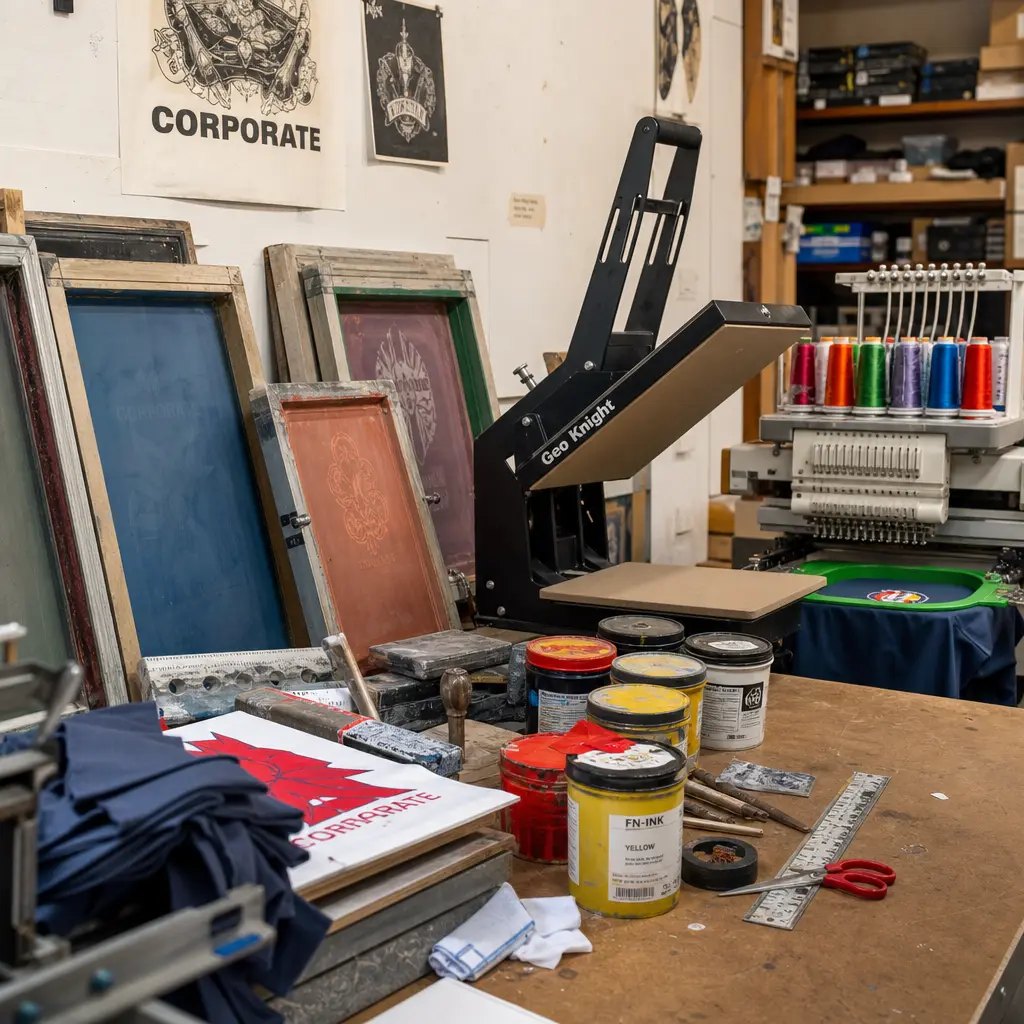
Most custom cotton drawstring backpacks for liquor retail programs are best printed by screen print, especially for one-color or two-color branding. Screen print gives a good cost-to-appearance ratio, especially on natural cotton. It is also easier to scale for wholesale orders than digital methods when artwork is simple. However, buyers need to define the print area. A small chest-area logo and a large centered front graphic are not the same quote, even if both are one color. Ink coverage affects setup, print time, drying, and reject risk.
Heat transfer or DTF-style decoration can make sense for very small runs, highly detailed artwork, or multicolor imagery, but it changes the feel of the bag surface and can reduce the natural textile look some liquor brands want. Dark fabrics need special planning. White or metallic-looking graphics on black cotton may require an underbase or different ink system, and the result should be approved on an actual fabric sample rather than artwork alone. If your team cares about brand consistency across store groups, request a print strike-off or pre-production sample with the intended bulk fabric.
- Screen print: best for simple logos and mid to large wholesale runs
- Heat transfer: useful for small runs or artwork with fine detail
- Large solid print blocks can crack or feel heavy if curing is poor
- Natural cotton can slightly warm the apparent logo color compared with pure white references
- Print size should be quoted in centimeters, not described vaguely as standard logo
Understand MOQ logic before comparing supplier prices
MOQ on cotton drawstring backpacks is not one fixed number. It changes based on fabric color route, print setup, bag size, and whether the factory uses stock materials or custom processing. A buyer asking for natural cotton, standard size, and one-color print can often access a lower MOQ than a buyer requesting custom dyed fabric, woven labels, individual barcode stickers, and exact PMS matching. This is why two suppliers may both say low MOQ but still produce very different real order economics.
For liquor retailers testing a program, the best route is often to simplify the specification for the first order and protect the visual essentials only: correct bag size, usable GSM, a stable one-color logo, and practical bulk packing. Once sell-through or store uptake is proven, the second run can justify refinements such as custom dyeing, upgraded cord, gusset, inside care label, or more complex ticketing. Buyers should also separate tooling and setup costs from unit cost in quote review. That makes it easier to compare future reorder economics.
- Stock natural fabric usually lowers MOQ and shortens lead time
- Custom dyed fabric pushes MOQ higher because dye lot minimums apply
- More print colors usually raise setup cost before they raise material cost
- Individual retail packaging adds labor and may raise practical MOQ
- Reorder pricing can improve if artwork and dimensions remain unchanged
Approve samples against production reality, not just appearance
A digital proof only confirms artwork layout. It does not confirm how the cotton surface absorbs ink, whether the fabric feels right in hand, whether the top channel closes smoothly, or whether the cord thickness looks proportionate. For liquor retail programs where branding matters in-store, one physical pre-production sample using the actual intended fabric, cord, and print method is usually the minimum safe step. If dark dyed fabric is used, this sample matters even more because print opacity and fabric lint visibility can change the final look significantly.
Sample approval should include measurable acceptance points. Teams often sign off based on a general visual reaction and later dispute details that were never frozen, such as logo size, side seam straightness, or cord knot length. A better practice is to annotate the approved sample or approval sheet with front print dimensions, print placement from the top edge, finished size, cord color, and any acceptable natural-cotton variation notes. This reduces back-and-forth during bulk production and gives the inspection team something concrete to inspect against.
- Approve print width and height in centimeters
- Measure placement from the top seam or channel edge
- Record actual sample fabric GSM if tested or supplier-declared
- Photograph the approved sample under neutral light
- Note whether slight natural-fabric flecks or shade variance are acceptable
Packing decisions affect store handling and landed cost more than many buyers expect
Cotton drawstring backpacks look simple, but packing details can change warehouse efficiency and freight cost. Bulk packing at 10 to 25 pieces per polybag is common and economical, especially for distributor or importer warehouses that will re-sort later. However, if the retailer needs immediate store-level distribution, mixed cartons or piece-level labeling may save downstream labor even though the factory charge is higher. Buyers should decide where they want to spend labor: at origin or after import.
Carton planning also matters. Over-compressed cartons may reduce CBM but increase print set-off, wrinkling, and cord tangling. Heavy cartons save some packing material but can exceed warehouse handling limits or increase damage risk. Good quote comparison includes pieces per carton, net weight, gross weight, and carton dimensions. Without those details, freight estimates remain soft and the cheapest unit price can become the most expensive landed option.
- Bulk packed loose: lowest direct factory packing cost
- Bundles by store quantity: useful for chain retail rollouts
- Individual barcode sticker: add if the retailer system requires scan-ready units
- Request carton dimension and gross weight on every quote
- Set a maximum carton weight if your receiving network has manual handling limits
Lead time risk usually sits in dyeing, print approval, and packing complexity
Standard cotton drawstring backpacks are not usually difficult to sew, so delays often come from upstream and downstream steps rather than the sewing line itself. Custom dyeing can add time for lab dips and shade approval. Artwork revisions can delay print screen preparation. Piece-level labeling, inserts, and special assortment packing can slow final packing far more than buyers expect. If a liquor retail program is tied to a seasonal campaign or holiday shelf date, these are the risk points to surface early.
A practical schedule should separate sample timeline from bulk timeline. Many buyers compress both into one target date and lose visibility on where time is being spent. It is better to request a milestone plan: artwork proof date, sample dispatch date, sample approval date, bulk material readiness, printing window, sewing completion, final inspection, and ship date. Even when the factory gives only estimated dates, this structure makes delay conversations more specific and easier to manage.
- Natural stock fabric usually moves faster than custom dyed fabric
- Pantone-sensitive print approvals can add revision rounds
- Woven labels and hangtags need their own material lead times
- Complex assortment packing often becomes the final bottleneck
- Peak season booking can affect both factory line time and vessel space
Compare quotes using landed-cost logic, not unit price alone
For a realistic supplier comparison, buyers should review at least five quote lines: bag body material, printing, accessories such as cord and labels, packing, and freight basis. If one factory quotes very low on unit price but uses lighter fabric, looser size assumptions, and oversized cartons, the apparent savings may disappear. A liquor retail importer should also compare yield risk: if one bag spec produces more bulk rejects due to weak seams or print inconsistency, the reorder and claims cost can outweigh a small upfront saving.
The cleanest comparison format is FOB with full carton data, plus an ex-works option if the buyer manages local consolidation. When suppliers quote by image only, request a normalized quote sheet with GSM, size, print size, cord spec, packing details, sample cost, and lead time assumptions. This is especially important when procurement teams are collecting offers from traders, direct factories, and mixed sourcing channels. Comparable data creates leverage and prevents hidden substitutions.
- Normalize all quotes to the same finished size and GSM
- Include sample charges and proof charges in the total sourcing view
- Compare carton CBM because freight can erase unit-price savings
- Review whether print setup is included or listed separately
- Flag any quote that omits fabric tolerance, packing details, or lead time assumptions
Set QC thresholds that match the retail reality of the program
Quality control on cotton drawstring backpacks should focus on the defects customers and store staff will actually notice first: crooked print, uneven bag size in a branded display stack, tangled or hard-to-pull cords, seam opening at the bottom corners, and visible fabric marks. A practical QC plan does not require luxury-goods standards, but it does require agreed thresholds. Cotton is a natural material, so the brand should decide what level of slub, fleck, or shade variation is commercially acceptable before production starts.
The inspection standard should also reflect the selling channel. For a giveaway program, minor internal seam roughness may be acceptable if the exterior look is consistent. For retail resale, internal finishing and trimming need more attention because customers handle the bag as merchandise. If third-party inspection is planned, give the inspector the approved sample record and measurable tolerances rather than a general statement like premium quality only.
- Print placement tolerance should be agreed before bulk production
- Lower corner reinforcement is critical if the bag carries heavier accessories
- Cord movement should be smooth and not snag in the channel
- Visible stains, oil marks, and major weaving defects should be reject points
- Different acceptance levels may apply for promotional giveaway use versus retail resale use
Specification comparison for buyers
| Spec decision | Recommended option | When it fits | Buyer risk to check |
|---|---|---|---|
| Fabric weight | 8 oz to 10 oz cotton canvas, about 220 to 280 GSM | Best balance for liquor retail gift packs, promo resale, and bottle accessory bundles where the bag must feel substantial but still fold flat | Below about 180 GSM can feel too soft for heavier contents and may distort after printing; above 300 GSM raises cost, carton weight, and can make drawstring closure bulky |
| Bag size | Approx. 35 x 45 cm or 38 x 42 cm finished size | Fits standard branded retail use for apparel, gift items, bar tools, brochures, or one light bottle-related accessory set | If intended for glass bottles, clarify internal usable size and safe weight limit; many buyers quote size by cut panel, not finished size after seams |
| Bottom construction | Flat bottomless sack style for lowest cost, or boxed gusset only if merchandising needs a standing shape | Simple sack style suits promotions and event giveaways; gusset works when the bag must hold boxed sets or look fuller on shelf | Gussets increase fabric usage, sewing time, and carton cube; if not specified, suppliers may quote different constructions that are hard to compare |
| Print method | 1-color or 2-color screen print on natural cotton; heat transfer only for detailed artwork or small runs | Screen print is usually the most economical route for liquor retailer logos, event branding, and seasonal promotions | Dark fabrics need underbase planning; large solid prints can crack if ink deposit and curing are not controlled; transfer prints can vary in wash feel and durability |
| Drawcord material | Cotton rope or thick cotton cord with knotted ends | Use when buyers want a natural-fiber story and a more premium hand feel | Thin cord cuts into seams under load; cord color bleeding and fraying are common if pre-production sample trimming and wash-rub checks are skipped |
| MOQ route | Use stock fabric color with standard size and 1-color print for lower MOQ; use dyed fabric or custom PMS print only for higher volume | Good for distributors testing a new liquor retail program across multiple stores | Low-MOQ orders often carry higher unit cost, fewer customization options, and mixed production methods; quote should separate setup cost from unit cost |
| Inner packing | 10 to 25 pcs per polybag, then export carton with carton weight under buyer limit | Works for warehouse receiving, retail redistribution, and store-level kitting | Compressed packing can crease prints or twist cords; if the retailer needs piece-level barcode ticketing, add labor and packing time up front |
| Sampling route | Digital artwork proof plus one physical pre-production sample from actual bulk fabric and print method | Recommended whenever artwork placement, cord color, or bag hand feel matters to brand presentation | Approval based only on digital mockup often leads to disputes on print size, fabric shade, and seam appearance; sample should represent actual sewing construction |
| Quote basis | FOB quote with fabric GSM, size tolerance, print size, cord spec, packing, and carton dimensions listed line by line | Best for comparing multiple factories and estimating landed cost with freight forwarders | A low quote without carton data, net weight, or print coverage assumptions is often not comparable and can rise later through change notes |
Buyer checklist before sampling
- State the retail use clearly: gift-with-purchase, reusable promo bag, accessory pack, or bottle-related merchandise bag. The correct use determines GSM, safe loading, and packing method.
- Define finished bag size in centimeters and note whether dimensions are measured after sewing. Include tolerance, for example plus or minus 1 cm.
- Specify cotton type and fabric weight target, such as 220 GSM natural cotton canvas or 250 GSM black dyed cotton.
- Describe whether the bag needs to carry glass-related weight or only light retail items. If carrying heavier contents, request a recommended safe load and seam reinforcement plan.
- List print artwork count, print dimensions, print location, and whether the logo must match a Pantone reference on natural or dyed fabric.
- Choose drawcord material, diameter, color, and end finish. Add whether knots, metal tips, or heat-cut ends are acceptable.
- State if the inside seam finish can be standard turned seam or if cleaner internal finishing is required for premium retail presentation.
- Tell suppliers whether stock fabric colors are acceptable. Custom dyeing may improve brand alignment but will change MOQ, lead time, and shade-approval steps.
- Define packaging level: bulk pack, store-ready bundles, barcode sticker by piece, retail insert cards, or hangtags.
- Request a pre-production sample made from bulk-intended fabric and actual print method before mass production approval.
Factory quote questions to send
- What exact cotton composition and tested fabric weight will be used, and what is your GSM tolerance in bulk production?
- Is the quoted size based on cut panels or finished sewn size, and what sewing tolerance do you apply?
- What drawcord material, diameter, and color method are included in the quote?
- What print method is quoted, what print area is included, and how does the price change if artwork coverage becomes larger or if a second color is added?
- Does the quote assume natural fabric, stock dyed fabric, or custom dyed fabric, and what MOQ applies to each route?
- Can you provide the sample timeline for digital proof, pre-production sample, and revised sample if artwork or cord details change?
- What is the standard sewing construction at the top channel and lower cord exit points, and do you reinforce stress points for heavier retail use?
- How many pieces per polybag and per export carton are included, and what are the estimated carton dimensions and gross weight?
- What quality standard do you follow for print registration, loose threads, seam tolerance, and shade variation?
- What is your normal production lead time after sample approval and deposit, and what factors usually delay cotton drawstring backpack orders?
Quality-control points to confirm
- Fabric weight should stay within the agreed tolerance, commonly around plus or minus 5 percent if no other standard is agreed.
- Finished size should match approved specification within stated tolerance, often plus or minus 1 cm for width and height.
- Drawcord channel must be evenly stitched with no skipped stitches, twisted sewing, or cord trapping that prevents smooth closure.
- Lower corner cord exit points must be reinforced enough for the intended load; no seam opening after reasonable pull test.
- Print position should match approved placement within agreed tolerance and remain visually centered from bag edge references.
- Print color on natural cotton should be compared against approved standard with the understanding that raw cotton tone can slightly affect appearance.
- No severe oil marks, weaving defects, needle damage, or obvious shade panel mismatch on visible surfaces.
- Loose threads should be trimmed cleanly, especially around channel openings, side seams, and logo area.
- Packing must preserve print surface and cord order; no excessive compression that causes set-in creases on major print panels.
- Carton count, shipping marks, barcode labels, and assortment details must match packing list before container loading.