Buying Problem: Bakery Bags That Must Work After the Giveaway
A custom cotton drawstring backpack for an artisan bakery is not the same buying problem as a cheap event sack. Bakery customers may carry boxed pastries, coffee bags, jars, aprons, loyalty cards, and small retail products. The bag has to look natural enough for a food brand, but it also needs enough structure to survive repeated use. If the RFQ only says cotton drawstring backpack with logo, most suppliers will quote the lowest workable fabric and leave the critical choices undefined.
The commercial risk is usually hidden in small details: fabric too thin for the brand position, cords that feel uncomfortable when loaded, print that bleeds into coarse cotton, or cartons that become too bulky for distribution. A good wholesale buying checklist turns those details into measurable requirements before samples and quotes are compared.
- Best use cases: bakery retail merchandise, seasonal gift sets, bread subscription packs, staff onboarding kits, and distributor promotional stock.
- Weak use cases: heavy grocery replacement bags, insulated food delivery, wet bakery production areas, and any load that needs a padded strap.
- Core RFQ target: a reusable cotton backpack with stable logo print, comfortable cord, controlled packing, and predictable landed cost.
Fabric Weight and Cotton Handfeel
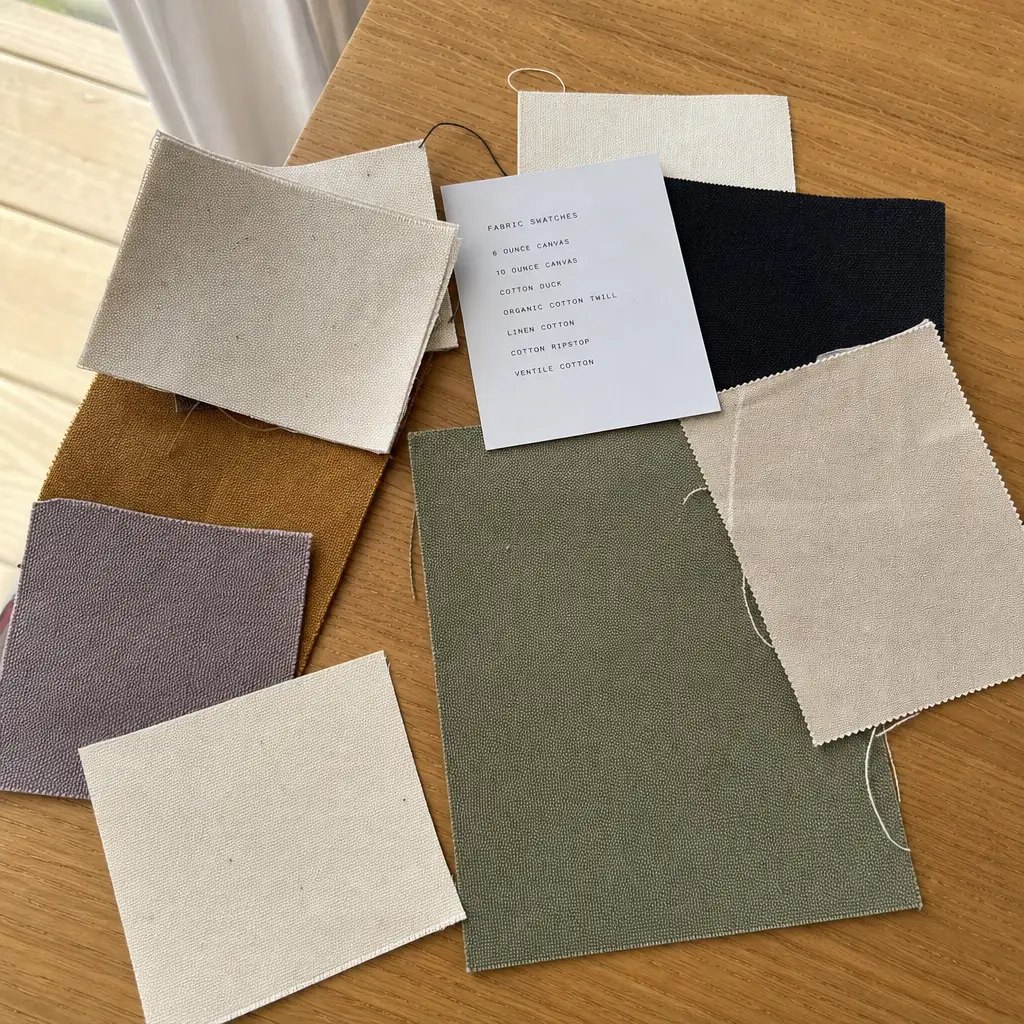
For bakery wholesale programs, fabric weight sets the first impression. A 5 oz cotton backpack can work for a low-cost giveaway, but it often feels closer to a pouch than a retail merchandise item. For artisan bakery branding, 8 oz to 10 oz cotton canvas, roughly 270 to 340 GSM, is a safer starting point because the body holds shape better, the print surface is more stable, and the bag looks more valuable on a retail display.
Natural cotton has seed flecks and shade variation, which can support an artisan look. Dyed cotton gives more color control but adds dye lot risk and usually needs a higher MOQ. If the bakery wants an unbleached natural look, the buyer should define whether flecks, slubs, and slight cream-to-beige variation are acceptable. Otherwise, the supplier may treat normal cotton character as acceptable while the retail buyer sees it as a defect.
- Economy giveaway: 5-6 oz cotton, light loads, limited reuse expectation, lower print stability.
- Balanced bakery retail bag: 8 oz cotton canvas, good cost-to-quality ratio, suitable for most logo printing.
- Premium merchandise: 10-12 oz cotton canvas, heavier carton weight, stronger perceived value, higher sewing and freight cost.
- RFQ wording to use: state both oz and GSM where possible, and require the production fabric to match the approved sample.
Size, Cord, and Construction Choices
A practical bakery drawstring backpack usually sits around 35 x 45 cm, but the right size depends on what the bakery intends to pack. If the bag must hold an apron, recipe card, and one or two packaged retail items, a standard adult backpack size works. If it is only for pastry club gifts or market giveaways, a slightly smaller size can reduce fabric consumption and carton volume without hurting the user experience.
The cord is more important than many RFQs suggest. Thin cord lowers cost but feels sharp on the shoulder when the bag has weight. Cotton rope or flat cotton cord gives a more natural handfeel and better brand match. The bottom anchoring should be reinforced with fabric tabs, bartacks, or strong seam capture. If a supplier saves a few cents by reducing reinforcement, the failure will happen exactly where the customer applies load.
- Define finished size, not cutting size, because cotton sewing and pressing can change final measurement.
- Keep the top drawcord channel deep enough for smooth opening and closing without bunching.
- Use reinforced bottom corners or tabs if the bag will carry jars, coffee, books, or retail bundles.
- Set a practical load expectation in the RFQ, such as light merchandise use rather than heavy grocery carrying.
Print Method for Bakery Artwork
Most bakery artwork works best with water-based screen printing when the design uses one to three solid colors. It gives a softer handfeel than heavy plastisol-style prints and fits the natural cotton look. Logos, wheat icons, oven line drawings, bread illustrations, and simple typography usually print well if the lines are not too thin. The artwork should be reviewed before sampling because cotton canvas is not a smooth paper surface.
Heat transfer can be useful for full-color or short-run seasonal artwork, but buyers should be careful with handfeel, edge visibility, and wash performance. Embroidery can look premium on small logos, but it adds cost and can pucker lighter cotton. For most wholesale bakery programs, the safest route is a clean screen print with adjusted line thickness, controlled ink color, and approved strike-off before mass production.
- Use vector artwork for logos and line art; avoid low-resolution bakery menu graphics.
- Specify print size in centimeters and position from top edge, side edge, and drawcord channel.
- Use Pantone references as targets, but allow realistic tolerance on natural cotton unless lab-dip matching is required.
- Avoid tiny ingredient text, fine flour dust gradients, and distressed textures unless a print strike-off proves they hold.
MOQ Logic and Cost Drivers
The lowest MOQ is not always the best sourcing route. A supplier may accept 300 pieces, but the unit price can be high because fabric cutting, screen setup, logo alignment, packing, and export handling do not scale down cleanly. For custom cotton drawstring backpacks wholesale buying, useful price breaks often appear when the order reaches efficient cutting and printing quantities such as 1,000, 3,000, or 5,000 pieces per design.
Buyers should separate total order quantity from SKU quantity. One purchase order for 3,000 pieces may look efficient until it is split into six bakery branch logos, three bag colors, two cord colors, and mixed packing rules. Each split adds setup time, material control, and inspection complexity. A factory quote should show how price changes by quantity tier and by variation so the buyer can decide whether customization is worth the extra cost.
- Main cost drivers: fabric weight, bag size, print colors, number of artwork versions, cord type, labels, packing method, and inspection requirements.
- Hidden cost drivers: screen charges, sample courier, color matching, barcode labeling, individual polybags, palletization, and low carton fill.
- Good comparison method: request one base spec and then price adders for heavier fabric, extra print color, woven label, and individual packing.
- Avoid comparing quotes where one supplier includes export carton and packing while another quotes only basic unit production.
Sample Approval That Prevents Production Arguments
A physical sample is not only for appearance. It is the contract reference for fabric handfeel, drawcord thickness, print coverage, construction, and packing. For a new bakery program, the sample should use final fabric or a clearly identified substitute. If the supplier sends a similar sample from another order, it is useful for construction review, but it should not become the approval sample unless the material and print are matched.
The buyer should approve the sample with written comments instead of a simple okay. Small comments matter: logo can move 1 cm down, cord must be thicker, print color too dark, seam needs cleaner trimming. These notes should be confirmed before mass production starts. If the production team only receives photos and vague approval, the chance of repeating sample corrections in bulk is low.
- Approve final fabric weight, bag dimensions, print size, print position, cord type, stitching, and label placement.
- Keep one sealed approval sample with the buyer and one with the factory production team.
- Use a print strike-off if the artwork has small type, special ink color, or large solid coverage.
- Do not approve mass production from a digital mockup alone when the order is for a new fabric, new supplier, or retail buyer.
Packing Plan for Wholesale Distribution
Packing affects landed cost and receiving accuracy. Bulk folded packing in master cartons is usually enough for bakery merchandise that will be unpacked by store teams or distributors. Individual polybags may be needed for retail resale, e-commerce handling, or warehouse cleanliness, but they add material, labor, plastic use, and carton volume. Buyers should decide based on the real distribution path, not habit.
Carton planning should be fixed before production because fabric weight and bag size change carton count quickly. A heavier 10 oz cotton backpack may look only slightly more expensive at unit level, but it can increase carton gross weight and reduce pieces per carton. For importers and distributors, carton dimensions, gross weight, net weight, and SKU labels are not afterthoughts; they control freight estimates, warehouse receiving, and chargeback risk.
- State pieces per inner pack or master carton if warehouse counting speed matters.
- Limit carton gross weight if store teams or small bakery buyers handle cartons manually.
- Require shipping marks that match purchase order, SKU, color, quantity, carton number, and destination.
- Confirm whether bags are folded flat, rolled, tied, banded, or individually bagged before final carton dimensions are quoted.
Lead Time and Schedule Risk
A realistic production schedule has more than one date. It includes artwork review, sample making, sample courier time, buyer approval, fabric booking, cutting, printing, curing, sewing, trimming, packing, final inspection, and export handover. When buyers ask only for delivery time, suppliers may quote an optimistic production window that assumes instant approval and no sample revision.
Bakery programs often tie to openings, seasonal launches, holiday gifting, or market events, so late approval can be more damaging than a small unit price increase. The RFQ should state the required warehouse arrival date and ask the supplier to work backward. If the schedule is tight, simplify the spec: use stock natural cotton, one print color, one bag size, bulk packing, and no special dyed cord.
- Lower schedule risk: stock fabric, standard size, one artwork, simple screen print, bulk packing.
- Higher schedule risk: dyed fabric, multiple branch logos, full-color transfer, woven labels, barcode sorting, split shipments.
- Useful quote format: sample lead time, mass production lead time, inspection window, and export document timing.
- Do not start bulk fabric cutting until artwork size, position, and bag construction are approved in writing.
Supplier Evidence and Quote Comparison
A professional quote should make the production assumptions visible. Buyers should be able to see the fabric weight, size, print method, artwork colors, cord type, label, packing, carton data, MOQ, lead time, payment term, and Incoterm. If a quote is just one unit price with a product photo, it may be fast, but it is not enough to compare against another factory.
Supplier evidence should also match the risk of the order. For a simple 1,000 piece local promotion, clear sample photos and a physical sample may be enough. For a distributor order shipping directly to several retail accounts, stronger evidence is needed: production sample, carton marking plan, inspection checklist, and confirmation that the supplier can separate SKUs correctly. The buyer does not need a long factory story; the buyer needs proof that the supplier understands the exact bag being purchased.
- Require quote lines for base unit price, sample cost, screen or setup cost, packing upgrade, label cost, and any test or inspection support.
- Compare suppliers using the same Incoterm, currency, quantity tier, packing method, and artwork count.
- Request photos of similar cotton drawstring backpack construction, especially bottom cord reinforcement and print quality on cotton canvas.
- Treat unusually low prices as a spec question first: fabric weight, finished size, cord thickness, and packing may not match your RFQ.
QC Thresholds Before Shipment
Final inspection should focus on defects that matter to a bakery brand and a wholesale buyer. A slight natural cotton fleck may be acceptable, but oil stains, mildew smell, print smears, broken drawcords, open seams, and wrong carton labels are not. The acceptance criteria should separate natural material character from actual defects so the factory and inspector judge the goods the same way.
For most wholesale orders, inspection should include size measurement, fabric and shade review, logo placement, print adhesion or rub check, stitching quality, cord function, seam strength, loose thread trimming, cleanliness, packing count, and carton marking. If the bags ship straight to a distributor or retail buyer, the cost of rework after shipment is much higher than the cost of catching defects before export.
- Size tolerance: commonly plus or minus 1 cm unless the design requires tighter control.
- Print tolerance: centered and level, with no obvious bleeding, cracking, tackiness, or missing ink in visible areas.
- Construction tolerance: no open seams, skipped stitches at stress points, weak bottom tabs, or jammed drawcord channels.
- Packing tolerance: carton quantity, SKU label, barcode, and shipping mark must match the packing list.
Specification comparison for buyers
| Spec decision | Recommended option | When it fits | Buyer risk to check |
|---|---|---|---|
| Fabric weight | 8-10 oz cotton canvas, about 270-340 GSM | Bakery retail merchandise, staff welcome kits, bread club gifts, and reusable customer bags that need a firm handfeel | Very light 5 oz cotton may reduce unit cost but can look weak after printing and may not support heavier flour, jars, or boxed pastry add-ons |
| Bag size | Around 35 x 45 cm with usable front print area kept below drawcord channel | Fits folded aprons, retail coffee, pastry boxes, recipe cards, and small bakery merchandise bundles | Oversized bags increase fabric consumption and carton volume; undersized bags limit promotional use after the first purchase |
| Cord style | Thick cotton rope or flat cotton cord with reinforced bottom tabs | Better for artisan brands that want a natural look and expect repeated carrying | Thin cord cuts into shoulders, frays faster, and can fail at the bottom eyelet or tab if the seam allowance is too narrow |
| Print method | Water-based screen print for 1-3 solid colors; heat transfer only for small full-color artwork | Best for bakery logos, line drawings, ingredient icons, and simple seasonal graphics | Detailed flour dust effects, gradients, or tiny serif text may fill in on coarse cotton unless artwork is adjusted before sampling |
| Branding position | Front center print plus optional woven side label | Works for retail buyers who need visible shelf appeal without making the bag feel like disposable advertising | Printing too close to the top channel, cord path, or side seams causes distortion and inconsistent registration |
| MOQ logic | Start from factory fabric and print setup reality, not only lowest advertised MOQ | Good for importers comparing 500, 1,000, 3,000, and 5,000 pcs quotes across colorways | Splitting one order into many bakery branch logos or seasonal colors can push each variant below efficient production quantity |
| Packing method | Individually folded in bulk master cartons; polybag only when retail handling requires it | Suitable for wholesale distribution to bakery chains, gift-pack stations, or regional warehouses | Individual polybags add labor, plastic, carton volume, and labeling risk; bulk packing needs clear carton count control |
| Inspection threshold | AQL-style final inspection with print, stitching, cord pull, size, and packing checks | Useful when goods ship directly to distributors or retail buyers without rework time | Loose threads, shade variation, misprinted logos, and weak cord anchoring become expensive once cartons are sealed and exported |
Buyer checklist before sampling
- Define the main use: retail merchandise, loyalty gift, bakery staff kit, event giveaway, or wholesale resale pack.
- Specify fabric as cotton canvas with target oz or GSM, tolerance, color, shrinkage expectation, and whether natural flecks are acceptable.
- Lock the finished bag size, seam allowance, drawcord channel depth, cord type, bottom reinforcement, and maximum load expectation.
- Send vector artwork with Pantone references, print size in centimeters, position from top and side edges, and whether slight ink absorption is acceptable.
- Separate quantities by SKU, artwork, bag color, cord color, packing style, and shipping mark so suppliers quote the real production structure.
- Request pre-production sample photos plus physical sample approval for new fabric weight, new logo, or first order with a new supplier.
- State packing needs: bulk folded, individual polybag, retail barcode, inner carton, export carton, carton weight limit, and pallet requirement if applicable.
- Ask for lead time split by sample, material booking, mass production, inspection, and export handover rather than one vague delivery date.
- Require quote data in the same currency and Incoterm, with separate tooling, sample, packing, labeling, inspection, and freight assumptions.
- Set acceptance criteria for size tolerance, print registration, color shade, seam strength, cord pull resistance, stains, odor, and carton count.
Factory quote questions to send
- What fabric weight do you propose in oz and GSM, and is it stock greige cotton, dyed cotton, or made-to-order fabric?
- What is the finished size tolerance after sewing and pressing, and how much shrinkage should we expect if the end user washes the backpack?
- Which print method fits our artwork best, and what artwork details should be simplified before sampling?
- What is your MOQ per bag color, per print design, and per cord color, and how does unit price change at 500, 1,000, 3,000, and 5,000 pcs?
- Are sample charges, screen charges, color matching charges, woven label charges, and courier fees included or separate?
- Can you provide one physical pre-production sample using final fabric, final cord, final logo size, and final packing method?
- What carton dimensions, gross weight, net weight, and pieces per carton do you recommend for our target shipping mode?
- What inspection points do you control inline, and can you support a third-party final inspection before shipment?
- What is the production lead time after artwork approval and deposit, and what date is the latest artwork approval needed to meet our delivery window?
- Which Incoterm is quoted, and are export cartons, shipping marks, barcodes, and documents included in the price?
Quality-control points to confirm
- Finished size should stay within the agreed tolerance, commonly plus or minus 1 cm for standard cotton drawstring backpacks.
- Fabric weight should match the approved sample handfeel and documented GSM; large shade or thickness variation should be flagged before cutting.
- Print position should stay level and centered within the approved artwork placement tolerance, not drifting toward the drawcord channel or side seam.
- Ink should have acceptable coverage without pinholes, heavy bleeding, cracking, tackiness, or strong odor after curing.
- Drawcord should run smoothly through the top channel, with no twisting, broken fibers, or sharp cord ends.
- Bottom cord tabs or reinforced corners should withstand a practical pull test without tearing the seam or opening the bartack area.
- Seams should be straight, locked at stress points, and free from skipped stitches, open seams, excessive loose threads, and fabric puckering.
- Carton count, inner count, SKU label, shipping mark, and barcode should match the purchase order and packing list.
- Bags should be clean, dry, and free from mildew smell, oil marks, needle stains, heavy creasing, or foreign fibers.