1. Start with the buying job, not the bag
A useful RFQ for custom cotton drawstring backpacks starts with the use case. Farmers market vendors, retail buyers, and brand teams do not need the same bag. A vendor give-away may only need a light cotton bag that holds lettuce, herbs, or a folded market flyer. A resale program or branded retail item usually needs denser cloth, better seam strength, and a cleaner finish. If you skip that context, suppliers will quote different products and you will compare numbers that do not mean the same thing.
Write the RFQ around the outcome you need from the bag. State whether it is for event distribution, point-of-sale merchandising, retail resale, produce carry, or bundled membership packs. Then define the decision that matters most: lowest unit cost, durable repeat use, fast replenishment, or a premium look. That one line will prevent a lot of useless back-and-forth and make the quote stack readable.
- State the intended load: light handouts, produce, books, or daily carry.
- State whether the bag must feel promotional or retail-grade.
- State the program length: one event, seasonal use, or ongoing replenishment.
2. Lock the spec before asking for price
Most RFQ mistakes come from vague product definition. A supplier can quote a 12 x 15 inch cotton bag, but if you do not specify finished size, cloth weight, cord type, and closure method, the factory will fill in the blanks with its standard version. That may be fine for a giveaway, but it is usually wrong for a branded program. Put the exact finished dimensions in the RFQ, and if you care about bag volume, add a simple sketch or one reference photo with measurements.
The same applies to the small features that change production cost. Specify the top hem width, whether the cord runs through a stitched channel or a folded tunnel, and whether you want a single drawcord or a double drawcord. If you want a natural cotton look, say whether slight slub, small specks, or a matte finish are acceptable. If you want a cleaner retail presentation, say so clearly because that changes the cloth selection and the sewing standard.
- Use one finished size only if you want a clean quote comparison.
- State whether the bag is unbleached natural cotton or dyed.
- Add a reference image if the shape matters more than the size alone.
3. Fabric weight drives the real price and feel
For custom cotton drawstring backpacks, fabric weight is usually the first cost driver that matters. A 140-180 GSM cotton twill or plain weave gives you a lighter bag with lower freight cost and easier folding. It is fine for farmer market handouts, membership gifts, and light retail programs. But if the bag is going to hold produce, water bottles, or heavier goods, you need to move up in cloth weight or the seams and cord channels will fail sooner than expected.
When the bag is meant for repeat use or resale, 220-260 GSM canvas is a more defensible starting point. It costs more and ships heavier, but it gives a better hand feel and better structure. If your quote is tight, ask the supplier to price two fabric options side by side. That lets you see how much of the quote is cloth and how much is setup, sewing, and packaging. It is common for a buyer to discover that upgrading fabric changes the unit price less than expected, while improving the product materially.
- 140-180 GSM: lighter promo use, lower freight, higher risk of thin cloth.
- 180-220 GSM: middle ground for everyday market carry and moderate resale.
- 220-260 GSM: better structure, better durability, higher fabric and shipping cost.
4. Print method should match the logo and the order size
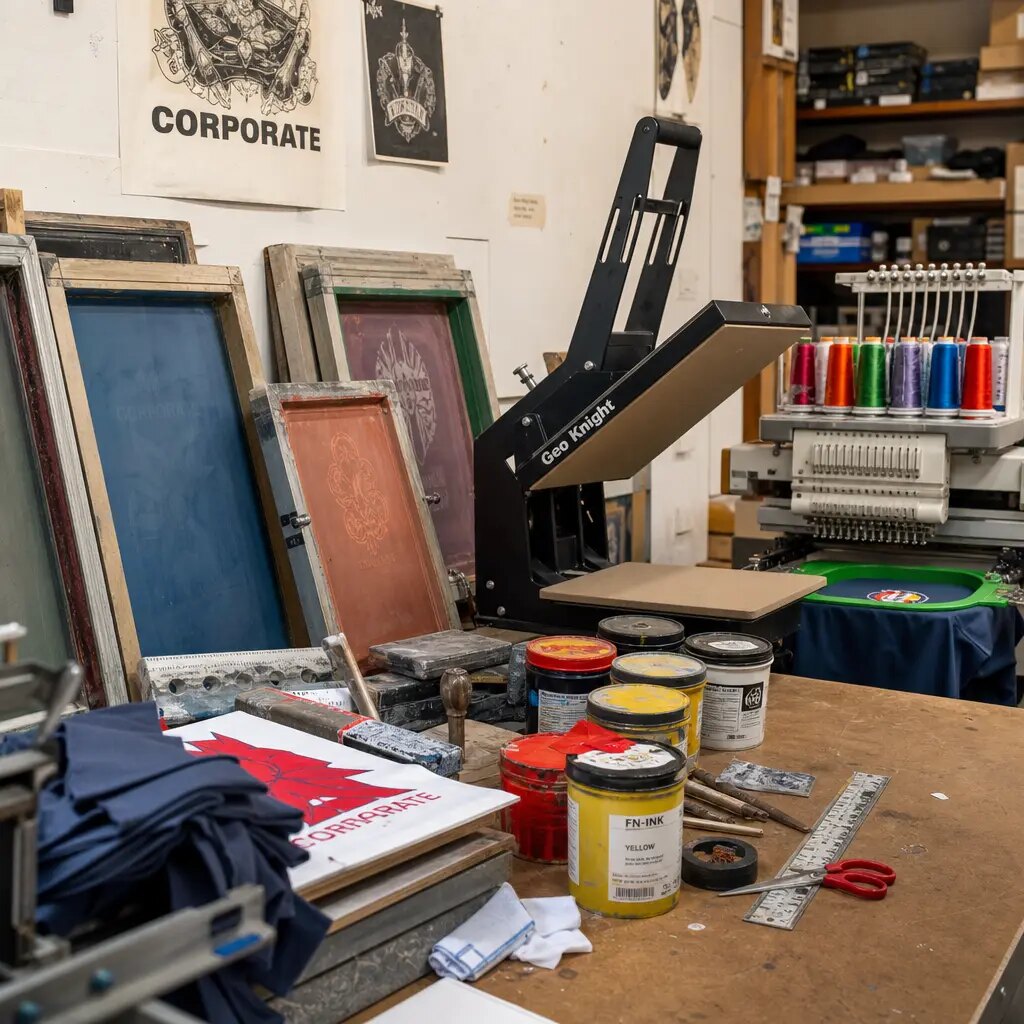
For a simple logo on cotton backpacks, screen print is still the best default in many programs. It is usually the best unit economics for one- or two-color art, and it holds up better than buyers expect when the ink and curing are handled correctly. If the logo has fine detail, multiple colors, or small type, you need to be honest about what the printing process can reproduce cleanly on cotton. A poor art file makes a good factory look bad.
Not every branding method belongs on the same bag. A woven label, stitched patch, or small embroidery hit can look more premium than a large print, but each one has its own cost and risk. Embroidery can distort light fabric if the backing is not chosen well. Woven labels work well for retail positioning, but they add a component lead time. For an RFQ, define the decoration method, size, position, color count, and the exact artwork file format. That removes a major source of quote noise.
- Screen print: best for simple logos and scalable pricing.
- Woven label or stitched patch: better for premium branding and smaller logos.
- Embroidery: usable for clean logos, but confirm fabric backing and stitch density.
5. Quote the MOQ the way the factory actually prices it
A serious RFQ should ask for at least three quantities. Factories price cotton drawstring backpacks by material yield, sewing time, print setup, and packing labor. That means 500 pieces, 1,000 pieces, and 3,000 pieces can sit in very different price bands. If you only ask for one number, you lose the ability to see where setup costs flatten out and where the real savings begin. The point is not just to get a cheaper quote. It is to learn how the supplier thinks about production efficiency.
Do not treat MOQ as a yes or no question. A factory may accept a lower quantity but move you to a standard fabric, a smaller print area, a simpler cord, or a generic carton pack. That may still be a good deal if you only need a pilot run. If the buyer wants repeat business or retail continuity, it is better to see the MOQ ladder clearly and decide whether the pilot run is a true test or a limited version of the final product.
- Ask for price breaks at 500, 1,000, and 3,000 pieces if possible.
- Separate one-time setup fees from recurring unit cost.
- State whether the MOQ is for one artwork or for one fabric color.
6. Treat sample approval as a production gate
A sample is not a souvenir. It is your proof that the factory understood the request. Ask for either a pre-production sample or a very clear photo sample before mass production starts. The approval standard should cover fabric hand feel, measured size, print placement, color tone, cord length, and the overall sew quality. If the factory sends a sample that differs from the quote, stop and reconcile the spec before ordering the full lot.
The best sample review is written, not verbal. Mark up the sample with notes on what passes and what fails. For example, a slightly softer cloth may be acceptable if the size is right and the print is clean, while a logo placed too low on the bag is not acceptable even if the print itself looks good. If your order is seasonal or time-sensitive, keep the sample path simple. Long sample loops often eat the schedule more than production does.
- Measure the sample, do not just inspect it visually.
- Compare sample color against the approved art or Pantone reference if relevant.
- Record the approval with the exact sample date and version.
7. Compare supplier routes before you compare unit prices
The cheapest quote is often from the supplier route that hides the most risk. A direct factory usually gives the best control over fabric, sewing, and packaging, but it requires more buyer discipline. A trading company can be useful when you need sourcing help or mixed product management, but you need to understand whether they are marking up the factory price and whether they can enforce QC. A domestic decorator can be the right answer for a rush program, but the landed cost will usually be much higher than an offshore factory quote.
For a farmers market or retail program, the right route depends on quantity, timing, and how much rework you can tolerate. If your order is small and the launch date is fixed, speed may be worth the higher price. If you are building a repeat SKU, direct factory sourcing usually wins because you can standardize the cloth, print process, carton pack, and replenishment terms. The table below is the practical way to compare those routes without pretending they are equivalent.
- Use the same spec across all supplier routes before comparing numbers.
- Separate factory price from freight, duties, and local handling.
- Ask who will own QC if the seller is not the actual factory.
8. Packing and carton data affect retail readiness
Packing is not a minor detail. For custom cotton drawstring backpacks, the way the bag is packed changes labor cost, storage efficiency, and the condition in which the buyer receives the goods. Bulk packing is usually the cheapest, but many retail buyers need individual polybags, barcode stickers, or even an insert card for store handling. If you want clean inbound receiving, give the supplier explicit packing instructions instead of assuming their standard pack is good enough.
Carton data should be part of the quote, not an afterthought. Ask for carton size, estimated gross weight, and the number of pieces per carton. If you are importing, this helps with freight planning and warehouse slotting. If the bags are going to be distributed to vendors or stores, carton count accuracy matters as much as the bag quality. A neat product packed into the wrong carton plan still creates receiving problems downstream.
- Specify bulk pack, individual polybag, or retail-ready pack.
- Request carton dimensions and gross weight for freight planning.
- Ask whether the packing label can include SKU, color, and carton count.
9. Lead time and landed cost are where many programs fail
The factory lead time is only one part of the schedule. A realistic timeline includes artwork confirmation, sample approval, production, packing, export booking, transit, and local receiving. If the supplier promises a fast turnaround but cannot show where the time is spent, the schedule is usually too optimistic. Build the RFQ so the supplier has to state production lead time after sample approval and deposit, not just a vague delivery promise.
Landed cost should also be broken out clearly. A quote that looks strong at the factory gate can become expensive once freight, import duty, inland transport, and repacking are added. Ask for a quote format that separates ex-factory price, packing cost, sample cost, and shipping assumptions. That makes quote comparison much cleaner and helps you avoid choosing the lowest unit price when the real delivered price is higher. For repeat programs, it is worth standardizing the quote template so every supplier is pricing the same job.
- Ask for lead time after sample approval, not just after order placement.
- Break out freight, duties, and local handling from factory price.
- Use the same RFQ format for every supplier so pricing is comparable.
Specification comparison for buyers
| Spec decision | Recommended option | When it fits | Buyer risk to check |
|---|---|---|---|
| Sourcing route | Direct factory with sewing and print in-house | Best for 1,000+ units when you need control over fabric, size, artwork, and carton packing | Verify the seller is the actual producer, not a broker, and confirm who owns final QC |
| Sourcing route | Trading company coordinating a vetted factory | Useful when you need one contact for mixed SKUs or do not have time to source multiple factories | Check whether the quote includes a hidden margin and whether the sample source matches production |
| Sourcing route | Domestic decorator or local bag printer | Fits rush events, short runs, or regional restocks where speed matters more than unit cost | Expect fewer fabric options and higher landed cost than offshore production |
| Fabric weight | 140-180 GSM cotton twill or plain weave | Works for light promo use, farmer market giveaways, and lower-cost retail programs | Watch for see-through cloth, weak seams, and shrinkage that changes the finished size |
| Fabric weight | 220-260 GSM canvas | Fits premium resale, reusable shopping use, or bags that carry heavier produce and groceries | Confirm the bag still folds easily, and price the extra freight weight into the quote |
| Print method | 1-2 color screen print | Best for logo-led programs that need durable branding and good unit economics | Check color registration, print hand feel, and rub or wash resistance |
| MOQ tier | 500-1,000 pcs with a simple decoration set | Works for pilots, seasonal launches, and smaller vendor programs testing demand | Expect setup fees, tighter artwork limits, and less room for custom packaging |
| Packing route | Bulk packed with size-marked polybags and master cartons | Good for distributors, importers, and retail buyers who repack locally | Confirm carton count, moisture protection, barcode placement, and whether polybags are required by your market |
Buyer checklist before sampling
- Define the finished size, fabric weight, cord type, and closure style before asking for pricing.
- Send one clean artwork file and state the print size, print colors, and print placement in millimeters.
- State the target order quantity, first order quantity, and repeat-order expectation so MOQ pricing makes sense.
- Ask for a pre-production sample or photo sample and define what counts as approval.
- Request unit price, sample fee, setup fee, packing cost, carton dimensions, and estimated gross weight in one quote.
- Confirm country of origin, production lead time, and shipping method separately from the factory price.
- Set acceptable tolerances for size, color, and print placement before mass production starts.
- Confirm how the bags will be packed for resale, event distribution, or warehouse storage.
Factory quote questions to send
- What is the exact fabric after finishing, including GSM, weave, and whether the cloth is pre-shrunk or not?
- Does the unit price include screen setup, print plates, embroidery setup, or woven label production?
- What are the approved size tolerances for body width, body height, cord length, and print placement?
- Can you quote three quantities so I can see the step-down price from pilot run to repeat order?
- What is the sample cost, sample lead time, and whether the sample fee is refundable after order confirmation?
- What packing is included by default: bulk pack, individual polybag, insert card, barcode sticker, or master carton mark?
- What is the estimated production lead time after sample approval and deposit, and what can extend it?
- Please share recent production photos, carton information, and one reference order that used a similar fabric and print method.
Quality-control points to confirm
- Finished size should stay within a practical tolerance, usually plus or minus 0.5 cm to 1 cm depending on bag size and fabric shrinkage risk.
- Fabric should match the approved GSM and hand feel, with no obvious weave gaps, thin spots, or dye streaking.
- Cord attachment points must be reinforced and should not pull loose under normal loading and repeated opening and closing.
- Print should sit in the approved location, with clean registration, even ink coverage, and no major cracking, bleeding, or ghosting.
- Seams, bar tacks, and top hems should be straight and secure, especially where the cord channels and shoulder cords carry load.
- Labels, side seams, and woven brand tabs should be attached cleanly with no fraying, twisting, or crooked placement.
- Carton count should match the packing list, and finished goods should not show contamination, odor, moisture damage, or crushed corners.
- If your program already uses AQL, set one standard for critical, major, and minor defects before production starts and use the same rule on every shipment.