Start with the bakery job, not the bag
A custom cotton drawstring backpack for an artisan bakery is not a single fixed product. The same basic shape can be a quick farmers market handout, a reusable retail item, a staff onboarding kit, a bread subscription insert, or a wholesale partner gift. Those jobs look similar in a mockup, but they should not be quoted the same way. A one-day giveaway may need speed and a low unit price. A retail bag needs better fabric handfeel, cleaner sewing, stronger visual inspection, and packing that protects the front logo. A kit that carries jars, aprons, cookbooks, flour samples, or boxed bakery goods needs more attention at the lower cord exits.
Write the use case before the dimensions. Tell the supplier who receives the backpack, where it will be used, how long it should last, and what it will carry. This one step prevents a common procurement problem: one factory quotes a light cotton sack, another quotes a reinforced canvas bag, and both call it a cotton drawstring backpack. The prices are different because the products are different.
Also describe what happens after production. If the bags ship to one warehouse for event teams, simple bulk cartons may work. If they ship to bakery branches, the carton marks may need branch name, artwork version, PO number, destination, and carton sequence. If the bag is sold at retail, include barcode labels, hang tags, individual packing, or consistent fold size in the RFQ. These details change labor, materials, lead time, and freight volume, so they should not wait until the final approval email.
- State the product role: giveaway, retail resale, gift kit, loyalty reward, staff issue, wholesale partner gift, or distributor promotion.
- List expected contents with dimensions, loaded weight, sharp edges, glass packaging, and shoulder-carry expectations.
- Define the distribution channel because retail packing, barcode labels, hang tags, and branch sorting change the quote.
- Tell the supplier whether the bag needs repeated customer reuse or only one event distribution.
- Include destination country, delivery deadline, Incoterms preference, and whether timing is tied to a holiday, store opening, or trade show.
- Require suppliers to confirm assumptions in writing so quotes are comparable.
Specify fabric in terms buyers can compare
Fabric is the first thing customers notice and one of the first places a quote can drift. Cotton drawstring backpacks are often sold as 6 oz, 8 oz, 10 oz, or 12 oz, but those labels alone are not enough for procurement. Ask for measured GSM after finishing. As a practical reference, 8 oz cotton is often around the high-200 GSM range, 10 oz is commonly around the low-to-mid 300 GSM range, and 12 oz is often around the 400 GSM range. Exact numbers still depend on weave, finishing, moisture, and measurement method, so the approved swatch and production lot matter more than a catalogue phrase.
For most artisan bakery programs, 8 oz cotton works when contents are light: coupons, recipe cards, flyers, loyalty cards, or a wrapped cookie sample. A 10 oz cotton canvas is a stronger starting point for reusable merchandise because it feels more substantial and supports a front logo with less show-through. A 12 oz option can make a premium kit feel more durable, but it adds folded bulk, carton weight, and stiffness at the top channel.
Composition needs the same clarity. If the bakery wants 100% cotton, write 100% cotton. If the marketing team plans to mention organic cotton, recycled cotton, certified content, or plastic-free positioning, ask exactly what documents can be provided and whether they apply to the order being shipped. Natural cotton can be beautiful for bakery branding, but it is not perfectly uniform. Cream tone, seed specks, slubs, and small weave variations should be accepted, limited, or rejected in writing before bulk cutting.
- Use 6-7 oz only for very light, low-cost event handouts with minimal contents and limited reuse expectations.
- Use 8 oz for general promotions where contents are light, flat, and unlikely to stress lower corners.
- Use 10 oz for retail merchandise, stronger brand presentation, repeated customer use, and cleaner logo appearance.
- Use 12 oz when premium handfeel and durability matter more than folded thickness, carton weight, and freight cost.
- Record oz, measured GSM, fabric composition, weave type, color, shade tolerance, and shrinkage expectation in the RFQ.
- Request a fabric swatch from the same or equivalent production fabric before sample sewing.
Lock dimensions, tolerances, and load assumptions
A common adult cotton drawstring backpack is about 34 x 42 cm measured flat after sewing, but a standard size is only useful if it fits the program. A folded apron, cookbook, bread mix pouch, glass jar, or boxed pastry kit may need more width or height. A bag that is too small strains seams and lower corners. A bag that is too large looks under-filled when it only carries a small insert or coupon.
Use finished flat dimensions, not pattern size and not a loose catalogue estimate. Cotton can shift during cutting, sewing, pressing, and packing. Practical tolerances make inspection fair. For many cotton drawstring backpacks, ±1 cm for finished width and height is reasonable unless the bag must fit a rigid insert or display fixture. Print placement can often be tighter, but only if the artwork position and measurement points are clear.
Load assumptions deserve a line in the RFQ. Paper inserts are very different from jars, flour pouches, packaged granola, staff tools, or books. The lower cord exits take most of the stress during shoulder carry, so do not rely on vague phrases such as strong construction or durable quality. Name the reinforcement method and require a loaded sample test when the contents are heavier than flat printed materials.
- Provide finished size as width x height, measured flat after sewing and light pressing.
- Set practical tolerances, such as ±1 cm for bag width/height and agreed tolerances for print placement and cord length.
- Specify top channel height so the selected 5-7 mm cord slides without binding or distorting the fabric.
- Define lower-corner reinforcement: folded corner, reinforced patch, bartack, eyelet, or another approved construction.
- Ask for a loaded sample test using actual bakery contents, especially for jars, books, boxed gifts, or flour pouches.
- Confirm whether the construction is single-layer, lined, or uses internal reinforcement because each option affects cost and bulk.
Do not treat the drawcord as a minor trim
The drawcord closes the backpack and becomes the shoulder strap. It affects comfort, appearance, and durability every time the bag is used. For artisan bakery merchandise, a 5-7 mm cotton rope or heavy cotton cord usually fits the brand better than a shiny polyester cord. Thin cord can save money, but it may dig into the shoulder, fray faster, or make a retail item feel like a throwaway promotion.
Lower cord exits are one of the highest-risk areas. A simple folded corner can be fine for a light handout. Reusable bags, staff kits, or gift packs should normally use bartacks, reinforced patches, or another approved stress-point construction. Metal eyelets can look neat, yet they are not automatically better. Poor eyelets may loosen, scratch, rust, stain natural cotton, or tear out under load.
Ask the supplier to show the standard construction and price upgrades separately. You may decide that bartacks are mandatory and eyelets are unnecessary. Another bakery may prefer reinforced fabric patches for a more crafted look. The important point is repeatability: the approved lower-corner construction should be photographed, referenced in the PO, and checked during final inspection.
- Specify cotton cord if cotton is required; do not accept unspecified cord material in the quote.
- State cord diameter, color, length, knot style, end finish, and whether plastic or metal tips are allowed.
- Require bartacks at lower cord exits for reusable bags, staff kits, or bags carrying heavier contents.
- Test eyelets only if needed, and reject sharp edges, loose setting, rust risk, and fabric staining.
- Check shoulder comfort with the intended load, not only with an empty sample.
- Photograph the approved lower-corner construction for inspection reference.
Choose print methods around real bakery artwork
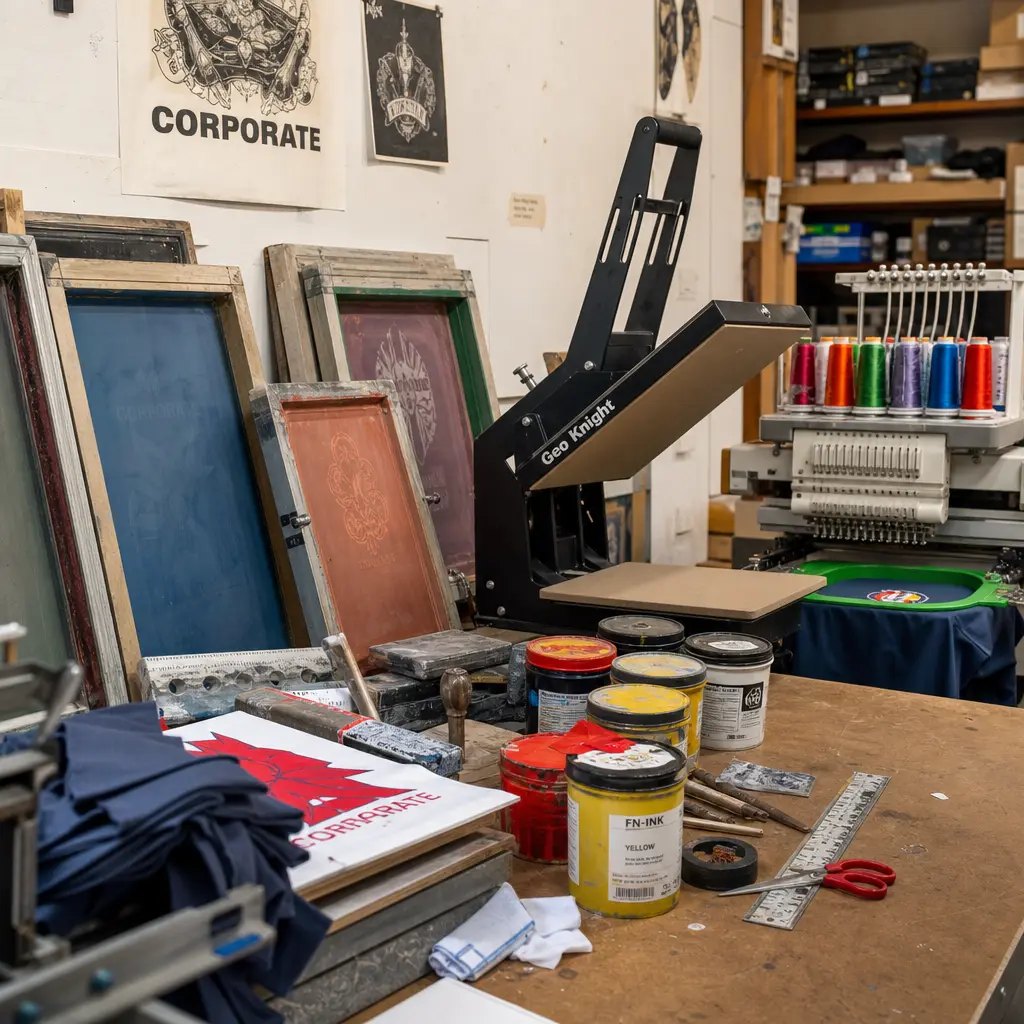
Many bakery logos are well suited to screen printing: one to three solid colors, simple icons, branch names, wheat marks, bread illustrations, or short slogans. Screen printing is efficient after setup and can look sharp on cotton canvas. The fabric texture is the limitation. Fine wheat stems, tiny serif letters, distressed flour-dust effects, and delicate line drawings may fill in or print unevenly. Send vector artwork, final print size, Pantone or CMYK references, and the smallest text or line detail that must remain readable.
Ink choice changes the feel. Water-based ink can suit a natural cotton bag because the handfeel is softer, but opacity must be checked on darker or uneven fabric. Plastisol or heavier ink systems may cover better but can feel thicker. Heat transfer can handle full-color or complex artwork, though a large transfer may feel plastic-like and less aligned with cotton positioning. Embroidery works best for small premium marks, side labels, staff editions, or limited runs; it may pucker lighter fabric and is not ideal for a large front graphic.
Approve a physical strike-off on the selected fabric. A digital mockup shows placement, but it cannot prove ink opacity, edge sharpness, texture interaction, registration, or handfeel. For multi-branch bakeries, list every logo version, slogan, language, and colorway with quantity. Each version can add screens, strike-offs, inspection photos, carton labels, and warehouse controls.
- Use screen print for one-to-three-color bakery logos, icons, branch names, and simple slogans.
- Use heat transfer only when full-color detail is worth the tradeoff in handfeel, cost, and durability risk.
- Use embroidery for small premium marks, staff editions, side tabs, or limited retail runs.
- Set print size, distance from top edge, center alignment, skew tolerance, ink color, and registration tolerance in the RFQ.
- Ask the supplier to flag tiny text, distressed texture, narrow lines, low-contrast inks, and artwork that may fail on canvas.
- Approve a strike-off on the selected fabric before bulk printing.
Build the RFQ so hidden costs surface early
A good RFQ makes every supplier price the same product. If you send only a logo mockup and target quantity, the cheapest response may simply include lighter cotton, polyester cord, no bartacks, bulk packing, excluded setup fees, or an untested print method. The quote should separate the base bag, material upgrades, decoration, sampling, packing, documentation, and freight-ready carton data.
Ask for quantity tiers such as 500, 1,000, 3,000, and 5,000 pieces. Then ask where MOQ applies. Is MOQ per total order, per fabric color, per artwork version, or per packing style? This matters for bakery groups with several branches or seasonal designs. A 3,000-piece order split into six logos may behave like six smaller print jobs. Screens, strike-offs, labels, carton marks, and inspection references may repeat.
Commercial terms should be written in the same quote table, not buried in email. Currency, Incoterms, loading port, quote validity, sample cost, screen charges, payment terms, lead time after approval, carton size, pieces per carton, gross weight, net weight, and estimated CBM all affect landed cost. If one quote is EXW and another is FOB, or if one includes individual polybags while another assumes bulk cartons, the unit prices are not comparable.
- Request base unit price by quantity tier and by fabric option, such as 8 oz, 10 oz, and 12 oz.
- Show setup fees, screen charges, strike-offs, sample fees, custom labels, hang tags, barcodes, and packing upgrades as separate lines.
- Require Incoterms, loading port, production lead time after final approval, quote validity, and payment terms.
- Ask for pieces per carton, carton size, gross weight, net weight, and estimated CBM for freight planning.
- Confirm MOQ per artwork version, fabric color, label type, and packing style.
- Require suppliers to list exclusions such as testing, certification documents, palletization, duties, or destination delivery.
Use samples as approval gates, not souvenirs
Sampling should prove more than whether the logo looks attractive. It should confirm material, construction, print behavior, use performance, and packing. Start with the fabric swatch and cord sample. Approve weight, shade, texture, diameter, softness, and color before sewing a full bag. Then approve a print strike-off on the selected fabric. Once those parts are stable, move to the pre-production sample.
Review the pre-production sample with the actual bakery contents. Load the backpack, close the drawcord, carry it on one shoulder, open and close it several times, and check what changes. Do the lower corners pull? Does the top channel bind? Does the cord feel rough? Does the front print distort when the bag is filled? If the bag will be sold or packed into a gift kit, approve the folded and packed sample too. Fold lines across the logo, barcode position, hang tag attachment, paper band fit, polybag size, and carton count all affect the customer experience.
Keep approval notes numeric and dated. Instead of make the logo higher, write the required distance from the top edge. Instead of improve stitching, specify bartack location, patch size, or stitch expectation if available. The purchase order should reference the approved sample code or date. The buyer and factory should keep matching reference samples for final inspection.
- Approve fabric swatch for GSM, shade, texture, composition, specks, slubs, and shrinkage expectation.
- Approve cord sample for material, diameter, color, softness, length, and end finish.
- Approve print strike-off for opacity, color, detail, registration, handfeel, and fabric interaction.
- Approve pre-production sample for final size, channel, seams, cord exits, labels, reinforcement, and print placement.
- Approve packed sample for fold size, barcode, hang tag, polybag or paper band, carton quantity, and shelf presentation.
- Document every approval with sample code, date, photos, and measurable revision notes.
Set QC criteria before cutting starts
Quality control for cotton drawstring backpacks should target the failures most likely to cause returns, rework, or brand disappointment: wrong fabric weight, stains, mildew odor, uneven shade, open seams, skipped stitches, weak lower corners, incorrect cord material, off-center print, poor ink opacity, loose threads, and wrong carton allocation. The inspection level should match the channel. A retail bakery bag needs stricter visual criteria than a free event handout. A staff kit may tolerate small natural cotton slubs but not weak stress points.
Many buyers use random sampling plans based on ISO 2859-1 or ANSI/ASQ Z1.4, with AQL levels agreed before inspection. Even when an AQL plan is used, the RFQ should define product-specific defect categories. A missing cord, open seam, wrong artwork, sharp eyelet, or severe front-panel stain should be major or critical. A small natural cotton speck away from the logo may be minor or acceptable if it matches the approved swatch standard.
Measurement method should be consistent. Inspectors should measure the bag flat after sewing and light pressing. They should use the same top and side reference points for print placement and photograph failures clearly. For multi-version bakery orders, QC must also check artwork quantity, carton labels, barcode data, and destination allocation. A well-made bag shipped to the wrong branch is still a commercial failure.
- Define AQL level, inspection timing, sampling plan, defect categories, and who approves shipment release.
- Measure width, height, channel height, cord length, print size, and print placement against written tolerances.
- Inspect lower corners, side seams, top channel, label insertion, bartacks, loose threads, and stitch consistency.
- Perform cord-pull checks at upper channels and lower exits to identify tearing, missing bartacks, or eyelet failure.
- Test print by dry rub, damp rub, tape pull where suitable, and light wash or wipe if durability is claimed.
- Check stains, odor, mildew, dust, water marks, oil, fingerprints, ink smears, and cotton contamination.
Plan packing, cartons, and moisture protection
Packing is not just an afterthought. It affects landed cost, warehouse handling, cleanliness, and brand presentation. Bulk packing by 50 or 100 pieces per carton can be efficient for event giveaways or internal distribution. Individual polybags keep bags cleaner, support barcode scanning, and help warehouse pick-pack teams, but they add labor, material, carton volume, and sometimes labeling obligations. Paper belly bands can reduce the plastic look, but they need testing for scuffing, loosening, and transit cleanliness.
Ask for carton data before choosing a supplier. Pieces per carton, carton dimensions, gross weight, net weight, and estimated CBM should be quoted for each fabric option. A 12 oz canvas bag may look reasonable at unit-price level but become less attractive if it pushes air freight cost up or creates heavy cartons that warehouses dislike handling. For sea freight, humid routes, or long storage, cotton needs protection from moisture, mildew odor, dust, and dirty cartons. Inner liners or desiccants may be appropriate depending on route and season.
Multi-branch bakery programs need precise carton rules. If artwork versions are packed separately, carton marks should show version name, quantity, PO number, destination, and sequence. If mixed cartons are allowed, write the assortment. Then inspect it. Branch allocation mistakes create late store deliveries and repacking work even when the bags themselves pass inspection.
- Use bulk packing for hand-distributed promotions where shelf presentation and barcode scanning are not required.
- Use individual polybags for retail, gift kits, warehouse picking, dust-sensitive presentation, or barcode control.
- Consider paper belly bands when lower-plastic presentation matters, but test for scuffing and transit stability.
- Request carton dimensions, pieces per carton, gross weight, net weight, and estimated CBM for each quoted option.
- Add moisture protection for natural cotton, humid routes, long sea transit, or extended warehouse storage.
- Define carton marks by artwork version, branch, PO number, destination, quantity, and sequence.
Control lead time with clear dependencies
Lead time should be shown as a chain of approvals, not as a vague number of days. Production usually starts after deposit, final artwork, approved fabric, approved print strike-off, approved pre-production sample, and confirmed packing data. If barcode files, branch allocations, or final logo versions arrive late, the factory may reserve material but cannot safely complete printing and packing. State when the production clock starts.
The fastest route is usually stock natural cotton, standard size, one-color screen print, standard cotton cord, standard reinforcement, and bulk packing. A medium-complexity order may include heavier canvas, two or three print colors, custom labels, individual packing, and a packed sample approval. The slowest path often includes custom dyed fabric, documented material claims, multiple artwork versions, special retail packaging, barcodes, destination sorting, or third-party testing.
Bakery timelines often connect to fixed dates: holiday campaigns, store openings, farmers market season, trade shows, subscription launches, or wholesale promotions. Build in buffer. Sampling courier time, artwork revisions, strike-off approval, fabric availability, factory queue, inspection booking, export customs, vessel schedules, and destination delivery can all move the schedule. Ask each supplier which specification is fastest and what each upgrade adds to the timeline.
- State lead time after final approval, not from first inquiry or initial quotation.
- Separate dates for artwork approval, swatch approval, strike-off approval, pre-production sample approval, production, inspection, and shipment.
- Ask which options increase lead time: custom dye, certified fabric, retail packing, multiple versions, labels, or testing.
- Book inspection before production finishes so shipment does not wait for inspector availability.
- Freeze artwork, packing, and version quantities before screens and cartons are prepared.
- Keep a launch-date buffer for bakery openings, holiday campaigns, trade shows, and seasonal promotions.
Specification comparison for buyers
| Spec decision | Recommended option | When it fits | Buyer risk to check |
|---|---|---|---|
| Buying purpose | Define giveaway, retail merchandise, gift kit, staff issue, loyalty reward, or wholesale partner promotion before asking for price | Purpose drives fabric weight, reinforcement, print durability, packing, inspection level, and carton sorting | A vague RFQ lets suppliers quote different bag constructions under the same product name |
| Fabric weight | Quote 8 oz, 10 oz, and 12 oz cotton separately; request measured GSM after finishing | 8 oz fits light event handouts; 10 oz fits reusable bakery merchandise; 12 oz fits premium kits or heavier contents | Nominal oz varies by mill and finish, so compare measured GSM rather than catalogue wording |
| Fabric composition | State 100% cotton, cotton canvas, recycled cotton blend, organic cotton, or conventional cotton; require documentation for any claim | Useful when bakery branding mentions natural, organic, recycled, low-plastic, or plastic-free positioning | Do not market certified, recycled, or organic claims unless the documents match the order and supply chain |
| Finished size | Use finished flat dimensions, often around 34 x 42 cm for adult promotional use, adjusted to the bakery contents | Fits flyers, folded aprons, recipe cards, small packaged goods, loyalty inserts, or light gift sets | A standard size may be too narrow for boxes or too large for small premium gifts |
| Tolerance control | Set practical tolerances such as ±1 cm for width and height, ±0.5 cm for print placement, and an agreed cord length tolerance | Keeps inspection measurable without over-controlling normal cotton sewing variation | Unwritten tolerances create disputes when production differs slightly from the sample |
| Drawcord | Specify 5-7 mm cotton rope or heavy cotton cord, including color, length, end finish, and shoulder comfort requirement | Supports a soft, craft-oriented bakery look and usually feels better than very thin cord | Polyester cord, thin cord, or rough ends may conflict with brand positioning or user comfort |
| Lower reinforcement | Require folded reinforced corners plus bartack at cord exits; quote eyelets only if needed and tested | Important for reusable retail bags, staff kits, jars, flour samples, cookbooks, or boxed bakery gifts | Unreinforced cord exits are a common tear point; poor eyelets can rust, scratch, or stain cotton |
| Print method | Use screen print for 1-3 solid colors; heat transfer for complex full-color art; embroidery for small premium marks | Screen print fits most bakery logos, branch names, wheat icons, slogans, and high-contrast line art | Fine distressed artwork, small serif text, and flour-dust effects may fill in on canvas |
| Artwork versioning | Quote each branch name, seasonal slogan, ink color, and logo version as a separate production line | Needed for multi-location bakeries, holiday campaigns, wholesale partners, and regional distributors | Each version may add screens, strike-offs, packing segregation, inspection references, and carton labels |
Buyer checklist before sampling
- Define the buying job: event giveaway, retail merchandise, loyalty gift, staff kit, seasonal bakery launch pack, wholesale partner gift, or distributor promotion.
- List intended contents, largest item dimensions, approximate loaded weight, and whether items include glass jars, boxed goods, sharp corners, or flour/dust exposure.
- Specify fabric composition, weight in oz and GSM, weave or canvas feel, color standard, acceptable natural shade range, and whether certified claims are required.
- Provide finished flat dimensions after sewing, with tolerances for width, height, drawcord channel, print size, print placement, cord length, and seam allowance where critical.
- State drawcord material, diameter, color, length, end finish, knot style, and whether cotton cord is mandatory instead of polyester or blended cord.
- Define lower-corner construction: folded corner, reinforced patch, bartack, eyelet, or no metal hardware, plus the load condition the sample must survive.
- Send vector artwork with Pantone or CMYK references, actual print size, print position, color count, version list, and minimum acceptable detail/line thickness.
- Separate quote lines for base bag, fabric upgrade, print setup, strike-off, sample, custom dye, labels, hang tags, barcode stickers, retail packing, carton sorting, testing, and freight-ready packing.
- Ask for quantity-tier pricing at realistic breaks such as 500, 1,000, 3,000, and 5,000 pieces, with MOQ and setup cost stated for each artwork version.
- Approve fabric swatch, cord sample, print strike-off, pre-production sample, loaded-use sample, and packed sample before authorizing bulk cutting, printing, and shipment.
Factory quote questions to send
- What cotton fabric weights are available from current stock, and what is the measured GSM after finishing for each option rather than the nominal mill description?
- Is the quoted fabric 100% cotton, cotton canvas, conventional cotton, organic cotton, recycled cotton blend, bleached, dyed, natural, or blended, and what documentation is included?
- Can you quote 8 oz, 10 oz, and 12 oz options separately with unit price, carton weight, estimated CBM, and recommended loaded-use limit?
- What finished size tolerance do you use for cotton drawstring backpacks after cutting, sewing, pressing, and packing, and can you hold ±1 cm for width and height?
- Which drawcord material, diameter, color, cord length, end finish, and shoulder feel are included in the quote, and can cotton cord be confirmed if required?
- What reinforcement is included at the lower cord exit points, and are bartacks, patches, or eyelets standard or added-cost features?
- Which print method do you recommend for our artwork, and what minimum line width, minimum text height, color registration tolerance, and ink handfeel should we approve?
- How many screen, setup, strike-off, or artwork handling charges apply if we use several bakery branch names, seasonal slogans, or colorways?
- What sample schedule applies for fabric swatch, cord sample, print strike-off, pre-production sample, loaded test sample, packed sample, and final production approval?
- What are the standard pieces per carton, carton dimensions, gross weight, net weight, inner packing, carton marks, and moisture protection for the selected spec?
Quality-control points to confirm
- Fabric weight verified against the approved swatch, with oz, measured GSM, composition, weave texture, color/shade range, and acceptable variance agreed before bulk cutting.
- Finished size measured flat after sewing and light pressing, including width, height, drawcord channel height, cord length, and print location from top and side edges.
- Seams checked for skipped stitches, open seams, uneven allowance, loose threads, puckering, fraying, weak bartacks, and stress-point failure at lower cord exits.
- Cord pull test performed at upper channels and lower corners to detect weak stitching, missing bartacks, poor eyelet setting, fabric tearing, or cord slippage.
- Print adhesion tested by dry rub, damp rub, tape pull where suitable, and light wash or wipe test if the buyer makes reuse, cleaning, or durability claims.
- Print position checked against the approved sample, with tolerance for center alignment, distance from top edge, artwork size, skew, registration, and ink opacity.
- Color assessed under consistent lighting, including natural cotton shade, dyed fabric, cord color, ink color, label color, and branch-version differences.
- Cleanliness checked for oil marks, mildew odor, visible dust, dark stains, water marks, printing smears, fingerprints, loose thread clusters, and unacceptable cotton contamination.
- Packing checked for folded size, carton count, artwork version allocation, inner packing, carton marks, barcode labels, polybag or paper band quality, and moisture protection.
- Metal parts, if used, checked for rust, sharp edges, poor plating, staining, loose setting, deformation, and safe contact with natural cotton fabric.