The RFQ problem hotel retail buyers need to solve
A cotton drawstring backpack looks like an easy product to quote. That is the trap. If the RFQ says only “custom cotton drawstring backpack with logo,” each supplier fills in the missing details differently. One quote may be based on 6 oz natural cotton, thin cord, simple stitching, and bulk packing. Another may include 10 oz cotton canvas, 10 mm cotton rope, reinforced corners, screen printing, hangtags, barcode labels, individual protection, and export cartons. Both suppliers may use the same product name, but they are not pricing the same item.
Hotel retail buyers have less room for that kind of ambiguity. The backpack must look clean enough for a resort shop, boutique hotel store, spa retail area, destination kiosk, or lobby market. It also has to work after purchase: pool visits, beach walks, excursion buses, gym trips, welcome kits, and luggage packing. A procurement-grade RFQ removes guesswork around fabric GSM, finished size, drawstring comfort, reinforcement, logo durability, packing, carton data, and schedule.
The best RFQ separates non-negotiables from open options. Fixed requirements might include target delivery date, required logo, size range, retail packing needs, barcode rules, approved color references, and QC tolerances. Optional quote lines can include two fabric weights, two packing formats, or several quantity breaks. That structure gives the factory room to suggest cost-effective alternatives without guessing what the hotel brand values most.
- Write separate specifications for paid retail, amenity giveaway, VIP welcome gift, event merchandise, and distributor stock programs.
- Do not compare unit prices until fabric weight, finished size, print method, drawstring type, reinforcement, and packing are aligned.
- State the target delivery date, shipment method, Incoterm, and sample approval deadline early; hotel openings and seasonal launches are often fixed.
- Ask suppliers to list exclusions clearly, including screen charges, sample freight, barcode labels, hangtags, inspections, and special cartons.
- Request a short production-risk note from each supplier so procurement can flag artwork, fabric, MOQ, or schedule issues before sampling begins.
Start with the hotel retail use case and target guest experience
The right backpack specification depends on how the hotel plans to use and sell the product. A resort shop backpack sold as destination merchandise needs stronger fabric and cleaner finishing than a one-time conference amenity bag. A paid retail item should not feel like a free giveaway. Buyers often spend a lot of time on the front logo and too little on the physical experience: how the cotton feels in hand, whether the cord cuts into the shoulder, whether the bag folds neatly, and whether the print looks opaque on dyed fabric.
Open the RFQ with the commercial use case, selling environment, and target product tier. A beach hotel may prefer natural cotton canvas, nautical rope, and a large destination print. An urban boutique hotel may choose black or ecru canvas with a small tonal logo, woven side label, or embroidery. A family resort may need more room for towels, sunscreen, children’s items, and bottled water. A spa or wellness property may want softer washed cotton and quieter branding.
Also decide whether the order is a one-time seasonal buy or a repeatable program. If a distributor will sell the same backpack to multiple hotels, a standard construction with changeable print artwork is usually easier to replenish than a highly customized fabric or accessory. If the product is tied to one flagship property, a more premium build may be worth the extra sampling time and higher MOQ.
- Paid hotel retail: specify 8-10 oz cotton canvas, clean seam finishing, retail hangtag, barcode, and individual protection.
- Guest amenity: 5-6 oz cotton may work if the backpack is light-use, cost-sensitive, and not positioned as premium merchandise.
- VIP welcome gift: consider 10 oz canvas, embroidered mark, woven patch, inner pocket, thicker rope, or upgraded paper packaging.
- Beach or excursion retail: consider larger capacity, stronger bottom reinforcement, and rope that stays comfortable when the bag is loaded.
- Distributor stock: keep size, fabric, rope, and packing standardized so replenishment is easier across hotel accounts.
Fabric weight, construction, and color control
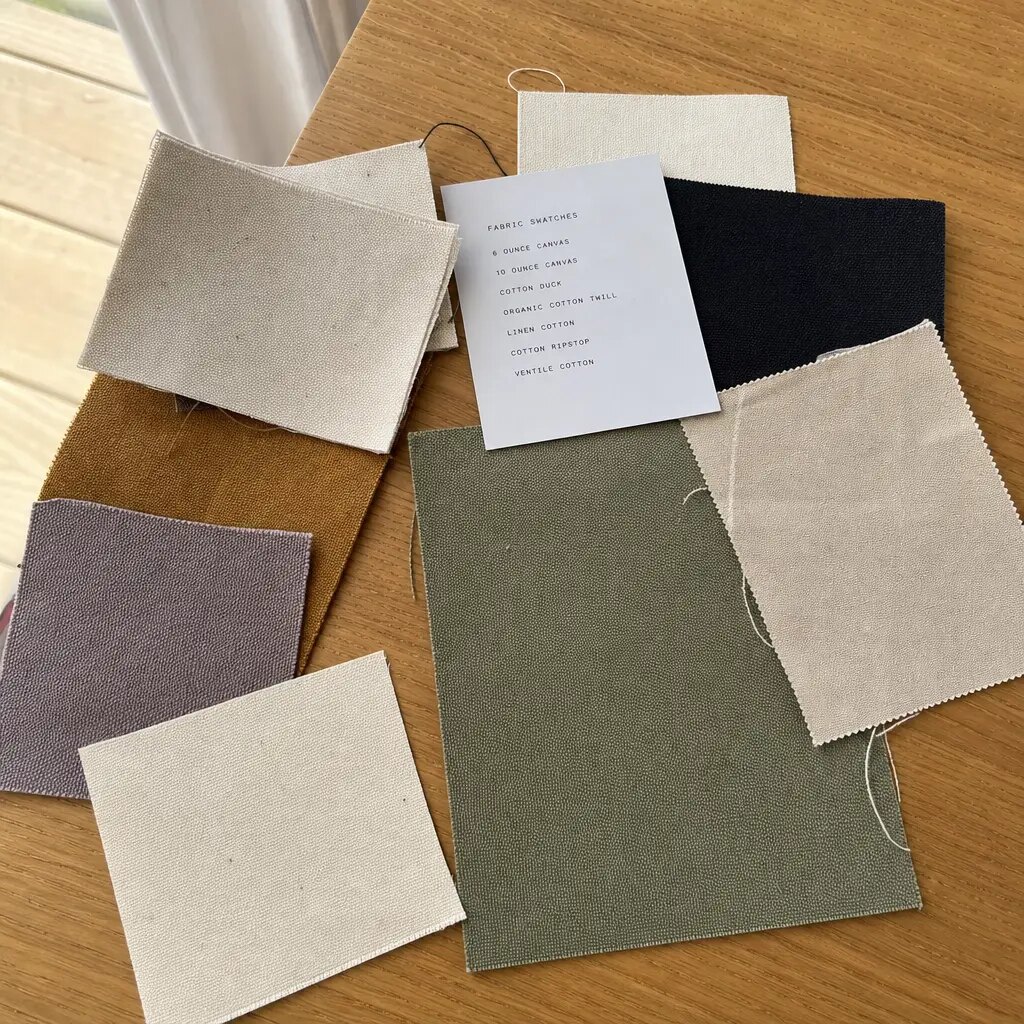
Fabric is the strongest quality signal in a cotton drawstring backpack, and it is one of the biggest reasons quotes vary. A description such as “cotton canvas” or “natural cotton” is not enough for procurement comparison. A 5 oz cotton fabric may be acceptable for a light amenity pack, but it will not have the same body, opacity, or perceived retail value as 8 oz or 10 oz canvas. Ask for the fabric weight in both oz and GSM, then request a swatch from the same construction intended for production.
As a practical reference, 6 oz cotton is often about 200 GSM, 8 oz about 270 GSM, and 10 oz about 340 GSM. Exact values can shift with weave, yarn, finishing, and measurement method, so the RFQ should define how weight will be checked. Natural unbleached cotton may show seed flecks, slubs, shade variation, and occasional darker fibers. Some hotel brands like this honest, natural look. Others need cleaner retail-facing panels. Spell out which characteristics are acceptable before the supplier cuts bulk fabric.
Color control needs attention before production starts. If the hotel brand requires a close Pantone match, ask whether the supplier will use existing stock, submit a lab dip, or custom dye the fabric. Existing fabric is usually faster and may support lower MOQ, but shade may not match the brand standard. Custom dyeing gives more control, while usually adding MOQ, approval steps, and lead time. Washed cotton can feel softer and more relaxed, but it may need wider size and shade tolerances.
- 5-6 oz cotton: lowest cost, lighter handfeel, and more suitable for amenity kits, conference packs, or event use than paid retail.
- 8 oz cotton canvas: strong starting point for hotel shops, destination merchandise, and resort retail programs.
- 10 oz cotton canvas: more premium handfeel and structure, with higher material cost, sewing load, carton weight, and freight impact.
- Natural unbleached cotton: attractive for eco-positioned merchandising, but specify tolerance for seeds, slubs, foreign fibers, and shade variation.
- Custom dyed cotton: better brand color control, with lab dip approval, higher MOQ, and longer production lead time.
- Washed cotton: softer and more casual, but approve final size, shrinkage, shade, and handfeel before bulk production.
Size, capacity, construction, and drawstring comfort
A common adult cotton drawstring backpack size is around 34 x 42 cm, but it should not be selected automatically. Start with what guests are expected to carry. A small welcome kit bag may only need room for documents, slippers, and amenities. A resort retail bag may need to fit a light towel, sandals, sunglasses, a T-shirt, or a water bottle. Too small, and the item feels like packaging. Too large, and it may look floppy on a shop display while adding fabric and freight cost.
The stress points are predictable. Drawstring backpacks take strain at the top channel and at the bottom cord attachments. Thin cord lowers cost, yet it can feel uncomfortable when the bag is loaded. Thick cotton rope looks better with natural cotton and can sit more comfortably on the shoulder, but it adds material cost and carton volume. The top channel must be wide enough for the rope to move smoothly without snagging, twisting, or closing unevenly.
For humid coastal hotels, stitched fabric tabs or reinforced patches may be safer than low-grade metal eyelets that can rust or stain cotton. If metal eyelets are used, ask for a non-rusting finish, smooth edges, and checks for cracking or flaking. The RFQ should define finished size, tolerance, drawstring length, reinforcement method, stitch density, and seam finishing. It should also state whether the backpack will be folded flat, hung on a peg, or displayed with a paper band.
- Recommended adult retail size: about 34 x 42 cm with ±1 cm finished tolerance after sewing and finishing.
- Compact amenity size: about 30 x 38 cm when capacity is less important and cost control is the priority.
- Heavier-use resort size: consider 36 x 44 cm with stronger bottom corner reinforcement and thicker rope.
- Drawstring diameter: 8-10 mm cotton rope for premium comfort; thinner cord only for light-use or low-cost programs.
- Top channel: specify enough channel width so the rope pulls smoothly and closes evenly on both sides.
- Bottom corners: request bar tacks, reinforced patches, or stitched tabs to reduce tearing during guest use.
Logo method, artwork limits, and brand presentation
Hotel retail artwork often includes property logos, destination names, coordinates, slogans, small illustrated icons, beach graphics, wellness marks, or event branding. Screen printing is usually the most practical method for one to three solid colors. It controls cost, gives clean edges, and can be durable when the ink, curing, and fabric surface are suitable. For large solid print areas on natural cotton, review the ink handfeel. Heavy ink can make the front panel stiff and work against the soft cotton experience.
Heat transfer can handle gradients, full-color artwork, and photographic designs, although it may look less integrated with cotton canvas. Embroidery gives a premium impression for small marks, but it can pucker lighter cotton and is not ideal for large filled graphics. Woven labels and patches are useful when the hotel wants a retail apparel-style finish or when the artwork is too detailed for screen printing.
Do not write only “print logo” in the RFQ. Include artwork file type, print size, placement from bag edges, number of colors, Pantone references, maximum acceptable color variation, and any performance checks required. Discuss artwork risk before sampling. Very fine lines, tiny reversed text, large ink blocks, and prints crossing seams can all create defects. For multi-property programs, buyers can approve one master construction sample and then approve separate logo strike-offs for each hotel or destination SKU.
- Screen print: best for simple logos, destination graphics, coordinates, slogans, and solid-color artwork.
- Embroidery: best for small premium branding on 8 oz or heavier cotton canvas; confirm backing and puckering risk.
- Heat transfer: useful for gradients or complex color artwork, but check handfeel, edge finish, and durability.
- Woven patch or label: good for boutique hotel branding, small detailed artwork, and retail-style presentation.
- Avoid tiny reversed text, lines under about 1.5 mm, and large solid ink areas unless the factory confirms feasibility.
- Include print location measurements, such as centered on front panel, 12 cm below top edge, with ±5 mm placement tolerance.
MOQ logic, pricing structure, and cost drivers
MOQ is not just a supplier preference. It is tied to fabric availability, cutting efficiency, printing setup, labor planning, dyeing minimums, accessory sourcing, and packing materials. A factory may accept 300 pieces if the buyer uses standard natural cotton, a standard 34 x 42 cm size, available rope, and one-color screen printing. The same factory may require 1,000 pieces or more for custom dyed fabric, special rope color, custom woven labels, multiple retail hangtags, or several low-volume SKU versions.
When comparing quotes, look past the first unit price. A low quote may exclude screen setup, sample revisions, retail labels, inner bags, carton upgrades, or pre-shipment inspection support. A higher quote may include stronger fabric, thicker rope, better reinforcement, barcode labels, and more protective packing. For hotel retail, the fair comparison is sellable quality and landed presentation, not only FOB unit price.
Ask for quantity breaks that match actual buying plans. Too many unrealistic tiers waste supplier time and can make quotes less accurate. Also specify whether MOQ is per artwork, per color, or total order. Four colors at 250 pieces each may require different handling than one color at 1,000 pieces, even when the total order quantity is the same.
- Main cost drivers: fabric weight, finished size, print coverage, number of print colors, rope thickness, reinforcement, labels, and packing.
- Setup charges: ask whether screen charges, artwork separation, embroidery digitizing, patch molds, or label setup are included.
- Quantity breaks: request 300, 500, 1,000, 3,000, and 5,000 pcs only if those levels are realistic for the program.
- SKU spread: several low-volume colors or property logos may cost more than one consolidated bulk design.
- Reorder planning: standard fabric, standard rope, and repeatable print placement reduce replenishment risk.
- Payment terms and Incoterm: confirm whether the quote is EXW, FOB, CIF, DDP, or another basis before comparing landed cost.
Sample approval workflow that prevents bulk disputes
A custom cotton drawstring backpack should not move to bulk production from a digital mockup alone. A mockup can confirm visual direction, but it cannot prove fabric weight, handfeel, drawstring comfort, print opacity, seam strength, packing presentation, barcode scanning, or finished size. The buyer needs to touch the fabric, pull the rope, inspect the logo, check the fold, scan the barcode if used, and compare the product to the intended retail position.
A practical sampling workflow has several stages. A prototype sample confirms construction and approximate appearance. A fabric swatch or lab dip confirms fabric and color direction. A print strike-off checks ink color, opacity, line sharpness, and placement before bulk printing. The pre-production sample should use final fabric, final rope, final logo, final labels, final packing, and final carton marking format. Once approved, this sample should be sealed, dated, and used as the inspection reference.
For hotel groups and distributors, revision control is essential. Artwork file names, Pantone numbers, barcode data, SKU names, property names, and packing instructions must match the purchase order. A small mismatch can create retail receiving problems even when the bag itself is well made. Build time into the schedule for comments, resubmission, sample freight, and final written approval.
- Prototype sample: checks size, construction, seam method, top channel, drawstring function, and general handfeel.
- Fabric swatch or lab dip: confirms weight, color, surface texture, natural flecks, and dye direction before full sampling.
- Print strike-off: checks logo color, ink coverage, line sharpness, adhesion, and placement before bulk printing.
- Pre-production sample: final fabric, accessories, logo, hangtag, barcode, packing, and label data.
- Sealed sample: signed or dated reference held by both buyer and factory for QC comparison.
- Revision control: artwork version, PO number, SKU name, barcode data, and approval date should be recorded before production release.
Packing, labeling, and carton planning for hotel retail
Packing is often treated as a late detail, but it directly affects retail presentation and landed damage. Natural cotton backpacks packed loosely in dusty cartons can arrive with smudges, lint, or carton odor. Dyed cotton can transfer color if packed before it is fully dry or if it is exposed to moisture. Screen prints can block, scuff, or stick if stacked before proper curing. For hotel shops, the product may need individual protection, a clean fold, a hangtag, a barcode sticker, and SKU identification before it can enter retail inventory.
The RFQ should state whether the backpacks are for shelf display, peg display, back-of-house guest amenity distribution, event registration, or distributor warehousing. Retail packing costs more, but it can reduce handling at destination. Bulk packing is efficient for amenity programs, though it may require local labor to fold, sticker, or prepare each unit. If the hotel has sustainability targets, request available options such as paper bands, recycled polybags, or bulk packing, then confirm whether that method protects natural cotton from dirt and moisture.
Carton planning affects freight and warehouse handling. Cotton canvas with thick rope can be bulky, and individual bags can increase CBM. A carton that is too heavy may fail warehouse handling requirements; a carton that is too loose may crush or wrinkle retail goods. Ask for pieces per carton, carton dimensions, gross weight, net weight, and total CBM at the quotation stage, not after production is finished.
- Retail packing: individual polybag, recycled polybag, or paper band, neat fold, hangtag, barcode sticker, and clean outer presentation.
- Amenity packing: bulk pack by 50 pcs or 100 pcs if the hotel will distribute internally and does not need retail labeling.
- Carton marks: include PO number, SKU, color, destination, quantity, gross weight, net weight, and carton sequence.
- Carton weight: keep within the buyer’s warehouse handling limit, commonly around 15-18 kg unless another limit is approved.
- Moisture control: use dry cartons and avoid packing goods before ink, dyed fabric, or washed cotton is fully dry and cured.
- Mixed cartons: define whether mixing colors or property logos is allowed and how each inner pack should be labeled.
Lead time, schedule risk, and launch planning
A real production schedule includes more than sewing. For custom cotton drawstring backpacks, the timeline normally includes artwork confirmation, fabric confirmation, sample making, sample shipping, buyer review, material preparation, printing, sewing, QC, packing, and export booking. If the buyer counts only sewing time, the launch date is exposed. Sampling may take 7-12 days for standard materials, while bulk production may take 20-35 days after sample approval. Custom dyeing, washed fabric, multiple print versions, retail hangtags, and peak season capacity can extend the timeline.
Hotel retail deadlines are often fixed around property openings, seasonal travel periods, conferences, holiday promotions, or franchise review dates. The RFQ should include the required delivery date, required ship date, preferred Incoterm, shipment method, and whether partial shipment is acceptable. If air freight might be needed as a backup, collect carton size and gross weight during quotation so logistics can estimate a realistic emergency cost.
Some approvals can move in parallel. Construction can be reviewed while barcode data is being finalized, but bulk packing cannot be completed until label data is correct. If several hotel properties are involved, approve the common bag construction first, then manage artwork approvals by SKU. That approach reduces the chance that one delayed logo blocks the entire order.
- Fastest route: standard natural cotton, standard size, one-color screen print, available rope, and simple bulk packing.
- Higher-risk route: custom dyed fabric, washed finish, multiple SKU logos, special rope color, woven labels, and retail hangtags.
- Common delay points: late artwork, Pantone disputes, barcode files, sample revisions, lab dip rejection, inspection failure, and freight booking.
- Schedule buffer: allow time for inspection and corrective action before vessel cutoff, courier pickup, or hotel opening date.
- Partial shipment: useful when a property opening needs first stock before full replenishment arrives.
- Approval calendar: assign dates for artwork approval, sample approval, packing data approval, inspection, and shipment release.
Quote data and QC terms needed for landed-cost comparison
A useful supplier quote gives procurement enough information to calculate landed cost without a chain of follow-up emails. Unit price is only one line. Buyers also need sample charges, screen charges, tooling or digitizing fees, label and hangtag cost, packing cost, carton quantity, carton size, gross weight, net weight, CBM, lead time, payment terms, quote validity, and Incoterm. Without those details, the cheapest factory quote may become expensive after freight, destination handling, relabeling, or rework.
For importers and distributors, CBM and weight matter because cotton canvas backpacks can be bulky, especially with thick rope, reinforced corners, and individual packing. Retail packaging may increase carton volume even when the unit cost increase looks small. If the buyer sells to multiple hotels or destinations, the quote should say whether mixed cartons, SKU labels, property-specific carton marks, and drop-shipment preparation are available.
QC terms should be agreed before the purchase order is released. Define defect classes for critical, major, and minor issues. Critical defects may include unsafe sharp metal, mold, severe odor, or an incorrect regulated label if applicable. Major defects may include wrong fabric weight beyond tolerance, wrong size, incorrect logo, weak seams, non-scanning barcode, or visible stains on retail-facing panels. Minor defects may include small loose threads or slight shade variation within the approved standard. Many buyers use AQL inspection, but the exact AQL level, sample size, and acceptance criteria must be written into the order.
- Request price by quantity break and by SKU color if colors have different fabric, dyeing, print, or packing requirements.
- Separate FOB product price from sample, tooling, screen, embroidery digitizing, hangtag, barcode, inner bag, paper band, and special carton costs.
- Collect carton dimensions, pieces per carton, gross weight, net weight, and total CBM for each packing option.
- Request Incoterm clearly: EXW, FOB, CIF, DDP, or another agreed term, including named port or destination where relevant.
- Confirm payment terms, sample refund policy, production lead time, quote validity period, and inspection booking process.
- Use landed cost per sellable unit, including freight, packing, inspection, and expected rework risk, when choosing the final supplier.
Specification comparison for buyers
| Spec decision | Recommended option | When it fits | Buyer risk to check |
|---|---|---|---|
| Fabric weight for hotel retail | 8 oz cotton canvas, about 270 GSM, is a strong baseline; 10 oz, about 340 GSM, for premium retail; 5-6 oz, about 170-200 GSM, only for light amenity use | 8 oz usually balances retail handfeel, printability, sewing efficiency, carton weight, and cost for hotel shops and resort merchandise | Quote must state GSM or oz and whether weight is greige, finished, dyed, or washed. Set GSM tolerance, commonly ±5%, and approve a fabric swatch |
| Finished backpack size | 34 x 42 cm for adult retail; 30 x 38 cm for compact amenity packs; 36 x 44 cm for beach, pool, or excursion use | 34 x 42 cm fits light clothing, sandals, a small towel, brochure, and gift items without looking oversized on a retail shelf | Small size lowers cost but may disappoint guests if marketed for beach or day-trip use. State finished-size tolerance after sewing, usually ±1 cm |
| Drawstring material | 8-10 mm cotton rope or flat cotton cord with reinforced fabric tabs, bar tacks, or reinforced grommet patches | Cotton rope gives a natural hotel retail look and improves shoulder comfort compared with very thin cord | Thin cord can cut into shoulders. Low-grade metal eyelets may rust in humid coastal storage. Confirm rope length, diameter tolerance, color, and attachment method |
| Print method | Screen print for 1-3 solid colors; heat transfer for gradients; embroidery, woven patch, or woven label for small premium marks | Screen print is usually best for resort names, destination artwork, coordinates, slogans, and simple brand graphics | Fine text under 1.5 mm, large ink coverage, textured canvas, and seams near print areas can cause opacity, registration, cracking, or handfeel issues |
| MOQ logic | 300-500 pcs may be possible for existing fabric and standard size; 1,000+ pcs is more realistic for custom dyed fabric, special rope, woven labels, or many SKU versions | Lower MOQ fits seasonal hotel retail tests, new property openings, event merchandise, and limited destination assortments | Very low MOQ may restrict Pantone matching, accessory choices, carton customization, and price leverage. Clarify MOQ per artwork, per color, or total order |
| Packing format | Individual polybag, recycled polybag, paper band, or retail-ready fold for shop sale; bulk pack by 50 pcs for amenity back-of-house use | Retail shops need clean presentation, barcode sticker, hangtag, SKU identification, and protection from dust during transit | Unprotected natural cotton can pick up carton odor, moisture marks, dust, or handling smudges. Excessive packaging can increase CBM and landed cost |
| Sample approval | Prototype plus pre-production sample using final fabric, drawstring, logo size, print color, packing label, barcode data, and carton mark format | Required before hotel launch dates, franchise approval, retail buyer sign-off, and multi-property rollouts | Approving only a digital mockup leaves risk on fabric handfeel, print opacity, color, rope comfort, seam strength, barcode accuracy, and finished dimensions |
| Lead time planning | 7-12 days for standard sampling; 20-35 days for bulk after approval for standard materials; add time for dyeing, washing, complex artwork, or many SKUs | Suitable for replenishment orders and scheduled hotel retail launches when artwork, barcode data, and packing instructions are ready early | Custom dyeing, peak season capacity, late artwork, delayed barcode files, sample revisions, and inspection failures can push shipment beyond opening date |
| QC inspection level | Use measurable tolerances for size, fabric weight, print position, stitching, drawstring pull, stains, odor, packing, barcode accuracy, and carton marks | Best for B2B buyers who need consistent sellable goods across hotel locations, distributors, or retail systems | If defects are defined only as “poor quality,” inspection disputes become subjective. Agree AQL, defect classes, sealed sample, and test method before production |
Buyer checklist before sampling
- Define the program type: paid hotel retail item, guest amenity, VIP welcome gift, event merchandise, franchise-approved shop product, or distributor stock program.
- State the target finished size with tolerance, for example 34 x 42 cm with ±1 cm tolerance after sewing, finishing, and packing.
- Specify fabric by weight and construction, such as 8 oz cotton canvas, natural unbleached cotton, dyed black canvas, washed cotton, twill, or recycled cotton blend.
- Ask the supplier to confirm both oz and GSM, plus whether the weight is measured before or after dyeing, washing, coating, or other finishing.
- Define acceptable natural cotton characteristics: seed flecks, slubs, shade variation, foreign fibers, broken yarns, or uneven weave.
- List logo artwork size, location, color count, Pantone references, print method, and whether the logo must pass dry rub, wet rub, adhesion, or light wash tests.
- Choose drawstring type, diameter, color, length, end finish, and corner reinforcement method before comparing supplier quotes.
- Define top channel width, seam allowance, stitch density, and whether seams should be overlocked, folded, bound, or otherwise finished for retail presentation.
- Request unit quote by realistic quantity breaks, such as 300, 500, 1,000, 3,000, and 5,000 pcs, and clarify whether quantity is per design, per color, or total PO.
- Separate product cost, sample cost, screen or tooling charge, embroidery digitizing, hangtag, barcode, inner bag, master carton, inspection support, and inland freight if applicable.
Factory quote questions to send
- What exact fabric weight in oz and GSM will be used, and is it greige, finished, washed, dyed, or natural unbleached cotton?
- What is the fabric construction and composition: plain cotton, cotton canvas, cotton twill, washed canvas, recycled cotton blend, or another material?
- Is the quoted price based on existing fabric stock or new fabric production, and how does that affect MOQ, shade consistency, lab dip timing, and lead time?
- What finished-size tolerance, GSM tolerance, shrinkage expectation, and shade tolerance are included in your normal production standard?
- What drawstring diameter, material, weave, length, color, end finish, and diameter tolerance are included in the quote?
- Will the bottom corners use metal eyelets, stitched fabric tabs, reinforced grommet patches, bar tacks, or another attachment method?
- Which print method is quoted, what ink or transfer type is used, and what is the maximum printable area on the front panel for this size?
- Can the artwork pass the requested dry rub, wet rub, adhesion, or light wash test, and are any fine lines, reversed text, or large ink areas considered risky?
- Are screen charges, sample charges, artwork separation, barcode labels, hangtags, individual bags, paper bands, master cartons, and carton marks included or listed separately?
- What are the carton dimensions, pieces per carton, gross weight, net weight, and estimated CBM for each quoted packing option?
Quality-control points to confirm
- Fabric weight should match the approved sample within the agreed tolerance, commonly ±5% when measured by GSM with an agreed test method.
- Finished size should stay within ±1 cm for width and height unless the buyer approves a wider tolerance for washed, dyed, or heavily finished cotton.
- Front logo position should stay within ±5 mm from the approved reference point for standard screen printing unless artwork or construction requires a different tolerance.
- Print color should match the approved Pantone, lab dip, or strike-off under consistent lighting, with no major pinholes, smearing, ghosting, cracking, poor curing, or obvious registration shift.
- Dry and wet rubbing should meet the buyer’s stated requirement; if no lab standard is used, approve a practical internal rub test and retain the strike-off as the reference.
- Drawstrings should pull smoothly through the top channel and hold symmetrical length on both sides when the bag is closed.
- Corner reinforcement should withstand repeated pulling without tearing, loose stitches, distorted grommets, sharp edges, or broken bar tacks.
- Stitch density should be even, commonly around 7-9 stitches per inch for cotton canvas construction unless a different standard is approved.
- Seams should be secure, with no open seams, skipped stitches, raw fraying edges on retail-facing areas, needle holes, or loose threads beyond the agreed trimming tolerance.
- No visible oil stains, mildew smell, heavy slubs outside the approved fabric standard, broken yarns, foreign fibers, dye streaks, water marks, or handling smudges on retail-facing panels.