Why Hotel Retail Bags Need Tighter QC
A custom cotton drawstring backpack looks simple on paper: two fabric panels, a drawcord channel, a logo, and packing. In hotel retail, that simplicity can be misleading. The bag is often sold as a lifestyle product in a resort shop, spa counter, boutique shelf, or in-room retail program. Guests touch it, compare it with other products, and notice whether the cotton feels thin, the logo sits straight, and the cord pulls smoothly.
Quality problems usually begin long before production. An RFQ that says only "cotton drawstring backpack with logo" leaves too much open to interpretation. One factory may quote lightweight cotton with bulk packing. Another may quote heavier cotton with retail folding and stronger corners. Both quotes may use the same product name, but the goods are not equal.
A useful custom cotton drawstring backpacks quality inspection checklist for hotel retail turns vague expectations into measurable requirements. It tells the supplier how the bag will be used, what must be checked, and what cannot ship without approval.
- Focus the specification on finished size, fabric GSM, cord type, print method, seam strength, packing format, and inspection level.
- Treat logo position, print adhesion, drawcord function, and shelf presentation as retail-facing quality points.
- Separate amenity-grade bags from retail-grade bags because fabric, packing, and inspection thresholds should not be the same.
- Write acceptance tolerances before sampling so disputes are not decided after goods are finished.
Start With Fabric, Not Unit Price
Fabric weight is one of the biggest cost and quality drivers. Cotton drawstring backpacks may be quoted in GSM or ounces. Buyers often see light cotton around 120-150 GSM, mid-weight cotton around 180-220 GSM, and heavier cotton around 240-280 GSM. In ounce terms, many hotel retail projects sit between 5 oz and 8 oz cotton.
A 6 oz cotton bag can be suitable for a light guest amenity pack or a lower-cost souvenir. An 8 oz cotton bag normally gives a stronger hand feel and better shelf presence. It may also support seams and corners better when guests carry towels, bottled water, sandals, or small purchases. The right choice depends on use, brand positioning, freight budget, and expected retail price.
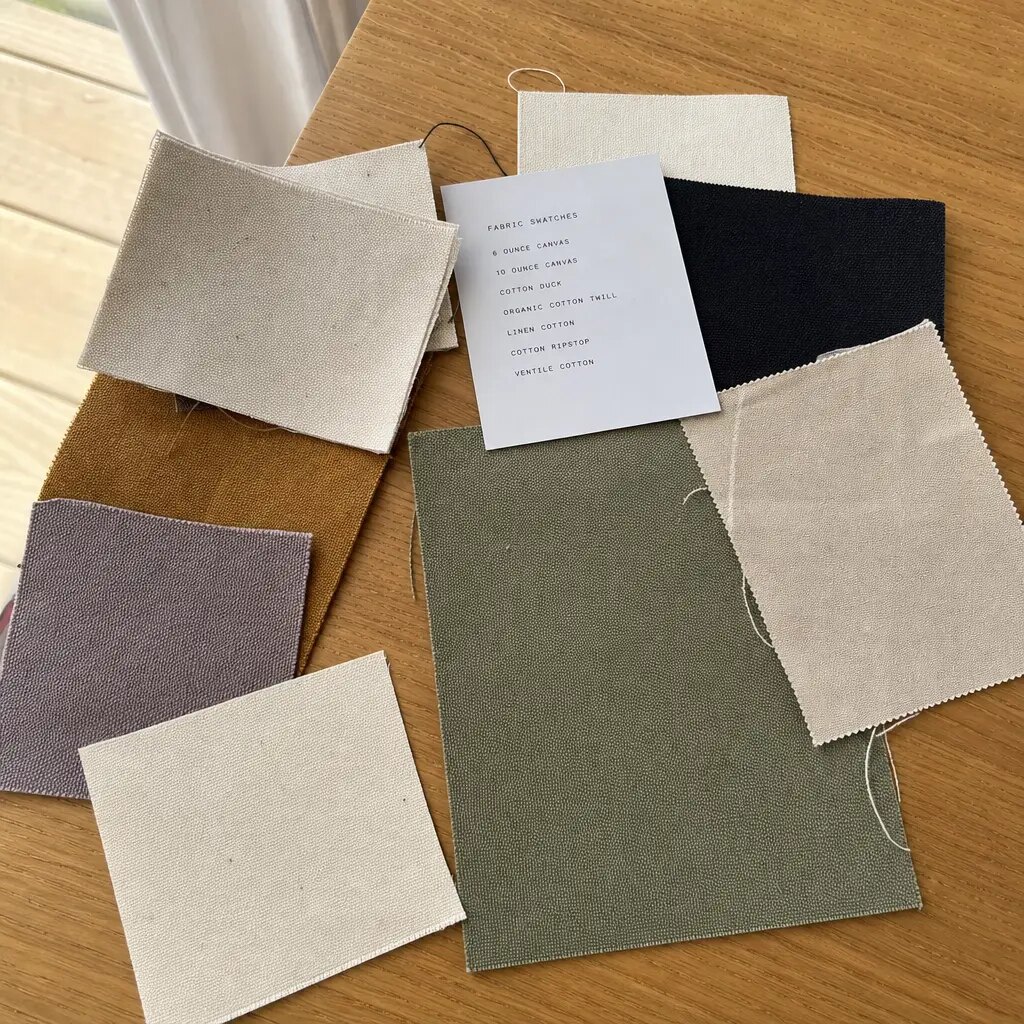
The fabric description should go beyond "cotton." State whether the fabric is natural, bleached, dyed, washed, or otherwise finished. Natural cotton may show seed flecks and shade variation. That may be acceptable for an eco-positioned resort, but it can look inconsistent in a premium minimalist hotel store. Dyed cotton needs lab dip approval, shade tolerance, and shrinkage review. Washed cotton needs extra attention to hand feel, size change, and print durability.
- Use 120-150 GSM only for very light carry use, giveaways, or cost-sensitive amenity programs.
- Use 180-220 GSM when the bag must balance retail hand feel, print quality, freight weight, and cost.
- Use 240-280 GSM when the bag needs stronger shelf presence, better structure, or small embroidery support.
- Ask the supplier to state GSM, fabric finish, yarn or weave description if available, and expected shrinkage range.
- Keep an approved fabric swatch for repeat orders, especially when several hotel properties share one base bag.
Build Specs Around Real Guest Use
The best specification starts with what the guest will actually carry. A resort shop bag may hold a towel, sunscreen, sandals, and bottled water. A spa retail bag may carry slippers, a robe accessory, or small wellness products. A city hotel boutique may sell it as a compact souvenir that must fold neatly and display the logo cleanly.
Common finished sizes include approximately 34 x 42 cm or 36 x 45 cm, but there is no single correct size. A wider mouth helps with bulky resort items. A slimmer body can look cleaner on a boutique shelf. Longer cords may make the bag more comfortable on the shoulder, while cords that are too long can look messy when packed.
Cotton fabric and manual sewing create natural variation, so the purchase order should include tolerances. If the factory is not told how much variation is acceptable, the buyer may receive bags that are technically usable but inconsistent on shelf. That is a retail problem, not just a production detail.
- Finished size: define width, height, and tolerance after sewing, not only cutting size.
- Drawcord channel: specify channel width so the cord slides without bunching or tearing the fabric.
- Cord length: confirm comfort, closure function, and packed appearance when the bag is full and empty.
- Bottom corners: add double stitching or reinforcement when expected load is more than light souvenir use.
- Thread color: match fabric for a clean retail look unless contrast stitching is part of the design.
- Label position: control woven side labels, care labels, and origin labels so they do not distort the seam.
Match Logo Method to Artwork
Screen printing is usually the most practical choice for hotel logos, resort names, simple icons, and one- to three-color artwork. It offers good cost control at bulk quantities and works well on flat cotton panels. The buyer should specify print size, print location, ink color, opacity expectation, and whether the print should feel soft or more solid.
Heat transfer can work for multi-color artwork, gradients, or designs that are hard to screen print cleanly. The tradeoff is hand feel and adhesion risk. It should be checked for peeling, cracking, edge lift, and transfer marks after packing. Embroidery can look premium, but it is best kept small and placed on heavier cotton. Large filled embroidery on light cotton may pucker, pull, or distort the panel.
Woven labels are another useful option for hotel retail. A small side label or front patch can give the product a finished retail feel without a large printed logo. However, label insertion must be controlled. Crooked labels, loose edges, and inconsistent seam placement are visible defects on a simple cotton bag.
- Screen print: best for solid hotel logos, clean repeat production, and predictable cost.
- Heat transfer: useful for multi-color graphics but requires peel, rub, scratch, and packing checks.
- Embroidery: suitable for small premium marks on heavier cotton, not large artwork on thin fabric.
- Woven label: good for subtle brand detail when label position and seam insertion are controlled.
- Print approval: use a physical strike-off on the actual fabric type before approving bulk production.
- Artwork file: provide vector art, exact print dimensions, Pantone references, and logo placement measurements.
Understand MOQ and Cost Drivers
MOQ is rarely about one number. It is affected by fabric sourcing, dyeing, printing setup, cutting efficiency, cord color, label production, packing style, and carton sorting. A supplier may accept a lower quantity for natural cotton in a standard size because fabric is easier to source. MOQ rises when the buyer requests custom-dyed fabric, multiple hotel-property logos, special cord colors, hangtags, barcode labels, or several retail packing versions.
For hotel groups, a practical sourcing plan may use one shared base bag with property-specific printing. This can reduce fabric complexity and make repeat orders easier. It does not remove all setup costs, though. Each logo version may still require screens, print setup, SKU separation, packing controls, and carton marking.
Price comparisons must be normalized. A quote for 8 oz cotton with reinforced corners, two-color screen print, retail polybag, barcode sticker, and sorted cartons cannot be compared with a quote for 5 oz cotton, one-color print, and bulk packing. The lower price may simply be a thinner product with less labor included.
- Fabric GSM and color process affect cost more than many first-time buyers expect.
- Print color count, print area, and setup charges matter most on small and mid-size orders.
- Retail folding, individual packing, barcode labeling, and hangtag application add labor cost.
- Mixed colors, mixed logos, or multiple hotel properties can create MOQ pressure even when total quantity is high.
- Low MOQ is only useful if the supplier still controls fabric consistency, logo placement, and packing accuracy.
Use Samples to Lock the Standard
A strong sample process has stages. First, approve fabric swatches or lab dips. Second, approve a printed strike-off on the same fabric type that will be used for production. Third, approve a full pre-production sample with final size, cord, seam construction, print, label, folding, and packing. This sequence takes more discipline than approving a photo, but it prevents expensive interpretation gaps.
The signed pre-production sample should become the production reference. Keep one sample with the buyer and one with the factory. Mark it with the date, PO number, fabric GSM, print method, color reference, and approved packing. During inspection, the inspector can compare bulk goods against this sample for hand feel, shade, logo placement, cord smoothness, sewing quality, and packed presentation.
Do not approve a sample only because it looks attractive in one photo. Measure it. Pull the cord. Load it. Fold it. Check the print under consistent lighting. A hotel retail bag has to survive handling before it reaches the guest, and the sample should prove that the specification can do the job.
- Measure actual fabric GSM from the sample when the project is cost-sensitive or quality-sensitive.
- Photograph front print placement with a ruler before approving bulk production.
- Pull the drawcord repeatedly to detect tight channels, shedding cords, or uneven closure.
- Load the sample with realistic hotel retail items to expose weak bottom corners and side seams.
- Check the packed sample because folding can hide, crease, or distort the front logo.
- Record any approved deviations so the factory, buyer, and inspector use the same standard.
Inspection Checklist and Defect Rules
Inspection should cover material, measurement, workmanship, print, function, packing, and carton accuracy. A standard visual inspection may catch stains and broken stitches, but it may miss weak corner reinforcement, cord slippage, poor ink adhesion, or mixed-SKU packing errors. For cotton drawstring backpacks, the most useful QC plan combines AQL sampling with product-specific functional checks.
Defect classification should be agreed before production starts. Critical defects may include wrong logo, wrong product, contamination, mold, sharp metal parts, or safety-related issues. Major defects may include incorrect fabric weight, off-center logo beyond tolerance, open seam, broken drawcord channel, visible front-panel stain, non-working drawcord, wrong retail packing, or incorrect SKU ratio. Minor defects may include small loose threads or light wrinkles if they do not affect presentation or function.
The inspection report should not only state pass or fail. It should show measurements, defect photos, carton markings, packing condition, and results from pull, rub, and load checks. If the order is for several hotel properties, the report should also confirm color, logo, barcode, and carton count by SKU.
- Measurement: finished body size, logo position, and cord length within approved tolerances.
- Fabric: GSM and shade close to approved sample, with no unacceptable holes, oil marks, dye streaks, or heavy slubs.
- Sewing: even stitch density, secured backstitching, no skipped stitches, no open seams, and a clean cord channel.
- Function: both cords pull smoothly, opening closes evenly, and bottom corners resist the agreed practical load test.
- Print: correct artwork, color, registration, opacity, and no obvious cracking, smearing, flaking, or ink transfer.
- Packing: correct fold, clean bag or band, accurate barcode or hangtag, correct carton quantity, and proper shipping marks.
Packing for Retail Shelves and Warehouses
Packing is part of the product, especially for hotel retail. A backpack sold in a boutique may need a neat fold, individual polybag, kraft band, hangtag, barcode sticker, or belly band. A bag used as an in-room amenity may be bulk packed to reduce cost and plastic. These two packing plans require different labor, materials, carton dimensions, and inspection checks.
Folding deserves attention. If the front logo is folded sharply, the print may crease before the product reaches the shelf. If the fold hides the logo, store staff may need to repack or display the bag differently. If the bag is over-compressed, the cord channel can deform and the product may look tired when unpacked.
Carton planning affects landed cost and warehouse receiving. Cotton bags are soft, so factories may be tempted to pack tightly. Over-packing can damage presentation; under-packing wastes freight space. The RFQ should ask for pieces per carton, carton dimensions, gross weight, net weight, carton strength, and whether carton weights meet receiving limits. Mixed-SKU cartons should be used only when the warehouse can count and receive them accurately.
- Retail-ready packing: specify fold direction, logo visibility, polybag thickness, band position, and hangtag placement.
- Barcode labels: confirm SKU code, label location, scan result, and whether labels are applied to bags, bands, or cartons.
- Moisture control: avoid packing damp cotton and require clean cartons, dry storage, and reasonable ventilation before shipment.
- Carton marks: include PO number, item code, color, logo version, quantity, carton number, and destination if required.
- Mixed cartons: use a packing matrix by SKU and require carton photos before shipment when orders contain several properties.
- Receiving check: match carton count, SKU ratio, barcode labels, and shipping marks before releasing the balance payment or shipment approval.
Lead Time Risks to Manage Early
Lead time depends on fabric availability, dyeing, sample approval, printing, sewing, finishing, packing, inspection, and shipment booking. Natural cotton in a standard weight can usually move faster than custom-dyed fabric. Multi-color print, several hotel-property logos, special labels, or retail barcode packing can extend setup time and increase the chance of approval delays.
The schedule should start from confirmed artwork, approved sample, and deposit, not from the first inquiry date. Many delays happen before cutting begins. The logo file may not be production-ready. Pantone colors may be missing. Lab dips may need revision. The hotel team may change logo size after seeing the strike-off. Each of these decisions affects production release.
Procurement teams should build a milestone calendar. Include deadlines for artwork, lab dip, strike-off, pre-production sample, bulk production start, inline check if needed, final inspection, rework window, export packing, and shipment booking. This is especially important for hotel openings, seasonal resort launches, spa promotions, and retail calendar resets.
- Artwork preparation: allow time to convert logos into vector files and confirm print size, color, and placement.
- Fabric approval: plan extra time for dyed cotton, washed cotton, non-standard GSM, or special cord color.
- Sample approval: avoid photo-only approval when hand feel, shade, print texture, or packing presentation matters.
- Production queue: confirm whether factory capacity is reserved after sample approval, not only after the first quote.
- Inspection and rework: leave time for sorting, correction, replacement, and buyer review if major defects appear.
- Shipment booking: align carton data, warehouse receiving rules, and export documents before goods are packed.
Quote Data for Fair Supplier Comparison
A strong supplier quote should be detailed enough for procurement, merchandising, logistics, and quality teams to review the same assumptions. It should list fabric GSM, finished size, cotton finish, cord material, seam construction, print method, number of print colors, label details, packing method, carton data, MOQ, sample cost, setup charges, lead time, payment terms, and trade term.
If this information is missing, the lowest unit price may hide lighter fabric, weaker cord, bulk packing, missing barcode labor, or excluded screen charges. Ask suppliers to quote against the same specification sheet. Then compare not only price, but also sample discipline, inspection cooperation, carton planning, and ability to repeat the approved standard.
Repeatability matters in hotel retail. A first order may launch one property, but later orders may need the same fabric shade, logo location, cord color, and packing for other locations. A supplier who can hold standards steady across repeat production may be more valuable than one who only offers the lowest first quote.
- Request fabric GSM in writing and keep an approved swatch for future comparison.
- Separate unit price from screen charges, sample fees, hangtag cost, packing surcharge, and domestic freight.
- Ask for carton dimensions and gross weight so logistics can estimate freight and warehouse handling.
- Compare lead time by milestone: fabric, sample, production, inspection, packing, and shipment booking.
- Include inspection support, defect photo reporting, and rework process in supplier evaluation.
- Ask how the supplier controls repeat orders when fabric lots, cord lots, and ink batches change.
Specification comparison for buyers
| Spec decision | Recommended option | When it fits | Buyer risk to check |
|---|---|---|---|
| Fabric weight | 6 oz cotton for light souvenir or amenity use; 8 oz cotton for stronger hotel retail shelf presence | 6 oz works when guests carry light items; 8 oz feels more substantial and usually holds shape better on display | Do not compare quotes by unit price alone; 140 GSM and 260 GSM bags are different products |
| Fabric construction | Plain weave cotton with even yarn, stable hand feel, and controlled shrinkage | Best for screen print, heat transfer, simple labels, and small embroidery on flat panels | Loose or uneven weave can create fuzzy print edges, seam puckering, and shade variation |
| Cotton finish | Natural cotton, bleached cotton, dyed cotton, or washed cotton stated clearly in the RFQ | Natural cotton fits eco-style retail; dyed or bleached cotton fits tighter brand color control | Natural cotton can show seed flecks; dyed cotton needs lab dip approval and shade tolerance |
| Drawcord material | Cotton cord for natural look; polyester cord for smoother pull and lower moisture sensitivity | Cotton cord suits resort and boutique positioning; polyester cord suits frequent handling and faster turnover | Cord thickness must match the channel or eyelet; poor matching causes jamming, slipping, or a cheap feel |
| Bottom reinforcement | Double-stitched bottom corners or triangular corner reinforcement when load matters | Important when guests carry bottled water, towels, sandals, slippers, guidebooks, or small retail purchases | Weak corners may look fine at first inspection but fail under load and repeated pull cycles |
| Print method | Screen print for solid logos; heat transfer for multi-color artwork; embroidery only for small logos on heavier cotton | Screen print is usually the best cost-to-quality choice for hotel logos and resort retail branding | Large ink coverage on thin cotton can stiffen the panel and distort after washing or folding |
| Logo position tolerance | Center front print with +/- 5 mm position tolerance after approved pre-production sample | Useful for consistent shelf display, hotel boutique merchandising, and repeat orders | Without a written tolerance, off-center printing may be treated as normal production variation |
| Packing method | Individual polybag, kraft band, hangtag, or bulk packing selected by retail plan | Retail shops usually need clean presentation; amenity programs may accept bulk packing | Uncontrolled folding can crease prints, hide the logo, or make receiving inspection harder |
| Inspection level | AQL general inspection plus functional pull, seam, load, print rub, and packing checks | Best for importers, distributors, and hotel groups buying mixed retail SKUs | Standard visual AQL alone may miss cord slippage, seam burst risk, and ink adhesion problems |
Buyer checklist before sampling
- Define finished bag width and height, fabric GSM or oz, fabric finish, fabric color, drawcord type, cord length, and whether bottom corners need reinforcement.
- State the intended use: guest amenity, resort shop souvenir, spa retail item, in-room retail product, or hotel boutique merchandise.
- Set logo artwork file format, print size, print method, Pantone or lab dip reference, logo placement tolerance, and acceptable print shade range.
- Approve a physical pre-production sample using the same fabric weight, cord, thread, print ink, label position, folding method, and packing material as bulk production.
- Measure sample shrinkage if the bag is garment washed, dyed, or likely to be washed by guests after purchase.
- Confirm a practical load test target based on real hotel use, such as towel, bottled water, slippers, sunscreen, guidebook, or retail merchandise weight.
- Specify stitch density, seam allowance, backstitching, drawcord channel width, eyelet requirement if any, and bottom corner reinforcement.
- Classify critical, major, and minor defects before inspection so the supplier and inspector judge problems the same way.
- Require carton markings with PO number, SKU, color, quantity, gross weight, net weight, carton size, and country-of-origin marking if needed.
- Separate retail-ready packing from bulk amenity packing in the RFQ because folding labor, barcode stickers, hangtags, and polybag quality change cost.
Factory quote questions to send
- What cotton fabric weight are you quoting in GSM or oz, and is it natural, greige, bleached, dyed, washed, or printed cotton?
- What is the finished bag size tolerance, and what cutting allowance do you use to control shrinkage or sewing loss?
- Which print method is included in the unit price, how many colors are included, and are screen charges or setup fees quoted separately?
- Can bulk production use the same fabric lot, cord lot, thread color, and ink formula as the approved pre-production sample?
- What MOQ applies by fabric color, print design, logo version, and packing style, and what surcharge applies below standard MOQ?
- What stitch density, seam construction, cord channel construction, and bottom reinforcement are included in the quoted specification?
- What sample types do you provide before bulk production: fabric swatch, lab dip, printed strike-off, prototype, or full pre-production sample?
- What lead time is required for fabric sourcing, sample approval, production, inspection, export packing, and shipment booking after deposit and artwork approval?
- What carton size, pieces per carton, gross weight, net weight, and packing method are included, and can cartons meet warehouse receiving limits?
- How do you prevent mixed SKU errors when there are several hotel properties, colors, logos, barcode labels, or retail packing versions?
Quality-control points to confirm
- Fabric GSM should match the approved standard within the agreed tolerance, commonly +/- 5% for cotton fabric unless the buyer specifies a tighter range.
- Finished bag dimensions should remain within the approved tolerance, typically +/- 1 cm for body size and +/- 1.5 cm for cord length on common drawstring backpacks.
- Logo placement should stay within the approved tolerance, such as +/- 5 mm from the center line and top reference point for front-panel printing.
- Print color should be compared with the Pantone reference, approved strike-off, or signed pre-production sample under consistent lighting.
- Ink adhesion should pass dry rub and light scratch checks without obvious flaking, cracking, smearing, or transfer to packing material.
- Drawcords should pull smoothly from both sides, close the opening evenly, and show no slipping from the channel after repeated pull cycles.
- Cord ends, knots, or stitched anchors should be secure enough that they do not loosen during normal opening, closing, and shoulder wear.
- Bottom corners and side seams should pass a practical load test based on intended hotel retail use, not only a visual seam check.
- Needle holes, skipped stitches, broken thread, puckering, stains, oil marks, loose lint, and fabric slubs should be classified before inspection begins.
- Retail packing should protect the logo area from heavy creasing, moisture, carton abrasion, and mixed-SKU confusion during warehouse receiving.