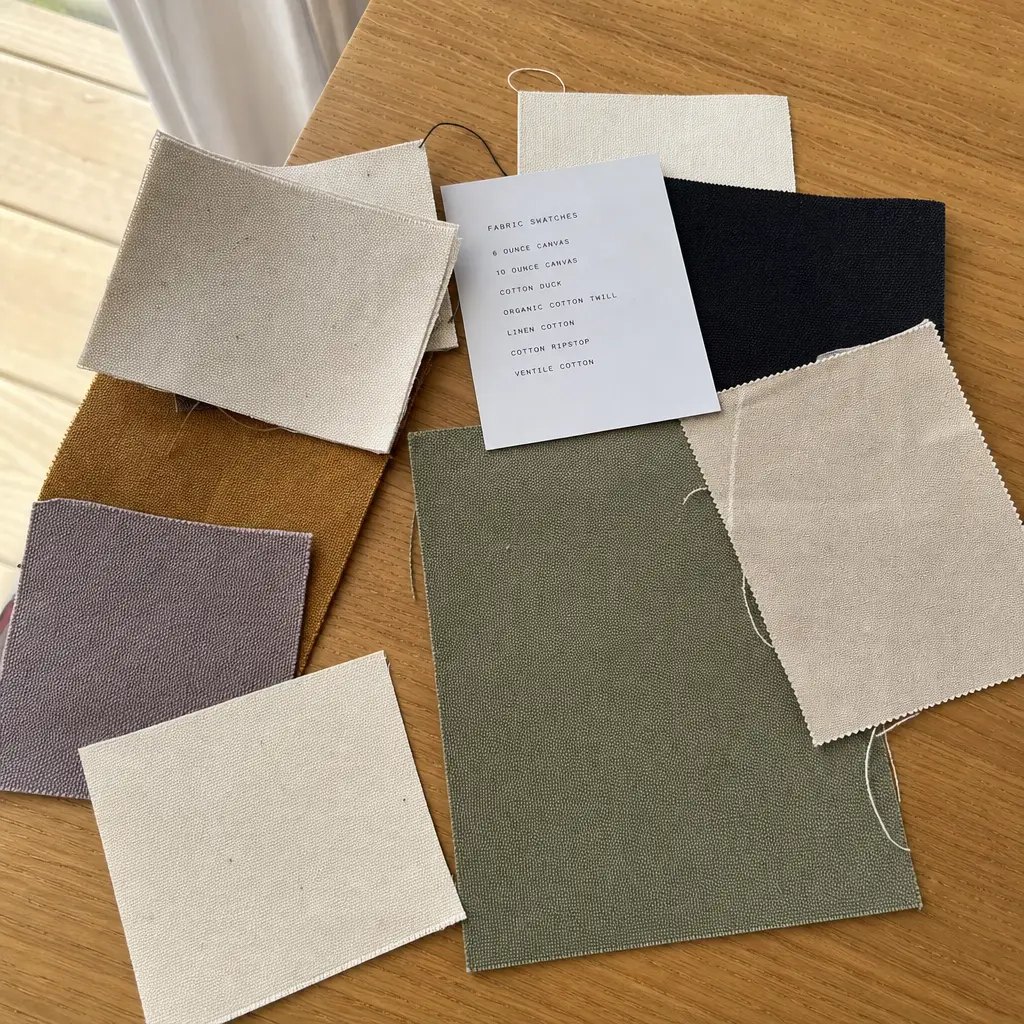
Why print proofing matters more than most startup buyers expect
A cotton drawstring backpack looks simple, but the final result depends on several linked decisions: fabric surface, print method, artwork scale, sewing sequence, cord construction, and packing. If any of those are loosely defined, the order can arrive technically complete yet still fail the brand test. That is why a custom cotton drawstring backpacks print proofing checklist is less about design approval and more about risk control before bulk production.
For tech startups, the risk is usually amplified by timing. These bags are often tied to a fixed event, employee onboarding wave, launch, accelerator demo day, sales kickoff, or partner shipment. If the logo color is off, the print is visibly crooked, or the bag feels cheaper than expected, there may be no practical window to remake it. Procurement therefore needs proofing to answer measurable questions early, not just collect a mockup for internal sign-off.
Good proofing also improves quote quality. Suppliers price differently when assumptions are missing. One may quote lighter fabric, another may print after sewing, and a third may exclude samples or labels. The bags look similar on paper, but the real offer is not the same. Tight proofing language makes supplier comparisons more reliable because it reduces hidden interpretation.
The goal is not to demand unnecessary complexity. It is to define only the standards that materially affect the delivered product: what cloth is being used, how the artwork will print on that cloth, what sample stages will be approved, what variation is acceptable, and what evidence will support supplier claims. When those basics are clear, startup buyers usually get faster decisions and fewer surprises.
- Proofing controls brand risk before bulk production starts
- Startup event deadlines leave little room for rework
- Clear specs improve quote comparability across suppliers
- The key is measurable standards, not extra paperwork
Start with fabric because the print can only be as good as the cloth
Many print disputes begin with a vague fabric description. '100% cotton drawstring bag' is not a useful production specification. Cotton varies in weight, weave openness, lint level, base shade, and surface cleanliness. Those differences affect edge sharpness, ink coverage, and how premium the bag feels in hand.
For budget giveaways, 140-160 GSM cotton is common. It can work well for lightweight event packs or short-use programs where price matters most. The tradeoff is that lighter fabric tends to move more during sewing, can show contents through the cloth, and may look less stable when a large front logo is printed.
For employee kits or partner gifts, many buyers prefer 180-220 GSM because it generally gives a firmer hand feel and a more stable print field. It also helps the bag present better when carried or photographed. That does not automatically make heavier fabric the right answer; it simply makes the quality-positioning more predictable if brand presentation is a priority.
Surface quality matters as much as weight. Cleaner combed or washed cotton can produce crisper logo edges than rougher standard cotton, even when GSM is similar. If the artwork includes small text, thin strokes, or light tones, the fabric surface should be part of the approval discussion from the start.
Base color matters too. Natural cotton is not bright white, and different lots can lean warmer or duller. That can shift how whites, cool grays, and some brand colors appear. The practical solution is simple: approve color on actual fabric, not only from a digital mockup or paper printout.
- Write finished GSM, not only generic cotton content
- Lighter cotton supports price but gives a less stable print surface
- Heavier cotton usually improves hand feel and logo presentation
- Cleaner cotton surfaces help fine detail and sharper edges
- Approve color on real fabric because natural cotton affects ink appearance
Match the print method to the artwork and actual use case
For most startup logos on cotton drawstring backpacks, screen printing is still the commercial baseline. It usually suits one- or two-color artwork, medium to large quantities, and everyday use. When the artwork is simple and the curing is controlled, screen print is often the easiest method to compare across factories.
Heat transfer can make sense for short runs, more complex multicolor graphics, or campaigns that need fast setup. But buyers should not assume it is interchangeable with screen print. It often creates a heavier hand feel, can show a film edge, and may respond differently to folding and repeated stuffing. On event swag this may be acceptable; on a longer-life onboarding bag it may not be.
Some suppliers may offer digital options for very detailed or low-volume graphics. These can be useful, but the buyer should still ask how the chosen method performs on the actual cotton surface being quoted. Fabric texture and absorbency can reduce sharpness compared with what the on-screen file suggests.
The strongest buyer question is not 'what is your cheapest print method?' but 'why is this method the right fit for this artwork, quantity, and use case?' A supplier that can explain that tradeoff clearly is usually easier to manage through sampling and bulk production.
- Screen print is usually the benchmark for simple startup logos
- Heat transfer may suit short runs or complex graphics
- Method choice affects feel, durability, and fold performance
- Ask the supplier to explain the method choice, not just quote it
Turn artwork approval into measurable production instructions
The phrase 'center the logo' creates too much room for interpretation. On a sewn bag, visible panel shape is influenced by top hem construction, side seams, and fabric skew. Buyers need placement rules tied to fixed references. A better instruction is logo width in millimeters, distance from top finished hem, and centered to the panel with a stated tolerance.
Production-ready vector files should be supplied in an editable format such as AI, EPS, or outlined PDF. If the artwork uses brand colors, list Pantone references where relevant, but treat the strike-off on actual cloth as the final practical color reference. Cotton is not coated paper, and that distinction matters.
Fine details should be discussed before screens or transfers are prepared. Ask the supplier to confirm the smallest reproducible line weight and text size for the chosen print method on the selected fabric. If tiny details need adjustment, that decision is better made before sampling than after bulk production has started.
It also helps to define no-print zones. Logos too close to top channels, side seams, or reinforced corners can look strong in a mockup but become difficult to control consistently in production. A simple placement diagram in the approval pack can prevent most avoidable confusion.
- Use measured placement references, not only visual centering
- Supply editable vector artwork and lock the approved file version
- Confirm minimum line width and text size before production
- Mark no-print zones near seams, channels, and reinforcement areas
Use sample stages for different decisions, not one sample for everything
Each proof stage should answer a different question. A digital proof confirms artwork content, rough scale, and orientation. It is useful, but it does not show how the print will look on real cotton or how the sewn bag will present.
The strike-off is where buyers should evaluate color, coverage, edge quality, and how the fabric base tone affects the design. This stage is especially important for natural cotton and for logos that rely on clean edges or lighter color values. Buyers should ask that the strike-off be done on actual production fabric, not smoother substitute cloth.
The pre-production sample validates the full product: finished dimensions, logo placement after sewing, cord appearance, seam balance, and packing method if relevant. A swatch can pass while the finished bag still fails visually because sewing changes the panel geometry.
One simple way to keep sample review efficient is to assign owners by decision type. Marketing approves the visual identity, procurement approves measurable specs and quote alignment, and operations or logistics approves packing if the destination requires labeling or special handling. This keeps the process practical rather than bureaucratic.
- Digital proof checks layout, not real print behavior
- Strike-off checks color and print quality on actual cloth
- Pre-production sample validates the finished bag, not just the graphic
- Assign approval owners so feedback stays focused and timely
Compare suppliers on evidence, not only on price
A strong quote for custom cotton drawstring backpacks should function like a summary spec. It should state size, fabric, print method, color count, sample stages, MOQ logic, packing assumptions, lead time trigger, and exclusions. If the quote is only a unit price with a short description, the buyer still does not know what is actually being purchased.
For procurement teams, a normalized comparison sheet is worth the effort. Put each supplier into the same columns: finished size, fabric GSM, cotton surface, print process, flat-panel or post-sewing print, included samples, carton details, unit packing, lead time from which trigger, and excluded charges. This exposes where a low quote is driven by thinner fabric, looser placement expectations, or stripped-down packing.
Evidence matters as much as the spreadsheet. Ask what the supplier can show before production: actual fabric swatch, strike-off photo, internal QC checklist, packaging standard, and sample approval flow. None of those items are unusual requests, and they give buyers a practical way to verify whether the supplier's process is organized enough for a deadline-sensitive order.
If the supplier claims color consistency on reorders, ask how the approved standard is referenced later. If they say placement tolerance is controlled, ask what reference points are used. If they state quality checks are done in-house, ask who signs them off and at what stage. Specific questions produce more useful answers than general promises.
- Use a normalized quote sheet to make apples-to-apples comparisons
- Check what is excluded, not only what is included
- Request process evidence: swatches, strike-offs, QC forms, packing standards
- Supplier claims are more useful when tied to specific records or samples
What sourcing evidence to request and how to verify it
Supplier-validation advice is most useful when it is concrete. Buyers do not need a long audit framework for a straightforward drawstring backpack order, but they do need evidence that the supplier can repeat what was approved. Four evidence categories usually matter most: material reference, print reference, process record, and shipping specification.
For material reference, request an actual fabric swatch labeled to the quoted specification. Keep that swatch with the signed sample. When a pre-production sample arrives, compare the cloth visually and by hand feel to the same swatch. This is not a lab test, but it is an effective first screen against silent substitution.
For print reference, request a strike-off on the same fabric base and keep a signed version or dated approval image. This gives the buyer and supplier a shared visual standard for color and edge quality. If the supplier later sends production photos, compare them to the strike-off, not only to the digital artwork.
For process record, ask for a basic sample approval trail: artwork version, placement diagram, sample comments, and final sign-off. A capable supplier should be able to show how the approved sample instructions are passed to printing and sewing. You are not asking for confidential factory systems; you are checking whether the order will be controlled through production.
For shipping specification, ask for folding method, polybag or bulk-pack standard, carton count, dimensions, and carton markings before bulk starts. Verification is simple: review the packed sample or photos, then match the final carton details against the original quote. This catches a common problem where packing changes late and affects presentation or freight cost.
If a third-party inspection will be used, verification becomes easier when the same spec pack goes to both factory and inspector. The inspector should not guess what the buyer considers acceptable. They should inspect against the agreed dimensions, placement tolerances, and visual references already approved.
- Material reference: keep an approved swatch linked to the quoted fabric spec
- Print reference: sign off a strike-off on actual production cloth
- Process record: confirm how approvals are documented and passed to production
- Shipping spec: validate fold, packing, labels, and carton data before bulk starts
- Use one shared spec pack for supplier and third-party inspector
Set QC rules that reflect both print quality and sewn-bag reality
Quality control on cotton drawstring backpacks should not isolate print from construction. A well-printed logo can still look wrong if the top hem pulls unevenly or if the side seam shifts the front panel off square. Buyers therefore need QC rules that reflect how the finished bag actually presents, not only how the print looked on a flat swatch.
The most useful QC points are practical and observable: size within tolerance, fabric consistent with approved swatch, correct artwork version, print placement within tolerance, clean print edges, no major smudging or ghosting, acceptable seam quality, secure cords, and no damage from folding or packing. These points are enough to support a good final inspection without inventing unnecessary test requirements.
It helps to classify likely failures into major and minor defects before production begins. Wrong logo, wrong color family, missing cord, severe off-placement, open seam, or obvious print transfer marks are typically major. Small isolated pinholes or slight natural weave variation may be minor if the agreed sample allows them. This keeps inspection decisions more consistent.
If the order is high-visibility, consider whether final random inspection alone is enough. For a tight event deadline, an earlier inline photo review or mid-production check can be worthwhile if the supplier is new. The point is not to over-control a simple product; it is to create enough visibility that issues are found while correction is still possible.
- Judge print and sewing together because they affect the same front-panel appearance
- Keep QC focused on observable defects that matter commercially
- Define major and minor defect examples before bulk starts
- Use earlier review points if the supplier is new or the deadline is fixed
Packing is part of delivered quality, not an afterthought
A custom cotton drawstring backpack can leave the print line looking good and still arrive looking poor if the packing method is wrong. Freshly printed surfaces can offset, gloss, crease, or block when folded too quickly or compressed too hard in cartons. For buyers, that means packing is not just a warehouse issue; it is part of print protection.
The right packing format depends on the channel. Bulk packing may be perfectly suitable for event distribution. Individual bagging may be better for 3PL storage, retail-adjacent presentation, or pre-sorted onboarding kits. What matters is that the packing format be chosen deliberately and reflected in the quote, sample, and final PO.
Folding instructions are worth documenting. Which side faces inward? Are cords tucked in? Is interleaving needed for dark inks or transfer prints? How many pieces per stack before pressure marks become likely? These details are small, but they affect both appearance on arrival and handling efficiency at destination.
Carton data should be confirmed early because it affects freight cost as much as product protection. A low ex-factory bag price can lose its advantage if oversized cartons increase dimensional shipping charges. Request carton dimensions, carton count, and gross weight at quote stage, then re-confirm them before shipment.
- Packing can damage good print if curing and folding are poorly controlled
- Choose bulk or individual packing based on the destination channel
- Write fold instructions clearly to protect both print and presentation
- Confirm carton data early to avoid freight and handling surprises
Plan backward from the delivery date so proofing does not break the schedule
Lead time for printed cotton drawstring backpacks should be broken into stages: artwork release, digital proof, strike-off, pre-production sample, bulk production, inspection, packing, and shipment. A single promise such as '25 days' is not enough for startup planning unless you know what triggers the clock.
Backward planning is usually the safest approach. Start with the date the bags must be in hand, then subtract receiving, local distribution, transit, customs if relevant, and inspection buffer. That gives the latest realistic ship date. From there, count backward through production and sample approvals. This often shows that proofing decisions need to be finalized earlier than non-procurement stakeholders expect.
Buyers should also agree internally how many revision rounds are acceptable. If the team typically wants one color or size adjustment after seeing the first strike-off, build that into the schedule intentionally. Pretending the first sample will always be final can create avoidable expedite pressure later.
Once the first order is complete, keep the timeline record. Actual dates for proof approval, sample transit, production, and shipment are valuable for future campaigns. Over time, the checklist becomes a repeatable sourcing tool instead of a one-off project document.
- Break lead time into proof, sample, production, inspection, and shipping stages
- Use the in-hands date to drive all earlier milestones
- Allow for at least one revision cycle if that is realistic for your team
- Store real timeline data to improve planning on future orders
Specification comparison for buyers
| Decision area | Option | Best fit | What to verify before approval | Typical buyer risk if unclear |
|---|---|---|---|---|
| Fabric weight | 140-160 GSM cotton | Budget event giveaways, lightweight conference packs, short-term campaigns | Confirm finished GSM, not only greige or nominal fabric weight; ask for actual swatch from bulk fabric | Bag may feel thin, show contents, distort more during sewing and print positioning |
| Fabric weight | 180-220 GSM cotton | Employee welcome kits, partner gifts, stronger brand presentation | Check if heavier fabric changes unit cost, carton count, and freight | Price and freight rise, but some quotes quietly downgrade fabric if PO wording is vague |
| Cotton surface | Standard carded natural cotton | Cost-sensitive simple logos with bold shapes | Request close photos or swatch for lint, seed specks, and weave consistency | Rougher surface can soften edges and warm ink appearance |
| Cotton surface | Cleaner combed or washed cotton | Sharper print, better hand feel, more premium presentation | Require the finish in the approved sample and PO notes | Supplier may substitute standard cotton if finish is not documented |
| Print method | Screen print, 1-2 spot colors | Most startup logos at medium to high quantities | Ask whether printing is on flat panels or sewn bags; check color reference and cure control | Cheaper quote may hide looser placement control or post-sewing print |
| Print method | Heat transfer | Short runs, multicolor graphics, fast campaigns | Review film edge, hand feel, fold resistance, and adhesion on actual fabric | Print can feel heavier and show wear sooner in repeated use |
| Proof stage | Strike-off on actual fabric | Color and coverage approval before sewing | Confirm the swatch uses actual production cloth and intended ink method | Approving from substitute cloth gives misleading color and edge quality |
| Proof stage | Pre-production sample | Full construction, print placement, cords, and packing validation | Check size, logo placement, seam balance, cord finish, and fold method together | A good swatch can still become a poor finished bag if sewing changes panel shape |
| Supplier control | In-house QC only | Lower complexity or trusted repeat orders | Ask for QC checklist, sample photos, and who signs off before packing | No third-party check can leave disputes unresolved if standards were vague |
Buyer checklist before sampling
- State finished bag width and height in centimeters, how the bag is measured, and acceptable tolerance.
- Write the full fabric spec: cotton content, finished GSM, weave or surface expectation, base color, and whether natural shade variation is acceptable.
- Specify print method, number of colors, print location, and whether print must be applied on flat panels before sewing.
- Define artwork size in millimeters and locate it from the top hem and side seam rather than using only 'centered' language.
- Set placement tolerance in writing, such as ±5 mm, and note whether visual tilt is also considered a defect.
- Request a digital proof, a strike-off on actual production fabric, and a printed pre-production sample using final cords and construction.
- State minimum line weight and smallest text size; require written approval before any artwork simplification.
- Define drawcord material, diameter, color, knot or tip finish, and whether color transfer onto natural cotton must be checked.
- Add sewing requirements if the bag will hold more than leaflets: seam allowance expectation, bartacks, reinforcement patch, stitch density, and trim quality.
- Write packing instructions clearly: fold method, bulk or individual bagging, labels, carton count, size limit, and gross weight limit.
Factory quote questions to send
- What is the quoted finished fabric GSM after processing, and what tolerance do you allow in bulk production?
- Is the logo printed on flat cut panels before sewing or on finished bags after sewing? What placement tolerance do you normally achieve with that method?
- What print method are you quoting for this artwork and quantity, and what tradeoff are you making on feel, detail, or speed?
- Can you provide a strike-off on the actual bulk fabric and base color rather than on substitute cloth?
- What sample stages are available: digital proof, blank sewing sample, strike-off, pre-production sample, sealed sample? Which are chargeable?
- What is your MOQ by style, by color, and by print design? Can multiple colorways combine into one total MOQ?
- What exactly is excluded from the quote: Pantone matching, barcode labels, polybags, third-party inspection, carton marks, or sample courier?
- What quality records can you share before production: approved swatch photo, print placement guide, internal QC checklist, and packing standard?
- If natural cotton shade varies between lots, how do you control bulk consistency and how should reorders be referenced?
- Who signs off on bulk production after sample approval, and how is the approved sample communicated to the print and sewing teams?
Quality-control points to confirm
- Measure finished width and height against the approved tolerance using the same method stated in the PO.
- Compare fabric hand feel and visible weave to the approved swatch; if needed, check GSM from a cut swatch or supplier test record.
- Check print color against the signed strike-off or master sample under neutral light, not against a screen image.
- Inspect print registration, edge sharpness, pinholes, smudges, ghosting, incomplete coverage, and visible strike-through if restricted.
- Measure logo placement from the top hem and side seam on sampled units; also flag obvious visual tilt.
- Run a dry rub check on printed areas and, if specified, a light damp rub check to identify loose or under-cured ink.
- Inspect whether top channel stitching, panel skew, or seam tension distorts the printed face.
- Check corner exits, bartacks, seam closures, and cord path for skipped stitches, weak reinforcement, or cord slippage.
- Review top hem straightness, side seam balance, puckering, loose threads, and trimming because construction affects front-panel presentation.
- Open packed cartons to confirm there is no blocking, offsetting, pressure gloss, sticking, or severe fold damage from packing.