Start with the winery use case, not the MOQ number
MOQ negotiation goes badly when the buyer starts with a target quantity and only later defines how the bag will be used. A boutique winery does not need the same drawstring backpack spec for a club shipment insert, a retail shelf item, and a vineyard event giveaway. The use case determines how much structure the bag needs, how expensive the decoration can be, and whether the supplier can sell you from stock fabric or must open a new production line. If the team can state the use case clearly, the factory can tell you where the real minimum sits instead of giving one vague answer for everything.
A useful RFQ reads more like a merchandising brief than a generic bag inquiry. It should say what the bag must hold, how it will be handled, whether it needs premium shelf appeal, and how many reorder cycles the business expects. That is the fastest way to separate a supplier who understands production from one who is simply repeating a catalog MOQ. A lower minimum is only useful if the bag survives retail handling, print washdown, and shipping without falling apart or looking cheap.
- Retail add-on: prioritize appearance, print clarity, and a compact fold.
- Club shipment insert: prioritize weight, pack efficiency, and carton consistency.
- Event giveaway: prioritize low unit cost and fast decoration turnaround.
Choose a spec that survives winery handling
For cotton drawstring backpacks, fabric weight is the first real cost lever. A 140-160 gsm cotton body usually works for lightweight retail use and promo campaigns. If the bag will carry a bottle, tasting notes, a garment, or a heavier gift set, the buyer should move toward 180-220 gsm or add reinforcement at the base and stress points. The cheapest quote often assumes a thin body fabric and basic cord, which is fine for a handout but weak for a product that must sit on a retail shelf next to stronger packaging.
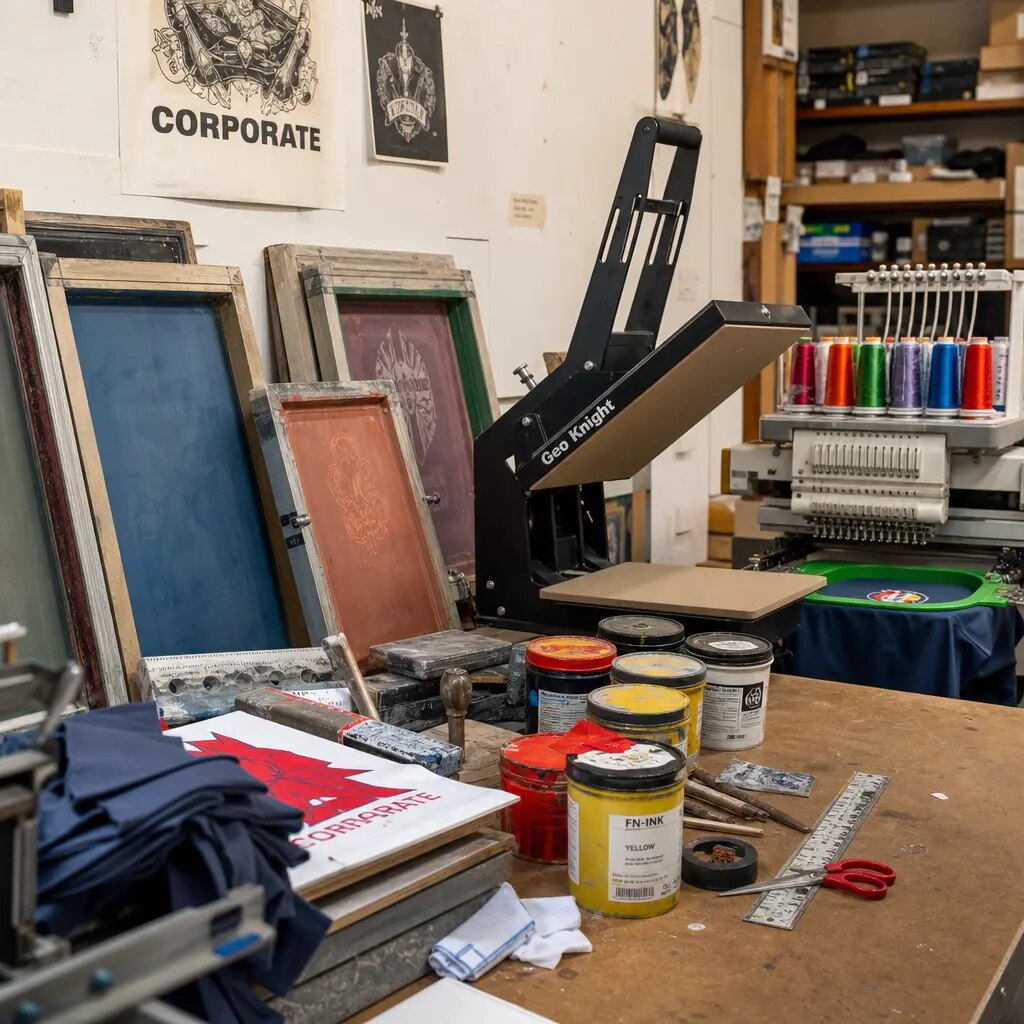
Decoration choice changes the MOQ story as much as fabric weight. One-color screen print is usually the cleanest route for low-to-mid volume because the setup is simple and the print is readable at distance. Embroidery looks more premium but raises labor time and thread cost. Heat transfer can help short runs or variable artwork, but the buyer should be strict about adhesion, wash resistance, and edge lifting. A winery buyer should decide whether the bag is a branded product or a disposable promotion before accepting the first quote.
- Baseline spec for many winery orders: 140-160 gsm cotton, 30 x 40 cm or 35 x 45 cm body, 5-7 mm cord.
- Upgrade spec when the bag carries weight: reinforced bottom seam, double-stitch stress points, heavier cord.
- Use a simple print area if the order is small; complex art pushes the MOQ and setup cost higher.
How factories build MOQ and why the number moves
Factories do not set MOQ from one number in a spreadsheet. They look at fabric purchase minimums, cutting efficiency, print setup, trim sourcing, and labor balance. If the cotton body fabric must be woven or dyed for your order, the minimum may be tied to the mill, not the sewing line. If the artwork needs two print colors, each color adds screen setup and registration control. If the bag includes a woven label, custom cord, or branded hang tag, the trim minimum can exceed the sewing minimum. That is why one supplier may quote 500 units and another 2,000 for what seems like the same bag.
The practical way to negotiate MOQ is to separate the order into decision points. You can often reduce the minimum by accepting stock natural cotton instead of custom dyed fabric, holding the bag to one print color, or simplifying the packaging. You can also ask the factory to quote breakpoints, not one number: for example, price at 500, 1,000, and 3,000 units with the same spec. That shows exactly which line item is driving the minimum and lets procurement decide whether the business case supports the next tier.
- Fabric MOQ is often the hidden driver, not sewing capacity.
- Print color count is one of the fastest ways to raise both setup cost and minimum quantity.
- Custom trims and packaging can create a separate MOQ even when the bag itself is simple.
Compare sourcing routes before you compare unit prices
A real MOQ negotiation starts with the route to market. Direct factory buying is usually the best path when the buyer wants cost control, repeatability, and the ability to lock one spec for reorders. Trading companies can help when the internal team wants one point of contact and the order includes multiple SKUs or destinations, but the buyer should expect margin built into the quote. Local decoration on imported blanks is attractive for speed, yet it often produces the highest landed cost once blank pricing, domestic labor, and freight are added together.
The wrong sourcing route makes a good quote look expensive or a bad quote look cheap. A low factory price can still fail if the line cannot control print alignment or if the fabric minimum is too high for your launch plan. A local decorator can ship quickly but may only offer generic blanks that do not match the winery brand. Buyers should compare routes by risk, speed, and repeat order fit, not just by the first invoice number.
- Best for scale: direct factory with stable fabric and repeatable decoration.
- Best for speed: local decoration on stocked blanks.
- Best for coordination: trading company or full-package merchandiser.
Build a quote that is actually comparable
Most quote disputes come from missing inputs, not bad suppliers. If one factory prices a 140 gsm bag with one-color print and another prices 160 gsm with a woven label and folded insert card, the numbers are not comparable. Send the same spec sheet to every supplier and insist that the reply breaks out fabric, print, packing, sample fee, and shipping terms. The buyer should also state the end use, because a winery gift bag and a retail SKU can justify different finishing standards even when the silhouette looks identical.
A useful quote does more than state unit price. It shows what is included and what triggers an add-on. If the supplier cannot separate sample charge from production price, or cannot explain whether the screen fee is one-time or per reorder, the quote is not ready for procurement approval. The best way to avoid later disputes is to force each quote into the same lane before anyone negotiates volume.
- Require the same incoterm from every supplier, such as FOB or EXW, before comparing numbers.
- Ask for a breakdown by fabric, decoration, packing, and export charges.
- Keep one shared spec sheet so artwork, dimensions, and finish are identical across quotes.
Approve samples like a production buyer, not a merchandiser
The sample is not just a visual approval. It is the proof that the factory can hold the spec through cutting, sewing, and decoration. For drawstring backpacks, the buyer should inspect the hand feel of the cotton, the cord run, seam consistency, print sharpness, and whether the bag closes evenly when loaded. If the artwork sits too high or too low on the panel, the problem may not show up until the bag is packed, so the sample stage is the right time to lock placement dimensions. A sample that looks close is not enough if the factory cannot repeat it in bulk.
For boutique wineries, the sample should also reflect merchandising reality. Put a bottle, a tasting brochure, or the intended gift set into the bag and see how the structure behaves. If the bottom drags or the cord digs into the panel, the design needs reinforcement before production starts. Good sample approval is specific: it records what was accepted, what was corrected, and what the factory must match in bulk. That reduces the chance of an argument when the first cartons arrive.
- Check print placement against a measured template, not by eye alone.
- Test cord function with a realistic load, not an empty bag.
- Save a golden sample with signed notes on fabric, print, trim, and packing.
Set QC thresholds before the order enters production
A production order needs acceptance criteria, not vague language like nice quality or good finish. For cotton drawstring backpacks, the buyer should define tolerances for size, stitch quality, print registration, color variation, and packaging. If the winery brand depends on a clean natural look, small stains and weave slubs may be unacceptable. If the bag is a promotional item, the team may allow more variation but still require zero critical defects such as holes, broken cords, or severe print faults. The point is to decide the threshold before the factory starts sewing, not after the shipment is already on the water.
If the supplier offers an internal inspection standard, ask how it maps to the buyer's spec. Some factories use their own AQL approach, but the buyer still needs to define what counts as major and minor defects. For this product, the expensive mistake is often not a catastrophic failure but a bag that looks slightly off across a whole shipment: print shifted, cord lengths uneven, or panels mismatched in shade. Those problems damage retail presentation even if the bags technically function.
- Set zero tolerance for holes, contamination, broken cords, and severe seam failures.
- Define measurable size and placement tolerances in writing.
- Keep one approved golden sample at the factory and one with the buyer.
Plan packing for cartons, retail, and club fulfillment
Packing can change both MOQ and landed cost more than buyers expect. A simple bulk pack in master cartons is cheapest, but retail shelves or direct-to-consumer fulfillment may need individual polybags, barcode labels, or carton marks that match warehouse receiving rules. If the winery ships to multiple club members or retail stores, carton count and carton size matter because the order needs to be easy to count, lift, and store. The wrong carton spec can create damage, even when the bag itself is well made.
The buyer should also decide whether the backpack needs a retail insert, hang tag, or care card. Those items add setup and may force a higher MOQ for printing or die cutting. If the product is seasonal, packing should protect against moisture and crushing without creating too much dead space. A compact, predictable pack-out improves freight efficiency and reduces warehouse repacking. That is usually worth more than shaving a few cents from the bag itself.
- State whether each bag ships individually bagged or bulk packed.
- Specify master carton marks, barcode placement, and carton quantity per SKU.
- Use a packing method that matches the receiving system, not just the factory's default.
Negotiate lead time and landed cost, not just the unit price
A low unit price can hide a slow schedule, and a fast schedule can hide expensive freight. For winery programs, the useful comparison is landed cost at the target date. That means the buyer needs to separate sample lead time, material purchase time, production time, and transit time. If the supplier is quoting custom fabric, ask whether yarn or dye booking is already secured. If the order is for a launch event, even a small delay in screens, labels, or cartons can push the shipment past the useful sales window.
The easiest way to negotiate is to trade specification complexity for quantity certainty. If the buyer can accept stock fabric, one print color, and simpler packaging, the factory often has room to lower the MOQ or lock a shorter lead time. If the brand needs custom color or premium finishing, expect the MOQ to rise and write that tradeoff into the buying decision. Procurement should also compare EXW, FOB, CIF, and DDP carefully, because a quote that looks cheaper may simply be missing freight, export clearance, or delivery handling.
- Ask for a lead time split by sample, production, and transit.
- Compare quotes on the same shipping term before judging price.
- Use specification simplification as the main lever when MOQ is too high.
Specification comparison for buyers
| Spec decision | Recommended option | When it fits | Buyer risk to check |
|---|---|---|---|
| Direct factory order on standard cotton | One factory, one size, one print color, 140-160 gsm cotton, basic woven cord | Best for stable reorders and buyers who can live with a standard natural or dyed fabric window | Watch for hidden setup charges, weak spec control, and MOQ tied to fabric color rather than total bags |
| Direct factory with stock fabric | Factory uses in-stock cotton body fabric and reserves trim from existing inventory | Useful for launch orders, fast seasonal drops, or tasting-room retail tests under a tighter budget | Color choice is limited and stock can disappear before repeat orders |
| Trading company with multi-factory sourcing | One sourcing partner coordinates cutting, print, packing, and consolidation | Fits buyers who need fewer vendor touchpoints and can accept a markup for coordination | Confirm who owns quality claims, because responsibility can blur between source and factory |
| Local decorator on imported blanks | Buy blank bags locally and decorate in your market | Good for very small test runs, event deadlines, or last-mile control over print approval | Blank styles are often generic and landed cost can exceed direct import at scale |
| Small cut-and-sew workshop | Low MOQ, manual production, limited automation | Works for pilot programs, special releases, and buyers who need flexibility over volume | Expect wider size variation, slower repeatability, and less consistent print registration |
| Full-package factory with custom fabric sourcing | Factory sources fabric, cords, labels, packaging, and decoration under one spec | Best when you want brand-specific fabric shade, custom packaging, and repeatable reorders | MOQ often rises because the mill and trim supplier each impose their own minimums |
| Factory with in-house print or embroidery department | One site handles cut, sew, decoration, and final pack-out | Good for mixed decoration needs and tighter control of sampling approvals | Check whether decoration capacity is shared with other products, which can stretch lead time |
| Split launch order: sample locally, bulk offshore | Approve a local sample run, then move volume to offshore production after sign-off | Useful when the first buyer needs speed but the business case needs offshore unit cost | Do not assume the local sample matches offshore bulk exactly in fabric hand, dye lot, or print sharpness |
Buyer checklist before sampling
- Define the bag use case first: retail add-on, tasting-room gift, club shipment insert, or event giveaway.
- Lock the fabric weight, target size, cord type, and whether the bag needs a flat base or internal reinforcement.
- Set the decoration method before requesting quotes: screen print, heat transfer, embroidery, or woven label.
- Ask for MOQ by line item: fabric, color, print screen, carton label, and packaging, not just one headline number.
- Request a pre-production sample or golden sample with the same fabric, print process, and trim spec as bulk.
- State packing requirements clearly: polybag or no polybag, carton count, master carton mark, and barcode format.
- Get lead time split by sample, material purchase, production, and ocean or air transit.
- Compare quotes on the same incoterm and the same defect tolerance so the lowest number is not a false comparison.
Factory quote questions to send
- What is the MOQ by fabric color, bag size, and print color, and which part of the order drives the highest minimum?
- Is the quoted price based on stock fabric or custom woven/dyed fabric, and what changes if we choose a Pantone match?
- What decoration method is included in the price, and what are the setup fees for screens, embroidery digitizing, or plates?
- Can you share the bag spec sheet with fabric GSM, cord thickness, seam allowance, and reinforcement details?
- What is the production lead time after sample approval, and how does it change if we split the shipment?
- What packing format is included, including polybag, insert card, carton count, carton size, and outer marking?
- What inspection standard do you use for size tolerance, stitch quality, print registration, and stain rejection?
- Which terms are included in the quote: EXW, FOB, CIF, or DDP, and what freight or export charges are extra?
Quality-control points to confirm
- Fabric weight matches the approved range, typically 140-160 gsm for value orders or 180-220 gsm for a heavier premium hand.
- Bag dimensions stay within the agreed tolerance, usually within plus or minus 1 cm on width and height unless the spec says otherwise.
- Drawcords run smoothly through the channel, knots are secure, and cord ends are cut and sealed cleanly.
- Print alignment is centered within the agreed print box, with no noticeable smearing, pinholes, or ghosting.
- Stitching is even, with no skipped stitches, loose threads, or weak stress points at the bottom corners and cord channels.
- Fabric shade matches the approved sample lot, and visible shade variation between panels stays within the accepted range.
- Packaging matches the confirmed pack-out, including barcode placement, carton marks, and retail inserts if required.
- Critical defects are zero-tolerance: holes, contamination, broken cords, severe print errors, or damaged seams.