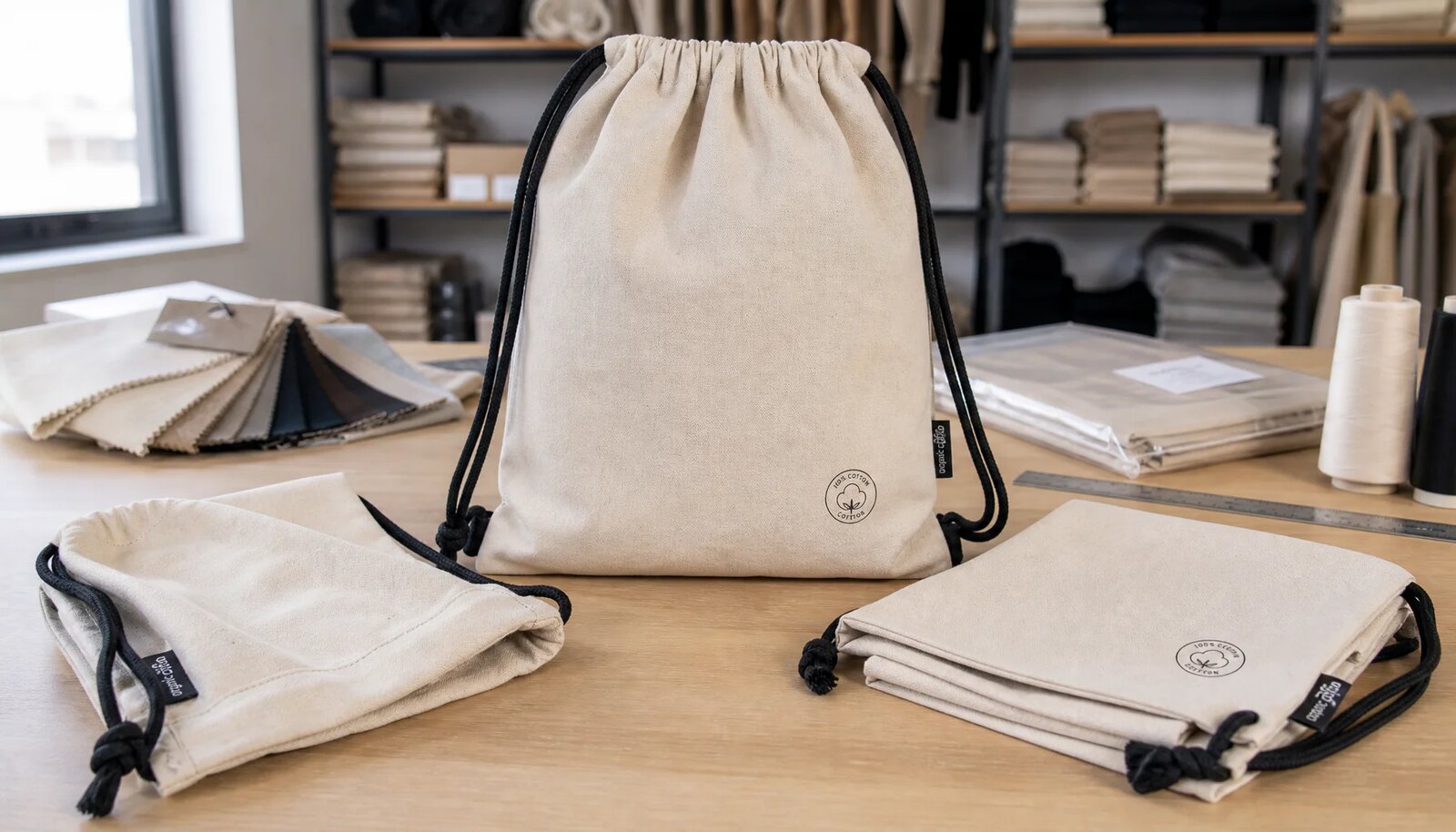
Start With the Hotel Retail Use Case
A custom cotton drawstring backpack for hotel retail is not the same product as a low-cost event giveaway. It sits in a guest-facing retail environment where the buyer expects a useful bag, the hotel expects brand presentation, and the distributor expects stable repeat production. Material selection should start with what the guest will carry: a beach towel, slippers, spa products, a water bottle, children's items, or light souvenirs.
If the bag is sold in a hotel gift shop, the fabric handfeel and print cleanliness matter as much as the basic size. If the bag is used as a welcome pack, the buyer may prioritize foldability, packing speed, and carton efficiency. A good RFQ separates these use cases before asking for a price; otherwise, suppliers will quote different fabric weights and construction levels and the lowest price will not represent the same product.
- For beach and resort retail, plan for wet towels, sunscreen, and heavier guest use.
- For spa retail, prioritize cleaner fabric, softer handfeel, and subtle logo execution.
- For kids' amenity packs, avoid very long cords and check local safety requirements.
- For welcome gifts, balance low carton volume with fabric that still feels reusable.
- For souvenir resale, select a fabric weight that supports the selling price, not only the target cost.
Choose Fabric Weight by Retail Position
The most common mistake in this product is requesting cotton without a fabric weight. Cotton drawstring backpacks can be made from light plain cotton, midweight cotton canvas, or heavy canvas, and all of them may be described as cotton bags in a supplier quote. For hotel retail, 8 oz cotton canvas, roughly 270 GSM, is often a practical middle point because it feels reusable without becoming too bulky.
A 6 oz fabric, around 200 GSM, can work for amenity kits or short seasonal programs, but it may not support a premium retail price. A 10 oz fabric, around 340 GSM, gives a stronger and more substantial feel, but it raises material cost, carton volume, and sewing difficulty. The RFQ should ask suppliers to quote at least two fabric weights using the same size, print, and packing method so the buyer can compare true cost impact.
- 6 oz cotton: suitable for light contents, lower-cost packs, and short-use programs.
- 8 oz cotton canvas: suitable for most hotel retail and reusable guest bags.
- 10 oz cotton canvas: suitable for boutique retail, resort shops, and heavier contents.
- 12 oz cotton canvas: possible for premium lines, but usually excessive for simple drawstring closure.
- Always request both oz and GSM because mills and suppliers may describe fabric weights differently.
Natural, Bleached, Dyed, or Recycled Cotton
Natural cotton is popular in hotel retail because it gives a relaxed, eco-style appearance and pairs well with black, navy, green, or terracotta logos. Buyers should understand that natural cotton can show seed specks, slight slubs, and shade variation between fabric lots. These are normal characteristics, but they must be defined in the approval sample so they do not become a dispute during inspection.
Bleached cotton gives a cleaner white base for bright print colors, but it is less forgiving during storage and transit because stains and carton dust are more visible. Dyed cotton supports brand color programs but adds lab dip approval, minimum dye lot requirements, and colorfastness risk. Recycled cotton blends may support a sustainability story, but the buyer should request composition evidence and understand that recycled yarn can have more shade variation and weaker consistency than standard cotton canvas.
- Natural cotton is best when the hotel accepts visible cotton texture and small seed flecks.
- Bleached cotton is best when logo color brightness and clean display appearance are priorities.
- Dyed cotton is best for coordinated retail ranges, but MOQ and lab dip timing increase.
- Recycled cotton blend is useful for sustainability positioning when documentation is available.
- Organic cotton should not be claimed unless the buyer and factory align on certification documents and labeling rules.
Size, Capacity, and Construction Details
For hotel retail, a typical adult drawstring backpack size is around 34 x 42 cm, with smaller versions used for children's programs and larger versions used for beach or towel packs. Size affects fabric consumption, print proportion, carton quantity, and guest comfort. A small difference, such as increasing height by 3 cm, can push consumption higher across thousands of pieces and change the quoted price.
Construction should be specified more carefully than many buyers expect. The strongest stress points are the bottom corners where the cords exit and the top channel where the drawcord slides. If the fabric is medium or heavy canvas, the channel must be sewn cleanly so the cord pulls smoothly. Reinforced corners, bartacks, adequate seam allowance, and correct cord length are inexpensive compared with the cost of guest complaints or retail returns.
- Standard adult size: about 34 x 42 cm for light retail and guest use.
- Beach-oriented size: about 38 x 45 cm when towels or sandals may be carried.
- Kids' size: reduce both bag size and cord length to improve safety and comfort.
- Bottom corner reinforcement: specify bartack, cross stitch, or reinforced triangle patch.
- Top channel opening: confirm cord moves smoothly after final sewing and pressing.
Drawcord Selection and Comfort
The drawcord is not a small trim decision. It affects closure, shoulder comfort, perceived quality, and failure rate. A thin polyester cord may reduce cost, but it can cut into the shoulder and look inconsistent on a cotton retail bag. Cotton rope or flat cotton tape usually gives a better hotel retail feel, especially when the bag is sold as a reusable souvenir or resort accessory.
Cord diameter and length should be approved on a real sample, not only listed in the quote. A 6 mm cotton rope is common for light to medium bags, while 8 mm can improve appearance on heavier canvas. Flat tape spreads pressure better on the shoulder, but it changes the look and may need a wider channel. Cord ends can be knotted, heat sealed if synthetic, tipped, or finished with metal or plastic aglets, but every finish has cost and safety implications.
- Cotton rope gives a natural retail appearance and matches cotton canvas well.
- Flat cotton tape improves shoulder comfort for heavier contents.
- Polyester cord can be acceptable for budget programs but changes the product feel.
- Metal tips look premium but may scratch other products during packing or retail display.
- Cord length should allow easy wearing without hanging excessively low when closed.
Logo Method and Artwork Limits
Screen printing is usually the most practical method for custom cotton drawstring backpacks in hotel retail. It works well for solid hotel logos, destination names, line art, and simple multi-color graphics. The buyer should specify print size, print position, Pantone references, and whether a soft handfeel is required. Large solid ink areas can make cotton canvas feel stiff, especially on lighter fabric.
Heat transfer is useful for gradients, small detail, or multi-color artwork where screen printing becomes expensive, but the handfeel and wash durability must be approved. Embroidery can look premium for a small chest-style logo, side mark, or patch, but it may pucker on lighter cotton unless backing and stitch density are controlled. Woven labels, side tabs, and cotton patches are good options when the hotel wants a subtle brand mark rather than a large front print.
- Use screen print for one- to three-color logos and clean hotel retail graphics.
- Use heat transfer only after checking handfeel, edge finish, and adhesion on cotton.
- Use embroidery for small premium marks, not large filled artwork on thin cotton.
- Use woven labels when the design needs a quieter boutique retail style.
- Require a print strike-off before bulk production when color matching matters.
MOQ Logic and Cost Drivers
MOQ is driven by fabric availability, color, print setup, trim sourcing, and packing requirements. If the buyer selects natural cotton in a standard fabric weight, MOQ can often be lower because fabric is easier to source. If the buyer requires custom dyed cotton, special drawcord color, branded cord tips, or multiple retail SKUs, the MOQ may rise because each component has its own minimum order requirement.
Cost comparison should be built around the same finished specification. A lower quote may use lighter fabric, thinner cord, no reinforcement, simpler packing, or fewer print colors. Buyers should request a quote breakdown by fabric weight, print method, packing method, and carton data. This does not mean the factory must disclose every internal cost, but it should provide enough detail for a distributor or importer to compare offers fairly.
- Fabric weight is usually the largest cost driver after order quantity.
- Custom dyed fabric adds lab dip time, dye lot MOQ, and shade control work.
- Multiple logo colors increase screen setup and print handling.
- Reinforcement adds sewing time but reduces failure at cord exit points.
- Individual retail packing adds labor, material cost, carton volume, and inspection steps.
Sample Approval Before Bulk Production
A hotel retail bag should not move to bulk production based only on a digital mockup. The buyer needs a physical sample that shows actual fabric weight, actual drawcord, actual print method, and final construction. If the fabric is dyed, a lab dip or fabric swatch should be approved before the full sample. If the logo is critical, a print strike-off should be approved before the pre-production sample.
The pre-production sample should be treated as the factory's reference standard. It should include signed or written approval of finished size, fabric color, fabric weight, logo position, print color, drawcord length, seam construction, label placement, and packing method. If the sample uses substitute fabric or a temporary cord, the buyer should not approve it as the final production standard.
- Measure finished width and height flat, then record accepted tolerance.
- Weigh or verify the fabric against the approved GSM swatch.
- Pull the cords several times to test closure smoothness and corner strength.
- Compare print color against the approved artwork or strike-off under consistent light.
- Fold and pack the sample using the final retail packing method to check creasing and presentation.
Inspection Criteria for Hotel Retail
Quality control should match the retail environment. Guests and hotel shop staff will notice stains, crooked logos, loose threads, uneven drawcords, and unpleasant odor before they notice technical fabric terms. Natural cotton makes inspection more sensitive because small dirt marks, oil stains, and shade panels can stand out under shop lighting. The buyer should define what is acceptable texture and what is a rejectable defect.
Functional testing is equally important. The lower cord exits should withstand normal pulling without tearing. Seams should not open when the bag carries typical contents. The top channel should not trap the drawcord. Print should not crack during normal folding and packing. If the bag will be used around pool or beach areas, buyers should consider basic colorfastness and rubbing checks, especially for dyed fabric and dark print.
- Reject oil stains, holes, heavy weaving defects, severe shade mismatch, and visible dirty marks.
- Set print position tolerance from fixed edges, such as top opening and side seam.
- Check skipped stitches, open seams, uneven channel width, and loose threads.
- Test cord pull at bottom exits because this is the most common stress failure.
- Check odor after packed bags are opened from cartons, especially after long transit.
Packing, Cartons, and Lead Time Risk
Packing affects both presentation and landed cost. Individual polybags protect cotton from moisture, dust, and warehouse handling, but some hotel groups prefer reduced plastic. Recycled polybags, paper belly bands, hangtags, or folded bulk packing can all work if they are defined early. Retail barcodes, SKU stickers, and carton marks should be included in the quote because they add labor and create avoidable shipment delays when handled late.
Lead time depends on fabric readiness, sample approval speed, print complexity, and packing workload. Standard natural cotton with screen print is usually faster than custom dyed cotton with multiple labels and retail barcode packing, but buyers should not rely on general promises. The safest schedule separates artwork approval, fabric confirmation, sample production, bulk cutting, printing, sewing, inspection, packing, and export booking. This makes it easier to see where delay risk sits.
- Confirm carton quantity, carton dimensions, gross weight, and net weight before PO release.
- Use moisture protection for long ocean shipments or humid warehouse environments.
- Provide barcode artwork and carton mark files before mass packing starts.
- Avoid approving packing only after production because folding method affects carton volume.
- Build buffer time for sample revision, lab dip approval, and peak-season vessel booking.
Specification comparison for buyers
| Spec decision | Recommended option | When it fits | Buyer risk to check |
|---|---|---|---|
| Main fabric weight | 8 oz cotton canvas, about 270 GSM | Most hotel gift shops, resort retail, welcome packs, and medium-price souvenir lines | Too light can feel like a promo giveaway; too heavy increases freight and makes drawcord closure stiff |
| Budget fabric option | 6 oz cotton, about 200 GSM | Short-stay event programs, staff kits, kids' amenity bags, or price-sensitive seasonal retail | Lower opacity, weaker corner strength, and higher print show-through on dark artwork |
| Premium fabric option | 10 oz cotton canvas, about 340 GSM | Boutique hotels, spa retail, beach resorts, and reusable merchandise positioned above basic souvenirs | Higher unit cost, slower sewing speed, and larger carton volume unless folded carefully |
| Fabric finish | Natural unbleached cotton or dyed canvas with preshrink control | Natural fits eco-style hotel retail; dyed fabric fits brand color programs and resort collections | Natural cotton has seed specks and shade variation; dyed lots need lab dip and bulk color tolerance |
| Drawcord material | 6-8 mm cotton rope or flat cotton tape | Cotton rope gives a casual retail look; flat tape improves comfort when the bag is worn on shoulders | Thin cord cuts into shoulders; poor cord tips fray during guest use and retail handling |
| Logo method | Screen print for solid logos; heat transfer for gradients; embroidery only for small premium marks | Screen print is the safest choice for hotel logos, location marks, and one- to three-color artwork | Large ink areas can stiffen cotton; embroidery on thin fabric can pucker without backing |
| Bottom construction | Reinforced lower corners with bartack or cross stitch | Useful when guests carry water bottles, towels, slippers, or retail purchases | Unreinforced cord exits are a common failure point during pull testing |
| Packing format | Individual polybag or paper belly band, then export carton by size and color | Polybag protects natural cotton from warehouse dust; belly band supports plastic-reduction programs | Unprotected natural cotton can collect lint, carton dust, and moisture marks during long transit |
Buyer checklist before sampling
- Define the retail use first: souvenir bag, beach bag, amenity kit, spa retail, kids' program, or staff gift.
- Specify cotton type, fabric weight in oz and GSM, finished size, seam allowance, and shrinkage tolerance.
- State whether natural seed specks, slubs, and small shade variation are acceptable for the hotel retail look.
- Provide logo artwork with Pantone references, print size, print position, and acceptable color tolerance.
- Confirm drawcord type, cord diameter or tape width, cord color, knot or tip finish, and shoulder comfort requirement.
- Require reinforced bottom corners or bartacks when the bag will carry bottles, towels, books, or retail purchases.
- Approve a pre-production sample with real bulk fabric, real cord, real print method, and final folding method.
- Set inspection criteria for fabric defects, print registration, seam strength, cord pull strength, stains, odor, and carton labeling.
- Define packing: individual polybag, recycled polybag, paper band, hangtag, barcode sticker, inner quantity, and master carton marks.
- Request quote data by MOQ tier, fabric weight, print colors, packing method, sample cost, lead time, carton size, and gross weight.
Factory quote questions to send
- Which cotton fabric do you recommend for this hotel retail use, and what are the exact oz and GSM values?
- Is the fabric natural, bleached, dyed, recycled cotton blend, or organic cotton, and what evidence can be supplied if we require a claim?
- What is the MOQ for the selected fabric color, and does the MOQ change for custom dyed cotton or special drawcord color?
- What shrinkage tolerance should we expect after cutting, sewing, and finishing, and how will you control finished size?
- Which print method is best for our logo artwork, and what is the maximum print area before handfeel becomes too stiff?
- Can you quote separate prices for 6 oz, 8 oz, and 10 oz cotton using the same size and logo so we can compare landed cost?
- What reinforcement is included at the bottom cord exits, and what pull strength test do you use before shipment?
- What is the sample timeline for a blank fabric sample, logo strike-off, pre-production sample, and revised sample if needed?
- How many pieces fit per export carton under our preferred packing method, and what are the carton dimensions and gross weight?
- What data will appear on the proforma invoice and packing list for our importer, distributor, or hotel retail warehouse?
Quality-control points to confirm
- Fabric weight checked against approved swatch, with practical tolerance agreed before production.
- Finished size measured flat after sewing, with width, height, and drawcord length recorded.
- Print position checked from top edge and side seam, not by visual centering only.
- Logo color compared against approved strike-off under consistent lighting.
- Seams inspected for skipped stitches, loose thread, open seams, and uneven seam allowance.
- Cord exits and lower corners pull tested because they carry the highest stress during use.
- Drawcord length and knot security checked so both sides close evenly.
- Natural cotton panels inspected for stains, oil marks, heavy slubs, holes, and unacceptable shade mixing.
- Packing checked for correct SKU, barcode, hangtag, carton mark, carton quantity, and moisture protection.
- Random carton weight and count checked against packing list before shipment release.