Start With the Campaign Job
A cotton drawstring backpack for a nonprofit campaign is rarely just a bag. It may identify volunteers, hold school supplies, package a hygiene kit, thank donors, support a fundraising sale, or give sponsors visible recognition. Logo placement decides whether the bag works in those moments. A layout that looks balanced on a flat mockup can disappear under a gathered drawcord, sit too low when worn, or become unreadable once a bottle and T-shirt are inside.
Treat placement as a production specification, not a design afterthought. It affects the screen size, print table setup, operator alignment, curing time, packing sequence, inspection standard, and reject sorting. If the factory receives only a JPG mockup, it may choose a position that looks acceptable on screen but does not match sponsor agreements, event photography needs, or chapter distribution instructions.
The cleanest procurement workflow is to define the bag body, printable area, artwork hierarchy, and placement tolerance before requesting the final quote. That keeps supplier prices comparable. It also prevents a familiar sourcing problem: approving a low quote, then adding a larger logo, extra sponsor versions, custom packing, or tighter QC after sampling. The quote should describe the exact campaign product, not a generic cotton bag with a logo somewhere on the front.
- Define how the bag will be seen: worn by volunteers, stacked on tables, mailed to donors, sold at retail, or photographed at events.
- Choose the primary message first: nonprofit name, campaign slogan, event title, sponsor recognition, or donation call to action.
- Use millimeter placement measurements from fixed bag features rather than relying on a screenshot or proportional mockup.
- Make sponsor size, order, and placement part of the signed artwork approval, not an informal email comment.
- Quote every version and packing route at the RFQ stage so setup charges and carton sorting are visible.
Lock the Backpack Specification
Logo placement starts with construction. A common campaign size is 34 x 42 cm finished flat measurement. It is large enough for flyers, a folded T-shirt, a bottle, and event inserts without feeling oversized for a giveaway. Smaller sizes such as 30 x 40 cm can reduce cotton consumption and carton volume, but they also shrink the safe print area and make sponsor grids harder to read. Larger bags improve usefulness, yet they increase material use, sewing time, carton size, and freight weight. Always confirm whether the supplier is quoting finished size or cutting size.
State fabric weight in both oz and GSM where possible. Cotton bag fabrics are often sold as 5 oz, 6 oz, 8 oz, 10 oz, or 12 oz, but the exact GSM depends on weave and finishing. For many budget-sensitive nonprofit campaigns, 6-8 oz cotton, about 200-270 GSM, is a practical range. Premium donor kits or retail fundraising items may use 10-12 oz cotton canvas, about 340-407 GSM, for a sturdier hand and stronger reuse value. If weight matters to the program, agree on a tolerance such as ±5%.
Small construction choices change the print zone. The top channel may be folded from the body fabric, sewn as a separate band, or built with a different stitch arrangement. Channel height, side seam allowance, bottom seam depth, and corner shape all reduce the flat area available for artwork. If the supplier changes any of those details after sampling, the same logo coordinates may no longer land correctly. The sample and bulk order should use the same construction unless a revised placement diagram is approved.
- Specify finished flat size, fabric weight, fabric color, drawcord material, cord diameter, channel height, side seam allowance, and bottom seam construction.
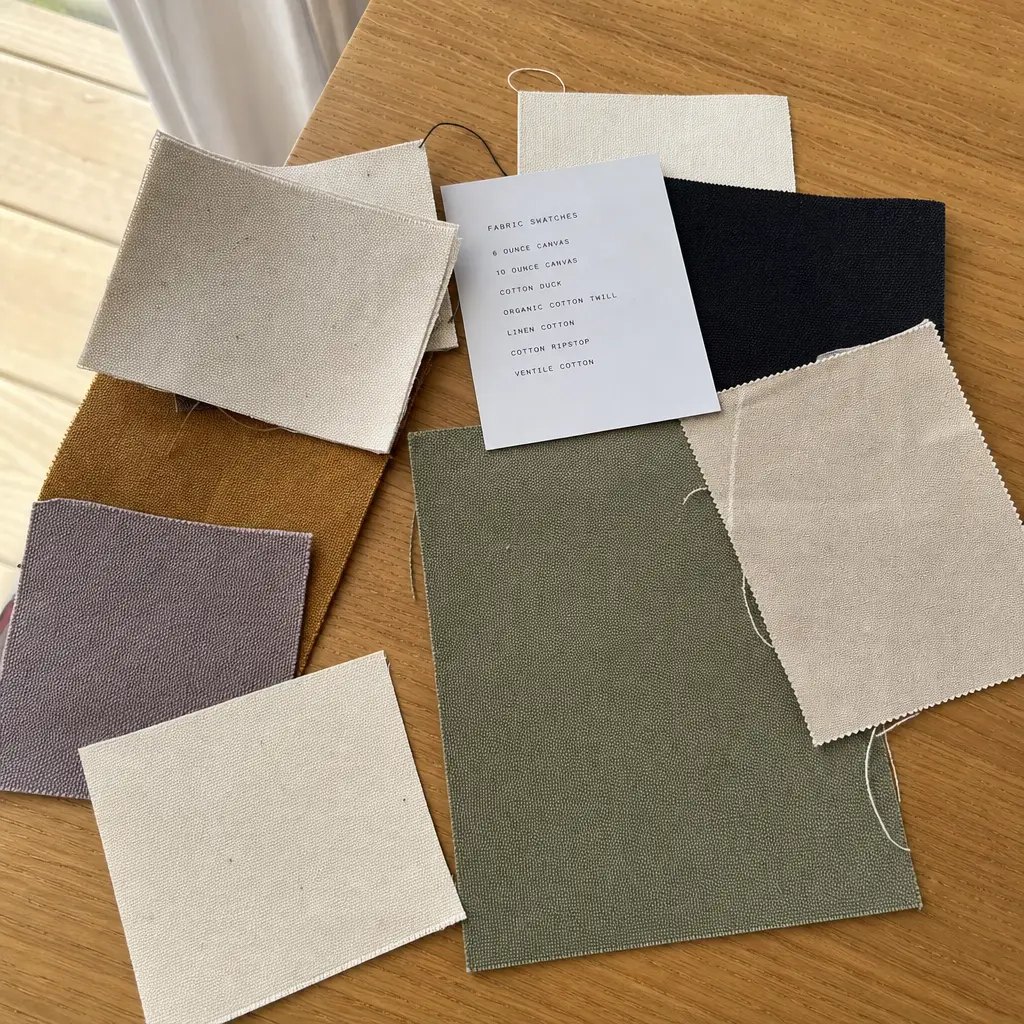
- Ask whether natural cotton seed specks, slubs, and shade variation are acceptable or should be limited for donor-facing presentation.
- For dyed cotton, require lab dip approval, bulk shade confirmation, and colorfastness discussion before fabric cutting.
- Confirm whether the same fabric and construction will be used for sample and bulk production.
- Require the supplier to identify any size, fabric, or seam changes that affect the approved print area.
Map the Logo Safe Area
For a standard 34 x 42 cm cotton drawstring backpack, the most reliable primary logo location is centered on the front panel and placed below the drawcord channel. A useful starting point is to set the top of the artwork about 90-120 mm below the top folded edge, or about 55-80 mm below the channel stitch line, depending on the bag construction. The reference point must be written into the diagram. Measuring from the folded top edge and measuring from the channel stitch line are not the same thing.
Safe-area rules keep the print flat and inspectable. On standard bags, keep key artwork at least 35 mm from side seams and at least 40 mm from the bottom seam unless the factory confirms another safe zone. Avoid folded seam allowance, thick side seams, cord-channel stitching, and double-layer areas. These areas are harder to print cleanly because the surface is uneven, ink can build up, and the operator may need to force the fabric into position.
Size the artwork for the fabric, not only for the brand guide. On a 34 cm wide bag, a horizontal campaign logo around 180-230 mm wide is usually visible without covering the whole panel. A stacked logo around 140-180 mm high can work when the artwork is simple. Fine sponsor marks, phone numbers, short URLs, and QR codes deserve extra testing. A QR code should usually be tested at actual printed size, often no smaller than 25-30 mm square, with high contrast and a short URL backup.
- Show the bag outline, centerline, channel seam, side seams, bottom seam, logo width, logo height, and all placement distances in the artwork file.
- Define whether the top reference is the folded top edge, the channel stitch line, or another repeatable construction point.
- Keep critical text and sponsor logos outside the gather zone created when the drawcord is pulled.
- Ask for maximum print area and recommended safe artwork area as two separate supplier answers.
- Test QR codes, URLs, and fine sponsor marks on the physical printed sample, not only in the digital proof.
Control Sponsor Hierarchy
Nonprofit artwork can become crowded quickly. One bag may need the organization logo, campaign name, event year, presenting sponsor, supporting sponsors, chapter name, website, QR code, and grant language. If every element fights for the same front-panel space, the design becomes noisy and the factory has less room for error. Start with a simple question: what should the recipient understand in three seconds? That message deserves the primary position.
Sponsor grids should be reviewed at actual size. A logo that looks clear on a laptop may fill in, blur, or lose thin details on textured cotton. Reversed type, tiny seals, tight registration, and thin rules are especially risky. If sponsor agreements require equal visibility, confirm the number of logos and minimum reproduction size before selecting the backpack size. When there are too many marks for a clean front panel, a back print or printed insert may protect readability better than shrinking every logo.
Version control belongs in procurement, not only in design. A national campaign may use one bag body but need different city names, local sponsors, languages, dates, or shipping destinations. Each version can require separate screens, artwork files, production scheduling, inspection counts, and carton labels. The RFQ should include a version matrix showing quantity, artwork code, fabric color, print colors, destination, and packing method for every variation.
- Assign the primary front position to the nonprofit identity, campaign name, or sponsor only when the campaign strategy requires it.
- Approve sponsor order, relative size, spacing, and exact placement before screen output or heat-transfer production begins.
- Create an artwork-version table with version code, quantity, print colors, destination, carton mark, and approval status.
- Avoid small sponsor grids unless the factory confirms minimum line weight and text height can reproduce on cotton.
- Use back-panel printing, side labels, or inserts when recognition requirements exceed the clean front-panel safe area.
Choose the Print Method
Screen printing is usually the most practical decoration method for custom cotton drawstring backpacks at nonprofit campaign volume. It suits one-color and two-color logos, solid slogans, block type, and many sponsor layouts. Screen and separation costs are real, but unit cost becomes more efficient as quantity grows. Buyers should still confirm ink type, curing method, maximum screen size, and hand-feel, especially for large solid areas that can make the panel stiff.
Heat transfer helps when artwork includes gradients, photos, full-color illustrations, or many short-run versions. The tradeoff is feel and edge durability. A large transfer can look less integrated with cotton than a screen print. Poor pressing may also create gloss variation, scorch marks, box marks, or lifting edges. If heat transfer is selected, the pre-production sample should use final fabric, final transfer material, and final press settings. Flex the panel and inspect the edges before approval.
Embroidery can work on heavier cotton canvas for a compact premium mark, but it is rarely the right choice for large front campaign messages. Stitching adds cost, takes more production time, and may pucker lighter cotton panels. The reverse side can also feel rough if the bag carries thin materials. For donor kits or retail fundraising goods, embroidery may justify the premium when the logo is small and the canvas is stable enough.
- Use screen print for solid campaign marks, limited-color sponsor layouts, large event quantities, and natural cotton presentation.
- Use heat transfer only when full-color artwork or short version runs justify the different surface feel and edge-risk checks.
- Use embroidery for small premium logos on heavier canvas, not for large slogans, QR codes, or detailed sponsor grids.
- For multi-color screen print, define acceptable registration tolerance before production starts.
- Request actual bulk-method samples for any print that includes fine text, large ink coverage, gradients, or QR codes.
Compare Quotes Fairly
Two quotes for custom cotton drawstring backpacks can look similar and still describe very different products. One may include 5 oz natural cotton, a small one-color front print, standard black cotton cord, and bulk packing. Another may include 8 oz cotton, PMS-matched ink, larger print coverage, custom cord, woven side label, paper bands, and chapter-specific carton labels. The lower unit price is not a better buy if it fails sponsor visibility, durability, or distribution requirements.
The main cost drivers are fabric weight, bag size, print area, number of print colors, number of artwork versions, print positions, drawcord type, labels, packing, and inspection requirements. A larger front print uses more ink and may require larger screens or transfer sheets. It can also need more careful handling and slower curing or pressing. Multiple sponsor versions add setup even when the total quantity is high. A 2,000-piece single-design order is not the same production job as eight versions of 250 pieces.
Ask for itemized quote lines whenever possible. At minimum, separate the bag unit cost, screen or setup charges, sample fees, courier fees, custom label charges, special packing, and version-split charges. Request carton dimensions and estimated gross weight before awarding the order, especially if goods will be air shipped, stored in a small campaign office, or sent directly to chapters. Landed cost per approved usable bag is more useful than factory unit price alone.
- Send the same tech pack, artwork file, placement diagram, version matrix, and packing instruction to every supplier.
- Compare fabric weight, finished size, print dimensions, number of colors, packing method, and carton allocation before comparing unit price.
- Ask whether PMS ink mixing, screen output, sample revisions, courier charges, and special labels are included or extra.
- Request carton quantity, carton dimensions, gross weight, inner bundle count, and destination labeling plan.
- Evaluate total landed cost and reject risk, not only the lowest quoted FOB or ex-works unit price.
Build MOQ Around Components
MOQ for cotton drawstring backpacks is driven by more than the sewing line. Standard natural cotton with a one-color print may be possible at a few hundred pieces depending on the supplier and season. Custom dyed fabric, custom drawcord, woven labels, back printing, individual packing, or complex version sorting can push the practical MOQ higher. Each component may have its own minimum purchase lot or setup cost.
Version splits are a common nonprofit surprise. A buyer may request 3,000 backpacks, then later divide them into 12 chapter versions with different sponsor lists. The factory may still cut and sew efficiently, but printing, inspection, and packing become 12 smaller jobs. That can affect price, lead time, and error risk. The quote should show whether pricing is based on total order quantity or quantity per artwork version.
MOQ should also be discussed against the reorder plan. If the campaign repeats annually, ask whether screens, digital artwork files, woven label specifications, or color standards can be retained, and for how long. Do not assume a natural cotton shade or dyed cord will match a previous production lot months later. For pilot campaigns, keep the bag body standard and customize the print first. Save custom fabric, custom cord, and private labels for programs with confirmed repeat demand.
- Separate MOQ by total order, fabric color, artwork version, print position, cord type, label type, and packing format.
- Ask whether small artwork versions can share one sewing run but pay separate print setup charges.
- Avoid custom dyed cotton or custom cord when campaign quantity and reorder demand are uncertain.
- Confirm whether reorder pricing assumes the same artwork, same fabric weight, same packing, and same destination structure.
- Document how the supplier will store artwork files, screens if applicable, approved samples, and color references for repeat orders.
Approve Samples by Measurement
Do not approve a nonprofit campaign backpack only from a photo. The sample needs to confirm size, fabric hand, fabric weight class, drawcord movement, seam construction, logo placement, print color, print method, and packing. If the schedule allows only a layout sample with substitute material, the approval record should say so clearly. Fabric, color, hand-feel, and final print performance remain open until the production sample or first bulk pieces are checked.
Measure the sample flat on a table without stretching it. Record finished width and height, channel height, visible side seam allowance, logo width, logo height, distance from top reference to logo, distance from side seams, and distance from bottom seam. The approved placement diagram should match the physical sample. Photos help communication, but millimeter measurements are what factory operators and inspectors can repeat.
Test the sample in the way the campaign will use it. Pull the drawcord several times and confirm both sides move smoothly. Put typical contents inside and check whether the logo remains visible. Rub the print with a dry white cloth to detect loose ink or poor curing. Flex large printed areas to check cracking or stiffness. Scan QR codes from a normal user distance under indoor lighting. If those checks fail, revise the artwork, method, or placement before bulk production.
- Keep one signed sample with the buyer and one with the supplier or inspection team as the physical production reference.
- Record approved dimensions and tolerances in the sample approval form, not only in email comments.
- Confirm whether the sample uses final bulk fabric, final ink, final drawcord, final label, and final packing.
- Check the bag filled with realistic campaign contents, not only empty and perfectly flat.
- Do not release bulk production until artwork version, placement, print color, and packing instructions are approved in writing.
Set QC Thresholds Early
Quality control should be written before bulk production starts. For basic cotton drawstring backpacks, a finished-size tolerance of ±10 mm is often realistic unless the buyer and supplier agree to tighter control. For logo placement, ±5 mm from the signed sample or placement diagram is a practical target for campaign merchandise. If the buyer requires tighter limits, the supplier should confirm feasibility and possible cost impact before order placement.
Defect classification prevents arguments at final inspection. Critical defects include wrong artwork, missing required print, unsafe contamination, unusable drawcord, or a severe open seam that makes the bag nonfunctional. Major defects include visibly crooked print, artwork outside the approved safe area, poor ink adhesion, unreadable QR code, dirty front panel, wrong carton count, or wrong version allocation. Minor defects may include small loose threads, minor natural cotton specks, or slight shade variation within the approved standard.
Inspection should cover loose goods and packed cartons. Product checks include size, print placement, print color, adhesion, registration, seams, loose threads, stains, odor, drawcord function, and overall appearance. Carton checks include quantity, version code, PO number, carton number, destination code, inner bundle count, packing method, and carton marks. If the buyer uses an AQL inspection plan, the acceptable quality limits and defect classes should be stated on the purchase order or inspection booking.
- Use the approved sample, placement diagram, artwork file, and packing list as inspection references.
- Measure logo placement from the same reference point used in sampling: top edge, channel stitch, side seam, bottom seam, or centerline.
- Perform dry rub and tape-pull checks on screen prints before cartons are sealed.
- Check heat transfers for edge lifting, gloss variation, press marks, scorch marks, and cracking after flexing.
- Verify mixed-version cartons carefully because correct product in the wrong destination carton can still fail the campaign.
Plan Packing and Lead Time
Packing should match the nonprofit’s distribution model. Bulk bundles are efficient when a central team will insert brochures, shirts, bottles, badges, or donor materials. Individual polybags protect each bag from dust and handling, but they add material cost, labor, plastic use, carton volume, and unpacking time at events. Paper bands or bundle ties can be a good middle option when the buyer wants cleaner receiving without full individual packaging.
Carton planning matters for chapter campaigns. Each carton label should show campaign name, PO number, artwork version, destination code, quantity, carton number, and gross weight if required by the receiver. If multiple versions ship together, the packing list should separate versions by carton, not only by total quantity. Heavy canvas bags can make cartons difficult to handle, so ask the supplier to confirm carton gross weight and whether it fits the receiving site’s limits.
Lead time risk often comes from approvals, not sewing. Late sponsor logos, unclear Pantone references, changing QR codes, new chapter versions, and revised packing instructions can delay sample approval and screen production. A realistic timeline includes artwork review, sample making, sample transit, approval, material purchase, cutting, printing, sewing, finishing, inspection, packing, and shipment handover. State the required delivery date and latest acceptable inspection date in the RFQ so the supplier can flag impossible schedules early.
- Choose bulk packing for local kitting, individual packing for donor shipping or retail resale, and chapter-specific cartons for distributed programs.
- Confirm carton dimensions, carton gross weight, pieces per carton, inner bundle count, and carton mark layout before freight booking.
- Require destination and version codes on carton labels when goods ship to chapters, schools, events, or fulfillment partners.
- Clarify whether production lead time starts from deposit, artwork approval, sample approval, material arrival, or final packing confirmation.
- Schedule inspection before goods leave the factory, especially for mixed sponsor versions or fixed-date campaign events.
Specification comparison for buyers
| Spec decision | Recommended option | When it fits | Buyer risk to check |
|---|---|---|---|
| Base bag size | 34 x 42 cm finished size is a practical campaign standard; confirm whether tolerance is ±10 mm or tighter | Volunteer kits, school outreach, donor gifts, event giveaways, and basic fundraising merchandise | A quoted 34 x 42 cm cutting size is not the same as finished size; shrinkage, seam allowance, and drawcord channel depth reduce the printable panel |
| Main logo position | Centered on front panel; top of artwork about 90-120 mm below top edge or 55-80 mm below channel stitch on a 34 x 42 cm bag | Primary nonprofit identity, event name, campaign slogan, or donor-facing message | If placed too high, the logo wrinkles when the drawcord gathers; if placed too low, it can be hidden by the wearer’s back, tables, or contents |
| Safe print area | Keep key artwork at least 35 mm from side seams, 40 mm from bottom seam, and below the gathered channel zone | Most flat cotton drawstring backpack panels with side seams and bottom seam | Printing into seam allowance, double-layer areas, or uneven fabric causes distortion, ink build-up, poor registration, and inconsistent inspection results |
| Logo size for 34 x 42 cm bag | Horizontal logo 180-230 mm wide; stacked mark 140-180 mm high; QR code usually no smaller than 25-30 mm square after testing | Readable campaign branding without excessive ink coverage | Oversized solid ink blocks can stiffen the panel, slow curing, increase cracking risk, and make defects more visible on textured cotton |
| Fabric weight | 6-8 oz cotton, about 200-270 GSM depending on weave and finishing; 10-12 oz canvas, about 340-407 GSM, for premium reuse | 6-8 oz for cost-controlled campaigns; heavier canvas for donor kits, retail resale, or repeated use | Very light cotton may distort, show strike-through, or feel disposable; heavy canvas increases unit cost, carton gross weight, freight, and storage volume |
| Print method | Screen print for 1-3 solid colors; heat transfer for short-run full color; embroidery only for compact marks on heavy canvas | Screen print suits most nonprofit logo and sponsor layouts at campaign volume | Heat transfer can feel plasticky or lift at edges; embroidery can pucker cotton; multi-color screen print needs registration tolerance and approval samples |
| Sponsor hierarchy | Campaign identity in primary front position; sponsor grid smaller below, on back panel, or on side label | Programs with donor recognition, chapter sponsors, presenting sponsors, or local versions | Unreadable sponsor marks create approval disputes; sponsor order, size, and spacing must be signed off before screens are made |
| MOQ logic | 300-500 pcs may be possible for standard natural cotton and one-color print; 1,000+ pcs is more common for dyed fabric, custom cord, woven labels, or multiple components | Pilot campaigns, chapter runs, national events, and repeat programs | MOQ may apply per fabric color, artwork version, packing method, cord color, or label type, not just total PO quantity |
| Packing format | Bulk bundles for event kitting; individual polybag, paper band, barcode, or carton allocation only when distribution requires it | Bulk receiving, retail resale, donor shipping, chapter distribution, or fulfillment warehouse routing | Packing changes labor, carton count, plastic use, warehouse handling time, carton marks, and the time needed to unpack goods at campaign sites |
Buyer checklist before sampling
- Define the campaign use case: volunteer identifier, donor gift, school outreach kit, fundraising merchandise, conference giveaway, chapter distribution, retail resale, or one-day event supply.
- Confirm expected contents and load: flyers only, T-shirt and bottle, school supplies, hygiene kit, registration pack, donor mailing insert, or merchandise bundle.
- Specify finished size in centimeters, acceptable size tolerance, fabric weight in oz and GSM, cotton type, weave, drawcord material, cord diameter, channel depth, and seam construction.
- State whether the quoted size is finished flat measurement after sewing, before washing, after washing, or based on cutting dimensions.
- Provide vector artwork, Pantone or brand color references, minimum text height, QR code target size, sponsor order, and a placement diagram in millimeters.
- Define the measurement reference for logo placement: top folded edge, drawcord channel stitch line, side seam, bottom seam, or vertical centerline.
- Keep important artwork outside the drawcord gather zone and at least 35 mm from side seams and 40 mm from the bottom seam unless the factory approves a different safe area.
- List every artwork version, language version, chapter version, sponsor list, fabric color, drawcord color, and packing allocation with quantities before requesting a quote.
- Confirm print method, ink type, number of colors, screen size, curing method, color tolerance, registration tolerance, and acceptable logo hand-feel.
- Ask whether samples use final bulk fabric, final drawcord, final ink, final label, final packing, and final artwork scale, or substitute materials for layout only.
Factory quote questions to send
- What finished bag size, cutting size, fabric weight, yarn construction if known, weave, shrinkage expectation, and size tolerance are included in the quote?
- Is the quoted dimension measured flat after sewing, after washing, or before sewing, and do you apply ±10 mm finished-size tolerance or another standard?
- What is the maximum print area and what is the recommended safe artwork area for this exact bag size, side seam allowance, and drawcord channel construction?
- Can you mark the proposed logo placement in millimeters from the top edge or channel stitch line, left and right side seams, bottom seam, and centerline before sampling?
- What fabric weight tolerance do you quote, such as ±5% or another range, and how will fabric weight be verified on bulk material or finished samples?
- Are screen charges, film or digital output charges, PMS ink mixing, artwork separation, setup charges, sample charges, revision samples, and courier fees included or itemized separately?
- Will the pre-production sample use bulk fabric, final drawcord, final ink, final print method, final label, and final packing, or are any elements substitute materials?
- What MOQ applies separately to natural fabric, dyed fabric, custom drawcord, woven side label, screen print, back print, heat transfer, embroidery, and individual packing?
- If we split the order by chapter, language, sponsor list, destination, or campaign date, how does pricing change per artwork version and per setup?
- What print method do you recommend for this artwork, and what risks do you see with fine text, QR codes, gradients, thin lines, halftones, or large solid ink coverage?
Quality-control points to confirm
- Finished bag size should normally be controlled within ±10 mm for basic cotton drawstring backpacks unless the buyer approves a wider tolerance in writing.
- Fabric weight should be checked against the approved specification and supplier tolerance, commonly expressed as GSM or oz with an agreed percentage tolerance.
- Main logo placement should stay within ±5 mm from the approved sample or signed placement diagram for campaign merchandise where brand alignment matters.
- Logo angle should be checked against the bag centerline or top seam with the panel laid flat and not stretched; visibly tilted prints should be classified before production.
- Print color should be checked against a signed physical sample, Pantone drawdown, or approved ink reference under consistent lighting, not only against a screen proof.
- Multi-color screen print registration should be agreed before production; small sponsor text should not appear blurred, doubled, or filled in at actual print size.
- Screen print adhesion should pass a basic dry rub and tape-pull check before packing, especially on natural, brushed, or slub cotton surfaces.
- Heat transfer prints should be checked for edge lifting, press marks, gloss variation, scorched fabric, cracking, and distortion after the panel is flexed by hand.
- QR codes, short URLs, phone numbers, and donor-facing contact details should be tested on actual printed samples before approving bulk production.
- Drawcords should pull smoothly from both sides; cord ends should be knotted, sewn, tipped, heat sealed if synthetic, or otherwise finished according to the specification.