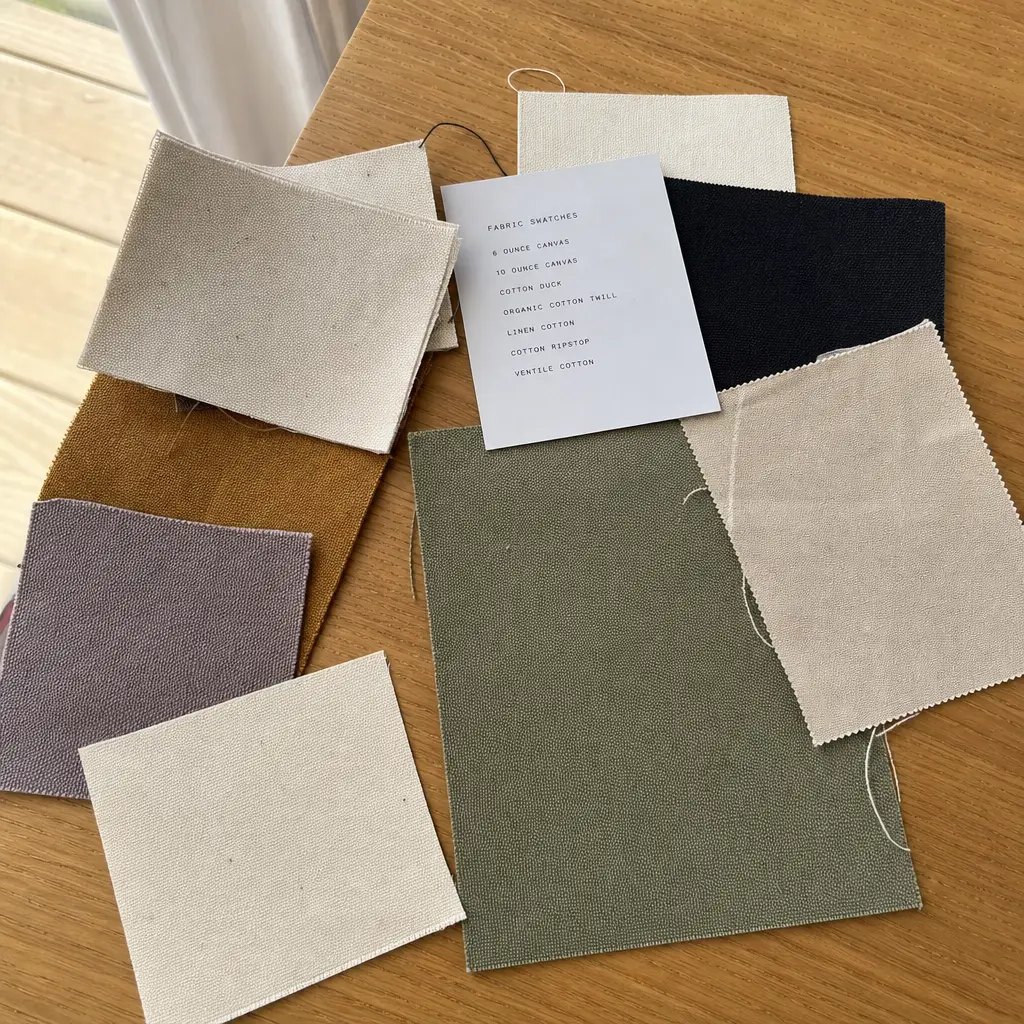
Start with the carton, not just the bag
For custom cotton drawstring backpacks, carton planning affects freight cube, warehouse handling, damage risk, and even whether a quote is truly comparable. A low sewing price can turn into a weak landed cost if the carton is oversized, the packing count is loose, or the factory assumes a different fold method than your receiving team expects. For procurement buyers, the carton is part of the product spec, not a logistics afterthought.
This is especially true for tech startups. These bags usually go into onboarding kits, launch events, conference giveaways, or gift packs, so the order is often tied to a deadline and a visible brand moment. If the product arrives wrinkled, short-counted, or hard to receive, the problem is operational and reputational at the same time.
A practical rule is to request the same packing format from every supplier before you compare price. Ask for one stated bag size, one packing method, one carton count, and one carton size. If a factory wants to propose a different pack-out, require it to show the freight impact in writing. That keeps the comparison honest.
The most useful carton data is simple: units per carton, carton dimensions, gross weight, and whether the bags are flat-packed, folded, or individually wrapped. If a supplier cannot give that information early, landed-cost planning will stay noisy until after sample approval or even after the PO is issued. That is avoidable risk.
For repeat orders, carton consistency matters as much as unit price. If the first order ships well, keep the same carton logic unless there is a clear reason to change it. Changing the fold direction, pack count, or carton label format between runs often creates more trouble than savings.
The real buying discipline is to make the final shipment countable and scannable when it reaches the dock. If the carton spec is not precise enough to book freight, it is not precise enough for approval.
Use this section as the baseline: product spec, packing method, carton spec, and freight assumptions belong in the RFQ from day one.
- Compare quote sheets by carton dimensions, gross weight, and units per carton.
- Treat packing style as part of the product spec.
- Use one carton plan across suppliers for a fair landed-cost comparison.
- Ask whether the bag is packed flat, folded, or with inserts, because cube changes.
- Make carton marks part of approval so receiving can match the PO without guesswork.
Choose fabric weight by use case
The workable cotton range for drawstring backpacks usually falls around 140–180 GSM, but the right choice depends on how the bag will be used. Around 140–150 GSM fits lightweight promo use: paper inserts, small swag items, and short-life event distribution. Around 160–180 GSM is a better fit when the bag needs to feel more retail-ready, carry a notebook or bottle, or survive repeated reuse.
For startup buyers, the use case is the fastest decision filter. A bag used once at a conference does not need the same hand feel as a bag that will be reused in an office or at future events. If the product is meant to be kept, ask for the heavier end of the range and a cleaner finish on the hems and cord channel. If the product is disposable from a brand campaign perspective, keep weight under control so freight stays efficient.
Fabric weight also changes how the decoration reads. Lighter cloth can show more shadowing or fill-through under dense ink, especially with dark artwork on pale fabric. Heavier cloth keeps its shape better and often looks more premium, but it adds unit weight and carton cube. That is why you should ask for both measured fabric weight and finished bag weight, not just a catalog description.
Natural, bleached, and dyed cotton should be treated as separate sourcing choices. Natural cotton can support a more rustic or eco-minded presentation, but shade variation is common. Bleached cotton gives a cleaner print base. Dyed cotton can support brand color goals, but you should confirm colorfastness, lot consistency, and whether dye changes the final handle or cost in a meaningful way.
Do not approve a GSM number in isolation. Ask what the supplier recommends for the actual contents, then ask for a sewn sample and a measured finished weight. A good factory should be able to explain the recommendation in terms of use, print behavior, and freight impact, not just price.
Also check how the fabric behaves after sewing and cinching. A swatch can look fine while a finished bag puckers at the seams or shows crease marks at the fold. The sample should be evaluated in the same way the end user will handle it: filled, closed, carried, and viewed in normal light.
- Use 140–150 GSM for lightweight promotional packs.
- Use 160–180 GSM for premium gifting or repeated use.
- Confirm whether the cloth is natural, bleached, or dyed.
- Request the finished bag weight, not only fabric weight.
- Check for seam puckering and print shadowing after cinching.
Match decoration to artwork and run size
Decoration choice should follow artwork complexity, quantity, and durability expectations. Screen print is usually the best first option for simple logos and repeatable runs because it is stable and cost-efficient. Heat transfer can make sense for short runs or variable names, but the buyer should check edge quality, hand feel, and adhesion. Embroidery can look premium, but it changes the fabric hand, adds needle perforations, and is not always the right choice for thinner cotton or budget packs.
The common mistake is approving art only as a digital proof. A logo can look clean on screen and still fail once it is scaled to the bag panel, pushed near a seam, or placed across a fold. In the RFQ, specify print area, color count, decoration method, and whether the print is applied before or after sewing. If those details are missing, two quotes may look similar while actually assuming different production steps.
Ask for the exact visual tolerance you are expected to accept. For example, if the logo lands a few millimeters off center or has a soft edge, is that a reject or acceptable? That standard should be written before production starts. Corporate buyers, event teams, and brand teams often view the same bag differently, so the acceptable range needs to be explicit.
It also helps to define the viewing condition. A bag handed out at an event, seen from arm’s length, or photographed on stage does not need the same finish as a close-view retail item. For startup launches, the visual standard may be driven more by photography and live presentation than by long-term abrasion. Say that in the spec so the factory optimizes for the actual job.
Ask whether the factory prints on cut panels or on sewn bags. Both are common, but the placement risk differs. Printing on cut panels can give cleaner alignment if the line is disciplined, while printing on sewn bags may reduce some assembly variation but limit placement. The important part is to know the route in advance and approve a sample made through the same route.
Decoration pricing should also show setup charges clearly: screens, transfer setup, artwork revisions, and extra colors. Hidden setup costs are one of the fastest ways a quote stops being comparable.
Use the sample to test more than the logo. Check whether the print survives handling, whether the bag keeps its shape when loaded, and whether the logo still looks centered when the cords are cinched.
- Screen print for simple one- to two-color logos.
- Heat transfer for short runs, names, or complex graphics.
- Embroidery only when the fabric thickness and design justify it.
- Confirm whether printing happens on cut panels or finished bags.
- Set a visual tolerance for logo position before production starts.
Build MOQ around real setup cost
MOQ should be discussed by colorway, print version, and packing format. A supplier may advertise a low total order quantity, but if you split the order across three logo versions and two fabric colors, the effective setup cost rises quickly. That is where headline MOQ numbers become misleading: they ignore how many production steps are repeated on the floor.
The cleaner approach is to ask for MOQ by stable production unit: one fabric color, one decoration method, one carton plan. If you need a starter run for a startup kit or regional launch, request one clean version first, then ask for incremental pricing for additional versions. That shows whether the assortment plan is operationally efficient or simply convenient for marketing.
Material MOQ and finished-goods MOQ are not the same thing. A factory might sew a relatively small number of bags if the cloth is already in stock, but the cost can change quickly if the fabric color must be dyed, the cord is custom, or the label is private. Ask which component drives the minimum so you know where the real constraint sits.
For a first order, simplicity usually wins. One color, one print, one pack format, and one carton spec is the easiest way to get reliable pricing and lower production confusion. Then use that first run as the benchmark for the next reorder.
If the supplier can hold screens, transfer files, or reserved material for a short period, ask about it. Reuse on a reorder can reduce setup cost and simplify replenishment, but only if the supplier actually manages that process. Some do; some restart from zero every time.
The key judgment is whether the MOQ is commercially desirable or operationally efficient. Marketing may want three colors; the line may be economical at one. Surface that mismatch early, before sample approval creates false momentum.
A buyer-friendly MOQ conversation sounds like this: one version to start, clear add-on pricing for the next version, and a known path to reorder without reworking every setup step.
- One color and one print version usually gives the cleanest price.
- Multiple artwork versions increase setup and QC load.
- Ask for separate MOQ logic for fabric, print, and labels.
- Keep the first order simple if you need a pilot run.
- Check whether screens or artwork files can be reused on reorder.
Verify supplier route and factory proof
A direct factory is usually the strongest route when carton control, repeatability, or mixed packing by SKU matters. A trading company can still be useful for flexibility or smaller trial volumes, but the buyer should verify carton specs from the actual production source. A sourcing agent may help coordinate communication, yet the final pack-out evidence should still come from the plant that sews and packs the bags.
The real question is not which route sounds cheapest. It is which route can prove the final pack plan. If a supplier cannot provide carton size, finished unit weight, units per carton, and packing style without several follow-up messages, the landed-cost estimate is not mature enough yet. For deadline-driven startup orders, that uncertainty becomes a schedule and freight problem.
Ask for factory name, pack-out location, and who signs off carton count. That one request often separates a real manufacturing offer from a loose sales quote. If carton planning matters to your receiving team, request packing photos or a sample carton before you release the order.
Direct factory coordination also helps when you need multiple delivery points. Startup teams often ship to headquarters, co-working spaces, or event venues at the same time. When the pack-out owner can print labels cleanly and separate batches at the source, the receiving side has less sorting work.
Treat the route decision as a control question. Which supplier can make the carton plan visible, stable, and easy to verify? That answer usually matters more than the lowest unit price on the first page of the quote.
If the supplier claims the factory is strong, ask for evidence: a carton spec sheet, a packed sample photo, or a pre-production pack test. Real proof is more useful than sales language.
For a buyer, the safest route is the one that can show the product, the pack-out, and the carton behavior before money is committed.
- Direct factory: best for carton consistency and repeat orders.
- Trading company: useful for flexibility, but verify the plant data.
- Sourcing agent: helpful for communication, not proof.
- Ask for pack-out photos when carton count matters.
- Choose the route that can prove the packing plan.
Ask for quotes that read like production plans
A usable quote should look like a production plan, not a sales flyer. It needs bag size, fabric GSM, cord type, print method, carton count, outer carton dimensions, gross weight, sample lead time, bulk lead time, and packaging assumptions. Without those fields, you cannot compare suppliers cleanly or model freight risk with confidence.
The quote should also separate included items from optional ones. Some factories include one logo screen and basic packing, while others charge extra for each color, label change, or carton mark revision. If the scope is unclear, the true cost often appears only after sample approval or after production starts.
Use one quote format for every supplier. If the field order changes from one proposal to the next, spend the time to normalize it before comparing. That keeps the decision on the manufacturing assumptions, not on presentation style.
Ask for carton loading efficiency as part of the quote. A lower unit price can disappear if the carton is oversized, the bag is packed too loosely, or the pack-out is not efficient. The carton data should be detailed enough for your freight partner or warehouse team to work from it directly.
Revision policy also belongs in the quote. If artwork, carton labels, pack format, or destination instructions change after approval, what happens to cost and lead time? That should be visible before the PO is released.
Carton construction matters too. Single-wall, double-wall, and reinforced export cartons are not interchangeable, especially if the bags will stack, move through multiple hands, or sit in transit. Buyers often wait until a carton fails before asking about board strength; it is better to ask in advance.
If a quote does not show the carton plan, it is not really complete. Mark missing fields and ask again rather than filling in assumptions.
This is one place where a disciplined RFQ saves real money: it turns hidden packing assumptions into visible buying choices.
- Demand the same quote format from every supplier.
- Separate unit price, print setup, packaging, and freight assumptions.
- Use carton dimensions as part of quote acceptance.
- Require line items for extra colors, labels, and carton mark changes.
- Ask what happens to price and lead time if specs change after approval.
Use sample approval to test structure and pack-out
The pre-production sample is where the most avoidable problems surface. For drawstring backpacks, the buyer should check more than logo placement. Confirm cord length, channel function, seam strength, top hem finish, opening width, and whether the print stays flat after cinching. A sample judged only on artwork can still fail on function or handling.
A better sample approval uses measurable points. Set a tolerance window for bag size, a placement window for the logo, a stitch expectation for the seams, and a finishing standard for the cord ends. Once those points are written down, it is much easier to manage production drift later because the sample becomes a documented reference instead of a memory.
Do not stop at the loose bag. Ask for the packed sample carton too. Verify the count, carton marks, and fold method. If the warehouse will rely on barcode labels or multiple delivery addresses, the carton sample matters as much as the product sample.
For startup buyers, sample evaluation should include use behavior. Load the bag, cinch it, check whether the logo still reads well, and look at how the bag hangs. Some issues only appear once the cords are tightened or the bag is carried. A factory that can supply a true pre-production sample is much easier to work with than one that only sends a decoration proof.
Keep a signed sample record with photos and measurements. That record becomes the reference if the bulk order arrives with smaller print placement, different cord length, or weak seam finishing. It also helps with receiving, because the warehouse can check the same reference points.
If the order is for a public-facing event or launch, view the sample under the same lighting the end user will see. Office light, stage light, and warehouse light can change how cotton texture and logo color read. The point is not perfection; it is to make sure the sample matches the actual use environment.
A sample approval that covers both bag structure and carton behavior is usually enough to prevent the most common bulk surprises.
- Approve one pre-production sample with final fabric, cord, and label.
- Measure bag dimensions after sewing, not only on cut panels.
- Keep a signed sample photo set for size, print, and carton reference.
- Check the packed sample carton, not just the loose bag.
- Record tolerance windows for stitch, print, and cord finishing.
Pack for freight and receiving, not just for appearance
Packing decisions should reflect export freight and warehouse handling. Flat-packed bags are usually the best default because they reduce carton bulge and keep counts stable. Individual polybags make sense for retail presentation or hygiene, but each bag adds labor, waste, and often cube. For onboarding kits, event kits, or internal distribution, many buyers can skip polybags and keep the pack cleaner.
Count discipline matters as much as presentation. Define units per inner pack, units per outer carton, net and gross weight targets, and the exact carton mark text. If a receiving team gets mixed counts or unclear labels, it wastes time recounting product instead of distributing it. That is a real cost even if it never appears on the quote.
Think through handling conditions. If cartons will be moved by hand, stacked in a tight room, or delivered to several locations, keep the box size and gross weight manageable. A carton that maximizes cube can be awkward to lift or stack. Freight efficiency matters, but so does whether the receiving team can move the cartons safely and quickly.
If the bags will sit in storage before distribution, ask about crease risk and print rub. Tight packing can leave fold marks or create rubbing between printed surfaces. Tissue, a small fold change, or a revised inner pack may be worth the extra cost if appearance matters on delivery day.
Ask whether the factory does a carton drop or compression check before mass packing. It is a simple way to catch weak tape closures, poor box seams, or bulging count errors before the shipment is sealed. That is cheap insurance when the order is tied to a launch date.
Label logic matters when shipments go to multiple destinations. Clear destination marks reduce sorting errors and keep the right cartons from being opened first. For startups shipping to a headquarters office and an event venue in the same week, that detail prevents avoidable confusion.
The pack-out should make receiving easier, not harder. If the carton plan adds sorting labor or rework, it is not optimized yet.
- Use flat packing unless retail presentation requires polybags.
- Standardize carton marks with SKU, color, quantity, and PO number.
- Keep gross weight manageable for manual handling and pallet loading.
- Request packing photos before shipment if the order is time-sensitive.
- Use tissue or spacing only when fold marks or print rub are a real risk.
Manage lead time around approvals
Lead time risk usually starts before sewing. Artwork confirmation, screen making, sample approval, carton approval, and final packing sign-off can all stop the clock. If the order is tied to a fixed launch or event, build buffer into every approval gate instead of trusting only the bulk sewing timeline.
A realistic plan includes sample development, bulk production, packing, and carrier handoff. The exact timing depends on order size, print complexity, carton configuration, and whether materials are already in stock. A supplier that promises speed without asking about the carton plan may not be quoting the real critical path.
Material readiness matters too. Fabric, cord, labels, and cartons may not be ready together. If one component needs to be ordered or dyed, the schedule stretches. Ask which items are already in stock and which ones trigger a lead-time swing.
Freeze the launch spec early. Even small changes to logo size, bag color, carton marks, or destination instructions can trigger rework. For event-driven orders, define the latest safe change date and circulate it to marketing, procurement, and logistics so no one assumes a last-minute revision is harmless.
If timing is tight, ask whether the factory can split the order into an early pilot batch and a later balance shipment. That can help when you need a small quantity for a launch and the rest later for replenishment. Not every plant will do it, but the answer tells you a lot about production control.
It is also useful to ask for milestone dates: sample ready, carton approved, production start, packing complete, and carrier handoff. Those checkpoints make delays visible before they become a missed event.
The shortest timeline is not always the best timeline. The safest one is the timeline with frozen specs and clear approvals.
- Freeze artwork early to avoid rework.
- Lock carton specification before bulk packing starts.
- Reserve schedule buffer for multiple colors or labels.
- Ask whether fabric, cord, and cartons are already in stock.
- Define the latest safe change date for all stakeholders.
Compare landed cost from the carton outward
The cleanest way to compare quotes is to build landed cost from the carton outward. Start with unit price, then add print setup, packaging labor, carton materials, inland handling, and freight based on actual carton dimensions. A lower sewing price can disappear quickly if the cartons are oversized or the pack-out is inefficient.
Keep the comparison assumptions identical across suppliers. If one quote is FOB with compact cartons and another is EXW without packing detail, the comparison is not real. Ask every supplier to quote the same spec, the same carton count, the same inner-pack format, and the same packaging method. That is how procurement teams separate real savings from paper savings.
A simple comparison sheet helps: bag size, fabric GSM, print method, number of colors, cord type, units per carton, carton dimensions, gross weight, packaging type, lead time, and payment terms. If a supplier leaves a field blank, mark it as missing instead of guessing.
Destination matters as well. A distribution center may accept larger cartons and palletized freight, while a direct event shipment may need more manageable cartons and tighter marks. If bags are going to multiple offices or venues, carton count and label clarity matter as much as unit cost.
For startup buyers, the tradeoff is usually speed versus efficiency. A dense carton can lower freight cost but slow receiving or create wrinkles. A lighter pack may look better on arrival but cost more to ship. The right answer depends on launch timing, warehouse labor, and brand presentation.
If you are comparing suppliers across borders, separate product price from import friction. Documentation quality, carton accuracy, and pack consistency often save more time than a slightly cheaper sewing quote.
The right landed cost is the one that arrives on time, can be received without rework, and still meets the presentation standard.
- Compare total carton cube, not only unit price.
- Add print and packaging fees to base manufacturing cost.
- Use the same spec sheet for every supplier.
- Keep missing fields visible instead of assuming them.
- Match carton strategy to the receiving destination and delivery method.
Specification comparison for buyers
| Spec decision | Recommended option | When it fits | Buyer risk to check |
|---|---|---|---|
| Supplier route | Direct factory with pack-out control | You need custom print, carton marking, or mixed packing by SKU | Confirm who signs off carton count, label accuracy, and final packing |
| Fabric weight | 140–150 GSM for light promo; 160–180 GSM for premium or repeated use | You need a balance of hand feel, print clarity, and freight cost | Too light can show fill-through; too heavy raises unit weight and cube |
| Print method | Screen print for simple logos; heat transfer for short or variable runs; embroidery only when justified | Your artwork is simple and you want repeatable results | Check hand feel, edge quality, and wash or rub durability after sewing |
| Closure cord | Cotton or cotton-blend cord matched to bag weight and channel width | You want a natural look and softer retail finish | Thin cord can cut into the channel; weak knots can slip under load |
| MOQ structure | Set MOQ by color, artwork version, and packing format | You need multiple campaign colors or regional assortments | Low total MOQ can hide high setup cost per variant |
| Packing method | Flat packed with fixed carton count; polybag only if retail or hygiene requires it | You want efficient freight and clean warehouse counts | Overpacking raises cube; underpacking can crease fabric or rub print |
| Carton loading | Standardize units per carton, gross weight, and carton dimensions before quote comparison | You need predictable air or ocean planning | Two factories can quote the same unit price with very different cube |
| Sample approval | Pre-production sample plus packed-carton review and drop check | You need proof before bulk release | Approve print size, cord length, stitch quality, and carton marks together |
| Landed cost route | Compare EXW, FOB, and packed-export-carton pricing using the same carton data | You buy through a forwarder or import directly | Missing carton dimensions make freight comparison unreliable |
Buyer checklist before sampling
- Freeze final bag size, fabric GSM, cord type, and print area before RFQ.
- Ask for carton dimensions, gross weight, units per carton, and carton count by SKU.
- Approve artwork placement on a pre-production sample, not only a digital proof.
- Define whether bags ship flat, folded, or with inserts, tissue, or polybags.
- Match MOQ to each print version and each color, not only the total order.
- Ask for replacement or rework terms if stitch width, print position, or carton count misses spec.
- Request a packed sample photo and carton-mark draft before mass production release.
Factory quote questions to send
- What fabric GSM do you recommend for this backpack size, and what is the measured finished weight per piece?
- What are the finished dimensions, seam allowance, and acceptable tolerance range on length and width?
- What are the carton dimensions, gross weight, net weight, and units per carton for the proposed packing method?
- How many print colors are included in the quoted process, and what is the setup charge per extra color or version?
- What is the MOQ by fabric color, print file, and carton configuration?
- Will the sample reflect final cord length, stitch density, label placement, and print position exactly?
- What lead time applies after sample approval, and what events can extend it?
- Can you quote EXW, FOB, and packed-to-export-carton pricing so freight can be compared on the same basis?
- What inspection standard do you use for seam strength, print registration, and carton count accuracy?
- Can you share packing photos or a carton test sample before we release the order?
Quality-control points to confirm
- Fabric GSM falls within the agreed range, with lot-to-lot variation documented before bulk sewing.
- Finished dimensions stay within tolerance after sewing and final trimming.
- Print position sits within the approved window, with no visible misregistration or color bleed.
- Stitch density is uniform along seam lines, with reinforced stress points at cord channels and top hems.
- Cord length is equal within tolerance across a carton, with clean end finishing and no fraying.
- Carton count, inner pack count, SKU marks, and shipping marks match the packing list exactly.
- Packed cartons pass a simple drop check and compression check before seal-and-ship approval.
- Sample photos and measurements are signed off before mass packing begins.