Define The Packing Job First
For trade show orders, carton packing is part of the product specification. It controls how custom cotton drawstring backpacks arrive, how quickly cartons can be counted, whether the printed face still looks presentable, and whether booth staff can distribute the bags without sorting problems on opening day. A unit price without carton data is not enough for a fixed-date event order.
Start with the route after production. A direct-to-booth delivery needs simple carton opening and clean folded units. An advance warehouse delivery needs stronger cartons, correct event labels, and sequential numbering. Distributor resale may require barcode labels and separated SKUs. A prepacked attendee kit may need a fold that keeps inserts flat and avoids creasing the logo panel.
The practical question is not how many bags can be forced into one carton. It is how many should be packed without creating bulged cartons, heavy manual handling, permanent creases, or receiving confusion. That decision should be made before the purchase order is released, because carton quantity affects freight booking, warehouse paperwork, and the inspection checklist.
- For booth handouts, prioritize fast opening, consistent folds, and easy carton counts.
- For advance warehouses, prioritize carton strength, event marks, side labels, and pallet visibility.
- For distributor resale, prioritize barcode accuracy, SKU separation, and clean individual packing.
- For post-arrival kitting, avoid tight compression so bags reopen flat enough for inserts.
Lock Fabric Before Carton Count
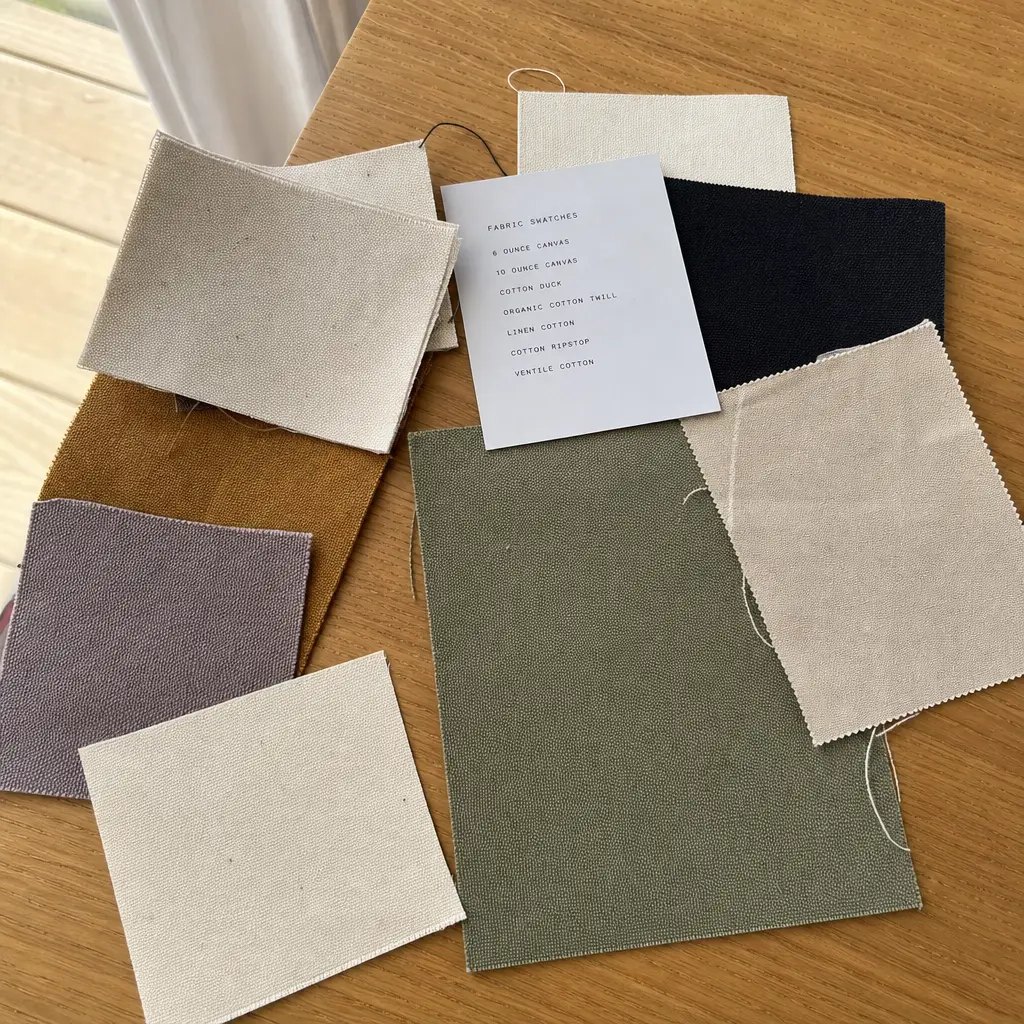
Cotton drawstring backpacks are often quoted in 4 oz, 5 oz, 6 oz, 8 oz, or 10 oz cotton. For trade show buyers, 6 oz and 8 oz are usually the most useful starting points. A 6 oz cotton fabric, often around 190-210 GSM depending on weave and finish, folds well and keeps carton volume controlled. An 8 oz canvas, often around 250-280 GSM, feels more substantial and can carry heavier event contents, but it adds bulk and usually reduces pieces per carton.
Carton count should never be copied from an older order unless the fabric, finished size, cord, print coverage, and packing method are unchanged. A carton that works for 200 pieces of 5 oz bulk-packed bags may be too tight for 150 pieces of 8 oz individually packed canvas bags. If the factory keeps the old count, pressure moves somewhere: carton corners deform, printed panels crease, cords press into ink, or the carton becomes too heavy for easy handling.
Ask for two fabric options when budget is still open. Compare the bag price and the freight effect together. A cheaper fabric may save unit cost but look thin under strong booth lighting. A heavier fabric may improve perceived value but increase CBM, gross weight, and warehouse handling cost. The best choice is the fabric that fits the contents and the delivery plan, not simply the lowest or heaviest option.
- 4-5 oz cotton: low-cost light giveaway use; higher transparency, wrinkle, and durability risk.
- 6 oz cotton: common event balance for screen print, foldability, and freight control.
- 8 oz cotton canvas: stronger hand feel for kits, catalogs, apparel, and heavier attendee use.
- 10 oz cotton canvas: premium but bulky; use lower carton counts and stronger cartons.
Size The Bag Around Contents
A common finished size for cotton drawstring backpacks is about 34 x 42 cm or 35 x 45 cm. That range fits many brochures, notebooks, folded T-shirts, and sponsor inserts. If the exhibitor will include bottles, rigid product samples, catalog bundles, or several loose items, the size and construction need a closer review. Larger bags are not automatically better; oversized bags waste carton space and can look underfilled at the booth.
State finished dimensions, not only cutting dimensions. Cotton can shift during cutting, sewing, washing or finishing, and packing compression. A plus or minus 1 cm tolerance is often workable for event bags, but a tighter tolerance may be needed when the bag must fit a fixed insert, gift box, or retail display. If one item is non-negotiable, provide its dimensions and weight to the supplier.
Separate normal load from maximum load. A bag handed out with a brochure may later carry samples, water bottles, and collected literature from other booths. The supplier cannot design seam strength or cord reinforcement from artwork alone. The carton plan also changes when bags need to reopen smoothly for kitting rather than being handed out empty.
- State finished width and height after sewing, with measurement tolerance.
- List the largest insert and the heaviest expected contents.
- Confirm whether A4 folders, letter folders, apparel, bottles, catalogs, or rigid samples must fit flat.
- Avoid oversizing unless bulky contents require it.
- Ask whether the selected size changes units per carton, CBM, or gross weight.
Treat Cords As Functional Hardware
Drawcords are often treated as a small trim detail, but they carry the load and shape the user experience. Cotton cord fits the natural look of cotton bags. Polyester cord may be smoother or stronger but can look less aligned with an all-cotton positioning. Flat cotton tape is more comfortable on the shoulder for heavier loads, though it increases material cost and folding bulk.
The attachment method matters as much as cord material. Low-cost construction may rely on simple seam capture at the bottom corner. Stronger builds use reinforced tabs, bartacks, eyelets, or more secure channel stitching. For bags expected to carry catalogs, bottles, apparel, or samples, require a pull check at the top channel and bottom attachment. A cord failure during an event is highly visible and difficult to correct onsite.
Quote comparisons should identify cord material, diameter or width, color, finished length, and attachment style. Otherwise, a lower quote may be using thinner cord, shorter length, weaker knots, or less reinforcement. Review comfort with realistic contents inside the bag. An empty approval sample tells you how the bag looks; a loaded sample tells you whether attendees can actually use it.
- Specify cord material, color, diameter or width, and approximate finished length.
- Use reinforced bottom attachment when the bag will carry more than light paper items.
- Confirm whether metal eyelets fit the brand, safety requirements, destination rules, and budget.
- Check knot security, cord slippage, channel stitching, and shoulder comfort during sample review.
Print With The Fold In Mind
Screen printing is usually the practical choice for cotton drawstring backpacks with one to three solid colors. It is efficient for event logos, sponsor marks, and repeat programs when curing is controlled. Heat transfer can handle gradients, fine detail, and photographic artwork, but it changes the surface feel and should be tested after folding. Embroidery is possible for premium orders, though it adds thickness, cost, and production time.
The print method should be approved with the packing method. A large solid print can stiffen cotton, especially on lighter fabric. If a fold line crosses heavy ink coverage, the crease may be visible when the bag is opened. A flat printed sample may pass easily while the packed unit fails visually after compression. For sponsor logos, that is a preventable issue.
Ask the factory to show where the printed face sits inside the fold and whether cords touch the inked area. Simple changes can solve many problems at sample stage: move the print slightly, change the fold direction, reduce carton count, use a larger polybag, add a protection sheet for special packs, or adjust artwork coverage. Once mass production is packed, those fixes become expensive or impossible before the show date.
- Use screen print for solid event logos, sponsor marks, and simple brand graphics.
- Use heat transfer only when artwork detail requires it and fold testing is approved.
- Avoid hard folds through large solid ink areas where possible.
- Provide vector artwork, Pantone references, print size, print location, and print color count.
- Confirm curing time before packing so ink does not offset under carton pressure.
Choose Packing Method By Route
Individual packing is not automatically better, and bulk packing is not automatically risky. The correct choice depends on the route and how the bags will be used. Bulk layer packing can reduce material use and keep costs down when cartons go directly to a controlled booth handout. Paper bands can help count and separate units while reducing plastic. Recyclable polybags help keep bags clean and organized through advance warehouses, distributor handling, and multi-location shipments.
Each packing method changes carton data. Individual polybags add thickness, trap air if sized poorly, and may reduce units per carton. Paper bands are lighter but can shift if cartons are handled roughly. Bulk packing is efficient but demands clean cartons, controlled folding, and protection from moisture. The supplier should not quote carton size until the packing method is known.
For trade show exhibitors, the key is opening behavior. Booth staff may need to open a carton, remove 25 bags at a time, and restock quickly. If all units are compressed irregularly, tangled by cords, or sorted by mixed artwork without labels, the booth team loses time. Ask for photos of packed layers and a folded unit before production so the carton is designed around real handling, not just factory efficiency.
- Use bulk layer packing for direct handout when cleanliness and handling are controlled.
- Use paper bands when counting and plastic reduction both matter.
- Use recyclable polybags for warehouse sorting, resale, kit packing, or cleaner distribution.
- Avoid tight polybags that create sharp corners, trapped air, or distorted folded units.
- Request packed-layer photos before approving carton quantity.
Set Carton Quantity With Decision Logic
For custom cotton drawstring backpacks, carton quantities often sit between 100 and 200 pieces, but that range only becomes useful when tied to the spec. A lighter 5-6 oz bag with standard cord and bulk layer packing may fit 150-200 pieces per carton. An 8 oz canvas bag with flat cotton tape, large print coverage, and individual polybagging may be better at 100-150 pieces. A premium 10 oz version may need even lower counts to avoid heavy or distorted cartons.
Gross weight is a handling decision, not just a freight number. Many buyers set a carton target around 12-18 kg when cartons may be lifted by warehouse staff, decorators, or booth teams. If cartons are pallet-only and handled by equipment, a higher weight may be acceptable, but that should be confirmed with the receiving route. If courier services, advance warehouses, or booth staff will carry cartons manually, keeping cartons lighter can prevent slow receiving and onsite frustration.
Carton construction should match the route. A 5-ply export carton is the safer choice for sea freight, pallet stacking, LCL shipments, and long storage. Lighter cartons may work for short domestic delivery when goods are not heavy and handling is simple. Ask the supplier to confirm carton dimensions, gross weight, net weight, CBM, and carton construction after a packing trial, not from a generic estimate.
- Use 150-200 pcs only when fabric is light, packing is simple, and carton weight stays controlled.
- Use 100-150 pcs for 8 oz fabric, individual packing, wide cord, or stronger crease-control needs.
- Reduce carton count if the printed panel is compressed, cartons bulge, or gross weight exceeds the PO target.
- Use 5-ply export cartons for sea freight, palletized delivery, warehouse storage, and multiple handling points.
- Calculate CBM per 1,000 pieces from actual carton dimensions before freight booking.
Make Carton Marks Warehouse-Ready
Trade show deliveries are label-sensitive. Many cartons may arrive at the same advance warehouse for different exhibitors, halls, booths, and show dates. A carton label that only says cotton backpack and quantity may be technically accurate but operationally weak. The receiving team needs to connect each carton to the order, event, exhibitor, destination, and carton sequence without opening boxes.
For orders with several logo versions, colors, sponsors, or language markets, carton separation should be decided in advance. Separate cartons are usually easier to receive and audit than mixed cartons. Mixed cartons can be useful for pre-allocated kits, but only when the inner quantity breakdown is printed on the carton and packing list. Unapproved mixing creates counting delays and may send the wrong logo version to the wrong booth.
Label placement needs attention. If cartons will be pallet wrapped, side labels should remain visible after wrapping. If the event contractor requires a specific format, the supplier needs that template before packing. Carton marks should be approved before sealing, because relabeling packed export cartons near the ship date wastes time and increases error risk.
- Include PO, item name, SKU, color, artwork version, quantity, gross weight, net weight, carton size, and carton number.
- For event shipments, include show name, exhibitor name, booth number, warehouse reference, and destination address.
- Use sequential numbering such as 1 of 36, 2 of 36, and 3 of 36.
- Do not mix SKUs or artwork versions unless the buyer approves the carton breakdown in writing.
- Make labels visible after pallet wrapping, stacking, and normal warehouse handling.
Use Samples As Packing Proof
A pre-production sample should approve more than appearance. For a fixed-date event order, the buyer should review final fabric, drawcord, print, fold, inner packing, and carton direction. If a full packed carton sample is not practical, the supplier can provide a documented photo set showing the folded unit, layer arrangement, carton fill level, closed carton, label, and weighed carton.
Sample review should simulate the event experience. Load the bag with expected contents, wear it briefly, fold it for at least 24 hours, reopen it, and inspect the print area. Check whether cords leave pressure marks, whether the logo creases, whether the print transfers, and whether the bag shape recovers well enough for booth distribution. This is simple work, but it catches problems that flat approval photos miss.
Write the approved fold method into the production record. Include photos if possible. Inspection teams can then compare mass production against the same reference. Without a packing reference, factories may change fold direction or layer count for speed, especially during large runs. That small change can affect carton height, printed appearance, and final receiving count.
- Approve fabric hand feel, GSM, color, shade, odor, and finish against the swatch.
- Test the sample with expected contents for cord comfort, seam strain, and bottom strength.
- Fold and reopen the sample to review crease recovery and logo appearance.
- Rub printed areas after curing to check color transfer and surface durability.
- Attach approved fold photos to the production file and inspection checklist.
Quote For Landed Cost, Not Unit Price
A useful quotation for custom cotton drawstring backpacks includes the data procurement and logistics teams need to make a decision. At minimum, it should state fabric weight, finished size, cord construction, print method, print colors, packing method, units per carton, carton dimensions, gross weight, net weight, CBM, sample lead time, production lead time, inspection timing, and packing lead time. Missing carton data makes landed cost and delivery risk hard to judge.
Compare cost per usable delivered backpack, not just ex-factory unit price. A slightly lower product price can be offset by oversized cartons, weak carton construction, unclear labels, repacking labor, or late carton-mark approval. A quote with complete packing data may look less dramatic at first, but it gives the buyer a cleaner view of freight, receiving, and onsite handling.
Schedule detail matters because trade shows do not move for production delays. Ask the supplier to separate material preparation, sample approval, printing, sewing, curing, packing, inspection, and freight booking. Leave time for carton label approval before cartons are sealed. A fast production promise that ignores packed-sample approval is not a complete event supply plan.
- Request CBM and gross weight per carton and calculate CBM per 1,000 pieces.
- Ask for separate pricing on polybags, paper bands, barcodes, hangtags, insert cards, and special labels.
- Confirm whether export cartons, standard carton marks, inner packing, and final inspection are included.
- Keep quote revisions visible when fabric, print, packing, or carton count changes.
- Use the same approved carton data on the proforma invoice, packing list, and freight booking.
Specification comparison for buyers
| Spec decision | Buyer-ready recommendation | Choose this when | Operational threshold to confirm |
|---|---|---|---|
| Fabric weight | 6 oz cotton around 190-210 GSM for standard giveaways; 8 oz canvas around 250-280 GSM for heavier event kits | Use 6 oz for brochure bags and low-bulk handouts; use 8 oz when the bag must carry catalogs, apparel, bottles, or samples | If moving from 6 oz to 8 oz, ask the supplier to recalculate carton quantity, carton CBM, gross weight, and fold recovery before approving price |
| Finished size | 34 x 42 cm or 35 x 45 cm finished size, measured after sewing and before packing | Fits most A4 or letter-size folders, notebooks, folded T-shirts, and sponsor inserts without wasting carton volume | Use plus or minus 1 cm tolerance unless inserts require tighter fit; test the largest content item before locking carton count |
| Drawcord construction | Cotton cord 5-7 mm or flat cotton tape with reinforced bottom attachment | Choose cord for standard cost and natural look; choose tape when comfort matters for heavier loads | For loaded bags above light brochure use, require sampled pull checks at channel, knot, and bottom attachment points |
| Print method | Screen print for 1-3 solid colors; heat transfer only for gradients, photographic art, or fine detail that screen print cannot hold | Screen print is usually best for event logos and sponsor marks on cotton; heat transfer suits complex artwork but must be fold-tested | Approve the folded sample, not only the flat printed sample; avoid hard fold lines through large ink coverage |
| Individual packing | Bulk layer packing, paper band, or recyclable polybag based on distribution route | Bulk packing suits direct booth handout with clean handling; polybagging suits warehouse sorting, resale, and multi-site distribution | Confirm whether individual packing changes units per carton, labor cost, barcode placement, and plastic policy compliance |
| Carton loading | 100-150 pcs per carton for 8 oz or individually packed bags; 150-200 pcs may work for lighter 5-6 oz bulk-packed bags | Use lower counts for heavier fabric, large size, wide cord, large print, or strict crease control | Keep gross weight practical for manual handling, commonly below about 18 kg unless pallet-only handling is confirmed |
| Carton construction | 5-ply export carton for sea freight, palletizing, long storage, or multiple handling points | Use for advance warehouse, distributor routing, LCL shipments, or any order stacked before show move-in | Confirm carton burst strength or supplier export standard, corner integrity after packing, tape method, and pallet stack height |
| Gross-weight target | Set a maximum carton gross weight in the PO, usually 12-18 kg for hand-carried event cartons | Best for show decorators, warehouse teams, booth staff, and courier deliveries with repeated lifting | If cartons exceed the target, reduce pieces per carton or confirm pallet-only handling in writing |
| Labeling plan | PO, SKU, color, artwork version, quantity, carton sequence, gross/net weight, carton size, destination, event, exhibitor, and booth reference | Essential for advance warehouse, multi-logo programs, distributor allocations, and fixed-date event deliveries | Labels must match the packing list exactly and remain visible after pallet wrap or warehouse stacking |
Buyer checklist before sampling
- Define finished bag size after sewing, not fabric cutting size, and state the measurement tolerance on the purchase order.
- Specify fabric weight by oz and GSM target, such as 6 oz around 200 GSM or 8 oz around 270 GSM, including weave, color, and finish.
- Describe the real event use: brochure giveaway, apparel kit, sample pack, VIP sponsor bag, distributor resale item, or prepacked attendee kit.
- Provide the heaviest expected contents and target loaded weight so the factory can confirm cord, seam, and bottom attachment strength.
- Send vector artwork with Pantone references, print size, print position, number of colors, and any large ink coverage areas that may crease.
- Choose bulk packing, paper banding, recyclable polybagging, barcode labeling, insert cards, hangtags, or mixed packing before the supplier calculates carton data.
- Set a maximum carton gross weight and require units per carton, carton dimensions, gross weight, net weight, and CBM in the quotation.
- Approve one folded packing sample or documented fold photo set before bulk production, especially when the print area is large.
- Confirm carton marks, event name, booth number, destination warehouse, SKU, artwork version, and carton sequence before cartons are sealed.
- Require written inspection criteria for fabric, print, stitching, cord pull, fold quality, carton count, carton strength, label accuracy, and random packed-carton measurements.
Factory quote questions to send
- What fabric weight, weave, color process, and finishing are included, and what GSM or oz tolerance applies?
- What finished size tolerance should we expect after cutting, sewing, printing, and packing compression?
- What cord material, diameter or width, finished length, attachment method, and reinforcement are included in this price?
- How many pieces per carton do you recommend for this exact fabric weight, finished size, cord type, print coverage, and packing method?
- What are the carton dimensions, gross weight, net weight, and CBM per carton at the quoted packing quantity?
- Will the printed face be protected from cord pressure, ink offset, hard fold lines, and carton compression during storage and transit?
- Can you provide a pre-production sample folded exactly as mass production will be folded and packed?
- Which MOQs apply separately to fabric color, cord color, print setup, label type, barcode label, insert card, and custom packing material?
- Can cartons be marked by event name, exhibitor, booth number, destination warehouse, PO, SKU, artwork version, and sequential carton number?
- What inspection standard, sampling level, defect classification, and packing checklist will be used before shipment?
Quality-control points to confirm
- Finished width and height are measured after sewing against the approved tolerance, commonly plus or minus 1 cm unless tighter control is agreed.
- Fabric weight is checked against the approved swatch and specification before cutting, with shade and finish reviewed under consistent lighting.
- Print color, placement, opacity, edge clarity, curing, ink hand feel, and registration are checked against the approved pre-production sample.
- Drawcord length, cord thickness, knot security, channel stitching, and bottom attachment are checked on sampled units with a documented pull test.
- Side seams, bottom corners, top channel, reinforcement points, and any label stitching are inspected for skipped stitches, loose threads, and weak seams.
- Units are rejected or downgraded for oil marks, mildew odor, fabric contamination, broken stitches, needle damage, unacceptable shade variation, or visible print defects.
- The approved fold method is followed, and hard creases are not placed through the logo or sponsor mark unless accepted in the signed sample record.
- Carton quantity matches the packing list, and mixed SKU or mixed artwork cartons are not used unless approved in writing.
- Cartons are checked for correct construction, clean corners, intact tape, readable labels, and suitable strength for export stacking or palletizing.
- Random packed cartons are weighed and measured so freight planning uses actual carton data rather than early estimates.