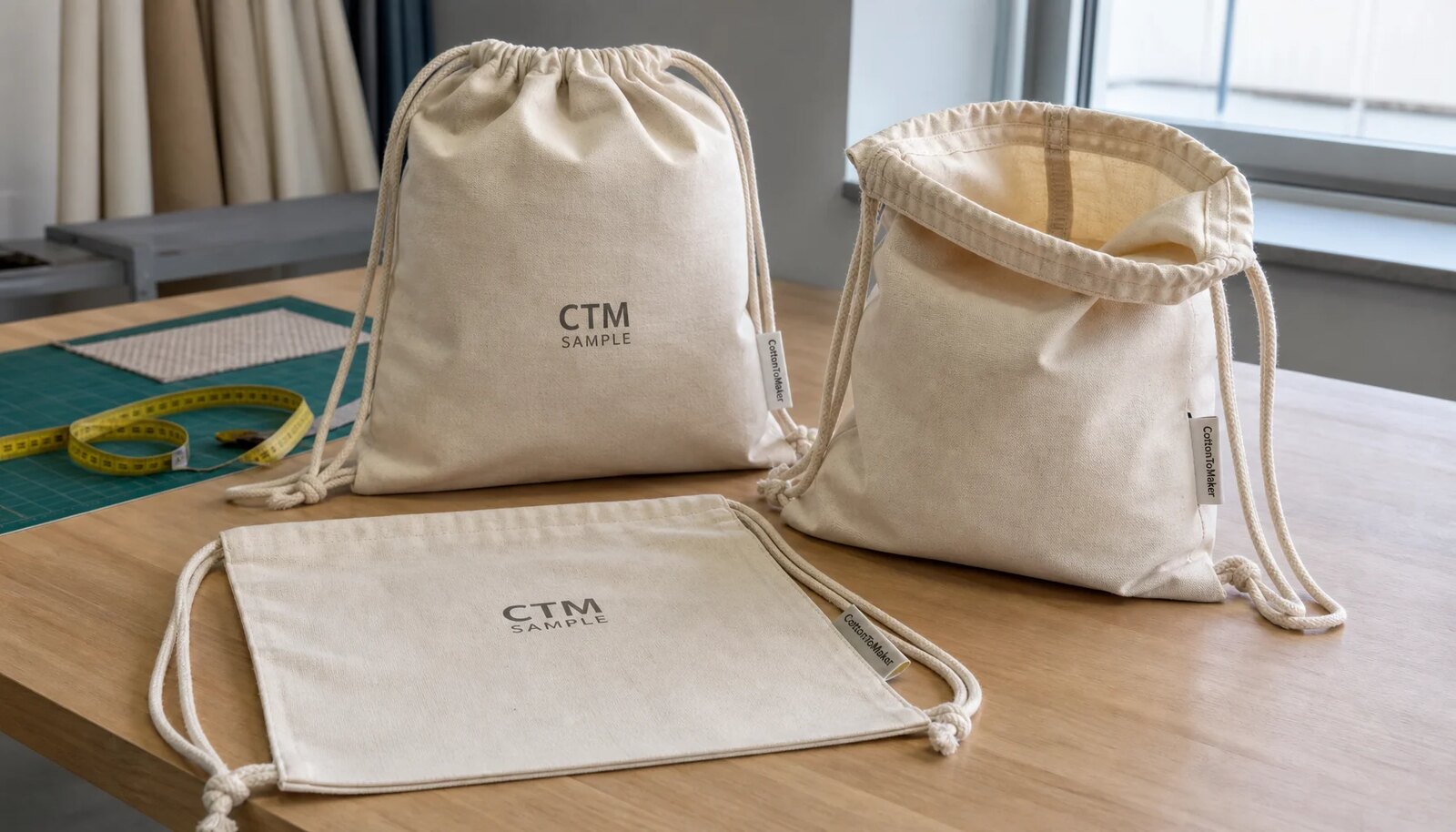
Start With the Pricing Problem
Custom cotton drawstring backpacks look simple, but bulk pricing changes quickly when the buyer moves from a giveaway bag to a hotel retail product. A hotel retail program usually needs better fabric handfeel, consistent color, clean logo placement, scannable packing, and repeatable replenishment. If those details are not written into the RFQ, suppliers will quote different products while using the same basic name.
The main buying problem is not finding the lowest unit price. It is building a price plan where every supplier is quoting the same fabric weight, size, print method, drawcord, packing, and inspection standard. Procurement teams should use the first RFQ to remove vague words such as premium, durable, eco, and retail-ready, then replace them with measurable requirements.
- Define the selling use: hotel boutique, resort amenity, event welcome kit, spa retail, or staff merchandise.
- State whether the bag must carry only light apparel or heavier items such as towels, slippers, books, or bottled amenities.
- Decide if the price target is for one launch order only or for a replenishment program across several properties.
- Require suppliers to quote the same Incoterm, packing method, and artwork count so unit prices can be compared fairly.
Fabric GSM Drives More Than Price
For cotton drawstring backpacks, fabric weight is one of the biggest cost drivers and one of the easiest places for quotes to become misleading. A 170 GSM cotton body and a 280 GSM cotton body can both be called cotton canvas by a seller, but they will not feel, hang, print, or pack the same. Hotel retail buyers should write GSM and ounce weight together when possible because suppliers in different markets may quote in different systems.
A practical low-cost hotel amenity bag often uses 6 oz cotton, around 170-190 GSM. A stronger retail backpack usually moves to 8 oz or 10 oz cotton, around 220-300 GSM depending on weave and finishing. Heavier fabric gives better shelf presence and less show-through, but it increases raw material cost, sewing difficulty, carton weight, and ocean freight volume.
- 170-190 GSM: suitable for light giveaways, welcome kits, and low-cost seasonal programs.
- 220-240 GSM: balanced choice for hotel retail where logo appearance and handfeel matter.
- 260-300 GSM: stronger premium option for resort boutiques, but check drawcord channel bulk and carton weight.
- Natural unbleached cotton: good for an eco look, but shade variation must be accepted within a controlled range.
- Dyed cotton: better brand color control, but requires minimum dye lots and possible longer fabric lead time.
Size, Shape, and Load Need Alignment
A drawstring backpack is not only a flat cotton pouch with cords. The finished size, drawcord channel width, bottom corner construction, and seam allowance decide whether it behaves like a usable backpack or a low-strength promotional sack. Hotel retail buyers should specify finished dimensions after sewing, not only fabric panel dimensions before sewing.
Common hotel retail sizes sit around 34 x 42 cm or 38 x 45 cm, but the correct size depends on the intended contents. A spa retail bag carrying robe accessories needs more volume than a lightweight resort event bag. If the backpack will be sold to guests, the buyer should test it with real contents and check how the front logo looks when the bag is filled.
- Finished size tolerance should be written as an inspection rule, such as plus or minus 1 cm for normal cotton sewing.
- Drawcord channel should be wide enough for smooth pulling after washing shrinkage and bulk sewing.
- Bottom corners should include secure stitching where the cord anchors carry shoulder load.
- If the bag carries heavy items, request bartacks or reinforced triangular stitching at cord anchor points.
- For retail display, confirm whether the front panel lies flat enough for logo visibility after packing.
Print Method Changes Unit Cost and Risk
Most hotel retail cotton drawstring backpacks use screen printing because it is cost-effective, durable, and suitable for solid logos. The quote should state print size, number of colors, print position, and whether setup charges are included. A one-color front print is a different price structure from a large two-side print with four spot colors.
Heat transfer can be useful for gradients, fine detail, or small batches where screen setup is inefficient. It is not automatically better. Transfers may create a different handfeel on cotton, and poor film selection can crack or lift after use. Embroidery is possible on heavier cotton, but it adds cost, can pucker light fabric, and usually needs backing control.
- Screen print: best for bold hotel logos, simple artwork, and medium to large production runs.
- Heat transfer: useful for detailed artwork, but require wash, rub, and adhesion checks.
- Embroidery: premium appearance on heavier cotton, but not ideal for thin fabric or very large designs.
- Woven side label: good for subtle branding and repeat retail lines, but has its own MOQ.
- Print placement tolerance should be measured from the top edge and side seam, not judged by eye only.
MOQ Logic Behind Bulk Pricing
MOQ is not one single number. A factory may have one minimum for fabric purchase, another for dyeing, another for printing, and another for custom labels or retail packing. When a buyer asks for custom cotton drawstring backpacks bulk pricing without SKU details, the factory may quote a best-case MOQ that does not apply once colors, logos, and packing are split.
For hotel retail, the cleanest pricing plan groups SKUs by shared construction. Use the same size, same fabric GSM, same drawcord, and same packing wherever possible, then change artwork or label by property. This keeps cutting and sewing efficient while giving each hotel location its own retail identity.
- MOQ per fabric color matters most when dyed cotton or unusual cotton shades are requested.
- MOQ per artwork affects screen printing cost because each logo color and position needs setup.
- MOQ per label design can affect woven labels, hangtags, and barcode stickers.
- MOQ per packing style matters when some units need retail packing and others need bulk distribution.
- Price breaks should be requested at practical levels such as 500, 1,000, 3,000, and 5,000 pieces per artwork or shared body.
Build a Quote Sheet That Separates Costs
A useful factory quote should not only show one unit price. It should show what is included and what is excluded, otherwise the cheapest quote often becomes more expensive after artwork, packing, carton marks, and inspection requirements are added. Buyers comparing suppliers should request a cost structure that is clear enough for internal approval and later reorder control.
The quote sheet should identify the base bag, decoration, labels, packing, sampling, tooling, and shipping assumptions. For hotel retail buyers, barcode handling and property-level carton sorting are common hidden costs. If the factory packs by mixed SKU cartons but the hotel distribution center requires single-SKU cartons, repacking can create avoidable labor and delay.
- Base product: size, fabric GSM, fabric color, drawcord, stitching, and reinforcement.
- Decoration: print method, print area, number of colors, number of positions, and setup charge.
- Branding trims: woven label, hangtag, care label, barcode sticker, paper band, or retail header card.
- Packing: individual bag, bulk pack quantity, carton quantity, carton marks, and SKU sorting.
- Commercial terms: Incoterm, sample fee, payment term, lead time, validity period, and estimated carton data.
Sample Approval Should Recreate Bulk Conditions
A sample made from random stock cotton is not enough for a hotel retail order. The approval sample should use the intended GSM, fabric color, drawcord, logo method, stitching construction, label, and packing. If the final fabric is not available at first sample stage, the supplier should clearly mark which elements are temporary and issue a production sample before bulk cutting.
The buyer should keep one sealed approval sample and require the factory to keep a matching sample. During final inspection, the inspector can compare the bulk goods against this physical standard. Written specs are necessary, but cotton shade, handfeel, print opacity, and drawcord tension are easier to judge against an approved sample.
- Check fabric handfeel and opacity with the actual items expected to go inside the backpack.
- Pull both drawcords repeatedly to confirm smooth closure and equal cord length.
- Load test the backpack with expected retail contents for a short carry test.
- Inspect logo position on an empty bag and a filled bag because cotton shifts under load.
- Approve final packing with barcode placement, folded shape, and carton quantity before bulk packing starts.
QC Thresholds for Hotel Retail Goods
Hotel retail buyers need a higher visual standard than event giveaway buyers because the product may sit in a boutique, spa shop, or guest-facing merchandise display. Cotton is a natural material, so tiny slubs may be acceptable, but stains, oil marks, holes, twisted drawcords, and off-center logos should not pass as normal variation.
The purchase order should define AQL level or at least clear acceptance criteria. Without thresholds, disputes become subjective. The most common failure points are uneven printing, loose threads, weak cord anchors, shade differences between production lots, incorrect labels, and carton marking errors.
- Critical defects: wrong logo, wrong SKU, unsafe needle, severe stain, missing drawcord, or unusable closure.
- Major defects: broken stitch, open seam, badly off-center print, wrong barcode, or weak cord anchor.
- Minor defects: small thread end, slight wrinkle, minor cotton slub, or small shade variation within approved range.
- Functional testing: drawcord pull, seam tension, anchor strength, and basic load carry test.
- Retail verification: barcode scan, hangtag match, carton mark match, and property allocation count.
Packing Choices Affect Landed Cost
Packing is not a minor detail for custom cotton drawstring backpacks. A bulk pack may be cheaper, but it can arrive wrinkled and require repacking before hotel retail display. Individual polybags protect the product but may conflict with sustainability goals or hotel brand policy. Paper bands or recyclable bags can look better but may add labor and material cost.
Carton size also affects landed cost. Heavy cotton backpacks can create dense cartons, while loosely packed retail-ready units can increase volume. Buyers should compare carton dimensions and gross weight, not only FOB unit price. For distributors sending goods to multiple properties, carton sorting by SKU or hotel location can prevent warehouse handling mistakes.
- Bulk pack: lowest packing cost, suitable when the buyer will repack locally.
- Individual polybag: protects against dust and moisture, but may not suit plastic-reduction policies.
- Paper band: retail-friendly and lower plastic use, but offers less moisture protection.
- Barcode sticker: required for many retail systems and should be tested for scanability on the packed unit.
- Single-SKU carton: easier for receiving and inventory control than mixed cartons.
Lead Time Risk Is Usually Front-Loaded
Production delay usually starts before sewing, not during sewing. Artwork correction, fabric sourcing, dye approval, screen setup, and sample revision consume the early schedule. A buyer who approves a vague sample quickly may still lose time later when final cotton shade, print color, or packing design changes after bulk materials are already ordered.
A realistic schedule separates sampling, material preparation, production, packing, inspection, and shipment. For a repeat order using existing fabric and artwork, the timeline can be much shorter than a first order with custom dyed cotton and new retail labels. Procurement teams should request lead time from deposit and final approval, not from the first email.
- Artwork confirmation: logo file, Pantone references, print size, and print position.
- Sample stage: blank sample if needed, then printed approval sample using final construction.
- Material stage: cotton purchase or dyeing, drawcord preparation, label production, and packing material ordering.
- Bulk stage: cutting, printing, curing or drying, sewing, trimming, pressing, and packing.
- Inspection stage: allow time for corrective sorting before the booked shipment date.
Specification comparison for buyers
| Spec decision | Recommended option | When it fits | Buyer risk to check |
|---|---|---|---|
| Factory-direct cotton backpack production | Use when the order needs custom fabric weight, print, drawcord, and hotel retail packing in one quote | Best for 1,000 pieces and above, repeat retail programs, or buyers needing stable reorder specs | Compare whether the quote includes cutting loss, inner packing, export carton, and print setup instead of only a bare sewing price |
| Stock-body decoration route | Use existing cotton drawstring backpack body with custom logo printing | Works for urgent hotel gift shop launches, small trial buys, or events with limited artwork changes | Stock fabric GSM, dimensions, and drawcord color may not match future replenishment unless locked in writing |
| Importer or distributor consolidated order | Combine several hotel properties or retail SKUs under one buying plan | Useful when each design has low volume but the buyer can share fabric, size, and packing format | Factory may price by shared fabric lot but charge separate print screens, labels, and carton marks per SKU |
| Lightweight promotional build | 6 oz cotton or 170-190 GSM cotton with simple one-color print | Fits room amenity packs, staff events, beach welcome kits, or low-ticket hotel retail | Thin fabric can show contents and wrinkle heavily; require shrinkage and seam strength checks before approval |
| Retail-ready hotel shop build | 8-10 oz cotton or 220-300 GSM cotton with reinforced bottom corners and neat drawcord finish | Fits gift shops, resort boutiques, spa retail, and branded merchandise walls | Higher GSM increases fabric cost and shipping weight; confirm carton weight and shelf presentation before locking price |
| Premium natural cotton look | Unbleached cotton with cotton rope drawcord and woven side label | Fits eco-positioned hotels, resort retail, and brands avoiding shiny polyester cords | Natural cotton shade varies by fabric lot; approve a tolerance range instead of expecting exact optical whiteness |
| Multi-color retail artwork route | Screen print for solid artwork; heat transfer only when fine gradients or photo effects are unavoidable | Works when the buyer needs strong logo visibility and repeatable retail appearance | Heat transfers can change handfeel and may crack if the wrong film is used; request wash and rub test results |
| Hotel retail packing route | Individual polybag or paper band, barcode sticker, carton sorting by SKU, and clear master carton marks | Needed for retail receiving teams, property-level distribution, or marketplace resale inventory | Packing labor and barcode handling can change unit cost more than expected; separate packing cost in the quote |
Buyer checklist before sampling
- Define whether the backpack is a low-cost amenity item, a paid hotel retail product, or a premium branded gift before requesting price.
- State finished size, fabric GSM or ounce weight, color standard, drawcord material, reinforcement details, and target quantity per artwork.
- Require a pre-production sample using final fabric, final drawcord, final print method, and final packing, not only a blank sewing sample.
- Separate costs for fabric, printing, labels, packing, sampling, molds or screens, inland freight, and export documents in the quote comparison.
- Set acceptance criteria for print placement tolerance, color tolerance, seam strength, drawcord pull resistance, and carton packing quantity.
- Confirm whether the MOQ is based on fabric dye lot, cutting efficiency, print setup, or packing material minimums.
- Check carton dimensions, gross weight, and pieces per carton before comparing FOB, EXW, or delivered quotations.
- Reserve schedule time for artwork correction, sample approval, bulk fabric procurement, printing, sewing, packing, and final inspection.
- Approve a realistic natural cotton shade range if using unbleached or organic-positioned fabric.
- Keep one sealed approval sample at the factory and one with the buyer for final inspection comparison.
Factory quote questions to send
- What fabric weight is quoted in GSM and ounce, and is it greige, bleached, dyed, or unbleached cotton?
- Is the quoted size measured before or after sewing, and what finished dimension tolerance will be used for inspection?
- What is the MOQ per fabric color, per print artwork, and per packing style?
- Which print method is included, how many colors are covered, and are screen charges or setup charges separate?
- What drawcord material, diameter, length, color, and end finishing are included in the unit price?
- Are reinforcement stitches, bartacks, bottom corner construction, and seam binding included or quoted as upgrades?
- What sample cost, sample lead time, and revision policy apply before bulk production starts?
- What packing is included: individual bag, hangtag, barcode, retail band, carton sorting, or only bulk pack?
- What are the estimated carton dimensions, gross weight, net weight, and loading quantity per carton?
- What payment term, production lead time, inspection window, and shipment term are assumed in the price?
Quality-control points to confirm
- Fabric weight should be verified against the approved sample with a practical tolerance agreed before production.
- Finished backpack dimensions should stay within the buyer-approved tolerance, commonly tighter for retail packaging than for giveaways.
- Drawcord channels must allow smooth pulling without twisting, trapped seams, or uneven left and right cord length.
- Bottom corners and side seams should withstand loaded pull tests using the expected product weight, not only visual inspection.
- Print placement should be measured from fixed panel points, with color checked against Pantone or approved artwork under consistent light.
- Screen print should pass dry rub and light wet rub checks before packing, especially on dark dyed cotton.
- Needle holes, loose threads, oil marks, slubs, stains, and uneven cotton shade should be sorted against an agreed AQL level.
- Retail labels, barcodes, hangtags, and carton marks must match the purchase order, SKU list, and hotel property allocation.
- Cartons should be strong enough for export handling and sized to avoid crushing drawcords or wrinkling the front logo panel.
- Final inspection should compare packed goods against the sealed approval sample, not only against a written spec sheet.