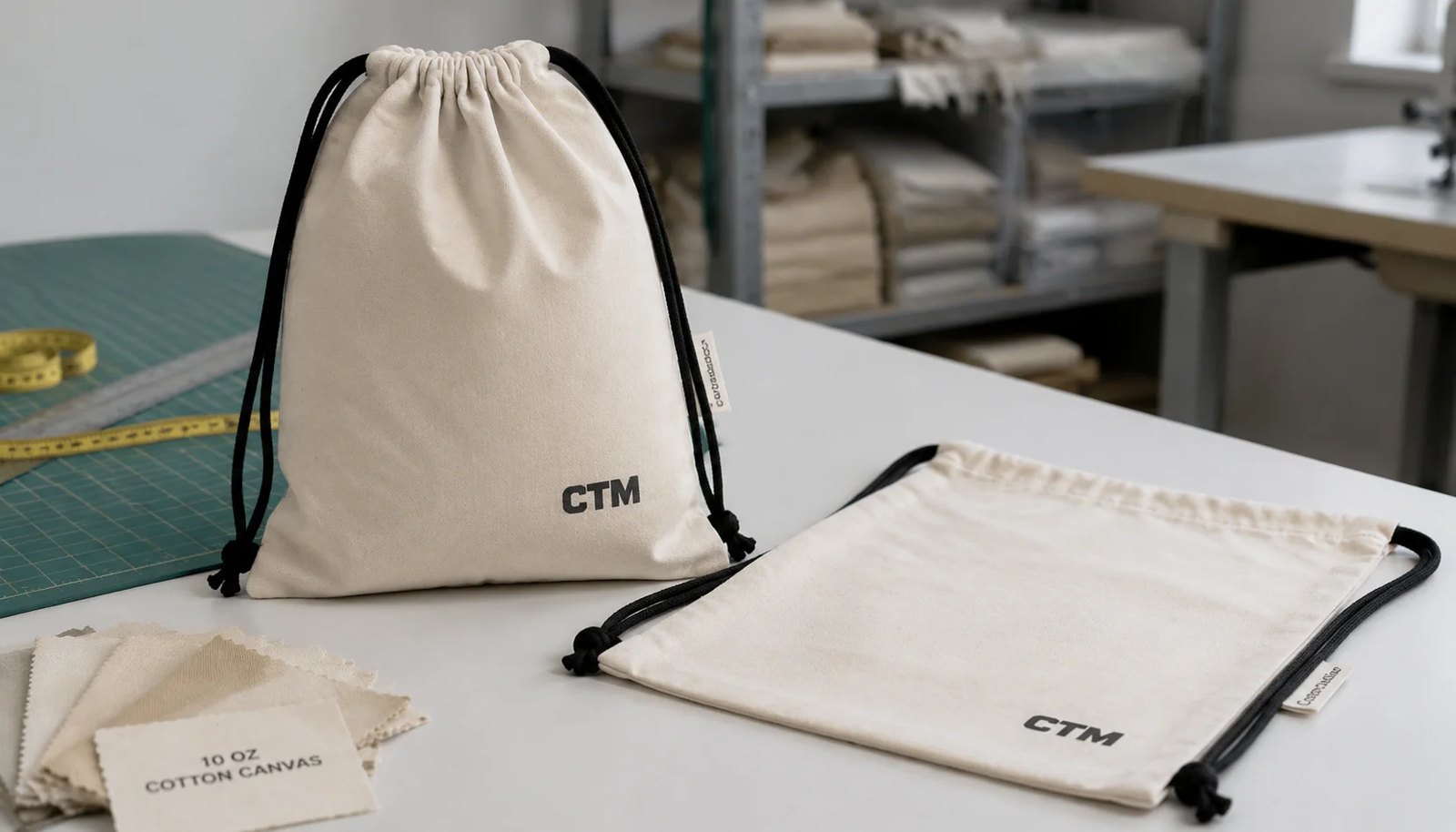
Inspection Starts With the Use Case
A custom cotton drawstring backpack for a skincare brand is usually not a school sports bag. It is often a gift-with-purchase item, a clean beauty launch pack, a spa retail bag, a sampling kit, or a distributor sales tool. The quality inspection checklist should start from what the bag must carry and how it will be presented. A bag used for three sachets and a leaflet does not need the same seam strength as a bag carrying two glass jars and a boxed serum.
For procurement teams, the first mistake is treating all drawstring backpacks as the same product line. A low-cost giveaway bag may pass a basic visual inspection but fail when used as retail packaging. A skincare brand also has a different visual standard: natural fabric must look clean, print edges must be sharp, and packing creases should not make the product look like a warehouse leftover.
- Light sample kit: 6 oz to 8 oz cotton may be enough if the load is soft and low value.
- Retail gift set: 8 oz to 10 oz cotton canvas gives better body and print stability.
- Premium skincare bundle: 10 oz to 12 oz canvas can work, but closure bulk and freight weight must be reviewed.
- Glass jar or bottle set: reinforced lower corners and cord exit points should be part of the base construction.
- Ecommerce unboxing: individual packing, clean fold method, and print-facing presentation matter more than for bulk event use.
Fabric Weight and Handfeel
Fabric weight is one of the fastest ways to identify whether two supplier quotes are actually comparable. Many RFQs say cotton canvas, natural cotton, or reusable drawstring backpack, but those phrases do not define strength, opacity, handfeel, or cost. For skincare packaging, a practical range is often 8 oz to 10 oz cotton canvas, roughly 270-340 GSM. This gives enough body for retail presentation without making the drawcord channel too stiff.
Buyers should not evaluate GSM alone. Yarn count, weaving density, finishing, washing, and shrinkage control all affect the final bag. A 300 GSM fabric with loose weave can feel weaker than a slightly lighter but tighter fabric. Natural cotton also has seed specks and shade variation; that may support an eco-positioned skincare line, but it must be accepted intentionally rather than discovered during final inspection.
- Write both oz and GSM in the RFQ when possible, because factories and mills may quote in different systems.
- Request fabric swatches before sample approval if the order depends on a specific natural, bleached, or dyed shade.
- For pale skincare branding, inspect front panels for dark yarn contamination and oil marks before printing.
- If the bag may be washed by end users, require shrinkage testing on fabric and cords before bulk production.
- For custom dyed cotton, allow extra lead time for lab dips, shade approval, and possible re-dyeing.
Construction Details That Fail First
The weakest points on a cotton drawstring backpack are usually not the middle of the fabric. Failures happen at the cord channel, side seam ends, bottom corners, and cord exit points. When skincare sets include glass or hard plastic containers, these points take concentrated stress. A clean-looking sample can still fail if the load test is skipped or if the factory switches sewing settings during bulk production.
A useful inspection checklist should describe the construction in measurable terms. The top channel should allow the cord to move without excessive friction. The side seams should be straight and fully locked. Lower corners should be reinforced if the cord passes through them. Bar tacks or extra stitch lines are small cost items compared with the damage caused by bags tearing in retail stores or distributor kits.
- Top channel depth should be wide enough for the selected cord diameter plus smooth movement.
- Cord exit points should be reinforced for any loaded backpack use, not left as simple fabric holes.
- Stitch density should be consistent across approved sample and bulk production.
- Seam ends should be backstitched or otherwise secured to prevent unraveling.
- Loaded pull testing should use the real target product weight, not an empty bag demonstration.
Print Method Selection
Most skincare brand drawstring backpacks use a front logo, campaign mark, short ingredient message, or simple line artwork. Screen printing is usually the most stable option for one to three solid colors on cotton canvas. It gives good cost control at bulk quantity, works well with natural fabric, and avoids a plastic look when ink coverage is managed correctly.
Heat transfer has a place when artwork contains gradients, tiny detail, or photographic elements, but it changes the handfeel and can look less integrated with natural cotton. Embroidery gives a premium effect but increases cost, lead time, and weight around the stitched area. For a skincare brand with soft visual identity, the print method should support the product positioning without creating production risk.
- Use screen print for solid logos, line icons, campaign slogans, and simple two-color marks.
- Use water-based ink when a softer handfeel is more important than very high opacity.
- Use plastisol or heavier ink only after testing cracking, folding, and surface feel.
- Avoid large heavy print blocks on thin fabric because they can wrinkle and feel unbalanced.
- Keep artwork away from seams, bottom folds, and the drawcord channel to reduce distortion.
Sample Approval Should Be Physical
Photo approval is not enough for a skincare retail program. A buyer needs to handle the fabric, pull the cord, load the bag, fold it, and view the print under normal light. The pre-production sample should use the actual bulk fabric, actual cord, actual ink, actual stitching method, and final packing approach whenever possible. If one component is substituted, the factory should label it clearly and explain what will change in bulk.
A strong sample approval process also prevents price disputes later. If the sample has reinforced corners, a thick cord, and 10 oz canvas, but the quote was built on lighter fabric and simple stitching, the order will create conflict before shipment. The signed sample should become the production reference for inspection, not just a sales tool.
- Measure finished width, height, drawcord channel depth, and cord length on the approved sample.
- Load the sample with the actual skincare set or an equivalent weight and shape.
- Rub the printed area lightly with a dry white cloth and inspect for ink transfer.
- Fold the sample as it will be packed and check whether the logo creases badly.
- Keep one signed sample with the buyer and one with the factory QC team for bulk comparison.
QC Thresholds for Bulk Inspection
Final inspection should separate cosmetic variation from functional defects. Natural cotton may have minor slubs or seed specks, especially when the brand requests unbleached fabric. However, oil marks, mildew odor, heavy stains on the front panel, open seams, misprinted logos, and blocked drawcord channels should be treated as major defects. The inspection standard must be written before production, not negotiated after cartons are packed.
For most commercial orders, buyers can use AQL-based inspection or a stricter internal plan for launch-critical retail programs. The important point is to define what fails the shipment. Skincare brands often care about clean presentation, so front-panel defects deserve more attention than small marks hidden inside the bag.
- Major defect: open seam, broken cord, blocked channel, wrong fabric, wrong logo color, or severe print misplacement.
- Major defect: visible stain, oil mark, mildew odor, or dirty packing on a retail-facing bag.
- Minor defect: small loose thread that can be trimmed without affecting seam strength.
- Minor defect: slight natural yarn variation within the approved fabric standard.
- Critical defect: sharp object contamination, mold, unsafe accessory, or any issue that could damage skincare products.
Cost Drivers Behind the Quote
A low unit price is not useful unless the buyer understands what is included. For cotton drawstring backpacks, cost is driven by fabric weight, fabric type, cutting yield, print colors, print area, cord specification, sewing complexity, packing method, order quantity, and inspection requirements. A quote based on 6 oz cotton and bulk packing cannot be compared with a quote based on 10 oz canvas, reinforced corners, individual barcode labels, and retail carton marks.
MOQ logic also matters. Natural stock cotton normally has a lower entry point than custom dyed fabric. A custom cord color can introduce its own MOQ. Multi-color screen printing may require setup charges even when the order quantity is modest. For skincare brands launching several fragrance lines or product ranges, splitting one total order into many small artwork versions can raise the real production cost.
- Fabric cost rises with GSM, tighter weave, organic cotton claims, dyeing, washing, and special finishing.
- Print cost changes with color count, print size, ink type, artwork coverage, and setup requirements.
- Sewing cost increases with reinforcement, thicker fabric, lining, pockets, labels, or special cord routing.
- Packing cost increases with individual bags, tissue, paper bands, barcode labels, hangtags, and mixed cartons.
- Freight cost rises quickly when heavier canvas and retail packing increase carton volume and gross weight.
Packing and Carton Control
Packing is not a small detail when the backpack will sit beside skincare products. Poor folding can create permanent-looking creases across the logo. Loose bulk packing can contaminate natural cotton with carton dust. Overfilled cartons can crush cord channels and distort the front panel. If the order is going to a retail distribution center, carton labels and inner packing must match the buyer's receiving rules.
For ecommerce kits, the bag may be packed flat, folded with the logo facing out, or used as the outer holder for the skincare set. Each method changes the inspection approach. The buyer should define the packing before the quote is finalized, because individual packing and barcode work affect both unit cost and production time.
- Bulk carton packing works for event giveaways where the buyer will repack locally.
- Individual polybag packing protects clean fabric but may conflict with plastic-reduction policies.
- Paper band or glassine-style packing can fit natural skincare positioning but needs handling tests.
- Carton moisture protection is important for natural cotton during ocean freight and humid storage.
- Mixed SKU cartons need clear inner separation to prevent wrong fragrance line, logo version, or barcode mix-ups.
Lead Time and Schedule Risk
Lead time should be built from separate steps: artwork review, fabric sourcing, lab dip if dyed, sample making, sample shipping, revision, bulk cutting, printing, sewing, trimming, inspection, packing, and export handover. A supplier who quotes only one total lead time may still be accurate, but the buyer has less visibility into where delays can happen. For skincare launches tied to retail calendars, that lack of visibility is risky.
The common schedule risks are late artwork, unclear Pantone references, custom fabric shade approval, print test failure, packing label changes, and split SKU approvals. Importers should keep buffer time for sample shipment and approval, especially when the brand team, distributor, and retailer all need to sign off. Rushing the sample stage usually pushes the problem into bulk production, where correction is more expensive.
- Natural stock fabric with simple screen print is usually the fastest route.
- Custom dyed cotton needs lab dip approval and may require extra mill lead time.
- Embroidery, woven labels, hangtags, and barcode labels add approval points.
- Multiple artwork versions should be locked before bulk printing screens are made.
- Final inspection should be scheduled before the vessel or courier booking is fixed too tightly.
Landed-Cost Comparison
The cheapest factory quote can become expensive after packing, rejects, repacking, air freight, or retail chargebacks. Buyers should compare landed cost by building a simple line-by-line view: ex-factory unit price, sample fees, mold or screen charges if any, packing materials, inland transport, export handling, freight, duty, inspection, and destination handling. Cotton backpacks are not high-tech products, but bulky cartons and heavier canvas can change freight economics.
For skincare brands, landed cost should also include brand risk. If the backpack is part of a paid gift set, a visible stain or weak seam affects the perceived value of the skincare product itself. A slightly higher quote with stronger fabric control, cleaner packing, and transparent inspection support may be the lower-risk buying decision.
- Compare carton dimensions and gross weight, not only unit price.
- Calculate cost impact of individual packing before approving retail presentation.
- Review duty classification with the importer of record instead of assuming all cotton bags clear the same way.
- Include third-party inspection cost when the order value or launch risk justifies it.
- Keep a defect allowance or replacement agreement in writing for serious quality failures.
Specification comparison for buyers
| Spec decision | Recommended option | When it fits | Buyer risk to check |
|---|---|---|---|
| Main fabric weight | 8 oz to 10 oz cotton canvas, about 270-340 GSM, pre-shrunk if wash testing is required | Skincare gift sets, retail purchase-with-purchase bags, and distributor sampling kits where the bag must feel reusable but not too stiff | Low-GSM fabric may show product corners inside the bag; overly heavy canvas can increase freight cost and make drawcord closure bulky |
| Bag construction | Double-fold top channel, reinforced bottom corners, lockstitch side seams, and bar tack at cord exit points | Programs carrying jars, tubes, sample boxes, or refill pouches with mixed shapes and moderate weight | Weak corner stitching and narrow cord channels often fail first during loaded pull testing |
| Drawcord material | Cotton rope or flat cotton cord with consistent diameter and no hard knots inside the channel | Natural skincare, clean beauty, refill, spa, and wellness brands that need a soft handfeel | Cord shrinkage, color bleeding, and rough cord ends can affect both use and shelf appearance |
| Print method | Screen print for 1-3 solid colors; heat transfer only when fine gradients or photographic artwork are unavoidable | Most skincare logos, ingredient icons, refill campaign marks, and simple retail graphics | Heavy ink deposit can crack on folded canvas; heat transfer film may look less natural on cotton |
| Logo placement | Front center print with at least 25-35 mm clearance from side seams and bottom fold | Retail displays, influencer kits, and gift sets where the mark must stay visible after filling | Artwork placed too low can distort when the bag is loaded; artwork near the channel may wrinkle after drawcord closure |
| MOQ logic | Factory MOQ based on fabric availability, dyed color, print setup, and packing style rather than one fixed number | Buyers comparing stock natural cotton, custom dyed fabric, and multi-SKU skincare launches | A low MOQ quote may hide higher unit cost, limited color control, or manual packing that slows delivery |
| Sample approval | Pre-production sample using actual fabric weight, actual cord, actual print ink, and final sewing construction | Any program where the backpack supports a paid skincare set or in-store merchandising campaign | Photo-only approval misses fabric handfeel, cord sliding, ink thickness, and real loading performance |
| Export packing | Individual polybag or paper band by SKU, master carton with moisture protection, carton drop-ready weight under practical handling limits | Distributor orders, retail DC delivery, and mixed carton programs with several fragrance or product lines | Overpacked cartons crush bags and crease prints; under-labeled cartons slow inbound receiving |
Buyer checklist before sampling
- Define the loaded use: empty giveaway bag, skincare sample kit, boxed gift set, refill pouch bundle, or retail purchase-with-purchase item.
- State the target fabric weight in oz and GSM, not only cotton canvas or natural cotton.
- Specify finished bag size after sewing, with tolerance for width, height, and drawcord channel position.
- List the expected load weight and require a pull test on both cords and reinforced lower corners.
- Send logo artwork in vector format and include Pantone references for print colors.
- Confirm whether the fabric is natural, bleached, dyed, organic cotton, recycled cotton, or conventional cotton.
- Approve one physical pre-production sample before bulk cutting when the order is for retail or paid gift sets.
- Set inspection thresholds for fabric stains, loose threads, seam slippage, print position, print color, and cord operation.
- Define packing by sales channel: bulk carton, individual polybag, paper wrap, barcode label, carton mark, or mixed SKU carton.
- Request quote data broken down by fabric, print, sewing, accessories, packing, sample cost, and lead time assumptions.
Factory quote questions to send
- What fabric weight in oz and GSM is included in the quote, and is it greige, bleached, dyed, organic, or recycled cotton?
- Is the quoted size measured flat before or after sewing, and what tolerance do you apply to width, height, and channel depth?
- Which print method is quoted, how many colors are included, and what is the maximum printable area on this backpack size?
- Are reinforced bottom corners, bar tacks, or extra stitching included, or are they optional cost items?
- What cord material, diameter, and color are included, and has the cord been tested for shrinkage or color bleeding?
- What is the MOQ for natural stock fabric, custom dyed fabric, custom cord color, and individual retail packing?
- How many days are needed for sample making, sample revision, bulk production, inspection, and export packing after approval?
- What packing method is quoted, including units per carton, carton size, gross weight, inner packing, and carton markings?
- Can you provide photos or videos of the same construction style, not just similar drawstring bags?
- Which defects will be treated as major defects during final inspection, and what AQL or inspection standard do you normally support?
Quality-control points to confirm
- Fabric weight should match the approved sample within the agreed tolerance, commonly plus or minus 5% unless a tighter range is written into the order.
- Finished size should stay within practical sewing tolerance, often plus or minus 5 mm to 10 mm depending on bag size and fabric behavior.
- Side seams and bottom seams should be straight, locked, and free from skipped stitches, broken threads, or open seam ends.
- Drawcords should slide smoothly through the top channel and carry the loaded bag without seam tearing or channel distortion.
- Bottom cord exit corners should be reinforced when the backpack is expected to carry skincare jars, bottles, or boxes.
- Print position should match the approved sample and remain clear after light folding, rubbing, and normal packing pressure.
- Ink color should be checked under consistent light against approved Pantone or signed physical sample, not only by phone photos.
- Fabric surface should be free from oil marks, dark yarn contamination, mildew odor, heavy slubs, and visible stains on the front print panel.
- Packing should prevent moisture, carton crushing, barcode mix-ups, and excessive print creasing during export handling.