Start with approval gates, not a loose delivery date
A quoted production time is only useful when the starting point is clear. For custom cotton drawstring backpacks, one supplier may mean 25 days after deposit. Another may mean 25 days after artwork approval, fabric approval, pre-production sample signoff, or final packing confirmation. Those differences matter when an eco apparel brand is planning a seasonal drop, event kit, wholesale delivery, or retail launch with a fixed receiving window.
Procurement teams get better control when they break the timeline into approval gates. The RFQ gate confirms size, GSM, fabric color, cord, decoration, label, packing, quantity by SKU, destination, and target ship date. The commercial gate locks unit price, setup charges, MOQ, incoterms, payment terms, and quote validity. The sample gate proves what the factory is expected to reproduce, including fabric hand feel, print placement, cord behavior, and pack-out.
Small delays on the buyer side can push the factory out of its planned production slot. One late artwork revision can miss a screen-print window. A late decision on individual polybags can change folding labor and carton volume. A switch from natural cotton to a custom-dyed shade can add lab dips, dyeing, finishing, and shade review. A practical lead time plan names the approval owner, the due date, and the event that unlocks each next step.
- Separate RFQ review, sample time, bulk production, QC, packing, export handoff, freight transit, customs clearance, and domestic delivery.
- Ask the supplier to state the exact trigger for the production clock, then include that trigger in the PO or order confirmation.
- Build buyer-side review time into the calendar for artwork, sample comments, carton marks, and barcode files.
- Keep written approval records for artwork, samples, carton marks, packing, and any approved deviations.
Make the RFQ quoteable before asking for price
The fastest way to get vague pricing is to send a vague brief. A real production quote needs more than the phrase custom cotton drawstring backpack. The RFQ should state finished bag width and height, gusset or no gusset, fabric GSM, fabric color, cord material, cord color, print method, print size, print position, label or tag details, packing method, carton mark requirements, and quantity by SKU.
Measurements need to be written the way the factory will inspect them. State whether the bag is measured flat, seam to seam, after sewing, or after washing if washability is part of the requirement. If the product will be sold as a reusable retail item, the tolerance expectations may be tighter than for a one-time event giveaway. If laundering is not part of the use case, say that as well so the supplier is not guessing.
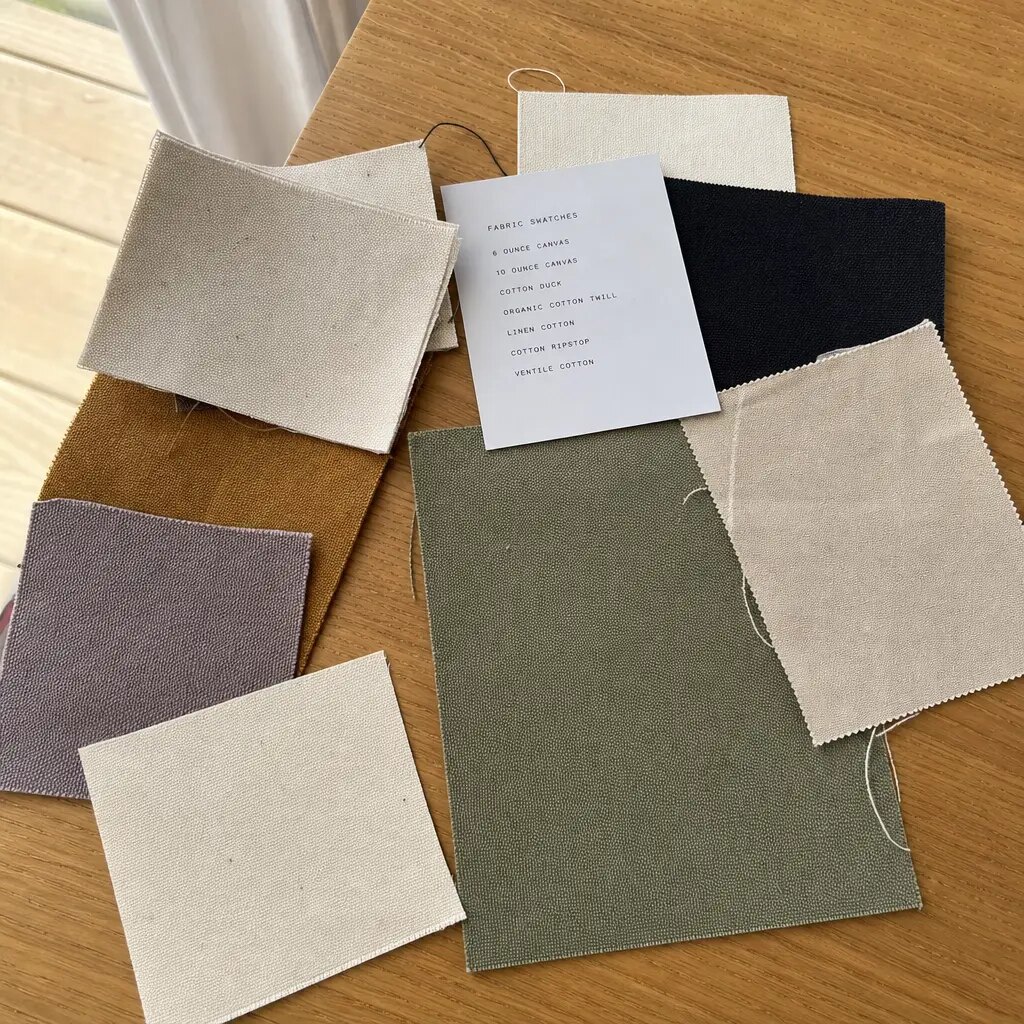
Fabric weight is one of the first decisions because it affects price, opacity, sewing speed, hand feel, and carton weight. Around 140 GSM can work for lightweight giveaways and event kits. A 160-180 GSM body usually feels more substantial for apparel brands, resale merchandise, and retail-adjacent programs. Heavier cotton can look premium, but it may raise freight cost and slow sewing, especially if the construction includes gussets or multiple trims.
- Define finished size in centimeters or inches and state the measurement reference points.
- Choose a GSM band that fits the channel: lighter for mass giveaways, midweight for branded merchandise, heavier only when the buyer will value the added hand feel.
- Specify plain weave, twill, canvas-like cotton, organic cotton, recycled blend, or conventional cotton if that distinction affects the buying decision.
- State intended use, such as apparel set, light accessories, school giveaway, event kit, or retail add-on, so the factory can judge seam strength and construction.
Choose fabric color and shrinkage standards with timing in mind
Natural cotton is often the simplest route for eco-positioned drawstring backpacks because it keeps the material appearance straightforward and may be easier to source when the supplier carries stock. Bleached white, black, and other standard colors can also move quickly if the mill or factory has them available in the target GSM. Custom-dyed colors are a different timeline. They add lab dip preparation, buyer review, dyeing, drying, finishing, and bulk shade control.
Shrinkage needs a decision before production starts. Cotton can move after washing or moisture exposure, and the supplier needs to know how the bag will be judged. Some programs only need finished dimensions at delivery. Others need a pre-wash and post-wash standard because the bag may be sold as a reusable accessory. If washability matters, define the test method, acceptable shrinkage, and whether the approved bulk size is measured before or after washing.
Shade control deserves the same clarity. Natural cotton can vary slightly from lot to lot, and that may be acceptable for some eco apparel brands. For retail programs or account-specific replenishment, shade variation may be more sensitive. Ask whether one fabric lot can cover the full order, whether future reorders will use the same reference, and what level of shade variation will be acceptable at final inspection.
- Use natural, bleached white, black, or supplier-stocked colors when timing is tight.
- Treat custom dyeing as its own approval path with lab dip review, bulk shade tolerance, and added schedule buffer.
- Define finished-size tolerance and, when needed, a separate shrinkage limit before cutting begins.
- Ask whether all SKUs can be produced from the same fabric lot or whether shade grouping will be needed across cartons.
Match the decoration method to the artwork and fabric
Decoration is one of the biggest schedule drivers after fabric. Screen printing is usually efficient for simple one- or two-color logos, bold marks, and repeat programs. It can be economical in bulk, but it still needs artwork review, screen setup, ink confirmation, and curing. Fine lines may fill in on textured cotton, so the factory should check the artwork against the actual fabric, not only against a digital mockup.
Transfer printing can help when artwork includes gradients, small details, or color complexity that is not practical for standard screen printing. The tradeoff is that the buyer should inspect adhesion, edge behavior, hand feel, and how the transfer sits on cotton texture. A print that looks crisp on a smooth synthetic sample may behave differently on a woven cotton drawstring bag.
Embroidery can look premium, but it is not automatically the best choice for lightweight cotton. Stitch density, backing, thread tension, and placement all matter. On lighter GSM fabric, embroidery can pucker or distort the panel. If the logo is large, the sewing time and cost can rise quickly. Use embroidery when the brand value justifies it and when the fabric can support the stitch plan.
- For screen print, confirm number of colors, Pantone target if applicable, vector artwork, print size, screen charges, and curing process.
- For transfers, request adhesion and hand-feel review on the actual cotton fabric used for bulk.
- For embroidery, confirm stitch count, backing, puckering risk, and whether the logo size affects folding or packing.
- Ask whether decoration is applied to cut panels or finished bags, because the sequence affects placement tolerance and scheduling.
Make placement, cords, and trims measurable
Placement language should be exact. A note like front center sounds simple, but it is not enough for bulk control. State the print width, print height, distance from the top edge, distance from side seams if relevant, and whether the reference point is the visible body, seam line, or folded top channel. That level of detail prevents arguments later when a shipment is functionally correct but visually inconsistent.
Cords also need a real specification. A braided cotton cord and a self-fabric cord create different looks, costs, and handling. Buyers should define cord diameter, finished length, color, knotting method, and whether both straps must hang evenly when worn. The drawcord is one of the first parts users touch, so poor symmetry or weak knots can make the product feel cheap even when the bag body is acceptable.
Trim choices should support the channel. A simple woven side label can be clean and efficient. Metal tips, contrast cords, multi-piece tags, inside labels, or hang tags may be right for certain retail programs, but every extra trim adds sourcing, sewing, inspection, and packing work. If a label sits inside a seam, the sewing sequence changes. If a print must avoid the cord channel, the artwork area may need to shrink. Treat these details as production inputs, not last-minute design notes.
- Write placement with fixed reference points and a tolerance band, not only descriptive words.
- Confirm label size, orientation, stitch method, edge finish, and whether it is sewn into a seam or applied on top.
- Define cord diameter, cord length, color, knot security, and open-close function.
- Ask for sample photos from the same angle the end customer or receiving team will see.
Structure MOQ by version, not only by total quantity
MOQ is often misunderstood because buyers ask for one number while factories manage several. A custom cotton drawstring backpack order may have separate minimums for fabric color, cord color, print version, label version, and packing version. A 3,000-unit order can be efficient if all units share one natural cotton body, one cord, and one print. The same 3,000 units split across six colorways, three logos, and two packing formats can behave like many small orders inside one PO.
Version count affects both price and lead time. Each version needs setup, segregation, counting, inspection, and carton control. The factory has to prevent mixed SKUs, manage different screens or labels, and pack cartons according to the buyer's distribution plan. More versions create more chances for shortages, mislabeling, shade mismatch, and partial shipment delays.
A stronger procurement strategy is to standardize the slowest pieces and vary only what creates real commercial value. For example, keep the same 160 GSM natural cotton body and braided cotton cord, then vary a one-color front print. Or use one woven label across all versions and handle account-specific hang tags through a later fulfillment step. This keeps production cleaner while still allowing the brand to support different accounts or regions.
- Ask for MOQ by fabric color, print design, print color count, cord color, label design, and packing version.
- Create a version matrix showing quantity, body color, cord color, artwork, label, packing, carton marks, and destination.
- Avoid changing both body fabric and artwork for small sub-quantities unless the account value supports the setup cost.
- For repeat programs, ask whether standard blanks can be produced first and decorated later if the supplier supports that model.
Use samples to prove repeatable production
A sample should answer a practical question: can the supplier make the bulk order this way, repeatedly? A showroom sample or generic blank bag is helpful for early selection, but it is not enough for final approval. A pre-production sample should use the same fabric GSM, color route, cord, decoration method, label, dimensions, and packing concept as bulk. If any material or process is substituted, mark it as a reference sample only.
Eco apparel brands often care about texture, hand feel, and presentation, and those details are difficult to approve from a mockup. A physical sample lets the buyer pull the cords, check closure smoothness, inspect seam bulk, fold the bag as it will be packed, and see whether the logo remains readable on cotton texture. It also gives the factory a control item for cutting, printing, sewing, and final inspection.
Sample approval should not be a casual email that says approved. Record the measurements, artwork file name, fabric reference, print method, trim details, packing notes, date, and approver. Add photos of the front, back, label, cord exit, stitching, and packed unit if packing is part of the order. If a change is approved after the sample, note whether the factory must create a revised sample or can proceed with a written deviation.
- Request a pre-production sample for custom print, sewn label, custom cord, custom color, gusset, or retail packing.
- Measure width, height, gusset, top channel depth, cord length, print size, and print placement from fixed points.
- Ask whether the sample was made on production equipment or in a sample room with different handling.
- Approve a packing sample when the order includes polybags, insert cards, hang tags, barcodes, carton dividers, or SKU-specific carton marks.
- Do not release bulk until the supplier confirms that bulk materials and methods match the approved sample.
Build the calendar around real factory steps
A factory calendar is more than sewing time. A typical order moves through artwork review, material confirmation, sample making, fabric cutting, printing or embroidery, curing or drying when printing is used, sewing, thread trimming, inline checking, final inspection, folding, packing, carton marking, and shipment handoff. Some steps can overlap. Others wait for a buyer approval or an outside supplier.
Fabric readiness is the early driver. If the supplier has the correct natural cotton fabric in the target GSM, cutting can start soon after approvals. If the fabric must be woven, dyed, finished, or moved from another mill, the order depends on outside capacity. Decoration sequence also matters. Printing on cut panels can improve flatness and placement control, while printing on finished bags may support later decoration but can be harder near seams, gussets, or cords.
QC and packing need their own dates. Buyers sometimes assume inspection happens immediately after sewing, but a real final inspection requires finished goods, carton access, and time for documentation. If defects are found, rework needs a window. If carton marks or barcodes arrive late, finished goods can wait even though production is complete. Leave a realistic buffer after inspection for rework, carton relabeling, freight booking, export documents, and shipment release.
- Ask for a stage schedule covering artwork check, sample, fabric booking, cutting, printing, sewing, inline QC, final inspection, packing, and handoff.
- Identify which steps are internal and which depend on mills, printers, label suppliers, or packaging vendors.
- Request first-bulk photos after initial decoration and after the first completed packed cartons for high-visibility orders.
- Hold freight booking assumptions lightly until carton size, gross weight, and ready date are confirmed.
Set QC rules before bulk starts
Quality control for cotton drawstring backpacks should be practical, measurable, and tied to use. The buyer does not need to reject every natural cotton slub or small texture variation. The important issues are function, brand appearance, and pack-out accuracy. The bag must open and close properly, hold the intended light load, present the logo cleanly, match the approved size, and arrive in cartons that the warehouse can receive without confusion.
A good inspection plan includes incoming fabric checks, inline sewing checks, print checks, and final packed-goods inspection. Incoming checks catch stains, severe shade variation, incorrect GSM, odor, holes, and fabric defects before cutting. Inline checks catch seam problems while rework is still manageable. Print checks catch registration, color, curing, edge clarity, and placement before the full batch is finished. Final inspection verifies size, appearance, function, quantity, carton marks, and packing.
The key procurement move is to define acceptance rules before there is a problem. Decide what counts as critical, major, and minor. Critical defects might include wrong branding, unsafe contamination, or a closure that cannot function. Major defects might include broken stitching, unreadable print, wrong size outside tolerance, incorrect packing, or severe shade mismatch. Minor defects might include small thread ends or light cotton texture variation that does not affect presentation.
- Use a measurement sheet for finished width, height, gusset, top channel depth, print position, and cord length.
- Check stitching at the top channel, side seams, bottom corners, drawcord exit points, and label attachment.
- Open and close a representative number of bags and pull the cords with normal hand force.
- Inspect print clarity on unpacked bags and after folding because cotton texture and carton pressure can change appearance.
- Verify carton count, SKU, PO number, destination, and carton sequence marks against the packing list.
- If using a formal inspection standard, write the AQL level into the PO; many buyers use AQL 2.5 for major defects and AQL 4.0 for minor defects as a reference.
Treat packing, cartons, and quote comparison as procurement work
Packing decisions change lead time, landed cost, warehouse efficiency, and the sustainability profile of the order. Bulk carton packing is usually the fastest route for wholesale, events, internal brand use, and warehouse replenishment. Bags are folded or stacked by count, placed into master cartons, and labeled for receiving. This reduces labor and carton volume compared with individual polybags.
Individual packing may be necessary for retail, marketplace fulfillment, or third-party warehouse requirements. It adds work: folding each bag consistently, inserting cards, applying barcode stickers, checking orientation, counting inner packs, and separating SKUs. If the buyer adds retail packing after the quote is approved, the factory may need to revise labor time, carton quantity, gross weight, and cost.
Quote comparison should be handled with the same discipline. A low unit price does not mean much if the specs are different. Supplier A may quote 160 GSM natural cotton with one-color screen print, bulk packing, and FOB terms. Supplier B may quote 120 GSM fabric, an unspecified print method, no individual packing, and EXW terms. Those are not the same offer. Normalize GSM, decoration, labels, packing, carton count, incoterms, payment terms, sample costs, setup charges, and quote validity before choosing.
- Define whether bags are bulk packed, inner-bundled, individually polybagged, tagged, barcoded, or retail-ready.
- Set carton quantity, maximum gross weight, carton dimensions if constrained, SKU separation, and outer mark format before packing starts.
- Confirm whether cartons can mix colorways or must remain single-SKU for receiving.
- Provide barcode files and carton mark instructions before finished goods are waiting.
- Ask whether the supplier controls cutting, sewing, printing, and packing, or whether major steps are outsourced.
- Compare setup charges, sample fees, carton charges, packing labor, incoterms, and payment terms alongside unit price.
Specification comparison for buyers
| Spec decision | Recommended option | When it fits | Buyer risk to check |
|---|---|---|---|
| Fabric weight | 140-180 GSM cotton for most programs; 160-180 GSM for a more retail-ready hand feel | Giveaways, apparel add-ons, conference kits, school programs, resale merch, and light lifestyle carry | A spec that is too light can look thin or show seam stress; a spec that is too heavy can raise cost, reduce carton efficiency, and slow sewing |
| Fabric color route | Natural, bleached white, black, or other stock colors when timing matters | Launches with fixed ship windows or repeat replenishment programs | Custom dyeing adds lab dip approval, shade control, and another sourcing step before bulk can start |
| Shrinkage target | Define a finished-size tolerance and, if washability matters, a shrinkage limit before production starts | Programs that expect laundering, long-term use, or retail resale expectations | Raw cotton can move after washing; if the buyer never defined the wash standard, the supplier may judge shrinkage differently |
| Decoration method | 1-2 color screen print for simple logos; transfer for detailed art; embroidery only when the fabric can support it | Brand marks, retail merchandising, and campaign artwork with different complexity levels | Fine detail can fill in on textured cotton; embroidery can pucker lightweight fabric if backing and stitch density are not controlled |
| Logo placement | Centered front print or a clearly measured side label with written tolerances | Programs that need consistent presentation across cartons and regions | Vague placement language creates disputes even when the bags are functionally correct |
| Cord specification | Braided cotton cord or self-fabric cord with a defined diameter and finished length | Eco-positioned programs that want a softer, lower-plastic look | Uneven cord length, weak knotting, or poor symmetry can make the bag look off even if the sewing is acceptable |
| Construction | Flat body for speed, or 5-8 cm gusset if usable volume matters; reinforce the top channel and bottom corners | Giveaway bags, apparel kits, retail use, or bundled products | Gussets change cutting yield, sewing sequence, and carton volume; weak channel stitching is a common failure point when fill weight is not defined |
| MOQ structure | Quote MOQ by fabric color, print version, cord color, label version, and packing version | Programs with multiple SKUs, regional artworks, or wholesale account splits | A low headline MOQ can hide setup charges or separate minimums for each version |
| Packing method | Bulk carton packing unless retail-ready presentation is required | Wholesale distribution, event fulfillment, internal brand programs, and warehouse replenishment | Individual polybags, barcodes, hang tags, and inserts add labor, time, and carton volume |
Buyer checklist before sampling
- Issue one RFQ spec sheet that states finished size, fabric GSM, weave or hand-feel target, fabric color, cord type, decoration method, print size, label details, packing, quantity by SKU, and target ship date.
- State quantity by colorway, artwork version, packing version, and destination, not only the total order volume.
- Ask the supplier to separate sample lead time, bulk production lead time, QC and packing time, and freight handoff timing.
- Confirm when the lead time clock starts: deposit receipt, artwork approval, sample approval, fabric approval, or all of the above.
- Request a physical pre-production sample for branded or retail programs, and define which sample details control bulk approval.
- Set measurable tolerances for bag dimensions, GSM, print placement, cord length, stitching, shade, carton count, and visible defects.
- Confirm whether fabric is in stock, booked after PO, or custom dyed, and ask what happens if the chosen color is unavailable.
- Compare quotes on the same basis: GSM, fabric color, print positions, label type, packing method, carton quantity, incoterms, and payment terms.
- Define carton markings, SKU separation, inner pack requirements, carton weight target, barcode placement, and any retail compliance needs before production.
- Reserve time after final inspection for rework, carton relabeling, freight booking, customs documents, and destination delivery.
Factory quote questions to send
- What exact fabric GSM, weave, color route, and GSM tolerance are included in your quote?
- Is the fabric in stock now, or does it require booking, bleaching, dyeing, or lab dip approval?
- Does the quoted lead time start from deposit, artwork approval, fabric approval, pre-production sample approval, or final packing approval?
- What is the MOQ per fabric color, per cord color, per print version, per label version, and per packing version?
- How many print setups are required for this order, and are screen charges included or listed separately?
- Will the decoration be applied to cut panels or to finished bags, and what does that mean for placement tolerance?
- Can you provide a pre-production sample using the same fabric, print method, cord, label, and packing as bulk?
- What dimensional, print placement, GSM, shade, stitching, and carton count tolerances will you use for bulk inspection?
- What defects are considered critical, major, or minor for this product, and what inspection standard do you recommend?
- What packing method is included, what is the estimated carton quantity, carton size, gross weight, and SKU separation plan?
Quality-control points to confirm
- Fabric weight tolerance: confirm the target GSM and an acceptable range before cutting, and record the tested lot weight on the approval sheet.
- Fabric appearance: check for stains, oil marks, holes, weaving flaws, excessive slubs, shade banding, odor, and any visible contamination before bulk cutting.
- Bag dimensions: measure finished width, height, gusset if applicable, and top channel depth from the same reference points on every sample.
- Dimension tolerance: set a written tolerance, such as plus or minus 0.5 cm for smaller measurements and plus or minus 1.0 cm for larger finished dimensions, unless the approved sample specifies tighter limits.
- Stitching: inspect the top channel, side seams, bottom corners, drawcord exit points, and label attachment for skipped stitches, seam opening, loose thread ends, and puckering.
- Print quality: verify registration, coverage, edge clarity, curing, placement, and readability after folding and repacking from cartons.
- Print placement tolerance: define the acceptable offset from the approved reference point, commonly within 0.5 cm for a simple front print if the bag design allows it.
- Cord quality: check cord length, thickness, symmetry, knot security, and smooth open-close function, and confirm both straps hang evenly when worn.
- Label and trims: confirm label size, placement, orientation, stitching, and edge finish, and verify that the trim does not interfere with folding or packing.
- Function check: load a representative weight that matches the intended use and cycle the closure multiple times to confirm the seams and cord exits hold under normal handling.