Define the Bakery Use Case First
A canvas zipper portfolio can serve several bakery jobs: a retail gift item, a wholesale account folder, a tasting appointment kit, a route-driver document case, a staff folder, or a trade-show handout. Those uses should not be sourced from one vague specification. Retail pieces need clean front panels, barcode control, consistent packing, and shelf-ready presentation. Operational folders need stronger zipper function, reliable pocket security, and tolerance for repeated handling.
Start the supplier conversation with the contents. State whether the portfolio must hold A4 sheets, US letter invoices, laminated menus, cake consultation forms, distributor price lists, gift certificates, coupons, recipe cards, a tablet, or mixed paper inserts. Include the approximate sheet count or total thickness. An empty sample can look acceptable and still fail when stiff menus or multiple paper packs are inserted.
This definition keeps a low-cost promotional pouch quote from being compared with a true document portfolio. For the keyword requirement, the practical intent is clear: a custom canvas zipper portfolios supplier compliance checklist for artisan bakeries should help buyers compare factories on evidence, fit, materials, decoration, QC, and packing rather than sales claims.
- User: retail shopper, wholesale customer, bakery salesperson, route driver, event guest, or staff member.
- Contents: paper size, sheet count, insert thickness, tablet dimensions, or mixed document bundle.
- Channel: bakery counter, e-commerce bundle, wholesale kit, distributor shipment, or trade show.
- Handling level: one-time gift, seasonal campaign, daily use, or repeat retail SKU.
- Likely failures: wrong fit, weak zipper, stained canvas, poor logo placement, crushed packing, or mixed cartons.
Turn Brand Direction Into Measurable Specs
Words such as rustic, premium, sturdy, natural, and artisan help creative teams, but they do not control factory output. Convert brand direction into measurements: finished outside size, usable internal size, gusset depth, zipper path, opening direction, corner radius, seam allowance, fabric weight, lining, pocket layout, logo size, logo placement, label position, and packing method.
Write both the finished size and the functional capacity. A4 paper is 210 x 297 mm, and US letter is 8.5 x 11 in. Add clearance for paper thickness, zipper tape, seam allowance, lining, and rounded corners. If the portfolio must hold a tablet, provide the device size and case thickness instead of using a generic tablet description.
Construction should also be explicit. Confirm whether the zipper runs along one side, two sides, or three sides. State whether corners are square, rounded, bound, or turned. Define whether inside seams are hidden, bound, or acceptable as raw edges. Interior details such as document sleeves, pen loops, and card slots should be measured from fixed reference points so they do not drift in bulk production.
- Body: outside size, internal clearance, gusset, corner radius, zipper path, opening direction, and tolerance.
- Construction: seam allowance, binding, turning method, lining, reinforcement, edge finish, and thread color.
- Interior: sleeve, divider, card slot, pen loop, elastic strap, pocket opening, and label location.
- Branding: logo size, placement from fixed edges, color reference, method, side label, and hangtag location.
- Packing: flat or folded pack, individual wrap, insert board, carton quantity, SKU split, and carton marks.
Specify Canvas With Evidence
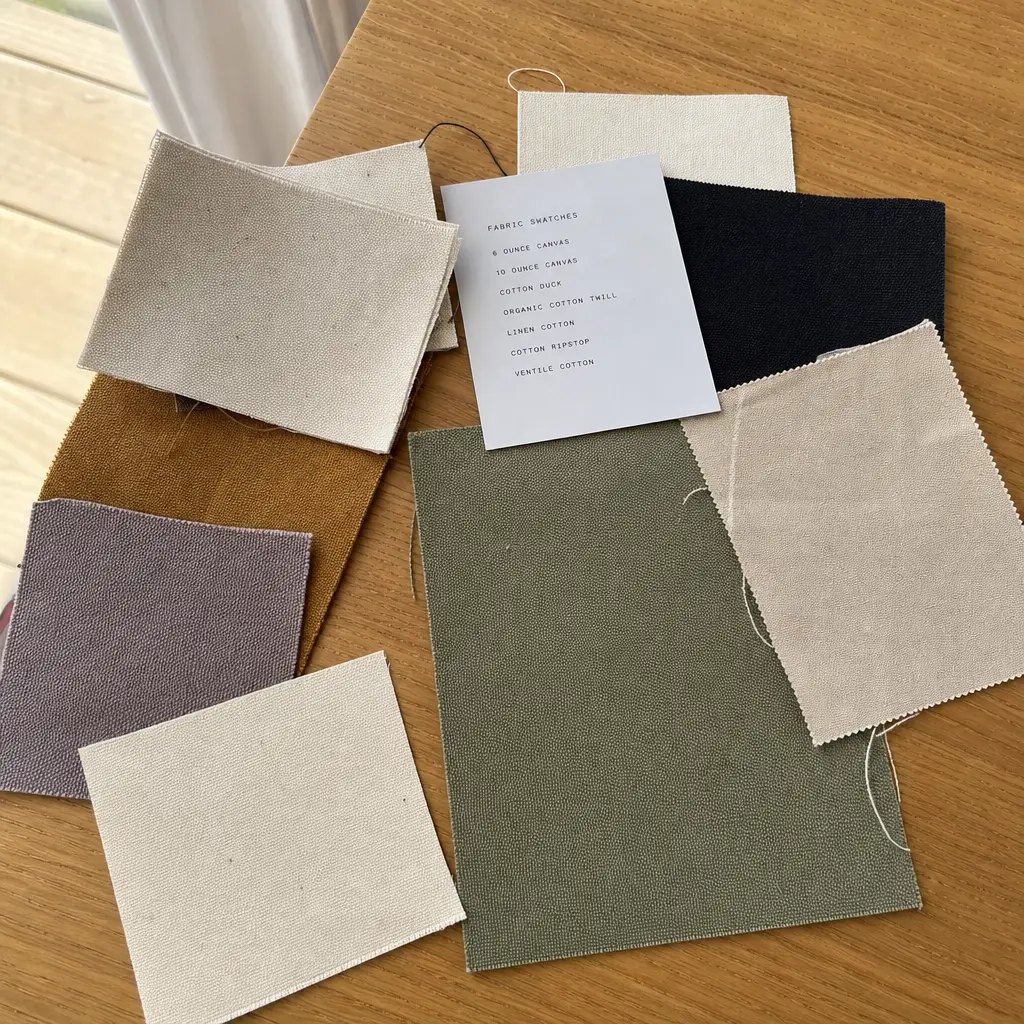
Canvas may be quoted in ounces per square yard, GSM, or loose terms such as medium and heavy. For buying control, ask for the supplier's weight description, a GSM record, and a labeled physical swatch. A lighter canvas can work for low-risk promotional folders, especially with lining or insert boards. Heavier canvas can feel premium, but it can also create bulky seams, stiff zipper corners, and higher freight weight. Confirm the final choice through a working sample, not fabric weight alone.
Natural cotton canvas suits many bakery brands because it sits well beside kraft cartons, bread bags, flour sacks, and handmade retail displays. It is not uniform like coated synthetic fabric. Seed specks, slubs, and slight weave variation may be acceptable if they are part of the approved look. Oil marks, mildew, dirty handling, strong odor, dark contamination, and large stains should be rejected.
Finish changes performance. Unwashed canvas can feel crisp and hold shape. Washed canvas can feel softer but needs closer shade and shrinkage review. Dyed canvas can match bakery colors but usually adds color approval work and may raise MOQ. Backing or lining can improve structure and document protection, but it affects cost, sewing behavior, weight, and recyclability.
- Approve shade, hand feel, surface texture, stiffness, and odor with physical swatches, not photos alone.
- Request GSM evidence because ounce labels are not applied consistently across all suppliers.
- Separate approved natural variation from defects such as oil, mildew, stains, odor, and dirty handling.
- Validate heavy canvas at zipper corners before assuming it is better for the portfolio.
- Retain swatches by PO, SKU, fabric lot, finish, logo method, supplier, and approval date.
Treat the Zipper as the Main Function
The zipper is not a small trim detail on a portfolio. It determines whether the product works once documents are inserted. Avoid vague specifications such as black zipper or metal zipper. Define zipper type, gauge, tape width, tape color, teeth finish, slider body, puller shape, end stops, opening direction, and whether the zipper must travel around corners.
Nylon coil zippers are often practical for canvas portfolios because they are flexible and usually move more smoothly around curved openings. Metal zippers can create a more premium look, but buyers should check plating, burrs, corrosion risk, puller sharpness, added weight, and whether the puller dents the front panel in packing. Molded plastic zippers may work for casual programs but may not suit every bakery brand position.
Approve the zipper on the actual portfolio, not only as loose tape on a trim card. Open and close the sample empty, then repeat with the intended paper bundle. Watch the corners, end stops, slider resistance, tape twisting, stitch line, and puller position. Any change in zipper source, tape color, puller finish, or gauge should require buyer approval before bulk sewing continues.
- Define type, gauge, tape width, tape color, teeth color, slider, puller, and end-stop method.
- Test full zipper travel when empty and filled with the intended documents or inserts.
- Check corners for catching, twisting, wavy tape, tight turning, or uneven stitch tension.
- Inspect metal zippers for burrs, plating issues, corrosion risk, weight, and sharp puller edges.
- Record the approved zipper on a trim card with physical sample, supplier reference, color, and date.
Match Decoration to Textured Canvas
Bakery portfolio branding is often restrained: a bakery name, wheat mark, pastry icon, founding date, wholesale badge, or short slogan. The decoration method should fit both the artwork and the fabric surface. Screen printing is usually strong for one-color or two-color solid artwork on cotton canvas, but the fabric texture can soften fine edges, tiny text, and reversed details.
Heat transfer can support full-color artwork or many logo versions, but buyers should review edge feel, gloss, flexibility, and cracking risk. A shiny transfer may not match a natural bakery aesthetic. Embroidery can add a tactile premium detail for small marks, but large filled embroidery may pucker lighter canvas or create an uneven inside surface. Woven side labels and cotton patches can help keep brand identity consistent when canvas shade varies.
Decoration approval should include the artwork file version, logo dimensions, placement from fixed edges, color reference, acceptable appearance on texture, and reprint rules. For multi-location bakery groups, each logo version needs a spelling, color, placement, orientation, and carton-label check.
- Screen print: suitable for solid bakery logos, limited colors, slogans, and repeat artwork.
- Heat transfer: useful for color detail; check gloss, edge lift, flexibility, and cracking.
- Embroidery: premium for small marks; test puckering, backing feel, and inside interference.
- Woven label: good for subtle repeat branding across natural canvas shade variation.
- Patch branding: control material, odor, colorfastness, stitch quality, edge finish, and placement.
Build Quotes Around Cost Drivers
MOQ is shaped by material sourcing, cutting efficiency, decoration setup, label ordering, zipper purchasing, packing materials, and line scheduling. A standard natural-canvas portfolio with stock zipper and one-color screen print usually has a lower MOQ than a dyed canvas portfolio with lining, custom labels, and retail packaging. Ask for MOQ by variable instead of accepting one general number.
SKU structure changes cost quickly. An order of 2,000 pieces becomes more complex if split across eight bakery logos, two canvas colors, and two zipper colors. Each small batch may need separate artwork checks, setup, label sorting, carton marking, and inspection. A quote matrix should show quantity by size, canvas color, zipper color, logo version, packing method, and destination.
Request a base-product price plus optional upgrades. Price the same specification at several quantity tiers, then list add-ons such as heavier canvas, lining, document sleeve, card pocket, woven label, belly band, barcode sticker, insert board, and individual packing. This prevents unit-price negotiation from hiding quality or packing compromises.
- Lower MOQ: standard size, natural canvas, stock zipper, one-color print, and bulk carton packing.
- Higher MOQ: dyed canvas, custom zipper tape, private labels, lining, complex pockets, or retail kits.
- Setup costs: multiple bakery logos, Pantone colors, small print runs, or frequent artwork changes.
- Packing costs: hangtags, belly bands, barcodes, insert boards, retail cartons, or destination bundles.
- Quote lines: unit price, sample charge, setup charge, label cost, packing cost, carton data, and upgrades.
Check Supplier Compliance by Evidence
Supplier compliance should be checked with product evidence, not only polished catalog images. A direct sewing factory should show similar portfolio or business-bag work, zipper installation details, cutting photos, and inspection records. A trading company may be useful for mixed bakery programs, but the buyer should confirm who controls materials, who authorizes corrective action, and which factory will produce the order.
A strong supplier file includes business identity, production capability, material sources, trim approvals, inspection process, and packing control. Ask for labeled swatches, zipper samples, print strike-offs, label samples, and a trim card. Request process photos at key stages: incoming fabric check, cutting, logo application, sewing, trimming, needle control or broken-needle procedure, final inspection, and packing.
Commercial responsibility should be written into the purchase order. State that no fabric, zipper, puller, label, logo method, packing component, or carton count may be changed without written buyer approval. Define what happens if inspection fails: sorting, rework, remake, discount, replacement timing, and cost responsibility. This matters when bakery launches, event dates, distributor windows, or retail receiving appointments cannot move.
- Factory evidence: similar zipper portfolios, line photos, cutting photos, zipper work, and inspection records.
- Material evidence: canvas swatches, zipper sample, print strike-off, labels, patches, and packing mockup.
- Process evidence: fabric check, cutting, printing, sewing, trimming, needle control, inspection, and carton sealing.
- Commercial evidence: itemized quote, lead times, payment terms, carton data, and quote validity.
- Traceability evidence: PO number, fabric lot, zipper source, artwork version, retained sample, and inspection report.
Approve Samples Through Gates
Sampling works best as a controlled sequence. A development sample checks shape, size, pocket layout, zipper path, and construction concept. A decoration strike-off checks ink color, transfer finish, logo sharpness, edge quality, and placement on the selected canvas. A pre-production sample should use bulk canvas, bulk zipper, final decoration, final labels, and intended packing.
Keep an approval file with measured dimensions, photos, fabric references, zipper details, artwork version, color references, packing method, and written comments. A physical golden sample is more useful than photos because photos cannot capture canvas hand feel, odor, zipper resistance, stiffness, or true shade. Buyer and factory should each retain signed samples marked with PO number, SKU, approval date, and sample status.
No mass cutting or bulk printing should begin until the pre-production sample is approved. Any change in fabric lot, zipper source, puller, lining, print ink, label, carton count, or packing material should trigger buyer confirmation. For multi-logo programs, each bakery name and artwork version should be approved before printing and packed under the correct SKU.
- Development sample: confirms dimensions, shape, construction, pocket layout, and zipper path.
- Strike-off: confirms logo color, coverage, edge quality, registration, and placement on actual canvas.
- Pre-production sample: confirms bulk material, zipper, labels, sewing, trimming, and final packing.
- Golden sample: retained by buyer and factory with PO, SKU, artwork version, date, and approval status.
- Change control: reapprove fabric lot, zipper source, puller, label, ink, lining, carton count, or packing.
Set QC and Defect Rules Early
Canvas zipper portfolios have a different defect profile from simple tote bags. A portfolio can fail if documents do not fit, the zipper catches, corners twist, or the front panel is stained. Classify defects before production. Critical defects can include unsafe sharp parts, broken needle contamination, mold, severe odor, wrong material, wrong logo, or foreign matter. Major defects can include zipper failure, size outside tolerance, visible stain, loose seam, open pocket seam, cracked print, wrong label, or wrong SKU packing.
Many buyers use ANSI/ASQ Z1.4 or ISO 2859-1 sampling plans for final inspection. If using AQL, a common consumer-goods starting point is 0 critical, 2.5 major, and 4.0 minor, but the buyer should adjust by channel risk, receiving rules, and brand tolerance. Retail programs may need stricter front-panel cosmetic rules. Internal staff folders may tolerate small non-front-panel marks if function is sound.
Inspection should compare bulk pieces against the approved sample and written specification. Do not let the inspector rely only on general bag workmanship. For portfolios, the most important checks are document fit, zipper travel, front-panel appearance, logo placement, pocket security, carton accuracy, and SKU separation.
- Function checks: document fit, full zipper travel, corner movement, end stops, pocket security, and slider pull.
- Measurement checks: outside size, internal clearance, gusset, logo placement, pocket size, and label position.
- Appearance checks: canvas shade range, stains, odor, print quality, thread trimming, and front-panel cleanliness.
- Construction checks: seam strength, backtacks, skipped stitches, puckering, raw edges, and reinforcement points.
- Decision rules: define critical, major, and minor defects before production and before final inspection booking.
Control Packing, Cartons, and Receiving
Packing affects both quality and landed cost. Canvas can crease, absorb odor, collect dust, and show abrasion if packed poorly. Individual polybags protect well but may conflict with reduced-plastic goals. Paper belly bands support a natural retail look but protect less against moisture and rubbing. Decide the packing method based on channel, receiving rules, moisture risk, and brand position.
Ask for pieces per inner pack and export carton before approving the quote. Confirm carton dimensions, gross weight, net weight, CBM per 1,000 pieces, carton marks, barcode visibility, and destination split. Heavy cartons create warehouse handling problems, while weak cartons can crush front panels and damage presentation.
Mixed bakery logos, colors, or sizes should not share cartons unless the packing list and carton marks are clear. For retail or distributor programs, require carton labels that identify PO number, SKU, color, logo version, quantity, carton number, destination, and gross weight. If a receiving center has barcode or pallet rules, share them with the supplier before final packing materials are ordered.
- Packing method: bulk pack, individual bag, paper wrap, belly band, insert board, retail carton, or mixed kit.
- Protection: moisture barrier, dust control, abrasion prevention, crease control, and odor separation.
- Carton data: units per carton, dimensions, gross weight, net weight, CBM, carton marks, and destination split.
- SKU control: separate logos, colors, sizes, barcodes, and destination cartons unless mixing is approved.
- Receiving documents: packing list, carton labels, inspection report, commercial invoice, and any named test or compliance documents.
Specification comparison for buyers
| Supplier option | What to verify | Commercial advantage | Buyer risk to control |
|---|---|---|---|
| Direct sewing factory | zipper source record, production-line zipper test photos, approved trim card, cutting marker photos, and final open-carton count | Better sample-to-bulk control and faster production feedback | May be weaker on export paperwork or branded packing unless checked early |
| Trading company | Factory name, production photos, trim-source proof, and who owns QC decisions | Can coordinate small mixed orders and extra services | Markup can hide real factory capability and slow defect decisions |
| Specialized bag workshop | zipper gauge, zipper tape width, puller finish, binding tape, corner reinforcement, seam allowance, and document-size tolerance | More practical for detailed construction, trims, and repeat programs | Capacity may be limited during peak seasons |
| Low-price general supplier | 300D-600D polyester, 10-12 oz canvas, or recycled PET with backing stiffness matched to document weight | Useful for simple promotional runs with loose specs | Material downgrades, weak packing, and vague inspection scope can erase savings |
| Retail-ready supplier | flat packing, insert board if needed, SKU bundles, carton weight limit, moisture protection, and barcode visibility | Can handle labels, SKU separation, carton marks, and receiving rules | Higher unit cost must be compared against reduced warehouse work |
| Compliance-focused supplier | Fabric records, labeling review, test plan, and production traceability | Safer for retail programs and repeat brand orders | Documentation claims need evidence, not only sales language |
| Local sample room plus bulk factory | Signed sample, bulk factory handoff, first-piece photos, and deviation owner | Good for complex branding before large production | Sample room quality may not match bulk line unless handoff is controlled |
Buyer checklist before sampling
- Define the portfolio use case: retail SKU, wholesale welcome kit, tasting appointment folder, route-driver document case, staff folder, loyalty gift, trade-show handout, or distributor sales tool.
- List the exact contents: A4 sheets, US letter invoices, laminated menus, gift certificates, recipe cards, coupons, tablet, or mixed inserts; include sheet count or total thickness where relevant.
- Specify finished outside size, usable internal size, gusset depth, zipper path, opening direction, corner radius, and tolerance; validate tight dimensions by sample fitting.
- Specify canvas by fiber, weave, finish, weight description, and GSM record; approve a physical swatch because ounce descriptions and natural shade can vary.
- Define acceptable natural-canvas variation: shade band, seed specks, slub level, weave irregularity, wrinkles, backing, lining, odor, stains, and dirty handling limits.
- Define zipper type, gauge, tape width, tape color, slider finish, puller shape, end stops, opening direction, and corner performance on the final sample.
- Lock decoration details: method, artwork file, color reference, logo size, placement from fixed edges, acceptable texture effect, and strike-off approval on selected canvas.
- List all components: document sleeve, card slot, pen loop, lining, woven label, care/content label, hangtag, barcode, belly band, insert board, or no retail labeling.
- Ask for pricing by variable: order quantity, canvas color, canvas weight, zipper color, size, lining, pocket layout, print colors, label type, and packing method.
- Require a pre-production sample made with bulk canvas, bulk zipper, final logo method, final labels, and intended packing before mass cutting or bulk printing.
Factory quote questions to send
- What is your MOQ for a standard natural-canvas zipper portfolio with stock zipper tape and one-color print, and how does MOQ change for custom size, dyed canvas, lining, custom zipper color, or multiple bakery logos?
- Which canvas options are available from stock, and can you quote the same construction in two or three weight levels with GSM records and labeled swatches?
- What is the canvas fiber content, weave, finish, backing or lining, and shade-control process? If the fabric is dyed, washed, laminated, or backed, what sample approval evidence will you provide?
- Which zipper will be used: nylon coil, metal, or molded plastic; what gauge, tape width, slider, puller, teeth finish, and end-stop method are included in the quoted price?
- How do you check zipper function during production, and how many pieces are checked in-line and at final inspection? Please describe any pull, cycle, or filled-product checks you can support.
- What seam allowance, thread type, reinforcement points, edge finish, and stitch density will you use, and will these be controlled against the approved sample rather than a generic standard?
- Which logo method do you recommend for our artwork on textured canvas, and what details are risky: fine lines, small text, reversed type, color gradients, large solid fills, or edge registration?
- What is included and excluded in the unit price: fabric, zipper, lining, pockets, labels, print setup, sample charge, artwork handling, individual packing, export carton, carton marks, and documents?
- What are the lead times for artwork review, material sourcing, development sample, strike-off, pre-production sample, bulk production, final inspection, and shipment booking after deposit?
- How many pieces are packed per inner pack and export carton, and what are the estimated carton dimensions, gross weight, net weight, and CBM per 1,000 pieces?
Quality-control points to confirm
- Finished outside length, height, and gusset should match the approved sample and written tolerance; document portfolios often start with plus or minus 5 mm unless the buyer requires tighter fit.
- Usable internal size must be checked with the real contents, allowing for paper thickness, zipper tape intrusion, seam allowance, lining, and corner shape.
- Canvas should match the approved swatch or supplier GSM record, with shade, hand feel, weave, specks, slub level, surface cleanliness, and odor reviewed before cutting and at final inspection.
- Natural canvas shade should be approved as a range, not one photo; cream, beige, grey, and speckled tones can shift by lot and lighting.
- Zipper should run smoothly through full travel when empty and when filled, with no corner catching, loose teeth, broken slider, twisted tape, rough puller, weak end stop, or wavy installation.
- Zipper gauge, tape color, slider finish, puller shape, and teeth color should match the trim card; any source or finish change should require buyer approval.
- Visible topstitching should be straight, secure, and consistent with the approved sample; stitch-density numbers should be treated as sample-based requirements, not universal rules.
- Seams should have secure backtacks at zipper ends, pocket stress points, and pull points, with no skipped stitches, popped seams, needle damage, puckering, loose threads, or unintended raw edges.
- Logo placement should remain within the agreed tolerance, commonly plus or minus 3 mm to 5 mm depending on artwork size, fabric texture, and panel shape.
- Logo appearance should match the approved strike-off under agreed lighting, with no obvious bleeding, cracking, ghosting, pinholes, ink smears, transfer-edge lifting, scorch marks, or contamination.