Why Canvas Zipper Portfolio RFQs Get Misquoted
A custom canvas zipper portfolio can look like a straightforward item in a catalog image. In production, it is rarely that simple. One factory may price a flat 10 oz cotton pouch with a stock zipper and no lining. Another may quote a 12 oz lined portfolio with a document sleeve, bound seams, reinforced zipper ends, and retail packing. A third supplier may include custom dyed fabric, branded pulls, hangtags, property-specific barcodes, and stronger export cartons. The product name sounds identical. The cost structure is not.
That gap matters in hotel retail procurement because the same portfolio may be used in several different ways. A resort shop needs clean front panels, a polished hangtag, and predictable shelf presentation. A guest welcome kit needs consistent logo placement and cartons sorted by property. A conference portfolio must fit papers, pens, and schedules without fighting the zipper. A distributor program needs a specification that can be repeated next season without reinterpreting every detail.
A stronger RFQ does not overcomplicate the purchase. It narrows the guessing. It tells every supplier to price the same fabric weight, finished size, zipper grade, lining, pocket layout, logo method, reinforcement, packing, and inspection standard. When assumptions are visible, buyers can compare quotes on the same basis instead of discovering hidden differences after sampling.
- Use finished dimensions, not only a product name, paper size, or reference image.
- Separate a stock-material quote from custom dyed fabric, custom zipper tape, or branded hardware options.
- Define logo method, size, color, and placement before asking for final pricing.
- List pockets, lining, binding, interlining, and reinforcement as priced construction details.
- Include retail and export packing because sleeves, hangtags, barcodes, and carton allocation affect cost and operations.
RFQ Template Structure for Hotel Retail Procurement
A procurement-ready RFQ should read like a compact technical brief, not a mood board. Start with the buyer name, product name, destination market, intended sales channel, order quantity range, quote deadline, and required delivery window. Then move into the product specification: finished size, usable fit, zipper path, canvas, lining, pockets, reinforcement, logo, labels, packing, and QC expectations. The final part should cover commercial terms such as MOQ, tiered pricing, sample charges, tooling, setup fees, Incoterm, payment terms, and quote validity.
The intended use deserves one clear sentence near the top. A luxury resort shop portfolio may need stricter front-panel fabric grading, individual sleeves, hangtags, and barcode labels. A hotel conference portfolio may prioritize A4 or US letter fit, a reliable zipper, and a pen loop. An in-room gift may need presentation packing and cartons allocated by property. These choices influence material selection, packing labor, inspection steps, and sometimes MOQ.
If procurement has a target price, state the basis. EXW, FOB, CIF, DDP, and landed cost are not interchangeable. If there is no target, request tiered quotes so the team can see the cost effect of 300, 500, 1000, and 3000 pieces. Ask suppliers to list exclusions as well. A unit price that excludes screen charges, embroidery digitizing, branded pull tooling, hangtags, barcode labels, stronger cartons, or inspection support can look attractive until the missing items are added back.
- RFQ header: buyer name, item name, channel, destination, quantity range, quote due date, and required ship date.
- Technical brief: finished size, zipper opening, canvas spec, lining, pocket layout, logo method, labels, and packing.
- Commercial request: MOQ by color and logo, price tiers, setup charges, sample fees, tooling, Incoterm, payment terms, and quote validity.
- Attachments: vector artwork, Pantone references, dimension drawing, reference photos, packing example, barcode rules, and QC checklist.
- Supplier response: require confirmation of assumptions, substitutions, component availability, and lead time by stage.
Dimensions, Fit, Zipper Path, and Daily Use
Begin the RFQ with finished outside dimensions and usable internal fit. A portfolio may be interpreted as an A4 document case, US letter padfolio, tablet sleeve, menu holder, travel organizer, notebook pouch, or guest document wallet. The factory needs to know what the finished piece must hold and how easily a guest, shopper, or conference attendee should remove those contents. Paper size alone is not enough because seam allowance, zipper tape, lining, pocket placement, and rounded corners all reduce usable space.
As a reference, A4 paper is 210 x 297 mm. US letter paper is 8.5 x 11 inches, or about 216 x 279 mm. A canvas portfolio intended for documents normally needs added width and height, especially when it carries a paper stack or has a zipper running around two sides. An outside dimension around 340 x 250 mm may be suitable for some A4-type uses, while US letter fit may be around 345 x 255 mm depending on the zipper path and construction. The safer approach is to state both the contents and the required usable internal dimensions, then ask the supplier to confirm them after sewing.
Zipper path changes both function and cost. A top zipper is simple and behaves like a document pouch. An L-shaped two-side zipper gives better access and is common for portfolios. A three-side zipper opens wider, but it adds labor and puts more stress on the corners. If the portfolio must lie flat on a desk, hold a notebook set, protect a tablet, or close over a thick welcome pack, say so before the first sample is made.
- Specify finished outside width and height with tolerance, commonly +/-5 mm for soft canvas goods.
- Specify usable internal fit and list the exact contents the portfolio must hold.
- Define zipper path: top opening, L-shaped two-side opening, or three-side opening.
- State zipper opening direction when the logo faces up.
- If corners are rounded, specify the approximate radius or approve it clearly from the sample.
- Include a flat drawing showing zipper path, logo position, pockets, labels, seam binding, and reinforcement points.
Canvas Specification: GSM, Composition, Finish, and Fabric Grade
Canvas drives much of the product’s hand feel, structure, sewing behavior, carton weight, and cost. A 10 oz cotton canvas can work for price-sensitive flat document programs, but it may wrinkle more and collapse around the zipper. A 12 oz cotton canvas, commonly about 380-410 GSM depending on yarn and finishing, is a practical starting point for many hotel retail portfolios because it has body without feeling like luggage. A 14 oz canvas can feel more substantial, but it increases material cost, freight weight, sewing resistance, and the chance of visible needle marks at corners.
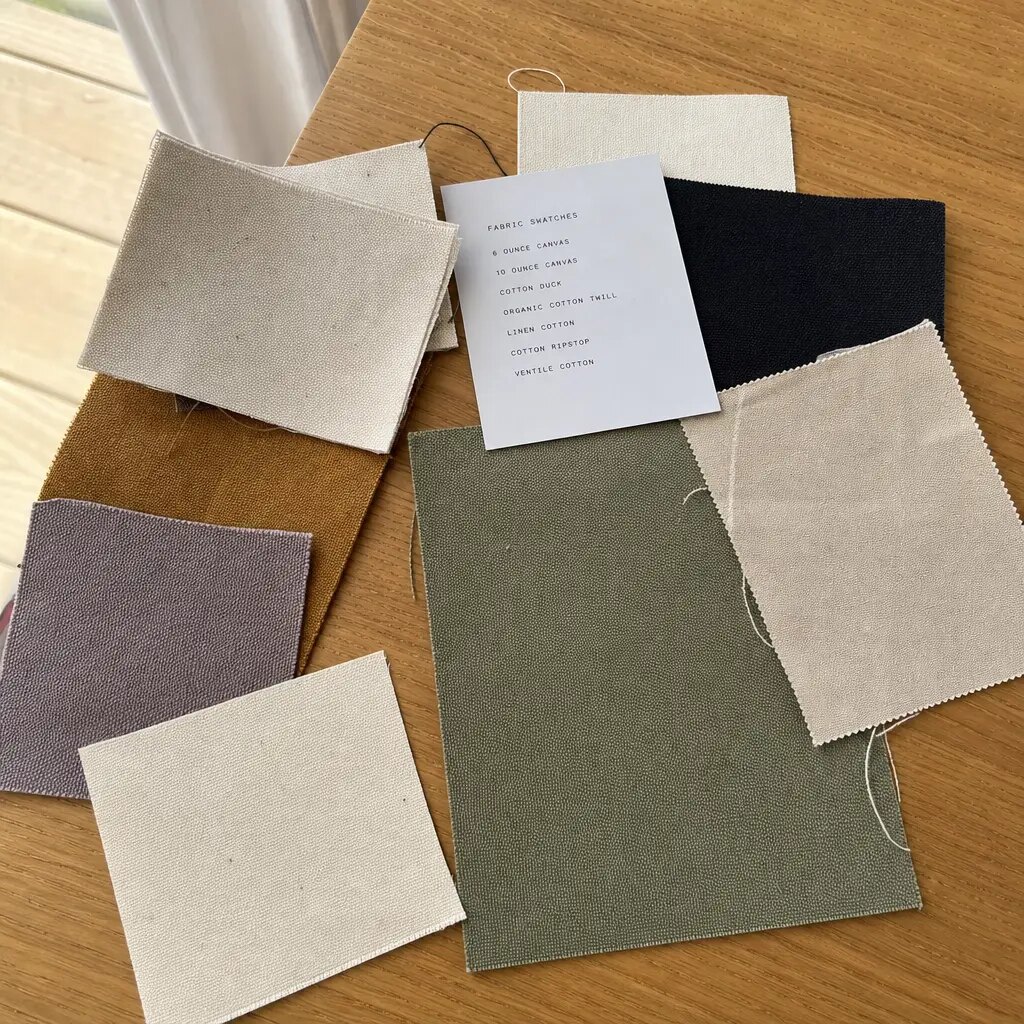
Ask how the supplier is defining fabric weight. Some quotes use nominal ounce. Some refer to greige fabric before finishing. Others provide tested GSM after finishing. Those are not always equivalent. Include both ounce and GSM where possible, request a physical swatch, and ask for the acceptable GSM range. If the program may repeat, request fabric lot traceability and ask how future production will match the approved shade and hand feel.
Appearance rules are just as important as weight. Natural cotton canvas is popular for resort, spa, and lifestyle retail, but it can show seed flecks, slubs, and shade variation. Dyed cotton canvas supports brand colors but needs lab dips and bulk shade approval. Polyester-cotton blends may improve dimensional stability, though the touch and brand story change. Washing, enzyme treatment, preshrinking, coating, bleaching, and other finishes can affect shrinkage, printing, odor, and final measurements. Put those details in the RFQ before the factory chooses a convenient fabric.
- Budget: 10 oz canvas for simple, flat, promotional-style portfolios.
- Balanced: 12 oz cotton canvas, about 380-410 GSM, for most hotel retail programs.
- Premium: 14 oz canvas or 12 oz canvas with lining or interlining for a heavier perceived value.
- Natural canvas: define whether seed flecks, slubs, and shade variation are acceptable.
- Dyed canvas: require lab dip, bulk shade approval, and lot control before cutting.
- Finish: confirm whether fabric is untreated, washed, preshrunk, coated, bleached, or enzyme finished.
Zipper, Puller, and Corner Construction
The zipper is the part the user touches again and again. If it feels rough, catches the lining, or pulls open at a corner, the entire portfolio feels cheap no matter how good the canvas looks. For most custom canvas zipper portfolios, a No. 5 nylon coil zipper is a sensible default. It runs smoothly, handles curves better than many rigid alternatives, and keeps the finished piece lighter. A metal zipper can support a more traditional premium look, but it adds weight, may scratch nearby contents, and is less forgiving when the sewing line is uneven.
The RFQ should not say only “good zipper.” Define the size, type, tape color, teeth color, slider finish, puller material, puller length, puller shape, and opening direction. If the hardware finish is antique brass, nickel, matte black, gunmetal, or color matched, confirm availability before sampling. Branded zipper pulls can be attractive for hotel groups and retail collections, but they usually add tooling, development time, and higher minimums. For a pilot program, ask for branded pulls as an optional line item rather than burying them in the base quote.
Corners deserve early attention. Zipper portfolios often fail where the slider stops or turns because stress concentrates at that small point. The drawing should mark fabric tabs, binding, bar tacks, backstitching, or reinforcement tape. When the sample arrives, test it with the intended contents inside. An empty sample that zips well may behave differently once it holds papers, a notebook, a pen, and a welcome booklet.
- Specify No. 5 nylon coil as the default for smooth function and balanced cost.
- Use metal zipper only when the heavier look supports the retail position.
- Avoid undersized zippers on 12 oz or 14 oz canvas because the body can overpower the hardware.
- Match zipper tape to fabric unless contrast is part of the design.
- Require close-up photos of zipper ends, inside corners, slider, and puller construction.
- Ask for a basic cycle or function check, such as opening and closing the full zipper path multiple times during inspection.
Logo, Label, and Decoration Specifications
Decoration should be chosen for the artwork, the fabric surface, the order quantity, and the brand position. Screen printing is usually efficient for solid hotel names, resort logos, and simple one- or two-color graphics. It is not magic, though. Cotton canvas has texture. Thin lines, small taglines, fine serif type, and reversed-out details can fill in or look uneven unless they are tested at actual size.
Embroidery gives a tactile, premium feel on compact marks, but it may pucker lighter fabric and does not suit very small text or large filled areas. Woven labels are useful for repeat retail collections because the same label can appear on portfolios, totes, pouches, and amenity bags. Sewn patches add texture but also add material checks, colorfastness questions, and extra stitching inspection. Heat transfer can create sharp artwork, yet adhesion and surface appearance should be tested on the exact canvas finish.
The RFQ should include vector artwork, Pantone or brand color references, decoration dimensions, exact location, and tolerance. Avoid placement descriptions such as “lower corner.” Use fixed measurements, for example 60 mm from the left edge and 45 mm from the bottom edge. Approve a strike-off on final canvas rather than relying only on a digital proof or paper printout. The fabric texture changes the real result.
- Screen print: best for clean solid graphics and cost control.
- Embroidery: best for compact premium marks, not tiny text or oversized filled graphics.
- Woven label: best for repeat collections and multi-product retail programs.
- Patch: useful for texture but adds sewing labor and extra QC points.
- Heat transfer: consider only after adhesion and surface appearance testing.
- Approval rule: approve decoration on final canvas, at actual size, before bulk production.
Interior Layout, Lining, Pockets, and Reinforcement
Interior construction is one of the fastest ways for quotes to drift apart. A supplier may assume a plain zip pouch. Another may include a document sleeve, slip pocket, pen loop, lining, binding, and reinforced pocket corners. Both may call the item a canvas zipper portfolio. The RFQ should describe the interior by function: what will go inside, how often it will be used, and how structured the finished item should feel.
A practical hotel retail layout might include one main compartment, one flat document sleeve, one smaller slip pocket, and one pen loop. For welcome kits, test the actual map, itinerary, voucher booklet, local guide, key card sleeve, or retail insert. For conferences, test A4 or US letter papers, badge cards, business cards, pens, and any notebook. If the portfolio is sold with a notebook set, place the actual notebook inside and close the zipper without forcing the corners.
Lining should be specified, not assumed. A 210D polyester lining is common because it is lightweight, clean, and economical. Cotton lining may fit a natural canvas story better but can add cost and bulk. An unlined interior with bound seams can work for casual retail, provided raw edges do not fray. If the structure comes from foam, board, nonwoven interlining, or another stiffener, state the thickness and placement so the supplier does not substitute a softer or stiffer material.
- Document sleeve dimensions should be finished measurements, not cutting measurements.
- Pocket openings should allow easy insertion without tearing top corners.
- Pen loop should be tested with the actual pen diameter or a specified diameter range.
- Card slots require tighter sewing tolerance and should be added only when needed.
- Lining must be secured so it does not twist or enter the zipper path.
- Reinforce pocket top corners, zipper ends, and high-pull areas with backstitch, bar tack, or added fabric support.
MOQ, Price Tiers, and Cost Drivers
MOQ is usually set by materials and trims as much as by sewing capacity. Stock natural canvas, stock zipper colors, and a simple screen print may allow a lower starting quantity. Custom dyed fabric, branded zipper pulls, custom lining, multiple property logos, hangtags, barcode labels, and special retail packaging can raise minimums because mills and component suppliers have their own order rules.
Request tiered pricing at 300, 500, 1000, and 3000 pieces, then ask what changes at each tier. A 300-piece order may need to use stock canvas and stock zipper tape. A 500-piece order may open more color options and improve cutting efficiency. A 1000-piece order may support custom dyed fabric depending on the mill. A 3000-piece order may spread setup costs better and improve material utilization. The exact thresholds vary, so require the supplier to state assumptions instead of giving a single unexplained MOQ.
Separate recurring unit costs from one-time costs. Screens, embroidery digitizing, branded hardware tooling, label development, patch molds, samples, and testing should be visible. Confirm Incoterm and quote validity as well. A low EXW unit price may not beat an FOB quote once export packing, inland delivery, documentation, carton upgrades, and inspection support are included.
- Major cost drivers: canvas GSM, dyeing, lining, zipper grade, pocket count, reinforcement, logo method, and packing.
- One-time costs: screens, embroidery digitizing, custom zipper tooling, label setup, patch molds, and sample fees.
- Low MOQ option: stock canvas, stock zipper, one logo, simple lining or unlined construction.
- Higher MOQ option: custom dyed fabric, branded puller, multiple colorways, custom lining, or property-specific SKU packing.
- Ask for price tiers and material assumptions at each tier.
- Require MOQ per color, per logo, and per packing version, not only total order quantity.
Sampling and Pre-Production Approval Workflow
A clean sampling path prevents expensive surprises. Approve the materials and decoration before approving the complete sewn product. A swatch confirms canvas weight, hand feel, color, and texture. A lab dip confirms the direction for custom dyed fabric. A decoration strike-off shows print coverage, embroidery density, patch appearance, or woven label detail. After those items are clear, the supplier can make a fit sample or pre-production sample with fewer open questions.
The first sewn sample may be a prototype. Its job is to test size, zipper path, corner behavior, pocket placement, structure, and general usability. It may use substitute materials if everyone agrees, but every substitution should be listed. The pre-production sample is different. It should represent the exact approved canvas, zipper, lining, thread, logo process, labels, reinforcement, individual packing, and carton plan. Bulk production should wait until the PPS is approved in writing.
Whenever possible, review physical samples rather than photos only. Measure the top, middle, and bottom because soft goods shift during sewing. Insert the intended contents and close the zipper without forcing it. Measure logo placement from fixed edges. Open and close the zipper several times. If retail presentation matters, review one fully packed sample with sleeve, hangtag, barcode, belly band, or carton packing because tight packing can crease the canvas or change how the item looks on arrival.
- Stage 1: approve fabric swatch and lab dip if custom color is required.
- Stage 2: approve decoration strike-off on final canvas at actual size.
- Stage 3: approve fit sample for size, zipper path, pockets, and structure.
- Stage 4: approve revised sample if construction, material, or artwork changes.
- Stage 5: approve PPS with final materials, trims, labels, packing, and carton plan.
- Keep one signed approved sample with the buyer and one with the factory as production reference.
Quality Control and Acceptance Criteria
Quality control for custom canvas zipper portfolios should cover function, appearance, measurement, branding, and packing. A crooked logo can be a retail reject even if the zipper works perfectly. A smooth zipper does not make up for a stained front panel. Defect definitions should be agreed before production so factory QC, buyer QC, and any third-party inspector judge the product against the same standard.
Useful acceptance criteria include smooth zipper operation, correct dimensions, straight visible stitching, clean canvas panels, correct logo placement, no strong odor, no mold, no sharp hardware burrs, secure pocket corners, and accurate SKU labeling. Cotton canvas is a natural textile, so small flecks and slubs may be normal if approved. If the front panel must look cleaner than the back or interior-facing panels, say so in the RFQ and on the inspection checklist.
Measurement and function checks should happen during inline and final inspection. Finished size is commonly controlled within +/-5 mm for soft canvas portfolios. Logo placement may use about +/-3 mm for screen print on canvas if the supplier confirms capability. Stitch density is often 10-12 SPI for this category unless the design calls for another appearance. The zipper should be checked along the full path, and sample approval should include a fit test with the real intended contents inside.
- Critical defect: broken zipper, sharp burr, wrong logo, mold, severe odor, unsafe component, or contamination.
- Major defect: open seam, missing pocket, wrong fabric color, front-panel stain, zipper catch, crooked logo outside tolerance, or incorrect barcode.
- Minor defect: small internal thread end, slight hidden wrinkle, or minor natural irregularity within approved standard.
- Function check: zipper runs the full path repeatedly without catching or excessive force.
- Appearance check: inspect front, back, edges, lining, logo, labels, thread trimming, and packing presentation.
- SKU check: verify color, logo version, hangtag, barcode, carton mark, and count for each hotel property or retail channel.
Specification comparison for buyers
| Spec decision | Recommended option | When it fits | Buyer risk to check |
|---|---|---|---|
| Finished size basis | Quote by finished outside dimensions plus usable inside fit, for example A4 document fit around 340 x 250 mm or US letter fit around 345 x 255 mm depending on zipper path | Hotel retail, resort welcome kits, conference document packs, tablet and notebook sets | Do not quote only by paper size; require finished width, height, gusset if any, zipper opening, and tolerance such as +/-5 mm for soft construction |
| Outer fabric weight | 12 oz cotton canvas, typically about 380-410 GSM after finishing; confirm actual fabric spec from supplier | Balanced hotel retail portfolios needing structure without becoming heavy luggage-style cases | Some suppliers quote nominal ounce before finishing; require GSM test tolerance, fabric swatch, shrinkage expectation, and whether fabric is greige, bleached, dyed, washed, or coated |
| Fabric color control | Stock natural canvas for simpler programs; custom dyed canvas with lab dip and bulk shade approval for brand-color programs | Natural resort retail, spa shops, guest gifting, and hotel group merchandise | Natural canvas may include seed flecks and slubs; dyed cotton can vary by lot. Define acceptable shade range, front-panel grading, and whether AATCC gray scale or buyer-approved swatch is used |
| Lining construction | 210D polyester lining, cotton lining, or unlined bound seams depending on price point and brand positioning | Lined versions fit premium retail and executive gifting; unlined bound interiors fit value document pouches | Loose lining can catch the zipper; require lining attachment method, seam binding width, zipper clearance, and trimming standard |
| Zipper type | No. 5 nylon coil zipper with metal puller for most programs; No. 5 metal zipper only when the design needs visible premium hardware | Nylon coil is smoother through corners and lighter for bulk programs; metal gives a heavier traditional look | Low-grade sliders, weak pullers, and uneven zipper sewing cause returns; request zipper brand or grade, tape color, slider finish, puller thickness, and cycle/function check |
| Logo method | Screen print for solid 1-2 color marks; embroidery, woven label, or sewn patch for textured branding | Screen print suits resort names and clean artwork; labels support repeat collections across bags and pouches | Fine serif text and small reversed details can fill in on canvas; require strike-off on final fabric, actual size, with placement tolerance such as +/-3 mm |
| Interior organization | One document sleeve, one slip pocket, one pen loop, optional card slots or notebook sleeve only if needed | Travel document kits, conference retail, executive amenities, and branded business accessories | Every pocket adds labor and defect risk; approve pocket finished measurements and test real contents, including paper stack thickness and pen diameter |
| Seam and reinforcement | 10-12 SPI visible stitching, reinforced zipper ends, backstitching or bar tacks at stress points, bound internal seams where unlined | Repeat retail handling, storeroom movement, and gift presentation | Zipper corners and pocket top corners fail first; mark reinforcement positions on the drawing and inspect for skipped stitches or needle damage |
| MOQ structure | 300-500 pieces possible with stock canvas and stock zipper; 800-1500+ pieces often needed for custom dyed fabric or special hardware depending on mill and component minimums | Pilot hotel retail programs, distributor tests, and multi-property consolidation | Very low MOQ may rely on available fabric lots or substitute trims; lock exact material source and color before approving sample |
Buyer checklist before sampling
- Define the portfolio by its real contents: A4 papers, US letter documents, tablet, notebook set, travel document pack, menu holder, guest welcome materials, or retail insert.
- State finished outside width and height, usable inside dimensions, gusset or depth if any, zipper path, corner radius if relevant, and measurement tolerance such as +/-5 mm.
- Specify outer fabric composition, nominal ounce weight and target GSM, acceptable GSM tolerance, color, finish, shrinkage expectation, and whether fabric is stock, custom dyed, washed, coated, or untreated.
- Clarify fabric appearance rules: natural cotton seed flecks, slubs, shade bands, crease marks, weaving defects, and whether the front panel needs stricter grading than the back or lining-facing panels.
- Specify zipper size, zipper type, tape color, teeth color, slider finish, puller material, puller dimensions, opening direction, end-stop treatment, and whether branded hardware is required.
- Attach logo artwork in vector format with Pantone references, decoration size, exact placement measured from fixed edges, decoration method, and acceptable print or embroidery placement tolerance.
- List interior pockets by finished measurement and intended use, including document sleeve depth, card slot count, pen loop diameter, lining fabric, reinforcement points, and clearance needed for real contents.
- State whether structure comes from canvas weight alone, lining, foam, nonwoven interlining, cardboard or board insert, binding, or padding; include material thickness if a stiffener is used.
- Define retail and export packing: individual sleeve type, hangtag, barcode label, warning label if required, carton count, carton dimensions, carton mark format, and whether cartons are allocated by hotel property.
- Set sample stages: fabric swatch, lab dip if dyed, decoration strike-off, fit sample, revised sample if needed, and approved pre-production sample using final materials and packing.
Factory quote questions to send
- What exact canvas composition, construction, nominal ounce weight, tested GSM range, and tolerance are you quoting, and can you provide a physical swatch before sample making?
- Is the quoted fabric stock natural canvas, stock dyed canvas, or custom dyed fabric, and what MOQ, lab dip process, bulk shade approval, and shade tolerance apply?
- Is the canvas preshrunk, washed, enzyme finished, coated, bleached, or untreated, and how will that affect hand feel, printing, shrinkage, odor, and final measurements?
- Which zipper specification is included: size, coil or metal type, tape width, tape color, teeth color, slider finish, puller material, puller dimensions, end stop, and zipper supplier or grade?
- How are zipper ends and corners reinforced, and can you provide close-up photos of the proposed reinforcement on the sample?
- Does the quote include lining, inner pockets, pen loop, card slots, binding, reinforcement stitches, labels, hangtags, and all labor steps shown in the drawing?
- What decoration method is priced, how many colors are included, what print area is assumed, and what setup charges apply for screen print, embroidery digitizing, patch sewing, woven labels, or branded pulls?
- Can you quote 300, 500, 1000, and 3000 pieces separately and state which tiers allow custom dyed fabric, custom zipper tape, custom lining, or branded hardware?
- What is the realistic sample lead time after artwork and material approval, and which changes trigger a new sample charge or extended timeline?
- Will the pre-production sample use exact bulk canvas, zipper, lining, thread, logo process, label, hangtag, sleeve, and carton packing, or will any substitute material be used?
Quality-control points to confirm
- Finished portfolio outside dimensions should normally remain within +/-5 mm for soft canvas construction; tighter tolerance requires confirmation during sampling and may need a more structured insert.
- Usable internal fit should be checked with the actual intended contents, including document stack, notebook, tablet, pen, voucher booklet, or retail insert.
- Logo placement should be measured from fixed edges, with a practical screen print tolerance of about +/-3 mm on canvas unless a different tolerance is approved.
- Screen print should be checked for coverage, edge sharpness, pinholes, ink smudging, color match, and cracking or distortion after light folding at normal use points.
- Zipper must open and close smoothly across the full path at least several times without catching lining, binding, pocket edges, loose threads, or corner seam allowance.
- Zipper ends should be reinforced by backstitching, bar tack, secure binding, fabric tab, or reinforcement tape so slider stress does not pull open the corner seam.
- Canvas panels should be inspected for stains, oil marks, mold, strong odor, large slubs beyond agreed grade, dye streaks, crease marks, shade mismatch, and visible weaving flaws on the front panel.
- Visible stitching should be straight and balanced, typically 10-12 stitches per inch for this category unless the tech pack specifies a decorative or heavy-duty stitch.
- Pocket top corners, pen loop ends, and document sleeve openings should be checked for reinforcement and tested with light pulling appropriate to normal handling.
- Lining should be secured, trimmed, and free from twisting so it does not migrate into the zipper path after repeated opening and closing.