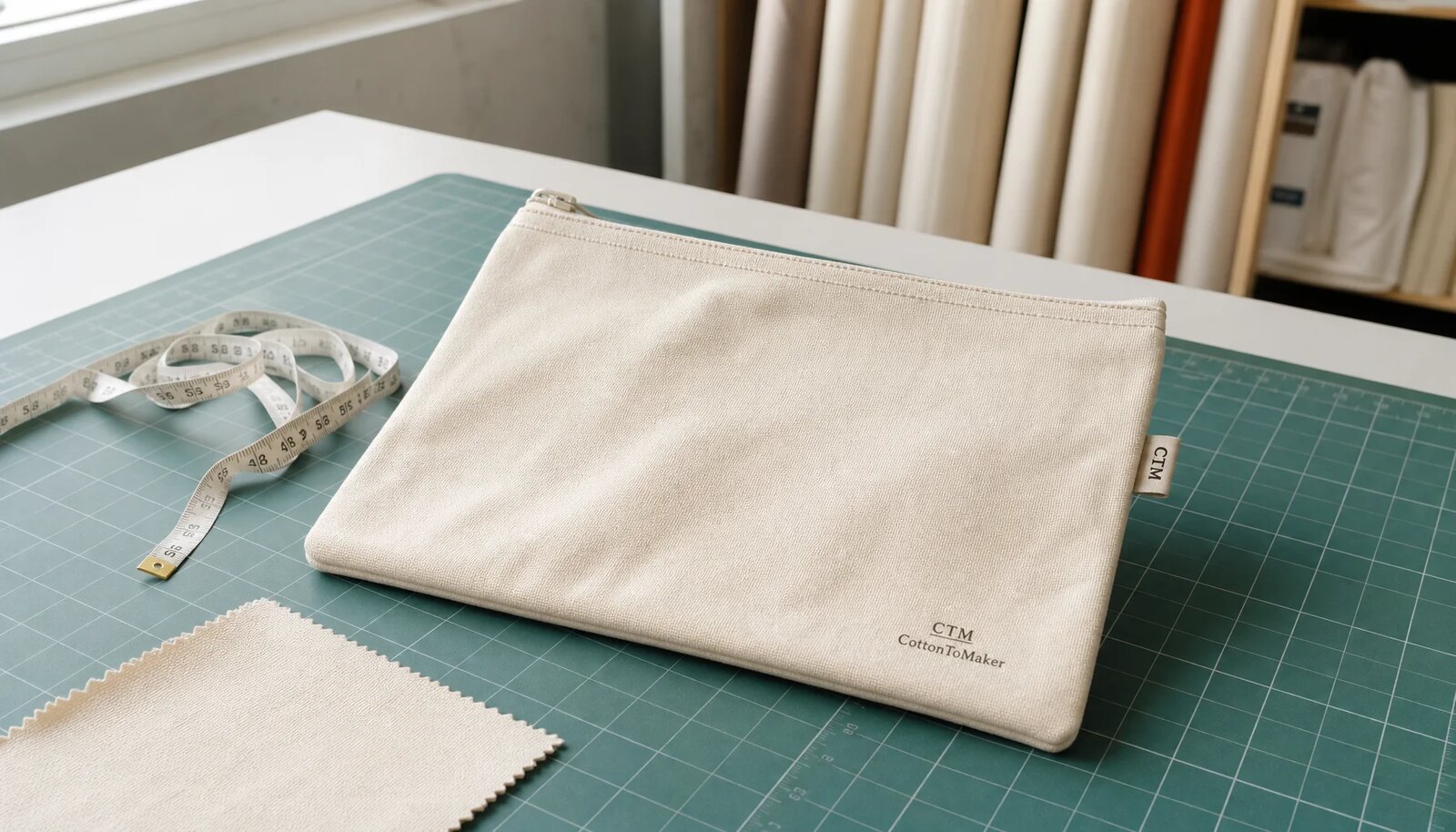
Why logo placement matters on event portfolios
For event planners, a zipper portfolio is not a display item that sits on a shelf. It gets carried through registration, stacked on counters, shoved into tote bags, and photographed during check-in, breakout sessions, and sponsor handoffs. That means logo placement has to work in motion and in close-up. A mark that looks balanced in a catalog can become hidden by a zipper pull, a seam break, or a pocket edge once the bag is sewn. The right placement keeps the brand visible without forcing the factory into awkward decoration positions that add cost and risk.
The decision also affects the buying process. If the artwork sits on the center front panel, the factory can usually print or stitch it with fewer constraints. If the logo hugs the top seam, wraps around a gusset, or crosses a pocket line, the supplier may need a special platen, a revised artwork file, or a decoration patch. Buyers who treat placement as a design detail usually end up paying for it later in extra sampling, longer lead times, and batch inconsistency. Treat placement as a production spec, not a marketing preference.
- Use the front panel for the main brand mark when visibility is the priority.
- Keep decoration away from zipper tape, seam junctions, and top edge binding.
- Balance logo size against the way the portfolio will be carried and photographed.
Start with a base spec that can carry the logo cleanly
The canvas body sets the ceiling for what logo methods will look clean in bulk. For most custom canvas zipper portfolios, a 12 oz to 14 oz canvas, roughly 400 to 475 GSM, is a practical baseline. It is heavy enough to hold shape, resist wrinkling, and support screen print or embroidery without looking flimsy. If the portfolio is meant to be reused, carried daily, or stuffed with event handouts, a 16 oz option around 540 GSM can feel more substantial, but it also raises sewing effort, increases freight weight, and can make the zipper edge stiffer.
The build around the logo matters as much as the canvas itself. An unlined bag can save cost, but the logo may show strike-through or stitching marks more easily, especially on light-colored canvas. A simple lining such as 210D polyester or a lightweight cotton lining can improve structure and hide backing threads. For the zipper, a #5 nylon coil is often the safest default for smooth operation and lower snag risk. Metal zippers can look premium, but they add cost and can create a harsher close on lighter portfolio bodies.
- 12 oz to 14 oz canvas is the usual sweet spot for event portfolios.
- Use lining if the portfolio will hold paper packets, catalogs, or tablets.
- Choose a zipper that closes smoothly before you optimize for appearance.
Choose the logo position based on how the portfolio will be used
The front center panel is the easiest placement to manufacture and usually the best choice for most buyers. It gives the largest uninterrupted print zone and allows the brand to appear clearly in hand and in photos. If the portfolio includes a front pocket, the logo should stay high enough to avoid distortion from the pocket fold, but low enough to avoid the zipper seam. A lower-right or lower-left corner placement can look more premium, but only if the artwork is strong enough to stand on a smaller field. Small logos in the wrong place often disappear once the bag is filled.
Side panels, back panels, and woven side labels each solve a different buying problem. Side labels work when the main artwork is too complex for direct print or when the buyer wants a clean, understated finish. Back-panel branding is useful if the front is reserved for a conference title, sponsor artwork, or a personalization window. Interior labels are good for repeat programs where the bag may be reused outside the event. What matters is not just where the mark looks nice, but where it remains visible after packing, handling, and stacking.
- Keep artwork at least 15 mm away from seam lines unless the factory has confirmed a tighter tolerance.
- Avoid crossing a zipper stitch line with any logo detail or thin text.
- Use the larger uninterrupted panel for detailed art and the smaller panel for simple marks.
Match the decoration method to the artwork and order size
Screen printing remains the most practical method for many canvas zipper portfolios because it is stable on cotton surfaces and holds up well when the logo is simple. It works best for one to three colors, especially when the buyer wants a crisp, repeatable mark across a medium or larger run. If the artwork includes gradients, fine typography, or multiple shades, the factory may suggest heat transfer or digital transfer. Those methods can be useful for small event pilots, but they need extra testing because the surface feel and edge durability may not match a direct print.
Embroidery and woven patches serve different goals. Embroidery gives a premium tactile finish, but it needs enough fabric body and a logo simple enough to stitch cleanly without distortion. Woven badges and sewn patches are more forgiving when the artwork changes between campaigns, and they can reduce risk on textured canvas because the decoration is applied separately from the bag surface. For event planners, the right choice usually depends on whether the portfolio is a one-time giveaway, a recurring conference kit, or a reusable staff tool. If the bag will be packed and carried hard, durability should outrank visual novelty.
- Use screen print for simple logos and repeatable bulk runs.
- Use transfer methods for small pilot orders or detailed artwork.
- Use embroidery or woven patches when premium feel matters more than the lowest unit cost.
How logo placement changes MOQ logic and quote structure
Logo position is not a cosmetic line item; it changes the factory's setup work. A centered print on a flat panel may need only one screen or one digitized file, while an angled corner logo, patch placement, or multi-zone decoration can add jigs, extra handling, and more reject risk. That is why suppliers often price the same bag differently depending on whether the logo is one-color front print, front print plus side label, or a stitched mark that must be aligned by hand. Buyers comparing quotes without checking placement assumptions are not comparing the same product.
A clean RFQ should ask for pricing at multiple quantity tiers and separate the visible cost drivers. In practice, the best quote data includes blank bag cost, decoration setup, sample fee, packaging cost, and any add-on such as woven labels or hangtags. If the supplier bundles everything into one number, ask for a breakdown. That makes it easier to compare a direct factory quote against a trader, a local decorator, or a stock-bag route. It also makes reorder pricing more realistic when the artwork stays the same but the event quantity changes.
- Request price tiers at 300, 500, and 1,000 pieces if the factory can support them.
- Ask whether setup fees are one-time or repeated on every reorder.
- Separate blank bag pricing from decoration pricing before you compare suppliers.
What a useful pre-production sample should prove
A sample should prove more than the logo color. It should show that the production canvas, zipper, thread, and decoration method can be combined without distortion. Review the exact panel where the logo will sit, then measure the distance to seams, zipper tape, and pocket edges. If the mark is printed, look at edge sharpness and whether the ink feathers into the weave. If it is embroidered, check whether the stitches pull the panel or create a stiff ridge that could affect how the portfolio closes. A sample made from substitute fabric tells you very little about the finished order.
The approval process should include functional checks, not just visual approval. Zip the portfolio open and shut several times, fill it with paper packs or a realistic insert, and confirm the logo still reads cleanly when the bag is under load. If the event kit will include pens, brochures, or tablets, test the internal capacity and zipper clearance with those items in place. Keep the approved sample photographed from front, back, edge, and close-up views, and require the factory to sign off on those reference images before bulk production begins.
- Measure logo placement against the approved sample, not just the artwork file.
- Test zipper movement with the bag loaded, not empty.
- Keep a signed photo set of the approved sample for production reference.
Set quality thresholds before bulk production starts
Bulk quality control should be tied to the points that can break an event order in the field. Placement drift, print blur, loose threads, zipper snagging, and carton damage matter more than abstract cosmetic perfection. For canvas zipper portfolios, define which issues are major and which are acceptable minor defects. A print that is 3 mm off center may be fine for a utility bag, but not for a brand-heavy conference kit where the logo is the only visible branding on the front panel. The factory needs those limits before sewing starts, not after packing is complete.
Use the approved sample as the upper boundary for production, then add practical tolerance notes. If the logo is meant to sit 20 mm from the zipper seam, say how much drift is acceptable and whether the supplier should stop the line if the placement starts moving. Ask for in-line checks on the first cut pieces, after print, and before carton sealing. That gives the factory a chance to correct a trend instead of sending an entire lot with the same problem. For event programs, that early correction is usually cheaper than sorting rework after freight is booked.
- Define major defects for placement, print quality, and zipper function.
- Require in-line checks at the first production pieces and before packing.
- Tie acceptance to the approved sample plus written tolerance limits.
Packing choices affect how the portfolios arrive and how they are used
Packing sounds routine until the bags arrive wrinkled, mislabeled, or short of the required count. For event buyers, the packing method should match the end use. If the portfolios will be distributed at a registration desk, flat packing with a clear outer label is usually better than over-compressed cartons that crush the canvas and make the zipper tape curl. If they will be boxed as part of a sponsor kit, the factory may need to add an insert sheet, hangtag, or barcode sticker. Those details should be on the packing instruction, not left to warehouse habit.
The simplest way to reduce damage is to define the inner pack count, carton count, and carton mark format before production starts. If the shipment is ocean freight, add moisture protection where appropriate and make sure the cartons are strong enough for stacking. If the event requires sorted kits by region, hotel, or sponsor, tell the factory how to group them and whether mixed cartons are allowed. Packing errors are expensive because they often show up only after the goods have cleared customs or reached the event venue.
- State inner pack count and master carton count in the PO.
- Use flat packing when the portfolio needs to look crisp on arrival.
- Specify barcode, carton mark, and kit-sorting rules before bulk packing starts.
Lead time risk is usually caused by artwork and sample delays
For event work, the calendar risk is rarely only sewing time. The real delay usually comes from late artwork lock, placement revisions, sample approval loops, and freight booking. If a supplier is asked to quote before the final logo position is fixed, the production clock does not really start until the artwork is signed off. Buyers often underestimate how much time is lost when a small placement adjustment forces a new screen, a revised embroidery file, or a corrected patch size. Each of those changes can move the whole program back by days or weeks.
Build the schedule backward from the event date and include a buffer for inspection and transit. If the portfolio is tied to a conference, trade show, or roadshow, the final ship date should be set well before the handout date so there is room for customs release, carton correction, or late rework. The safest orders are the ones where the buyer locks the artwork first, approves a production sample second, and only then releases bulk. When the buyer compresses those steps, the factory may still deliver, but the risk of logo mismatch rises sharply.
- Lock artwork and placement before quoting the final schedule.
- Leave time for sample approval, inspection, and freight delays.
- Avoid changing logo position after screens, embroidery files, or patches are already prepared.
How to compare supplier routes and landed cost without being misled
The cheapest ex-factory quote is not always the cheapest delivered result. When comparing suppliers for custom canvas zipper portfolios, include freight mode, carton volume, sampling fees, setup charges, and the cost of any rework risk. A direct factory may look slightly higher on paper but can save time and reduce blame if decoration, sewing, and packing are managed in one place. A trading company can simplify communication if you are buying several bag styles at once, but you need proof that the actual factory and quality controls are known. A local decorator may be best for a last-minute run, yet the blank bag price and freight pattern can make repeat orders less competitive.
For event planners and procurement teams, landed cost should be calculated on the actual use case, not a generic unit price. If the portfolio is a one-off conference giveaway, speed and certainty may be worth more than the lowest cost. If the bag will be reordered across multiple events, direct factory sourcing with repeatable logo placement and stable pack specs usually gives better control. Ask each supplier to quote the same specification, the same placement drawing, and the same packing instructions. If any of those change between quotes, the comparison is not valid.
- Compare delivered cost, not only unit price.
- Use the same artwork, placement drawing, and packing spec across every quote.
- Favor the route that reduces rework risk when the event date is fixed.
Specification comparison for buyers
| Spec decision | Recommended option | When it fits | Buyer risk to check |
|---|---|---|---|
| Direct factory with in-house printing | Best for one-stop bag making, logo placement control, and repeatable output | You need one supplier to manage cutting, sewing, printing, and carton packing | Verify the print line is actually in-house and not subcontracted after sample approval |
| Cut-and-sew factory plus local decorator | Use when the bag spec is stable but artwork may change between events | You want flexible decoration without changing the sewing factory each season | Two vendors can split blame on print shade, seam damage, or late delivery |
| Trading company with multi-factory sourcing | Useful if you need several bag styles in one program | You value consolidated buying and project management over factory-direct pricing | Confirm the actual factory name, production line, and sample source before approval |
| Domestic decorator with imported blank bags | Good for very small runs or last-minute event kits | Your event date is close and freight timing matters more than unit cost | Blank bags may not match the final bulk quality, canvas shade, or zipper feel |
| Stock bag with added woven label | Low-risk option for repeat programs with light branding needs | You need fast replenishment and a simple logo that does not need full-panel printing | Logo size and placement are limited, so brand visibility can drop in photos and at registration desks |
| Digital print or DTF short-run supplier | Best for small pilots, multi-color artwork, or artwork testing | You are validating a new event program before ordering at scale | Check rub resistance and edge softness on coarse canvas before moving to bulk |
| Embroidery on the front panel | Premium look for simple logos and long-life reuse | The portfolio will be used more than once and the logo is compact | Light canvas can pucker, and dense stitching can distort thin panel areas |
| Patch or woven badge application | Good when you want a premium finish and easier art changes | You need a clean brand mark without printing directly onto the canvas | Patch size still has to clear seams, zipper tape, and pocket openings |
Buyer checklist before sampling
- Confirm the target canvas weight in GSM and whether the bag is unlined, lined, or reinforced at the zipper edge.
- Send the logo file in vector format and state the exact print method you want quoted first and second choice.
- Mark the preferred logo location on a dimensioned mockup, including distance from seams, zipper tape, and pocket edges.
- Ask for separate line items for blank bag cost, decoration setup, sample fee, packing, and outer carton charge.
- State the expected order split by size or color so the factory can price waste and material usage correctly.
- Approve one pre-production sample made from the same canvas, zipper, and thread planned for bulk.
- Define carton quantity, inner pack count, and any event kit inserts before the quote is finalized.
- Set the required ship date, not just the event date, and include freight mode assumptions.
- Request photos of stitching, print alignment, zipper tape, and finished packing before bulk release.
- Write acceptable defect limits for placement drift, loose threads, print blur, and zipper snagging.
Factory quote questions to send
- What canvas GSM, weave type, and lining option are you quoting for the sample and for bulk production?
- Is the logo method screen print, heat transfer, embroidery, woven patch, or sewn label, and what setup fee applies?
- How many pieces per quantity tier did you use for pricing, and what changes at 300, 500, and 1,000 units?
- What are the exact logo placement dimensions, seam clearances, and tolerance you will hold in production?
- Will the zipper, puller, and thread colors match the sample exactly, and can you source them from the same lot?
- What is the sample lead time, bulk lead time, and the latest date you can accept artwork lock?
- How are the bags packed per inner polybag and master carton, and what carton dimensions do you expect?
- Which defects are treated as major versus minor, and what rework or replacement policy applies before shipment?
Quality-control points to confirm
- Logo placement matches the approved artwork and stays clear of seams, zipper tape, pocket openings, and stitch lines.
- Canvas weight and hand feel match the approved spec, with no obvious thin spots or excessive slub variation.
- Print color, registration, and coverage match the approved sample under daylight and indoor light.
- Embroidery or patch edges sit flat with no puckering, warping, or loose thread tails longer than the agreed limit.
- Zipper runs smoothly from end to end without catching the canvas, lining, or logo area.
- Topstitching is even, backtacks are locked, and no broken stitches appear at stress points or corners.
- Finished size stays within the agreed tolerance for width, height, and gusset depth.
- Inner packing count, carton count, and shipping marks match the purchase order and packing list.
- Polybags, desiccant, and carton strength meet the shipping method and climate risk.
- Overrun, underrun, and spare-piece policy are written before production starts.