Start With the Use Case, Not the Bag Name
A custom canvas zipper portfolio can be a document holder, vendor welcome kit, craft pattern wallet, retail accessory, artist merchandise item, or protective pouch for printed materials. These uses look similar in a catalog photo, but they need different construction. A portfolio used to hold flat order forms at a craft fair can be unlined and simple. A portfolio sold at retail beside handmade products needs cleaner finishing, better zipper feel, and more controlled packing.
The biggest RFQ mistake is sending a size and logo only. Factories then quote the cheapest interpretation: light canvas, basic zipper, no lining, standard print, and minimal packing. That may be fine for a giveaway, but it can fail when the buyer expects a premium reusable product. Procurement teams should describe what goes inside, how the item is displayed, and whether the end user will pay for it or receive it as packaging.
- For paper inserts, provide the insert size plus the maximum stack thickness.
- For retail resale, specify visible finish expectations: lining, branded label, hangtag, barcode, or dust-free packing.
- For craft fair vendor kits, specify if the portfolio must fit under a booth table, inside a tote, or into a shipping mailer.
- For sponsor merchandise, state whether print color matching is more important than the lowest unit cost.
Fabric Weight and Canvas Construction Choices
For wholesale canvas zipper portfolios, fabric weight should be quoted in both ounce and GSM. A practical range is 10 oz to 16 oz cotton canvas, roughly 300 to 540 GSM depending on weave and finishing. For most craft fair programs, 12 oz canvas around 380 to 410 GSM gives enough body without making the zipper seam too bulky. An 8 oz fabric may reduce cost, but it usually feels closer to a flat pouch and can wrinkle heavily after packing.
Heavier canvas is not automatically better. A 16 oz portfolio feels sturdy, but it raises cutting resistance, needle stress, seam bulk, and carton weight. If the design has lining, internal pockets, zipper tabs, and a folded top seam, heavy fabric may create thick corners that are hard to sew neatly. Natural canvas also has seed specks and shade variation. If the buyer wants a cleaner retail look, bleached canvas or dyed canvas may be necessary, but it changes MOQ and color control.
- 10 oz canvas: suitable for low-cost event giveaways and light document storage.
- 12 oz canvas: recommended starting point for most custom canvas zipper portfolios wholesale programs.
- 14 oz canvas: good for a more structured retail feel if the design remains simple.
- 16 oz canvas: use only when the brand accepts higher cost, heavier cartons, and more visible seam bulk.
- Pre-shrunk or washed canvas: useful when print position and finished size stability are important.
Size Engineering for A4, Letter, and Craft Fair Inserts
The correct finished size depends on what the portfolio must hold after sewing, not the nominal paper size. A4 paper is 210 x 297 mm, and US letter is 8.5 x 11 inches. A zipper portfolio needs clearance around the paper, plus space lost to seams and zipper tape. If the finished product is too tight, the user must bend the inserts to close the zipper, which quickly damages corners and creates complaints.
A buyer should define the internal usable space and the external finished size. If the portfolio holds catalogs, sticker sheets, prints, or craft patterns, include the thickest expected bundle. A flat portfolio without gusset may work for 10 to 20 sheets. A thicker vendor packet may need a small gusset or a larger body. Gussets add material and sewing time, but they prevent the portfolio from looking strained when filled.
- For A4 inserts, consider an external size around 240 x 330 mm depending on seam allowance and zipper style.
- For US letter inserts, consider an external size around 250 x 330 mm or 10 x 13 inches.
- For mixed inserts, add 15 to 25 mm clearance beyond the largest item.
- For bulky kits, consider a 20 to 40 mm gusset instead of simply making the flat size larger.
- For retail shelf display, keep the size compatible with the buyer's peg, bin, or carton system.
Zipper Specification Is a Major Quality Signal
The zipper is the part buyers notice every time they use the portfolio. A beautiful canvas body with a rough zipper still feels cheap. Nylon coil zippers are usually the best choice for wholesale craft fair portfolios because they are smooth, flexible, and easier to sew around canvas curves or corners. Metal zippers create a heavier look, but they add weight and may scratch nearby printed surfaces if packing is not controlled.
The RFQ should define zipper tape color, coil or teeth color, slider material, puller shape, opening direction, and whether the zipper ends need fabric tabs. For a portfolio, the zipper length and opening clearance matter as much as the body size. If the opening is too short, users struggle to insert documents. If the zipper is too close to the edge without reinforcement, the corners can fail after repeated use.
- Use nylon coil for flexible, smooth, cost-controlled production.
- Use metal zipper only when the buyer wants a premium look and accepts higher weight.
- Specify a branded, plain, cord, or fabric puller before sampling because it affects labor and cost.
- Require bar tacks or reinforced stitching at zipper ends for repeated opening.
- Test the approved zipper on the final fabric weight, not on a lighter showroom sample.
Print Method Selection for Canvas Portfolio Branding
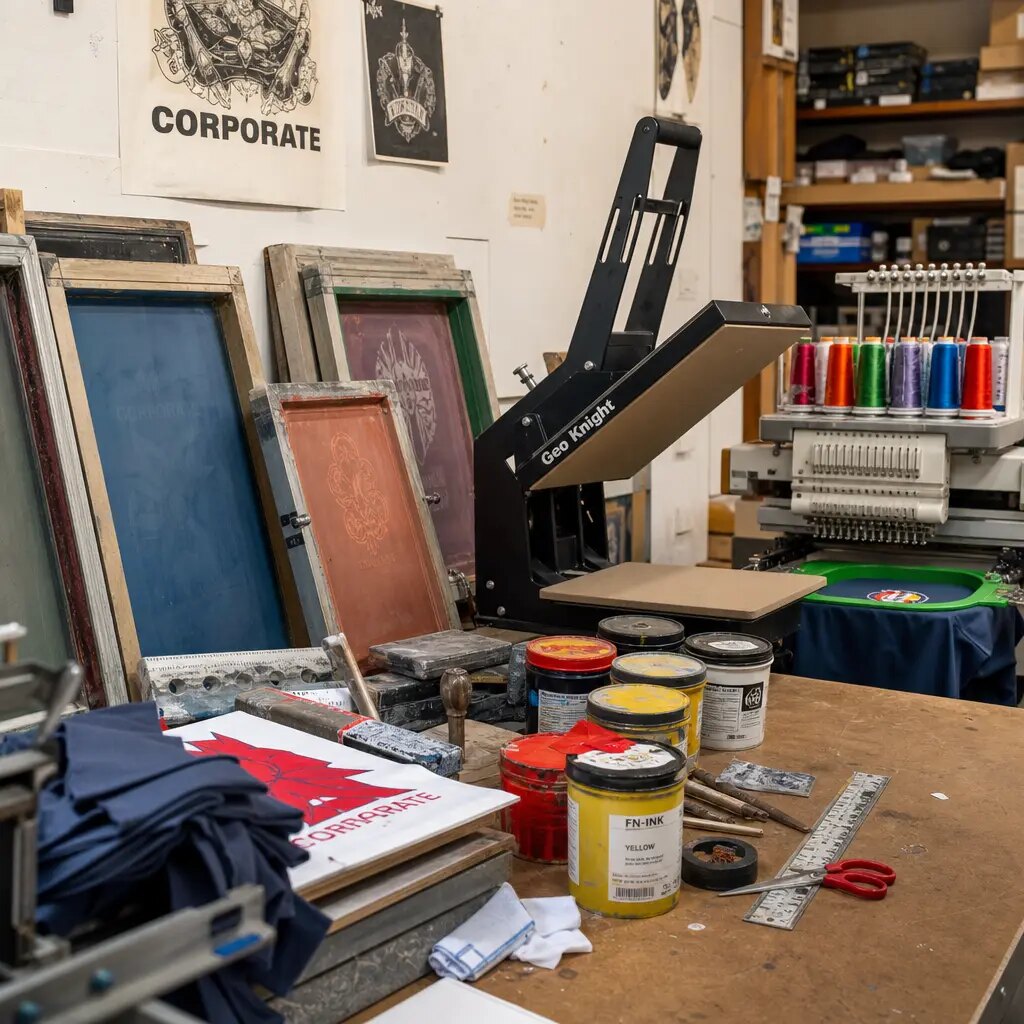
Screen printing remains the most reliable method for simple logos, bold craft fair graphics, and sponsor branding on cotton canvas. It gives good opacity on natural or dyed fabric when artwork uses solid colors. The buyer should provide vector artwork and Pantone references, then approve a print strike-off on the actual canvas. Printing on a smooth paper proof does not predict how ink will sit on a woven canvas surface.
Heat transfer can reproduce finer lines, gradients, and small type, but it changes the handfeel and may look less natural on a heavy canvas product. Embroidery is durable, yet it can pucker the fabric if the stitch count is high or the placement is near a zipper fold. For wholesale orders with multiple artist logos, the setup cost per version becomes important. A low total quantity split across many artworks may cost more than expected because each version needs separate screens, films, strike-offs, and packing control.
- Screen print: best for 1 to 3 solid colors and medium to large logos.
- Heat transfer: useful for fine artwork, gradients, or small batch personalization.
- Embroidery: suitable for small premium marks away from zipper seams and folded corners.
- Woven label: good for repeat private label programs where a permanent brand marker is required.
- Debossed or embossed patch: possible, but it changes both material sourcing and sewing process.
MOQ Logic for Wholesale Craft Fair Assortments
MOQ is not only a total piece count. A factory calculates MOQ by fabric color, fabric weight, zipper color, print method, artwork version, size, and packing requirement. A buyer may say the order is 1,200 pieces, but if it is divided into 12 artist designs, 4 fabric colors, and 3 zipper colors, the production behaves like many small orders. That increases setup time, material leftovers, line changes, and packing risk.
For craft fair buying, assortments are common because brands want several designs for different makers or event themes. The cleanest approach is to standardize the body size, canvas weight, zipper color, and packing, then vary only the print. If the budget allows, keep each artwork version above a sensible production quantity so print setup cost is diluted. If small runs are required, heat transfer or digital methods may be more flexible than screen print, but the buyer must compare durability and appearance.
- Best cost control: one fabric color, one zipper color, one size, several prints.
- Moderate complexity: two fabric colors with the same zipper and same carton plan.
- High complexity: multiple sizes, multiple zipper colors, different labels, and mixed retail packing.
- Hidden cost driver: each artwork version may need separate approval, production record, and packing segregation.
- RFQ clarity: list quantities in a matrix by size, fabric color, zipper color, artwork, and packing style.
Sample Approval Should Lock the Real Production Standard
A useful sample process is not just one attractive photo sample. For custom canvas zipper portfolios, buyers should approve a construction sample, fabric and zipper materials, print strike-off, and final pre-production sample. The construction sample confirms size, seam allowance, pocket layout, zipper opening, and general handfeel. The print strike-off confirms ink color, edge sharpness, curing, and placement on the exact canvas.
The pre-production sample should represent the final approved specification before cutting bulk material. It must include the correct fabric weight, zipper, label, print, lining if any, and packing method. If the buyer approves a sample made with substitute fabric or a different zipper because the correct materials are not available yet, that approval should be marked temporary. Otherwise, the factory and buyer may use different standards when judging bulk goods.
- Measure the sample empty and filled with the intended insert.
- Pull the zipper repeatedly to feel rough points, tight corners, or slider looseness.
- Fold and handle the printed area to see if ink cracks or feels too thick.
- Check whether the portfolio lies flat after packing or develops permanent creases.
- Keep one signed sample at the factory and one with the buyer or inspection team.
Packing, Carton Planning, and Retail Receiving
Canvas zipper portfolios are often damaged by poor packing rather than poor sewing. Heavy stacking can create fold marks, bent zipper pulls, and shiny pressure areas on printed ink. Flat packing in controlled stacks is usually best. If the portfolio is lined or structured, avoid forcing too many pieces into one carton. If the order has several artwork versions, inner packing and carton marks must prevent warehouse mixing.
Retail buyers and distributors should define receiving requirements early. A product that is well made but missing barcodes, SKU labels, or carton markings can still cause delays and chargebacks. For craft fair programs, inventory may be shipped to multiple locations or event kits. The packing plan should show pieces per inner pack, pieces per carton, carton dimensions, gross weight, net weight, carton marks, and whether each portfolio needs a polybag, paper band, hangtag, or insert card.
- Use individual polybags when moisture, dust, or mixed handling is a concern.
- Use paper bands when the brand wants lower plastic use and the product will be handled carefully.
- Add silica gel or moisture protection for long ocean shipments or humid seasons.
- Keep metal zipper pulls separated from printed faces when rub marks are possible.
- Request carton photos before shipment for multi-SKU craft fair assortments.
Lead Time Risks Buyers Usually Underestimate
Lead time starts after final sample approval, artwork approval, material confirmation, and deposit, not when the first email is sent. For a standard canvas zipper portfolio using stock natural canvas, a common production timeline can be shorter than a dyed fabric or custom zipper program. Dyed canvas, special zipper tape, custom pullers, woven labels, retail packaging, and multi-artwork assortments all add steps before bulk sewing begins.
The most common schedule risk is late artwork finalization. If print files arrive after the fabric is cut, placement changes may not be possible. If a sponsor changes logo colors after strike-off approval, screens or transfers may need to be remade. Procurement teams should build the schedule backward from the event receiving date, including buffer for inspection, export packing, freight booking, customs, inland delivery, and local distribution to craft fair booths or retail stores.
- Reserve time for sample revision if the first sample reveals size or zipper issues.
- Do not approve bulk fabric purchase before the buyer confirms final fabric color and GSM.
- Allow extra time for dyed canvas lab dips and shade approval.
- For multi-logo orders, freeze artwork before print screens or transfer films are made.
- Schedule inspection before final balance payment and before cartons leave the factory.
Quote Data Needed to Compare Suppliers Fairly
A cheap quote is not useful if the specification is incomplete. When comparing suppliers, normalize the quote around the same fabric GSM, size, zipper grade, print method, artwork count, packing method, carton quantity, and delivery term. One factory may quote 10 oz canvas with a basic zipper and bulk packing, while another quotes 12 oz canvas with individual bags, reinforced zipper ends, and retail labels. The unit prices are not comparable until the included details are visible.
The buyer should request a quote sheet that separates one-time charges from unit cost. Print screens, transfer films, sample fees, custom labels, custom zipper pullers, and packaging artwork may be charged separately. Freight cost also changes with fabric weight and carton volume. For landed-cost comparison, calculate product cost, packaging cost, inspection, inland trucking, ocean or air freight, duty, customs brokerage, local delivery, and expected rework risk.
- Quote basis: EXW, FOB, CIF, DDP, or other delivery term.
- Material basis: canvas oz/GSM, fabric color, zipper specification, lining, and hardware.
- Decoration basis: print method, print size, number of colors, number of artwork versions, setup charges.
- Packing basis: individual packing, inner pack, export carton, carton size, gross weight.
- Commercial basis: MOQ, price breaks, sample cost, payment terms, lead time, and validity date.
Specification comparison for buyers
| Spec decision | Recommended option | When it fits | Buyer risk to check |
|---|---|---|---|
| Canvas body fabric | 12 oz cotton canvas, about 380 to 410 GSM, pre-shrunk if printing edge-to-edge | Good balance for craft fair vendor kits, document portfolios, retail merchandise, and reusable packaging | Below 10 oz may feel like a pouch, not a portfolio; above 16 oz increases sewing thickness and freight weight |
| Portfolio size | A4 or letter-size body plus 15 to 25 mm tolerance allowance around the insert | Buyers packing brochures, order forms, sticker sheets, prints, certificates, or craft patterns | A nominal A4 size without clearance can jam at the zipper and cause corner wear during use |
| Zipper type | Nylon coil zipper for smooth bulk production; metal zipper only when the brand needs a heavier retail feel | Nylon suits most craft fair wholesale orders because it is flexible, lighter, and easier to sew consistently | Low-grade sliders, short zipper ends, or weak stops can cause returns even when the canvas looks acceptable |
| Printing method | Screen print for 1 to 3 solid colors; heat transfer for fine artwork; embroidery only for small marks away from folds | Craft fair logos, artist names, sponsor branding, or distributor private label programs | Thick ink over a zipper seam or folded edge can crack; fine lines on coarse canvas can fill in |
| Internal structure | Unlined canvas with one flat inner pocket, or light lining for retail gift use | Unlined construction controls cost; lining is useful when the portfolio is sold as a finished retail accessory | A lined portfolio needs extra seam allowance and turning space; poor lining tension causes wrinkles near the zipper |
| MOQ planning | Start from fabric color, zipper color, print colors, and size, not only total pieces | Mixed craft fair assortments where several logos or artist editions are ordered together | Splitting 1,000 pieces into many small colorways may trigger extra dyeing, zipper, setup, and packing charges |
| Packing method | Individual polybag or paper band plus export carton with flat stacking and moisture control | Wholesale distribution, retailer backroom receiving, and event inventory handling | Over-compressed cartons can crease canvas and bend zipper pulls; loose cartons raise carton volume and freight cost |
| QC acceptance | AQL inspection with defined measurements, zipper pull cycles, print rub test, seam strength, and carton drop checks | Orders that must arrive ready for resale or sponsor distribution without local rework | Visual approval alone misses zipper roughness, fabric skew, odor, uneven print position, and mixed packing errors |
Buyer checklist before sampling
- Define the portfolio use before quoting: document holder, retail accessory, vendor kit, craft pattern wallet, or sponsor giveaway.
- List the exact insert size and thickness the portfolio must hold, not only the finished bag size.
- Specify canvas weight in oz and approximate GSM, with tolerance for actual mill output.
- State whether natural, bleached, dyed, or recycled cotton canvas is required.
- Decide if the order needs lining, inner pockets, gusset, pen loop, card slot, or label before sample costing.
- Choose zipper material, zipper tape color, slider color, puller style, and opening direction.
- Provide artwork in vector format with Pantone references and acceptable print position tolerance.
- Separate quantities by size, fabric color, zipper color, artwork version, and packing version.
- Define sample approval stages: blank construction sample, print strike-off, pre-production sample, and carton packing photo.
- Require finished size tolerance, print position tolerance, seam density, and zipper function criteria in the purchase order.
Factory quote questions to send
- What canvas weight, actual GSM range, and fabric width are you quoting for the portfolio body?
- Is the quoted fabric greige, natural, bleached, dyed, washed, or pre-shrunk?
- What is the finished size tolerance for length, height, gusset, and zipper opening?
- Which zipper grade, slider material, and zipper tape width are included in the price?
- Are zipper ends reinforced with bar tacks, fabric tabs, or hidden seam construction?
- Which print method is quoted, and how many colors, screens, or transfer films are included?
- What is the print size limit before the price changes?
- Can you provide a fabric swatch, zipper sample, and print strike-off before bulk production?
- What MOQ applies per fabric color, zipper color, size, and artwork version?
- What is the sample lead time and bulk production lead time after sample approval?
Quality-control points to confirm
- Finished size within agreed tolerance, commonly plus or minus 5 mm for small portfolios and plus or minus 8 mm for larger document sizes.
- Canvas GSM and handfeel match approved swatch; no strong odor, mildew, oil marks, slubs beyond approved fabric character, or visible color lot mismatch.
- Zipper opens and closes smoothly for repeated pull cycles without slider catching, tape waviness, broken teeth, or loose end stops.
- Seams are straight with balanced tension, no skipped stitches, no loose thread nests, and reinforced stress points at zipper ends and corners.
- Print color, artwork scale, edge sharpness, curing, and placement match the approved strike-off within agreed tolerance.
- Rub test and tape test show acceptable ink adhesion for the selected print method and fabric surface.
- Inner pockets, lining, labels, pen loops, or card slots are positioned correctly and do not interfere with closing the zipper.
- Carton packing protects the portfolio from creasing, moisture, zipper pull scratches, and mixed-design shipment errors.
- Carton marks, barcodes, SKU labels, and packing quantities match the buyer's receiving requirements.
- Inspection records include photos of measurements, zipper tests, print tests, packed cartons, and any approved deviations.