Why subscription box buyers need a different pricing logic
A canvas zipper portfolio for a subscription box is not priced like a generic tote or a stationery pouch. It is usually a repeat insert item, which means the buyer cares about predictable cost, flat packing efficiency, and a premium feel that survives unboxing, storage, and some reuse. The real problem is not finding a quote; it is getting quotes that are built on the same fabric weight, zipper grade, print method, and packing standard.
If those inputs are not fixed in the RFQ, suppliers will fill the gaps differently. One factory may price a 10 oz canvas with a basic nylon zipper and bulk fold pack, while another quotes 14 oz canvas, a stronger slider, and individual polybagging. Both numbers can look competitive until the landed cost and the retail expectation are compared.
- For subscription box programs, compare unit price only after matching fabric weight, print area, zipper grade, and packing method.
- Use the sample stage to lock the look and hand-feel before discussing volume price tiers.
- If the portfolio carries brand content or premium inserts, flatness and print quality often matter more than decorative features.
Fabric weight, texture, and finish: where the bulk price starts moving
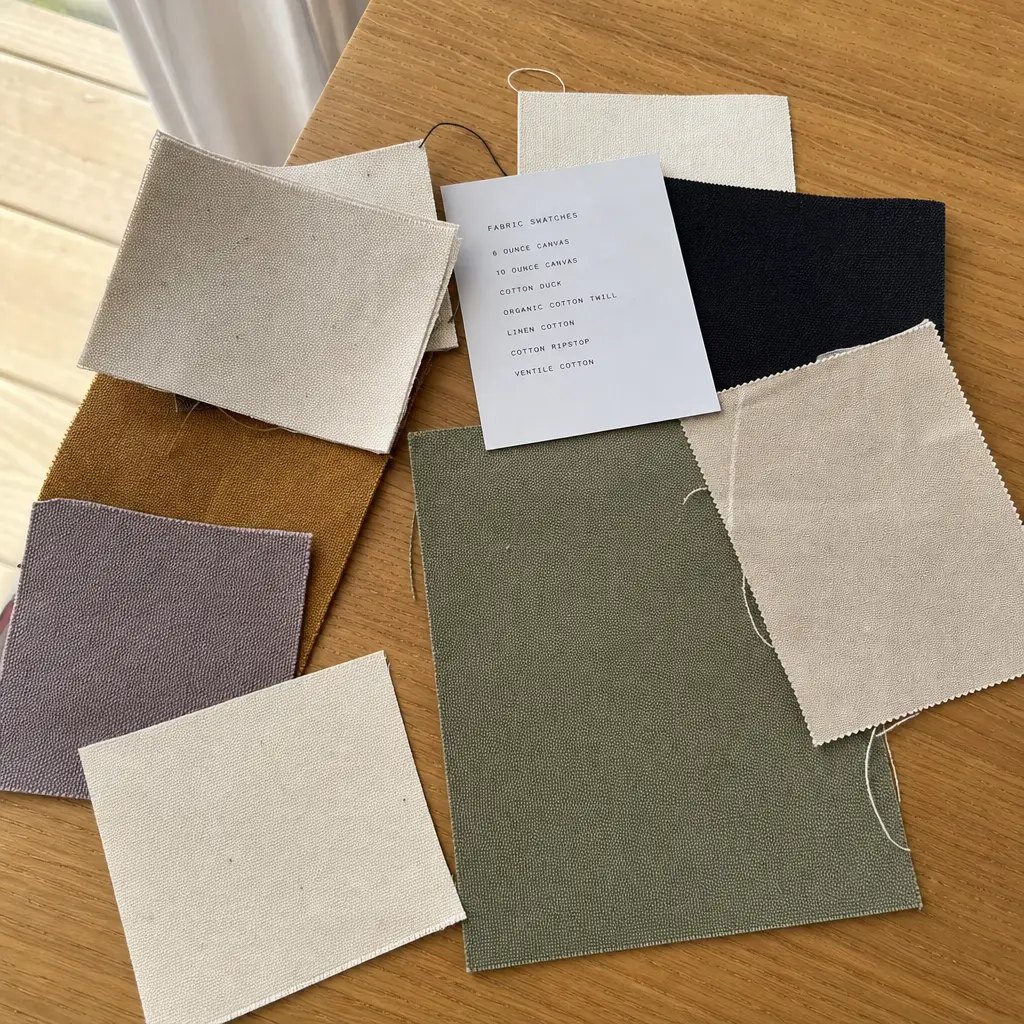
Canvas weight is the first line in the cost structure. For most custom canvas zipper portfolios, 12 oz is the practical baseline, with 14 oz used when the buyer wants a firmer body, better edge stability, and a more premium retail feel. Going lighter than 10 oz can work for low-load promo use, but the portfolio may look soft, wrinkle more, and show seam distortion after packing. If the item will sit in a subscription box next to heavier inserts, the material should hold its shape without turning into a rigid board.
Texture and finish also matter. A plain weave with a clean surface prints more predictably than a coarse, uneven canvas. If the art is simple, a standard greige-to-dyed finish is usually enough. If the buyer wants a stronger retail impression, ask whether the factory can offer enzyme wash, pre-shrunk treatment, or better color consistency across lots. Each step adds cost, but uncontrolled shrinkage or uneven shade can be more expensive once the box is assembled and shipped.
- 10 oz: lower cost, softer body, acceptable for light contents and short-use promotional programs.
- 12 oz: common balance of price, print clarity, and structure for subscription box inserts.
- 14 oz: better hand-feel and body retention, usually worth it for premium brand programs or repeat-use portfolios.
- Pre-shrunk or washed canvas reduces surprise shrinkage after sample approval, but it should be quoted as a separate process.
Print method choices that change quote behavior
The print method is one of the biggest cost drivers because it affects setup, labor, yield, and visual consistency. For a clean logo or short slogan, 1-color screen print is usually the most economical at volume. It gives solid coverage on canvas and is easy to repeat across large runs, provided the artwork is not too fine. If the design has multiple colors or a short run with frequent art changes, heat transfer may be cheaper at the order stage, although it can feel less integrated into the fabric.
Woven labels, embroidery, and debossed patches are useful when the buyer wants a more subdued brand mark and fewer ink-related issues. They do not replace full-panel print if the box design depends on a large graphic, but they can reduce reprint risk and improve appearance on darker fabrics. When comparing quotes, make sure the supplier states whether setup is included, what the color separation cost is, and whether print placement tolerance is part of the final approval.
- Screen print is usually best for stable, high-volume subscription box programs with simple artwork.
- Heat transfer can help with short runs or changing campaign art, but it must be tested for peel and crack resistance.
- Embroidery and woven labels are safer for small logos, but they add labor and can stiffen thin areas.
- Request the print file format and pantone reference before sample production to avoid color drift.
How MOQ really works on a factory quote
MOQ is not only a factory policy; it is usually the point where fabric sourcing, print setup, and cutting efficiency become workable. For custom canvas zipper portfolios, the MOQ may change by canvas color, zipper color, and print method. A buyer asking for natural canvas, black zipper, and one-color print may get a much lower MOQ than a buyer requesting a custom-dyed body, branded puller, and multi-color print. That is why two suppliers can appear to disagree on MOQ when they are actually quoting different production paths.
A useful MOQ plan has a primary option and a fallback option. The primary route should match the brand ideal. The fallback route can use a stock fabric shade or standard zipper component to reduce dyeing and sourcing time. This keeps the subscription box schedule moving while protecting the margin. If the supplier cannot explain which elements are driving MOQ, the quote is not ready for comparison.
- Fabric color customization often increases MOQ more than the bag shape itself.
- Custom zipper pullers, metal logos, and special liners usually raise setup and minimums.
- Stock natural or black canvas is the easiest route for lower MOQ and faster lead time.
- Ask for MOQ by component, not only by final bag, so you can identify the true bottleneck.
Comparison of sourcing routes for bulk pricing
Bulk pricing for this product is shaped by the sourcing route more than the headline factory quote. A direct factory quote can be lower, but only if the buyer is ready to manage samples, revisions, and production communication. A trading company may look more flexible on service, yet the margin layer can make it harder to see the real material standard. For subscription box programs with repeated runs, the cheapest route is not always the one with the lowest paperwork friction; the better route is the one that keeps repeat orders consistent.
The table below is meant to compare how buyers should evaluate supplier options, not just spec fields. Use it to separate an actual factory, a trading layer, and a domestic converter when you are collecting quotes for a bulk program.
Supplier route comparison table
Define the measurable checks around zipper cycle check, puller torque, seam pull, corner abrasion, logo rub, size tolerance, and carton compression review. Add tolerance ranges only where the buyer truly cares, and ask for photos that show the measurement point, not just a finished product overview.
For procurement decisions, the inspection note should say who checks, when they check, and what evidence is required. Photos without measurements are often not enough for remote approval.
- Write decisions in measurable language, not only descriptive wording.
- Ask for sample photos plus one physical approval sample for important orders.
- Keep quotation, sample approval, and inspection notes tied to the same spec version.
What a usable quote should contain
A serious quote should read like a production plan, not a one-line price. The factory should identify canvas GSM, bag size, zipper type, print method, packing method, carton quantity, lead time, and sample cost. If the supplier only gives a unit price and a vague delivery estimate, it is impossible to compare risk. A quote with exact inputs usually costs less to manage later, even if the headline number is not the lowest.
For subscription box buyers, quote structure matters because the order often repeats by season or campaign. The first purchase may be a pilot run, but the next two runs depend on whether the supplier can hold the same fabric shade, print registration, and carton pack count. Put the quote into a comparison sheet and separate material cost, process cost, packing cost, and freight assumptions. This is the cleanest way to see whether a lower price is real or simply missing work that will show up later.
- Request a breakdown for fabric, zipper, print, sewing, packing, and carton export handling.
- Ask whether sample charges are refundable against mass production.
- Confirm whether the quoted price includes inner polybags, barcode stickers, and master carton marks.
- Make sure the quote states the validity period and whether raw material volatility can trigger an adjustment.
Quality thresholds that prevent expensive rework
Quality control for zipper portfolios should focus on functional failure points, not only appearance. The zipper must run smoothly from end to end, the top corners must be reinforced, and the seams around the gusset should stay straight after folding. If the portfolio is packed flat in bulk cartons, any crooked zipper or weak edge stitch becomes visible during receiving and later in the box assembly line. Buyers should set acceptance thresholds before production starts so the factory understands which defects are critical and which are cosmetic.
The canvas surface also needs a practical standard. A small amount of natural slub is normal, but visible oil stains, large yarn knots, or shade variation beyond the agreed reference should be rejected on first inspection. For printed items, the strongest commercial complaint is not always a broken product; it is a logo that looks off-center, washed out, or inconsistent across cartons. That is why the sample approval should be tied to a written reference, not just a photo on a phone.
- Zipper test: full open-close cycle should be smooth on a random carton sample without snagging.
- Stitching: no loose thread clusters at zipper ends, gusset corners, or pull-tab attachment points.
- Print: acceptable placement tolerance should be written into the approval sheet.
- Fabric: shade and texture must match the approved swatch or signed sample, especially across repeat orders.
Sample approval: the step that prevents the wrong bulk run
A sample is not just a visual reference; it is the production standard for the bulk order. For canvas zipper portfolios, the buyer should evaluate the sample under the same conditions expected in the subscription box: flat packed, then opened, folded, and re-closed. Check whether the zipper sits straight, whether the body stands or collapses as intended, and whether the print survives light bending without cracking or separating from the weave. If the sample includes a liner or internal pocket, test the pocket opening size against the intended insert dimensions.
The best approval process uses three layers: pre-production sample, top-of-line sample, and final shipment spot check. If only one sample is approved without a physical reference retained by both sides, the risk of drift is high. Keep a signed reference sample or sealed approval card, and note the exact fabric roll or dye lot if the order is large enough for multiple production days.
- Measure finished size, zipper length, and gusset depth from the sample rather than assuming the spec sheet was followed.
- Flex the printed area to see whether the ink will crack in box handling.
- Open and close the zipper several times and look for wave movement along the top seam.
- Keep one approved sample in your office and one with the factory if the order will repeat.
Packing, carton counts, and freight efficiency
Packing is often the hidden cost in bulk pricing. A portfolio that ships flat and nests cleanly can reduce carton count and freight volume, especially in subscription box programs where the buyer is already paying to move many SKUs. Individual polybags protect the surface and make warehouse handling cleaner, but they add labor and plastic cost. If the portfolio is not retail-sold individually, many buyers can save money by using bulk inner packing with a clear barcode sticker and consistent carton pack count.
The carton plan should match the receiving workflow. If the warehouse wants easy count verification, smaller carton packs are safer. If ocean freight efficiency matters more than inbound labor, a denser carton pack may be better. Either way, the supplier should tell you the gross weight, net weight, carton dimensions, and how many finished units fit in one export carton without crushing the zipper line or distorting the canvas fold.
- Flat-fold packing is usually the best option for subscription box inserts and freight control.
- Individual polybags are useful when abrasion or dust is a concern, but they raise cost and cube.
- A barcode sticker on the inner pack can speed warehouse matching and reduce receiving errors.
- Ask for carton dimensions and packed weight before confirming freight booking.
Specification comparison for buyers
| Spec decision | Recommended option | When it fits | Buyer risk to check |
|---|---|---|---|
| Canvas weight | 12 oz or 14 oz canvas, pre-shrunk if the print is large | Subscription boxes that need a premium feel and repeated handling | Too light and the portfolio sags; too heavy and unit cost plus carton weight rise quickly |
| Body construction | Single-panel body with reinforced gusset and zipper top | Standard document or kit insert use where flat packing matters | Weak gusset stitching can cause zipper pull stress and shape loss during transit |
| Print method | 1-color screen print for volume, heat transfer for short runs, woven label for minimal branding | Clear logo or campaign graphics without fine gradients | Poor registration or ink cracking if the art file is not matched to the process |
| Lining choice | Unlined or light cotton twill lining for cost-sensitive orders | When the insert is mostly decorative or for light contents | Unlined bags can show seam tails and reduce perceived quality if stitching is uneven |
| MOQ route | Factory direct MOQ tied to fabric color and print setup | Repeat programs and seasonal subscription box drops | Low MOQ may raise unit price sharply or force a stock fabric compromise |
| Closure hardware | Standard nylon zipper with metal slider; upgraded YKK-style only if brand positioning needs it | General commercial use and normal open-close cycles | Cheap zippers cause jamming, split teeth, or crooked top lines in packed cartons |
| Packing method | Flat-folded with barcode sticker and bulk packed by size/color | When freight efficiency and warehouse receiving speed matter | Overstuffed polybags and mixed cartons increase cubic volume and miscounts |
| Supplier route | Direct factory with sample room and in-house printing | If you need better price control and production traceability | Trading layers can hide the actual fabric, print, and inspection standards |
| Lead time strategy | Plan 35-50 days after sample approval for repeat-color canvas and print | Most subscription box schedules with fixed ship dates | Compressed schedules lead to rushed cutting, weaker QC, and less carton aging time |
Buyer checklist before sampling
- Confirm finished size tolerance, zipper opening length, gusset depth, and whether the portfolio must stay flat when empty.
- Lock canvas GSM, weave type, and color standard with a physical swatch or signed lab dip reference.
- State print method, artwork placement, ink color, and acceptable registration tolerance before sample production.
- Define zipper grade, puller style, stitching density, and reinforcement at the top corners and stress points.
- Specify packing format, carton count, barcode placement, and whether individual polybags are required for retail handling.
- Request a pre-production sample or top-of-production sample and approve it against a written spec sheet.
Factory quote questions to send
- What canvas GSM, weave count, and finish are included in your quoted price, and what changes if I move up or down one weight tier?
- Which print process is quoted, how many colors are included, and what is the setup fee for each process?
- What is your MOQ by fabric color, print color, and accessory configuration, and can you quote a stock-fabric fallback option?
- What zipper brand or grade is included, and is the slider metal, plastic, or branded puller?
- What packing method is included in the unit price, and how many pieces per carton do you recommend for export?
- How many days are needed for sample making, production, inspection, and export packing after artwork approval?
Quality-control points to confirm
- Fabric GSM matches the approved range, with no visible thin spots, oil marks, or excessive slubs in the main panel.
- Stitch density is consistent on zipper tape, gusset corners, and stress points; loose threads are trimmed cleanly.
- Zipper runs smoothly through a full open-close cycle without snagging, wave distortion, or tooth misalignment.
- Print coverage is centered and color-consistent; ink does not crack when the bag is flexed or folded lightly.
- Finished size, seam allowance, and gusset depth stay within agreed tolerance so the portfolio fits the intended insert or document set.
- Carton pack count, label accuracy, and inner polybag condition match the shipping instruction and receiving plan.