Why wine carrier sourcing fails in subscription boxes
Most sourcing problems start when the buyer treats a canvas wine carrier like a simple promotional pouch. In a subscription box, the item has to fit a bottle, survive repeated handling, protect against abrasion, and still look premium when the customer opens the carton. If the carrier is too soft, too narrow, or too loosely packed, the product feels cheap even if the print is clean. If the carrier is too rigid, it can distort the box or arrive with permanent folds. The item has to work at the intersection of packaging, presentation, and transit durability, which makes it more sensitive than a standard tote or drawstring pouch.
The cost mistake is usually the same: comparing supplier quotes only on unit price. A low quote can hide a lighter fabric, weak handle stitching, a print method that cracks, or cartons packed so tightly that the carriers arrive creased. For a subscription program, those defects become customer complaints, replacement shipments, and a damaged retail impression. The procurement team has to buy the full performance outcome, not just the textile shell.
A second failure mode is buying from incomplete specifications. If the buyer only says “single bottle carrier, natural canvas, logo printed,” suppliers will fill in the blanks differently. One factory may assume a loose open-top sleeve, another may quote a taller gusseted style, and another may include a divider board you did not want. When those assumptions differ, the price comparison is meaningless. The RFQ must define bottle size, fabric weight, printing method, closure style, packing format, and acceptable visual tolerances before quotes are requested.
This matters even more for subscription boxes because the wine carrier is often one component in a tightly packed system. The carton interior may allow only a few millimeters of clearance. The carrier may need to fit beside literature, inserts, or protective filler. It may also need to look neat after the customer opens the outer shipper. A carrier that works as a standalone retail item may still fail in a box environment if its seams, handles, or folds collide with the other contents.
- Fit problem: bottle dimensions were assumed instead of measured.
- Durability problem: fabric weight was quoted in oz only, without GSM or finish detail.
- Presentation problem: carrier looks flat or wrinkled after box opening.
- Cost problem: hidden setup, sample, insert, and packing charges change the real landed cost.
Start with the bottle, not the bag
A usable spec starts with the actual bottle profile. Standard 750 ml wine bottles vary in height, shoulder shape, and base diameter enough to affect seam placement and closure fit. Sparkling wine bottles can be wider or taller, and some specialty labels use nonstandard glass shapes that require more internal room. If your subscription box sometimes includes mixed bottle formats, the carrier must be designed around the largest likely profile, not the average one. Otherwise a minority of units will feel tight, split seams, or sit crooked in the package.
For single-bottle carriers, many buyers begin with 12 oz canvas as the baseline. That works for light presentation and moderate transit, but 14 oz is safer if the carrier ships loose inside a box, needs stronger shape retention, or must be reused after delivery. If the product includes an insert divider or bottom board, note the exact thickness because it affects internal clearance. Also note whether the bottom insert is corrugated, paperboard, or another rigid layer, because each material changes how the bottle sits and how the base carries weight.
The buyer should also define the closure and the loading direction. An open-top sleeve is faster to pack, but it gives less containment if the carrier moves around during fulfillment or transit. A flap, snap, or hook-and-loop closure may improve presentation and security, but it adds sewing steps, hardware cost, and possible alignment issues. If the bottle is inserted from the top, the neck clearance and top opening matter. If it is inserted from the side or into a pre-assembled box cavity, the carrier geometry needs to support that workflow without forcing the bag open.
Do not forget the handling sequence after delivery. Subscription box recipients often pull the carrier out of the shipper, inspect the design, and then carry the bottle or use the item later. That means the bag should feel stable in the hand, not just look right in a flat photograph. A buyer should ask the supplier to confirm the internal usable size, the finished body depth, the handle drop, and the clear space around the bottle shoulder. These are the measurements that determine whether the product feels like a tailored packaging component or a generic pouch.
- Measure bottle height, base diameter, shoulder width, and any capsule or cork bulge.
- State the usable internal size, not only the external bag dimensions.
- Specify whether the carrier needs to hold a bottle vertically, at an angle, or inside a box cavity.
- If the box is tight, include a tolerance band for seam allowance and insert thickness.
- Confirm whether the bottle is wrapped or unwrapped before loading, because wrap adds millimeters that affect fit.
Fabric weight, finish, and feel are not the same decision
Buyers often say they want a “heavy canvas” and stop there. For sourcing, that is incomplete. Ask for ounce weight and GSM, then clarify whether the fabric is raw, bleached, dyed, pre-shrunk, or coated. Two bags with the same stated weight can feel and perform differently if one is tightly woven and the other is a looser weave with more surface finish. Finish also affects ink adhesion, crease behavior, dust pickup, and color consistency. If you are approving a subscription box item, those details matter as much as raw fabric weight.
For subscription boxes, the buyer usually needs a balance between structure and packability. A very stiff carrier can be difficult to insert into the box and may crack at fold lines. A very soft carrier can slump after unpacking or fail to hold its silhouette when the customer opens the mailer. The right spec is the one that survives shipping while still looking intentional on shelf, in photographs, and in a consumer’s kitchen. That means the supplier should be able to describe not just the fabric weight but also the hand feel, weave density, and any softening or finishing process applied after weaving.
Pre-shrunk fabric is often a useful request for recurring programs because it reduces size drift between lots. It also makes sample approval more reliable if the production run is split over time. Coated canvas may be valuable if the carrier needs stain resistance or a more premium surface, but buyers should check whether the coating affects print adhesion or makes the surface too glossy for the intended brand look. A finish that helps performance but looks out of place can undermine the whole program.
The buyer should ask for a physical swatch whenever possible. Photos do not show weave tightness, rigidity, or how the bag will fold at the seams. If the supplier cannot provide a sample swatch, request a completed prototype that uses the final material lot. Compare the sample under the same lighting you will use for approval, and record whether the fabric has visible slubs, thickness variation, odor, or surface marks. Those cosmetic differences may be acceptable in a casual retail tote, but they can be unacceptable in a premium subscription insert.
- 12 oz canvas: common starting point for standard gift programs.
- 14 oz canvas: better for durability, premium feel, and reusable carry use.
- Coated canvas: useful for stain resistance, but confirm hand feel and print adhesion.
- Pre-shrunk fabric: reduces size drift and improves repeatability across batches.
- Request GSM, weave count, and finish description in the RFQ so quotes are directly comparable.
Print method should follow quantity and artwork, not taste
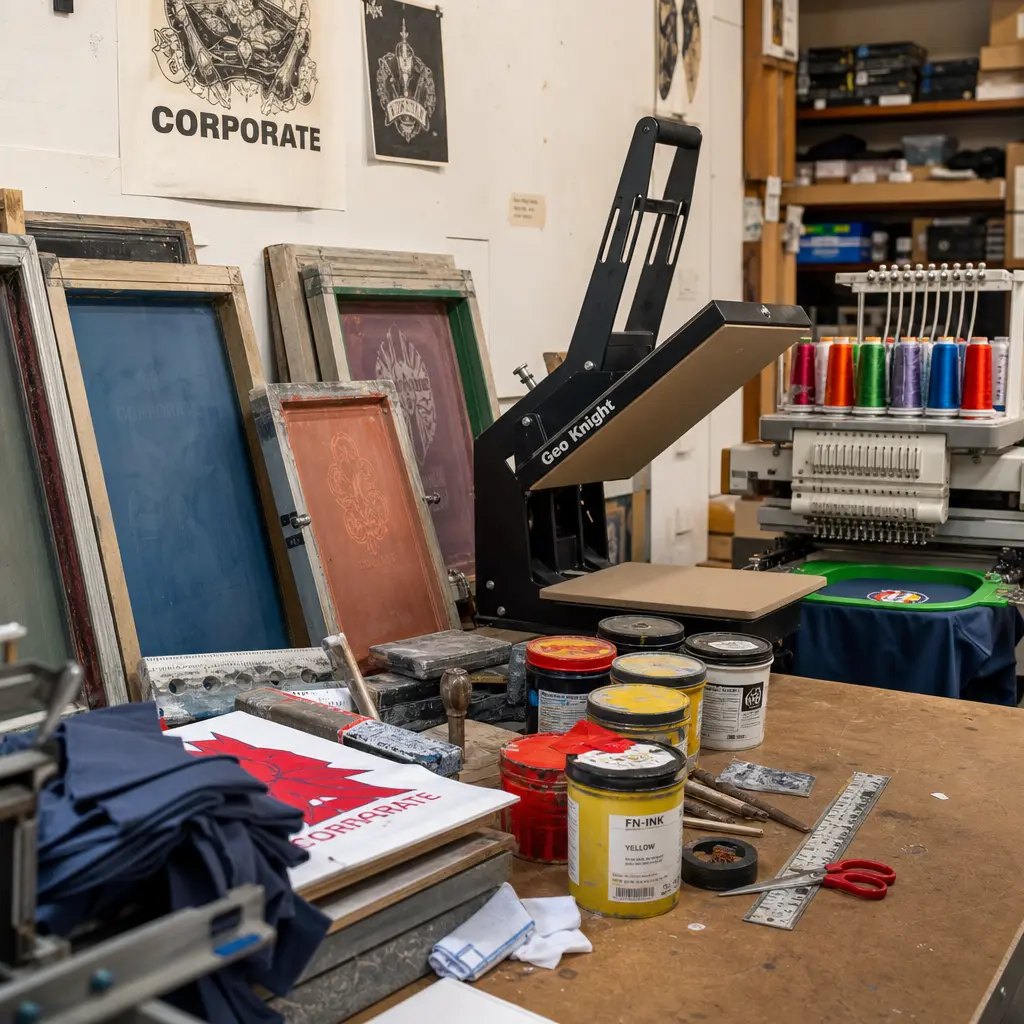
Screen print is usually the best value for a simple logo, one or two colors, and repeat orders. It gives solid coverage and good opacity on natural canvas, especially when the design must look bold from a distance. The tradeoff is setup cost per color and less flexibility if the artwork changes often. For a subscription box program with a fixed brand mark, screen print often gives the best mix of durability and cost efficiency, provided the artwork is not overly detailed.
Heat transfer, digital print, or DTG-style solutions make more sense for short runs, seasonal promotions, or artwork with gradients and multiple colors. The risk is durability. Some prints look good at the approval stage but become weak under rubbing, folding, or moisture exposure. Buyers should require a sample that reflects the final print method, not an art proof on paper. If the factory substitutes another method to save time, the final surface performance may change, even if the logo looks similar at first glance.
A practical print specification should include logo size, placement tolerance, pantone or color reference, and the acceptable shift from center. Also ask whether the print will sit on one side only, both sides, or on a gusset panel if the carrier has one. A logo can look balanced on a flat mockup and still land too close to a seam in production. That is why the print window should be measured in centimeters or millimeters, not described only as “centered.”
For B2B procurement, print durability questions should be specific. Ask how the carrier will be tested for rub resistance, fold cracking, or transfer edge lifting. If the item will sit inside a subscription box for long periods, consider whether carton friction may scuff the design before the customer ever sees it. If the product is likely to be reused, ask what happens after repeated handling. The right print choice is the one that survives the full customer journey, not just the factory photo shoot.
- Use screen print for stable, repeatable branding.
- Use transfer or digital print when the design changes frequently or order quantities are small.
- Ask for rub and fold durability expectations on the final surface.
- Confirm whether print sits on one side only or both sides, and whether that changes MOQ or setup cost.
- Request a photo or live sample of the actual print method, not a proof on paper.
Compare sourcing routes before comparing the quote number
Not every quote means the same thing. A direct factory quote usually includes cutting, sewing, printing, and packing under one roof or one managed workflow. A trading company or sourcing agent may present a simpler communication path, but the actual production control can be split across facilities. That split matters when a carrier needs exact logo placement or consistent handle stitching. If a quote is too vague about where each process happens, the buyer may not know who owns defect correction if something goes wrong.
For subscription box programs, direct factory sourcing is often the better route when you have a repeat design and want to lock in spec control. You can usually get better visibility into stitch details, packing methods, and the production schedule. If you are testing a new design or launching with uncertain volume, a trading route can help move faster and may be easier to coordinate across multiple product categories. Still, the buyer should be careful about who signs off on sample approval and who owns quality claims when the order is complete.
A hybrid model can also work. In that setup, the front-end communication may run through a sales office, but the factory still handles cutting, sewing, printing, and inspection. The issue is not whether an intermediary exists; it is whether the chain of responsibility is transparent. Procurement should ask which team approves the material, who checks print registration, who inspects the cartons, and who will resolve claims if the goods arrive short or damaged. The closer those answers are to one accountable production owner, the easier it is to control quality.
The safest comparison is to request the same format from every supplier. Ask for the same material spec, same print method, same handle construction, same insert plan, same packing method, and same carton assumptions. Then compare line by line. If one supplier includes a bottom insert and another does not, or if one includes polybags while another assumes bulk packing, the unit prices cannot be compared directly. The cheapest quote may simply be the least complete quote.
- Direct factory: best for repeat production, cost control, and quality consistency.
- Trading route: useful for fast coordination, but verify where each process happens.
- Hybrid sourcing: can work, but only if responsibilities for sample, QC, and packing are documented.
- Always compare quotes on the same spec sheet, not on a verbal description.
- Ask for the name of the factory and the workshop location if the quote is issued by an intermediary.
How to read MOQ logic without getting trapped by unit price
MOQ is not just a yes-or-no number. It often changes by fabric color, print color count, hardware type, and packaging style. A supplier may offer a lower unit price at 5,000 pieces, but if your program only needs 1,500 pieces per season, the higher volume breaks your inventory model. The right question is what the supplier needs to keep the line efficient, then whether your demand pattern supports that setup. In a subscription environment, where offers may change quarterly, overbuying can be more expensive than paying a slightly higher unit price.
Watch for hidden thresholds. Some factories price one logo placement as standard, then add cost for a second print location or special handle color. Others include bulk packing in the quote but charge extra for individual polybags or barcode stickers. A few will quote the same design across multiple colors but require each color to meet a separate minimum. If you do not ask about these thresholds early, you may discover that the “same” product becomes several different SKUs with separate MOQs and separate costing structures.
For procurement teams, a quote matrix is the most useful tool. Build rows for order quantity tiers and columns for fabric color, print color, hardware, insert, and packing method. Add setup charges, sample fees, and whether the quote includes packaging labels. If possible, ask the supplier to show the break point at which the unit price falls meaningfully. That makes it easier to decide whether to launch with a smaller trial run or wait until the next replenishment cycle to buy a larger lot.
It also helps to ask how MOQ is enforced in practice. Some suppliers are flexible on paper but slow to quote low-volume revisions once sampling starts. Others are efficient at the MOQ they quoted but unwilling to split lots across different artwork versions. If your subscription box program uses seasonal art or variant labels, make sure the factory is willing to repeat the same structure with changed graphics without reopening the entire sourcing process. That flexibility can be more valuable than a slightly lower unit price.
- Ask for unit pricing at multiple tiers: example 500 / 1,000 / 3,000 / 5,000.
- Separate MOQ by color, print color, and closure hardware.
- Clarify whether sample cost is refundable against bulk order.
- Confirm if price includes export carton marks, inner packing, and label application.
- Ask whether mixed artwork or mixed handle color is allowed within one run.
Use a sample approval process that mirrors production
A good pre-production sample is not just a logo proof. It should mirror the final fabric, handle, stitch pattern, insert, and packing format. If the sample arrives with different canvas weight or a cleaner print than the factory will use in bulk, it is not a reliable approval basis. The purpose is to expose production reality before the line starts. That means the buyer should ask whether the sample was made in the same workshop, on the same machine type, and with the same production sequence that will be used for the order.
The sample should be approved against a written checklist. Include dimensions, stitch count, print placement, handle length, closure alignment, insert fit, and packaging details. If you expect a natural canvas look, note whether light shade variation is acceptable or whether the batch should be closely matched. If a change is made after sample signoff, document the revision in writing. Many production problems happen because the factory is working from one revision while procurement remembers another.
It is also smart to test the sample in the actual packing environment. Insert the carrier into the exact subscription box or mailer it will ship inside. Check whether the handle folds flat, whether the top opening interferes with closure of the outer carton, and whether the overall pack-out remains neat. If the carrier is supposed to be a gift item, ask someone on the warehouse team to pack multiple units to verify that the process is repeatable and not overly slow.
The strongest approval method combines physical and photographic records. Photograph the sample from all sides, record key dimensions, and keep the approved unit labeled with the date and version. Share that sample record with production, QC, and the fulfillment team. If the supplier changes anything later, the approved sample should be the benchmark. For B2B procurement, the value of a sample is not that it looks good; it is that it can prevent ambiguity later.
- Approve against the same fabric, same print method, and same construction line.
- Measure finished dimensions after the sample has rested, not immediately after sewing.
- Open and close the carrier repeatedly to test seam behavior and closure alignment.
- Photograph the approved sample from all sides and share it with production and QC teams.
- Test the sample inside the actual subscription box before final signoff.
Packing details can protect margin or destroy it
A canvas wine carrier can look fine at the factory and still arrive ruined if the packing method is poor. Tight carton packing can flatten handles, leave permanent fold marks, and create edge wear. Loose packing increases freight volume and can let units shift until the print scuffs. The buyer needs a packing spec that balances cube efficiency with presentation quality. Packing should be treated as part of the product, not as a warehouse afterthought.
For subscription boxes, many buyers want bulk packed by color and size, with inner polybags only if moisture protection or surface cleanliness is needed. If the carrier is sold as a standalone retail SKU, individual polybagging and barcode labeling may be worth the added cost. If the item is only an insert inside a monthly box, bulk packing can reduce material use and unit cost. The right choice depends on how the carrier will be handled after it leaves the factory and before it reaches the customer.
A good packing spec should cover carton count, inner pack layout, maximum compression, moisture protection, and carton marking. Ask whether units are folded once or multiple times, whether handles are tucked in or laid flat, and whether the carton design prevents crushing. Also ask how the cartons will be stacked on a pallet or truck. A product that is technically correct but badly packed can still lose margin through freight inefficiency and damage claims.
If the shipment will travel through humid ports, long warehouse storage, or multiple handling points, consider adding moisture protection. That might mean a polybag, desiccant, or a lined carton specification. The buyer should also request carton dimensions and gross weight before production so the logistics team can estimate cube, freight class, and storage needs. If the quote does not include the packing method, it is not complete enough for procurement.
- State whether units are bulk packed or individually bagged.
- Define carton count, carton size, and target gross weight.
- Add moisture protection if shipping through humid ports or long transit routes.
- Confirm whether carton labels show style, color, quantity, and destination marks.
- Specify whether handles are folded inward, laid flat, or protected with tissue or insert cards.
Lead time risk comes from process order, not just the calendar
The calendar lead time in a quote is usually the easiest number to say and the least useful one to trust without detail. Production time depends on fabric availability, print setup, sample approval speed, accessory sourcing, and carton procurement. If one part is delayed, the whole order moves. A factory that promises a short schedule without asking for final artwork or packaging details is usually quoting a best-case path, not a secure one. For subscription programs, where launch dates are fixed, that optimism can create missed ship windows.
The cleaner approach is to map the order flow: sample approval, material reservation, cutting, printing, sewing, inspection, packing, and ex-factory dispatch. Then identify which steps are on the critical path. If your subscription box ship date is fixed, build a buffer before the packing deadline and not just before the factory ship date. That buffer matters because artwork changes, missing labels, and carton shortages often create delays after the sewing line is already scheduled.
Lead times also change when an order includes multiple variants. If the carrier comes in several colors, has different logo versions, or uses special hardware, the factory may need extra time for line changes and component sorting. Ask whether all variants can be produced in one continuous run or whether the factory will batch them separately. For procurement planning, that answer affects not just delivery date but also defect risk and packing accuracy.
Do not release final payment until the approved sample and production goods match the same spec. If the factory is incentivized to meet a ship date, there can be pressure to substitute materials or simplify steps. A written production schedule, backed by a checklist and signoff process, is more reliable than a general promise of speed. In B2B purchasing, the safest lead time is the one you can verify step by step.
- Ask for the production calendar by step, not only one total lead time number.
- Reserve extra time if the design includes multi-color print or hardware sourcing.
- If a seasonal launch is involved, confirm whether the factory has parallel orders running on the same line.
- Do not release final payment until the approved sample and production goods match the same spec.
- Ask what can be produced in parallel and what must wait for prior approval or material arrival.
What a usable landed-cost comparison looks like
A real comparison includes more than unit price. If one supplier quotes a lower bag price but charges separately for sample, tooling, inner packing, carton marks, and logo setup, the final landed cost can be higher. Build the comparison around the complete buy-in number: product, setup, sample, packing, inland handling, and freight assumptions if they are part of your procurement model. Otherwise the cheapest line item can hide the most expensive total outcome.
The most useful comparison is often between sourcing routes, not just suppliers. Direct factory buying may lower the per-unit cost, while a local stockholder may reduce lead time but increase unit price and limit customization. For subscription boxes, the right decision depends on how often the design changes and whether the carrier is a temporary insert or a recurring branded SKU. A one-off launch may justify a faster and simpler supply route, while a recurring program usually rewards lower steady-state cost and stronger spec control.
When building the landed-cost sheet, include the cost of quality risk. That does not mean inventing a number out of thin air. It means recording the practical cost of expected defects, replacements, and extra handling time. For example, if you need a higher fabric weight to reduce seam damage or a better print method to reduce rubbing, the added unit cost may be cheaper than one replacement cycle later. Procurement teams should compare not just immediate spend but also likely downstream correction cost.
The best landed-cost worksheet is transparent enough that marketing, operations, and finance can all see the tradeoff. If a premium closure or heavier canvas makes the item look better but increases pack-out time and freight cube, the business can decide whether that benefit is worth the expense. That is the real procurement job: not finding the lowest number, but choosing the most defensible one.
- Compare product price, setup cost, sample cost, and packaging cost separately.
- Add a small defect allowance to the budget so replacement cost is visible.
- Measure the cost impact of heavier fabric, added insert board, and individual polybagging.
- Review whether shorter lead time justifies a higher unit price for your launch window.
- Ask suppliers to state which costs recur on every reorder and which are one-time charges.
Specification comparison for buyers
| Spec decision | Recommended option | When it fits | Buyer risk to check |
|---|---|---|---|
| Sourcing route | Direct factory with in-house sewing and print control | Best for repeat subscription box programs, custom branding, and tighter cost control on mid-to-high volume | Confirm the factory truly controls cutting, sewing, printing, and final packing; broker quotes often hide split production costs |
| Fabric weight | 12 oz canvas for standard presentation; 14 oz if bottles are heavier or mailers are rough | Use 12 oz for standard 750 ml wine bottles in light-to-moderate transit; move up if the carrier must survive e-commerce handling | Do not accept only an ounce label; request GSM, weave density, and finished fabric shrinkage after washing or coating |
| Handle construction | Self-fabric handles or cotton webbing handles with reinforced stitching | Use webbing handles when the box is opened and reused by consumers, or when the carrier may be carried separately | Check handle stitch count, bar-tack position, and whether the handle anchor is stitched through lining or only the face fabric |
| Closure style | Open top with insert divider, or top flap with Velcro/metal snap for premium packs | Open-top works for standard gift sets; closure helps if the wine carrier ships loose inside a subscription box | Extra closure hardware adds cost, weight, and line complexity; confirm if the box design allows easy insertion |
| Print method | Screen print for bold single-color logos; heat transfer or digital print for short runs with multiple colors | Screen print is efficient for large repeats; digital or transfer suits design changes, seasonal packs, or low MOQ trials | Compare artwork setup fees, color limits, and wash/rub durability; cheap digital prints can crack or fade in transit |
| Internal protection | Divider board, bottom insert, or foam-free corrugated support depending on pack-out method | Needed when bottle breakage risk is high or the carrier is gifted separately from the box | Make sure the insert thickness does not reduce usable bottle clearance or distort the carrier shape |
| Packaging route | Bulk packed by size in polybags with carton labels, or individual retail-style polybag if the carrier is a gift item | Bulk packing keeps unit cost lower for subscription inserts; retail-style packing works when the carrier is sold separately | Confirm carton count, compression level, and moisture protection; overpacked cartons cause creasing and handle deformation |
| Supplier option | Factory with sample room approval and pre-production sample signoff | Best when design details matter: logo placement, stitch quality, insert fit, and box compatibility | If the supplier will not provide a signed sample, the production risk moves entirely to the buyer |
Buyer checklist before sampling
- Define the bottle format first: single 750 ml, twin bottle, or mixed-size gift pack, then size the carrier around the actual bottle dimensions and closure method.
- Set the fabric spec in both oz and GSM, plus finish type, because canvas weight alone does not tell the full story.
- Choose the print method based on order volume, artwork complexity, and durability target, not only on the cheapest quote.
- Request a pre-production sample with the exact logo position, handle construction, closure hardware, and insert fit before mass production.
- Clarify packing: individual polybag, bulk pack, carton quantity, desiccant use, and master carton dimensions for freight planning.
- Collect quote data in the same format from all suppliers: unit price at each MOQ tier, sample cost, tooling or plate cost, lead time, carton spec, and replacement policy for defects.
- Ask for finished dimensions after production, not only cut size, because seam allowance and insert boards affect real bottle clearance.
- Request written confirmation of which processes are in-house and which are outsourced, especially printing, hardware attachment, and final packing.
- Define acceptable cosmetic variation in canvas shade, stitch alignment, and logo placement before production starts, so QC teams have a clear pass-fail standard.
- If the carrier will sit inside a subscription box, test it inside the exact shipper or carton before approving the final spec.
Factory quote questions to send
- What is the exact fabric construction, GSM, weave count, and whether the canvas is raw, bleached, dyed, pre-shrunk, or coated?
- Which print method will you use for this artwork, what are the setup costs, and what is the expected color tolerance on production goods?
- What is your MOQ by color and by logo variation, and how does the unit price change at 500, 1,000, 3,000, and 5,000 pieces?
- Can you make a pre-production sample with the final handle length, stitch pattern, insert, and packaging spec before bulk approval?
- How do you pack units and cartons for export, and what are the master carton dimensions, gross weight, and carton marking details?
- What is your standard production lead time after sample approval, and what factors can delay cutting, printing, or finishing?
- What defect rate do you allow for stitching, print alignment, and smudging, and how are replacements handled if cartons arrive short or damaged?
- Do you control cutting, sewing, printing, inspection, and packing in-house, or are any steps outsourced to another workshop?
- What is the exact handle reinforcement method, including bar-tack count, stitch length, and anchor placement?
- Can you share product photos or a live sample from the same production line and material lot, not a stock photo or older revision?
Quality-control points to confirm
- Fabric weight matches the approved standard within a narrow tolerance, with no thin spots, slubs in critical areas, or obvious shade variation across the lot.
- Handle attachment is reinforced with consistent bar-tacks or lock stitching, and the carrier can hold the expected bottle weight without seam strain.
- Logo placement sits within the approved print window and shows no cracking, bleeding, ghosting, or off-register edges.
- Insert or divider fits the target bottle size without forcing the seams open or leaving too much loose movement inside the carrier.
- Top opening, flap, snap, or closure is aligned and functional after repeated opening during sample testing.
- Cartons are packed to prevent crushing, moisture ingress, and handle flattening; carton labels match SKU, color, and quantity accurately.
- Final goods should pass a simple transit simulation: shake test, light drop test, and visual inspection for seam distortion or print damage.
- Stitching is checked at every stress point, especially handle anchors, side seams, bottom corners, and closure attachment points.
- Finished dimensions are measured on multiple units from different cartons to confirm the production run matches the approved sample.
- Canvas surface is inspected under consistent light for dye streaks, stains, oil marks, skipped stitches, and print scuffing.