Buying Problem: Bakery Branding Meets Bottle Weight
Custom canvas wine carriers for artisan bakeries look simple until the product is filled. A bakery may use the same carrier for sourdough-and-wine bundles, holiday gift shelves, wholesale partner promotions, or retail resale near the checkout. Each use case puts different stress on the handle, bottom gusset, print surface, and packing method. A carrier that photographs well when empty can still fail when a staff member carries two filled bottles and a customer receipt pouch.
The safest wholesale RFQ starts with the real job of the carrier, not the logo. Procurement teams should define whether the bag is meant to hold one standard 750 ml bottle, two mixed bottle shapes, or a bottle plus bakery product insert. Importers and distributors also need carton and landed-cost data early, because canvas wine carriers are bulky compared with flat tote bags. A low unit price can disappear quickly if the carrier is overbuilt, packed loosely, or shipped with cartons that cube out before they weigh out.
- For gift-with-purchase, prioritize controlled cost, fast print approval, and flat packing.
- For retail resale, prioritize fabric handfeel, shelf shape, barcode labels, and cleaner stitching.
- For distributor stock, prioritize repeatable dimensions, neutral artwork zones, and carton efficiency.
- For bakery-winery collaborations, prioritize co-branding layout and bottle compatibility before sampling.
Fabric Weight and Canvas Construction
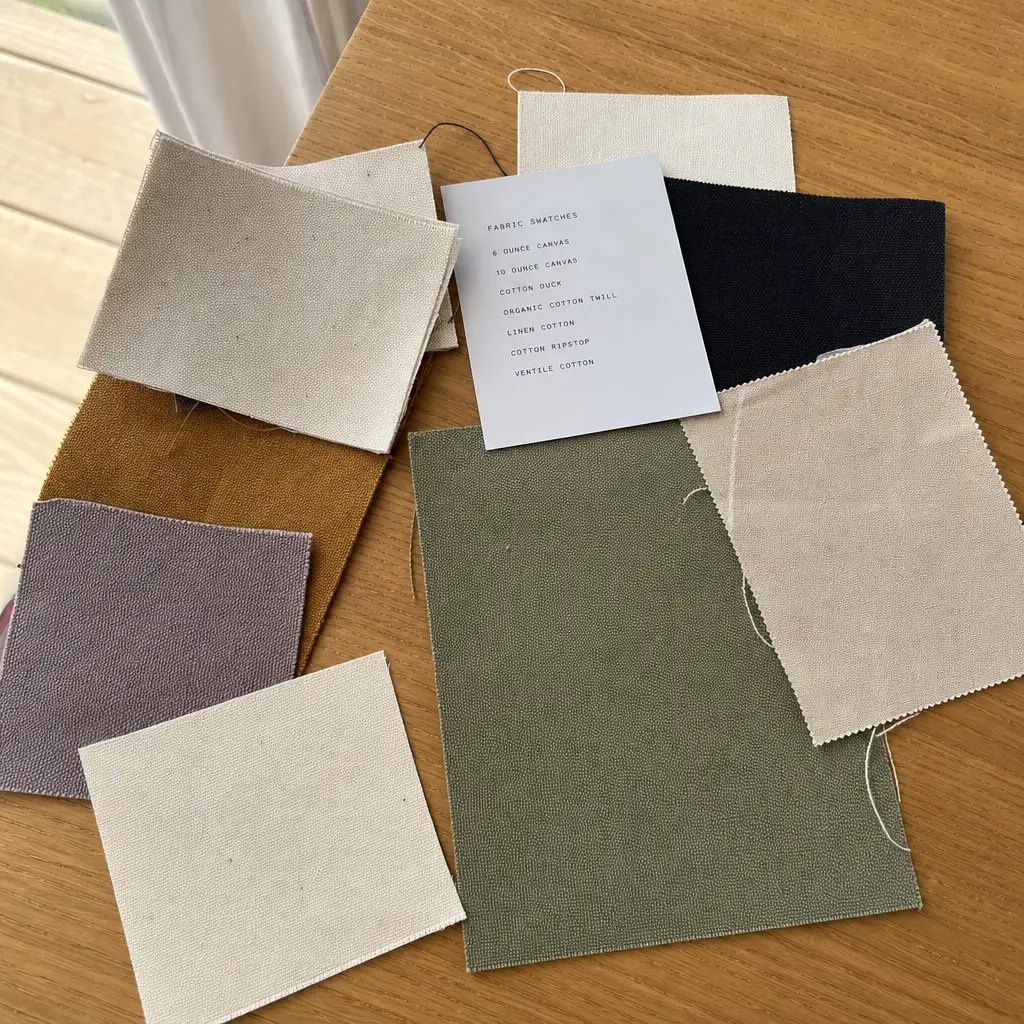
Most bakery wine carrier programs sit between 10 oz and 12 oz cotton canvas. A 10 oz canvas is usually enough for single-bottle carriers when the handle is properly reinforced and the design is not expected to stand like a rigid gift box. A 12 oz canvas gives better structure, better perceived value, and a smoother retail presentation. A 14 oz canvas can be attractive for premium collections, but it raises sewing difficulty, carton volume, needle wear, and sometimes print cracking near folded seams.
Do not compare supplier quotes by ounce alone. Canvas ounce may be described per square yard, while some suppliers quote GSM. Natural cotton canvas also varies by yarn thickness, weave density, finishing, and shrinkage. For a fair comparison, the RFQ should request a target ounce and GSM range, the fabric color, whether the canvas is pre-shrunk or washed, and whether natural cotton seed specks are acceptable. Artisan bakery buyers often like natural specks, but retail chains may treat dark specks as stains unless they are approved in the sample standard.
- Common starting point: 10 oz canvas for value single-bottle programs.
- Balanced option: 12 oz canvas for two-bottle bakery gift carriers.
- Premium option: 14 oz canvas only when the buyer accepts higher CBM and slower sewing.
- Quote control: request finished bag weight so suppliers cannot hide lighter fabric behind vague canvas wording.
Carrier Format and Bottle Fit
The phrase wine carrier is not precise enough for production. A narrow Bordeaux bottle, a wider Burgundy bottle, a sparkling wine bottle, and a tall olive oil bottle can all be called bottle products by retail teams, but they need different gussets and height allowances. If the bakery sells local wine pairings, imported oils, or seasonal cider, the buyer should send bottle dimensions or physical bottles for sample fitting. A finished carrier that is 5 mm too narrow may still accept the bottle when empty, then tear or distort when lifted.
For artisan bakeries, the two most practical structures are a single-bottle sleeve carrier and a two-bottle carrier with a center divider. The single-bottle style is easier to pack flat and cheaper to print. The two-bottle style has higher perceived gift value but requires more attention to divider height, bottom seam construction, and balance when lifted. If the carrier will hold one bottle and one bakery product, the divider should be tested with the actual bread sleeve, jam jar, or pastry box instead of a second bottle.
- Request finished internal width and gusset, not only external flat measurements.
- Set divider height high enough to reduce bottle knock, usually above the bottle shoulder contact zone.
- Avoid very low gussets for two-bottle carriers because the base becomes unstable on retail shelves.
- Approve the sample with real filled bottles, not empty sample bottles.
Printing Method and Artwork Risk
For most custom canvas wine carriers wholesale orders, screen printing is the most reliable option for bakery logos, simple slogans, store names, and one to three solid colors. It gives good cost control, stable color on natural or dyed canvas, and repeatable output across bulk production. Heat transfer works for detailed artwork or small trial orders, but buyers should test handfeel, edge lifting, and heat marks on thicker canvas. Embroidery can look premium, but it adds cost, slows output, and may pull the fabric if the logo has dense stitching.
Artwork placement is a common source of avoidable defects. The print area should not run across thick side seams, bottom folds, or handle attachment zones unless the factory confirms it can keep the surface flat during printing. Natural canvas absorbs ink differently than bleached or dyed canvas, so Pantone matching should be treated as a controlled tolerance rather than a perfect match. If the bakery brand uses a cream, brown, or black logo, a strike-off on the actual fabric is more useful than a digital proof.
- Best low-risk print: one-color screen print on the flat front panel.
- Higher-risk print: logo crossing a gusset fold or seam junction.
- Premium option: small woven side label plus front screen print.
- Approval evidence: request print strike-off under daylight and indoor store lighting.
MOQ Logic and Cost Drivers
The lowest quoted MOQ is not always the real MOQ. Canvas wine carriers have several minimums: fabric purchase, dye lot, print setup, artwork version, label production, and packing version. A supplier may say the MOQ is 500 pieces, then quote extra charges when the buyer wants five bakery locations with different logos. Another supplier may quote 1,000 pieces but include multiple artwork versions more efficiently. Procurement teams should separate total order quantity from per-design quantity in the RFQ.
Main cost drivers are fabric weight, carrier complexity, print color count, divider construction, label and hangtag work, and packing labor. Two-bottle carriers cost more not only because they use more fabric but because the sewing path is slower and alignment defects are more visible. Retail packing also changes cost. A carrier packed as loose bulk is cheaper than one folded with tissue, barcode sticker, hangtag, and individual bag. For importers, carton CBM can be as important as sewing cost, especially when sea freight rates are high.
- Separate quote lines for single-bottle and two-bottle versions.
- Separate quote lines for one-color and two-color print.
- Separate quote lines for bulk packing, retail-ready packing, and distributor carton marks.
- Request validity period because cotton fabric and freight costs can move between sampling and order release.
Sample Approval With Acceptance Criteria
A good sample process is not just receiving one pretty bag. The buyer needs a pre-production sample that represents the actual fabric, actual print method, actual handle construction, and actual packing fold. If the bulk order will use a woven side label, hangtag, or barcode sticker, those components should be included in the approved sample or approved separately. For bakery retail programs, the sample should be filled, lifted, placed on a shelf, and photographed from the customer’s viewing angle.
Sample comments should be written as measurable revisions. Instead of saying the handle feels weak, write the required handle drop, stitch pattern, bartack length, and load test target. Instead of saying the print is too low, write the distance from top edge to logo top and the allowed tolerance. Factories can act on numbers faster than taste comments, and the same numbers protect the buyer during final inspection.
- Approve fabric swatch before approving full sample if color is brand-sensitive.
- Measure finished height, width, gusset, handle drop, and divider height on the sample.
- Run a filled bottle hang test before mass production, especially for two-bottle styles.
- Photograph the approved sample with ruler, bottle fit, logo close-up, and inside seams.
- Keep one sealed approval sample for the factory and one for the buyer or inspector.
Quality Control Thresholds
Canvas is a natural textile, so a practical QC standard must separate acceptable material character from real defects. Small slubs and cotton seed specks may be acceptable on natural canvas if they match the approved sample range. Oil stains, mildew marks, heavy shade panels, broken yarns, and dark spots on the logo area should be rejected. The standard should define major defects, minor defects, and critical defects before production starts.
Functional QC matters more than cosmetic perfection for wine carriers. Handles should survive the defined load test without seam opening. The bottom gusset should remain flat enough for the carrier to stand with a bottle inside. Dividers should prevent bottles from hitting each other during normal carrying. Print should not smear, crack, or transfer to adjacent bags under normal packing pressure. These thresholds make inspection practical for importers and distributors who cannot renegotiate quality after cartons arrive.
- Major defect: handle seam slippage, broken stitch at load point, or open bottom seam.
- Major defect: logo visibly off-position beyond approved tolerance.
- Minor defect: loose thread that can be trimmed without damaging the seam.
- Critical defect: mold, foreign odor, sharp metal contamination, or unsafe needle fragments.
- Functional defect: divider too low or loose to keep two filled bottles separated.
Packing, Cartons, and Warehouse Handling
Packing decisions affect landed cost and retail labor. Canvas wine carriers can be shipped flat, folded, bundled, individually bagged, or retail tagged. Flat bundle packing is usually the most efficient for wholesale bakery buyers because it reduces carton volume and keeps receiving simple. Individual polybags may protect the product, but they add cost, plastic use, unpacking labor, and sometimes creases. Paper band bundles are a useful compromise when the buyer wants lower plastic use but still needs count control.
Carton specifications should be confirmed before order release, not after production. Ask for proposed carton dimensions, units per carton, gross weight, net weight, and total CBM. If the cartons are too heavy, bakery warehouse teams may complain even if the product is good. If the cartons are too large, they may crush in stacking or waste container space. Natural canvas also needs moisture protection during sea freight, especially in humid seasons or long transshipment routes.
- Set carton gross weight limit, commonly around 15 kg to 18 kg unless the warehouse accepts more.
- Use inner bundles to make receiving counts faster for multi-store distribution.
- Avoid over-compressing printed panels before ink has fully cured.
- Request carton drop or compression consideration when carriers are packed for long-distance import.
- Include carton marks, PO number, item code, color, quantity, and destination details in the packing instruction.
Lead Time and Schedule Risk
A realistic timeline includes artwork review, fabric sourcing, sample making, sample courier time, buyer comments, revised sample if needed, bulk material preparation, cutting, printing, sewing, trimming, inspection, packing, and export handover. Many delays happen before production starts because artwork files are incomplete, Pantone references are missing, or the buyer changes bottle format after the first sample. For seasonal bakery programs, the order calendar should be built backward from the in-store date, not from the desired ship date.
The highest schedule risks are dyed fabric, multi-logo orders, custom labels, and retail packing changes. Natural canvas is usually faster than custom dyed canvas because fabric may be available from stock or short lead sourcing. Custom dyed canvas requires lab dips, dye lot approval, and shade control. If the buyer needs bakery-specific versions for different regions, the factory should receive a version matrix listing artwork, quantity, packing, barcode, and carton mark for each version.
- Fastest route: stock natural canvas, one-color screen print, bulk flat packing.
- Slower route: custom dyed canvas, multi-color print, woven label, retail hangtag, barcode stickers.
- Common delay: buyer approves logo but not final carrier dimensions.
- Common delay: packaging artwork arrives after sewing has started.
- Risk control: freeze artwork, size, packing, and carton marks before cutting bulk fabric.
Quote Data for Landed-Cost Comparison
A usable supplier quote should let the buyer compare landed cost, not just unit FOB price. For canvas wine carriers, carton CBM and units per carton can change the true cost per unit when shipping by sea, rail, or air. A two-bottle carrier with 12 oz canvas may look only slightly more expensive at FOB level, but if it ships with lower carton density, the landed cost gap becomes larger. Importers should calculate product cost, packing cost, export charges, freight, duty, brokerage, warehouse handling, and expected defect allowance.
Quote comparisons should also include production evidence. A factory that provides fabric details, sample photos, load test method, packing plan, and inspection support may quote higher than a trading-only source, but the risk is lower. For repeat bakery programs, consistency matters more than shaving a few cents from the first order. If the product will be reordered seasonally, the quote should state whether the same fabric, label, and screen can be reused and how long production records are kept.
- Request FOB or EXW terms clearly, with port and currency.
- Request units per carton, carton size, gross weight, net weight, and total CBM per 1,000 pieces.
- Request separate sample, screen, label, hangtag, and packing charges.
- Request defect handling terms before shipment, including rework, replacement, or credit process.
- Request reorder terms for same artwork and same fabric specification.
Specification comparison for buyers
| Spec decision | Recommended option | When it fits | Buyer risk to check |
|---|---|---|---|
| Fabric weight | 10 oz to 12 oz cotton canvas for most bakery wine carriers; 14 oz only for premium gift sets | 10 oz controls cost for seasonal promos; 12 oz gives better structure for retail shelves and filled bottle handling | Quotes may use different ounce standards or substitute lighter plain cotton; request GSM, fabric construction, and finished bag weight |
| Carrier format | Single-bottle carrier for counter add-ons; two-bottle carrier with center divider for gift bundles | Single format suits bakery wine pairings and local partner programs; two-bottle format suits holiday hampers | Divider height and seam reinforcement are often under-specified, causing bottle knock and weak sidewalls |
| Handle construction | Self-fabric handles with box-cross reinforcement or cotton webbing handles stitched into side seams | Self-fabric looks cleaner for artisan branding; webbing handles improve strength and repeatability | Handle length can become too short after seam allowance; confirm finished drop length, not only cut length |
| Printing method | Screen print for one to three solid colors; heat transfer only for detailed small runs; embroidery for premium low-color logos | Screen print is best for bakery logos, slogans, and simple co-branding with wine shops | Ink cracking, color migration, and logo distortion occur when print area crosses seams or thick folded panels |
| Bottom and gusset | Flat bottom with 7 cm to 9 cm gusset for common 750 ml bottles | Works for most wine bottles, olive oil bottles, and bakery gift products packed upright | Champagne, Burgundy, and tall tapered bottles need different width and height; test with the buyer’s real bottle set |
| MOQ structure | Separate MOQ by fabric dyeing, print color, and size instead of using one vague total quantity | Useful when bakeries need several logo versions for store groups, distributors, or seasonal designs | Supplier may quote attractive total MOQ but apply hidden surcharge for each artwork, fabric color, or packing version |
| Retail packing | Flat pack in inner polybag bundles or paper band bundles; export carton with moisture barrier if sea freight | Flat packing reduces CBM for wholesale shipments and keeps retail teams from steaming every unit | Over-tight packing creates handle creases and ink offset; request carton test photos after pre-production packing |
| Inspection level | AQL inspection with clear defect definitions for print, stitching, stains, size tolerance, and load test | Needed for importers and distributors shipping to multiple bakery accounts | Without written thresholds, factories and buyers disagree on acceptable slubs, print pinholes, and canvas shade variation |
Buyer checklist before sampling
- Define whether the program is retail resale, gift-with-purchase, wine-and-bread bundle packaging, or distributor stock; each use changes fabric weight, packing, and logo durability requirements.
- Specify bottle types by actual diameter, height, and filled weight; do not approve dimensions based only on the phrase 750 ml wine bottle.
- State fabric as cotton canvas with target ounce and GSM range, color, shrinkage requirement, and whether natural cotton specks are acceptable.
- Choose one carrier format: single bottle, two bottle with divider, four bottle market carrier, or collapsible sleeve style; avoid mixing formats in one RFQ unless volumes are separated.
- Provide finished dimensions with tolerances for height, width, gusset, handle drop, divider height, and front logo position.
- Confirm handle construction, stitching pattern, stitch density, bartack or box-cross reinforcement, and minimum load test weight.
- Lock print method, ink type, Pantone reference, artwork size, print placement, and whether print on gusset or pocket is allowed.
- Request pre-production sample photos showing the empty bag, filled bag, inside seams, bottom gusset, handle reinforcement, and logo close-up.
- Define export packing by units per inner bundle, carton size target, gross weight limit, moisture protection, carton marks, and barcode or retail label needs.
- Ask for a quote breakdown by fabric, printing, sewing complexity, packing, sample charge, mold or screen charge, inland freight, and validity period.
Factory quote questions to send
- What exact fabric are you quoting: cotton canvas ounce, GSM, weave, dyed or natural, and expected shrinkage after finishing?
- Is the quoted price based on single-bottle, two-bottle, or another structure, and are dividers included in the unit price?
- What is the MOQ for fabric color, artwork version, print color count, and each packing version?
- Which print method is included, and what is the maximum printable area without crossing seams or heavy folds?
- Can you provide a load test standard for the handle and bottom seam, including test weight and hanging time?
- What are the size tolerances for finished height, width, gusset, divider, and handle drop after mass production?
- How many days are needed for sampling, sample revision, bulk material preparation, production, inspection, and export packing?
- What carton dimensions, units per carton, gross weight, and estimated CBM are used in the quote?
- Are screen charges, sample charges, courier cost, label cost, hangtag cost, barcode sticker cost, and palletizing cost included or separate?
- What inspection photos or production checkpoints can be shared before final shipment release?
Quality-control points to confirm
- Finished size tolerance should normally stay within plus or minus 5 mm for width and gusset and plus or minus 10 mm for height and handle drop, unless the design is intentionally soft and unstructured.
- A filled 750 ml bottle load test should not cause handle tearing, seam opening, or visible stitch slippage after hanging for a defined period such as 24 hours.
- Print registration should remain within the approved artwork position, with no major ink smears, missing logo areas, heat press scorch marks, or obvious color deviation from the approved sample.
- Inside seams should be trimmed and locked so loose thread ends do not catch bottle labels or gift inserts.
- Bottom gusset and divider stitching must keep bottles separated when the carrier is lifted and moved, not only when it is standing empty.
- Canvas shade, cotton seed specks, and slub level must match the approved sample range, especially for natural canvas where buyers may mistake normal fiber variation for stains.
- Cartons should not exceed the buyer’s warehouse handling limit, commonly 15 kg to 18 kg gross weight for hand-loaded cartons unless otherwise agreed.
- Moisture control should be used for sea freight, especially for natural cotton canvas packed tightly in humid seasons.