Why carton planning changes the real cost of custom canvas wine carriers
For liquor retailers, custom canvas wine carriers are often sourced as a store-support item, a seasonal gift item, or an upsell packaging accessory. Because the unit cost is usually modest compared with the bottle inside, teams sometimes treat carton planning as a side note. That is where avoidable cost starts to accumulate.
A carrier can look excellent as a loose sample and still perform badly once 30, 40, or 50 pieces are compressed into export cartons, floor-loaded into a container, and unpacked by a distribution center working fast. If the bag body is folded across the print, if dividers collapse under pressure, or if cartons exceed a warehouse lift standard, the buyer’s cost is no longer just the ex-factory bag price. It becomes freight inefficiency, receiving delay, reshaping labor, relabeling cost, and in some cases write-off of unsaleable units.
Carton planning matters even more in liquor retail because many programs are tied to short commercial windows. Holiday gifting, store resets, winery events, tasting-room promotions, and chain-specific campaigns all depend on goods arriving in saleable condition with clear SKU identification. A technically correct bag packed in an operationally poor carton still creates downstream failure.
The procurement lesson is simple: carton planning belongs in the RFQ, not in a later email thread after artwork approval. Buyers should ask how the bag will be folded, how many pieces will be packed per carton, what the gross carton weight will be, and what carton strength is included in the quoted price. That is the minimum needed to compare suppliers on landed cost rather than on a narrow piece-price basis.
There is also a planning benefit that is easy to miss. Once the carton format is fixed, the buyer can evaluate storage density, inbound dock handling, pallet pattern, and store replenishment behavior. In practice, the box around the bag often influences execution as much as the bag itself.
- Carton design affects freight cube, pallet pattern, and manual handling compliance.
- High pack density can create gusset memory, divider deformation, and logo creasing.
- Weak board grade increases the chance of carton crush during long or humid transit.
- Clear carton marks reduce receiving errors during seasonal or multi-SKU programs.
Start with bottle geometry, not a generic 'wine bag' request
One of the most common sourcing errors in this category is asking for a 'single-bottle wine bag' or 'two-bottle wine tote' without defining the actual bottle geometry. That language is understandable commercially, but it is not specific enough for accurate costing or technical fit. A standard 750 ml Bordeaux bottle does not occupy the same space as a Burgundy bottle with broader shoulders, and neither behaves the same as a Champagne bottle with a larger diameter and heavier glass mass.
For procurement buyers, the useful starting data is not the bottle’s nominal liquid volume alone. It is the actual height, body diameter, shoulder profile, neck clearance requirement, and approximate filled weight. If the bag is sold empty at checkout, a slightly easier fit may be acceptable. If store staff or a gift-assembly team are loading the bags at speed, the opening must be easier to access and the fit must be consistent enough to avoid forcing seams.
Multi-bottle carriers add another layer of complexity. Two bottles placed side by side may look simple in a sketch, but divider height and base width determine whether the bottles contact, tilt, or overload the side seams. If one bottle type is wider than the other, a nominally symmetric bag can still perform poorly. Buyers should therefore define whether the bag is intended for one fixed bottle SKU, a family of similar bottles, or mixed use across several bottle shapes.
A physical fit sample remains the most reliable approval method. Even accurate drawings can miss loading friction at the shoulder, neck interference with the handle opening, or unstable stance when the loaded bag is set down. For this reason, the best RFQs either send an actual bottle reference to the supplier or provide precise dimensional data and require a fit sample before final costing assumptions are locked.
If the program spans multiple countries or bottle vendors, ask the factory to test against the worst-case profile first. That small step can prevent a quote that looks competitive on paper but fails when the retailer’s real bottle assortment arrives.
- Specify actual bottle height, diameter, and loaded weight in the RFQ.
- State whether the bag must fit one bottle SKU or several bottle families.
- For two-bottle styles, define whether bottle contact is acceptable or not acceptable.
- Approve fit with a real bottle or exact dummy, not only a flat sketch.
Fabric selection: 10 oz, 12 oz, 14 oz, and 16 oz are not interchangeable
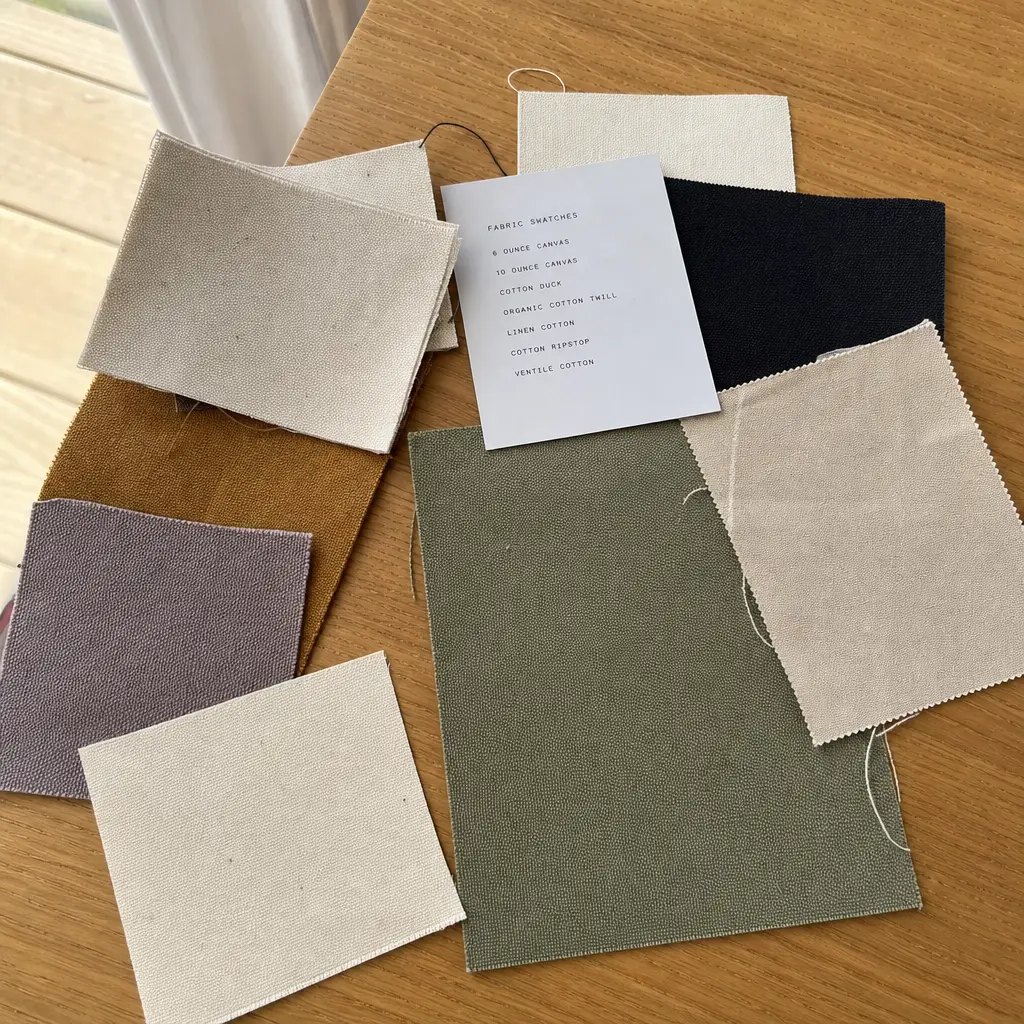
Canvas weight is often discussed casually, but in B2B buying it should be treated as a performance variable with cost and logistics consequences. A few ounces difference changes how the bag stands, how it prints, how much seam strain it can tolerate, and how many units can be packed per carton. Approximate market references are 10 oz about 340 GSM, 12 oz about 407 GSM, 14 oz about 475 GSM, and 16 oz about 542 GSM, though conversion can vary slightly by construction and finishing.
For many liquor retail programs, 12 oz to 14 oz canvas is the practical center range. It usually gives enough body for a single standard 750 ml bottle, supports economical screen printing, and still allows efficient carton counts. Lighter weights such as 10 oz may work for promotional or event-driven programs where short-term use and lower cost matter more than rigid presentation. Buyers should still expect more collapse at the neck, more visible distortion at the gusset, and greater sensitivity to handle reinforcement quality.
Heavier 16 oz fabric can add premium hand feel and shape retention, but it should not be specified automatically. Heavier cloth raises unit weight and often reduces pieces per carton, which means more cartons, higher gross shipment weight, and potentially stricter carton board requirements. In some cases, a 12 oz or 14 oz body with extra bottom reinforcement gives a better landed-cost outcome than moving the whole bag to 16 oz.
Material composition also matters. 100% cotton canvas is common and often preferred for natural hand feel and brand positioning. Cotton-poly blends may improve dimensional stability or cost efficiency but can change the surface character. Recycled-content canvas may support sustainability goals, yet buyers should confirm whether flecking, shade variation, or print-surface differences are expected. In all cases, the quote should state whether the GSM tolerance applies to greige fabric or finished fabric after dyeing and finishing.
If the program uses dyed fabric, ask whether the mill or the sewing factory controls color consistency. If the answer is unclear, the buyer may inherit shade variation that shows up only after the first carton is opened at the warehouse.
- Use both oz and GSM in specs to avoid quote confusion.
- Ask whether GSM is measured before or after finishing.
- Consider reinforced bottom construction before moving the entire body to heavier cloth.
- If using dyed or recycled canvas, define visual expectations for shade and texture.
Construction details that actually determine durability
In this category, many bag failures are construction failures rather than fabric failures. A buyer can choose the right GSM and still receive a weak product if the stress points are underbuilt. The most important load-bearing zones are the handle attachment area, top hem, side seams, bottom seam, gusset corners, and, in multi-bottle bags, the divider connection points.
Handle specification should include more than width. A 25 mm to 38 mm self-fabric handle is typical, but the reinforcement pattern is what determines whether it survives real use. Box-X stitching or robust bartacks are generally more reliable than a simple line stitch. Buyers should ask whether the quoted construction includes this reinforcement as standard or whether the factory has based its price on a minimal attachment method.
Bottom construction deserves equal attention. A bag may have a generous gusset on paper yet still sag excessively if the seam allowance is too narrow or if the corners are not secured properly. For premium or heavier-bottle programs, a second fabric layer or inserted bottom support may improve carrying stability. If such reinforcement is used, the buyer should clarify whether it is sewn in, removable, or simply an extra fold of the same canvas.
Dividers are a separate engineering point, not just a styling detail. In two-bottle carriers, a divider that stops too low can allow bottle shoulders to knock together. A divider that is sewn only lightly at the top can shift out of position during repeated loading. If true bottle separation is required, buyers should specify divider height, attachment method, and whether the divider should reach the base seam cleanly.
Because these issues often become visible only after use, they should be written into the approval and inspection basis. If the purchase order says only 'canvas wine bag with divider,' the factory and inspector still have too much room to interpret the build standard differently from the buyer’s expectation. That gap is where expensive surprises appear.
The safest approach is to turn each structural feature into a line item: handle material, handle width, stitch density, bottom reinforcement, divider construction, seam allowance, and hem method. Once the language is fixed, quoting becomes much more consistent and inspection becomes much easier.
- Write handle width, drop, and reinforcement method into the spec sheet.
- Confirm seam allowance and bottom construction on the PP sample.
- Treat divider design as a functional feature with measurable requirements.
- Classify open seams, failed bartacks, and divider detachment as major defects.
Print method and panel layout must be planned together with folding
Branding on custom canvas wine carriers is usually simple in artwork terms but sensitive in production terms. Most liquor retail programs use one-color or two-color screen printing because the method is cost-efficient and repeatable. The key operational detail is where and when the print is applied. Printing on flat cut panels before sewing often produces cleaner registration and more stable placement than trying to print after assembly on a formed bag.
Placement tolerance should be specified from a fixed reference point. For example, a buyer may require the logo to be centered on the front panel width within plus or minus 5 mm and positioned 60 mm below the top edge within plus or minus 5 mm. Without this type of measurement, suppliers may still call a visibly off-center logo acceptable because there is no written reference.
Folding matters because the approved logo can be damaged by the approved packing method if those two decisions were made separately. Large solid logos are especially vulnerable to pressure creasing if the fold line runs directly through the print. A bag may leave the sewing line looking correct but arrive with a visible center crease that the retailer then perceives as a print defect. This is why the packing sample should be reviewed by both procurement and whoever owns brand presentation.
Dark dyed canvas adds another quoting variable. White or pale ink on dark fabric often requires an underbase or extra print pass to get acceptable opacity. If one supplier includes this and another does not, the quotes are not comparable. Embroidery, woven labels, heat transfer, or digital methods may suit some programs, but each interacts differently with folding, bulk, and cost.
The practical buying rule is to compare print method, print area, placement tolerance, and fold direction as one package. Looking at artwork alone is not enough for a retail program that will move through export cartons and warehouse handling. If the logo is a launch-critical element, ask for a folded pre-production sample under the exact carton plan you expect to use.
This is also the place to think about surface finish. A rougher canvas texture can soften a retail look, but it may also affect ink edge sharpness. That trade-off is worth settling before bulk approval.
- State print location from measurable reference points, not visual approximation.
- Ask whether dark fabric pricing includes underbase and extra pass requirements.
- Review logo position against planned fold lines before bulk production starts.
- Use packing samples to assess whether print scuffing or crease lines are likely in transit.
MOQ and SKU planning for chain retail programs
MOQ in canvas bag production is rarely one simple number. A supplier may quote a total quantity that looks acceptable while hidden constraints remain by color, artwork, size, or pack format. Procurement buyers should therefore split MOQ discussions into the drivers that actually affect factory efficiency: fabric booking, dye lot size, screen setup, cutting yield, line changeover, and packing complexity.
Natural or stock greige canvas often supports more flexible minimums than custom-dyed fabric. Once a program adds chain-specific body colors, multiple logo versions, dividers, or retailer-ready assortments, the practical MOQ can rise quickly. A buying team that asks only for one all-in MOQ may miss these production realities and receive a quote that changes later when artwork or color breakdown is finalized.
For liquor retailers managing several banners, a useful strategy is to standardize the base bag where possible. If dimensions, fabric, and core construction can remain common, brand differences may be handled through woven labels, hangtags, barcode labels, or carton marks rather than separate printed bodies. That can reduce obsolete stock and improve reorder flexibility. Where separate logos on the body are required, the buyer should still ask how MOQ changes by artwork and by colorway.
Assortment logic should also be confirmed early. A supplier may agree to the total order quantity but still face inefficient production if the split creates many very small runs. If the shipment must be pre-sorted by store group or promotional pack, buyers should state this at quote stage, because packing labor and carton planning may change materially.
Repeat-order logic matters too. A style with a relatively high first-order MOQ may become easier to reorder if screens, labels, patterns, and approved carton marks are already established. Capturing this information in the sourcing review helps the buyer distinguish between first-run setup cost and true long-term supply economics.
If the retailer expects replenishment through the season, ask the supplier to state whether the MOQ changes after the first run. That single question often reveals whether the program is truly scalable or only feasible as one opening order.
- Break MOQ down by color, artwork, size, and packing requirement.
- Natural canvas usually supports lower minimums than custom-dyed runs.
- A shared base bag can reduce stock risk across multiple retail banners.
- State SKU split and store-pack requirements during quotation, not after PO release.
Sampling should prove fit, construction, and packing execution
A rigorous sample process for custom canvas wine carriers should answer three separate questions: does the bottle fit correctly, is the approved build standard correct, and will the product survive the approved packing method. Too often, buyers stop at one visual pre-production sample and assume the rest of the supply chain will work.
The first useful checkpoint is the fit sample. This sample validates body width, height, gusset, divider behavior, and handle clearance using the intended bottle profile. If the retailer uses several bottle suppliers for nominally the same bottle type, the fit sample should use the largest or most difficult profile likely to appear in the program. That reduces the chance of an approval based on an easy bottle that the market does not consistently carry.
The second checkpoint is the pre-production sample. This is where fabric, stitching, print, labels, and reinforcement details are frozen. It should not be reviewed only by eye. The sample record should note key measurements, print reference points, divider height, and, if applicable, the expected visual range for natural canvas or dyed shade.
The third checkpoint is the packing sample, which is especially important for shipping carton planning for liquor retailers. A full packing sample should show the actual fold method, pieces per carton, carton marks, and gross weight estimate. It should also allow the buyer to inspect whether handles twist, logos crease, or dividers flatten when the carton is closed to production density.
For larger programs or where several departments are involved, keeping one sealed production reference sample is useful. It gives the factory, third-party inspector, and buyer a common standard during inline and final inspection and reduces arguments about what was actually approved. If more than one supplier is being evaluated, ask each one to pack to the same carton logic so the comparison is fair.
A good sample trail also speeds approval. When the fit, PP, and packing sample are all documented, the buyer can sign off more confidently and avoid repeated rework later in the season.
- Use a fit sample to validate bottle loading and divider performance.
- Use a PP sample to freeze measurable build details, not just appearance.
- Use a packing sample to validate fold method, count, and carton marks.
- Retain a sealed reference sample for inspection alignment.
Packing configuration and export carton specification that buyers should quantify
Export packing affects landed cost, carton handling speed, and product condition at arrival. In this category the key variables are inner packing method, pieces per carton, fold orientation, carton dimensions, carton gross weight, and board strength. These should be quantified in the quote and confirmed again at the packing-sample stage.
Inner packing is a trade-off. Individual polybags can reduce dirt pickup and print-to-print scuffing, but they add labor, material cost, and volume. For many canvas wine carrier programs, bundle packing or direct master-carton packing is acceptable if the goods are dry, the print is durable, and the fold method prevents abrasion. The right choice depends on the retailer’s presentation standard and logistics environment, not on factory habit.
Pieces per carton should be selected against both compression risk and warehouse rules. A light single-bottle carrier may tolerate a higher count than a heavy two-bottle carrier with a divider, but there is no universal carton count that works for every style. Buyers should ask the supplier to state the actual planned carton dimensions and estimated gross weight, then compare those against DC handling limits and container-loading efficiency.
Carton board grade should also be visible in the quote. As a commercial shorthand, 5-ply may be acceptable for lighter single-bottle programs, while 7-ply is often worth reviewing for heavier styles, denser pack ratios, long sea routes, or humid-season shipments. Some buyers also ask for burst or edge crush data where board failure has been an issue. Even if the supplier cannot provide a laboratory certificate for every order, asking the question makes carton quality an explicit part of the supply agreement.
Outer carton labeling matters operationally. PO number, item number, SKU, color, quantity, country of origin, net weight, gross weight, and dimensions are common requirements. If barcodes or store-pack labels are needed, approve them before bulk packing. Relabeling after import can erase any savings won in unit price negotiation.
Where carton stacking is part of the route, ask how the supplier protects the top layer from crushing. Simple fill count is not enough if the carton top collapses under pallet pressure or if the bag bodies are permanently flattened.
- Decide early whether the program needs individual polybags, bundle packs, or carton-only packing.
- Set a maximum gross carton weight based on warehouse handling policy.
- Ask for planned carton size and board grade in the quote, not after order confirmation.
- Approve carton marks and assortment labeling before production packing starts.
Quality control points to write into the PO and inspection brief
A purchase order for custom canvas wine carriers should do more than restate style name and quantity. It should define the measurable quality basis that inspectors and suppliers will use. The most commercially important checkpoints are functional, not cosmetic: GSM consistency, sewn dimensions, handle reinforcement, seam integrity, divider performance, print placement, cleanliness, and carton execution.
Fabric should be checked against the agreed nominal GSM and tolerance. Because buyers sometimes compare 12 oz and 14 oz closely on cost and performance, a low-side variance can materially change the feel and structure of the finished bag. Likewise, dimensions should be measured on the sewn bag, not inferred from cut panels. Width, height, bottom gusset, handle drop, and divider height are all relevant if the bag has a fit requirement.
Load-bearing construction should be reviewed carefully. Handle joints need the approved reinforcement pattern with no skipped stitches or incomplete bartacks. Bottom seams and gusset corners should be checked for security and symmetry. Many buyers also define a practical load test based on intended bottle weight plus a safety factor. The exact method should be written in the inspection brief rather than left to assumption.
Print QC should include position, density, edge quality, and behavior after folding. If the packing sample shows that the logo should avoid the fold line, final inspection should verify that the actual folding process follows the same method. Otherwise, a technically correct print can still arrive with avoidable visual damage.
Finally, carton QC must be treated as product QC, not just shipping administration. Wrong counts, weak cartons, wet cartons, mildew odor, crushed corners, and unreadable labels all create retail risk. If the shipment is seasonal, these issues can be more damaging than a minor fabric shade variance because they interfere directly with receiving and on-time launch.
For consistency, many buyers also require an inspection record photo set: one photo of the unopened carton, one of the folded bag stack, one of the print close-up, and one of the carton marks. That makes disputes much easier to resolve later.
- Measure sewn dimensions and compare them with approved tolerance limits.
- Treat handle failures, open seams, and divider detachment as major defects.
- Inspect print after folding, not only as a flat visual check.
- Hold shipments with wet cartons, mildew odor, severe crush, or incorrect carton marks.
How to compare quotes on total landed cost, not just unit price
Two suppliers can quote what appears to be the same custom canvas wine carrier while offering meaningfully different products and packing assumptions. One may quote 12 oz nominal fabric with standard handle stitching and 50 pieces per carton in 5-ply board. Another may quote 14 oz fabric, reinforced handles, 36 pieces per carton, and stronger export cartons. The lower piece price is not automatically the better procurement outcome if its packing method creates more freight or damage risk.
To compare accurately, normalize the technical basis first. Confirm fabric composition, nominal GSM, finished dimensions, reinforcement, divider build, print method, and sample stages. Then compare packing ratio, carton dimensions, gross weight, board grade, and any packing accessories such as polybags or interleaving. Without that step, buyers are often comparing incomplete assumptions rather than true alternatives.
Lead time should also be broken down by stage. Sampling, material booking, printing preparation, bulk sewing, packing, inspection, and booking can each affect the final delivery date. For seasonal retail, a quote with a more realistic schedule is often worth more than a slightly cheaper one that hides the critical path.
A useful quote review table for this category includes at least the following columns: fabric and GSM tolerance, finished size and tolerance, bottle-fit basis, handle reinforcement, divider spec, print method and placement tolerance, MOQ by variant, pieces per carton, carton size, gross carton weight, carton board, sample stages, and production lead time by step. This lets procurement, logistics, and merchandising review the same information from different angles.
For liquor retailers, the strongest supplier is typically not the one with the lowest nominal ex-factory cost. It is the one whose quote makes the total program easier to execute from sample approval through warehouse receipt and store deployment. That usually means fewer surprises, cleaner carton execution, and a better chance of launching on time.
If a supplier’s quote looks unusually lean, ask what was left out. The missing item is often the one that becomes expensive later.
- Align spec assumptions before comparing prices.
- Model freight and handling using carton count, cube, and gross weight.
- Ask for lead time by milestone, not one combined estimate.
- Choose the supplier whose packing logic reduces operational risk as well as cost.
Specification comparison for buyers
| Spec decision | Recommended option | When it fits | Buyer risk to check |
|---|---|---|---|
| Fabric weight | 12 oz to 14 oz canvas for most single-bottle retail programs | Good balance of body, printability, and carton efficiency for standard 750 ml bottles | Too light can collapse at the neck and stress handles; too heavy reduces pcs per carton and raises freight |
| Heavy-duty option | 16 oz canvas or 12-14 oz body with reinforced bottom panel | Premium gifting, repeated reuse, heavier glass, or wider bottle formats | Added weight may push carton gross weight over DC limits; confirm whether reinforcement is sewn in or removable |
| Bottle-fit basis | Approved against actual bottle dimensions, not a generic 'wine bag' size | Programs with specific Bordeaux, Burgundy, Champagne, or mixed bottle families | Loose fit wastes fabric and cube; tight fit causes seam strain and hard loading at store level |
| Inner divider construction | Full-height stitched divider with top tack reinforcement | Two-bottle carriers where bottle contact must be minimized during carrying | Low divider or weak attachment allows bottle collision and divider shift in transit |
| Handle style | 25 mm to 38 mm self-fabric handles with box-X or bartack reinforcement | Most retail carry applications with one or two 750 ml bottles | Short handle drop can interfere with bottle neck; minimal stitch pattern can fail under load |
| Print method | 1-color or 2-color screen print on cut panel before assembly | Large-volume programs needing repeatable cost and placement | Placement drift increases if cutting and sewing tolerance are not controlled; dark fabric may need underbase |
| Packing ratio | 25 to 50 pcs per export carton depending on style, GSM, and divider bulk | Sea freight programs where carton handling and palletization matter | Over-packed cartons can crease print, flatten gussets, and exceed warehouse lift limits |
| Carton specification | 5-ply for lighter single-bottle packs; 7-ply for denser heavy-canvas or long/humid transit routes | Use stronger board when gross weight, stacking height, or route severity is higher | Weak board can collapse under pallet pressure; ask for board type and edge crush or burst rating |
| Fold method | Flat-fold with handles tucked inward, gusset squared, divider aligned | Best for reducing cube while preserving recoverable shape at receiving | Poor folding creates logo crease memory, twisted handles, and permanent gusset distortion |
Buyer checklist before sampling
- Define the bottle family before quoting: list bottle type, nominal fill size, overall height, body diameter, shoulder profile, and approximate filled weight. Typical examples include standard 750 ml Bordeaux, Burgundy, or Champagne, but the RFQ should use your actual bottle data.
- State target fabric in both oz/yd² and GSM. Example references: 10 oz about 340 GSM, 12 oz about 407 GSM, 14 oz about 475 GSM, and 16 oz about 542 GSM. Also state acceptable fabric tolerance, such as plus or minus 5% unless tighter is required.
- Provide finished bag dimensions with sewing tolerance for width, height, bottom gusset, side gusset if any, and handle drop. Do not rely only on flat cut-panel dimensions.
- Specify the required fit condition: should the bag stand upright empty, only when loaded, or only when merchandised with tissue or insert? This affects cloth weight and bottom construction.
- List whether the bag is for one bottle, two bottles, or mixed use, and whether bottle-to-bottle contact is acceptable. If not, require a stitched divider and define divider height target.
- State handle construction clearly: self-fabric or webbing, finished width, finished drop, and reinforcement pattern such as box-X or bartack count.
- Define print method, color count, print area, and placement reference. Example: centered to front panel width within plus or minus 5 mm, top of art 60 mm below top edge.
- Set acceptable carton gross weight according to your warehouse or 3PL rule, for example under 12 kg for manual handling or under 15 kg if approved by your DC.
- Decide inner packing at RFQ stage: no polybag, individual polybag, bundle pack, tissue interleave, or master carton only. This changes labor, cube, and print-protection performance.
- Require three sample checkpoints where relevant: bottle-fit sample, pre-production sample, and packing sample with full carton count and carton marks.
Factory quote questions to send
- What exact fabric are you quoting: 100% cotton canvas, cotton-poly canvas, or recycled-content canvas, and what is the nominal GSM with allowed production tolerance?
- Is the quoted GSM based on greige fabric or finished fabric after dyeing and finishing, and how much variation should we expect lot to lot?
- What are the finished sewn dimensions and tolerances for body width, height, bottom gusset, divider height, and handle drop? Please state them in mm or cm.
- How many bottles and what bottle diameter and height range is this carrier engineered to fit without forcing seams or distorting the top opening?
- What is the maximum safe load you recommend for this construction, and what reinforcement is included at the handle base, top hem, bottom seam, and divider attachment?
- If a bottom reinforcement is included, what is it exactly: extra fabric layer, inserted board, removable base, or sewn-in stiffener?
- Which stitch type and reinforcement pattern are included in the quote for handles and stress points? For example, lockstitch SPI, bartack length, or box-X pattern.
- Which print method is included, what print area is assumed, and is underbase pricing already included for dark fabric or light artwork on dark ground?
- What is the MOQ by color, by print artwork, by size, and by packing configuration? Can mixed colorways share one MOQ if the same greige fabric is used?
- What sample stages can you provide: blank fit sample, printed PP sample, full packing sample, and sealed production reference sample? Which sample costs are refundable against bulk order?
Quality-control points to confirm
- Fabric GSM should remain within the agreed tolerance, commonly plus or minus 5% unless a tighter requirement is written into the PO or approved standard.
- Finished sewn dimensions should match the approved sample within the agreed tolerance, commonly plus or minus 0.5 cm on key bag dimensions for standard styles and up to plus or minus 1.0 cm only if explicitly accepted.
- Handle drop and handle spacing should be measured, not judged visually, because uneven handle placement affects carrying comfort and bottle-neck clearance.
- Handle attachment must show the specified reinforcement pattern with no skipped stitches, loose threads, incomplete bartacks, or asymmetry between left and right handles.
- Bottom seams, gusset corners, and divider joins should withstand a practical load test based on intended bottle weight plus safety margin. As a working procurement check, many buyers test at least 1.25x to 1.5x expected loaded weight, but the PO should define the exact method.
- Divider height and position must match the approved fit sample so bottles do not contact one another in multi-bottle carriers under normal carrying conditions.
- Print placement should be checked from fixed reference points such as side seam, top hem, or panel centerline. Placement tolerance should be documented, especially for centered retail logos.
- Print quality should be reviewed for density, edge sharpness, color consistency, and visible crease exposure after the approved fold method is applied.
- Natural canvas shade variation must stay within the approved visual range. If optical brightener is excluded or recycled-content flecking is expected, that should be documented in the approval record.
- Bags should be clean and dry with no mildew odor, oil marks, damp touch, water staining, rust transfer, or embedded foreign matter.