Why This Bag Needs Its Own Inspection Plan
A custom canvas wine carrier for a university bookstore is not just a small tote with taller proportions. It carries glass bottles, carries licensed artwork, and is often sold during alumni events, holidays, graduation weekends, local wine promotions, and donor programs. A weak handle or crooked logo becomes a retail return problem, while a poor divider can turn a premium gift item into a noisy, unsafe bag.
The buying problem is usually caused by under-specified RFQs. A supplier may quote a nice-looking carrier, but the quote may not include the canvas weight, bottle size used for measurement, divider height, print tolerance, packing method, or inspection standard. Procurement teams then compare prices that are not technically equal. A useful quality inspection checklist turns the order into measurable acceptance criteria before the factory buys fabric or prints bulk panels.
- Treat bottle fit, handle strength, logo accuracy, and retail packing as separate inspection categories.
- Use a physical pre-production sample as the control sample for bulk inspection.
- Avoid approving only a flat artwork proof; it does not prove bottle fit or handle strength.
Start With Bottle Fit, Not Artwork
Most artwork discussions begin too early. The first technical decision is the bottle type the carrier must hold. A 750 ml Bordeaux bottle is slimmer than many Burgundy bottles, and sparkling wine bottles can need more width and a stronger base. University bookstores often sell products from local wineries, so the buyer should obtain actual bottle dimensions or send reference bottles to the factory before confirming the pattern.
For a two-bottle canvas carrier, the internal width, gusset depth, and divider height should be designed together. If the divider is too short, bottles knock together above the divider. If the gusset is too tight, staff will force bottles into the carrier and distort the print panel. A practical RFQ states the maximum bottle diameter and bottle height, plus whether the carrier must accept tissue wrap, gift cards, or a slim insert.
- State the bottle format, such as two 750 ml wine bottles up to a defined diameter.
- Request finished internal dimensions, not only flat bag dimensions.
- Keep divider height high enough to reduce glass-to-glass contact during normal carry.
- Test loading with actual bottles before bulk approval.
Canvas Weight And GSM Choices
For most university bookstore wine carriers, 12 oz to 14 oz cotton canvas is a sensible range. In GSM terms, this often falls around the mid-300s to mid-400s, depending on the weave and finish. Lighter canvas can reduce unit cost but may collapse on shelf display or show bottle edges too clearly. Heavier canvas can look more premium, but it increases fabric cost, sewing difficulty, carton weight, and freight cost.
Natural canvas also varies in shade, speckling, and shrinkage. A bookstore buyer using strict university colors should not assume the same ink result on natural, bleached, black, or dyed canvas. If the order is for licensed school merchandise, request a fabric swatch and print strike-off on the actual fabric, then keep that approved sample for comparison. The inspection should allow normal cotton texture but reject stains, oil marks, severe shade differences within the same shipment, and weak or loosely woven panels.
- Use 10 oz only for light promotional use where lower cost matters more than shelf structure.
- Use 12 oz for common retail carriers that need good printability and manageable cost.
- Use 14 oz when the bookstore wants a sturdier gift item or reusable premium feel.
- Use 16 oz or heavier only after checking seam bulk, carton weight, and sewing quality.
Print Method And Campus Brand Control
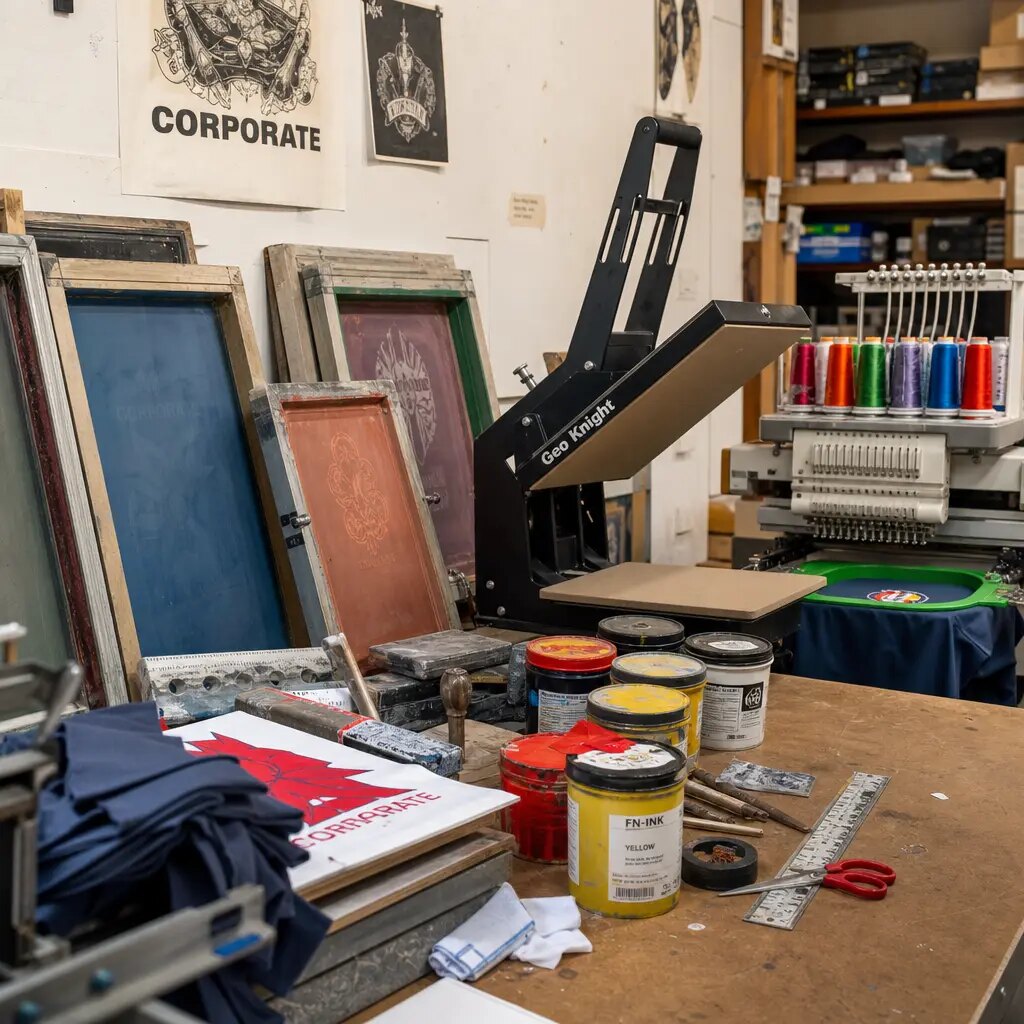
Screen printing is usually the most stable option for custom canvas wine carriers with one to three solid colors. It gives good opacity on natural canvas, handles repeat orders well, and keeps unit cost reasonable at bookstore quantities. Heat transfer can help with small runs, gradients, or detailed multicolor artwork, but it needs careful testing on canvas texture and folded packing. Embroidery is possible for a premium look, but it can pucker canvas panels and may not suit fine university marks.
The inspection standard should define color tolerance, print position, edge quality, and durability. Campus marks are often protected by licensing rules, so a slight color shift or stretched logo may not be acceptable even when the bag is otherwise functional. Specify Pantone references, final artwork file format, print size, and placement measured from stable edges. Leave enough distance from side seams, handle stitching, and bottom folds so the print does not distort after the bag is filled.
- Screen print: best for bold logos, school names, and simple bookstore graphics.
- Heat transfer: useful for short runs or complex color, but test edge adhesion and folding marks.
- Embroidery: premium texture, but control puckering and avoid very small lettering.
- Woven label: good for subtle branding, but not a replacement for licensed front artwork when retail display depends on recognition.
Construction Details That Affect Strength
Wine carriers fail at stress points. The most important areas are handle attachment, divider stitching, base seam, and side seam intersections. A bag can look acceptable on a table but fail when two bottles swing from the handle. For retail merchandise, request box stitching, cross stitching, or bar tacks at handle ends. Single straight rows may be acceptable for lightweight gift sleeves, but they are a poor choice for a reusable two-bottle carrier.
The divider should be sewn cleanly into the base and side structure, not loosely attached as an afterthought. The base should support bottle weight without twisting, and the carrier should stand reasonably upright when loaded. During inspection, the team should look for skipped stitches, broken threads, uneven seam allowance, needle damage, loose reinforcement, and thread tails left around the logo area. These are not cosmetic details when glass bottles are involved.
- Set minimum stitch density in the approved sample and reject obvious skipped stitch lines.
- Require reinforced handle attachment for two-bottle and four-bottle carriers.
- Check that both bottle pockets are similar in width so one side is not tight and the other loose.
- Reject open seams, loose divider ends, and fabric tears near bar tacks.
MOQ Logic For Bookstore Programs
MOQ can be confusing because factories may calculate it by fabric color, bag construction, print design, or total order quantity. A university bookstore may want separate versions for the main campus store, alumni association, athletics department, and seasonal gift program. If every version uses a different fabric color, print size, and label, the order becomes fragmented and the unit price rises.
A better sourcing structure is to standardize the carrier body and vary only the print where needed. One natural canvas body with shared dimensions, shared handle, shared divider, and shared packing can support several print versions if the factory accepts combined production. The RFQ should ask for MOQ per artwork and price breaks at realistic quantities. Buyers should also ask whether setup charges, screen charges, strike-off charges, and carton label changes are included.
- Combine departments around one carrier construction when possible.
- Separate MOQ for blank bag production from MOQ for each print version.
- Request price breaks at several order levels, such as low, expected, and reorder quantities.
- Clarify whether overruns or underruns are allowed and what tolerance applies.
Sample Approval Before Bulk Production
A full pre-production sample is worth the delay when the bag will be sold at retail. The sample should use the final canvas weight, final dimensions, final handle reinforcement, final divider construction, final thread color, and final print method. A blank sample can prove the pattern, and a print strike-off can prove color, but neither alone proves the finished retail product.
The approval file should include measurement photos, loaded bottle photos, logo close-ups, and packing photos if the factory will pack each carrier in a specific way. Keep the approved sample sealed or clearly marked, because it becomes the reference for bulk inspection. If changes are made after sample approval, record them in the purchase order and artwork sheet. Verbal changes are a common reason bulk production does not match what procurement expected.
- Approve dimensions with bottles inserted, not only when the carrier is flat.
- Compare print opacity in normal daylight and indoor store lighting.
- Fold and reopen the sample if bulk goods will ship flat.
- Use the same sample for factory production, buyer approval, and inspection reference.
Pre-Shipment Inspection Thresholds
A useful inspection plan separates critical, major, and minor defects. Critical defects include handle failure, sharp foreign objects, mold, severe contamination, or construction that cannot safely carry bottles. Major defects include wrong canvas weight, wrong print color, crooked logo beyond tolerance, open seams, loose divider, wrong dimensions, or mixed SKU packing. Minor defects include small thread tails, tiny natural canvas flecks within agreed limits, or slight measurement variation that does not affect function.
Many buyers use AQL sampling for visual inspection, but wine carriers also need functional testing. Pull tests and loaded carry tests should be performed on sampled units. The inspection report should show dimensions, logo placement, handle reinforcement, divider stitching, carton marks, and packed carton condition. When the order has several print versions, the sample selection must cover each version, not only the easiest carton at the front of the warehouse.
- Finished size tolerance: commonly plus or minus 5 mm unless the design requires tighter control.
- Logo placement tolerance: commonly plus or minus 3 mm to 5 mm from approved position.
- Loaded test: two filled bottles or equivalent weight with no tearing or seam opening.
- Print test: no obvious rubbing, smearing, cracking, or transfer after normal handling.
- Carton check: no wet cartons, crushed corners affecting product, or mixed unlabeled SKUs.
Packing For Retail Receiving
Packing is often treated as an afterthought, but it affects receiving accuracy and retail appearance. Canvas wine carriers are usually packed flat to save volume, but the print panels need protection from abrasion. If each unit has a hangtag, barcode sticker, or belly band, the location should be defined so it does not cover the logo or damage the print when removed. For sustainability programs, buyers may choose paper bands instead of individual polybags, but the risk of dust and rubbing should be tested.
Cartons should be sized so the carriers do not arrive permanently creased or distorted. Heavy cartons may reduce freight cost per unit, but they are harder for bookstore teams to handle and more likely to crush lower layers. Each carton label should identify SKU, print version, quantity, PO number, carton number, and destination. When goods ship to multiple campus stores or a distributor, carton-level accuracy saves more time than it costs.
- Pack by print version, not randomly mixed, unless the receiving plan specifically requires assortments.
- Use inner protection between printed panels if ink rub is a risk.
- Set carton gross weight limits before production packing begins.
- Require carton photos before shipment when the order has multiple SKUs.
Lead Time And Schedule Risk
Lead time should be counted from the real production trigger, not from the day the buyer sends an inquiry. For canvas wine carriers, the practical clock usually starts after artwork approval, fabric confirmation, deposit, and pre-production sample approval. If the bookstore needs goods for homecoming, graduation, holiday gifting, or a donor event, the PO should include inspection and rework time, not only sewing time.
The main schedule risks are fabric booking delays, artwork approval delays, print screen corrections, sample revisions, and packing material changes. Natural canvas is common, but dyed canvas, special labels, custom hangtags, and licensed packaging can add days or weeks. A realistic schedule includes sample making, sample shipping, buyer review, bulk material preparation, cutting, printing, sewing, finishing, inspection, packing, export booking, and final delivery buffer.
- Build the schedule backward from the campus event or retail floor date.
- Reserve time for one sample revision if the logo or bottle fit is critical.
- Do not approve bulk printing until the print strike-off is accepted.
- Keep inspection before final payment or shipment release whenever possible.
Specification comparison for buyers
| Spec decision | Recommended option | When it fits | Buyer risk to check |
|---|---|---|---|
| Canvas weight | 12 oz to 14 oz cotton canvas for most two-bottle carriers | Good balance for campus bookstore retail, alumni gifts, and seasonal wine promotions | Below 10 oz may collapse when displayed upright; above 16 oz can increase freight cost and make seams bulky |
| Bottle capacity | Two-bottle carrier with stitched center divider | Best for bookstores selling local wine, alumni weekend gifts, and bundled merchandise | Divider must reach close to the base so bottles do not knock together during handling |
| Handle construction | Self-fabric handles with box-stitch or bar-tack reinforcement | Suitable when the bag may carry two glass bottles plus tissue or gift inserts | Single-line stitching or narrow webbing can fail during loaded carry testing |
| Print method | Screen print for solid school marks; heat transfer only for small multicolor runs | Screen print works for one to three spot colors and repeat bookstore orders | Ink cracking, poor registration, or color mismatch against university brand standards |
| Logo placement | Centered front print with clear distance from seams, handle stitch lines, and bottom fold | Retail display looks consistent and barcode labels can stay on the back or base | Artwork too close to seam distortion can look rejected even if the bag is structurally sound |
| MOQ structure | One base canvas color and one shared construction across departments | Helps bookstore, alumni office, and event buyers combine volume without fragmenting production | Too many fabric colors or print versions may push each design below efficient factory minimums |
| Packing style | Flat packed by print version with inner polybag or paper band as required | Works for bookstore receiving teams that need fast count verification and shelf replenishment | Mixed cartons without version labels create receiving errors and slow store allocation |
| Inspection level | Pre-shipment inspection with AQL sampling plus loaded function checks | Needed when carriers will be sold at retail or used for donor gifts with fixed event dates | Visual AQL alone may miss handle strength, bottle fit, divider height, and carton crush risk |
Buyer checklist before sampling
- Define bottle size before sampling: 750 ml Bordeaux, Burgundy, sparkling, or mixed local bottles need different internal width and divider allowance.
- Specify canvas by weight and finish, such as 12 oz natural cotton canvas, washed or unwashed, with acceptable shrinkage and shade tolerance.
- Set logo size, Pantone references, print position from top edge and side seams, and whether the bookstore requires licensed brand approval before bulk production.
- Require a loaded carry test using two filled 750 ml bottles or equivalent weight for at least one minute, with no handle tearing, seam opening, or major shape distortion.
- Confirm divider construction: sewn-in center divider, reinforced base seam, and minimum divider height high enough to reduce bottle contact.
- Approve one pre-production sample made in final fabric, final print method, final thread color, and final packing method, not only a digital proof.
- Check print durability after rub testing and light folding, especially when bags are shipped flat and then opened for retail display.
- Mark carton labels by SKU, print version, quantity, PO number, carton number, and destination if campus stores or distributors receive separate allocations.
- Set carton weight limits suitable for bookstore receiving staff and parcel or LTL handling; heavy wine carriers packed too densely can deform at the bottom.
- Include inspection photos in the supplier file: front, back, divider, handle reinforcement, bottom seam, logo close-up, carton label, and packed carton layout.
Factory quote questions to send
- What canvas weight, yarn construction, and finished GSM will you quote, and is the weight measured before or after washing or finishing?
- What bottle dimensions did you use to calculate the carrier width, gusset, divider height, and handle length?
- Which print method is included in the price, how many colors are included, and what is the tolerance for Pantone matching on natural canvas?
- What MOQ applies per bag construction, per fabric color, and per print design, and what price change occurs at the next quantity break?
- Is the quoted sample a digital mockup, blank construction sample, strike-off, or full pre-production sample made with final materials?
- What handle reinforcement method is included: box stitch, bar tack, cross stitch, or single row stitching?
- What packing method, carton size, carton gross weight, and carton labeling are included in the quote?
- What production lead time starts after artwork approval, deposit, material booking, or pre-production sample approval?
- Can you provide inspection photos or a third-party inspection window before shipment, and how many days are needed for rework if issues are found?
- Are export carton marks, retail barcode stickers, hangtags, care labels, or country-of-origin labels included or quoted separately?
Quality-control points to confirm
- Finished bag dimensions within agreed tolerance, typically plus or minus 5 mm for width and height and plus or minus 3 mm for critical logo placement.
- Canvas weight verified against approved swatch and purchase specification, with no obvious thin panels, holes, slubs that weaken seams, or dirty marks on retail-facing areas.
- Handles withstand loaded carry testing with two filled 750 ml bottles or equivalent weight without seam popping, thread breakage, or visible tearing.
- Center divider is straight, securely stitched, and high enough to keep bottles separated during normal carrying and shelf handling.
- Print color, opacity, edge sharpness, and placement match approved sample, with no smearing, ghosting, pinholes, heavy ink buildup, or registration shift.
- Seams are straight and clean with trimmed threads, no skipped stitches, no open seams, and no needle cuts around stress points.
- Bag stands reasonably upright when loaded, with base seam alignment and gusset shape consistent across the inspected sample set.
- Packing protects the printed panels from abrasion and keeps SKUs separated by version, carton label, and purchase order.