Start with the bottle, not the bag
The most common mistake in custom canvas wine carriers is starting from a nice-looking flat bag size and then discovering that the actual bottle does not fit cleanly. A 750 ml Bordeaux bottle, a Burgundy bottle, a Champagne bottle, and a craft spirit bottle do not share the same shoulder width or height. For tech startup gifting, the carrier may also hold an insert card, small accessory, event badge, or subscription welcome note. Those extra items change the useful internal space and can create pressure points against the seams.
Before requesting quotes, procurement should define the bottle type and loaded use case. A factory can grade the pattern and reinforcement correctly only when it knows the expected diameter, height, and loaded weight. If the startup will use different wines across regions, design around the largest common bottle rather than the first bottle photographed by the marketing team.
- Typical 750 ml Bordeaux bottles need less shoulder room than Champagne bottles.
- Two-bottle carriers need a divider high enough to prevent glass contact during hand carrying.
- Retail display carriers may need to stand upright; pure soft canvas may fold unless the gusset and fabric weight support the shape.
- Gift-kit carriers should be tested with every included item, not only with an empty bottle.
Choose canvas weight by use case and handling risk
For most custom canvas wine carriers, the practical fabric range is 10 oz to 12 oz cotton canvas, roughly 280-340 GSM. This range gives a reusable feel without creating unnecessary seam bulk. It prints well, folds reasonably for export packing, and normally runs on standard bag sewing equipment. For a tech startup ordering event giveaways or onboarding gifts, this is usually the safest balance between cost, appearance, and production reliability.
Heavier 14 oz canvas, roughly 390-430 GSM, makes sense when the carrier is positioned as a premium gift or paid merchandise item. It can feel more structured and substantial, but it also increases cutting resistance, needle wear, seam thickness, carton weight, and freight volume. Very heavy fabric does not automatically mean better quality; it can make corners bulky, distort print panels, and slow output if the factory line is not set up for thick canvas.
- 260 GSM or lower: suitable only for very light promotional use and low load expectations.
- 280-340 GSM: recommended default for single-bottle and many two-bottle custom canvas wine carriers.
- 350-380 GSM: useful where extra structure is needed without moving into very heavy construction.
- 390-430 GSM: premium option requiring stronger needles, stable seam allowance, and load testing.
Understand fabric composition, finishing, and shrinkage
Buyers often write “canvas wine bag” in an RFQ without specifying whether the fabric is cotton, recycled cotton blend, polyester-cotton, or organic cotton. Each option changes price, print result, color stability, and documentation. Conventional cotton canvas is the easiest to source and gives a natural gifting look. Recycled cotton blends may have more shade variation and small fiber specks. Polyester-cotton blends can improve dimensional stability but may feel less natural.
Finishing also matters. Unwashed canvas can shrink if exposed to moisture or steam later. Dyed fabric may need colorfastness review, especially for black, navy, red, and strong corporate colors. If the carrier touches a white gift card, light tissue, or bottle label, crocking and dye transfer are real risks. For startup brands that ship gifts directly to employees or investors, a small fabric saving is not worth complaints about staining or odor.
- State cotton, recycled cotton, organic cotton, or blended composition in the RFQ.
- For natural canvas, approve the acceptable shade range because cotton lot color is not perfectly uniform.
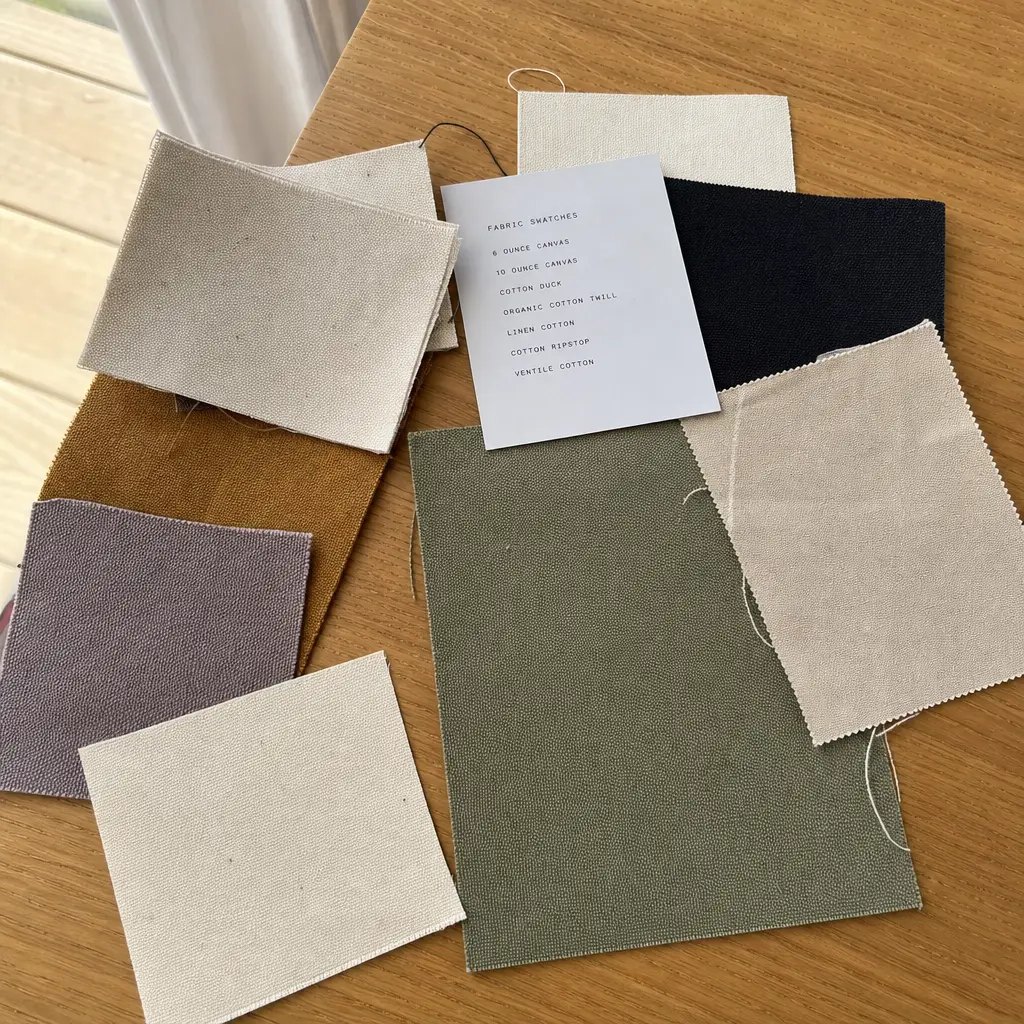
- For dyed canvas, request a lab dip or fabric swatch before bulk cutting.
- For dark dyed goods, include dry and wet rubbing checks when the carrier contacts labels or paper inserts.
Match lining and dividers to the real distribution channel
A plain unlined canvas wine carrier is acceptable when the buyer hands the bottle to the recipient in person and the carrier is mainly a presentation item. It is less suitable when bottles are transported in bulk cartons, inserted by a fulfillment center, or shipped as part of a gift kit. In those cases, the inside construction needs to control glass movement and protect labels. The divider is not decoration; it is a functional part of the packaging system.
For two-bottle carriers, the divider can be made from the same canvas, padded fabric, or a semi-structured insert. Same-fabric dividers are economical but may fold if not anchored correctly. Padded dividers improve protection but add labor and thickness. Removable inserts help with flat packing, but distributors must insert them correctly. The RFQ should define whether the divider is sewn-in, removable, padded, full-height, or partial-height.
- Single-bottle carrier: unlined canvas is usually enough if seams are clean and bottle fit is snug.
- Two-bottle carrier: use a sewn divider or padded divider to stop glass contact.
- Premium gift carrier: consider cotton lining or light padding for a more finished interior.
- Direct-to-recipient shipping: test the full gift pack in the intended outer carton, not only the carrier.
Specify handles as load-bearing components
Handles are where many wine carrier failures happen. A full 750 ml bottle commonly weighs around 1.2-1.5 kg depending on glass weight, and a two-bottle carrier can approach 3 kg before gift inserts are added. The handle joint must carry this load repeatedly. A clean front logo cannot compensate for a handle that tears after the first event.
Self-fabric handles are common and look consistent with the body. Cotton webbing handles can be stronger and more uniform, but they change the visual style and may require color matching. For most custom canvas wine carriers, a handle width of about 2.5-3.8 cm is comfortable and practical. Reinforcement should be visible in the sample: box stitch, cross stitch, bartack, or a combination depending on design. The buyer should define a load test, not just request “strong handles.”
- Use box-x reinforcement or bartacks at handle attachment points.
- Avoid very narrow handles for two-bottle carriers; they feel cheap and uncomfortable under load.
- Confirm handle drop so the carrier works by hand and does not drag on the ground.
- Run a loaded hang test using the heaviest expected bottle configuration plus safety margin.
Select the print method around artwork, not preference
Tech startup branding often uses clean vector logos, sharp wordmarks, and one or two corporate colors. For that artwork, screen printing is usually the best value on canvas. It gives solid coverage, predictable placement, and good durability when the ink system is matched to cotton fabric. Large simple logos on natural canvas are well suited to this method, but the buyer should still approve a print strike-off because canvas texture can slightly soften small text and fine lines.
Heat transfer works better for gradients, small multi-color detail, or short runs with artwork that is not economical for multiple screens. However, transfers can feel like a film on the fabric, especially on heavy canvas. Embroidery gives a premium look but can pucker lighter canvas and is not ideal for very small lettering. Woven labels are useful for subtle branding, but they do not replace front-panel logo impact unless the design direction is intentionally minimal.
- Screen print: best for solid logos, one to four colors, and clean event branding.
- Heat transfer: useful for gradients and small runs, but review hand-feel and edge adhesion.
- Embroidery: premium, but test pucker and readability on the selected GSM.
- Woven label: good for side branding, private label programs, or understated retail design.
Build the quote around actual cost drivers
Two quotes for the same custom canvas wine carrier can look different because one supplier included the real construction while another quoted a simplified version. The main cost drivers are fabric GSM, fabric type, dyed color, size, divider construction, handle reinforcement, print colors, packing method, and inspection requirement. A low quote that leaves out lining, actual print colors, or reinforced handles is not comparable.
MOQ is also linked to the material path. Standard natural canvas and common black canvas may support lower MOQs because mills or factories hold stock. Custom dyed canvas, custom webbing, special lining, custom labels, or special cartons push the MOQ higher because suppliers need to meet minimum dyeing, printing, or accessory purchase quantities. For a startup pilot order, use standard fabric and refine the structure. For a repeat program, custom color and higher-end details become more economical.
- Lower-cost build: standard 10 oz natural canvas, one-color screen print, self-fabric handles, flat bulk packing.
- Balanced build: 12 oz canvas, reinforced handles, sewn divider, two-color print, hangtag or paper band.
- Premium build: 14 oz canvas, lining or padding, custom dyed fabric, woven label, individual retail packing.
- Hidden cost item: carton volume can raise landed cost even when unit price looks attractive.
Use samples to approve production behavior, not just appearance
A beautiful sample photo is not enough. The sample must show how the selected canvas weight sews, folds, prints, and carries weight. If a factory sends a prototype using substitute fabric, substitute print, or simplified handles, it is useful only for rough shape review. It should not be treated as production approval. Procurement teams should separate prototype approval from pre-production approval.
For a custom canvas wine carrier, the most useful approval package includes fabric swatches, a print strike-off, and one complete pre-production sample made with actual materials. The sample should be loaded with the intended bottle and photographed or reviewed from front, side, bottom, handle joint, divider, and inside seams. If the carrier will be used in an event gift set, the sample should be packed with the card, tissue, barcode, or accessory exactly as planned.
- Measure finished width, height, gusset, handle drop, and divider position against the spec sheet.
- Review whether the carrier stands, leans, or collapses when empty and when loaded.
- Rub the print lightly after curing to detect poor ink bonding or tacky surface.
- Confirm the approved sample is sealed or clearly recorded with photos, dimensions, and material notes.
Set QC thresholds that factories can inspect consistently
Quality control works best when acceptance criteria are measurable. “Good stitching” and “nice print” create arguments at shipment time. A better QC plan defines size tolerance, print placement tolerance, color reference, load test method, stitch defects, loose thread limit, and packing count. This does not need to be complicated, but it must be written before production starts.
For a simple single-bottle canvas carrier, plus or minus 5 mm on major dimensions is usually practical. Print placement can often be controlled within plus or minus 3 mm if the logo sits on a stable panel and the fabric is cut accurately. For hand-sewn dividers or thicker canvas, tolerance may need to be realistic enough to avoid unnecessary rejection. The goal is to prevent functional and visible defects, not to apply rigid plastic-part tolerances to sewn goods.
- Critical defects: broken handle stitches, wrong logo, severe stain, incorrect bottle fit, missing divider, unsafe sharp object.
- Major defects: obvious print misplacement, open seam, heavy puckering, wrong fabric GSM, strong odor, incorrect packing.
- Minor defects: small loose threads, slight shade variation within approved range, small crease removable by normal handling.
- Functional test: loaded hang test and short carry test using agreed bottle weight.
Plan packing for freight, fulfillment, and event handling
Canvas wine carriers are often ordered for launch events, investor gifts, employee onboarding kits, or reseller campaigns. The packing method should match the next handling step. Flat bulk packing is efficient for export and reduces carton volume, but fulfillment teams may need time to open, shape, and insert bottles. Individual polybags protect against dust and moisture but add plastic and labor. Paper bands or hangtags can improve retail presentation but must be protected from bending.
Carton specification affects landed cost and damage risk. Overpacked cartons can crush printed panels and create hard creases. Underpacked cartons waste freight space. Buyers should request carton dimensions, units per carton, gross weight, and packing photos before shipment. If the carrier has a large front print, units should be packed so printed faces do not rub against rough seams, staples, or carton edges during transit.
- Flat bulk pack: lowest freight volume and suitable for event assembly or fulfillment centers.
- Individual polybag: better dust control, but consider sustainability requirements and retail regulations.
- Paper band or hangtag: useful for retail display, but include barcode placement and scannability.
- Carton marking: include PO number, SKU, quantity, gross weight, net weight, and destination reference if required.
Specification comparison for buyers
| Spec decision | Recommended option | When it fits | Buyer risk to check |
|---|---|---|---|
| Main canvas weight | 10 oz to 12 oz cotton canvas, roughly 280-340 GSM | Most tech startup gift packs, wine club add-ons, launch event giveaways, and distributor welcome kits | Below 260 GSM may collapse when loaded; above 380 GSM raises sewing cost and carton weight without always improving perceived value |
| Premium fabric option | 14 oz canvas, roughly 390-430 GSM, with reinforced side seams | Executive gifts, investor events, paid retail merchandise, or two-bottle carriers with heavier glass bottles | Thick fabric can cause bulky seam corners, slower sewing, and higher defect risk if the factory lacks heavy-duty machines |
| Interior protection | Canvas body with padded divider or bottle sleeve insert | Two-bottle carriers, shipped gift sets, or any program where bottles may knock together during handling | Loose dividers shift during transit; confirm divider height, stitch position, and whether padding is included or only fabric separation |
| Handle construction | Self-fabric handles with cross-stitch or box-x reinforcement, 2.5-3.8 cm width | Reusable gift bags expected to carry full 750 ml bottles safely | Narrow handles can cut into the hand; weak bartack placement is a common failure point during load testing |
| Branding method | Screen print for solid startup logos; heat transfer only for gradients or small color detail | Most VC, SaaS, fintech, and event branding where clean logo reproduction matters more than full photographic artwork | Large ink blocks on coarse canvas can crack or feel stiff; gradients on natural canvas may look dull without a white underbase |
| Fabric color | Natural, black, navy, or dyed corporate color with lab dip approval | Natural canvas works for sustainable gifting; black or navy hides handling marks for retail and events | Dyed canvas needs colorfastness review and can affect logo contrast; natural canvas shade varies by cotton lot |
| MOQ logic | 300-500 pcs for standard canvas and standard print; 1,000+ pcs for custom dyed fabric, custom woven label, or unique hardware | Startup launch campaigns often begin with small pilot orders, then repeat with refined artwork and packing | Very low MOQ quotes may use available fabric only, causing shade, GSM, or size variation between production batches |
| Packing format | Flat packed in export cartons with paper insert or divider packed separately | Best for controlling freight volume and avoiding crushed seams before event distribution | Over-compression creates creases on printed panels; confirm carton size, units per carton, and whether bottle-shaped packing is required |
Buyer checklist before sampling
- Define bottle type before bag design: 750 ml Bordeaux, Burgundy, Champagne, craft spirits, or mixed assortment.
- Set the loaded weight assumption per carrier, including bottle, insert card, opener, or any bundled gift item.
- Choose target canvas weight by use case: 280-340 GSM for most gifting, 390-430 GSM for premium or two-bottle builds.
- Decide whether the carrier must stand upright when empty; this affects gusset width, fabric stiffness, and interlining.
- Specify handle width, handle drop, reinforcement stitch pattern, and minimum load test requirement.
- Provide logo artwork in vector format and define Pantone colors, print size, placement tolerance, and whether a white underbase is needed.
- Confirm whether the interior needs a divider, padding, lining, or stain-resistant treatment.
- Request a pre-production sample using actual fabric weight, actual print method, and actual handle reinforcement.
- State packing method, carton weight limit, carton marking requirements, and whether each unit needs a polybag, paper band, hangtag, or barcode.
- Build schedule buffer for fabric dyeing, lab dips, print strike-off, sample approval, and peak-season carton booking.
Factory quote questions to send
- What exact fabric composition and GSM are included in the quote, and is the GSM measured before or after washing or finishing?
- Is the quoted canvas stock fabric, greige fabric to be dyed, or custom woven material?
- What bottle size and loaded weight did you base the pattern and reinforcement on?
- Which print method is quoted, how many colors are included, and what is the maximum printable area without seam distortion?
- Are handle reinforcement stitches, divider construction, lining, and inner seams included in the quoted labor cost?
- What is the MOQ for the same price if we reorder within six months using the same fabric and print screens?
- What sample stages are included: material swatch, print strike-off, prototype sample, and pre-production sample?
- What are the expected production lead time and the longest lead-time item in this design?
- How many units per export carton, what carton dimensions, and what estimated gross weight per carton?
- Which inspection points will be measured before shipment, and what tolerance will be used for size, print position, color, and load test?
Quality-control points to confirm
- Fabric GSM should be within the approved tolerance, typically plus or minus 5% unless otherwise agreed.
- Finished size should stay within plus or minus 5 mm for width and height on simple single-bottle carriers, and tighter only if the pattern supports it.
- Print placement should stay within plus or minus 3 mm for front panel logos where symmetry is visible.
- Logo color should be compared against approved strike-off under consistent lighting, not judged only from a phone photo.
- Handle attachment must pass a loaded hang test using the agreed bottle weight plus safety margin.
- Divider seams should be centered and high enough to stop bottle-to-bottle contact on two-bottle carriers.
- Inside seams should be trimmed and secured so loose threads do not catch bottle labels or gift cards.
- Carton packing should prevent printed faces from rubbing against rough seams, staples, or carton edges.
- Random cartons should be opened during final inspection to verify assortment, barcode, hangtag, and packing count.
- Any strong dye, ink, or storage odor should trigger airing, rechecking, or rejection depending on the buyer's retail requirement.