Start with the bottle and the gift setting
A canvas wine carrier is not just a bag with a bottle shape. The material choice has to match the bottle weight, the presentation value, and how long the recipient is expected to keep the carrier. A single 750 ml bottle in a corporate gift set behaves differently from a two-bottle holiday pack, and the fabric spec should reflect that before anyone talks about logo placement.
For procurement teams, the cleanest way to scope the item is to define the bottle first: standard Bordeaux, Burgundy, sparkling, or a larger specialty bottle. Then define the gift context: hand-delivered to clients, shipped in an outer carton, or displayed in a retail bundle. Those two answers drive the correct canvas weight, the handle build, and whether you need a carrier that feels decorative or genuinely load-bearing.
- State the bottle size and full weight, not only the volume in ml.
- Decide whether the carrier is a presentation sleeve, a reusable tote, or a shipping-safe gift item.
- Match the fabric and reinforcement to the heaviest bottle in the program, not the average one.
Canvas weight is the first cost decision
For most corporate gifting programs, canvas weight is the first place where the quote diverges. A 10-12 oz canvas, roughly 340-410 GSM, is usually the practical floor for a single-bottle carrier. It gives a clean structure, enough opacity for most natural or dyed colors, and a price point that still works when the order volume is large. Once you move into a premium executive gift or a double-bottle format, 14-16 oz, or about 475-540 GSM, usually feels more appropriate because the carrier needs a firmer body and better resistance to stretch.
The common mistake is to chase a low unit price by going too light on fabric. That can work on paper but fail in hand. Light canvas wrinkles easily, exposes seam marks, and can look soft or sloppy once the bottle is inserted. Heavy canvas is not automatically better either. If the pattern is inefficient or the sewing line is not set up for thick fabric, the added weight can increase cost without improving the result. Ask the factory to quote the same bag in at least two weights so you can see the price jump against the actual performance gain.
- Use 10-12 oz canvas for standard single-bottle corporate gifts where freight and cost matter.
- Use 14-16 oz canvas when the carrier must feel premium, reusable, or suitable for two bottles.
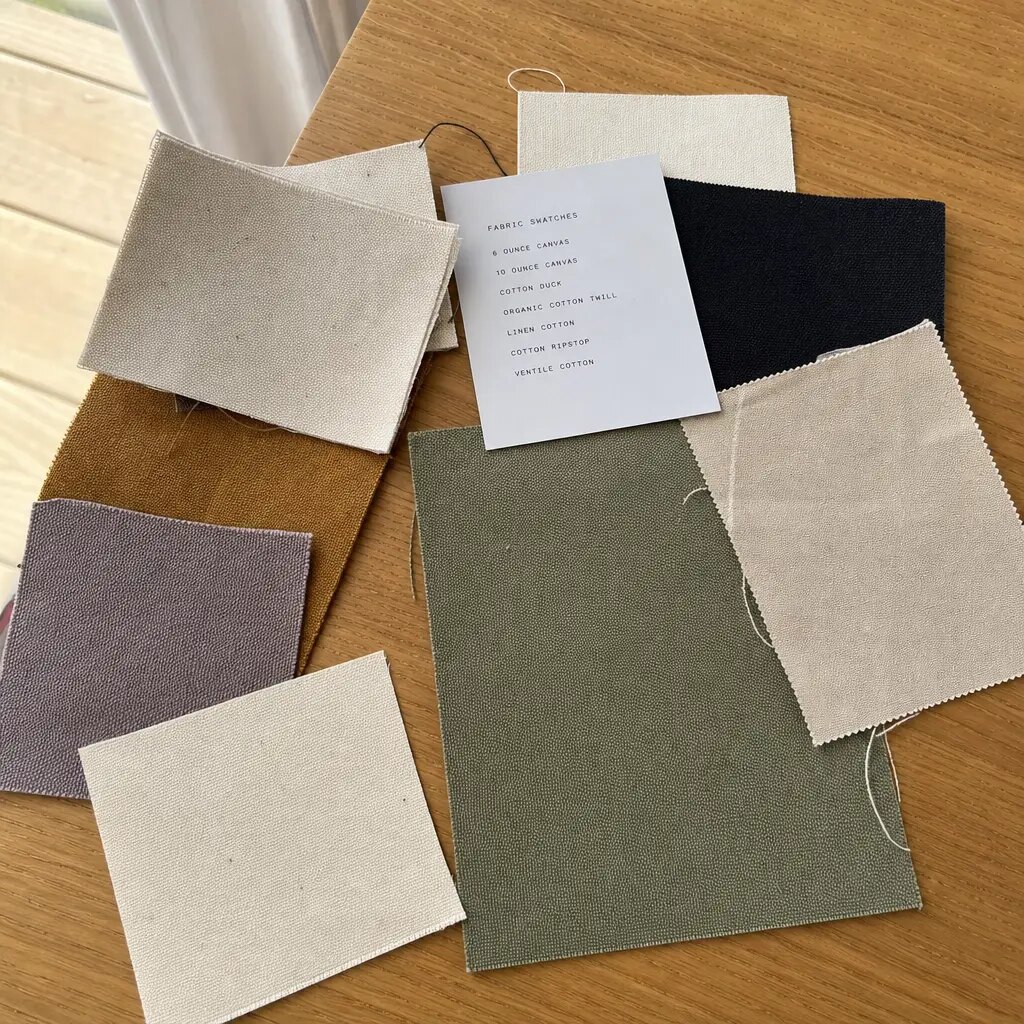
- Ask for a swatch plus a cut sample so you can judge stiffness, drape, and seam behavior together.
Pick the fiber blend for the quote you actually want
100% cotton canvas is still the safest choice when the brief calls for a natural look and a soft hand-feel. It usually prints well, photographs well, and gives the buyer a simple story to tell when the gift is meant to feel premium rather than promotional. The tradeoff is that cotton can shrink more than a blended cloth, and shade variation is more visible if the dye lot is not controlled tightly. If your brand is sensitive to color consistency, make that a quote requirement instead of a later complaint.
Polycotton or recycled blends can be a better fit when the carrier has to hold shape across a long distribution chain or when the program needs a lower landed cost. The fabric may feel slightly less organic, but it can reduce distortion and sometimes gives a more stable print surface. The key is not to assume a blend is cheaper in every case. Some recycled or specialty yarns raise fabric cost, while a higher-performance blend can reduce sewing waste and rework. Compare the full landed cost, not only the fabric price per meter.
- Choose 100% cotton when hand-feel, natural texture, and a premium gift look outweigh the need for maximum dimensional stability.
- Choose a blend when you need lower shrinkage, better body retention, or less price volatility on repeat orders.
- Require the supplier to show the actual fabric composition, not only a marketing description like eco canvas or premium canvas.
Build details matter more than a decorative logo
A wine carrier fails at the stress points long before the face fabric looks worn out. The top opening, handle attachment, side seams, and base panel carry most of the load. For that reason, bartack reinforcement at the handle ends is more important than a complicated decorative stitch. A clean double-needle seam, adequate seam allowance, and a stable base construction usually deliver better long-term quality than a carrier that relies on a thicker fabric alone.
If the carrier is meant for a premium gifting program, ask whether a base insert or stiffener is needed. A simple insert can improve shape retention and reduce bottle sway in transit. It is especially useful in double-bottle formats and in carriers that must sit upright in a gift box or retail shelf display. The quote should specify whether the insert is included, what material it uses, and whether it changes the fold or packing method.
- Check handle length against the expected use case: hand-carry, shoulder carry, or gift handoff only.
- Require bartack reinforcement or equivalent stress-point stitching at the top opening and handle anchors.
- If the carrier must stand upright, ask for a base insert and confirm it does not create a lumpy print surface.
Branding methods should be chosen before sampling
For canvas wine carriers, the branding method changes both the look and the production risk. Screen printing is usually the most efficient option for simple logos, one or two spot colors, and higher-volume runs. It gives a crisp result on flat canvas, but it needs proper curing and a clean print area. If the logo is small and the program needs a more premium feel, a woven label or sewn patch often looks more controlled than a large printed panel. Embroidery can also work, but it adds cost and may distort lighter canvas if the stitch density is too high.
The buyer mistake is to approve the construction first and the branding later. If the logo sits too close to a seam, fold, or handle attachment point, the factory may move it in production and the final result will not match the sample. If the artwork uses fine lines, a textured weave, or a dark base fabric, insist on a strike-off or proof before bulk approval. For multi-color artwork, ask the supplier to state whether the quote covers one screen per color, how setup charges are handled, and what happens if the logo needs revision.
- Use screen print for simple, high-visibility logos and larger orders.
- Use woven labels or sewn patches when the brand wants a subtler, more premium appearance.
- Do a rub test on the sample and inspect the logo after folding the carrier several times.
MOQ logic and sample approval should be written into the RFQ
MOQ on canvas wine carriers is not just a factory policy; it is often tied to fabric width, cut efficiency, printing setup, and color changeover. A darker dyed canvas may need a minimum dye lot, while a custom size may create waste that raises the required order quantity. If the quote looks low on unit price but the MOQ is much higher than your program needs, the real cost of ownership may be worse than a slightly higher quote from a more flexible supplier.
Sample approval is where many sourcing programs lose time. You usually need at least one pre-production sample built from actual production fabric, not a hand-cut mockup with substitute materials. For branded orders, ask for the structure sample first if the construction is new, then the decorated sample once the fabric and pattern are approved. If the logo placement is critical, request a photo of the print layout before the run starts. That is a small delay compared with reworking a full carton after bulk production.
- Separate structural approval from decoration approval so you do not approve a weak pattern just because the logo looks right.
- Ask whether the MOQ changes by fabric color, print color count, or packaging style.
- Make the quote state whether the sample fee is refundable against bulk order or charged separately.
Packing decisions affect damage rate and gift presentation
Corporate gifting buyers often underestimate packing because the carrier itself is soft goods. In practice, a canvas wine carrier can arrive with crushed handles, corner abrasion, or a distorted fold if packing is not controlled. For export programs, individual polybags or paper sleeves can protect the surface, but they should not be so tight that they create permanent fold marks. If the carrier is part of a premium gift set, the inner pack should also support the presentation experience, not only shipping safety.
Master carton planning matters just as much. The carton count changes handling cost, carton compression, and the chance of scuffing in transit. A compact carton may reduce freight volume, but if it crushes the top edge or bends a stiffener, the savings disappear when the goods are unpacked. Ask the factory to quote the piece count per carton, outer carton dimensions, gross weight, and whether dividers are needed for double-bottle carriers. If you are shipping to a distributor who repacks the goods, be explicit about whether the carrier should arrive flat, lightly shaped, or gift-ready.
- Use an inner bag or sleeve that protects the surface without creating hard crease lines.
- Confirm carton count and carton size before the first production run, not after packing starts.
- If the bag is sold as part of a gift set, define whether it ships as a flat textile item or as a pre-shaped presentation piece.
Lead time is driven by fabric, not just sewing
A realistic schedule starts with fabric readiness. If the factory has stock canvas in the right weight and color, sampling and bulk production can move faster. If the color is custom-dyed or the blend is special, the fabric lead time becomes the critical path. Printing and sewing are usually easier to plan than sourcing the right cloth, especially when the order needs consistency across multiple purchase orders or seasonal restocks. That is why the RFQ should ask the supplier to split lead time by stage instead of giving one generic promise.
Holiday gifting programs need extra buffer because many factories sell the same sewing capacity to multiple buyers at once. The risk is not only late delivery; it is also rushed QA and rushed packing. If your launch date is fixed, ask whether the supplier can reserve fabric early, whether they can split production by color, and what happens if sample approval slips by a week. A short schedule is manageable only if the design is frozen and the buyer is ready to approve samples quickly.
- Ask for lead time by stage: fabric booking, sample, bulk sewing, printing, packing, and dispatch.
- Build schedule cushion for seasonal campaigns and year-end gifting windows.
- If the program has multiple colors or logos, confirm whether each version resets the production clock.
Compare quotes by landed cost, not by the lowest ex-factory number
The cheapest ex-factory quote can hide the most expensive landed cost. A supplier may quote a lighter canvas, a simpler print method, or less protective packing, then leave the buyer to absorb the damage rate or the rework cost. To compare suppliers properly, line up the same fabric weight, same dimensions, same print method, same handle reinforcement, same packing level, and the same sample scope. Only then does the price difference mean anything useful.
A practical landed-cost sheet for canvas wine carriers should include unit price, setup charges, sample fees, inner packing, master cartons, estimated freight by carton volume, duties where applicable, and an allowance for defects or replacement units. If one supplier looks 8 to 12 percent cheaper but excludes packaging or quotes a lighter fabric, that is not a real saving. Ask for the quote to show every assumed spec on one line. If the supplier cannot write the spec clearly, the factory may not be controlling it clearly either.
- Compare like for like: same GSM, same size, same logo method, same packing, same carton count.
- Include setup, sample, and freight assumptions in the same quote review sheet.
- Treat vague terms like premium canvas or eco canvas as placeholders until the mill spec is written down.
Specification comparison for buyers
| Spec decision | Recommended option | When it fits | Buyer risk to check |
|---|---|---|---|
| Sourcing route | Direct factory with sewing and printing in one line | Repeat corporate gifting runs, custom sizes, and tighter brand control | Verify the factory actually cuts, sews, and prints in-house, not through a broker |
| Canvas weight | 10-12 oz / 340-410 GSM for a single-bottle carrier | Standard wine gifts where the carrier must look substantial without adding too much freight cost | Too light can sag at the base and distort at the handle stitching |
| Canvas weight | 14-16 oz / 475-540 GSM for premium or double-bottle carriers | Executive gifts, premium wine sets, or programs where the bag must feel reusable and durable | Heavier fabric can raise sewing difficulty, unit cost, and cut waste if the pattern is inefficient |
| Fiber blend | 100% cotton canvas | When natural hand-feel, matte texture, and a clean premium look matter more than the lowest price | Watch shrinkage, shade variation, and how the fabric behaves after printing |
| Fiber blend | Polycotton or recycled blend canvas | When you need more dimensional stability, easier handling, or a cost-controlled quote | Confirm the final look still matches the brand and that print adhesion is tested on the actual cloth |
| Handle build | Cotton webbing with bartack reinforcement at stress points | For heavier bottles and programs where the carrier will be reused after gifting | Check handle length, stitch density, and seam allowance at the top edge |
| Branding method | Screen print for simple logos; woven label or sewn patch for a more premium finish | Screen print suits larger runs; woven labels suit subtle corporate branding and premium gifts | Rub test the logo, and avoid placement that crosses seams or folds |
| Packing route | Individual polybag with carton dividers for shipping protection | Corporate gifting, e-commerce distribution, and export cartons that move through several hands | Confirm scuff protection, carton count, and whether the carrier arrives flat or pre-shaped |
Buyer checklist before sampling
- Confirm the bottle type, bottle diameter, and whether the carrier is for one bottle or two bottles.
- State the target canvas weight in both oz and GSM, and ask the factory to quote the same basis for every supplier.
- Define the handle material, handle length, reinforcement method, and whether a base insert is required.
- Choose the branding method before sampling, not after the sample is approved.
- Request a pre-production sample with the exact fabric, stitch construction, print method, and label placement.
- Ask for packing details: individual bag, divider, master carton size, carton count, and outer marks.
- Confirm the production lead time from sample approval, not from inquiry date.
- Request a complete quote that separates fabric, printing, sewing, packing, and freight assumptions.
Factory quote questions to send
- What exact fabric weight, weave structure, and shrinkage allowance are included in the quote?
- Is the quote based on a single-bottle carrier or a double-bottle carrier, and what are the finished dimensions?
- Which branding method is included, how many colors are covered, and are setup charges separate?
- What is the MOQ per color and per logo version?
- Which sample stage is included, and how long does each sample step take?
- Are handles, reinforcement stitching, side labels, and base inserts included in the quoted unit price?
- What is the standard packing method, and how many pieces go into a master carton?
- Which price items change if we adjust the canvas weight, the lining, or the retail-ready packaging?
Quality-control points to confirm
- Fabric weight should stay within the agreed tolerance and show no thin spots, holes, or loose slubs in visible areas.
- Finished size should stay within the agreed tolerance so the bottle fits without stretching the seams or leaving excessive slack.
- Stitching at the handle and base should be even, with no skipped stitches, loose thread tails, or seam puckering.
- Branding should be centered and legible, with no ink bleed, misregistration, or distortion across folds and seams.
- If the carrier is designed for reuse, the handle attachment and top opening should pass a static load check with the agreed bottle weight.
- Colors and shade should match the approved sample within the agreed tolerance across the production lot.
- Packing count should match the purchase order, with clean folds, protected corners, and no crushed handles.
- Outer cartons should be dry, marked correctly, and sealed well enough to survive export handling.