Why logo placement is a sourcing issue
For custom canvas wine carriers, logo placement is not only a design decision. It changes how the bag is sewn, how the print is aligned, how the carrier looks when loaded, and how many units can be packed without damaging the print face. Tech startups often use these carriers for launch dinners, investor gifts, reseller kits, recruitment events, and retail partner promotions. The carrier may be photographed more than it is reused, so the front-facing logo must sit in a place that remains readable after a bottle is inside.
The common buying mistake is to send a logo file and a quantity, then expect suppliers to choose the correct position. A wine carrier has a narrow printable zone compared with a tote bag. The upper area is interrupted by handle stitching, the lower area curves outward when filled, and the side gusset folds can hide artwork. A better RFQ gives the supplier the bottle size, carrier style, fabric weight, print process, logo dimensions, and placement tolerance before pricing.
- Treat placement as a production specification, not a designer preference.
- Approve the logo position with bottles inside the sample, not only on a flat empty carrier.
- Use front, side, and top-opening photos to judge whether the mark remains visible in real use.
- Separate branding goals from structural requirements so the factory can price the job correctly.
Choose the carrier structure first
The correct logo position depends on the carrier structure. A single-bottle sleeve gives a tall, narrow front panel and usually allows a vertical logo or small centered mark. A two-bottle canvas carrier has a wider front panel, but the center divider and bottle pressure can change the flatness of the printing surface. If the carrier has a boxed bottom, the lower front panel may curve after filling. If it has a simple flat bottom, the print may fold closer to the base during packing.
For most startup gifting programs, the safest structure is a one- or two-bottle carrier for standard 750 ml bottles with reinforced handles and a sewn divider if two bottles are used. If the program may include champagne, spirits, or larger specialty bottles, state the bottle diameter and height in the RFQ. Do not assume every supplier uses the same wine bottle pattern. A bag that fits a slim Bordeaux bottle may look tight or distorted with a wider sparkling bottle.
- Single-bottle carrier: better for narrow logos, lower unit cost, easier packing, and simpler sampling.
- Two-bottle carrier: higher gift value, more front area, but divider quality becomes a key QC point.
- Boxed bottom: improves standing shape but can reduce the safe lower print zone.
- Drawstring top: adds closure value but may cover upper logo placement if the mark is too high.
Set fabric weight before artwork approval
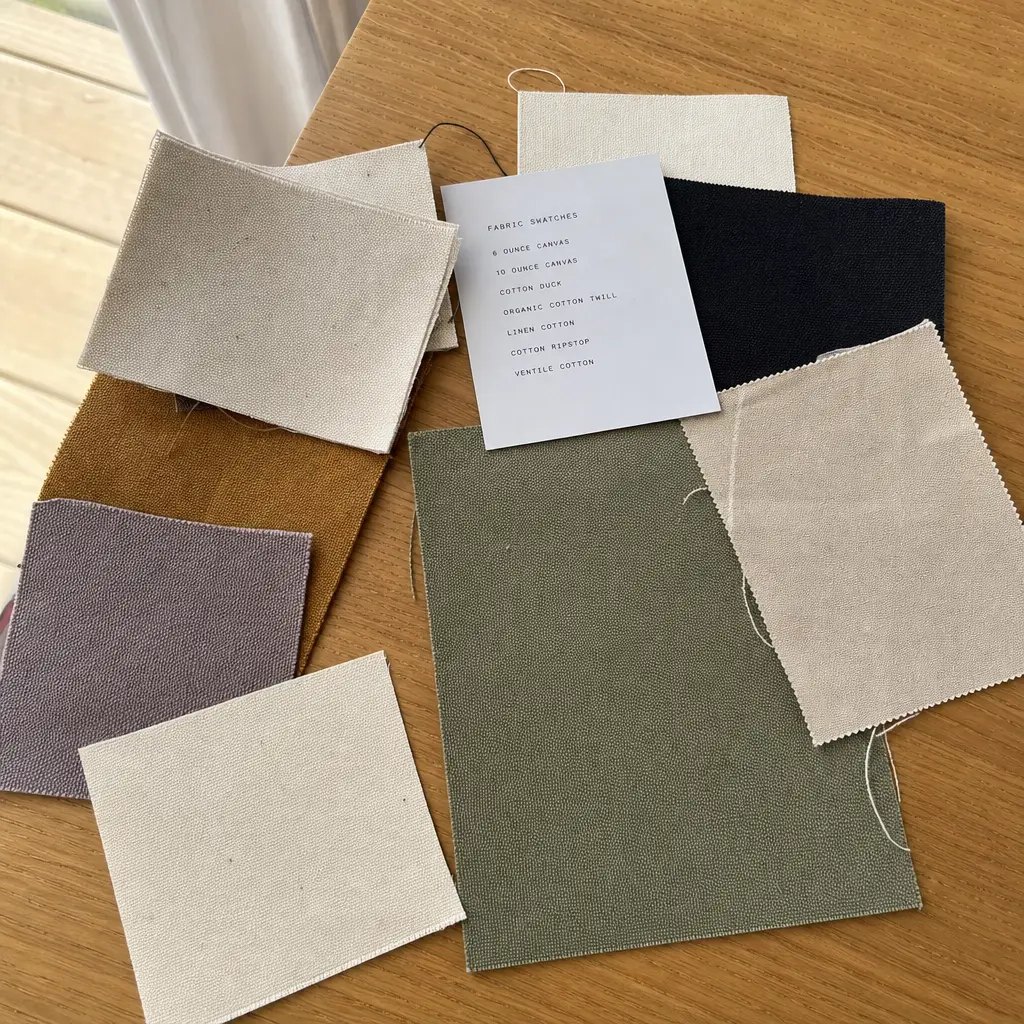
Canvas weight affects both print appearance and bag strength. A 10 oz canvas can work for event giveaways and light gifting, but it may wrinkle more easily and show more distortion around the bottle body. A 12 oz canvas is often the practical middle option for reusable wine carriers because it gives a cleaner print face, stronger hand feel, and acceptable folding for export packing. A 14 oz canvas feels more premium but increases material cost, needle wear, sewing time, carton weight, and sometimes freight volume.
Many supplier quotes become impossible to compare because one factory quotes 280 GSM canvas while another quotes 340 GSM or 400 GSM. Ask for both oz and GSM when possible, and request a fabric swatch or sample photo under natural light. Natural unbleached canvas can vary in speck level and shade from batch to batch. Dyed canvas improves brand color control but adds dye MOQ, possible shade tolerance, and more risk for light-color printing opacity.
- 10 oz or about 280-300 GSM: budget-friendly, acceptable for short campaigns, less premium hand feel.
- 12 oz or about 340-360 GSM: balanced choice for most logo printed wine carriers.
- 14 oz or about 400-430 GSM: stronger appearance, higher cost, may need wider carton planning.
- Natural canvas: good for black or dark logos, but expect cotton seed flecks and shade variation.
- Dyed canvas: better brand color direction, but confirm dye lot control and print opacity.
Map the safe logo zones
A reliable front logo zone usually starts below the handle reinforcement and ends above the point where the bottle body pushes the fabric outward. For a standard two-bottle canvas carrier, a centered logo placed about 45-60 mm below the top opening often works well, but the exact position depends on bag height and handle stitch location. The logo should not sit across a seam, divider stitch line, gusset fold, or lower base crease.
The RFQ should include a simple placement drawing with measurements from fixed edges. Use distance from the top opening, side seam, or centerline rather than vague wording such as upper middle. For bulk production, a practical tolerance might be plus or minus 3 mm horizontally and plus or minus 5 mm vertically, depending on construction and print setup. If the artwork includes small type, QR codes, or thin icon lines, enlarge it or move it to the flattest possible panel.
- Front center: strongest visibility for event photos and retail display.
- Lower front: risky if the bottle curve distorts the logo or the base crease crosses the print.
- Upper front: risky if handles, drawcord, or stitching compete with the mark.
- Side label: useful for subtle branding but less visible in front-facing photos.
- Interior label: good for compliance or brand story, not suitable for primary exposure.
Match print method to the logo
Screen printing is the usual first choice for custom canvas wine carriers with a solid tech logo. It gives good coverage, stable cost at volume, and a clean result on natural canvas when the artwork is not too fine. For one-color black, navy, green, or dark gray logos, screen print is generally the most efficient option. For white ink on dark canvas, the factory may need an underbase or extra pass, which changes both cost and hand feel.
Heat transfer can reproduce gradients and small details better, but it may look less natural on coarse canvas if the transfer film edge is visible. Embroidery gives a premium texture for small marks, but it can pucker canvas, increase unit cost, and is not ideal for large filled shapes. Woven labels or cotton side labels work well when the buyer wants a retail-grade detail and does not need a large front logo. The right process is the one that keeps the brand readable without making the carrier expensive to inspect or reject.
- Use screen print for one- or two-color logos with solid shapes and clear line gaps.
- Use heat transfer for gradients, small color changes, or artwork that cannot be separated cleanly.
- Use embroidery only for compact logos where stitch density will not stiffen the front panel.
- Use woven or cotton labels for subtle side branding, retail trim, or secondary brand marks.
- Avoid tiny legal text on the front panel; place it on a side label, hangtag, or insert card.
Understand MOQ and cost drivers
MOQ for custom canvas wine carriers is usually driven by fabric availability, cutting efficiency, print setup, and sewing line setup. A supplier may accept a low total quantity if the buyer uses stock natural canvas and one print color. The same quantity becomes harder if the buyer wants custom dyed canvas, two artwork versions, multiple logo positions, retail barcode stickers, or individual gift packaging. Clarify whether MOQ is counted per style, per size, per fabric color, or per logo.
Logo placement can also change cost. Printing on a flat front panel before sewing is usually efficient, but it requires accurate cutting and sewing alignment. Printing after sewing can help position the logo on the finished carrier, but the seams, gussets, and handle bulk may limit the print area or slow production. A low unit price may exclude screen setup, artwork adjustment, sample freight, carton marks, or special packing. A useful quote separates these items so procurement can compare real landed cost.
- Main material cost: canvas weight, cotton market level, dyeing, and wastage from the cutting layout.
- Branding cost: screen setup, number of print colors, print area, transfer film, label weaving, or embroidery stitches.
- Construction cost: divider sewing, boxed bottom, handle reinforcement, binding, lining, or drawstring closure.
- Packing cost: individual polybag, recycled paper band, hangtag, barcode sticker, master carton strength.
- Operational cost: sample rounds, artwork correction, inspection time, and short-run line setup.
Build a sample approval standard
The pre-production sample should use the same fabric weight, same logo process, same handle construction, and same divider method planned for bulk. A prototype made from substitute fabric is useful for shape discussion, but it should not be treated as final approval for print quality or strength. For logo placement, mark the approved sample with measurement points and keep photos showing a ruler from the top edge and side seam. This prevents arguments later when bulk units are close but not visually identical.
Inspect the sample both empty and loaded. Insert the intended bottle type, hold the bag by the handles, and photograph the front panel at normal viewing distance. The logo should remain flat enough to read and should not sit across a crease. For two-bottle carriers, shake the loaded sample lightly to judge whether the divider keeps bottles apart. If the sample fails, revise the structure or logo position before bulk cutting. Moving a logo after fabric is printed can create scrap and delay.
- Approve fabric shade with a swatch or physical sample, not only a supplier photo.
- Measure logo size and position on the finished carrier, not only on the print film.
- Check handle drop with bottles inside because the loaded shape changes the front view.
- Rub the print lightly after curing to identify weak adhesion or incomplete drying.
- Confirm whether the approved sample becomes the golden sample for final inspection.
Define QC thresholds before production
Quality control for logo placement should be measurable. If the only standard is looks good, the factory inspector and buyer may judge the same unit differently. Define major defects such as off-center logos beyond tolerance, crooked artwork, print smearing on the visible face, handle stitch failure, loose divider, wrong canvas weight, wrong fabric shade, and cartons crushed enough to crease printed panels. Minor defects can include small loose threads or slight natural cotton flecks if they do not affect function or the approved appearance.
For larger orders, the inspection plan should include dimensional checks, loaded bottle fit checks, print checks, seam checks, and packing checks. AQL levels depend on the buyer's risk tolerance, but wine carriers used as executive gifts often need stricter visual standards than low-cost event giveaways. Procurement teams should also require the supplier to keep print setup samples from the first production run and compare them with the approved sample during mass production, not only at final packing.
- Logo position: measure centerline and top-edge distance against the approved technical drawing.
- Print surface: reject visible bleeding, ghosting, wrong color, heavy cracking, or transfer lift.
- Stitching: reject skipped stitches, open seams, loose handle reinforcement, and broken divider seams.
- Load function: test with intended bottle weight and inspect handle attachment after hanging.
- Packing: verify pieces per carton, carton weight, carton marks, and protection of printed panels.
Plan packing for freight and presentation
Canvas wine carriers are usually packed flat to control carton volume, but aggressive compression can leave hard creases through the logo. Two-bottle carriers with dividers need careful folding so the divider is not permanently bent. If the bags will be used for retail display or premium gifting, the packing method matters almost as much as the sewing. A clean fold, consistent orientation, and protected print face reduce handling work when the goods reach the distributor or event team.
Ask for carton dimensions, pieces per carton, gross weight, and carton board strength in the quote. If individual polybags are not acceptable for sustainability reasons, specify paper bands, bulk inner bags, or carton liners. For retail buyers, add hangtags, barcode labels, care labels, or country-of-origin marking early because these items affect packing labor and lead time. For importers, carton volume is part of landed cost, so a heavier 14 oz carrier or more rigid divider may increase sea or air freight cost even if the unit price looks similar.
- Flat bulk packing: lowest freight volume, suitable for distributor repacking.
- Individual polybag: cleaner handling, higher plastic use, more labor, better for retail storage.
- Paper band or belly band: better presentation, but can scuff prints if packed too tight.
- Retail hangtag: useful for shelf display, requires artwork approval and attachment method.
- Carton liner: practical when natural canvas must stay clean during long export handling.
Control lead time and revision risk
A realistic schedule separates artwork preparation, sample making, sample shipping, sample approval, material purchasing, printing, sewing, inspection, and packing. For a simple stock natural canvas carrier with one-color screen print, the path is much shorter than for custom dyed canvas with multiple logo positions and retail packaging. The biggest delays usually come from unclear artwork, late sample comments, fabric shade changes, and revised logo placement after the first sample.
Procurement should protect the launch date by freezing decisions in order. First freeze structure and bottle size, then fabric weight and color, then logo placement and print method, then packing. If the buyer changes the logo after the print screens or transfer films are prepared, setup cost and schedule may reset. If a startup needs carriers for a fixed event date, build in a decision deadline for sample approval and a separate buffer for final inspection and freight booking.
- Artwork review: confirm vector file, Pantone values, logo size, and minimum line width.
- Sampling: allow time for material sourcing, printing, sewing, internal check, and courier transit.
- Bulk preparation: do not start cutting or printing until the golden sample is approved in writing.
- Inspection: reserve time before shipment so rejected cartons can be repaired or replaced.
- Freight buffer: air shipments are faster but costly; sea shipments need earlier carton data.
Specification comparison for buyers
| Spec decision | Recommended option | When it fits | Buyer risk to check |
|---|---|---|---|
| Front center logo placement | Print 45-60 mm below bag opening, centered between side seams and above bottle curve | Best for startup gifts, launch events, partner kits, and photos where the wine carrier faces forward | Logo may distort if printed too low over the bottle bulge or too high near the handle stitching |
| Side panel or gusset branding | Use a small woven label or narrow one-color print on the side seam area | Useful when the brand wants a premium retail look without making the front panel feel crowded | Side seams and gusset folds can hide artwork; request a flat-lay sample photo plus filled-bottle photo |
| Fabric weight | 10 oz for event giveaways, 12 oz for standard retail-grade carriers, 14 oz for heavier reusable gifting | 12 oz usually balances print surface, load strength, folding, and landed cost for tech startup volumes | Quote comparisons are misleading if one supplier quotes 10 oz and another quotes 12 oz or 14 oz |
| Print method | Screen print for solid logos, heat transfer for gradients, embroidery only for small premium marks | Screen print works well for one- or two-color tech logos on natural, black, or dyed canvas | Fine lines can fill in on coarse canvas; require artwork minimum line width and printed sample approval |
| Bottle capacity structure | Single-bottle for simple gifting; two-bottle with divider for higher perceived value | Two-bottle carriers suit investor gifts, reseller welcome packs, and retail wine promotions | Weak or loose dividers cause bottle knocking; include divider material and seam reinforcement in RFQ |
| Handle construction | Self-fabric handles with box stitching or reinforced cross stitching | Recommended when carriers are used with full 750 ml bottles and shipped to distributors | Handle drop and stitch pattern vary by factory; define handle length, width, and load test expectation |
| MOQ logic | Consolidate one fabric color and one print method if ordering 500-2,000 pcs | Best when a startup needs stable pricing but cannot absorb large leftover inventory | Low MOQ can hide higher setup charges, fabric dye surcharges, and less efficient carton packing |
| Packing method | Flat pack in export cartons with divider protected from hard creases | Keeps freight volume controlled while preserving the carrier shape for retail or event teams | Over-compression can crease printed logos and deform dividers; define carton size and max carton weight |
Buyer checklist before sampling
- Define bottle count, bottle size, filled weight, and whether the carrier must stand upright when loaded.
- State exact canvas weight in oz or GSM, not only the word canvas.
- Provide logo size, Pantone or CMYK values, placement distance from top edge, and allowable placement tolerance.
- Choose print method based on artwork detail, fabric color, order volume, and washing or rubbing expectations.
- Request one pre-production sample with real fabric, real handle stitching, real divider, and real logo process.
- Approve the sample using filled-bottle photos from front, side, top opening, and handle stress angle.
- Set QC points for logo position, print adhesion, seam strength, handle reinforcement, divider stability, and carton packing.
- Require quote data to separate bag cost, printing setup, sample charge, packing, carton dimensions, and production lead time.
- Confirm whether quoted MOQ applies per artwork, per fabric color, per print color, or per shipment.
- Include export carton gross weight, carton volume, inner polybag requirement, and barcode or retail tag needs.
Factory quote questions to send
- What canvas weight are you quoting in oz and GSM, and is it natural, bleached, dyed, or recycled cotton canvas?
- What is the maximum printable area on the front panel after sewing, and what placement tolerance can you control in bulk?
- Which print method are you quoting for this logo, and what minimum line width or gap should the artwork keep?
- Is the MOQ based on total quantity, one logo, one fabric color, one print color, or one carrier construction?
- Will the divider be sewn into the bottom seam or only attached at the top and sides?
- What handle width, handle drop, and reinforcement stitch pattern are included in the price?
- Can you provide a pre-production sample using bulk fabric and the same print ink or transfer film as mass production?
- What are the carton dimensions, pieces per carton, gross weight, and packing method for one-bottle and two-bottle versions?
- How many days are needed for sample making, sample revision, bulk fabric preparation, printing, sewing, inspection, and packing?
- What defects are considered major for logo placement, print smudging, loose stitching, bottle fit, and carton damage?
Quality-control points to confirm
- Logo centerline deviation within 3 mm for front panel printing on standard rectangular carriers.
- Logo vertical placement deviation within 5 mm from approved sample or marked technical drawing.
- No visible ink bleeding, pinholes, cracking, ghosting, or transfer film edge lift on the approved viewing face.
- Handle box stitching complete on all corners with no skipped stitches longer than 10 mm.
- Divider secured enough to keep bottles separated during normal carrying without pulling away from seam.
- Carrier holds intended loaded weight for a short static hang test without handle tearing or seam opening.
- Canvas GSM or oz weight matches approved fabric swatch within reasonable mill tolerance.
- Cartons remain below agreed gross weight and protect printed panels from hard crease marks.
- Bulk units match approved sample for fabric shade, logo size, handle drop, and overall dimensions.
- Random inspection includes both empty measurement checks and loaded bottle fit checks.