Why logo placement is the main buying issue on canvas wine carriers
For coffee roasters, a canvas wine carrier usually works as a gift-with-purchase, seasonal retail item, subscription add-on, or collaboration pack. The bag is simple, but the logo placement is where many import projects go wrong. Unlike a flat tote, a wine carrier has a narrow body, bottom depth, and bottle-driven shape. Once a glass bottle is inserted, the front panel pulls, rounds, and shifts. A logo that looked balanced on an empty sample can end up partly hidden by the gusset, handle bridge, or bottle bulge.
That matters because buyers often compare supplier quotes only on bag size and fabric weight, while the usable branding area is what really determines whether the product works in stores. A factory can quote the same 310 GSM canvas body at similar cost, but two different constructions may give very different print results. A bag with a deep gusset, reinforced neck, or divider can cut down the front-facing logo zone by more than buyers expect. If you do not lock the artwork position in millimeters from seams and top edge, quote comparisons stay too loose to be useful.
- Most placement problems come from seam allowance, gusset expansion, and handle stitching overlap.
- The bag should be reviewed both flat and with a real bottle inserted before artwork is approved.
- A logo placement guide is not only a design issue; it affects yield, print method, labor, and rejects.
Start with bottle size and carrier construction before you place artwork
The first RFQ line should be bottle type, not logo size. Standard 750 ml wine bottles vary more than many buyers expect. Some gift bundles use Burgundy bottles with wider diameters, some use sparkling wine bottles with heavier shoulders, and some coffee roasters actually pack cold brew, syrup, or olive-oil collaboration bottles in the same style of bag. A single-bottle carrier for a slim bottle might only need a 90-100 mm gusseted width when flat, while a heavier bottle may need more base support and extra front panel height. Those changes shift the visible print area upward or inward.
Construction details matter just as much. A basic one-piece body with bottom fold gives a cleaner front panel than a bag with a separate base panel and stitched divider. Cotton webbing handles can sit on top of the printable area if they are anchored low. A neck strap or button loop can also block center-front branding. Buyers should decide early whether presentation or carrying security is more important. The more structural details you add, the less unrestricted logo space remains.
- Common base fabric range: 280-340 GSM canvas for standard wine carriers.
- Single-bottle gift bags often use 280-310 GSM; double-bottle or heavier premium packs often move to 310-340 GSM.
- Useful RFQ detail: finished size in mm, gusset width, handle drop, divider yes/no, and target bottle diameter range.
Choose the logo zone that matches how the bag will be seen in retail
Front-center printing is still the safest option for most coffee roasters because it gives immediate brand recognition in gifting and tabletop display. On a standard single-bottle canvas carrier, a practical print width often lands around 180-220 mm depending on bag width and seam allowance. The key is to keep the artwork within a safe zone that stays flat after the bottle is inserted. Large logos that span too close to the side folds can look distorted when the gussets open.
Side gusset branding, woven labels, and small upper-front logos are better when the brand wants a cleaner premium look or when there is co-branding with a winery, café chain, or retailer. These placements cost less in some cases because they reduce ink area, but they can also create readability issues. A subtle side label looks refined in a studio photo, yet may disappear on a crowded shelf. Buyers should choose based on the actual selling context: gift counter, checkout display, online unboxing, or wholesale distributor pack.
- Front-center print suits promotional clarity and lower artwork risk.
- Upper-front small logo suits premium styling but may be obscured by hand carry.
- Gusset labels suit understated branding but lose visibility once the bag is packed tightly in cartons.
- Inside labels work for private label or distributor programs where exterior must stay generic.
Match print method to canvas color, artwork detail, and MOQ
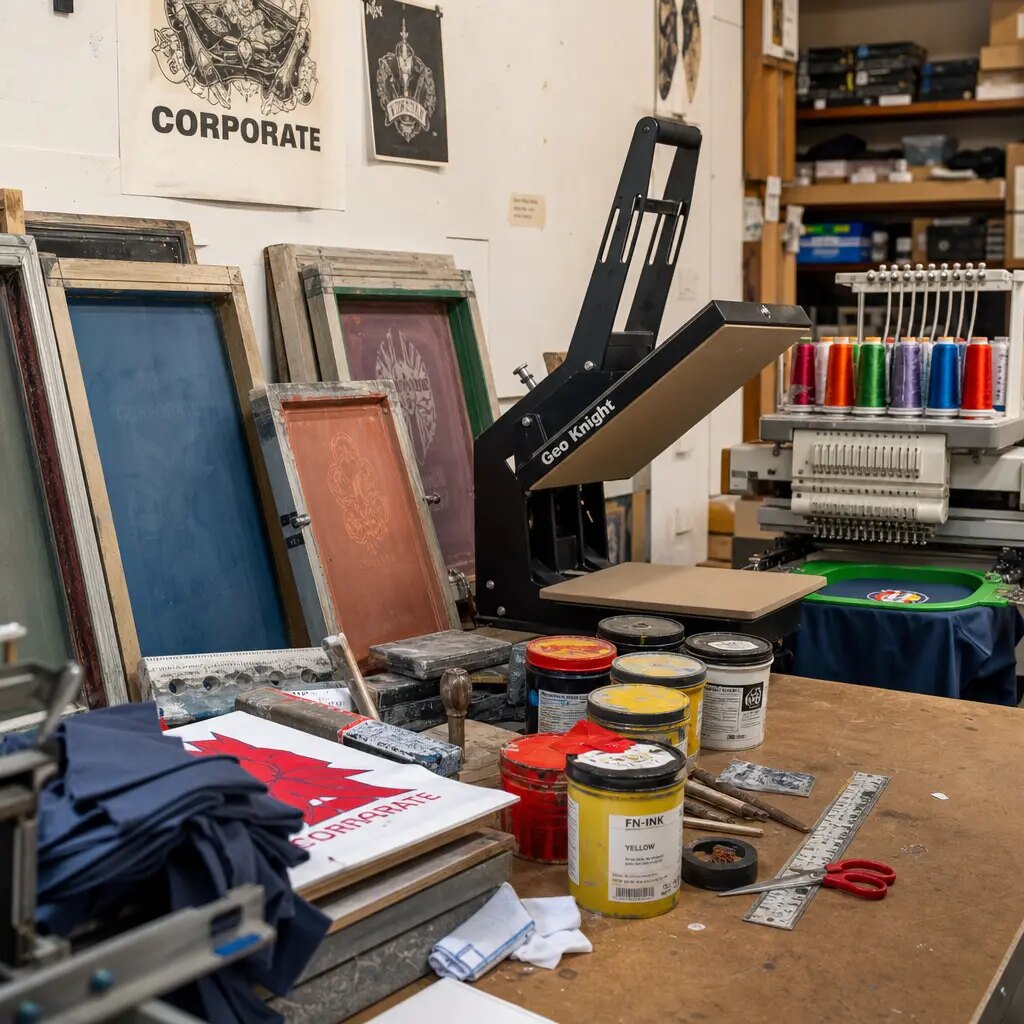
Screen printing is usually the most economical method for canvas wine carriers when the logo is one or two solid colors and order volume is commercial. It gives good opacity on natural canvas and predictable cost scaling as units increase. For coffee roasters using a simple wordmark or icon, screen print is the default unless the logo has fine gradients or a very small detailed crest. On dark or black canvas, however, the same logo may need a white underbase and extra print pass, which raises cost and can reduce softness.
Heat transfer or digital transfer can help when the artwork has finer detail, small text, or multiple colors at lower quantity. The tradeoff is surface feel and durability on flexible canvas. A transfer placed across a creasing zone may crack earlier than a standard screen print. Woven labels and faux leather patches move the branding cost from ink area to trim and sewing labor. These methods look more premium, but they introduce separate MOQ logic. A factory may accept 500 bags but require a higher minimum for a custom patch or woven label run.
- Natural canvas + 1-color screen print: usually the most budget-efficient combination.
- Black canvas + white logo: usually needs underbase; cost and approval risk increase.
- Woven labels: good for premium look, but logo detail must stay readable at small size.
- Embossed patch: better for gift retail than low-cost event distribution.
- Useful quote line: print method, number of colors, print size in cm, and whether underbase is included.
How fabric weight changes both branding performance and cost
Buyers often request 'thick canvas' without stating the fabric range. For wine carriers, thickness should be tied to bottle weight, retail position, and print behavior. Around 280 GSM can work well for economical single-bottle programs, especially in natural cotton with a compact screen print. At 310 GSM, the bag usually stands better, the panel feels more substantial, and front printing tends to look cleaner when the bottle is inserted. At 340 GSM and above, the structure improves further, but seam bulk, handle attachment labor, and carton weight also rise.
Heavier fabric does not always improve the logo result. If the body is too stiff for the chosen construction, the front panel can crease sharply rather than drape cleanly. On the other hand, fabric that is too light may collapse around the bottle and wrinkle through the logo. Buyers should compare quotes on an equal basis: same GSM, same yarn quality if available, and same finishing. A low quote on 'canvas' is not meaningful if one supplier is using a lighter actual weight or a looser weave.
- 280 GSM: entry-level gift bag range for lighter single-bottle use.
- 310 GSM: strong middle ground for most branded coffee roaster wine carrier projects.
- 340 GSM: premium hand feel and support, but higher material and freight cost.
- Request tolerance or actual measured GSM range on sample approval if weight consistency matters.
Cost drivers buyers should compare beyond unit price
A realistic quote comparison should separate material cost, print cost, labor additions, and packing cost. Two suppliers can be close on ex-factory price while hiding very different assumptions. One may include only the base bag with one-color front print and bulk carton packing. Another may include individual polybags, inserted tissue, bottle-shape support card, woven label, or stronger handle reinforcement. Without a line-by-line breakdown, procurement teams may approve the lower quote and discover later that the landed cost advantage was not real.
Logo placement itself can change cost because it affects setup and sewing sequence. A front screen print applied on flat cut panels is efficient. A side label inserted into the seam adds labor at sewing stage. A stitched patch needs its own material sourcing, die or mold if relevant, and extra handling. On dark fabric, underbase printing can add one more pass and more inspection time. The practical way to compare suppliers is to hold the bag structure constant and test one branding variable at a time.
- Main cost drivers: canvas GSM, fabric color, print size, print colors, underbase need, handle material, divider, and unit packing.
- MOQ logic changes by trim: basic body MOQ may be lower than patch or woven label MOQ.
- Quote example format to request: bag body, printing, trims, packing, sampling, and carton data as separate lines.
- Freight impact matters: heavier GSM and low units per carton can erase small unit-price savings.
Sample approval points that prevent bulk placement disputes
Sample approval should happen in stages. First, approve the blank bag for fit, structure, and handle balance with the real bottle inserted. That lets you decide whether the front panel remains flat enough for the intended logo size. Second, approve a printed pre-production sample using the actual artwork scale and bag color. A digital mockup is not enough because natural cotton absorbs ink differently than coated paper, and black canvas with white print often needs visual judgment in real light.
The approval file should include measurable placement references. 'Center logo' creates disputes because different teams may center from different reference points. On wine carriers, the visual center can differ from the cut-panel center once seams, gussets, and handles are added. Use dimensions such as logo top edge 70 mm below finished top edge, logo centered between side seam stitch lines, and logo width 200 mm. Add a photo of the approved sample with a bottle inserted and note whether the logo was judged flat-filled or empty-flat.
- Approve blank fit sample before printed sample if bottle dimensions are not standard.
- Use millimeter dimensions on artwork placement drawing.
- Approve color on actual fabric, not only Pantone reference.
- Retain one sealed pre-production sample for shipment QC reference.
- If there are two bottle sizes, do not approve one print position for both without testing.
QC thresholds for logo placement, print durability, and handle strength
Quality control on wine carriers should focus on what the end buyer sees first and what fails first in use. For logo placement, tolerance usually needs to be tighter than on a large shopping tote because the bag face is narrower and any drift is more visible. A plus or minus 5 mm placement tolerance is a reasonable written benchmark for many standard screen prints, provided the bag construction is stable. More important than the raw number is using one measuring method for all inspectors.
Print durability should be reviewed against the real use case. A coffee roaster gift bag may not need industrial wash resistance, but it should survive handling, carton friction, and folding without obvious cracking or offset. Handle strength is the other major risk. A premium-looking logo is useless if a filled bottle strains the stitch points. Buyers should request the factory's internal pull standard or at minimum a repeatable loaded carry test using the actual bottle weight plus safety margin.
- Placement tolerance example: ±5 mm for standard print position, unless a tighter requirement is priced and agreed.
- Reject major print defects such as blurred edges, missing ink, heavy overprint shadow, or visible misregistration.
- Inspect filled-bag appearance, not only flat-bag appearance.
- Handle reinforcement should be symmetrical and free from skipped stitches.
- For dark canvas, evaluate white print for cracking after light fold and rub tests.
Packing details that protect the logo and keep freight efficient
Packing is often treated as an afterthought, but it changes both print condition and landed cost. Canvas wine carriers are usually packed flat, yet if the front logo has heavy ink coverage or a raised patch, face-to-face stacking without protection can cause rub marks. Individual polybags add cost and plastic use, but they may be justified for premium retail or dark bags with white prints. For simpler natural canvas with a compact one-color logo, bulk packing in inner bundles may be enough if the print is fully cured and the cartons are not overfilled.
Carton planning also matters because these bags are narrower than totes but can become bulky if they include base boards, dividers, or tissue insertion. If the order will move by courier or mixed SKU warehouse replenishment, buyers should ask for carton dimensions and gross weight early. A low ex-factory price can lose value if the packing plan creates poor carton utilization or pushes gross weight above warehouse handling preferences.
- State whether units are packed flat, with tissue, with insert card, or retail-ready.
- Request units per carton, carton dimensions, net weight, and gross weight.
- If there is a patch or raised branding, avoid excessive compression in cartons.
- Outer carton marks should include item code, color, quantity, PO, and destination if multiple channels are involved.
- For e-commerce programs, barcode sticker location should not cover or distort the logo area.
Lead time planning and the schedule risks tied to logo choices
Lead time for canvas wine carriers is usually affected less by sewing than by approvals and trim coordination. A basic natural canvas bag with standard one-color screen print often moves faster than a black dyed bag with underbase print, custom woven labels, and hangtags attached at packing. Buyers should separate sample lead time from bulk lead time in every quote. The time needed for fabric shade approval, print strike-off, and artwork placement approval can exceed the sewing time if internal sign-off is slow.
The most common schedule risk is late artwork change after the blank bag has already been sampled or after screens and labels have been prepared. A smaller but frequent issue is changing from standard front print to patch branding after cost approval. That shifts the project into a different trim path and can reset sampling. If the program is seasonal, keep the branding method simple unless the retail margin clearly supports the added complexity. In short, the shortest path is usually natural canvas, stable artwork, front print, and standard carton packing.
- Useful quote timeline to request: sample days, print strike-off days, bulk production days, and packing completion days.
- Dyed fabric or black canvas can add approval steps compared with natural canvas.
- Custom labels and patches often require separate artwork and sampling timelines.
- Late logo position changes can trigger rework, new screens, or delayed bulk start.
Specification comparison for buyers
| Spec decision | Recommended option | When it fits | Buyer risk to check |
|---|---|---|---|
| Front-center logo on 12-16 oz canvas body | Single-color screen print, 180-220 mm wide, centered within safe print area | Best for roasters wanting a clear giftable logo on natural canvas at efficient unit cost | Handle stitching and side seams can distort print if artwork sits too high or too close to gusset fold |
| Low-front logo above base seam | Move artwork 35-50 mm above bottom seam with smaller width | Useful when neck support, bottle base panel, or heavy gusset construction dominates front panel space | Logo may disappear on shelf if bottle sits low and front panel creases around the base |
| Top-front logo near handle bridge | Small woven label or compact heat transfer placed below handle reinforcement | Works for understated brand marking or when front body is reserved for seasonal message card pocket | Print can be hidden by hand carry position; transfer adhesion may fail if stitching creates uneven surface |
| Side gusset logo | Narrow woven label sewn into side seam or small vertical print | Suitable for premium roaster branding where front stays clean and retail partner wants low-key branding | Gusset expansion changes artwork visibility; seam allowance can eat into readable logo width |
| Full-panel artwork on dyed black canvas | High-opacity screen print or heat transfer with white underbase | Best when dark bag color is part of a premium coffee gift set or holiday program | Ink coverage cost rises fast; underbase registration and rub resistance need approval before bulk |
| Inside-neck or hem label branding | Folded woven label sewn into inside top hem | Fits distributor or private-label orders where exterior branding must stay generic | Label placement can scratch bottle neck foil if seam ends are rough or label edge is too stiff |
| Embossed faux leather patch | Small stitched patch centered on upper front panel | Appropriate for higher-value gift channels and limited runs where tactile branding matters more than color | Patch adds labor, stitch holes, and MOQ on patch production; not ideal for low-cost promotional orders |
| Two-logo layout for roaster plus retail partner | Main front print plus small side label | Useful for co-branded subscription boxes, winery collaborations, or event gift bundles | Mismatched artwork hierarchy can create approval disputes; separate color approvals are needed for both logos |
Buyer checklist before sampling
- Define bottle format before artwork layout: standard 750 ml wine bottle, tall olive-oil bottle, or wider gift bottle changes front panel and gusset printable area.
- State canvas weight in GSM or oz clearly. For most wine carriers, 280-340 GSM is the practical range; lighter fabric can sag, heavier fabric can increase seam bulk and freight.
- Specify whether branding is on front body, gusset, handle wrap, woven label, or inside label. 'With logo' is not enough for a usable quote.
- Request a print safe area drawing with distances from side seams, bottom seam, and handle reinforcement stitching.
- Approve exact artwork size in millimeters, not only a visual mockup. Small shifts are common when panel cutting tolerances are not written.
- Match print method to bag color and volume: screen print for simple logos and scale, heat transfer for detail, woven labels or patches for premium positioning.
- List Pantone references and note whether color matching is critical on natural canvas, dyed canvas, or black canvas with white underbase.
- Decide if the bag needs a divider, padded base, bottle neck support, or internal stitching line; all affect usable logo area and labor cost.
- Include handle construction in RFQ: self-fabric handles, cotton webbing handles, X-stitch reinforcement, or wrapped grip. Handle style changes front branding position.
- Approve sample photos with a real bottle inserted. Empty-bag photos often hide print distortion and front-panel collapse.
Factory quote questions to send
- What is the finished bag size in millimeters for single-bottle and double-bottle versions, and what bottle diameter range does each fit?
- What fabric weight do you quote: 280 GSM, 310 GSM, 340 GSM, or another spec, and is that finished weight before or after dyeing/washing?
- What is the usable front print area after subtracting seam allowance, bottom fold, and handle reinforcement stitching?
- Which print method are you quoting for this artwork: screen print, heat transfer, digital transfer, woven label, or patch application?
- How many print colors are included, and is a white underbase required on dyed or black canvas?
- What is the MOQ by fabric color, logo version, and bag size, and do mixed colorways share one production run or separate runs?
- Can you provide a dieline or flat artwork placement drawing with distances from top edge, side seam, and bottom seam?
- What sample stages are available: blank fit sample, printed pre-production sample, and carton packing sample?
- What are the standard logo placement tolerances in bulk production, measured in millimeters horizontally and vertically?
- How are handles attached and reinforced, and what load test or internal standard do you use for bottle bag handle strength?
Quality-control points to confirm
- Logo placement tolerance should be written on the approved sample, commonly within plus or minus 5 mm for standard screen print placement on canvas panels.
- Print edges must be legible with no major pinholes, ghosting, double image, or ink smear visible at normal inspection distance.
- White prints on black or dark canvas should be checked for underbase show-through, gray cast, and cracking after light fold testing.
- Side seam and bottom seam must stay straight enough that centered logo appearance is not visually pulled off-center on filled bags.
- Handle reinforcement stitches should be balanced left and right; skewed handles make a centered logo look misaligned even when print is correct.
- Bottle fit must be tested with the actual intended bottle diameter and height, not only a standard 750 ml bottle substitute.
- If the bag includes a divider, the divider seam should not telegraph through the front panel enough to cut through logo readability.
- Fabric shade variation between panels should be controlled, especially on black canvas where print contrast makes panel mismatch obvious.
- Woven labels and patches must be sewn flat without curling corners or loose edge stitching that can catch during packing or retail handling.
- Cartons should protect print surfaces from rubbing; if heavy ink coverage is used, interleaving or individual polybags may be needed.