Start With the Date Goods Must Be Usable
For a craft fair order, the real deadline is not the date a factory finishes sewing. It is the date the custom canvas wine carriers are on hand, counted, sorted, and ready for booth allocation, vendor kits, retail display, tasting-room sale, or regional handoff. A shipment that lands one day before opening may look acceptable on a supplier schedule, yet still leave the buyer with no time to check shortages, separate artwork versions, relabel cartons, or move inventory to the event site.
Set the required in-hand date before you calculate supplier lead time. For a single local fair, three to five working days before use may be enough if cartons go directly to one team. For a multi-vendor program, a regional market tour, or an order split among wineries, distributors, and sales reps, one to two weeks is often more realistic. The more SKUs, carton marks, destinations, and booth kits involved, the more receiving time procurement should protect.
Factory production is only one part of the calendar. A supplier may quote 25 working days for bulk production, but that figure often excludes RFQ clarification, artwork clean-up, sample making, courier transit, buyer review, deposit processing, inspection booking, export handover, customs clearance, domestic delivery, and warehouse allocation. If the quote says only production time, ask what starts the clock and what is outside the quote.
A backward calendar makes late risk visible. Begin with the required in-hand date. Then reserve days for domestic redistribution, customs and inland delivery, international freight, inspection and packing release, bulk production, pre-production sample approval, sample transit, artwork lock, and RFQ finalization. This is especially important for craft fair merchandise because the selling window is fixed. A beautiful carrier arriving after the fair has little commercial value.
- Set a required in-hand date earlier than the fair date, not equal to it.
- Separate factory production time from buyer approval time, freight time, and receiving time.
- Ask whether lead time starts after deposit, approved sample, final artwork, label approval, or material arrival.
- Add 10-15 working days of buffer for fixed-date event programs whenever margin allows.
- Build extra time for multi-destination cartons, vendor kits, booth-level allocations, and regional redistribution.
Translate Event Use Into Product Requirements
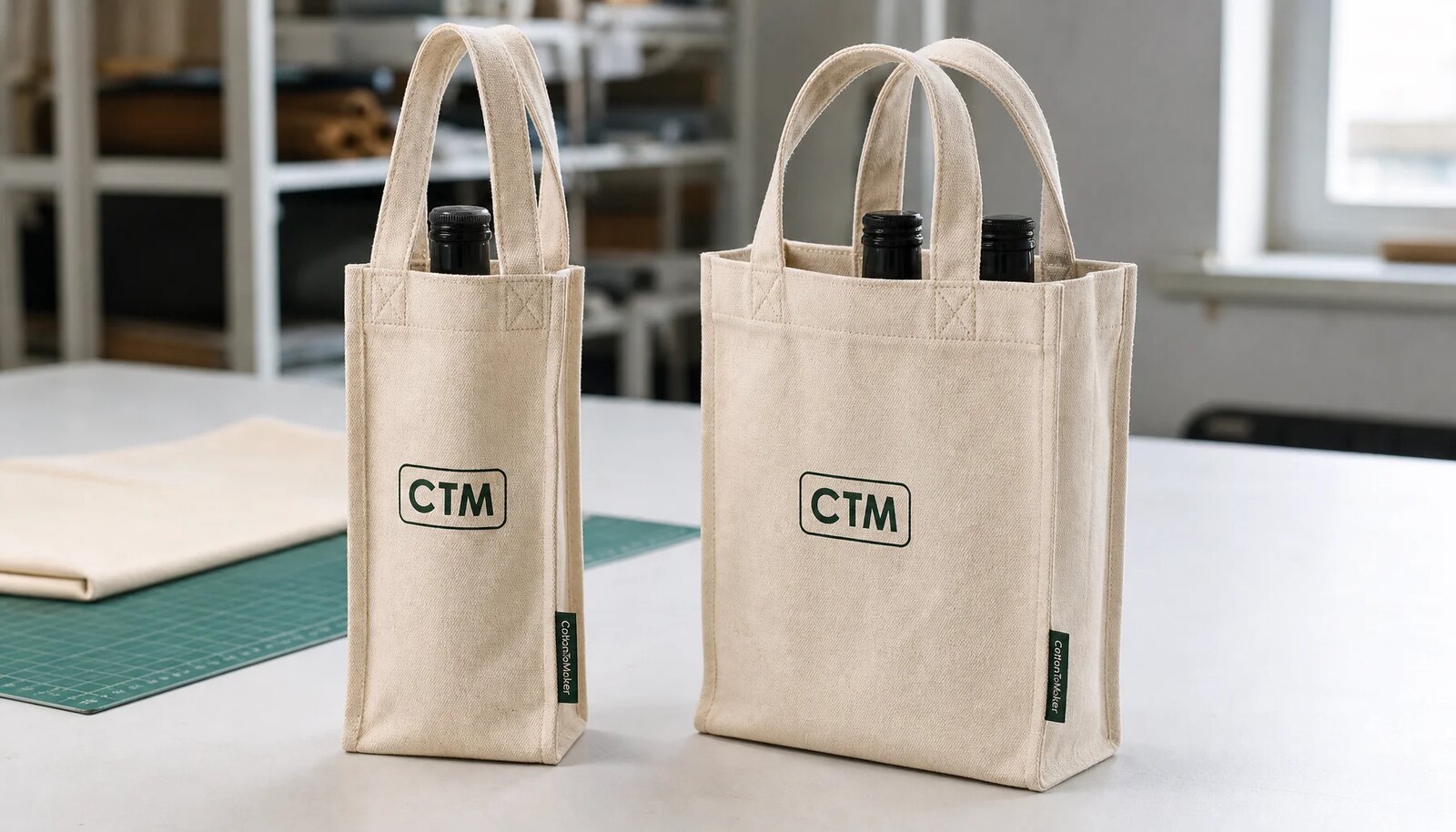
A canvas wine carrier used at a craft fair is not just a branded textile bag. It has to carry glass through crowded aisles, sit on uneven tables, survive wrist carry, and still look good enough for reuse. Procurement should brief it as a working package: bottle fit, carry comfort, seam strength, print presentation, packing efficiency, and retail appearance all need to be specified.
Start with bottle data. Many teams say “750 ml wine bottle” as if it describes one shape, but bottle profiles vary. Bordeaux bottles are often slimmer than Burgundy bottles. Sparkling bottles can be wider and heavier. Cider, spirits, olive oil, and specialty beverage bottles may have different shoulders, necks, or heights. A shared carrier for several vendors should fit the widest and heaviest bottle expected, not the easiest bottle on the list.
Match the carrier format to the commercial role. A single-bottle carrier usually suits high-volume craft fair checkout use, tasting-room support, and lower-cost giveaways. A two-bottle carrier needs more fabric, stronger construction, and usually a divider, so it costs more, but it can work well for gift sets, bottle-pair promotions, subscription pickups, and paid merchandise. If the item will be sold at retail, add hangtags, barcodes, care information, and presentation rules to the specification.
Finished dimensions need to be measurable. A common starting point for a one-bottle carrier is roughly 15-18 cm front width, 32-36 cm height, and 8-10 cm gusset, but those numbers only become useful after you test the actual bottle. Handle drop also matters. Too short, and the carrier feels awkward. Too long, and the bottle swings, stresses the handle joins, and can hit the customer’s leg while walking.
- Measure maximum bottle diameter, height, shoulder width, and filled weight before pattern approval.
- Confirm whether the carrier must fit wine only or also cider, spirits, sparkling bottles, olive oil, or non-standard bottles.
- Use single-bottle formats for utility and volume; use two-bottle formats for gifting, bundles, or higher retail value.
- Define handle drop and handle width, then test carry comfort with a filled bottle.
- State whether the neck should remain visible, be mostly covered, or align with a gift-pack presentation.
Specify Canvas Fabric in Measurable Terms
“Canvas” is not a complete specification. It does not define fiber content, weave, weight, color, finishing, shrinkage, shade variation, or hand feel. For custom canvas wine carriers, the PO should state the target fabric in objective terms: cotton content or blend, canvas weave, ounce weight or GSM, color, finish, and tolerance. The approved sample then becomes the physical reference for bulk production.
For most reusable craft fair wine carriers, 10 oz to 12 oz cotton canvas, approximately 280-340 GSM depending on weave and finish, is a practical range. It gives more structure than lightweight cotton and usually prints cleanly without becoming too bulky at the gusset or handle joins. An 8 oz canvas can work for light promotional use, but it may collapse around a glass bottle and feel less substantial. A 14 oz canvas can feel premium, although it increases fabric cost, sewing difficulty, folded bulk, carton weight, and freight cost.
Natural canvas is popular for craft fairs because it fits an artisanal look and may be faster to source than a custom-dyed fabric. Still, buyers should define acceptable natural flecking, shade variation, and hand feel. Bleached white canvas creates a cleaner print background, but it can show dirt and handling marks more easily. Dyed canvas supports brand color, yet it may require lab dips, shade approval, fabric MOQ, and extra lead time.
Agree fabric tolerance before production. A commercial tolerance such as +/-5% in fabric weight may be acceptable if both sides write it into the order, but it should not be assumed. Without a stated tolerance, a buyer may approve a 12 oz sample and receive a lighter material that changes structure, print opacity, and perceived value.
- Write fabric as cotton content, weave, target weight, color, finish, shrinkage expectation, and tolerance.
- Use 10 oz to 12 oz canvas as the normal starting point for reusable event carriers.
- Treat 8 oz as light promotional construction unless load testing proves it suits the bottle weight.
- Use 14 oz only when the brand value justifies thicker seams, heavier cartons, and higher landed cost.
- Ask whether the fabric is stock, newly purchased greige fabric, custom dyed, or mill-made to order.
Engineer Handles, Gussets, and Dividers
The front logo gets attention, but the load-bearing seams decide whether the product works. A carrier holding one filled 750 ml bottle may support roughly 1.2-1.6 kg depending on the bottle and closure. A two-bottle carrier may carry roughly double that weight. The exact test weight should come from the buyer’s own bottle data, but the sourcing principle is simple: handle joins, divider seams, and bottom gussets are functional safety points.
Handle construction can use self-fabric, cotton webbing, or another approved textile. Self-fabric handles create a consistent look and can be economical, but they should be folded and stitched cleanly so they do not twist or stretch unevenly. Webbing handles can add strength and consistency, but color matching, thickness, and hand feel need approval. Reinforcement should be written into the specification: box stitch, cross stitch, bartack, reinforced patch, folded self-fabric reinforcement, or another defined method.
The bottom gusset controls stability. If it is too narrow, the bottle carrier may tip on a checkout table. If it is too wide, the bottle can shift and the product may look loose. For one-bottle carriers, 8-10 cm is a common working range, but the correct dimension depends on bottle diameter, fabric thickness, and whether the buyer wants the carrier to stand upright when filled.
For a two-bottle carrier, the divider is not a cosmetic panel. It should be high enough to reduce glass-to-glass contact, attached securely enough not to pull loose, and straight enough that bottles insert without forcing. A loose floating divider may photograph well but perform poorly during normal carrying. Review divider height, attachment depth, seam allowance, and bottle movement before bulk approval.
- Specify handle material, handle width, handle drop, reinforcement method, stitch type, and thread type.
- Define bottom gusset and side gusset dimensions in the tech pack or PO.
- Use actual filled bottles for standing, lifting, swinging, and divider checks.
- Inspect seam strain after load testing, not only immediately after sewing.
- Require two-bottle divider measurements and attachment photos before shipment release.
Lock Artwork Before It Delays Production
Decoration is one of the most common reasons craft fair orders slip. The bag may be simple, but the schedule can stall when vector files are missing, sponsor logos arrive late, Pantone references are unclear, or vendors request last-minute artwork changes. Before RFQ close, create an artwork matrix showing SKU, artwork name, print colors, print size, placement, quantity, destination, and approval owner.
Screen printing is often the best choice for solid one- to three-color logos at medium quantities. It can be efficient after setup and can perform well on cotton canvas when the ink is suitable and properly cured. Textured canvas, however, does not reproduce detail like coated paper. Fine reversed text, tiny registration details, gradients, and thin outlines may fill in, break, or print unevenly. Ask the supplier to identify artwork risks before screens are made.
Heat transfer can support full-color graphics or many small artwork versions, but it changes the surface feel and needs physical approval. Check transfer edges, adhesion, cracking resistance, and rub resistance on the actual canvas. Embroidery can add a premium look for simple logos, but dense stitching can distort lighter fabric and adds digitizing plus production time. Woven labels, printed labels, and hangtags can be useful when one base carrier serves multiple vendor programs.
A digital mockup is not a production approval. It can confirm rough placement, but it cannot show ink opacity, edge quality, curing, transfer feel, embroidery distortion, or how folding affects the decorated panel. For a fixed-date order, approve the most difficult artwork physically on production fabric or on a fabric the supplier confirms is equivalent.
- Send editable vector artwork rather than low-resolution screenshots or flattened files.
- Provide Pantone references or agreed color standards for each print color.
- Measure logo placement from fixed seams or panel edges, not from a visual center estimate.
- Flag small text, reversed lettering, gradients, and thin lines before screen or transfer setup.
- Freeze artwork before bulk cutting if panel size or print placement depends on the final pattern.
- Include labels, hangtags, barcode files, and retail stickers in the same approval schedule.
Use MOQ Strategy to Reduce Complexity
MOQ is not just a supplier rule. It reflects material purchasing, cutting efficiency, decoration setup, label ordering, packing labor, inspection, and administration. A 3,000-piece order with one fabric and one logo is very different from a 3,000-piece order split across 30 winery logos, four fabric colors, two handle styles, and five destinations.
For distributors, wineries, and event buyers, the cleanest MOQ strategy is usually to standardize the base carrier. Keep fabric, size, gusset, handle, thread, divider, and packing format the same, then vary only the print artwork. The factory can cut and sew a common batch while print and packing teams manage the artwork SKUs separately. This reduces operational risk compared with allowing every vendor to redesign the product.
Ask suppliers to break MOQ down by cost driver. Stock natural canvas may have a lower MOQ than dyed canvas. Screen printing may have a minimum per artwork or per color. Woven labels may require a separate production minimum. Special carton marking, inner packing, or destination sorting may add handling cost even when the product MOQ is met. A single MOQ number is not enough unless it states exactly what it covers.
Price tiers make planning easier. Request tiers such as 500, 1,000, 3,000, and 5,000 pieces where relevant, and ask how artwork splits affect each tier. Sometimes a slightly higher unit price with clean SKU control is a better decision than a low quote that ignores sorting, relabeling, inspection time, and late packing corrections.
- Standardize base construction wherever possible, then vary artwork only.
- Ask MOQ by fabric color, size, print color count, artwork, label, packing method, and destination.
- Separate screen charges, transfer setup, embroidery digitizing, and label costs from unit price.
- Avoid treating many small vendor splits as one simple bulk order.
- Request quantity tiers so demand changes do not force a full requote.
Build a Lead Time Map With Gates
A useful lead time map shows both supplier work and buyer decisions. When specifications are complete, RFQ clarification may take 3-5 working days. A plain construction sample may take about 5-7 working days. A printed pre-production sample may take 7-12 working days depending on print setup, fabric availability, label needs, and component sourcing. Courier transit and buyer review can add another week if approvals are not organized.
Bulk production for many standard custom canvas wine carrier orders may fall in the 20-35 working day range after approvals and materials are ready. This is not a guarantee. Larger quantities, dyed fabric, two-bottle dividers, embroidery, woven labels, many artwork versions, and retail packing can extend the schedule. Inspection, corrective action if needed, and packing release should have their own calendar days instead of being squeezed into the final production date.
Freight planning should begin before the PO is placed. Canvas carriers are not fragile, but they can be bulky. Air freight can protect a deadline, yet it may not make sense for low-margin promotional bags. Ocean freight can protect margin but needs earlier commitment and more buffer. Courier can work for samples or urgent small top-ups, but it is rarely the lowest-cost option for a full bulk order. Ask for carton dimensions, gross weight, and CBM early so freight options can be compared honestly.
Add decision gates to the timeline. Bulk production should start only after construction approval, final artwork release, final quantity confirmation, packing approval, label approval, and commercial requirements such as deposit or payment terms are complete. Starting early may look faster, but it increases the chance of rework, wrong artwork, incorrect labels, or unusable inventory.
- RFQ gate: fabric, size, decoration, quantity, packing, destination, and incoterm are defined.
- Sample gate: construction, bottle fit, handle strength, divider, and print method are approved.
- Bulk-start gate: deposit, final artwork, labels, quantities, and packing rules are complete.
- Inspection gate: product, print, carton marks, and SKU separation pass shipment-release checks.
- Logistics gate: cartons, weights, CBM, booking, customs data, and delivery address are confirmed.
Control Samples as Production References
Samples should not be treated as casual sales pieces. For custom canvas wine carriers, the approved sample controls fabric hand feel, finished size, gusset shape, handle drop, divider behavior, stitching, print placement, and packing presentation. If the sample is not measured and documented, it becomes difficult to prove whether bulk production matches what the buyer approved.
A plain construction sample is especially useful when the pattern is new, the bottle profile is uncertain, or a two-bottle divider is involved. Insert the widest and heaviest intended bottle. Check whether the carrier stands. Lift it by the handle. Watch for twisting. Inspect handle joins and bottom seams after loading. If the pattern fails here, it is cheaper to correct before printing, labels, or bulk cutting are involved.
A printed pre-production sample should use production fabric and the intended decoration method whenever possible. Print color, ink opacity, transfer adhesion, embroidery distortion, and edge sharpness can change from one fabric to another. If a supplier prints the sample on smoother or lighter material than the bulk fabric, the approval may not predict the final goods.
Document approval in a way a warehouse, inspector, and factory can all use. Record sample date, fabric weight, dimensions, handle drop, divider height, logo size, logo position, packing method, and any accepted deviations. Take photos of front, back, side, bottom, inside, handle joins, divider, labels, and packaging. If the buyer later changes handle length, fabric weight, artwork position, or packing format, update the quote and calendar.
- Use actual bottles for sample testing rather than relying only on nominal 750 ml capacity.
- Measure finished size, gusset, handle drop, divider height, and logo placement.
- Run a simple loaded hang or carry test and inspect seams afterward.
- Rub the decorated area to check curing, transfer adhesion, or weak ink adhesion.
- Approve sample comments in writing before bulk production starts.
Write Packing Rules for Fast Distribution
Packing can decide whether an on-time shipment is usable. Craft fair programs often need cartons separated by winery, vendor, booth, sales rep, region, or event date. If the supplier mixes artwork versions in unmarked cartons, the buyer may receive the correct total quantity and still lose days opening cartons, sorting bags, recounting units, and rebuilding allocations.
The packing plan should define inner bundle quantity, pieces per export carton, carton sequence marks, barcode or SKU labels, hangtag placement, and whether individual polybags are required. Inner bundles of 25 or 50 pieces are often practical for counting and booth-kit assembly. Carton marks should include PO number, SKU, artwork name, quantity, carton number, total carton count, destination, and gross weight where needed for receiving.
Flat packing is common for canvas wine carriers, but the fold line matters. A hard fold through a screen print or transfer can create visible creasing or edge stress. Heavy canvas can hold creases. Transfer decoration can be sensitive to pressure and heat. Approve the folding method during sample review or packing photo review, especially when the carrier will be sold as merchandise.
Carton data is required for landed-cost planning. Ask for pieces per carton, carton dimensions, net weight, gross weight, and estimated CBM before PO release. This allows procurement to compare courier, air, ocean, truck, warehouse handling, and domestic redistribution costs. Without carton data, a low unit price may turn expensive after freight and labor are added.
- Pack by SKU and destination instead of mixing all artwork under one PO total.
- Use inner bundles of 25 or 50 pieces for faster counting where practical.
- Mark cartons with PO, SKU, artwork, quantity, carton sequence, destination, and gross weight.
- Approve folding so logos are not creased and transfers are not stressed.
- Confirm individual polybags, hangtags, barcodes, and retail labels before materials are ordered.
Compare Quotes by Landed Cost and Risk
Quotes for custom canvas wine carriers often look similar until you read the assumptions. One supplier may quote 8 oz natural canvas, one-color screen print, no divider, mixed cartons, and EXW terms. Another may include 12 oz canvas, reinforced handles, a two-bottle divider, SKU-separated packing, printed samples, and FOB terms. The lower unit price is not automatically the better procurement decision.
A strong RFQ forces comparable detail. Each supplier should quote fabric content and weight, finished dimensions, handle construction, gusset, divider, decoration method, number of print colors, setup charges, MOQ rules, sample cost, sample lead time, bulk lead time, packing quantity, carton size, gross weight, CBM, incoterm, payment terms, and exclusions. Words such as heavy canvas, normal size, standard handle, or regular packing should be clarified before evaluation.
Landed cost includes more than the bag price. Add screen charges, transfer setup, label production, sample fees, inspection cost, special packing, inland freight, international freight, duty assumptions, customs brokerage, warehouse receiving, and domestic redistribution labor. For event orders, also price the risk of delay. A cheaper supplier that cannot define lead time start date, SKU separation, or QC tolerance may create more commercial exposure than a higher quote with better control.
Execution confidence should be part of the sourcing decision. A supplier that asks detailed questions about bottle size, artwork, packing, inspection, and delivery date may be doing the work needed to quote accurately. A supplier that promises a fast timeline without checking specifications may be leaving hidden assumptions in the order.
- Compare identical fabric weight, size, handle reinforcement, divider, print method, packing, and incoterm.
- Separate unit price from setup charges, sample charges, labels, packing, freight, and inspection.
- Request carton CBM and gross weight before selecting the freight mode.
- Ask suppliers to state exactly when production lead time begins.
- Treat incomplete quotes as unresolved RFQs, not final price offers.
Specification comparison for buyers
| Procurement decision | Practical specification range | Why it matters for craft fairs | Quote or QC point to lock |
|---|---|---|---|
| Fabric weight | 10 oz to 12 oz cotton canvas, approximately 280-340 GSM; 8 oz only for light promotion; 14 oz for premium retail use | Controls structure, hand feel, print appearance, sewing difficulty, carton weight, and landed cost | State target weight and tolerance, commonly +/-5% if agreed, and verify against approved sample before cutting |
| Finished size for 750 ml bottles | Typical one-bottle front width 15-18 cm, height 32-36 cm, gusset 8-10 cm; adjust after testing actual bottle profiles | Burgundy, sparkling, cider, spirits, and olive oil bottles can be wider or heavier than a slim wine bottle | Measure actual bottle diameter, height, shoulder width, and filled weight; do not approve size from a mockup alone |
| Two-bottle divider | Divider sewn into side and bottom seams where possible; height often 22-28 cm depending on bottle profile | Reduces glass-to-glass contact and improves perceived retail value for gift sets | Check divider height, straightness, attachment depth, and bottle movement with two filled bottles inserted |
| Handle construction | Self-fabric or cotton webbing handles with box stitch, cross stitch, bartack, or reinforced patch at load points | Handle failure is a safety and brand risk because the carrier holds glass bottles | Define handle width, handle drop, stitch type, stitch density, thread type, and load-test method in the PO |
| Print method | Screen print for solid 1-3 color logos; heat transfer for full-color or small mixed artwork runs; woven label for subtle branding | Decoration choice affects setup cost, sample timing, durability, and mixed-SKU handling | Approve final decoration on production fabric; test opacity, registration, rub resistance, transfer edges, and print placement |
| MOQ structure | Best leverage comes from one fabric, one size, one construction, then multiple print versions | Mixed vendor logos can be economical only if the base carrier is standardized | Ask MOQ by fabric color, size, print color count, artwork version, label type, packing method, and destination |
| Sampling path | Plain fit sample first, then printed pre-production sample; use final fabric and final decoration method whenever possible | Catches bottle fit, divider, handle, gusset, and print issues before bulk material is committed | Record sample approval with photos, dimensions, comments, date, and any accepted deviations |
| Packing format | Flat packed by SKU, inner bundles of 25 or 50 pieces, export cartons marked by PO, SKU, artwork, quantity, and destination | Craft fair orders often need fast booth allocation, vendor kits, or regional redistribution | Request carton dimensions, pieces per carton, net weight, gross weight, CBM, carton marks, and folding method before PO release |
| Lead time buffer | Add 10-15 working days beyond quoted bulk production for approvals, sample transit, inspection, freight booking, customs, receiving, and redistribution | The event date cannot move, and late goods can miss the commercial selling window | Build a backward calendar from required in-hand date, not from factory production start |
Buyer checklist before sampling
- Define the commercial role: free giveaway, paid merchandise, tasting-room purchase bag, bottle-club pickup carrier, gift-pack component, or vendor kit item.
- Confirm bottle data before sizing: bottle count, maximum diameter, bottle height, shoulder width, filled weight, and whether sparkling, cider, spirits, olive oil, or non-standard bottles must fit.
- Specify finished dimensions in centimeters or inches, including front width, finished height, bottom gusset, side gusset, divider height, divider attachment, handle width, and handle drop.
- State fabric precisely: cotton content, canvas weave, target ounce weight or GSM, color, bleaching or dyeing requirement, shrinkage expectation, and acceptable weight and shade tolerance.
- Choose the decoration method before sampling: screen print, heat transfer, embroidery, woven label, printed label, hangtag, barcode label, or a combination.
- Send production-ready vector artwork, Pantone or brand color references, print size, print placement, number of colors, and an artwork matrix showing quantity and destination by SKU.
- Require a plain construction sample for fit and load review, followed by a printed pre-production sample for color, opacity, placement, curing or adhesion, and packing confirmation.
- Create a backward lead time calendar with dates for RFQ close, artwork lock, sample dispatch, sample approval, deposit, bulk start, inspection, freight handover, customs, warehouse receipt, and event allocation.
- Request supplier quotes in the same structure: fabric, dimensions, construction, decoration, MOQ, price tiers, setup costs, sample cost, sample timing, bulk lead time, carton data, CBM, incoterm, and exclusions.
- Separate MOQ and pricing by cost driver: fabric color, carrier size, handle style, divider, artwork version, print color count, label type, inner packing, carton marking, and destination.
Factory quote questions to send
- What exact fabric are you quoting, including cotton content, weave, target ounce weight or GSM, color, finishing, shrinkage control, and expected fabric weight tolerance?
- Is the quoted construction for a single-bottle or two-bottle carrier, and what finished width, height, gusset, divider height, handle width, and handle drop are included?
- What bottle profile did you size the carrier around, and what maximum bottle diameter, height, and filled weight do you recommend for this pattern?
- What handle reinforcement is included: box stitch, cross stitch, bartack, extra patch, folded self-fabric reinforcement, webbing reinforcement, or another method?
- What thread type, stitch density, seam allowance, and load-bearing seam construction are used at the handle joins, side seams, bottom gusset, and divider?
- What MOQ applies to base fabric, dyed fabric, each fabric color, each carrier size, each print method, each print color count, each artwork version, and each label type?
- Which decoration method are you quoting, how many colors are included, what is the maximum print area, and what artwork details may not reproduce cleanly on textured canvas?
- Are screen charges, transfer setup charges, embroidery digitizing, woven label costs, sample fees, packing surcharges, carton marking, inspection support, and inland freight included or separate?
- How many working days are required for plain sample, printed sample, fabric purchase, dyeing if needed, cutting, printing, sewing, trimming, inspection, packing, and handover to forwarder?
- When does the quoted lead time officially start: after deposit, after approved sample, after final artwork, after label approval, after fabric arrival, or after all components are in-house?
Quality-control points to confirm
- Verify fabric weight against the approved sample and PO target before bulk cutting; record measured GSM or ounce result and agreed tolerance in the inspection report.
- Check fabric color, natural fleck level, shade lot consistency, hand feel, odor, stains, weaving defects, slubs, holes, and obvious finishing marks before sewing begins.
- Measure finished width, height, bottom gusset, side gusset, divider height, divider position, handle width, handle drop, and print placement against the approved sample and PO tolerance.
- Confirm handle reinforcement type, stitch density, thread condition, bartack or box-stitch placement, seam allowance, and reinforcement patch alignment on inspected units.
- Perform a practical load test using the expected filled bottle weight plus a safety margin; inspect for seam opening, stitch breakage, handle elongation, and fabric tearing after the test.
- For two-bottle carriers, insert two representative bottles and check that the divider is straight, securely attached, high enough, and wide enough to reduce bottle-to-bottle impact during normal carrying.
- Compare print color, opacity, registration, edge sharpness, curing, transfer adhesion, transfer edge lift, embroidery distortion, and rub resistance against the approved decorated sample.
- Measure print position from fixed seams or panel edges rather than judging visually; record deviations beyond the agreed tolerance.
- Classify handle detachment, open load-bearing seams, wrong artwork, wrong SKU packing, severe print peeling, unusable divider construction, and unsafe contamination as critical or shipment-hold defects.
- Inspect sewing for skipped stitches, broken thread, loose bartacks, uneven topstitching, seam puckering, raw edges, untrimmed threads, dirty panels, and misaligned gussets.