Why Lead Time Is Different for Canvas Wine Carriers
A custom canvas wine carrier is not just a smaller tote bag. It holds glass, so the production plan must control fabric strength, base stability, divider accuracy, handle reinforcement, and print placement on a narrow panel. For artisan bakeries, the carrier is often part of a seasonal gift program where bread, pastry, wine, jam, olive oil, or local sauces are bundled together. If the carrier arrives late or does not fit the actual bottle set, the whole retail launch is affected.
The buying problem is usually not whether a factory can sew a canvas bag. Many can. The problem is whether the RFQ gives enough technical data for the supplier to quote the same product you expect to receive. Lead time planning becomes reliable only when the buyer fixes the bottle dimensions, canvas weight, artwork, sample approval route, packing method, and inspection criteria before bulk material booking.
- Treat the carrier as a load-bearing package, not only a promotional item.
- Use the real bottle or retail gift set as the sizing reference.
- Separate sampling time from bulk production time in your internal schedule.
- Require a pre-production sample after final fabric and artwork approval.
Start With the Bottle and Gift Set, Not the Bag Shape
The first RFQ mistake is asking for a custom canvas wine carrier without stating the load. A 750 ml Bordeaux bottle, champagne bottle, olive oil bottle, swing-top syrup bottle, and tall sauce bottle do not share the same diameter, shoulder shape, or center of gravity. A carrier that fits one may look tight, unstable, or oversized with another. For bakery buyers building a gift program, the carrier may also need to sit next to a small bread board, packet of crackers, or condiment jar inside an outer hamper.
A useful specification starts with the finished contents. Provide bottle height, maximum diameter, filled weight, number of bottles, and any non-bottle items that will be inserted. If the carrier is for retail display, state whether it must stand upright when loaded. This affects base depth, divider height, and whether a bottom reinforcement panel is needed. A factory can then quote real cutting dimensions instead of guessing from a photo.
- Single bottle: specify bottle height, widest diameter, and filled weight.
- Two bottles: define divider height and acceptable movement between bottles.
- Mixed gift set: include every item that must fit, including protective paper or insert.
- Retail shelf use: require a flat base and stable standing test with the actual load.
Fabric Weight and Canvas Construction Choices
For most custom canvas wine carriers, 10 oz to 12 oz cotton canvas, roughly 280-340 GSM, is a practical starting point. It provides more body than light tote fabric without making the carrier too bulky to sew or expensive to ship. Lighter 6 oz to 8 oz canvas can work for empty bottle gift packaging or short-use promotions, but it may collapse around glass bottles and show more distortion at the handle seams. Heavy 14 oz to 16 oz canvas gives a premium hand feel but increases unit cost, needle wear, carton weight, and sewing difficulty.
Buyers should also define whether the canvas is natural, bleached, dyed, washed, or coated. Natural unbleached canvas normally gives the shortest path because the fabric may be available from stock. Dyed canvas requires shade approval and may have a higher minimum dye lot. Washed canvas can look premium but introduces shrinkage control issues. If the bakery brand uses food-adjacent positioning, the buyer should clarify whether odor, loose fiber, or finishing chemicals are unacceptable, even if the carrier does not directly contact food.
- Common balanced spec: 10 oz or 12 oz natural cotton canvas.
- Budget-sensitive spec: 8 oz canvas with reinforced handle seams and base check.
- Premium spec: 14 oz canvas with longer sampling time and stronger needle planning.
- Dyed spec: add lab dip approval, shade tolerance, and fabric lead time.
Print Method Decisions That Affect Schedule
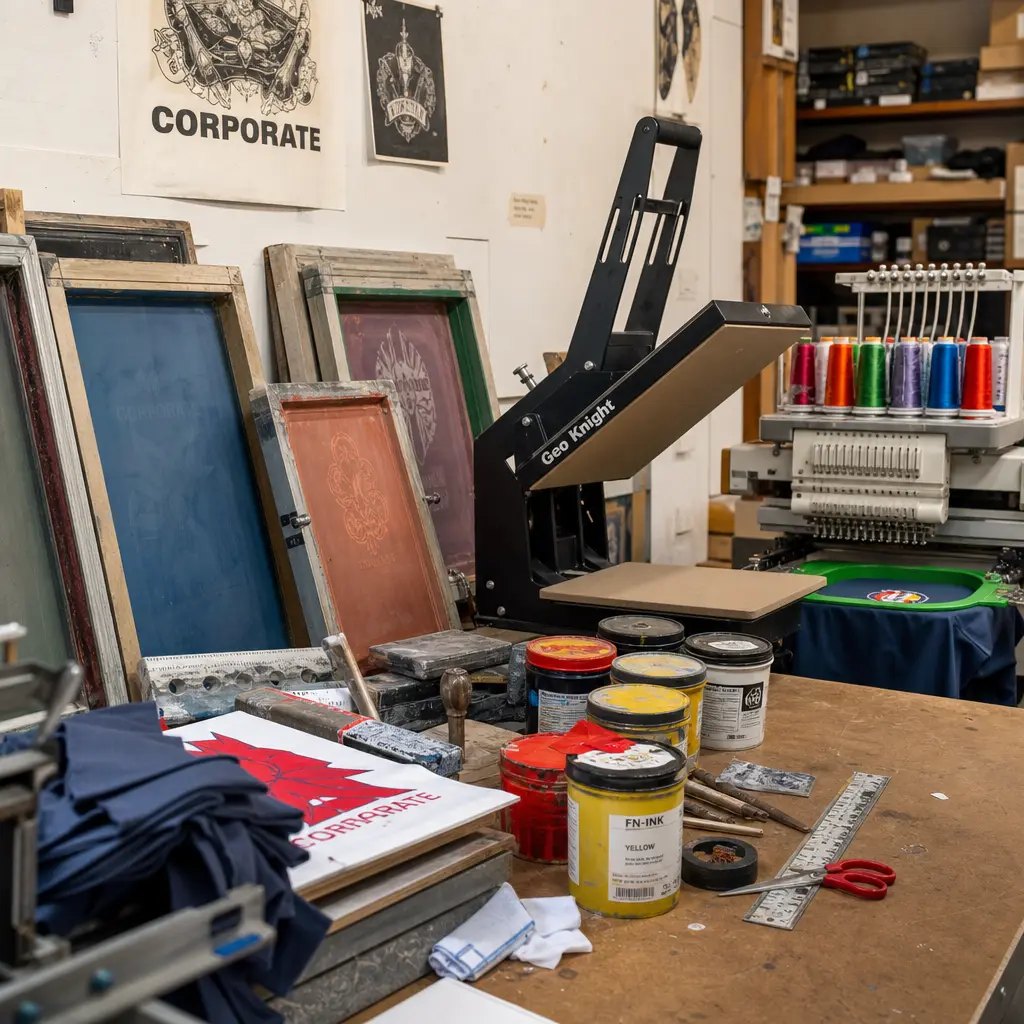
Screen printing is usually the most stable choice for bakery logos, one-color slogans, simple illustrations, or local market artwork. It is cost-efficient when the order quantity is high enough to spread screen setup over many pieces. On canvas, however, small serif type, thin lines, and pale ink can lose clarity because the fabric surface is not as smooth as paper. Buyers should send vector files and request a print strike-off or pre-production sample on the actual fabric.
Heat transfer, digital transfer, or embroidery may be suitable when the artwork has many colors or the order is small. These routes can reduce screen setup complexity but introduce other risks. Heat transfers need correct temperature, pressure, and placement away from thick seams. Embroidery adds texture and a premium look, but it can pucker lighter canvas and slow production if the stitch count is high. For lead time planning, every print method must include artwork approval, production setup, curing or finishing time, and inspection of adhesion or thread quality.
- Screen print: best for solid logos, repeat orders, and lower unit cost at scale.
- Heat transfer: useful for short runs or detailed color artwork but needs adhesion testing.
- Embroidery: premium look but slower, more costly, and sensitive to fabric weight.
- Woven side label: good for subtle branding and easier repeat placement control.
MOQ Logic and Quote Comparisons
MOQ is not only a sales policy. It is driven by fabric roll yield, cutting efficiency, print setup, sewing line changeover, packing labor, and export carton planning. A supplier may accept 300 pieces, but the unit price can rise sharply if the print screen, fabric purchase, and sample work are spread across a small order. For importers and distributors serving several bakery accounts, combining the same base carrier with different printed logos may help, but each print version still creates setup and QC work.
When comparing quotes, insist that each supplier states MOQ per style, per size, per fabric color, and per artwork. A quote for 1,000 pieces of one natural canvas single-bottle carrier is not equal to a quote for 1,000 pieces split across four bakery logos, two bottle sizes, and three print colors. Buyers should also separate tooling or setup charges from the unit price so landed-cost calculations are clear.
- Quote one base style first, then price optional versions separately.
- List screen charges, sample charges, and lab dip charges outside the unit price.
- Compare cost at practical tiers such as 500, 1,000, 3,000, and 5,000 pieces.
- Avoid approving a low MOQ unless the supplier confirms the same QC and lead time.
A Practical Lead Time Map for Buyers
A realistic schedule should work backward from the in-store or bakery launch date, not forward from the purchase order date. The buyer needs time for internal artwork sign-off, sample courier transit, physical loading review, revision, bulk production, final inspection, export packing, freight, customs, and distribution to retail or bakery locations. For seasonal bakery gifting, one late decision can consume the entire buffer.
As a planning example, stock natural canvas with one-color screen print may move faster than custom dyed fabric with multiple artwork versions. A counter sample may take several working days after artwork and size confirmation. A revised sample adds more time. Bulk production can only be scheduled firmly once the pre-production sample and materials are approved. The safest commercial schedule includes approval deadlines in the PO and treats missed approvals as schedule changes, not factory delay.
- RFQ clarification and quote comparison: allow several working days for technical back-and-forth.
- Counter sample: plan time for making, curing print, internal review, and courier transit.
- Pre-production sample: approve only after final fabric, artwork, and construction are fixed.
- Bulk production: schedule after material booking, not before specifications are frozen.
- Final inspection and packing: reserve time for rework if loaded tests or print checks fail.
Sample Approval Must Test Use, Not Just Appearance
A good-looking sample can still fail in the bakery retail environment. The sample review should include actual bottle loading, handle comfort, divider stability, base flatness, print location, and carton packing. If the buyer approves only the front view photo, the factory may reproduce a product that photographs well but performs poorly when loaded with glass. For wine carriers, physical handling is more important than layout approval alone.
Set measurable acceptance criteria before the sample is made. For example, the bag should stand upright when loaded with the target bottle, the handle seam should show no tearing after a loaded hang test, and the print should remain clean after rubbing once fully cured. If the carrier has a divider, both bottles should stay separated during normal carrying movement. These criteria help the factory understand what matters and reduce subjective disputes later.
- Load the sample with the exact bottle type and filled weight.
- Photograph front, back, side, bottom, divider, handle seam, and packed carton method.
- Measure finished size against the approved spec sheet, not against a rough drawing.
- Approve color under consistent lighting, especially for natural canvas and Pantone ink.
- Record every approved change in a final sample comments sheet.
Packing Decisions That Change Cost and Damage Risk
Canvas wine carriers are often shipped flat to reduce freight cube, but the handle, divider, and printed panel still need protection. Over-compressed cartons can create permanent creases, especially on heavier canvas or thick ink areas. If the order will move by sea freight, moisture control becomes important because cotton canvas can absorb humidity. Desiccant, clean poly liners, and carton strength should be considered when the shipment route is long or seasonal humidity is high.
Individual polybags keep products clean and simplify retail distribution, but they add cost, packing labor, and packaging compliance questions. Some bakery brands prefer plastic-free packaging, so the buyer must state this early. Bundle packing by 25 or 50 pieces can be efficient for wholesale receiving, but the carton mark must clearly show style, color, print version, quantity, gross weight, and purchase order number. Packing is not a final warehouse detail; it affects quote, production flow, and receiving accuracy.
- Flat pack when freight cost is the priority and creasing risk is acceptable.
- Use bundle packing when distributors need fast count checks and lower packaging waste.
- Use individual polybags only when cleanliness, retail handling, or barcode application requires it.
- Specify export carton strength, carton dimensions, pieces per carton, and moisture protection.
Cost Drivers Beyond the FOB Unit Price
The cheapest FOB quote is not always the lowest landed cost. Heavy canvas increases fabric cost and carton weight. Complex printing increases setup, reject risk, and inspection time. Multiple SKUs reduce production efficiency. Individual packing adds labor and carton volume. If a supplier quotes a very low price without listing these assumptions, the buyer may later face revised pricing or quality compromises.
A cleaner landed-cost comparison includes unit price, setup charges, sample fees, testing, inspection, inland transport, export packing, freight cube, duty classification support, and expected reject allowance. For bakery buyers selling gift bundles, the usable approved piece matters more than the cheapest produced piece. If 3% of carriers have poor print placement or weak handle seams, the shortage can affect finished gift set availability.
- Fabric: weight, color, shrinkage treatment, and stock availability.
- Labor: divider sewing, base reinforcement, handle reinforcement, and trimming.
- Printing: color count, screen setup, curing time, and artwork complexity.
- Packing: individual bagging, carton quality, desiccant, labels, and pallet requirements.
- Logistics: carton cube, gross weight, shipping mode, and consolidation plan.
Supplier Evidence and Factory Readiness
A capable supplier should be able to show similar canvas bottle carriers, explain fabric options, give realistic tolerances, and provide photos of seam construction. For procurement teams, the strongest evidence is not a polished catalog image. It is a clear sample record, material specification, production lead time breakdown, packing data, and QC method. A factory that can discuss divider construction and handle reinforcement is more useful than one that only repeats that any design is possible.
Before placing bulk orders, request factory photos of relevant sewing operations, print area, fabric stock, and packed cartons from similar items. This does not replace inspection, but it reveals whether the supplier understands the product category. For importers, it also helps identify whether the factory is actually producing the bags or trading through another workshop. Trading is not automatically bad, but the buyer needs transparent communication when schedule and QC responsibility matter.
- Request recent sample photos showing bottle carriers, not only general tote bags.
- Require a written spec sheet with fabric GSM, construction, print, and packing details.
- Look for clear lead time stages instead of a single vague delivery promise.
- Confirm who controls sampling, bulk sewing, printing, packing, and final inspection.
Specification comparison for buyers
| Spec decision | Recommended option | When it fits | Buyer risk to check |
|---|---|---|---|
| Fabric body weight | 10 oz to 12 oz cotton canvas, about 280-340 GSM, with shrinkage tested before cutting | Most bakery wine, olive oil, syrup, or gift bottle programs that need a structured retail look without excessive freight weight | Very light 6 oz canvas may collapse around glass bottles; very heavy 16 oz canvas can raise sewing cost, carton weight, and needle breakage risk |
| Bottle capacity | Single-bottle or two-bottle carrier with internal stitched divider and reinforced base panel | Bakery gift sets where wine is paired with bread, jam, pastry boxes, or seasonal hampers | Divider height and base width must match the actual bottle diameter; generic wine-bag sizing can fail with champagne, olive oil, or tall sauce bottles |
| Handle construction | Self-fabric canvas handles with box-stitch reinforcement and minimum 2.5 cm finished width | Retail buyers wanting a reusable carrier that feels stronger than a paper wine bag | Rope or webbing handles may change the look and price; weak handle anchoring is a common failure point in loaded drop tests |
| Print method | One or two color screen print for solid bakery branding; heat transfer only for complex artwork or short runs | Lead time-sensitive orders with repeatable logos, kraft-style packaging, or natural canvas aesthetics | Dense ink on coarse canvas can fill small text; heat transfer may crack if applied over seams or rough fabric |
| Color and dye route | Natural unbleached canvas for fastest production; dyed canvas only when color consistency is critical to the retail range | Launches tied to holiday baskets, tasting events, or bakery club subscriptions | Custom dyed fabric adds lab dip approval, minimum dye lot, and shade tolerance issues that can add 7-15 days before cutting |
| MOQ logic | Factory MOQ based on fabric roll efficiency, print setup, and carton packing, usually easier above 500-1,000 pieces per style | Importers consolidating bakery, wine shop, and deli customers under one branded spec | Splitting one order across many sizes, colors, and print versions can push each SKU below efficient production quantity |
| Packing format | Flat packed, bundled by 25 or 50 pieces, with desiccant and export carton sized to avoid handle crushing | Wholesale distribution where buyers need clean receiving, easy count checks, and lower freight cube | Individual polybags improve cleanliness but increase cost and packaging compliance questions; over-compressed cartons can crease printed panels |
| Lead time control | Approve fabric, artwork, pre-production sample, carton mark, and packing method before bulk material booking | Retail buyers working backward from bakery launch dates, wine-pairing promotions, or seasonal gift deadlines | Bulk production dates quoted before sample approval are estimates; delays often come from artwork revision, fabric shrinkage, or carton data changes |
Buyer checklist before sampling
- Define the exact bottle or product set: standard 750 ml wine, champagne, olive oil, syrup, sauce, or mixed bakery gift contents.
- Specify finished bag dimensions, not only bottle capacity; include width, depth, height, divider height, handle drop, and base reinforcement.
- Choose fabric weight in ounces or GSM and state whether natural, bleached, dyed, washed, or laminated canvas is required.
- Send vector artwork with Pantone references and minimum printable text size; avoid assuming a paper-bag logo will print cleanly on coarse canvas.
- State whether quote should include screen setup, sample fee, lab dip, pre-production sample, inner packing, export carton, and third-party inspection support.
- Require a loaded sample test using the real bottle weight plus a safety margin before bulk production approval.
- Confirm packing method, carton dimensions, gross weight, barcode or carton mark requirements, and whether individual polybags are acceptable.
- Build approval dates into the purchase order: artwork approval, material approval, pre-production sample approval, bulk start, inline check, final inspection, and ship date.
- Compare quotes by landed cost per usable approved piece, not only FOB unit price.
- Reserve extra calendar time for holiday programs, dyed fabric, multiple print colors, and split shipments.
Factory quote questions to send
- What exact canvas weight are you quoting in oz and GSM, and is it stock fabric or made-to-order fabric?
- What is the shrinkage rate after the fabric treatment you will use, and how will you control finished size tolerance?
- What finished dimensions are included in your quote, including gusset, divider, base panel, handle length, and handle width?
- Which print method are you quoting, how many colors are included, and what artwork limitations apply on this fabric surface?
- Is the divider sewn into the side seam, bottom seam, or added as a separate insert, and what bottle diameter has it been tested with?
- What MOQ applies per style, per color, per print design, and per shipment, and what surcharge applies below the efficient quantity?
- How many days are needed for counter sample, revised sample, pre-production sample, bulk production, final inspection, and export packing?
- Are screen charges, sample charges, lab dip charges, testing charges, and carton charges included or listed separately?
- What loading test, seam strength check, print adhesion check, and color tolerance will you accept as factory QC criteria?
- What are the packed carton dimensions, pieces per carton, estimated gross weight, and recommended container loading assumptions?
Quality-control points to confirm
- Finished size tolerance should normally stay within about plus or minus 0.5 cm for key bottle-fit dimensions unless a wider tolerance is agreed.
- Loaded handle test should use the intended bottle weight plus a safety margin; handle seams should not open, elongate sharply, or distort the printed panel.
- Divider alignment should keep bottles separated under movement; the divider must not twist, collapse, or expose raw edges after loading.
- Print adhesion should be checked by rub test after full curing, especially on natural canvas with hairiness or uneven yarns.
- Stitch density should be consistent at stress points, with reinforced bar tack, box stitch, or backstitch where the handle joins the body.
- Base panel and side seams should sit flat enough for retail presentation; excessive puckering can indicate wrong needle, thread tension, or fabric shrinkage.
- Cartons should protect against moisture, crushing, and print transfer; desiccant is useful for long sea freight routes.
- Final inspection should include AQL agreement, carton count verification, label placement, barcode readability if used, and photo record of packed goods.