Start With the Bottle, Not the Artwork
Many custom canvas wine carrier problems begin before the first sample is sewn. The buyer sends a logo, a rough quantity, and a target price, but not the bottle. Then the supplier quotes around a generic 750 ml assumption. That may work for a standard Bordeaux bottle. It may not work for a wider Burgundy bottle, a tall sparkling wine bottle, a heavy premium spirits bottle, or an olive oil bottle used in a gift set.
Treat the bottle as a physical component, not a vague category. The factory needs height, maximum body diameter, base diameter, shoulder profile, neck and closure shape, and filled weight. If the carrier must fit several bottle families, give the acceptable range. Do not ask the supplier to “make it standard” unless you are also willing to accept a standard limitation.
The use case matters just as much as the bottle shape. An event giveaway may need an economical bag that packs fast and carries one bottle safely for a short period. A paid retail accessory needs cleaner stitching, straighter branding, better base structure, and a more substantial hand feel. A wine club or corporate gifting program may need fast bottle insertion, less abrasion, reliable carton presentation, and repeatable packing. Put the channel in the RFQ so the supplier does not quote a low-spec promotional carrier when you expect a reusable retail product.
- Send bottle height, maximum body diameter, base diameter, shoulder type, closure profile, and filled weight with the RFQ.
- State whether the carrier must fit Bordeaux, Burgundy, Champagne/sparkling, spirits, olive oil, or mixed bottle formats.
- Define the channel: retail sale, gift set, wine club fulfillment, apparel-brand merchandise, event giveaway, or secondary packaging.
- List fit failures clearly: bottle catches at the opening, bag leans when filled, base collapses, handles feel weak, or logo sits visibly crooked.
Translate Canvas Weight Into Finished GSM
Canvas is often sold in ounces, but procurement teams should also specify finished GSM. The ounce description may be a nominal fabric reference. Actual finished weight can shift after dyeing, washing, coating, calendering, or printing. If two suppliers both quote “12 oz canvas,” they may not be quoting the same finished material.
For many one-bottle reusable carriers, 12 oz finished canvas, approximately 400 gsm, is a practical starting point. It gives the carrier a credible feel without making seams unnecessarily bulky. It is also easier to fold, stitch, print, and carton-pack than heavier fabric. For premium gifting, heavier bottles, or a sharper upright shelf shape, 14 oz finished canvas, approximately 475 gsm, can be more appropriate.
Heavier canvas is not automatically better. It can create thick folded hems, skipped stitches, needle breakage, bulky corners, and larger cartons if the sewing process is not adjusted. If a quote for 14 oz canvas looks unusually cheap, ask whether the weight is nominal or finished, what tolerance applies by lot, and whether reinforced sewing and packing are included.
Eco apparel brands also need clean material language. Natural cotton, organic cotton, recycled cotton blend, undyed canvas, dyed canvas, washed canvas, and low-impact printing are not interchangeable claims. If the claim will appear in customer-facing copy or compliance paperwork, request valid scope certificates or transaction documents where applicable. A logo in a sales presentation is not enough.
- Specify nominal ounces and finished GSM; use a written lot tolerance such as +/-5% unless another measurable standard is agreed.
- Use about 400 gsm finished canvas for many standard reusable one-bottle carriers; consider about 475 gsm for premium structure.
- Ask whether the canvas is natural, dyed, washed, coated, recycled blend, organic, or conventional cotton.
- Require certification documents where sustainability claims are contractual or customer-facing.
- Review any fabric substitution for price, hand feel, durability, print result, and visual consistency before approval.
Design the Construction Around Load Points
A wine carrier is compact, but the load is concentrated. The bottle pushes into the base while the user lifts from two small handle anchor zones. That makes the predictable failure points easy to identify: handle attachment, top hem, side seam, bottom seam, gusset corners, and divider stitching.
Do not leave handle reinforcement to assumption. Specify bartacks, box stitching, box-X stitching, folded strap ends, an internal patch, or the factory’s proposed method with photos and measurements. The right option depends on the handle material and body construction, but the purchase spec should name the method, stitch color, stitch density target, anchor position, and seam allowance. On a small carrier, even a few millimeters of handle drift can make the product look uneven.
Base structure affects both function and perceived value. A soft single-layer bottom may be acceptable for a very simple giveaway. Retail, gift, and wine club carriers often benefit from a removable or sewn-in bottom board. The board should fit cleanly. It should not curl, slide, expose a sharp edge, or rub a printed panel during transit.
Two-bottle carriers add another failure mode. The divider must keep bottles apart without fighting insertion. If it is too loose or too low, bottles knock together. If it is too tight, the body twists and the customer has to force the second bottle into place. Test the divider with filled bottles, not empty props.
- Define body height, width, gusset, top opening, bottom panel, handle width, handle drop, and divider dimensions in millimeters.
- Specify bartack, box stitch, box-X, or another handle reinforcement method at each anchor.
- Confirm seam allowance and stitch density targets before sampling.
- Use a bottom board when shelf shape, gift presentation, or filled stability matters.
- For two-bottle styles, test insertion, separation, and carrying with two filled bottles or equivalent weights.
Choose Branding That Works on Textured Canvas
Canvas has texture. That is part of its appeal, but it also changes how logos behave. Fine type can fill in. Thin lines can break. Light ink may lose opacity on darker fabric. Small registration gaps can look rough once the print crosses slubs or uneven yarns.
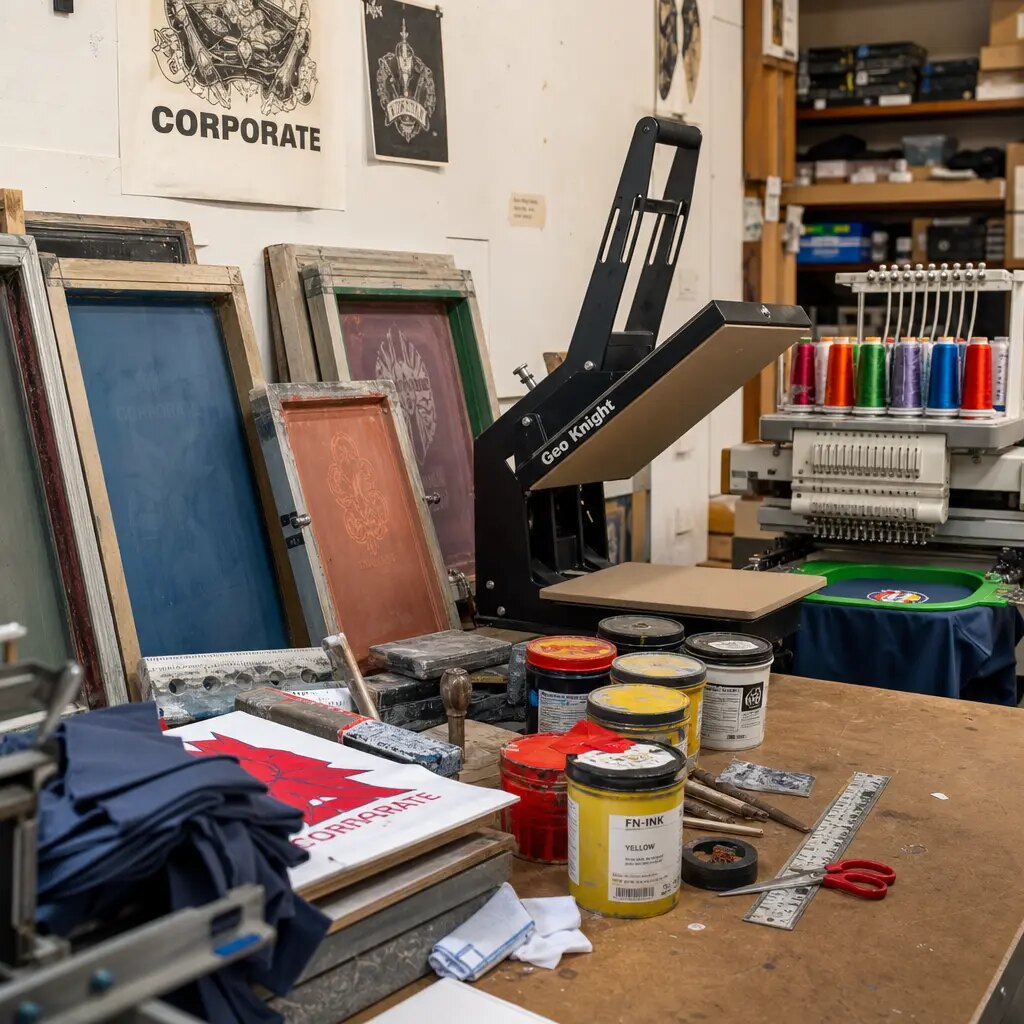
Water-based screen print is a common choice for eco-positioned canvas wine carriers, especially for simple one- or two-color artwork. It can keep a softer hand feel and suit natural canvas aesthetics. Still, a digital mockup is not proof. Request a strike-off on final material so you can judge color, opacity, edge sharpness, registration, curing, and how the ink sits on the weave.
Labels and patches can be better for small marks, premium variants, or programs where several artwork versions share one base carrier. A woven side label, cotton label, or sewn patch reduces some print complexity, but it adds sewing controls. Define the label size, fold type, stitch line, edge distance, and placement tolerance. On a wine carrier, a label that is 5 mm too low can look obviously wrong.
Embroidery can work on heavier canvas, but dense stitching may pucker lighter panels or distort a narrow body. Heat transfers can provide sharp detail, but they need adhesion, cracking, hand-feel, and rub checks. Whatever method you choose, approve a physical sample before bulk production and include rub testing in the inspection plan.
- Use water-based screen print for simple logos, but test fine text and thin lines on final canvas.
- Request strike-offs for color, opacity, edge sharpness, registration, and curing approval.
- Use woven or cotton labels for small logos, premium variants, or shared body programs.
- Set logo tolerance, commonly +/-3 mm to +/-5 mm for placement on small carriers if the factory can support it.
- Check dry rub, wet rub when relevant, tape-pull, cracking, and print transfer before approving shipment.
Compare Supplier Routes Before You Compare Price
A direct cut-and-sew factory, trading company, print decorator, and stock-bag supplier can all quote a canvas wine carrier. The quotes may look similar on a spreadsheet. The control behind them is not the same.
A direct factory is often better when you need custom dimensions, reinforced construction, in-line inspection, and repeat production against a tech pack. A stock decorator may be faster for a simple logo on an existing bag, but the stock dimensions, fabric weight, shade, and reinforcement may not match your long-term standard. Neither route is automatically right or wrong. The issue is whether the route matches the product risk.
Ask where each process happens: fabric sourcing, cutting, printing, sewing, label application, insert-board cutting, trimming, inspection, and packing. Outsourcing is not a deal-breaker, but hidden handoffs create blind spots. Print placement can drift when a decorator uses a different jig than the sample room. Bulk shade can shift when canvas comes from a new lot. Carton presentation can change if packing is handled by a separate team without the approved sample.
MOQ also needs to be broken apart. A supplier may say 500 pieces, but that may mean 500 per body color, per print design, per print color count, per label, per closure, per insert board, or per packing method. For launch programs, keeping one natural canvas body and varying only a label or one-color print can be much easier than managing several dyed bodies and multiple artwork setups.
- Ask which processes are in-house and which are outsourced.
- Clarify whether the supplier is making a custom carrier or decorating a stock style.
- Break MOQ down by fabric color, artwork, print colors, label type, trim, closure, insert board, and packing.
- Request repeat-order terms under the same specification, not a downgraded material.
- Do not compare unit prices until the construction, branding, packing, and inspection scope match.
Turn the Tech Pack Into Inspection Rules
A good tech pack for custom canvas wine carriers does not need to be long. It does need to be measurable. Include a dimension table with body height, body width, gusset depth, base width, top opening, handle width, handle drop, handle anchor position, divider position, bottom board size, and logo coordinates.
Define how measurements are taken. Is the carrier measured flat, filled, relaxed, or with the insert board installed? Is the top opening measured edge to edge or at the seam line? Are logo coordinates measured from the top edge, centerline, side seam, or bottom edge? If the buyer, factory, and inspector use different measurement methods, the same bag can appear to pass and fail at the same time.
For small sewn accessories, visual shifts are easy to notice. Practical buyer starting points are often +/-5 mm for body width, height, and gusset; +/-8 mm for handle drop; and +/-3 mm to +/-5 mm for logo or label placement. These are not universal standards. Fabric thickness, sewing method, construction complexity, and inspection level all affect what is realistic. Agree the tolerance before bulk production, not after the goods are packed.
Write defect classifications in advance as well. Critical defects may include sharp hardware, mold, unsafe contamination, or handle failure under load. Major defects may include wrong bottle fit, seam opening, fabric weight outside tolerance, severe shade mismatch, strong odor, major print misplacement, or incorrect packing quantity. Minor defects may include small thread tails, slight slubs within the agreed standard, or minor washable marks.
- Create a dimension table with measurement points and tolerances in millimeters.
- Agree tolerances before bulk; do not invent limits after goods are finished.
- Define critical, major, and minor defects in the purchase order or inspection brief.
- Use the golden sample plus the tolerance sheet; neither should replace the other.
- Record whether measurements are taken flat, filled, relaxed, or with insert board installed.
Approve Samples as Production Evidence
A showroom sample is useful for discussion. A rough prototype helps the buyer see size and shape. Neither should authorize bulk production. The sample that matters is the pre-production sample made with final canvas weight, final fabric color, final print or label, final thread, final reinforcement, final closure, final divider or insert board, and final packing method.
Review the sample like a product, not a photo prop. Insert the actual bottle. Lift the carrier repeatedly. Place it on a flat surface and see whether it stands as intended. Check whether the top opening twists. Fill and empty it several times to learn whether the divider, lining, or bottom board slows packout. If the carrier will be sold or gifted alongside apparel and lifestyle products, view it under realistic retail lighting as well as on the factory table.
If any component is substituted during sampling, record it. A substitute print, lighter fabric, different thread, missing bottom board, or temporary label may be fine for early discussion, but it should not be treated as bulk approval. If the substitution affects fit, strength, appearance, packing, or compliance, request a revised sample or written engineering sign-off.
After approval, create a golden sample record. Keep a sealed physical sample when possible. Add dated photos of the front, back, side seams, handles, inside, bottom, logo close-up, label close-up, filled-bottle view, and packed format. Include measured dimensions and the approved tolerances. This turns final inspection into an evidence-based decision instead of a debate about memory.
- Approve only a pre-production sample made with final materials, final branding, final trims, and final packing.
- Document every substitution and require a revised sample if the substitution affects fit, strength, appearance, or compliance.
- Review the sample empty, filled, carried, flat packed, and gift-ready if applicable.
- Keep a sealed golden sample plus dated photos and measurements.
- Use the golden sample during in-line and final inspection, not only at product development stage.
Build the QC Checklist Around Real Failures
A strong custom canvas wine carriers quality inspection checklist for eco apparel brands starts with function. The bottle should insert without force, sit correctly, and not wobble beyond the agreed design. If the design is meant to stand upright, test it on a flat surface with the filled bottle inside. The handles should feel balanced. The top opening should not twist. The base should not collapse around the bottle.
Next, inspect strength. Focus on handle anchors, bartacks, side seams, gusset corners, bottom seams, and divider stitching. Look for skipped stitches, broken stitches, loose thread tails, shallow seam allowance, weak backtacking, needle cuts, puckering, and uneven stitch tension. A clean-looking handle can still fail if the reinforcement is weak, so include a loaded lift test using the actual filled bottle or equivalent test weight.
Then move to branding and surface quality. Measure the logo from fixed reference points instead of approving by eye. Check color, opacity, registration, edge sharpness, curing, smearing, cracking, and color transfer. On natural canvas, separate acceptable slubs from unacceptable stains, oil marks, mold, repair marks, or contamination.
Odor deserves its own check. Canvas and cartons can absorb smoke, damp, mildew, solvent, or warehouse smells. A carrier can pass dimensions and still create customer complaints if it smells wrong. Finally, inspect cartons from different positions in the lot, not only the top layer. Look for compression, abrasion, moisture, wrong quantity, wrong carton marks, and packing method changes.
- Test bottle fit first, then structure, then sewing, then branding, then packing.
- Use the actual bottle or equivalent filled weight for lift and stability checks.
- Measure logo and label placement; do not approve by eye alone.
- Treat handle failure, seam opening, wrong fit, mold, strong odor, and severe print transfer as major or critical issues.
- Open cartons from different lot positions to catch compression, moisture, and packing variation.
Specify Packing for Shape, Moisture, and Lower-Plastic Goals
Packing is not an afterthought. It can protect the shape, reduce freight waste, or ruin the product before it reaches the warehouse. Flat packing is often efficient for canvas wine carriers and can reduce carton cube. But flat packing still needs rules. A loose bottom board can rub a printed panel. A divider folded the wrong way can crease the body. A carton packed too tightly can deform top edges.
Many eco apparel brands want reduced-plastic or plastic-free packing. That can be a good direction, but protection still matters. Canvas absorbs humidity and odor more readily than many synthetic materials. Paper bands, kraft sleeves, tissue, carton liners, and bulk inner packs can reduce plastic use, but the route, storage time, and warehouse conditions should be considered. For humid export routes, discuss desiccant, moisture-resistant liners, or carton handling instructions rather than simply removing every protective layer.
The packing spec should list units per inner pack, units per export carton, flat or assembled format, carton dimensions, gross and net weight, carton strength, carton marks, barcode placement, country-of-origin marking, and pallet requirements where relevant. Ask for packed-carton photos before shipment. During final inspection, verify the packing method and carton quantity, not only the sewn carrier.
A very low unit price can disappear quickly if cartons are oversized, underfilled, crushed, too heavy for handling, or damaged in transit. Packing should be priced, approved, and inspected as part of the product specification.
- Use flat pack when freight efficiency and shape protection are priorities.
- Define how bottom boards, dividers, labels, and printed panels are positioned inside the pack.
- For reduced-plastic programs, add moisture and abrasion controls instead of simply removing polybags.
- Specify carton quantity, carton size, gross weight, carton marks, barcodes, and pallet instructions.
- Inspect cartons from top, middle, and bottom stack positions before shipment release.
Control Lead Time, Change Rules, and Landed Cost
Lead time should be broken into milestones. A custom canvas wine carrier program can include artwork confirmation, material sourcing, sample making, sample review, strike-off approval, cutting, printing, sewing, trimming, packing, final inspection, and export preparation. If a supplier quotes 30 days, ask when those 30 days begin. Deposit receipt? Artwork approval? Material arrival? Golden sample sign-off? The difference can affect your launch calendar.
Late changes are expensive because they rarely affect only one step. Moving a logo can require a new print jig. Changing handle drop can affect cutting and sewing instructions. Adding a snap closure can change reinforcement, sampling, and inspection. Revising carton quantity can change compression and freight assumptions. Use freeze points: artwork freeze, construction freeze, material freeze, and packing freeze.
If a change affects fit, strength, branding, compliance, or packing, require a revised sample or written engineering approval before bulk continues. This protects both sides. The supplier has clear instructions, and the buyer has evidence if the final lot no longer matches the approved product.
Compare quotes by landed, saleable cost rather than factory unit price alone. Separate fabric, cutting, sewing, branding, trims, insert boards, dividers, packing, cartons, setup charges, inspection, and freight assumptions. Use the same Incoterm and destination. A cheaper carrier is not cheaper if it arrives with print transfer, damp odor, crushed bases, or handle defects that require sorting and rework.
- Request milestone dates for artwork, sample, strike-off, bulk start, packing, inspection, and ship-ready status.
- Confirm which event starts the quoted production lead time.
- Freeze artwork, construction, material, and packing before bulk cutting and print setup.
- Compare suppliers using the same Incoterm, destination, packing, and inspection assumptions.
- Evaluate landed cost in saleable condition, including freight, duties, inspection, damage risk, and rework risk.
Specification comparison for buyers
| Spec decision | Recommended option | When it fits | Buyer risk to check |
|---|---|---|---|
| Bottle fit basis | Actual bottle dimensions plus filled-bottle fit test | Any custom carrier for wine, spirits, olive oil, or gifting programs | A generic 750 ml assumption can fail with Burgundy, Champagne, sparkling wine, spirits, or oversized gift bottles |
| Fit allowance | Allow practical clearance around the widest bottle diameter and shoulder, confirmed by sample test | Reusable one-bottle and two-bottle carriers | Too tight slows packout and tears seams; too loose makes the filled carrier lean or feel low quality |
| Fabric weight | 12 oz finished canvas, approximately 400 gsm, with written tolerance such as +/-5% by lot | Mainstream one-bottle retail carriers balancing structure, cost, and sewing efficiency | Nominal ounce weight can differ from finished GSM after dyeing, washing, coating, or printing |
| Premium fabric option | 14 oz finished canvas, approximately 475 gsm, with adjusted sewing construction | Premium gifting, heavier bottles, sharper upright shelf shape | Thicker canvas creates bulky hems, skipped stitches, and higher carton cube if the factory does not adjust process |
| Dimension tolerances | Typical target: +/-5 mm on body width/height/gusset, +/-8 mm on handle drop, +/-3 mm to +/-5 mm on logo placement, agreed before bulk | Small carrier programs where minor shifts are visible | Unwritten tolerances create disputes at final inspection |
| Body structure | Single-layer canvas body with reinforced top hem, secure side seams, and optional bottom board | Most reusable wine carrier programs for eco apparel and lifestyle brands | Without base support the bag may collapse, twist, lean, or print-rub during transit |
| Handle reinforcement | Bartack, box stitch, or box-X reinforcement at each handle anchor | Any carrier expected to hold a filled bottle repeatedly | Weak anchors may pass visual inspection but fail under repeated lift or static load testing |
| Two-bottle construction | Fixed divider with reinforced attachment and bottle-separation test | Gift sets, wine club kits, retail bundles | Loose divider allows bottles to knock together; tight divider blocks insertion or distorts the body |
| Print method | Water-based screen print for simple one- or two-color artwork | Eco-brand marks, natural canvas aesthetics, repeat programs | Fine text can fill in on textured canvas; require strike-off, color approval, and rub testing |
Buyer checklist before sampling
- Confirm the exact bottle before RFQ: height, maximum body diameter, base diameter, shoulder profile, cap or cork height, filled weight, and whether the program must fit Bordeaux, Burgundy, Champagne/sparkling, spirits, olive oil, or mixed bottle shapes.
- Define the commercial use case: retail gift bag, wine club fulfillment, apparel-brand merchandise, event giveaway, premium reusable accessory, or secondary packaging for a gift set.
- State the finished carrier dimensions in millimeters and define tolerances before sampling: body height, body width, gusset depth, top opening, bottom panel, divider position, handle width, and handle drop.
- Specify finished canvas weight in GSM and nominal ounces, with a lot tolerance such as +/-5% unless the supplier proposes a different measurable standard.
- Confirm fiber and finish expectations: conventional cotton, organic cotton, recycled cotton blend, undyed natural canvas, dyed canvas, washed or unwashed hand feel, coating status, and odor limit.
- State whether certifications are required, such as GOTS, GRS, OEKO-TEX, or FSC for paper packing, and require valid scope certificates or transaction documents where applicable instead of logo claims only.
- Define construction: single-bottle or two-bottle format, side gusset, flat base, bottom board, divider, lining, edge binding, top hem, handle style, seam allowance, and reinforcement method.
- Choose the branding method before pricing: water-based screen print, pigment print, woven label, cotton label, embroidery, patch, heat transfer, or no external logo.
- Give exact logo placement in millimeters from top edge, side seam, centerline, or bottom edge, and state acceptable placement and angle tolerance.
- Define stitch requirements at stress points: handle anchor reinforcement, stitch density target, thread color, backtack/bartack location, seam allowance, and no untrimmed thread ends on visible panels.
Factory quote questions to send
- What exact bottle size and filled weight did you base the quote on, and can you test the sample with our actual bottle or a dimension-matching dummy?
- What finished GSM after dyeing, washing, printing, or coating are you quoting, and what tolerance do you allow by roll and by production lot?
- What canvas construction are you quoting: plain weave or twill if available, yarn count if known, natural or dyed canvas, washed or unwashed, coated or uncoated?
- Is the quoted supplier a direct cut-and-sew factory, trading company, print decorator, or stock-bag customizer, and which processes are done in-house?
- What MOQ applies separately for body color, fabric type, print design, print color count, woven label, cotton label, closure, bottom board, divider, and packing method?
- Which branding method is included in the unit price, how many print colors are included, and are screen charges, label tooling, strike-offs, or artwork separation charges separate?
- Can you provide a pre-production sample using final canvas, final print, final thread, final label, final closure, final insert board, and final packing, and what is the sample timeline?
- What written tolerances do you apply for body height, body width, gusset, base, top opening, handle width, handle drop, divider position, bottom board size, and logo placement?
- What reinforcement is included at the handles: bartack, box stitch, box-X, extra canvas patch, folded strap end, or internal seam reinforcement?
- What seam allowance and stitch density are standard for this construction, and will these be recorded on the tech pack or production worksheet?
Quality-control points to confirm
- Verify the carrier with the actual bottle format, including full height, maximum body diameter, shoulder width, base diameter, cap/cork profile, and filled weight; do not rely on a generic 750 ml placeholder unless it matches the program.
- Measure body height, body width, gusset, bottom panel, top opening, handle width, handle drop, divider position, and bottom board size against the approved golden sample and tolerance sheet.
- Apply agreed tolerances consistently; common buyer targets for small canvas carriers are +/-5 mm for main body dimensions, +/-8 mm for handle drop, and +/-3 mm to +/-5 mm for logo or label placement, but the final limits must be confirmed with the factory before bulk.
- Check finished fabric GSM by lot where practical, and review shade, weave consistency, slubs, thick yarns, weak yarns, stains, oil marks, mold marks, needle cuts, and visible contamination.
- Inspect cutting accuracy: side panels should be symmetrical, the top edge should sit level, gussets should not twist, and the filled bag should stand as intended on a flat surface.
- Inspect stitch density, seam allowance, seam straightness, skipped stitches, broken stitches, loose thread ends, backstitching, bartacks, and handle anchor security.
- Perform a filled-bottle lift test using the actual bottle or equivalent test weight; lift repeatedly, hold under load, and check for seam opening, handle stretch, thread breakage, and distortion at stress points.
- Classify handle detachment, seam opening under load, wrong bottle fit, sharp hardware, mold, strong chemical odor, and major print transfer as serious defects requiring containment or rework.
- Verify print or label placement against measured coordinates, not by eye; check color, opacity, edge sharpness, registration, ink penetration, curing, and alignment to seams.
- Rub test the print or transfer area before shipment to catch smearing, flaking, cracking, color transfer, or weak adhesion on textured canvas.