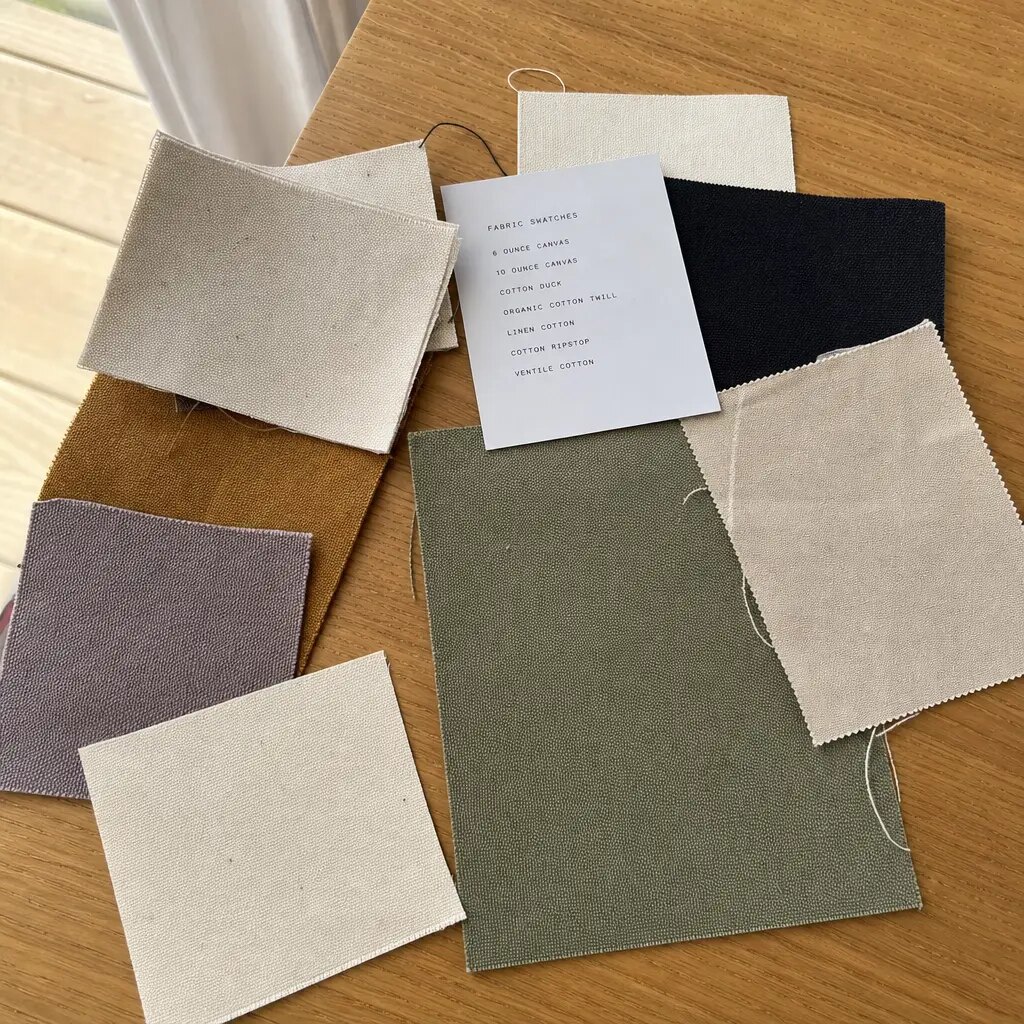
Start with the hotel retail job, then choose the material
A custom canvas wine carrier for hotel retail has a different job from a supermarket bottle sleeve or a giveaway tote. It may sit beside local wine, gourmet food, or room amenities in a boutique setting. It may be carried through elevators, corridors, valet areas, taxis, and airport transfers. It also has to look like something a guest is happy to pay for or receive as part of a thoughtful package. The material choice affects that entire journey: shelf presence, logo clarity, handle comfort, divider strength, carton volume, defect rate, and landed cost.
A common sourcing mistake is to ask for quotes with only a reference photo, an approximate size, and a logo file. Two suppliers can both answer with a price for a two-bottle canvas wine carrier, yet the products may be very different. One quote might assume 280 GSM cotton, a shallow gusset, narrow handles, and a divider that separates only the necks. Another might include 12 oz canvas, reinforced handle patches, a deeper gusset, and a divider that reaches the bottle body. On a spreadsheet, both look comparable. In use, they are not.
Before sending the RFQ, define the commercial role. A complimentary welcome carrier can usually be lighter than a paid retail accessory. A checkout bag for one bottle may not need to stand empty, while a shelf-displayed gift carrier often does. A six-bottle version for a resort wine shop should be treated as a load-bearing textile product, not just decorative packaging. In other words, start with the use case, the bottle profile, the capacity, and the display plan. Fabric weight comes after that, not before.
- Clarify whether the carrier is paid merchandise, bundled gift packaging, event retail, minibar upsell, loyalty gift, winery partnership packaging, or complimentary amenity.
- Define the expected handling distance: shop to room, room to car, event venue to parking, hotel to airport transfer, or longer destination retail use.
- State whether the carrier must stand upright empty, stand only when filled, hang on a display hook, or remain flat until point-of-sale packing.
- Compare supplier prices only when canvas weight, composition, divider, handle reinforcement, logo method, dimensions, and packing plan are aligned.
- Bring hotel retail, operations, and logistics teams into the discussion early if barcodes, hangtags, shelf display, back-of-house storage, or plastic-free packaging policies matter.
Choose canvas weight by finished structure, not GSM alone
For a custom canvas wine carriers material selection guide for hotel retail buyers, the practical fabric range is usually 8 oz to 14 oz, roughly 270 to 475 GSM depending on yarn, weave, and finishing. For paid hotel retail, 10 oz to 12 oz, approximately 340 to 410 GSM, is usually the safest starting point. It gives more substance than a promotional tote, supports stronger handle attachment, and helps the carrier look credible on a shelf without becoming overly bulky.
An 8 oz canvas can work for a low-cost single-bottle promotional carrier, especially when the bag is handed over with a purchase and not expected to stand on display. It becomes less convincing when the hotel wants a reusable accessory or a premium gift presentation. At the other end, 14 oz canvas can feel substantial, but heavier does not automatically mean better. Thick fabric creates bulky intersections at gussets, handle patches, divider seams, and base panels. Those bulky areas can slow sewing, increase needle damage, raise reject rates, and add freight weight.
Ask suppliers to state both oz and GSM. Conversions are not always described consistently, and finishing can change the result. A washed 12 oz canvas may shrink, soften, and drape differently from a crisp unwashed 12 oz canvas. Shelf structure comes from more than weight: weave tightness, body size, gusset depth, base construction, divider design, and packing method all matter. Approve a finished, loaded sample. A fabric swatch alone cannot tell you whether the carrier will sag, twist, or display well.
- 8 oz or about 270 GSM: mainly for low-cost single-bottle promotional carriers where a softer body is acceptable.
- 10 oz or about 340 GSM: a balanced option for single-bottle and simple two-bottle hotel retail carriers.
- 12 oz or about 410 GSM: stronger handfeel and better upright display for paid retail, two-bottle formats, and branded gift packaging.
- 14 oz or about 475 GSM: consider for premium or heavy-duty formats only after checking seam bulk, sewing quality, carton weight, and unit cost.
- For multi-bottle carriers, test the bag while loaded because bottom sagging, handle deformation, and divider movement reveal weaknesses quickly.
- Request carton quantity, carton dimensions, and gross weight with the GSM quote so freight impact is visible before PO approval.
Specify composition, finish, and shade tolerance in writing
Natural cotton canvas is popular for hotel wine carriers because it has a warm, tactile look. It pairs well with wine labels, cork textures, kraft hangtags, boutique shelving, and resort branding. It also hides minor handling marks better than bright white fabric. The tradeoff is shade variation. Natural cotton can shift from lot to lot, especially across repeat orders. Keep approved swatches and sealed production samples, then agree how much shade movement is acceptable before production begins.
Bleached or optical white canvas gives sharper contrast for black, navy, dark green, or crest-style logos. It can look crisp in a luxury hotel boutique, but it requires tighter handling controls. Dust, oil marks, needle marks, carton rub, and print smudges stand out more on white. If goods will move through a distributor warehouse before reaching the property, the packing plan may need individual polybags, carton liners, or tissue separation even when the hotel prefers reduced plastic.
Dyed and washed canvas can elevate the design, but they add sourcing risk. Custom dyeing may require lab dips, bulk shade approval, minimum dye lots, and extra lead time. Washed canvas gives a softer resort or vineyard character, yet shrinkage, seam twist, creasing, and print edge sharpness must be reviewed on real samples. Shrinkage can vary by fabric and process; practical ranges around 3% to 8% are possible unless the supplier has a controlled process and test data. Do not approve a clean unwashed sample if bulk production will be washed.
- Use natural canvas when the goal is a warm boutique look and minor shade variation is acceptable within a defined tolerance.
- Use bleached canvas when high-contrast logo clarity is important and stricter stain and rub inspection can be supported.
- Use dyed canvas only when the schedule allows lab dip approval, bulk shade review, and possible higher MOQ.
- Use washed canvas for a relaxed look, but check shrinkage, twisted seams, crease pattern, logo edge sharpness, and dimensional stability.
- If making sustainability claims, define documentation requirements for organic cotton, recycled cotton, or other certified materials before quoting.
- Separate acceptable natural slubs from unacceptable stains, oil marks, mildew, holes, dye streaks, and severe panel shade mismatch.
Build the pattern around the bottles actually sold
The phrase 750 ml wine bottle is not a sizing specification. Bordeaux, Burgundy, Riesling, Champagne, sparkling wine, spirits, olive oil, and premium water bottles can vary significantly in diameter, height, shoulder shape, punt depth, and filled weight. A carrier that fits a narrow Bordeaux bottle may be tight around a sparkling bottle. A short, heavy specialty bottle may sit poorly in a tall carrier. In hotel retail, staff need to pack bottles quickly at checkout without forcing the product or distorting the logo panel.
Procurement teams should provide maximum bottle diameter, maximum bottle height, shoulder type, and filled weight for the heaviest intended item. If the hotel sells mixed local products, specify the largest and heaviest SKU rather than the average. For a one-bottle carrier, the main decisions are body height, gusset depth, handle drop, and whether the bottle neck is exposed. For a two-bottle carrier, divider depth and balance become critical. For a six-bottle carrier, base support and handle strength dominate the design.
Clearance has to be functional. Too tight, and staff struggle to insert bottles. Too loose, and bottles tilt, knock together, or create an untidy silhouette. For two-bottle carriers, the divider should separate the bottle bodies, not only the necks. If chilled bottles are part of the program, condensation can affect fabric staining, label transfer, and mildew risk during storage. Discuss lining, coating, colorfastness, and drying expectations before approving the material.
- Send actual bottle dimensions: diameter, height, shoulder type, filled weight, and whether the bottle is round, tapered, or unusually wide.
- For single-bottle styles, define whether the neck should protrude, sit flush, or be mostly covered for gifting presentation.
- For two-bottle styles, require a divider that reaches low enough to prevent body-to-body glass contact during walking movement.
- For six-bottle styles, specify divider grid material, base reinforcement, handle width, and higher load testing before approval.
- If one carrier must fit multiple bottle types, sample with the largest and heaviest bottle, not only the easiest bottle to fit.
- Clarify who inserts the bottles: hotel retail staff, winery partner, warehouse packer, or guest. Ease of packing affects pattern tolerance.
Treat handles, dividers, gussets, and base panels as load-bearing parts
A heavy canvas body cannot rescue weak handle stitching. Handle failure is a high-risk defect because the product carries glass and liquid. For one- and two-bottle hotel carriers, self-fabric handles can work well if they are wide enough and reinforced. Webbing handles are consistent and strong, though they may look more utilitarian. Typical handle widths for this category often fall around 25 to 40 mm, but the final choice should reflect bottle weight, brand style, and guest comfort.
Handle drop belongs in the tech pack. It should not be guessed at the sewing table. Short handles may display neatly but feel cramped when loaded. Long shoulder-style handles can let bottles swing against a guest’s leg, luggage, or store fixtures. For wine carriers, a controlled hand-carry drop is often better than a generic tote drop unless the design is intentionally a reusable shopping bag. Measure handle drop after sewing and normal handling because soft textiles move.
Dividers, gussets, and base reinforcement work as a system. A two-bottle carrier with a shallow gusset may save fabric but allow bottles to lean. A fixed divider feels finished and reduces missing-part risk. Removable dividers improve flat packing and replacement, especially for larger formats. Base inserts can improve display and reduce sagging, but cardboard inserts may not suit moisture exposure, and rigid inserts complicate flat packing. Specify the material, thickness where relevant, whether the part is removable or permanent, and how it will be packed.
- Use box-X stitching, bartacks, or reinforcement patches at handle stress points; decorative straight stitching alone is not enough for loaded bottles.
- Define handle width, handle drop, handle material, thread color, stitch pattern, and reinforcement placement.
- For two-bottle carriers, test whether bottles knock together during normal carrying, not only when the bag is standing still.
- For removable dividers, specify material, thickness, fold method, packing position, unit count, and whether missing or misassembled dividers are major defects.
- For base inserts, state whether they are cardboard, plastic board, fabric-covered board, removable, permanently sewn in, or excluded for plastic-free requirements.
- For six-bottle carriers, inspect handle deformation, bottom sagging, divider collapse, and user comfort with the expected filled weight.
Match the logo method to canvas texture and artwork detail
Screen printing is usually the most practical branding method for custom canvas wine carriers for hotel retail, especially for one- to three-color property logos, short slogans, and simple artwork. It keeps cost under control and can repeat well when artwork, ink, curing, and fabric texture are controlled. Still, canvas is not coated paper. Coarse fabric can break fine lines, soften edges, and make small serif text hard to read. A hotel crest that looks perfect on a menu may need simplification before it prints cleanly on woven cotton.
Heat transfer can reproduce gradients, small details, and multi-color artwork, but it may sit on top of natural canvas rather than blending into it. On rough, washed, or slubbed fabric, transfer edges can lift or feel plastic unless tested. Embroidery can signal premium positioning, yet dense stitching may pucker thinner panels and create stiff spots that press against bottles. On wine carriers, embroidery is often safer as a small mark than as a large front-panel design.
Woven labels, cotton labels, leather patches, PU patches, and side tabs are useful when the hotel wants subtle branding or more consistent color across fabric lots. A woven label also reduces the risk that natural canvas shade variation changes the perceived logo color. Placement deserves attention. Avoid sharp fold lines, bottom gussets, and zones where bottle shoulders press from inside. Approve production-representative decoration on the final canvas, not only a digital mockup.
- Screen print: best default for clear one- to three-color hotel logos, simple icons, and economical bulk runs.
- Heat transfer: useful for gradients or complex artwork, but test adhesion, edge lift, handfeel, and abrasion on the actual canvas.
- Embroidery: suitable for small premium marks; avoid large dense embroidery on panels that can pucker or press into bottles.
- Woven label or cotton label: good for subtle retail branding and better color consistency across natural canvas lots.
- Leather or PU patch: attractive for boutique positioning, but adds stitching operations and should be placed away from bottle pressure points.
- Set measurable logo QC: Pantone target, print size, placement tolerance, registration tolerance, curing standard, and rub-resistance check.
Read MOQ and cost through the full construction, not just the fabric
Canvas weight is only one cost driver. A two-bottle carrier with a fixed divider, reinforced handles, bottom panel, woven label, hangtag, and tissue packing has more cutting, printing, sewing, trimming, inspection, and packing operations than a simple single-bottle sleeve. If the RFQ is vague, a supplier may quote a stripped-down version to win the comparison. The cost then rises later when the buyer adds hotel retail details that should have been included from the start.
MOQ follows material and process logic. Stock natural canvas with one-color screen printing is usually easier to produce at lower quantities than custom dyed canvas with several logo versions. Splitting one program across multiple properties, colorways, capacities, and artwork variations can create separate screens, labels, packing instructions, carton marks, and sorting risk. A combined order may still be complex if every SKU uses different trims or artwork.
Ask for line-item clarity instead of only one FOB number. Setup costs, screen charges, lab dips, pre-production samples, sample freight, woven label tooling, hangtags, barcode stickers, upgraded cartons, carton liners, local transport, and inspection support can affect landed cost. A useful quote states what is included, what is optional, what MOQ applies to each variation, and when lead time actually starts.
- Cost drivers include canvas consumption, fabric finish, divider material, handle material, reinforcement, printing, trims, sewing minutes, inspection time, packing, and carton cube.
- Costs increase with linings, base inserts, metal hardware, leather patches, custom dyes, washed finishes, multiple print placements, and complex divider grids.
- MOQ is easier to manage when styles share fabric, thread, handle material, logo color, label type, and carton plan.
- Small logo differences between hotel properties may require separate screens, labels, artwork approvals, SKU sorting, and carton marking.
- Ask suppliers to quote each capacity separately and as a combined program if shared materials can improve efficiency.
- Require the quote to identify excluded items such as setup, samples, hangtags, barcode application, carton upgrades, local freight, and inspection fees.
Approve samples that prove production reality
A sample should not be approved just because it looks acceptable in a photo. For hotel retail procurement, the pre-production sample should prove that the chosen canvas, construction, logo method, divider, handle, and packing plan can work together at scale. A prototype made from substitute fabric may help with shape discussion, but it should not become the bulk approval standard. The final pre-production sample should use production fabric, production decoration, final thread, final divider, final trims, and final packing method.
Load the sample with the actual bottle count and carry it normally. Check handle comfort, balance, bottle movement, base stability, divider separation, and twisting. Put it on a shelf and view it at guest eye level. If the carrier collapses empty, decide whether that works for the display plan. If the logo sits too low, it may be hidden by a shelf lip, bottle bulge, or bottom fold. These are retail merchandising issues as much as manufacturing issues.
Look at how the sample arrives. Creasing, ink rub, dust, odor, crushed handles, or distorted gussets may point to a packing problem. Ask the factory to label the sample with fabric weight, composition, finish, logo method, date, and any deviations. If a sample is approved with deviations, record them in writing so they do not appear in bulk. Keep one sealed reference sample at the factory and one duplicate with the buyer or inspector.
- Measure finished dimensions after the sample has been loaded and handled, not only straight from the courier box.
- Test with the exact bottle profiles used in the retail program, including the widest and heaviest bottle.
- Record logo placement from top edge, side seam, centerline, and bottom fold; set a written placement tolerance.
- Check whether the bag stands empty, stands filled, hangs properly, or is intended only for flat point-of-sale packing.
- Review print opacity, edge quality, curing, rub resistance, and handfeel on the production canvas.
- Approve a sealed reference sample and list any differences between sample and bulk production in the purchase order.
Write QC criteria inspectors can actually enforce
Quality control has to be measurable. Words such as premium, strong, clean, and neat sound reasonable, but they do not give an inspector enough direction. The purchase order should include tolerances for finished size, logo placement, fabric defects, seam condition, handle strength, divider position, odor, and packing. Canvas is a natural textile, so define acceptable slubs separately from stains, oil marks, mildew, holes, dye streaks, or severe shade mismatch.
The highest-risk areas are handle attachment, bottom seams, gusset corners, divider seams, and the logo panel. A carrier may pass a quick visual check and still fail under load. For two-bottle and six-bottle formats, inspectors should confirm that dividers are present, correctly positioned, not twisted, and deep enough to prevent normal bottle contact. Appearance matters too. In hotel retail, a small oil mark beside the logo may be more serious than a minor slub hidden inside the base.
A practical QC plan combines visual inspection, measurement, functional load checks, and packing verification. Buyers can use their standard AQL procedure, but the defect list should be specific to wine carriers. Major defects typically include wrong fabric, wrong logo, incorrect capacity, missing divider, broken handle stitching, open seams, severe stains, strong odor, or wrong carton count. Minor defects may include small loose threads or natural slubs within the approved range. Decide those categories before production starts.
- Dimension tolerance: define width, height, gusset, handle drop, divider depth, and base insert tolerance; plus or minus 5 to 10 mm is common depending on the dimension.
- Logo tolerance: define placement shift, print size tolerance, color standard, opacity, and registration for multi-color artwork.
- Seam quality: reject open seams, skipped stitches at stress points, broken threads, loose reinforcement, unraveling, and visible needle damage.
- Load test: specify capacity, bottle count, test weight, hold time, lift method, and pass/fail criteria for handles and bottom seams.
- Divider QC: reject missing, twisted, short, loose, or mispositioned dividers that allow bottle body contact.
- Odor check: reject mold, damp carton smell, heavy chemical odor, or strong uncured ink odor unsuitable for hotel retail.
- Packing check: verify unit count, style segregation, carton marks, barcode accuracy, hangtags, polybag policy, carton dryness, and inner protection.
Plan packing, freight, and lead time as part of the material decision
Canvas wine carriers are usually shipped flat to control carton volume, but the packing plan still has to protect the logo area and prevent permanent creasing. If the printed panel is folded tightly against handles, dividers, or rough canvas, ink abrasion can appear before the product reaches the hotel. Natural cotton can also absorb moisture and odor, so export cartons should be dry, clean, and strong enough for stacking. If the hotel wants to avoid individual polybags, carton liners and tissue separation become more important.
Retail packing should match the sales channel. A hotel boutique may prefer a hangtag, barcode sticker, and no individual plastic. A distributor may require individual bags to keep units clean during warehouse storage. A winery partner may need carton marks by property, wine program, or gift set. Avoid mixing single-bottle, two-bottle, and six-bottle styles in the same carton unless a set pack is intentional. Clear carton marks reduce receiving errors and save hotel staff from opening every carton to identify stock.
Lead time risk often comes from approvals, not sewing. Production cannot start cleanly until artwork, fabric, lab dips if any, pre-production sample, logo method, trims, and packing instructions are approved. Custom dyed canvas, washed finishes, woven labels, special patches, hangtags, and multiple hotel logos add sourcing and setup steps. Work backward from the hotel opening, seasonal promotion, wine event, or retail reset date. Include sample shipment, buyer review, production, inspection, export booking, ocean or air transit, customs clearance, and local distribution.
- Flat pack units consistently with handles tucked and printed panels protected by tissue or clean separation when rub risk exists.
- Set carton quantities that workers can count and lift accurately, often 50 to 100 pcs depending on capacity, GSM, and carton size.
- Mark cartons by style, capacity, logo version, fabric color, quantity, gross weight, net weight, carton dimensions, and carton number.
- Avoid over-compressed cartons because they can crease panels, distort gussets, and abrade printed artwork.
- Approve hangtags, barcode labels, carton marks, polybag policy, carton liner, and silica gel policy before mass packing starts.
- Build the schedule from the retail launch date backward, not only from the factory’s quoted sewing days.
Specification comparison for buyers
| Spec decision | Recommended option | When it fits | Buyer risk to check |
|---|---|---|---|
| Main canvas weight | 10 oz to 12 oz cotton canvas, approximately 340 to 410 GSM, for most paid hotel retail programs; 8 oz only for economy single-bottle promotional use; 14 oz for selected heavy-duty or premium styles after sewing review | Hotel gift shops, resort boutiques, winery partnership retail, minibar upsells, welcome packages, local wine programs, and two-bottle retail packaging where the carrier must feel more substantial than a thin cotton tote | Below about 300 GSM may collapse on shelf and feel promotional; above about 450 GSM can increase freight, create bulky seam intersections, raise needle breakage risk, and increase unit cost without automatically improving bottle protection |
| Fabric composition | 100% cotton canvas for natural handfeel and print acceptance; cotton-poly blend only when durability, shrinkage control, or price target justifies it; recycled or organic content only with documentation required in the PO | Hotels wanting a natural boutique look usually choose cotton canvas; buyers with sustainability claims or corporate reporting requirements may need certified material documentation | Do not market recycled, organic, or low-impact material unless certification, composition, and labeling support it; cotton-poly blends can affect dyeing, print curing, and claim language |
| Canvas finish and color | Natural, greige, or bleached canvas for predictable sampling and print control; custom dyed or washed canvas only with lab dip, shrinkage, and shade approval steps | Natural canvas suits warm hospitality branding; bleached canvas suits crisp black, navy, or metallic-look artwork; dyed canvas supports property color matching; washed canvas suits relaxed resort or vineyard styling | Washed fabric can shrink 3% to 8% depending on process unless controlled; white canvas shows dust and oil marks; custom dyed lots add MOQ, lab dip time, and shade tolerance discussions |
| Bottle capacity format | Single-bottle and two-bottle carriers as the core hotel retail range; four- or six-bottle carriers only when the hotel has a wine shop, tasting program, or destination retail bundle | Single and two-bottle styles suit guest purchases from shop to room, taxi, or valet; six-bottle styles suit local wine sets, event retail, and higher-ticket resort boutique merchandising | Large formats need wider handles, reinforced bottoms, divider testing, higher static and dynamic load checks, and larger cartons that affect warehouse and freight efficiency |
| Bottle fit specification | Pattern around actual bottle diameter, height, shoulder shape, and filled weight; allow functional clearance instead of relying on a generic 750 ml bottle statement | Programs selling Bordeaux, Burgundy, Riesling, Champagne, sparkling wine, spirits, olive oil, or premium water through the same carrier | A standard 750 ml bottle can range materially in diameter and height; a carrier that fits narrow Bordeaux bottles may be tight or unstable with sparkling or Champagne-style bottles |
| Internal protection | Fixed canvas divider for two-bottle carriers; removable cardboard, canvas, or non-woven divider grid for six-bottle formats; divider should extend low enough to separate bottle bodies, not only necks | Fixed dividers feel more finished and avoid missing parts; removable dividers help flat packing, replacement, and carton efficiency for larger formats | Thin or short dividers allow glass-to-glass knock; loose dividers can be missing, mispacked, or assembled incorrectly; missing dividers should normally be classified as a major defect |
| Handle construction | Self-fabric or webbing handles, usually 25 to 40 mm wide, with box-X stitching, bartacks, or reinforcement patches at stress points; define handle drop in the tech pack | Hotel guests may carry one to two bottles plus small retail items through elevators, corridors, car parks, and transfer points | Narrow decorative handles can cut into the hand; long shoulder-style drops may let bottles swing; weak stitching can fail even when main fabric is heavy |
| Logo method | Screen print for most one- to three-color hotel logos; woven label, cotton label, or patch for subtle premium branding; heat transfer only when detail or gradients require it and adhesion is tested | Screen print controls cost and works well on cotton canvas; labels reduce shade-matching risk across fabric lots; patches create a boutique accessory feel | Fine serif text and crests may fill in on coarse canvas; heat transfer edges can lift on textured or washed fabric; embroidery can pucker panels and create stiff pressure points |
| Lining, coating, or insert | Unlined canvas for dry room-temperature retail bottles; light cotton lining, non-woven lining, coating, or removable base insert only when structure, cleanliness, or condensation control is defined | Unlined works for most wine retail; lining may suit premium gift sets; limited coating may help with condensation from chilled bottles but is not the same as waterproofing | PE or PU coating affects handfeel, cost, recyclability messaging, and odor risk; lining increases sewing operations and wrinkle risk; moisture-resistant should not be described as leakproof unless tested |
Buyer checklist before sampling
- Define the exact commercial role: paid merchandise, gift packaging bundled with wine, complimentary amenity, minibar upsell, event retail, loyalty gift, winery partnership, or local product retail program.
- List bottle types before sizing: standard Bordeaux, Burgundy, Riesling, Champagne or sparkling, spirits, olive oil, or other specialty bottles; provide maximum diameter, height, shoulder profile, and filled weight.
- Specify capacity by style: one bottle, two bottles, four bottles, or six bottles; state whether dividers are required and whether the bag must stand upright empty, filled, or both.
- State canvas weight in both oz and GSM, composition, finish, color, and whether the quoted fabric is stock, custom dyed, washed, organic, recycled, or a substitute material for sampling only.
- Define finished dimensions with tolerances: body width, body height, gusset depth, handle drop, handle width, divider depth, base insert size, and acceptable appearance when filled.
- Provide vector artwork with Pantone references, print size, print placement, minimum line thickness, logo orientation, number of colors, and measured distances from top edge, side seam, centerline, bottom fold, or gusset.
- Choose the branding method deliberately: screen print, heat transfer, embroidery, woven label, cotton label, leather or PU patch, side tab, hangtag, or combined branding package.
- Set handle requirements: carry style, webbing or self-fabric material, handle drop, handle width, reinforcement method, thread color, stitch pattern, and required static or dynamic load test.
- Confirm divider design: fixed or removable, canvas or board material, thickness if board is used, full-depth or partial-depth, packed inserted or flat, and whether missing dividers are major defects.
- Decide lining or coating only after defining bottle temperature, condensation risk, desired handfeel, structure target, sustainability messaging, and cleaning expectations.
Factory quote questions to send
- Which canvas weights are available from stock now, stated in both oz and GSM, and what colors can be produced without custom dyeing or mill MOQ?
- What is the exact fabric composition in the quotation: 100% cotton canvas, cotton-poly canvas, recycled cotton blend, organic cotton, or another construction? Can this be stated on the proforma invoice and packing documents if required?
- Is the quoted GSM measured before or after dyeing, washing, coating, or finishing? What weight tolerance do you control in production?
- For our bottle dimensions and filled weights, what finished bag size and gusset depth do you recommend for each capacity, and what clearance do you allow for easy bottle insertion?
- For our artwork, do you recommend screen print, heat transfer, embroidery, woven label, cotton label, or patch? What line thickness, ink coverage, or placement risks should we adjust before sampling?
- What is your MOQ per style, per capacity, per fabric color, per logo, and per print design if we order single-bottle and two-bottle carriers together?
- Can all capacities use the same fabric lot, thread, handle material, and print ink? If not, how will shade, handfeel, and branding consistency be controlled across the program?
- If we choose dyed or washed canvas, what are the lab dip steps, expected shrinkage range, shade tolerance, bulk approval process, and added lead time?
- Will the sample use production fabric, production logo method, production divider, production handles, and final packing? If any material is substituted, how will that be labeled?
- What handle and bottom seam load tests can you perform for one-, two-, and six-bottle carriers? Please state test weight, hold time, lift cycle if used, and pass/fail criteria.
Quality-control points to confirm
- Canvas weight tolerance should be agreed in writing, commonly plus or minus 5% from the approved production fabric specification unless the mill or buyer sets a tighter standard.
- Finished dimensions should be measured after sewing and normal handling. Typical practical tolerances are about plus or minus 5 mm for small dimensions such as handle placement or divider position, and plus or minus 10 mm for larger body dimensions, unless the buyer specifies otherwise.
- Bottle fit should be checked using the buyer's largest and heaviest approved bottle profile, not only a generic 750 ml bottle. Inspectors should verify insertion ease, bottle stability, and divider separation.
- Handles should pass a defined load test by capacity. As a practical sourcing starting point, test at least 2 times the expected filled carrying weight for static holding, with no tearing, open stitches, severe deformation, or loosened reinforcement. Final criteria should be set by the buyer and supplier.
- Bottom seams and gusset corners should be checked under load because bottle weight concentrates stress at seam intersections, especially on two-bottle and six-bottle formats.
- Print color, opacity, registration, edge sharpness, curing, and rubbing resistance should be compared with the approved pre-production sample under consistent lighting. For multi-color print, registration tolerance should be defined before bulk production.
- Logo placement should be measured from clear reference points such as top edge, side seam, centerline, or bottom fold. A practical placement tolerance such as plus or minus 5 mm may be suitable for many hotel retail bags, but the buyer should confirm based on artwork size.
- Divider position should hold bottle bodies apart during normal carrying movement. Twisted dividers, short dividers that allow body contact, missing dividers, and loose divider seams should be treated as major defects for multi-bottle carriers.
- Seams at side panels, bottom, gusset, handle joint, divider joint, lining joint, and label or patch joint should be inspected for skipped stitches, broken threads, loose threads, needle damage, inconsistent seam allowance, and open seams.
- Fabric defects should be classified before production: acceptable natural slubs versus unacceptable oil marks, stains, mildew, dye streaks, severe creases, holes, snags, and visible panel shade mismatch.