1) What durability means for a boutique winery carrier
A custom canvas wine carrier is not just an accessory. For a boutique winery, it is part of the product experience at tasting rooms, gift counters, club shipments, and retail handoffs. That means durability should be defined by actual use, not by vague textile language. The carrier has to hold the bottle load without sagging, keep the bottles from knocking into each other, survive repeated lift-and-set cycles, and still look tidy enough that a customer is willing to reuse it. If it only performs once, it is too weak for a brand that wants the bag to act as a quiet reminder of the winery after the sale.
The practical question for procurement is simple: what failure would trigger a complaint, refund, or rebagging? For some wineries, the main issue is handle comfort during a short carry from tasting room to car. For others, it is bottle protection in a gift bundle or a club order that gets handled multiple times before the end customer opens it. Write the spec around the heaviest bottle combination you expect to support, not the nicest looking one. A carrier that performs for a lightweight sample bottle may fail as soon as it sees a fuller Burgundy, a thicker base, or a second bottle with an uneven shape.
This is also why a good test plan separates appearance from performance. Clean stitching, good print, and premium canvas matter, but none of that compensates for a handle that stretches, a seam that opens, or a divider that shifts. In a winery setting, the bag has to do three jobs at once: present well, protect glass, and remain easy to carry. Durability testing should prove all three before you place a bulk order.
- Define durability around the heaviest bottle format you will sell.
- Treat appearance, carry comfort, and bottle protection as separate approval criteria.
- Write the acceptable failure modes in advance so the supplier knows what will be rejected.
2) Lock the bottle and use case first, not the artwork
Many buying problems start when teams ask for a quote before the product definition is complete. With canvas wine carriers, the artwork is the least important variable at the beginning. The important variables are bottle dimensions, load weight, use case, and whether the carrier must protect one bottle, two bottles, or an unusual mixed set. A carrier for standard Bordeaux bottles is not automatically suitable for Burgundy shapes, taller sparkling bottles, or mixed-format gift packs. Small dimensional differences change seam stress, divider fit, and handle balance.
Start with measurable bottle data. Record the bottle height, maximum diameter or girth, weight when filled, and any shape features that affect fit, such as shoulders, taper, or a broad base. Then define the scenario: tasting-room retail, direct-to-consumer gift packaging, club fulfillment, or event merchandising. The build can change based on the scenario. A retail bag might prioritize presentation and easy hand-carry, while a shipment-support carrier may need a firmer base, tighter divider control, or more stable packing behavior. If the use case is not fixed, suppliers will assume the cheapest interpretation of the brief.
Once the bottle profile is set, decide whether the carrier must stand upright when loaded, fit inside another box, or move through a chain of handling steps before the customer sees it. That determines not only the canvas weight but also handle drop, bottom structure, and whether you need a rigid insert. These are procurement decisions, not styling decisions. The better they are defined early, the fewer sample revisions you will need later.
- List the exact bottle family: Bordeaux, Burgundy, sparkling, mixed, or custom shape.
- Record bottle dimensions and filled weight instead of relying on a generic product name.
- Decide whether the carrier is for hand-carry, gift presentation, or shipment support.
3) Choose a construction that matches the load, not the logo
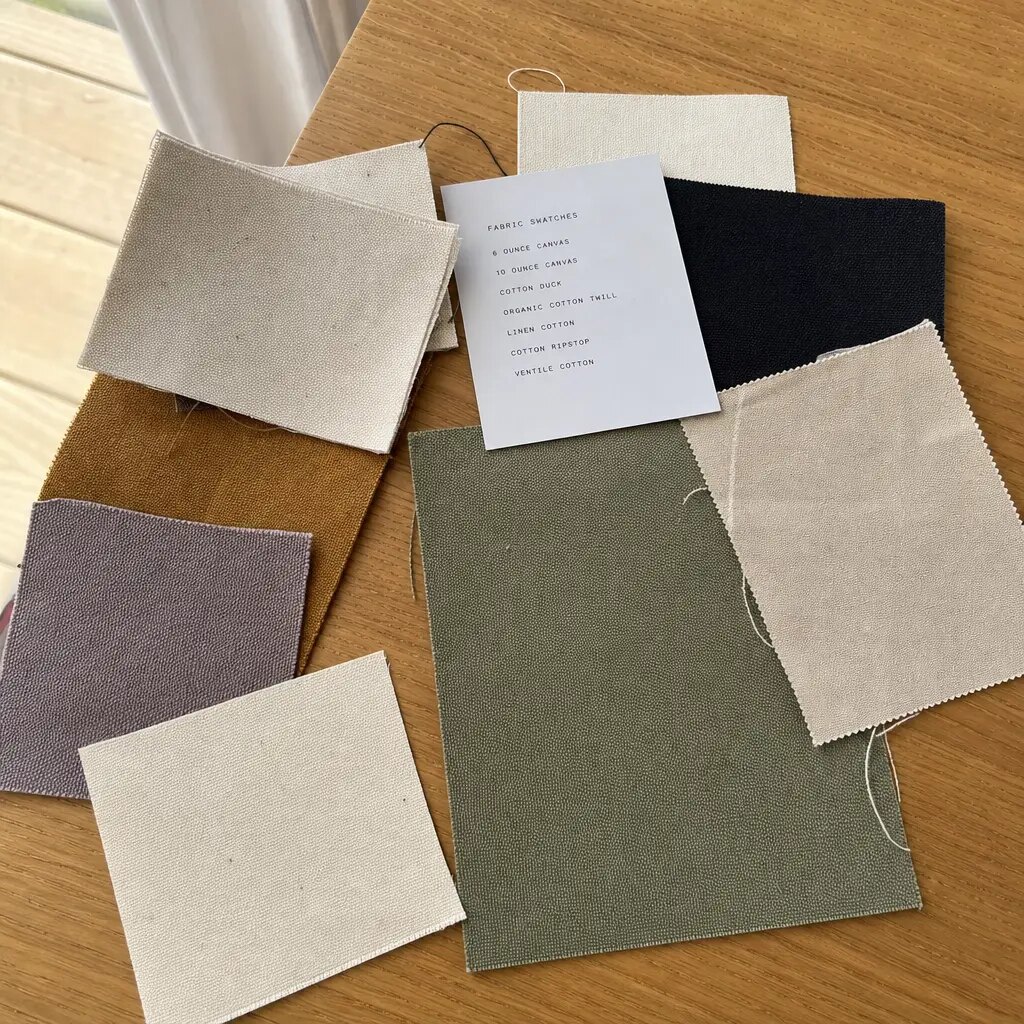
Canvas weight is one of the easiest places to oversimplify. A mid-weight cotton canvas is often the practical range for a two-bottle boutique carrier because it balances body, sewing behavior, and cost. In many sourcing conversations, you will hear broad ranges like 14-16 oz or roughly 400-475 GSM. Those ranges can be useful as a starting point, but they are not a guarantee of performance. Actual feel depends on weave density, finishing, pre-wash treatment, dyeing, and the quality of the sewing pattern. Two fabrics with the same nominal weight can behave differently once loaded.
The construction around the bag is just as important as the fabric itself. If the handles are only stitched through a thin seam allowance, the strongest canvas in the world will not save the carrier from pull failure. If the base is too soft, the bottles will tilt and the bag will feel unstable in the hand. For most boutique winery programs, a reinforced base insert or divider often delivers more value than simply increasing canvas weight. That is because the insert addresses the practical problem: keeping bottle position stable during lift, carry, and set-down.
Decoration should never drive the build. Screen print works well for simple marks and is usually the most economical method for repeat orders. Woven labels, sewn patches, and side labels often hold up better over time and can feel more premium on a canvas product. Embroidery can work, but it can also distort on thick seams or heavy folds if placement is careless. Heat transfers should be treated cautiously unless the supplier can show flex and rub resistance on a fully sewn sample. The best choice is the one that survives handling, not the one that photographs best.
- Use mid-weight canvas as a starting point, then verify with sample performance rather than assuming the weight alone is enough.
- Put reinforcement and base stability ahead of decorative upgrades.
- Keep branding away from the thickest seam intersections when possible.
4) Compare supplier routes before you ask for final pricing
Not all supplier quotes mean the same thing. A direct cut-and-sew factory typically gives you the most control over patterning, reinforcement, and rework because the people quoting the item are closer to the line that builds it. A trading company may still be a reasonable option if they manage communication well, but you should expect less transparency on who actually sews or prints the carrier. A general packaging supplier can be fine for simple bags, yet they may have limited control when the product needs proper load support or precise seam work.
The buyer question is not just whether the supplier can make a bag. It is whether they can reproduce the same bag at scale with the same stitch quality and the same placement tolerances. Ask to see a fitted sample made with the actual bottle shape, not just a generic canvas tote. Ask who owns the sampling process, how many revisions are included, and whether the production line is the same one that will run the bulk order. If the answer is vague, you are probably looking at a sourcing chain with hidden handoffs.
Use the supplier route to your advantage. For repeat winery programs, direct factory sourcing is often the cleanest path because it simplifies responsibility. For small pilot runs or new artwork, an in-house sample room becomes valuable because revision speed matters. If the product is too simple for the supplier to explain its reinforcement strategy, that is a warning sign. The quotes may look similar on paper, but they are not built on the same control structure.
- Confirm whether the same team that samples the carrier will also produce it in bulk.
- Ask for a fitted sample with the actual bottle profile before comparing prices.
- Treat unclear sourcing chains as a risk, not a convenience.
5) Build a durability testing checklist with numeric pass/fail limits
A useful durability checklist should be short enough to run every time and specific enough that two suppliers cannot interpret it differently. For custom canvas wine carriers, the most useful tests are usually a loaded carry test, seam and handle inspection, print flex/rub testing, and a basic pack-out check. The goal is not laboratory perfection. The goal is objective acceptance. If the test results are recorded consistently, you can compare samples from different factories and know whether one is stronger, cleaner, or more stable than another.
Here is a practical buyer-oriented structure you can use. For a two-bottle carrier, test with the intended bottle set or a matched equivalent weight. Carry the loaded bag through repeated lift-and-set cycles, then inspect for visible seam opening, handle distortion, and base sag. Set a simple numerical acceptance rule. For example, require no seam opening visible to the naked eye, no handle slip that changes the bag geometry, and no print cracking after flexing. If you want a stronger gate, measure the loaded shape before and after test and reject any sample that changes beyond your allowed tolerance. What matters is that the rule is written down before the test starts.
A good durability test also includes a check for handling abuse that the bag will realistically see. That can include abrasion at the base, damp rubbing around the print area, and a brief storage check to see whether the canvas picks up odor or transfers dye. If the carrier is dyed or washed, that matters more than many buyers expect. The bag may look fine straight out of the box and still fail after a few hours in a humid packing room or after light flexing in transit. Buyers should test the whole product, not only the visible front panel.
- Use actual bottles or equivalent weight matched to the heaviest use case.
- Require no visible seam opening, no handle slippage, and no print cracking after flexing.
- Include damp rub, abrasion, and short storage checks for dyed or washed canvas.
6) Use acceptance thresholds that your supplier can actually follow
Durability testing becomes useful when it has thresholds a factory can execute without guessing. A procurement team does not need a full lab specification, but it does need clear pass/fail numbers and a test cycle that can be repeated. Start with the load test. For a two-bottle carrier, ask the supplier to load the intended bottle set or an agreed equivalent weight and complete a defined number of lift-and-set cycles. A practical internal standard is 20-30 cycles for sample approval, with rejection if the handles slip, the top edge distorts permanently, or any seam begins to open. If you want to be stricter for premium retail use, increase the cycle count on the approval sample and require the same result on the production pilot.
Next, define seam and handle criteria. Instead of saying “strong stitching,” specify what you will accept: no broken stitches, no skipped stitches at anchor points, no visible thread pulling, and no seam opening greater than your agreed limit. If you do not have a lab instrument, visual inspection is still useful as long as the standard is written and the lighting, angle, and reference sample are consistent. Handle pull testing can be treated similarly. You do not need to overcomplicate it, but you do need to define whether you are checking for permanent deformation, slippage at the anchor, or outright breakage. A common procurement mistake is asking for “durability” without saying what would count as failure.
Finally, set a short flex and rub test for the decorated areas. If the logo is screen printed, fold or flex the panel several times and then do a damp rub with a white cloth. Reject visible cracking, tackiness, bleed, or transfer that could mark adjacent packaging. If a woven label or patch is sewn on, inspect edge lift and thread pull. These tests are simple, but they catch the problems that usually upset buyers after the first shipment. The more specific your acceptance limits are, the easier it becomes to compare factories on a like-for-like basis.
- Load test: 20-30 lift-and-set cycles for sample approval, with no seam opening or handle slip.
- Seam rule: no broken or skipped stitches at anchor points and no visible thread pull.
- Decoration rule: no cracking, peeling, tackiness, or color transfer after flex and damp rub.
- Packaging rule: the carrier must pass pack-out without deformation, scuffing, or crushed corners.
7) Sample approval should cover full build, not just artwork
A flat sample or printed panel tells you very little about the real product. For a canvas wine carrier, the approval sample should be built in the final fabric, with the final handle construction, final divider arrangement, final label, and final decoration method. That sample needs to be tested with the actual bottle shape. If the supplier sends you only an art proof, you are not reviewing the product that will ship; you are reviewing one element of it. That is not enough for a bag that has to carry glass.
Use the sample review to check the details buyers often miss on the first round: handle drop, bottle clearance, divider height, seam alignment, interior cleanliness, thread trimming, and whether the carrier still looks balanced once loaded. Open and close the carrier several times. Load it, set it down, lift it again, and pay attention to the feel of the bag in the hand. If the bottles bang against each other or the bag twists when carried, the sample is not ready. The point is not to admire the prototype. The point is to prove that the build works in use.
Document the approval carefully. Mark the sample with date, revision number, and any agreed exceptions. If you approve a small change, write that change into the purchase order and the sign-off notes. That keeps the factory from drifting later, especially on details like handle length or print placement that may not be obvious once the order is in bulk production. Sample control is one of the cheapest forms of quality control you can buy.
- Approve a full-build sample in the final material and final decoration method.
- Test with the actual bottle shape, not a generic bottle substitute unless you have already validated it.
- Record revision notes directly in the PO and approval file.
8) Packaging and shipping can undo a good build if they are not controlled
Durability does not stop at the sewing line. A strong carrier can still arrive warped, scuffed, or contaminated if the packing method is loose. Individual polybags are useful because they protect canvas from dust and reduce scuffing, but they are only part of the answer. The master carton needs a layout that keeps the bags from shifting. Too much empty space lets the product move and rub; too little space can crush handles, bend inserts, or create outer-carton damage. If the carrier includes a rigid base or divider, the carton plan should reflect that structure instead of treating the product like a flat pouch.
This is where procurement teams should ask for more than a pack count. Ask for carton dimensions, pack orientation, inner protection, and whether the goods are nested, flat-packed, or separated by partitions. Ask how the supplier will prevent the printed face or woven label from rubbing against another surface in transit. If the bags are destined for export or long transit, ask for photos of the packed carton before shipment. Those photos often reveal issues long before the goods reach your warehouse.
Also consider storage condition and odor. Natural canvas can absorb warehouse smell, and dyed canvas can show color transfer if packing is careless or the storage environment is humid. If you sell through retail or direct-to-consumer channels, customers notice these issues quickly. Packaging is not just a logistics line item; it is a last-stage quality control step that protects both the product and the brand experience.
- Specify polybag type, carton pack count, carton dimensions, and orientation in the RFQ.
- Require a pack-out that prevents shifting, rubbing, and handle crushing.
- Ask for packed-carton photos before shipment on any order that matters commercially.
9) Compare quotes on total risk, not just the factory number
The lowest quote is rarely the best procurement result if it leaves out setup, reinforcement, packing, or sample control. When you compare suppliers, normalize every quote to the same bottle size, canvas weight, decoration method, and packing spec. Then separate the costs into clear buckets: fabric, labor, print setup, labels, inserts, carton costs, sample charges, and freight assumptions. A quote that looks inexpensive may be missing one of these items, which makes the real landed cost higher once the missing pieces are added back in.
Risk matters as much as price. If one factory can show a fitted sample, a clear inspection method, and a realistic production schedule, that is worth something. A cheaper supplier that cannot explain stitch reinforcement or cannot commit to a proper sample approval process is not truly cheaper if the order gets delayed or rejected. For boutique wineries, timing is often tied to release calendars, seasonal events, tasting-room promotions, or gift campaigns. A missed ship date can cost more than the difference between two price points. Procurement buyers should treat time-to-usable-goods as part of the decision, not an afterthought.
This is also why a quote comparison should include an escalation path. If the sample fails, what happens next? Who pays for revision? How long does a corrected sample take? What evidence do you receive before bulk shipment? Those answers tell you whether the supplier can manage a repeat program or only a one-off order. A good vendor is not the one with the shortest answer. It is the one with the clearest process.
- Normalize every quote to the same build, same bottle shape, and same packing method.
- Split pricing into fabric, labor, decoration, packaging, samples, and freight assumptions.
- Ask what happens if the sample fails and how the revision cycle is managed.
10) Turn the checklist into a simple procurement workflow
The easiest way to keep a wine-carrier program under control is to turn the checklist into a repeatable workflow. Step one is specification lock: bottle dimensions, build details, logo method, and packaging are all confirmed before the first quote is accepted. Step two is supplier screening: verify whether the partner is a direct factory, a trading company, or a general packaging source, and ask for evidence of similar construction. Step three is sample approval: review a full-build sample with the actual bottle and record every accepted deviation. Step four is durability testing: run your load, seam, flex, rub, and pack-out checks using the same criteria every time. Step five is production release: only after the sample and test results pass do you allow bulk manufacturing.
That workflow matters because it gives you control points instead of opinions. If a problem appears in production, you can trace it back to a missing spec, a weak sample, a packing error, or a supplier mismatch. If the product is consistent, you can reorder with less friction because the approved standard already exists. For boutique wineries, that is especially useful when the carrier is part of a seasonal range, a club shipment, or a private-label gift program. The more repeatable the process, the less time procurement spends re-solving the same quality problem every order cycle.
If you want to simplify internal handoff, keep one page for the commercial brief and one page for the technical checklist. The commercial brief should hold MOQ, lead time, pricing, and destination terms. The technical checklist should hold bottle dimensions, fabric weight, reinforcement, print method, test cycles, and acceptance limits. That separation makes it easier for buyers, brand teams, and operations staff to work from the same file without mixing aesthetic preferences with production requirements.
- Use a five-step workflow: spec lock, supplier screen, sample approval, durability test, release.
- Keep commercial terms and technical requirements on separate pages.
- Reuse the same acceptance file for every reorder so quality does not drift.
Specification comparison for buyers
| Decision area | Buyer recommendation | Why it matters for boutique wineries | What to verify before you award |
|---|---|---|---|
| Supplier route | Direct cut-and-sew factory with wine-bag experience | Better control over pattern accuracy, reinforcement, and rework speed | Ask who actually cuts, sews, prints, and packs the product; request proof of similar construction and a fitted sample |
| Canvas weight | 14-16 oz cotton canvas, about 400-475 GSM for most two-bottle carriers | Usually a practical balance between body, sewability, and retail presentation | Require the supplier to state measured fabric weight tolerance and whether the lot is pre-washed, dyed, or raw |
| Handle construction | 38 mm webbing or reinforced self-fabric handles with boxed-X or bartack reinforcement | Handle failure is the fastest way to turn a premium carrier into a reject | Ask for stitch count, reinforcement pattern, and handle pull-test method |
| Bottle control | Sewn divider or reinforced insert when bottles must not contact each other | Reduces clinking, abrasion, and tip-over movement during carry or gifting | Confirm divider height, rigidity, and whether it shifts after loading |
| Branding method | Screen print for simple marks; woven label, sewn patch, or side label for premium finishes | Print quality and seam placement affect perceived quality and abrasion resistance | Check flex performance, wash/rub resistance, and the distance from print to seam folds |
| Sample route | Pre-production sample made with final fabric, final bottle size, final decoration, and final stitching | Flat samples hide the exact failure points that matter in use | Approve only a full build sample and log deviations in writing |
| Packing route | Individual polybag plus a carton plan that prevents shifting and crush damage | Packing problems can distort bags even when the carrier itself is strong | Verify polybag thickness, carton pack count, orientation, and void-fill rules |
| Inspection route | In-process checks plus final inspection with written AQL or pass/fail criteria | Without objective acceptance rules, disputes often start after shipment | Require inspection photos, defect categories, and release authority before dispatch |
Buyer checklist before sampling
- State the exact bottle profile: count, diameter, height, shoulder shape, and loaded weight for the heaviest bottle format you will ship or sell.
- Lock the product build in the RFQ: canvas weight, lining, divider style, closure, handle type, logo method, and any reinforcement insert.
- Use both GSM and ounces if possible so suppliers cannot reinterpret the fabric spec loosely.
- Define whether the carrier must stand upright when loaded, fit into a gift box, or be used as a retail hand-carry item.
- Require a pre-production sample in final materials, not a flat print proof or loose prototype.
- Write a pass/fail target for load carry, seam opening, handle stretch, print cracking, odor, and carton damage.
- Confirm carton pack count, polybag spec, orientation, and whether the carrier will ship nested or flat.
- Ask for in-process photos, a final inspection report, and shipment-release approval before the goods leave the factory.
- Tie MOQ and lead time to the actual build complexity: custom dye, label sewing, divider insert, multi-color print, or special packing.
- Capture all approved deviations in the PO and sample sign-off sheet so the factory cannot swap components later.
Factory quote questions to send
- What is the measured fabric weight you will hold on bulk production, and what tolerance can you commit to on the lot?
- Are you a direct cut-and-sew factory for this item, or are any steps outsourced to another workshop?
- Can you produce a pre-production sample with the exact bottle dimensions, handle length, divider structure, and final decoration method?
- What reinforcement do you use at the handle anchors and base seams, and what pull-test or lift-test method do you use to verify it?
- What is included in the unit price: fabric, lining, divider, print setup, labels, packaging, cartons, and any special trimming?
- What is the MOQ per color, per logo method, and per decoration placement, and how does it change if we add a woven label or insert?
- What is the recommended outer carton configuration for export, and how do you stop the bags from scuffing or crushing in transit?
- What inspection standard do you apply before shipment, and can you provide photos or a written report for release?
- If a sample change is needed after the first round, what is the revision cycle and who approves the final version?
- Which parts of the schedule are fixed, and which parts could move if the canvas must be custom-dyed or pre-washed?
Quality-control points to confirm
- Verify fabric weight against the approved swatch and reject any lot that falls outside your agreed tolerance band.
- Measure finished dimensions, including height, width, handle drop, and divider spacing, and compare them to the signed sample.
- Inspect stitch density, bartacks, thread trimming, and seam alignment at handle anchors, side seams, base seams, and divider attachments.
- Run a loaded carry test with the intended bottles or equivalent weight and reject visible seam opening, handle slip, or base sag beyond your limit.
- Check print and label durability after repeated flexing and a damp rub; reject cracking, peeling, bleeding, or thread distortion.
- Confirm bottle fit using the actual bottle shape, not only a standard test bottle, especially if the winery uses mixed bottle styles.
- Inspect odor, moisture, staining, and loose fibers before packing, especially on dyed or washed canvas.
- Measure carton compression, drop risk, and pack stability using the final carton arrangement, not a loose pilot pack.
- Verify labels, origin marking, SKU, and artwork placement against the PO and approved artwork before shipment release.
- Document every nonconformance with photos, severity, disposition, and corrective action so the next order is not built from the same error.