Why durability fails on startup wine carrier orders
Custom canvas wine carriers look simple, but they carry a hard, heavy, fragile product. A single filled 750 ml bottle usually weighs around 1.2 kg to 1.5 kg depending on glass weight, and Champagne or spirits bottles can be heavier. When a tech startup uses the carrier for investor gifting, launch events, employee kits, or retail partnerships, the bag is not just packaging. It becomes part of the brand handoff. A weak handle or sagging bottom is noticed immediately because the user feels the load in one hand.
The most common sourcing mistake is approving the cheapest visual sample and treating durability as a factory assumption. Photos do not show handle elongation, seam slippage, print cracking, inner lint, or how the bottom reacts when the bottle is carried across a venue. A proper RFQ should define the bottle type, load expectation, fabric weight, construction, logo method, sample tests, and packing method before suppliers quote. Otherwise, the lowest quote may be built on a thinner canvas, shorter handle reinforcement, or carton packing that saves cents but creates complaints.
- The buying problem is not whether the bag can hold a bottle once; it is whether it carries safely through packing, distribution, gifting, and reuse.
- Durability depends on fabric, seam design, handle reinforcement, divider anchoring, print method, and carton compression working together.
- A buyer-ready RFQ should include a durability checklist so suppliers quote the same construction instead of competing on hidden downgrades.
Define the carrier use before setting specifications
Start with the use case because the correct durability level changes by channel. An event giveaway carrier may need fast unpacking, clean print alignment, and enough strength for a walk from registration desk to hotel room. A retail wine shop carrier needs better shelf presentation, repeat handling, and consistent barcode or hangtag placement. A distributor or corporate gifting program may require stronger cartons and tighter shade control because products pass through a kitting warehouse before the end user sees them.
Tech startups often have multiple internal buyers working from the same brand asset: marketing wants the best-looking logo, people teams want onboarding gifts, sales wants partner gifts, and operations wants carton data for receiving. If the RFQ does not rank the use case, the supplier may optimize for the wrong thing. For durability testing, the safest instruction is to state the heaviest expected bottle, the number of bottles, the carry distance, and whether the bag should be reusable after the first delivery.
- For single-bottle wine gifts, specify the target bottle height, bottle base diameter, and filled weight.
- For two-bottle carriers, state whether the bottles are both wine bottles or mixed wine, Champagne, spirits, or olive oil bottles.
- For retail resale, include shelf presentation requirements such as standing ability, folded shape, hangtag, barcode, and visible seam cleanliness.
- For kitting warehouses, include carton size limits, gross weight limits, inner packing preference, and whether bags are packed flat or pre-opened.
Choose canvas weight by load, not by catalog default
Canvas weight is the first visible cost driver and one of the most important durability levers. For most single-bottle carriers, 10 oz to 12 oz cotton canvas, roughly 340 to 407 GSM, is a practical range. It gives enough body for a wine bottle without making the bag feel like luggage. For two-bottle carriers, 12 oz to 16 oz canvas, roughly 407 to 542 GSM, is usually more appropriate because the handles, side seams, divider, and bottom are all managing a heavier moving load.
Lighter fabric can be acceptable for short-life promotional use, but the buyer should be clear that the bag is not intended for repeated reuse. Heavier fabric improves perceived value, but it increases material cost, sewing difficulty, carton weight, and sometimes print handling risk. Natural canvas also has seed flecks and shade variation. If the brand requires a clean tech look, the RFQ should state whether natural flecks are acceptable or whether bleached, dyed, or cleaner-grade fabric is needed.
- 8 oz canvas may fit lightweight promotional bottle sleeves, but it is risky for reusable wine carriers unless reinforced carefully.
- 10 oz to 12 oz canvas is a balanced range for most single-bottle custom canvas wine carriers.
- 12 oz to 16 oz canvas is better for two-bottle carriers, premium gifting, and heavier bottle shapes.
- Dyed canvas should be tested for colorfastness and print contrast; natural canvas should be approved with realistic shade and fleck tolerance.
Engineer handles and seams for real carrying behavior
The handle area is where many wine carriers fail. A buyer may focus on logo size while the factory quietly uses a short stitch box, narrow webbing, or a single row of stitching. For a filled bottle, the handle join needs enough stitch length to spread load into the body fabric. Cross-stitch, bartack, or multiple rows of stitching can all work, but the method must match fabric weight and handle material. The RFQ should specify handle width, handle drop, reinforcement style, and whether the handle is self-fabric or webbing.
Seam construction matters just as much as handle design. A bottle base creates point pressure at the bottom, especially when the user sets the carrier down quickly. Boxed bottoms, folded bottoms, bound inside seams, and double-layer bottom panels are common ways to improve durability. For two-bottle carriers, the divider must be anchored so bottles do not knock against each other. A loose divider may look fine when empty but twists under load, making the carrier feel cheap and unsafe.
- Set a minimum handle width, commonly 2.5 cm to 3.8 cm for cotton webbing or folded canvas handles.
- Define handle drop based on use: hand-carry only, forearm carry, or longer drop for event convenience.
- Require reinforcement at every load-bearing handle join, not only at visible front-side positions.
- For two-bottle styles, require the divider to connect securely to the bottom or side seam, not float freely.
Match print method to durability and brand finish
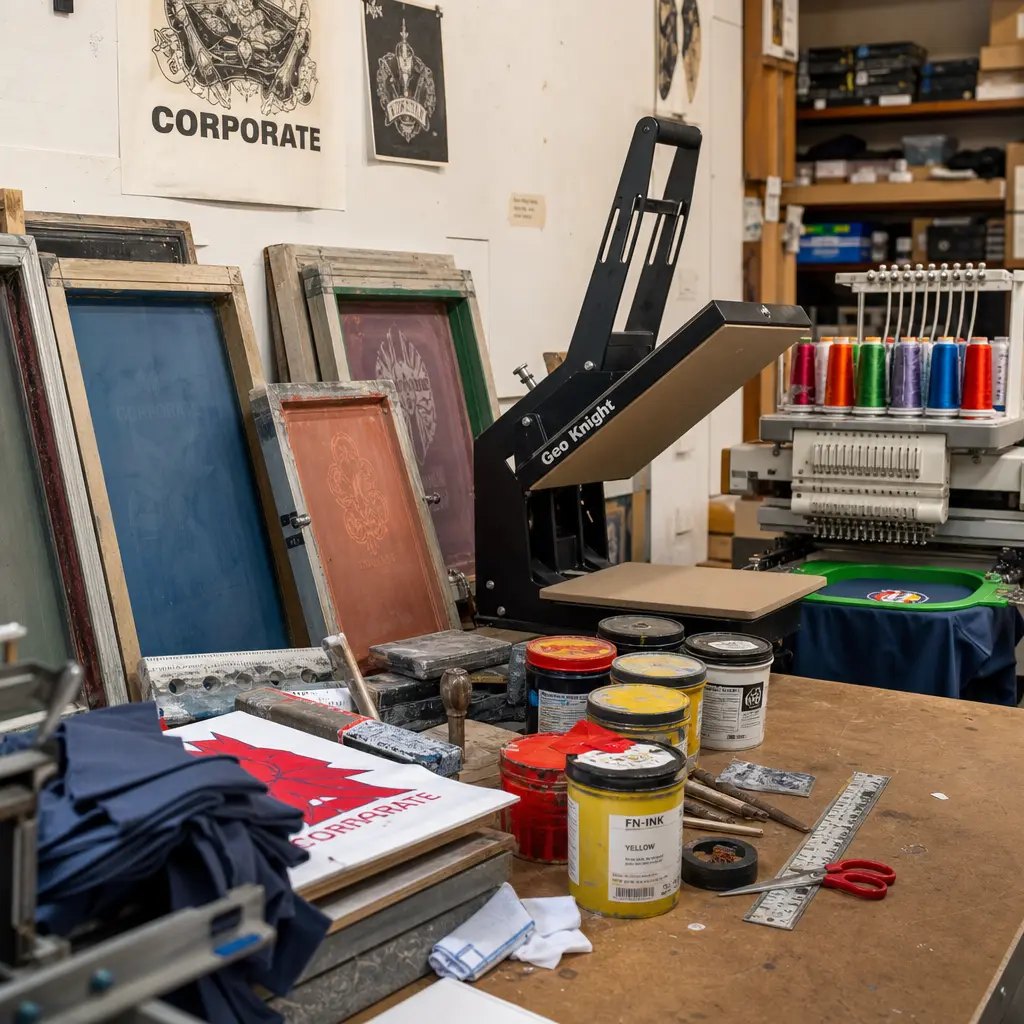
Most tech startup logos work well with screen printing when the design uses solid colors and the order quantity supports screen setup. Screen print gives good opacity on natural or dyed canvas when the ink system is selected correctly. Heat transfer can handle gradients, small details, or multi-color marks, but it must be tested for edge lift, press marks, and flexibility on textured canvas. Embroidery gives a premium feel but may distort thin canvas or add cost on larger logo areas. Woven side labels are useful when the brand wants a subtle retail finish.
Durability testing for print should happen on the same fabric weight and color intended for bulk. A print that looks sharp on smooth bleached canvas may lose edge definition on coarse natural canvas. Dark canvas needs stronger opacity planning, and heavy ink deposits can crack if the carrier is folded tightly in cartons. Include a dry rub test, light wet rub test, tape or edge-lift check for transfers, and visual review after the sample has been packed and unpacked.
- Use screen print for solid-color startup logos, icons, QR-free slogans, and medium to large order quantities.
- Use heat transfer only after checking adhesion, press shine, edge lift, and feel on the chosen canvas texture.
- Use embroidery for small premium marks, not large filled logos that can stiffen or pucker the panel.
- Use woven labels when multiple departments need the same bag body but different removable tags or inserts.
Build MOQ logic around fewer construction variables
MOQ is not only a factory policy; it reflects fabric purchasing, dyeing, cutting efficiency, print setup, sewing line changeover, and packing labor. A startup may ask for 200 pieces in five logo versions, three fabric colors, and two bottle capacities, then be surprised that the quote jumps or the supplier declines. Each variation splits purchasing and production. If the buyer wants lower MOQ or faster delivery, the better approach is to standardize the body and vary one controlled element, such as a one-color screen print or a hangtag.
For importers and distributors, MOQ planning should also account for reorder potential. If a tech client is testing a campaign, it may be smarter to approve one durable standard construction and run small logo batches on top of it. If the bag is intended for retail resale, the MOQ should support consistent fabric shade and packing across the full order. Suppliers can quote more accurately when the RFQ separates core construction MOQ from decoration MOQ.
- Lowest-risk MOQ structure: one fabric color, one carrier size, one handle style, one print position, and limited logo color count.
- Moderate complexity: same carrier body with different printed logos for departments, regions, or event sponsors.
- Higher complexity: multiple fabric colors, different bottle capacities, special labels, and custom packing for each SKU.
- Quote request should ask for MOQ at each break, such as one artwork, two artworks, and mixed artwork under one fabric purchase.
Use sample approval as a durability gate
A pre-production sample should not be treated as a formality. It is the point where the buyer confirms that the supplier understood the load, fabric, print, sewing, and packing requirements. The sample should be made with final or production-equivalent canvas, final handle material, final reinforcement method, and the intended print process. If substitute fabric is used because bulk fabric is not ready, the supplier should clearly state which test results are provisional.
The sample review should combine visual approval and physical testing. Put the specified filled bottle inside the carrier, hang it, carry it, set it down repeatedly, and inspect the handle joins and bottom seams. If the order is two-bottle style, test with both bottle cavities filled. After load testing, review print condition, seam slippage, handle twist, and whether the carrier still looks suitable for gifting. A sample that survives only careful desk handling is not enough for bulk approval.
- Approve dimensions with tolerances for height, width, gusset, handle drop, logo placement, and divider position.
- Photograph the sample with the actual target bottle inside, not only empty front and side views.
- Record any accepted natural canvas marks or shade variation so QC does not reject normal material characteristics later.
- Keep one signed or sealed approval sample for factory reference and one buyer sample for incoming inspection comparison.
Set measurable QC thresholds for bulk inspection
Durability language should be measurable. Words like strong, premium, and heavy duty do not help an inspector decide whether a shipment passes. Better acceptance criteria include no seam opening after a defined filled-bottle load test, no skipped stitches longer than a set limit, print placement within a stated tolerance, and no visible ink cracking after folding and unpacking. The supplier does not need a laboratory for every order, but the factory QC team should have a practical checklist that matches the buyer's risk.
For larger orders, importers may use AQL inspection or their own receiving checklist. The key is to classify defects properly. A broken handle, open bottom seam, severe odor, wrong fabric weight, wrong logo color, or unsafe bottle fit should be treated as major or critical depending on the channel. Minor loose threads may be repairable if they do not affect strength or appearance. Define this before production so the factory does not ship borderline goods because the issue was never ranked.
- Major defects: handle tearing, seam opening, wrong bottle fit, incorrect fabric weight, serious print peeling, or wrong logo position.
- Minor defects: trimable loose threads, slight natural canvas slub variation, small fold marks that recover after unpacking.
- Functional checks: filled-bottle loading, repeated carry movement, divider pull, bottom sag, and handle stitch inspection.
- Appearance checks: stains, oil marks, mildew odor, print registration, panel skew, shade consistency, and carton crushing.
Plan packing so durability survives shipping
A well-made canvas wine carrier can still arrive looking poor if packing is wrong. Overfilled export cartons can crush boxed bottoms, crease printed panels, and force handles into twisted positions. Too few pieces per carton can waste freight space and raise landed cost. The right packing plan balances protection, carton weight, warehouse handling, and unpacking speed. For many canvas wine carriers, flat packing is efficient, but the print face and handle orientation should be controlled.
Buyers should request carton dimensions, gross weight, pieces per carton, inner packing type, and palletization assumptions before issuing a purchase order. If the goods go to a kitting facility, the facility may prefer bags grouped by SKU, logo version, or event destination. If the carriers are retail-ready, each piece may need a hangtag, barcode, paper band, or recyclable polybag. Every extra packing step affects labor, MOQ, lead time, and quote comparison.
- Use carton weight limits that match the receiving warehouse; very heavy cartons slow unloading and increase damage risk.
- Avoid folding directly through thick ink areas or heat transfer edges when possible.
- Separate logo versions clearly with carton marks, inner bundles, or SKU labels to prevent event allocation errors.
- Request carton drop and compression awareness for heavy two-bottle styles, especially if cartons stack during ocean freight or storage.
Compare quotes by construction, not only unit price
Two quotes for custom canvas wine carriers can look close but describe very different products. One supplier may include 12 oz canvas, reinforced handles, screen setup, woven side label, and export cartons. Another may quote 8 oz canvas, simple handles, no setup cost shown, and thin cartons. The unit price alone does not show whether the bag will pass a filled-bottle test or survive distribution. Procurement teams should normalize the quote before choosing a supplier.
A useful quote comparison includes fabric GSM, handle material, reinforcement, divider design, print method, number of print colors, sample cost, screen or setup charge, packing method, pieces per carton, estimated carton weight, lead time, incoterm, and validity period. For landed cost, also compare freight weight and carton volume. A heavier durable bag may cost more at unit level but reduce replacement risk and brand damage. A lighter bag may be valid for short campaigns if expectations are documented.
- Normalize all quotes to the same bottle capacity, canvas weight, handle reinforcement, print size, print color count, and packing method.
- Separate one-time charges such as screens, cutting templates, sample courier, and special label setup from repeat order pricing.
- Compare production lead time after sample approval, not from initial inquiry date.
- Review carton volume and gross weight because freight can change the real landed cost more than small unit price differences.
Specification comparison for buyers
| Spec decision | Recommended option | When it fits | Buyer risk to check |
|---|---|---|---|
| Fabric weight for single-bottle carrier | 10 oz to 12 oz cotton canvas, about 340 to 407 GSM, pre-shrunk if washing is expected | Startup event gifts, wine club inserts, employee welcome kits, and retail counter sales where the bag must stand reasonably well | Below 10 oz may collapse around the bottle and show seam strain; above 12 oz can raise freight weight and make small runs expensive |
| Fabric weight for two-bottle carrier | 12 oz to 16 oz canvas, about 407 to 542 GSM, with center divider and reinforced bottom seam | Premium partner gifts, distributor packs, and retail bundles where two filled glass bottles create high handle load | A divider without bottom anchoring can twist during carrying; test with two real bottle shapes, not empty display bottles |
| Handle construction | Self-fabric handles folded and stitched, or 2.5 cm to 3.8 cm cotton webbing with cross-stitch reinforcement | Bulk gifting where users may carry the bag by one handle or hang it from a chair, cart, or scooter hook | Decorative handles that look clean in photos may elongate after load testing; specify stitch pattern and minimum bartack length |
| Bottom durability | Double-layer bottom panel or folded boxed bottom with 8 to 10 stitches per inch and clean inside binding | Round, Burgundy, Champagne, or craft beverage bottles with different base diameters and higher point pressure | Flat tote-style bottoms can sag and expose the bottle base; confirm the approved sample carries the heaviest target bottle |
| Print method | Screen print for solid startup logos, heat transfer for gradients, embroidery or woven label for premium small marks | Screen print suits most tech logos on natural canvas; woven labels suit understated retail or investor gift programs | Ink cracking, poor opacity on dark canvas, and heat press marks are common if print method is chosen from artwork only |
| MOQ logic | One shared body fabric with several print versions, or one print colorway across multiple bottle capacities | Startups with multiple departments, launch events, or regional teams that need controlled spend and brand consistency | Too many fabric colors, handle colors, and logo placements split the order and can push each version below efficient production MOQ |
| Sample approval | Pre-production sample tested with filled bottles for carry load, seam slippage, print rub, and packing recovery | Any order used for client gifting, retail resale, PR kits, or alcohol-related promotional distribution | Approving only a photo sample hides handle feel, stiffness, odor, seam strength, and carton compression behavior |
| Packing method | Flat packed with handle alignment, paper band or recyclable polybag if required, 50 to 100 pieces per export carton by weight limit | Distribution centers, kitting vendors, and event agencies that need clean unpacking and fast allocation | Overpacked cartons can crease print areas, deform boxed bottoms, and exceed manual handling limits at receiving |
Buyer checklist before sampling
- Define the actual bottle load: single 750 ml wine bottle, two bottles, Champagne bottle, spirits bottle, or mixed beverage shapes.
- Select canvas weight by load and appearance, not only price: 10 to 12 oz for most single carriers and 12 to 16 oz for heavier or two-bottle styles.
- State fabric composition, color, shrinkage expectation, and whether natural slubs, seed flecks, or shade variation are acceptable.
- Specify handle width, length, stitch pattern, reinforcement method, and required load test duration using filled bottles.
- Approve logo size, print method, ink color reference, print position tolerance, and rub resistance before bulk cutting.
- Require a pre-production sample made with final fabric, final handle, final print, final divider, and intended packing method.
- Test the sample after 24 hours of loading, short-distance carrying, hanging, carton compression, and unpacking.
- Set clear acceptance criteria for seam slippage, loose threads, print cracking, odor, stains, handle twist, and bottle fit.
- Confirm carton dimensions, pieces per carton, gross weight, packing orientation, barcode or inner label needs, and pallet limits.
- Request quote data by line item: fabric, printing, labels, packing, sample cost, tooling or screen charge, lead time, and incoterm.
Factory quote questions to send
- What canvas weight, yarn construction, and GSM tolerance are included in the quote?
- Is the fabric dyed, bleached, natural, or pre-shrunk, and what shade tolerance will be used for bulk approval?
- What is the maximum filled bottle weight the handle and seam construction are designed to carry?
- Which reinforcement method is included at the handle join: cross-stitch, bartack, double row, rivet, or another method?
- Can the pre-production sample be made with final bulk fabric and final print method instead of substitute stock fabric?
- What print method is quoted, how many colors are included, and are screen, setup, or heat transfer film charges separate?
- What are the MOQ breaks for one design, multiple logo versions, multiple fabric colors, and mixed single-bottle or two-bottle styles?
- What is the normal production lead time after sample approval, and which steps are on the critical path?
- How many pieces are packed per carton, what is the estimated gross weight, and can cartons meet the buyer's warehouse handling limit?
- What inspection standard or in-house QC checklist will be used before shipment, and can photos or test records be provided?
Quality-control points to confirm
- Filled-bottle load test: carrier holds the specified bottle weight for the agreed duration without seam opening, handle tearing, or visible fabric distortion.
- Carry test: sample is carried by handle for repeated short movements with no handle twist, stitch popping, or bottle base sagging.
- Seam inspection: inside and outside seams have even stitching, no skipped stitches, no raw fabric shedding into the bottle cavity, and no loose thread clusters.
- Divider stability: two-bottle styles keep bottles separated during movement and the divider does not pull loose from the bottom or side seam.
- Print durability: logo passes dry rub and light wet rub checks without obvious ink transfer, cracking, peeling, or edge lift.
- Dimensional tolerance: finished height, width, gusset, handle drop, and print placement stay within the tolerance agreed on the approved sample.
- Odor and cleanliness: canvas has no strong chemical smell, mildew odor, oil stain, rust mark, heavy dust, or visible contamination.
- Packing recovery: after carton packing and unpacking, the carrier can be reshaped without permanent crushing of the bottom or major print creasing.