Start With the Carton Problem, Not the Bag Photo
For custom canvas wine carriers shipping carton planning for hotel retail, the buying problem is not only whether the bag looks attractive. The real issue is whether the carrier fits the bottle, protects glass during handling, arrives without crushed handles, and uses carton space efficiently enough for the landed cost to make sense. A quote that shows only unit price and logo cost is incomplete for importers and hotel retail buyers.
Hotel retail usually has mixed operating pressure: limited back-of-house storage, seasonal replenishment, gift-ready presentation, and small damages that are expensive because the product may include wine or premium packaging. The RFQ should therefore connect the finished carrier specification with the export carton plan. If those two items are quoted separately, the buyer may approve a nice sample and later discover that the carton is too large, too heavy, or too tightly packed for distribution.
- Define whether the carrier ships empty, packed with wine locally, or pre-packed with a bottle at origin.
- Quote by SKU because single-bottle, two-bottle, and divider styles change carton count and CBM.
- Use actual bottle dimensions instead of generic 750 ml wording; bottle height and shoulder width affect fit.
- Require carton data in the first quote: pieces per carton, carton size, gross weight, net weight, and CBM.
Canvas Weight and Structure Choices
Most custom canvas wine carriers for hotel retail fall between 8 oz and 14 oz canvas. An 8 oz fabric can work for low-cost promotional wine sleeves, but it often collapses on shelf and gives weaker support when the bottle is heavy. A 10 oz canvas is a common commercial starting point for a simple single-bottle carrier. A 12 oz canvas gives a firmer handfeel and better upright presentation, especially for two-bottle carriers or carriers with a printed front panel.
GSM should be written into the RFQ because ounces are not always interpreted consistently across suppliers. As a practical conversion, 10 oz canvas is often around 340 gsm and 12 oz around 400 gsm, depending on weave and finishing. Natural canvas, bleached canvas, dyed canvas, and washed canvas also behave differently. Dyed or washed canvas may shrink or soften, so the approved sample must represent the bulk fabric route, not only a convenient sample-room fabric.
- Use 8 oz only for light promotional sleeves where shelf structure is not critical.
- Use 10 oz for standard retail single-bottle carriers with moderate cost control.
- Use 12 oz for stronger shelf presence, two-bottle carriers, and premium hotel gift assortments.
- Specify finished size tolerance after sewing, not only fabric GSM before production.
- Confirm whether the fabric is natural, bleached, dyed, washed, or laminated because each changes cost and packing behavior.
Bottle Fit, Divider Design, and Load Balance
The carrier pattern should be built around the bottle, not around a stock bag size. A Bordeaux bottle, Burgundy bottle, Champagne bottle, and slim dessert wine bottle can all be described as wine bottles, but they do not occupy the same shape. A hotel buyer selling local wine in a gift shop may need one flexible carrier, while a distributor building a fixed gift set can use a tighter pattern. The difference affects material consumption, divider position, carton count, and customer complaints.
For two-bottle canvas wine carriers, the divider is not decoration. It is a functional part that prevents glass contact when the bag is lifted and carried. A simple stitched canvas divider is enough for standard retail use if the bottles are not inserted at origin. For higher-value bottles, a padded divider or reinforced base may be needed. The buyer should approve the carrier with the heaviest intended bottle loaded, then tilt and set it down several times to see whether the base twists or the bottles knock together.
- Provide bottle height, base diameter, widest shoulder diameter, and filled weight.
- State whether the carrier must fit one exact bottle or a range of retail bottles.
- For two-bottle styles, define divider height and whether the divider is sewn into the base.
- Add a reinforced bottom panel when the carrier must stand upright on a retail shelf.
- Reject samples where the loaded carrier leans heavily, twists at the base, or allows bottle contact.
Print Method and Logo Durability
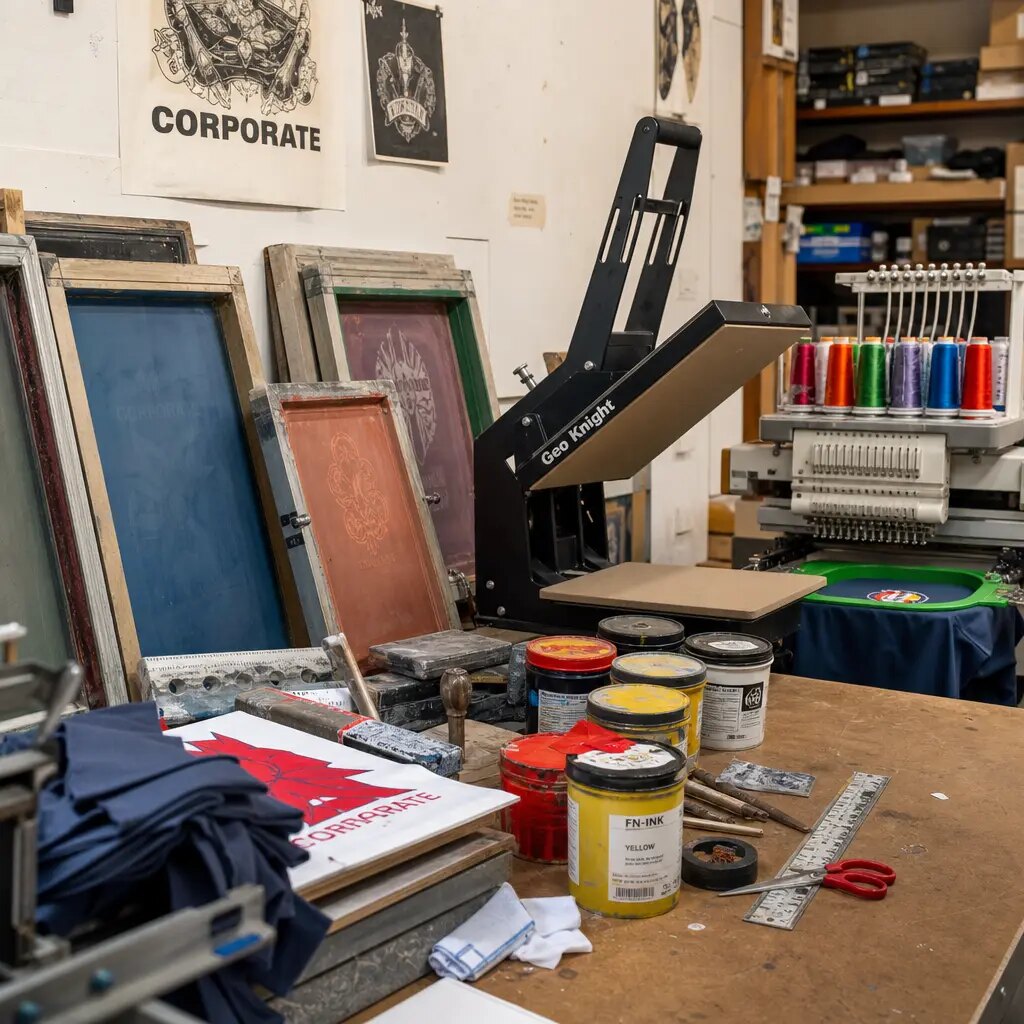
Screen printing is usually the best quote basis for hotel logos, resort marks, and simple brand artwork on canvas wine carriers. It gives a clean commercial finish on natural and dyed canvas when the artwork uses solid colors. The RFQ should specify print size, placement from seams, PMS target, number of colors, and whether the artwork is printed before or after sewing. Printing too close to a seam can distort the logo, especially on a shaped wine carrier.
Heat transfer may be useful when the artwork has gradients, very small details, or a lower MOQ where screen setup is inefficient. It is not automatically better. On coarse canvas, a transfer can look like a film sitting on the fabric, and it may crease if placed near a fold line. Embroidery is possible for premium carriers, but it adds weight, cost, and backing material, and it can pucker lighter canvas. Buyers should match decoration method to the retail price point and expected handling.
- Use screen print for solid one- to three-color hotel or wine brand logos.
- Use heat transfer only when fine detail justifies the different handfeel.
- Use embroidery on heavier canvas and keep it away from high-stress fold areas.
- Set logo placement tolerance, commonly within a few millimeters, based on the pattern shape.
- Test print adhesion by folding the printed panel and rubbing lightly after curing.
MOQ Logic and Cost Drivers
MOQ for custom canvas wine carriers is usually driven by fabric purchasing, dyeing, print setup, cutting efficiency, and the number of SKUs. A factory may accept a lower total quantity if the buyer uses natural canvas, one logo color, and one common pattern. MOQ rises when each hotel property needs a different logo, when several fabric colors are requested, or when the divider and handle construction differ by SKU. Buyers comparing quotes should confirm whether MOQ is per design, per color, per size, or per shipment.
The visible unit price is only one part of the commercial decision. A heavier canvas can raise fabric cost but may reduce product returns if the bag stands better and feels more retail-grade. A low carton count may reduce compression damage but increase CBM. A high carton count may lower freight per unit but can crush handles, crease printed panels, or exceed carton weight limits for warehouse handling. The best quote balances unit cost, carton efficiency, and damage risk.
- Main cost drivers include canvas GSM, fabric color, handle material, divider type, print colors, and packing method.
- Natural canvas usually supports lower MOQ than custom dyed canvas because greige fabric is easier to source.
- Multiple hotel logos may share one fabric and pattern, but each logo still creates print setup and QC separation.
- Retail hangtags, barcode labels, and individual packing should be included in the quote instead of added after approval.
- Compare landed cost per sellable unit, not only ex-factory unit price.
Shipping Carton Planning Rules
Carton planning should start when the sample pattern is being developed. A wine carrier may look compact when flat, but handles, dividers, reinforced bases, and shaped side panels all change how it packs. If the carrier is forced into a carton, handles can bend permanently and printed panels can crease. If the carton is too loose, the units shift during transport and arrive with poor retail presentation. For export orders, a 5-ply carton is normally a safer starting point than a light domestic carton.
Buyers should request a cartonization proposal before bulk production: pieces per carton, packing direction, use of inner bundles, carton dimensions, gross weight, and estimated CBM. For hotel retail, the carton should also match the receiving environment. A resort shop or distributor DC may reject or delay cartons with missing SKU labels, unclear PO references, or barcode positions that do not scan easily. Carton marks are part of the product system, not an afterthought.
- Avoid default carton counts such as 100 pcs per carton unless the packed sample proves it works.
- Keep carton gross weight practical for manual handling and destination warehouse rules.
- Use inner bundles to control count and presentation when individual polybags are not desired.
- Place printed panels face-to-face only if ink is fully cured and protected against transfer.
- Approve carton dimensions with the pre-production sample because small pattern changes affect CBM.
Sample Approval That Prevents Bulk Mistakes
A useful sample approval is more than a photo of a flat bag. The sample should be loaded with the actual bottle or a factory test bottle of the same dimensions and weight. The buyer should review balance, handle comfort, divider function, bottom shape, and retail appearance. The sample should also be folded or packed according to the proposed carton method so both the product and the shipping plan are approved together.
The approval record should include measured fabric weight, finished dimensions, print size and position, handle length, stitch reinforcement, divider construction, packaging materials, and carton data. If the hotel retail program has multiple logos, the base construction can be approved once, but print strike-offs or logo samples still need sign-off. Bulk production should not begin on verbal approval only, because disputes about logo shade, handle length, or packed shape are difficult to resolve after cutting.
- Keep one sealed approval sample at the factory and one with the buyer or inspection team.
- Photograph the loaded sample from front, side, base, and handle attachment areas.
- Record finished dimensions flat and loaded, because canvas changes shape under bottle weight.
- Approve one packed carton or at least a packed bundle before mass packing starts.
- List any approved deviations clearly, such as natural canvas slubs or minor shade variation.
QC Thresholds for Retail-Ready Carriers
QC for canvas wine carriers needs to cover both soft-goods workmanship and bottle-carrying performance. Visual defects such as stains, broken stitches, loose threads, uneven printing, and poor label placement matter because the product is sold or presented in a hotel retail environment. Functional defects matter more because the carrier may hold glass. A handle seam failure is not a minor sewing issue; it can become a product safety and brand damage issue.
The inspection plan should define what counts as critical, major, and minor. Critical defects include broken handle reinforcement, sharp objects inside the bag, severe odor, mold, and construction that cannot hold the intended bottle. Major defects include wrong fabric, wrong logo color, incorrect divider, dirty panels, heavy print bleeding, and carton count errors. Minor defects may include small natural slubs on unbleached canvas if the buyer accepted that fabric character during sample approval.
- Run loaded lift tests on sampled units using the target bottle weight or an equivalent test weight.
- Measure handle length and width because comfort and balance change if handles vary across production.
- Inspect bottom corners and divider seams where stress is concentrated.
- Check print registration, edge sharpness, curing, and color against the approved sample.
- Open random cartons to verify count, bundle direction, label placement, and carton mark accuracy.
Lead Time and Schedule Risk
Lead time should be broken into sample development, material purchasing, printing, sewing, inspection, packing, and export handover. A simple natural canvas single-bottle carrier with one-color screen print is usually faster than a dyed canvas two-bottle carrier with padded divider, embroidery, hangtag, barcode label, and retail carton rules. Buyers should not compare two supplier lead times unless the specifications and approval steps are the same.
The biggest schedule risks are late artwork approval, unclear bottle dimensions, fabric color changes, delayed label files, and packing instructions issued after production starts. Carton changes late in the process can also delay shipment because carton size affects ordering, packing line setup, and freight booking. For hotel retail launches, the safer workflow is to approve the product sample and carton plan before final production release, then freeze all retail labeling requirements before sewing is completed.
- Artwork files should include vector logo, PMS references, print size, and placement drawing.
- Bottle details should be finalized before pattern making, not after the sample is sewn.
- Custom dyed canvas needs extra time for lab dip, bulk dyeing, drying, and shade approval.
- Retail labels and barcodes should be tested against the destination receiving system.
- Final inspection should be scheduled before the cargo cutoff, leaving time for rework if needed.
Quote Data Buyers Should Compare
A professional quote for custom canvas wine carriers should let the buyer compare construction, risk, and landed cost. It should include fabric weight, material type, dimensions, handle details, divider details, print method, packing method, carton size, carton count, gross weight, net weight, MOQ, sample cost if any, production lead time, and payment or shipment terms. Without carton data, the buyer cannot estimate freight accurately or compare suppliers fairly.
For importers and distributors, the most useful comparison is cost per sellable carrier after freight and expected damage control. A supplier with a slightly higher unit price may be cheaper after landed-cost review if the carton plan is tighter, the gross weight is reasonable, and the product arrives with fewer creases. A very cheap quote that leaves out reinforced handles, print curing details, or carton strength may turn into a claim during hotel retail rollout.
- Compare quotes using the same bottle size, same GSM, same print artwork, and same packing requirement.
- Separate tooling, sample, print setup, retail label, and carton upgrade costs from the unit price.
- Request carton CBM per 1,000 pcs to compare freight impact across suppliers.
- Require the supplier to state assumptions instead of leaving blank areas in the quote.
- Keep the final RFQ sheet attached to the purchase order so inspection can verify the same data.
Specification comparison for buyers
| Spec decision | Recommended option | When it fits | Buyer risk to check |
|---|---|---|---|
| Canvas weight | 10 oz for standard hotel shop retail; 12 oz when the carrier must stand upright with a bottle inside | Hotel gift shops, winery corners, resort minibars, and boutique retail shelves where handfeel matters | Too light may collapse on shelf; too heavy increases carton weight and freight without improving usability |
| Bottle capacity | Single-bottle and two-bottle patterns quoted separately with actual bottle diameter range | Mixed retail assortments where one SKU is for gifting and one SKU is for premium sets | A two-bottle divider that is too soft allows glass-to-glass contact during handling |
| Handle construction | Self-fabric handles with cross-stitch reinforcement or cotton webbing handles sewn into the top seam | Retail buyers needing repeatable strength and a clean appearance | Decorative handles without reinforcement may pass photos but fail loaded pull tests |
| Print method | Screen print for solid hotel logos; heat transfer only for complex gradients or small runs | Brand owners needing consistent PMS color on natural or dyed canvas | Thick ink can crack on folds; heat transfer can look less retail-grade on coarse canvas |
| Inner bottle protection | Canvas divider, padded insert, or reinforced base depending on bottle value and transport route | Distributors supplying hotel welcome gifts or room-service wine sets | Ignoring insert thickness changes the packed size and carton quantity |
| Retail presentation | Fold-flat packing for stockroom efficiency; shaped packing only for premium ready-to-display units | Hotel retail where back-of-house storage is tight and replenishment is frequent | Pre-shaped packing improves shelf look but raises carton CBM and may deform if stacked badly |
| Shipping carton | 5-ply export carton with product-size-driven packing count, not a default 100 pcs per carton | Importers comparing sea freight, air freight, and local DC handling costs | Overpacked cartons crush handles and dividers; underfilled cartons waste CBM and raise landed cost |
| Supplier route | Direct factory for custom size, reinforced construction, and carton optimization; trader only for stock shapes | Buyers with logo, GSM, insert, and carton requirements tied to a retail launch | Trader quotes may omit carton dimensions, load test data, or fabric shrinkage controls |
| Sample approval | Pre-production sample with bottle fit test, logo placement, carton count, and packed carton photo | Any project where the bag must protect glass and arrive shelf-ready | Approving only a flat bag photo misses bottle fit, balance, divider position, and carton compression issues |
Buyer checklist before sampling
- Define bottle type, height, diameter, shoulder shape, and filled weight before asking for carrier dimensions.
- State whether the wine carrier is sold empty, supplied with a bottle, or packed as a hotel amenity set.
- Choose canvas weight by retail presentation and load requirement, not only by unit price.
- Specify handle length, handle width, reinforcement method, and minimum loaded pull test expectation.
- Confirm print artwork size, PMS color, print position tolerance, and whether printing crosses seams or folds.
- Decide whether a divider, padded base, or reinforced bottom board is needed for glass protection.
- Request inner polybag, no polybag, paper band, hangtag, barcode label, and carton mark requirements at RFQ stage.
- Ask for carton dimensions, pieces per carton, gross weight, net weight, and carton stacking notes in every quote.
- Approve a packed carton photo and carton drop or compression expectation before bulk production.
- Lock the pre-production sample, packing method, and shipping mark before final deposit or production release.
Factory quote questions to send
- What canvas weight, yarn construction, and shrinkage range are included in this quote?
- Is the quoted fabric natural, bleached, dyed, or washed canvas, and does the color affect lead time?
- What bottle size was used to calculate the pattern and divider position?
- What is the maximum filled bottle weight the handle construction is designed to carry?
- Which print method is quoted, how many colors are included, and what is the expected logo tolerance?
- Does the MOQ apply per style, per fabric color, per print design, or per total order across several SKUs?
- What are the exact carton dimensions, pieces per carton, gross weight, and estimated CBM for the quoted packing?
- Will the factory provide a pre-production sample packed inside the proposed export carton for approval?
- What production lead time starts after sample approval, and what inputs can delay that clock?
- Are carton labels, barcode stickers, hangtags, insert cards, or retail-ready packing included or quoted separately?
Quality-control points to confirm
- Canvas GSM must match approved sample within agreed tolerance, normally checked by cutting and weighing a measured fabric area.
- Finished bag dimensions should be measured flat and loaded with the target bottle because canvas shape changes under weight.
- Handle attachment must show consistent stitch density, back-tack or cross-stitch reinforcement, and no skipped stitches at stress points.
- Divider position must prevent bottle contact when the carrier is lifted, tilted, and placed back on a hard surface.
- Logo print should match approved PMS or lab dip direction, with clean edges, no ink bleeding, and no cracking after folding.
- Seam allowance and stitch tension should be consistent, especially at bottom corners and handle joints.
- Carton packing count must match the approved packing instruction, with no forced compression that bends handles or deforms dividers.
- Carton marks, SKU labels, country-of-origin labels, and barcode placement should match the buyer's DC receiving rules.
- Random packed cartons should be weighed and measured to verify the quoted gross weight and CBM before shipment.
- Final inspection should include loaded handling, visual retail appearance, odor check, packing accuracy, and carton condition.