Start With The Buying Problem, Not The Product Photo
A custom canvas wine carrier for a university bookstore is more than a small tote with bottle slots. It is licensed merchandise, gift packaging, and a load-bearing product that may hold filled glass bottles. That combination changes the way procurement should quote, sample, and inspect it.
The same item can serve several campus programs: alumni retail, commencement gifts, donor stewardship, holiday bundles, local winery collaborations, faculty events, or athletics-weekend promotions. Each use puts pressure on different details. A donor package may need cleaner presentation. A winery bundle needs stronger bottle separation. A bookstore shelf item needs scannable packaging, clear counts, and a product that looks worth its retail price.
The common sourcing mistake is to compare only size, logo, quantity, and unit price. Two suppliers can both quote a custom canvas wine carrier and mean very different things. One may price a light promotional bag with minimal stitching. Another may price a retail-grade carrier with reinforced handles, stitched dividers, controlled canvas weight, and carton labeling by SKU. Before bulk pricing means anything, the specification has to be normalized.
- Treat the carrier as a load-bearing retail product, not a decorative giveaway.
- Compare quotes only after fabric, dimensions, print method, handle reinforcement, divider construction, packing, QC, and Incoterm are aligned.
- Decide whether the carrier will be sold empty, bundled with bottles, distributed at events, or used as donor packaging.
- Build the calendar around the selling date because artwork approval, sample freight, and revisions can consume several weeks.
Map The Bookstore Program Before You Ask For MOQ
The best bulk pricing plan starts with the selling plan. A one-bottle commencement gift can be simple, compact, and easy to distribute. A two-bottle alumni carrier needs a stronger retail feel because it may sit beside apparel, drinkware, and higher-margin gift items. A four-bottle carrier for winery or holiday bundles has a heavier structural job and usually needs more careful divider and handle design.
Program structure also affects carton sorting. If the bookstore wants the same bag with a main university logo, alumni association logo, athletics logo, and several college or department marks, the factory is not producing one simple SKU. It is managing multiple artwork versions, strike-offs, screens, carton labels, and receiving risks. A 2,000-piece order split into eight 250-piece artworks does not price like one 2,000-piece run.
Packing should be decided early. A shelf item may need a hangtag or belly band that explains bottle capacity. An event item may only need clean bulk cartons sorted by date or department. A donor package may require individual protection, tissue, or an insert card. Those choices affect labor, material cost, carton cube, and approval time, so they belong in the first RFQ, not after the unit price is negotiated.
- Graduation gift: one-bottle or two-bottle capacity, simple print, easy storage, fast receiving.
- Alumni retail: two-bottle capacity, 14-16 oz canvas, reinforced handles, clean finish, optional premium label or patch.
- Local winery bundle: two-bottle or four-bottle capacity, actual bottle fit test, stronger dividers, reinforced bottom seams.
- Donor packaging: cleaner inspection standard, individual presentation, optional insert card, tissue, or branded band.
- Year-round merchandise: stable construction file, repeatable carton specs, saved artwork, and reorder-ready QC standard.
Choose Bottle Capacity With Real Bottle Data
Bottle capacity is the biggest structural decision. One-bottle carriers are simpler to cut, sew, pack, and inspect. Two-bottle carriers often deliver the best balance for university bookstores: useful, giftable, and not too bulky. Four-bottle carriers can create a premium bundle, but they demand stronger bottom construction, better load distribution, and dividers that do more than look tidy in an empty sample.
Avoid approving a design on the phrase “fits 750 ml bottles” alone. Wine bottles vary. Bordeaux, Burgundy, Riesling, sparkling wine, and local vineyard bottles can differ in base diameter, shoulder shape, height, and glass weight. A filled 750 ml bottle commonly weighs around 1.2-1.6 kg depending on glass thickness, while sparkling bottles can be heavier and wider. Four filled bottles may bring the carrying load to roughly 5-7 kg before adding the carrier itself.
The quote should list usable internal compartment dimensions after sewing, not just the outside bag size. Seam allowance, divider thickness, bottom folds, and fabric stiffness all reduce usable space. During sample review, load the actual bottle types, lift the carrier, walk with it, set it down, and inspect whether bottles lean, hit each other, or stress the divider seams.
- Provide target bottle height, maximum base diameter, shoulder shape if relevant, and filled weight.
- Ask for both external finished dimensions and usable internal compartment dimensions.
- For two-bottle styles, check divider height and bottom anchoring so bottles remain separated.
- For four-bottle styles, inspect handle comfort, load balance, divider intersection, and bottom stress points.
- If sparkling wine, cider, olive oil, or specialty bottles may be used, state that in the RFQ.
Specify Canvas Weight, Composition, And Color In Measurable Terms
Canvas weight shapes the customer’s first impression, but it also affects print performance, sewing difficulty, carton volume, and cost. For custom canvas wine carriers, a practical range is usually 12 oz to 16 oz cotton canvas, approximately 380-540 GSM depending on yarn, weave, and finishing. A 12 oz canvas may suit a lighter one-bottle style. For premium two-bottle and four-bottle bookstore merchandise, 14 oz or 16 oz often feels more appropriate.
Use both oz and GSM in the specification. Ounce labels are common in product conversations, but GSM is easier to verify during inspection. The approved pre-production sample should be weighed and documented. If bulk fabric arrives lighter, procurement has a measurable standard instead of a subjective handfeel dispute. A common tolerance is +/-5%, though tighter requirements should be agreed and priced before production.
Natural canvas is often the lower-risk choice for a first run. It avoids custom dye minimums, lab-dip delays, and some shade-approval problems. A natural body with a one-color or two-color school mark can still feel specific to the campus. Custom dyed canvas can be powerful when a school color is central to the product, but it requires Pantone targets, lab dips, bulk shade approval, and written acceptance criteria. If the bookstore plans to use sustainability claims such as organic, recycled, or unbleached, request documentation before those claims appear on packaging or ecommerce copy.
- Use 12 oz canvas for lighter one-bottle programs only when construction testing supports it.
- Use 14-16 oz canvas for more premium two-bottle and four-bottle retail carriers.
- Define composition clearly, such as 100% cotton canvas or recycled cotton blend, instead of relying on vague “eco” wording.
- For natural canvas, agree whether cottonseed flecks, slubs, and small shade variation are acceptable.
- For dyed canvas, require lab dip approval and define the color tolerance against the approved swatch.
Build Strength Into Handles, Seams, And Dividers
A heavy canvas body does not automatically make a strong wine carrier. Failures often begin where the handle joins the body, where the bottom fold meets the side seam, or where a divider is pulled under load. The construction spec should describe how the product is built, not only what it looks like.
For handles, state whether they are self-fabric, cotton webbing, or another material. Include finished width, handle drop, stitch color, and reinforcement pattern. Box stitching, box-X stitching, bartacks, or a combination can all work when correctly sized and placed. The stitch density should be consistent, and stitches should not sit too close to the fabric edge. For two-bottle and four-bottle carriers, visual approval is not enough; require a loaded hanging test.
Dividers deserve the same attention. A floating divider may reduce sewing time, but it can allow bottles to collide once the carrier is moving. A stitched divider secured into the side seams and/or bottom seam is usually better for bottle separation. Divider height should reach high enough to keep bottles apart at their widest points, while still allowing shoppers to insert and remove bottles without force. On four-bottle styles, the central divider intersection should be checked after loading because it concentrates stress.
- Specify handle material, width, drop length, reinforcement pattern, stitch density, and thread type.
- Require load testing at an agreed weight and duration, such as 1.5-2.0 times expected load for 30-60 minutes.
- Define divider fabric, number of dividers, height, anchoring points, bottom attachment, and alignment tolerance.
- Inspect bottom seams, corners, and divider intersections after the sample has been loaded.
- Use the approved sample as the standard for seam allowance, stitch density, reinforcement size, and handle placement.
Create A Bulk Pricing Plan That Procurement Can Compare
Bulk pricing is driven by fabric consumption, sewing time, logo setup, packing labor, carton volume, and SKU complexity. The most efficient version is usually stock natural canvas, one size, one artwork, one-color screen print, and flat bulk packing. Cost rises when the order adds custom dyed fabric, multiple artwork versions, large ink coverage, stitched labels, retail bands, individual packaging, or several bottle capacities.
Ask suppliers for price breaks at 500, 1000, 3000, and 5000 pieces per style and artwork. Those tiers help the bookstore decide whether to consolidate artwork or split it for different campus groups. Sometimes one clean university design at a larger quantity creates a better landed margin than many small department-specific runs. In other cases, department logos may be worth the extra setup because they support a specific event or donor program. The point is to make the tradeoff visible.
Separate fixed and variable costs. Screen charges, strike-offs, sample fees, and packaging artwork may not scale neatly with volume. Fabric, cutting, sewing, and standard cartons usually do. Freight should be estimated from carton dimensions and total CBM, not guessed from a unit price. A bookstore buyer should compare landed cost by SKU, including setup, packing, inland freight, export costs, and the chosen Incoterm.
- Request pricing by size, bottle capacity, artwork, SKU, and quantity tier.
- Separate unit price, setup charge, sample fee, strike-off cost, label or patch cost, packing cost, carton cost, inland freight, export documents, and Incoterm.
- Ask how price changes when the logo moves from one color to two colors or from one side to two sides.
- Ask how price changes when packing moves from flat bulk pack to individual polybag, kraft band, belly band, or hangtag.
- Avoid mixed cartons unless the bookstore receiving team approves the carton logic in writing.
Control University Logos, Licensing, And Artwork Approval
University artwork needs tighter control than generic promotional printing. The buyer should provide vector artwork, Pantone references, clear-space rules, trademark symbol requirements, and any licensee instructions. The RFQ should also define print size, side, placement, number of colors, and restricted areas near seams, folds, dividers, and handle attachments.
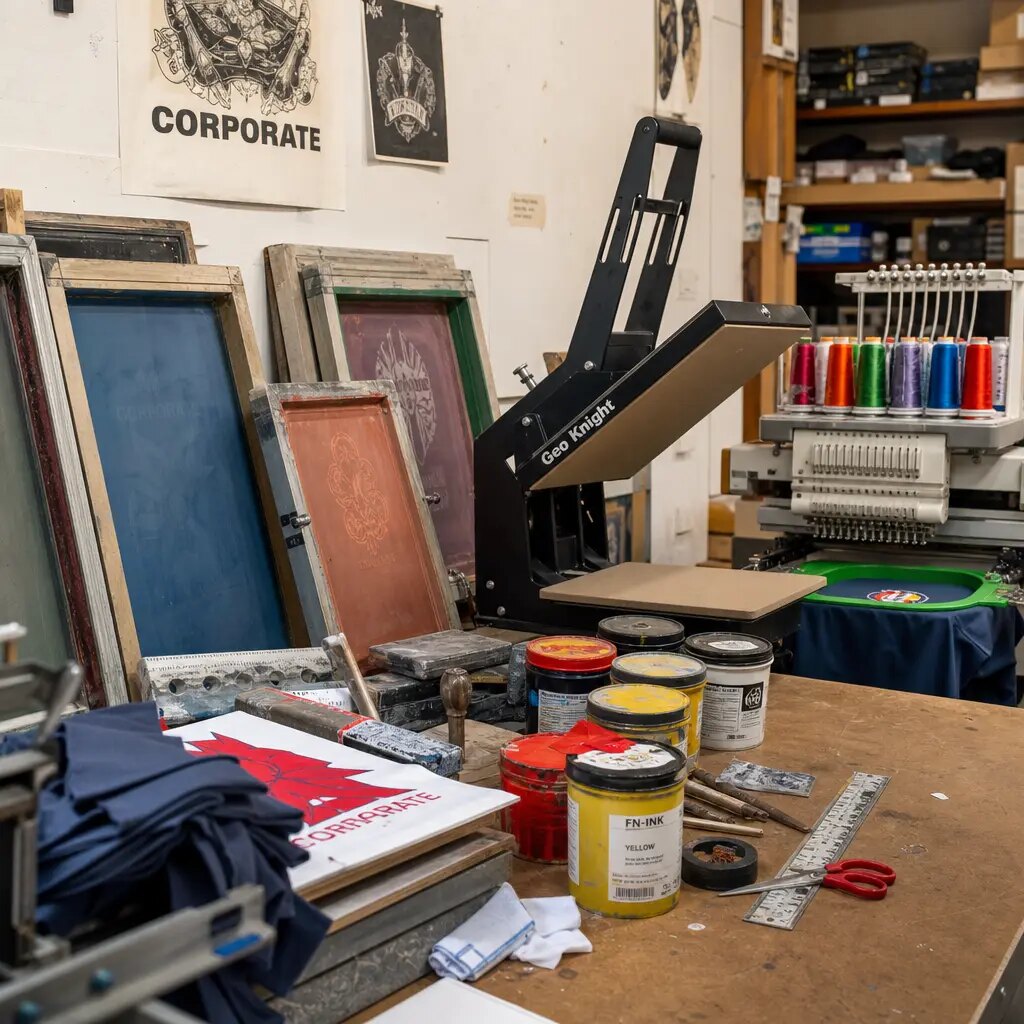
Screen print is usually the practical bulk choice for solid campus marks, alumni graphics, and one-color or two-color programs. It can be efficient and durable when ink, mesh, curing, and fabric surface are controlled. Canvas texture, however, can soften edges or affect coverage, especially on large solid areas. A digital proof is useful for layout, but it should not replace a physical strike-off on the actual canvas.
Heat transfer can work for detailed multi-color art, but it should be tested on the selected fabric for edge adhesion, flexibility, abrasion, and cracking. Embroidery can look premium in certain applications, but dense embroidery on a large canvas panel may pucker the surface or distort fine lettering. A woven label, cotton patch, or stitched emblem may be a cleaner premium option if the licensing office allows it.
- Send vector files rather than low-resolution images copied from a website.
- Approve Pantone color on physical canvas, not only on a screen proof.
- Define logo placement tolerance, often around +/-0.5 cm to +/-1.0 cm depending on panel size and method.
- Keep fine logo details away from seams, gusset folds, divider pressure points, and handle attachments.
- Confirm whether licensing must approve the strike-off, hangtag, belly band, trademark symbol, and country-of-origin label.
Use A Pre-Production Sample As The Buying Contract In Physical Form
A showroom sample is helpful for early discussion, but it should not authorize bulk production. The pre-production sample should use the final fabric, final dimensions, final handle reinforcement, final divider construction, final print method, final label placement, and final packing style. If anything is temporary, the approval record should clearly say what remains open.
Review the sample the way a customer will use it. Put the approved bottle types into each compartment. Lift the carrier by the handles. Hold it under load. Walk with it. Set it down. Look at the dividers, bottom seam, side seams, print distortion, and handle stress. Then pack it exactly as planned for shipment. Packing can create print creases, handle flattening, or divider pressure marks, especially when cartons are overfilled.
Keep a controlled approval record. Photograph the sample from the front, back, side, inside compartments, bottom, handle reinforcement, label area, and packed state. Record finished measurements, fabric weight, print colors, and any approved deviations. The buyer and factory should each keep the same dated reference sample before bulk cutting and printing begin.
- Approve fabric handfeel, GSM, dimensions, bottle fit, handle drop, divider alignment, print color, logo placement, label placement, and packed presentation.
- Do not authorize bulk cutting until artwork and construction are frozen.
- If a revision is needed, confirm whether the next sample is a full pre-production sample or a partial correction.
- Keep one dated approval sample with the buyer and one with the factory.
- Use the approved physical sample and written specification together for inspection.
Write A QC Plan Around Safety, Saleability, And Brand Accuracy
Quality control for canvas wine carriers should focus on three things: safe carrying performance, retail saleability, and licensed-brand accuracy. Critical defects include the wrong logo, unsafe handle attachment, open load-bearing seams, wrong bottle fit, mildew odor, severe stains, and incorrect SKU labeling. Major defects include visible print misregistration, crooked dividers, front-panel marks, missing labels, severe shade mismatch, and carton shortages. Minor defects may include tiny thread ends or small natural slubs if they fall within the approved standard.
Make the standard measurable. Canvas GSM may be controlled within +/-5% unless a tighter tolerance is agreed. Finished dimensions may use +/-0.5 cm for smaller areas and +/-1.0 cm for larger panels. Logo placement should have a written tolerance. Load testing should specify weight, duration, and pass-fail criteria. A two-bottle carrier intended for two 1.5 kg filled bottles should not be tested as if it were an empty tote.
Inspection can include incoming fabric checks, print strike-off approval, inline sewing checks, load testing, and final packed-goods inspection. AQL sampling may be used for visual defects, but safety-related failures should be handled more strictly. If a handle fails under a reasonable load, it is not a cosmetic issue; it is a structural issue that should trigger broader review of the production lot.
- Check loaded samples, not only flat empty bags.
- Inspect handle reinforcement, divider intersections, bottom corners, and side seams after load testing.
- Review print for color match, curing, crocking, pinholes, ghosting, bleeding, cracking, peeling, and placement.
- Check natural canvas for oil marks, dirt, yellowing, mildew odor, heavy slubs, and panel shade mismatch.
- Request final inspection photos showing loaded product, logo close-up, inside compartments, carton marks, and packed cartons.
Plan Packing, Freight, And Calendar Before The Selling Window Gets Tight
Packing affects landed cost and bookstore workflow. Flat bulk packing saves volume, but it can crease printed panels or flatten handles if cartons are too tight. Individual polybags protect against dirt and moisture, though some campuses may prefer reduced-plastic packaging. Kraft bands, belly bands, hangtags, or insert cards improve shelf presentation but add artwork approval, material cost, packing labor, and sometimes carton volume.
Carton data should appear in the quotation, not after production. Ask for pieces per carton, carton dimensions, net weight, gross weight, and estimated total CBM. If the order contains multiple logos, carton marks should show SKU, artwork version, quantity, PO number, carton number, country of origin, gross weight, net weight, and carton size. Mixed cartons should be avoided unless the receiving team specifically wants them and understands the count process.
Work backward from the event or retail launch date. Include artwork approval, quotation, sample making, sample freight, buyer review, revised sample if needed, material booking, printing, sewing, inline inspection, final inspection, packing, export booking, transit, customs clearance, campus receiving, and internal distribution. Custom dyed fabric, many artwork versions, and retail packaging all add approval steps. For a first run, natural canvas with approved screen print and simple carton packing is often the lower-risk path.
- Confirm inner packing, outer packing, carton strength, maximum carton weight, and mixed-SKU rules.
- Request carton dimensions and CBM at quotation stage, then verify them after the packed pre-production sample.
- Avoid printed panels rubbing face-to-face without protection if abrasion or ink transfer is possible.
- Build in buffer for licensing approval, sample shipping, customs clearance, and campus receiving.
- For reorders, keep construction files, artwork files, carton specs, QC standards, and approved sample photos.
Specification comparison for buyers
| Spec decision | Recommended option | When it fits | Buyer risk to check |
|---|---|---|---|
| Sourcing route | Factory-direct custom production with approved pre-production sample and written QC standard | Licensed university merchandise, repeat bookstore programs, donor packaging, seasonal alumni runs, and retail wine or bottle bundles | Confirm who controls fabric buying, cutting, printing, sewing, packing, and final inspection. Avoid quotes that cannot identify the production process behind the price. |
| Fabric weight | 12 oz to 16 oz cotton canvas, approximately 380-540 GSM depending on weave and finish | 12 oz can work for a lighter one-bottle style; 14-16 oz is more suitable for premium two-bottle and four-bottle bookstore merchandise | Require an actual GSM tolerance, commonly +/-5%, and compare bulk fabric with the approved sample. Ounce labels are not always used consistently. |
| Bottle capacity | One-bottle, two-bottle, or four-bottle carrier with measured usable compartments | One-bottle for commencement gifts; two-bottle for alumni retail; four-bottle for winery bundles, holiday programs, or higher-value gifts | Test with the real bottle height, base diameter, shoulder shape, and filled weight. Sparkling wine and some local vineyard bottles may need larger compartments. |
| Handle construction | Self-fabric or cotton webbing handles with box-X stitching, bartacks, or equivalent reinforcement | Any carrier expected to hold full 750 ml glass bottles in customer use | Specify a loaded hanging test, such as 1.5-2.0 times expected load for 30-60 minutes, then inspect for seam opening, thread breakage, fabric tearing, and distortion. |
| Divider design | Stitched-in dividers secured to side seams and/or bottom seam, with divider height matched to the bottle type | Two-bottle and four-bottle carriers where bottles need to stay separated while the shopper walks, lifts, or sets the bag down | Loose, shallow, or floating dividers may look acceptable when empty but allow glass bottles to hit each other once loaded. |
| Print method | Screen print for solid school marks; heat transfer for detailed multi-color art; woven label, patch, or small emblem for subtle premium branding | Screen print is usually the most efficient bulk choice for one-color or two-color university marks on canvas | Approve a physical strike-off on the actual canvas. Check Pantone match, ink coverage, curing, abrasion, edge sharpness, and placement tolerance. |
| Color approach | Natural canvas body with one or two school-color prints for the first bulk run | Keeps fabric MOQ, lab-dip risk, shade approval, and schedule complexity lower while still looking campus-specific | Custom dyed canvas may require higher fabric MOQ, lab dips, bulk shade approval, and a written color tolerance against the approved swatch. |
| Packing plan | Flat packed by SKU in clean export cartons; optional individual polybag, kraft band, belly band, hangtag, or insert card | Bookstore receiving teams need accurate counts, clean storage, easy shelf handling, and carton labels that match the purchase order | Overtight cartons can crease print areas, distort dividers, or crush handles. Request carton dimensions, pieces per carton, net/gross weight, and carton marks. |
| Quote basis | Unit price separated from sample fee, print setup, logo strike-off, packing, labels, carton cost, inland freight, export documentation, and Incoterm | Procurement can compare suppliers fairly and calculate landed margin instead of reacting to a low ex-factory number | A low unit price may hide thinner canvas, fewer stitches, weak dividers, excluded setup charges, mixed cartons, or incomplete shipping assumptions. |
Buyer checklist before sampling
- Define the program use first: alumni retail, commencement gift, donor thank-you, local winery bundle, faculty event, holiday promotion, athletics weekend, or year-round bookstore merchandise.
- Choose one-bottle, two-bottle, or four-bottle capacity and verify usable internal compartment dimensions against real bottles, not only catalogue dimensions.
- Specify fabric by composition, oz, GSM, weave appearance, color, finish, and tolerance; include whether the canvas is natural, bleached, dyed, recycled blend, organic, washed, or untreated cotton.
- State finished dimensions and measurement points: total width, height, depth/gusset, compartment width, divider height, handle length, handle drop, and seam allowance.
- Define handle width, material, reinforcement pattern, stitch density, thread type, and required load test based on expected filled weight.
- Specify divider construction: same canvas or lighter internal fabric, number of dividers, divider height, attachment points, bottom anchoring, and acceptable alignment tolerance.
- Send vector artwork with Pantone references, print size, placement, number of colors, ink coverage, side placement, and restrictions around seams, folds, and handle attachments.
- Confirm bookstore licensing requirements for logo strike-off, trademark symbol, hangtag copy, label placement, country-of-origin marking, and retail packaging artwork before sampling.
- Request a pre-production sample made with final fabric, final print method, final handle construction, final divider design, final labels, and final packing style.
- Separate the quote by bag unit cost, logo setup, screen or plate charge, sample cost, sample freight, packing cost, label or patch cost, carton quantity, inland freight, export cost, and Incoterm.
Factory quote questions to send
- What canvas composition, oz weight, and GSM are included in the quote, and what incoming fabric tolerance do you control?
- Is the quoted fabric natural cotton canvas, bleached canvas, dyed canvas, recycled cotton blend, organic cotton canvas, or another material blend?
- What is the MOQ for one size and one artwork, and what are the price breaks at 500, 1000, 3000, and 5000 pieces per SKU?
- If we split the order across campus, department, alumni, or event logos, how will screen charges, per-SKU MOQ, sorting, carton marking, and unit price change?
- What are the external finished dimensions and the usable internal compartment dimensions after seams and dividers are sewn?
- What bottle diameter, bottle height, and filled weight did you use for the fit and carrying test?
- Are dividers stitched to the bottom seam, side seam, top edge, or a combination, and are they made from the same canvas as the outer shell?
- What handle material, width, stitch pattern, stitch density, and thread type are included in the quotation?
- What load test weight, test duration, and pass-fail standard can you support before shipment?
- Which print method is included, how many colors are included, and what is the setup charge for each extra color, screen, or artwork version?
Quality-control points to confirm
- Canvas GSM should match the approved sample within the agreed tolerance, commonly +/-5% unless a tighter standard is negotiated and priced.
- Finished dimensions should stay within defined tolerance, often +/-0.5 cm for small panels and +/-1.0 cm for larger panels, measured at consistent points.
- Usable compartments must fit the approved bottle type without forcing seams, stretching dividers, or leaving excess movement that lets bottles hit each other.
- Handle attachment should pass the agreed loaded hanging test without seam opening, thread breakage, fabric tearing, or visible distortion around reinforcement stitching.
- Bottom seams, corner stress points, and divider intersections should be inspected after loading because failures often appear where the side seam, bottom fold, and divider meet.
- Print color should match the approved strike-off under consistent lighting, with no major bleeding, pinholes, peeling, ghosting, crocking, cracking, or poor curing.
- Logo placement should remain within the approved tolerance and must not be tilted, off-center, inverted, clipped by a seam, or distorted by folds and handle attachments.
- Dividers should be centered, straight, secure at stress points, and high enough to keep bottles separated during normal carrying.
- Natural canvas should be checked for oil stains, dirt marks, mildew odor, yellowing, excessive shade variation, major slubs, and panel mismatch beyond the approved standard.
- Threads should be trimmed cleanly, reinforcement stitches should be complete, and bartacks or box-X stitching should match the approved sample.