Start With The Event Use
A custom canvas wine carrier can be a low-cost booth giveaway, a sponsor gift, a VIP bottle pack, a tasting kit, a distributor sales tool, or a retail-style item used after the event. The right specification changes with that use. An empty handout can be lighter and packed more densely. A pre-loaded bottle carrier needs stronger handles, better base stability, and a loaded-use check before shipment.
Before pricing, map the event path. Identify who will load the carrier, whether cartons go to a booth, warehouse, 3PL, hotel, sales office, or distributor, and how quickly staff must unpack them. Show-site receiving windows, booth-number labels, pallet limits, and convention-center routing can affect usable cost as much as the factory unit price.
A useful custom canvas wine carriers bulk pricing plan for trade show exhibitors starts with the same controlled inputs for every supplier: bottle data, construction, artwork count, packing method, inspection standard, production geography, and shipping terms. Without those details, one quote may assume a light blank with basic print while another includes heavier canvas, reinforced handles, carton coding, and inspection.
- Name the use case before asking for price: giveaway, sponsor gift, VIP pack, tasting kit, retail item, distributor tool, or follow-up mailer.
- State whether carriers ship flat, pre-loaded, folded with inserts, packed by destination, or prepared for a 3PL.
- Include show receiving deadline, booth number labels, pallet limits, and special routing instructions.
- Compare quotes only when the same specification, packing method, artwork count, inspection scope, and Incoterm are used.
Fit The Carrier To Real Bottles
Bottle volume alone is not enough. A 750 ml Bordeaux bottle, Burgundy bottle, sparkling bottle, tall Riesling bottle, and spirits bottle can require different width, gusset depth, height, handle drop, and base construction. If the carrier is too narrow, loading is slow and seams take extra stress. If it is too loose, the bottle swings, the presentation looks unfinished, and the order wastes fabric and carton space.
Measure the actual bottle whenever possible. Send maximum diameter, total height, shoulder width, neck diameter, closure height, label protection needs, and filled weight. Many filled 750 ml bottles fall roughly around 1.2 kg to 1.6 kg, but heavy glass, sparkling formats, and spirits bottles can exceed assumptions. Procurement should use the real filled weight, not a generic estimate.
For one carrier covering several SKUs, quote around the largest and heaviest bottle, then test the smallest bottle for appearance and stability. Two-bottle formats require more care because load, divider stress, and bottom strain increase quickly. Divider material, divider height, base reinforcement, and handle anchoring belong in the first quote.
- Send bottle height, maximum diameter, shoulder width, neck diameter, closure style, label needs, and filled weight.
- Approve the sample with the real bottle inserted, photographed from front, side, top, and loaded carry views.
- For multi-SKU programs, test the largest bottle for fit and the smallest bottle for stability.
- For two-bottle carriers, specify divider height, divider material, reinforced base, and loaded test method.
Choose Canvas GSM By Use
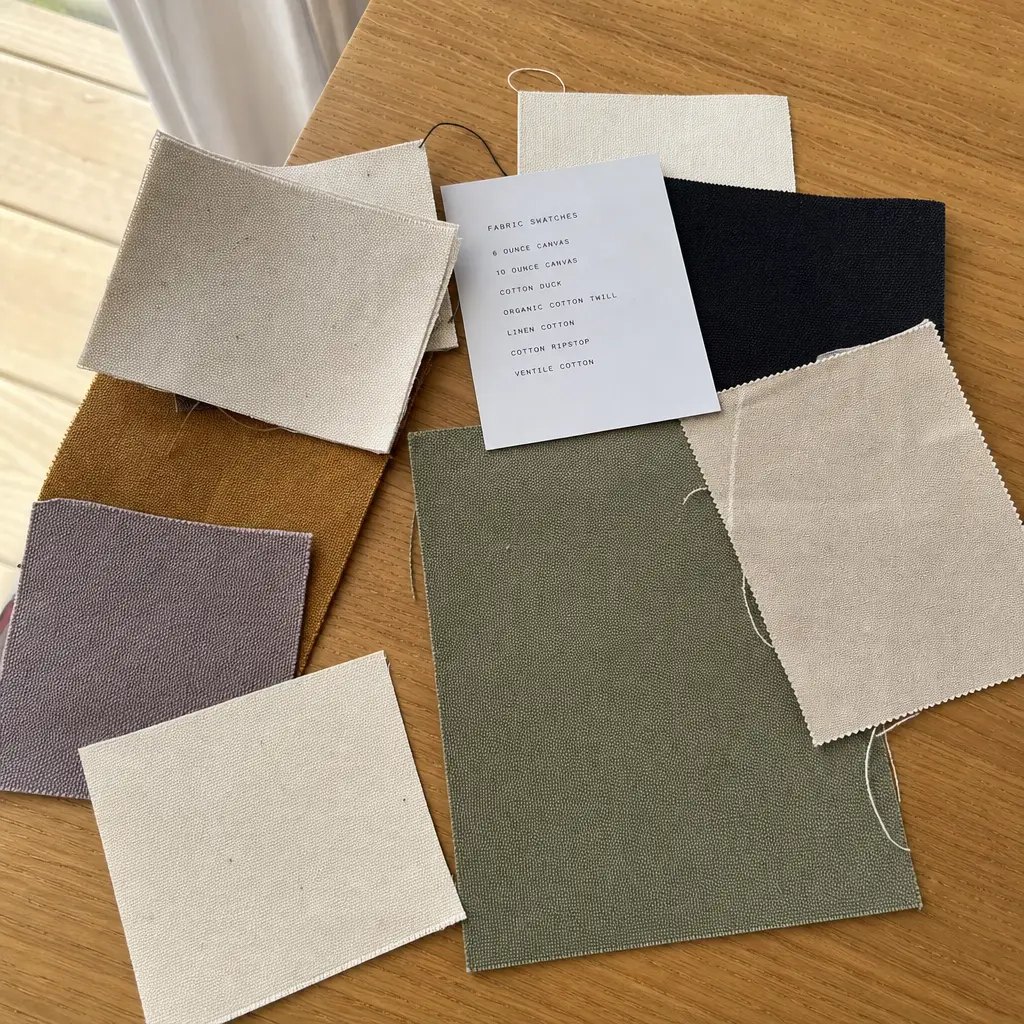
Canvas weight affects cost, hand feel, print appearance, load behavior, carton density, and freight. Buyers often treat 8 oz, 10 oz, and 12 oz canvas as simple quality levels. They are better viewed as fit-for-use choices tied to bottle load, reuse expectation, decoration method, and brand presentation.
Use both oz/yd2 and GSM in the spec so domestic teams and overseas factories read the same requirement. Useful approximate conversions are 8 oz/about 270 gsm, 10 oz/about 340 gsm, and 12 oz/about 400 gsm. For many single-bottle trade show programs, 10 oz canvas is a practical starting point because it has better structure than an economy handout while still folding efficiently.
An 8 oz canvas can work for cost-controlled empty handouts with standard bottles, but reinforcement and seam quality matter. A 12 oz canvas gives a more substantial hand and better standing shape, but it raises material cost, sewing resistance, carton weight, and freight volume. Fabric finish also matters: natural canvas has visible cotton flecks, bleached canvas gives a cleaner print ground, and dyed or washed canvas needs shade, shrinkage, and crocking checks.
- 8 oz/about 270 gsm: economy handout, lighter structure, best with simple art and standard bottle loads.
- 10 oz/about 340 gsm: balanced default for many branded exhibitor orders.
- 12 oz/about 400 gsm: stronger hand feel and better standing shape, with higher material and freight cost.
- Dyed, washed, recycled, or organic canvas: quote with document requirements, shade standard, shrinkage expectation, and colorfastness checks.
Build Comparable Bulk Pricing
Bulk pricing should separate the product spec from the cost variables. Price changes with GSM, finished dimensions, fabric finish, handle material, reinforcement, print method, artwork versions, trims, packing format, carton density, inspection scope, and Incoterm. A 1,000-piece order can look inexpensive if it assumes 8 oz natural canvas and bulk packing, then become a different project once reinforced handles, two-color print, or destination labels are added.
The planning ranges in this guide are budgeting references, not guaranteed quotes. They assume simple factory production in common textile sourcing regions such as China, India, Vietnam, or Pakistan; natural or basic dyed cotton canvas; one-bottle construction; one-color decoration unless stated; bulk flat packing; and FOB main export port unless another route is named. Final pricing depends on raw material market, labor route, exchange rate, freight mode, duty rate, delivery date, artwork, trim MOQ, testing, and inspection requirements.
For a natural canvas single-bottle carrier with one-color print and bulk flat packing, buyers may see a broad planning range around $1.25-$2.20 at 1,000 pcs on an FOB basis. A balanced 10 oz/about 340 gsm carrier with reinforced handles, controlled print placement, and better carton planning may sit around $1.70-$3.10 at 1,000 pcs FOB. Premium details such as 12 oz canvas, woven labels, patches, reinforced base, inserts, or unit packing can move the cost higher and may create separate MOQs.
Build landed cost before choosing a supplier. Add sample fees, screen or transfer setup, artwork version charges, inspection, inland freight, ocean or air freight, duty, customs brokerage, destination delivery, and show-site handling. A low factory unit price is not the best buy if it causes repacking, mislabeling, rush freight, or missed receiving windows.
- Request price breaks at 300, 500, 1,000, 2,500, and 5,000 pcs using the same spec, geography, packing method, and Incoterm.
- Separate bag cost, decoration setup, run charge, sample fee, packing upgrades, inspection, freight, duty, and destination delivery.
- Model cost per usable delivered carrier, not only factory unit price.
- Identify surcharges for artwork splits, dyed fabric, trims, woven labels, inserts, lab testing, or destination packing.
Specify Construction Stress Points
A wine carrier holds a dense object in a small footprint. The highest-risk areas are handle anchors, top hem, side seams, bottom seam, gusset corners, base shape, and divider if used. A flat sample can look clean and still distort when the bottle is inserted, lifted repeatedly, or pulled quickly from a packed carton.
Handle design is one of the clearest quality signals. Self-fabric handles match the body and often suit natural canvas branding. Cotton webbing can give a firmer grip and stronger feel. Common handle widths often sit around 20 mm to 30 mm, but the correct width depends on load, comfort, and presentation. Handle drop should allow easy carrying without excessive bottle swing.
Use precise construction language. State whether raw edges are overlocked, enclosed, bound, or finished another way. Define top hem height, seam allowance, stitch density, and reinforced base construction if needed. A shaped gusset or flat base can help the carrier stand upright, but it adds sewing time and can reduce carton density.
- List finished width, height, gusset, base style, top hem, seam allowance, handle width, and handle drop.
- Require bar tack, box stitch, dense backstitch, reinforcement patch, or approved equivalent at handle anchors.
- Define seam finish: overlocked, enclosed, bound, or another approved method.
- Test standing shape, handle comfort, seam strain, bottom stability, and bottle swing with the actual bottle.
Match Decoration To Canvas
Decoration should be selected for repeatable production, not only for a polished mockup. Screen printing is usually the workhorse for custom canvas wine carriers because it is economical at bulk quantities and reliable for simple logos. One-color screen print is often the cleanest option for exhibitors. Two-color printing can work well when registration tolerance and approval standards are clear.
Heat transfer helps with gradients, fine sponsor marks, and artwork that cannot be simplified into spot colors. On textured canvas, transfer quality depends on film type, temperature, pressure, dwell time, and surface condition. Check fold performance, light rub, and edge lift on the final canvas. Embroidery can look premium on heavier fabric but may distort lighter constructions. Woven labels and patches add a retail-ready finish, with trim MOQ, shade variation, placement tolerance, and extra sewing labor.
Send production-ready files. Include vector artwork, final print size, Pantone or brand references, placement from fixed edges or seams, and logo-use rules. Avoid tiny reversed type, thin strokes, and art crossing heavy folds unless the factory has tested it. If sponsor logos or regional versions are involved, track setup charges, proof approvals, carton labels, and packing lists by version.
- Use one-color screen print for simple logos, clean pricing, and stable large-run production.
- Use heat transfer for complex art only after fold, rub, and edge-lift checks on final canvas.
- Use woven labels or patches when the presentation value justifies trim MOQ and added sewing time.
- Set print-position tolerance in writing, commonly +/-5 mm unless the design requires tighter control.
Document Material Claims
Sustainability language should be specific enough for a procurement file. If the carrier is described as organic cotton, recycled cotton, GOTS-certified, OEKO-TEX tested, or made with reduced-plastic packaging, clarify what the document actually covers. A certificate may apply to the mill, fabric, facility, transaction, or finished product. Those are not interchangeable.
For organic cotton, request certificate scope and transaction documentation when applicable. For recycled cotton, ask for the recycled-content claim, blend percentage, and supporting document from the material supplier or certification program where available. For restricted-substance expectations, request the relevant test report, supplier declaration, or buyer-specific restricted substances confirmation. For packaging, specify kraft paper bands, recycled-content polybags, no individual polybag, or master carton only instead of using broad eco packaging language.
Be cautious with public claims on booth signage, inserts, or product pages. The documents should support the exact wording. When documentation is limited, use narrower language such as recycled-content canvas available with supplier documentation or organic cotton fabric available subject to certificate scope.
- Check whether certification covers the fabric, finished carrier, facility, or transaction.
- Request certificate scope, transaction documents where applicable, recycled-content percentage, and packaging material specs.
- Name standards only when the supplier can support them, such as GOTS, GRS, RCS, or OEKO-TEX Standard 100 where relevant.
- Avoid broad eco claims unless the documents support the exact wording.
Use Sampling As A Gate
Sampling should prove fit, construction, branding, and packing before bulk production begins. A reference sample made from similar canvas can help early discussion, but it is not a pre-production sample. The pre-production sample should use final fabric, final size, final handle, final decoration, and intended folding.
The sample should answer practical event questions. Does the bottle slide in easily? Does the carrier stand or hang correctly? Is the logo readable from booth distance? Do the handles feel secure when lifted repeatedly? Does the fold mark the print or patch? If the carrier must match a previous order, compare it against the retained sample and list any approved differences.
Record the approval in measurable terms. Note finished width, height, gusset, handle width, handle drop, top hem, print size, print placement, seam method, reinforcement method, and packing style. Photograph the sample empty, loaded, folded, and packed. The purchase order should reference the approved sample date, sample number, or signed spec sheet.
- Request a pre-production sample with final fabric, dimensions, handle, decoration, and intended packing.
- Measure the sample flat and loaded with the actual bottle or confirmed equivalent weight.
- Retain the approved sample as the inspection benchmark.
- Approve changes in writing before bulk cutting, printing, trim purchasing, or packing material production begins.
Control Packing And Freight
Packing is a cost and risk item. Flat bulk packing is usually efficient for simple giveaways because it lowers unit cost and improves carton density. VIP gifts, sponsor kits, resale programs, or tasting-room handouts may justify individual polybags, tissue, belly bands, insert cards, or shaped supports. Each option changes carton count, freight volume, booth setup speed, and presentation.
Ask for carton data with the quote: pieces per carton, carton dimensions, gross weight, net weight, CBM, pallet quantity, pallet height, and carton mark format. Stiff handles, patches, inserts, and premium folds can make carriers bulky. Oversized cartons raise freight cost, while overfilled cartons can crush folds, bend handles, or mark prints.
Split shipments need disciplined labels. Cartons for the booth, 3PL, warehouse, distributor, and sales offices should have destination codes and separate packing lists. For event freight, build schedule buffer for inspection, inland trucking, export documents, customs clearance, destination delivery, and show-site receiving rules.
- Approve fold style so printed areas, patches, and handles are not damaged in transit.
- Request pieces per carton, carton dimensions, gross weight, net weight, CBM, and pallet plan.
- Use destination-coded carton labels and separate packing lists for split shipments.
- Release shipment only after counts, labels, visible workmanship, and loaded-use checks match the approved plan.
Inspect Before Shipment
Inspection should be defined before defects appear. The checklist should cover dimensions, fabric cleanliness, GSM reference, sewing, handle anchors, print quality, trims, packing count, carton labels, and destination coding. For larger orders or strict show dates, a formal final inspection or third-party inspection can reduce the chance of finding problems when cartons are already at the event site.
Loaded-use checks are especially important for wine carriers. Inspectors should insert the target bottle or equivalent weight into production units, lift the carrier, observe handle anchors, check bottom seams, and look for bottle swing, neck pinching, base collapse, or top-opening distortion. The check does not replace laboratory testing, but it catches many practical construction problems.
Print and packing checks should reflect how the carrier will be handled. Because carriers are often packed flat and opened quickly at booths, printed or transferred areas should be reviewed after light rub and fold handling. Carton marks should match the packing list, version plan, destination, and booth or warehouse instructions. The best inspection standard is the one tied to the approved sample and written tolerances.
- Measure production units against the approved sample and written tolerance sheet.
- Check fabric defects, stains, odor, shade panels, raw edges, skipped stitches, loose threads, and needle damage.
- Test loaded handling from production units, not only from the approved sample.
- Verify print position, opacity, registration, transfer edge lift, carton count, carton marks, and destination labels.
Specification comparison for buyers
| Sourcing route or spec level | Estimated unit range at 1,000 pcs | Typical MOQ fit | Lead time profile | Customization control |
|---|---|---|---|---|
| Domestic blank plus local decoration | About $3.20-$6.50 decorated, before final domestic freight and show-site handling | 100-500 pcs | Shortest when blanks are in stock; rush decoration may add cost | Low to moderate; blank size, GSM, handle drop, and carton density are usually fixed |
| Semi-custom stocked factory lane | About $2.10-$4.20 FOB or ex-works equivalent, before international freight, duty, and destination handling | 300-1,000 pcs | Moderate when fabric, pattern, and blank construction are already running | Moderate; print, label, and packing may vary, while body pattern may be fixed |
| Direct cut-and-sew production | About $1.45-$3.40 FOB main export port, before freight, duty, and destination handling | 1,000-5,000+ pcs | Longer because sampling, fabric booking, cutting, sewing, printing, inspection, and export packing must be scheduled | High; buyer can control GSM, size, handle, reinforcement, decoration, packing, and inspection |
| Economy giveaway spec | About $1.25-$2.20 FOB for 8 oz/about 270 gsm natural canvas, one-color print, bulk flat pack | 500-5,000 pcs | Moderate if natural canvas and simple print are used | Moderate; best kept simple with standard dimensions and limited artwork versions |
| Balanced exhibitor spec | About $1.70-$3.10 FOB for 10 oz/about 340 gsm canvas, reinforced handles, one-color print, and controlled carton plan | 500-5,000 pcs | Moderate with normal sampling and material availability | High enough for most branded trade show programs |
| Premium sponsor or VIP spec | About $2.60-$4.90 FOB for 12 oz/about 400 gsm canvas, stronger base, label or patch, and upgraded packing | 300-2,500 pcs | Moderate to longer due to trims, heavier sewing, proofing, or unit packing | High, but trim MOQ and packing labor can limit flexibility |
| Multi-logo or regional artwork plan | About $1.85-$3.80 FOB when 1,000 pcs are split across several print versions; setup charges may apply per version | 500-5,000 pcs split by logo | Moderate; artwork proofing and carton segregation can become the bottleneck | High if version control, packing lists, and carton labels are managed early |
| Sustainability-documented plan | About $2.10-$4.80 FOB depending on certified fabric, recycled content, test reports, transaction documents, and packaging choice | 500-5,000+ pcs | Moderate to longer if certified fabric or transaction documents must be booked | Moderate to high, depending on certified material availability and document scope |
| Multi-destination fulfillment plan | About $1.80-$3.90 FOB for the carrier, plus added packing, labeling, carton segregation, palletizing, and freight charges | 1,000-10,000 pcs | Longer if cartons must be split, coded, or routed separately | High when packing instructions and destination codes are locked before production |
Buyer checklist before sampling
- Define the event use: empty booth giveaway, pre-loaded bottle carrier, sponsor gift, VIP kit, tasting room item, retail pack, distributor tool, or post-show mailer.
- Provide bottle data: volume, total height, maximum diameter, shoulder width, neck diameter, closure type, label-protection needs, and filled weight.
- Select single-bottle, two-bottle, or partitioned construction and state whether the filled carrier must stand upright on a counter.
- Specify canvas weight in both oz/yd2 and GSM, such as 8 oz/about 270 gsm, 10 oz/about 340 gsm, or 12 oz/about 400 gsm.
- Define fabric finish and claim language: natural, bleached, dyed, washed, recycled cotton, organic cotton, or certified material with required documents.
- List finished width, height, gusset depth, base style, top hem height, seam allowance, handle width, handle drop, and reinforcement method.
- Set measurable tolerances, commonly +/-5 mm for finished width and height, +/-3 mm to +/-5 mm for handle drop, and +/-5 mm for print position unless tighter control is needed.
- Provide vector artwork, Pantone or brand references, final print size, logo placement from fixed edges or seams, print color count, and decoration method.
- State packing format: bulk flat pack, folded set, belly band, tissue, individual polybag, carton count, pallet plan, destination split, or 3PL-ready labeling.
- Request price breaks at 300, 500, 1,000, 2,500, and 5,000 pieces using the same spec, packing method, artwork count, inspection scope, production geography, and Incoterm.
Factory quote questions to send
- What production geography, Incoterm, currency, and port or delivery point are used for the quoted price?
- What canvas weight in oz/yd2 and GSM is included, and what GSM tolerance will be used for bulk fabric acceptance?
- What finished size, gusset, base style, top hem, handle width, handle drop, seam type, stitch density, and reinforcement are included?
- Is the fabric natural, bleached, dyed, washed, recycled-content, organic, or otherwise certified, and what documents can prove the claim?
- Will cutting, sewing, printing, trimming, packing, and final inspection happen in-house, or will any step be subcontracted?
- What load expectation is the construction designed for, and can the factory test with our filled bottle or equivalent confirmed weight?
- What print method is quoted, what setup charges apply, and what minimum line weight or type size is recommended on textured canvas?
- What print-placement tolerance, color tolerance, curing or pressing standard, and bulk approval method will be used?
- What are the price breaks at 300, 500, 1,000, 2,500, and 5,000 pcs using the same specification, same packing method, same artwork count, and same Incoterm?
- What is excluded from the unit price, including sample fee, screen charge, transfer setup, label tooling, individual packing, inspection, freight, duty, customs brokerage, or destination delivery?
Quality-control points to confirm
- Finished dimensions should match the approved spec within written tolerances, commonly +/-5 mm on width and height for a simple single-bottle carrier and +/-3 mm to +/-5 mm on handle drop depending on construction.
- Gusset depth, base shape, top hem height, and handle placement should be measured against the approved sample because these details affect bottle fit and upright presentation.
- Canvas weight should match the approved GSM within the agreed fabric tolerance, controlled against a sealed swatch or approved production sample rather than a verbal description.
- Fabric should be clean, dry, evenly woven, and free of stains, oil marks, mildew, excessive slubs, holes, broken yarns, color streaks, shade panels, or strong storage odor.
- Dyed or washed canvas should be checked for shade consistency, visible crocking risk, shrinkage impact, and transfer of color onto light packaging when rubbed.
- Side seams, bottom seams, gusset seams, and top hems should be straight and balanced, with no open seams, skipped stitches, needle cuts, puckering, loose thread tails, or raw edges where enclosed edges were specified.
- Handle anchors should use the approved reinforcement method such as bar tacks, box stitching, dense backstitching, or reinforcement patches, with no twisting, uneven stretch, or top-opening distortion under load.
- The carrier should be tested with the target bottle or an equivalent weight to confirm no handle tear, seam failure, bottom blowout, excessive bottle swing, neck pinching, or base collapse during normal handling.
- Print placement should match the approved artwork position within written tolerance, with clean registration, controlled opacity, no pinholes, no ink bleeding, no scorching, and no transfer edge lift after folding.
- Carton count, carton marks, destination labels, version labels, pallet data, and packing lists should match the purchase order before shipment release.