Start Pricing From The Selling Situation
A custom canvas wine carrier for craft fairs is not priced the same way as a flat promotional tote. The buyer needs a bag that looks acceptable on a booth table, carries real glass bottles safely, and packs efficiently into cartons that a small vendor team can move. Your bulk pricing plan should start with the selling situation: single winery booth, multi-brand market, gift shop replenishment, or event sponsor giveaway.
For craft fairs, the biggest pricing mistake is treating the wine carrier as a simple logo bag. Bottle weight changes the handle construction, divider design, seam allowance, carton strength, and inspection method. A low quote based on light canvas and simple stitching can look attractive until the carrier sags, tips, or creases through the front print after packing.
- One-bottle carriers suit tasting rooms, pop-up wine shops, and gift-with-purchase programs.
- Two-bottle carriers are the most common fair retail upgrade because they feel useful without becoming bulky.
- Four-bottle and six-bottle carriers need stronger dividers, wider bases, and more serious handle testing.
- Flat-fold construction saves freight but may create visible fold marks on heavy front printing.
- Retail-ready carriers need cleaner thread trimming and sometimes individual packing; giveaway carriers can often be bulk packed.
Build Quantity Breaks Around Real MOQ Logic
Bulk pricing is driven by more than the final order quantity. A factory has to buy canvas, cut fabric, set screens, sew sample approvals, pack by carton plan, and manage artwork splits. A quote for 3,000 pieces in one natural canvas color with one black logo is very different from 3,000 pieces divided across six logos and three fabric colors.
A practical RFQ should request quantity breaks that match actual buying behavior. For craft fair programs, useful breaks are often 500, 1,000, 2,500, and 5,000 pieces. Below 500 pieces, setup charges and material purchasing can dominate the unit price. Above 2,500 pieces, the buyer may see better fabric purchasing efficiency and more stable production scheduling, especially if the construction stays unchanged.
- Request price by total quantity and by artwork version so setup costs are visible.
- Do not assume mixed logos qualify for the same price as one continuous production run.
- Separate repeat-order pricing from first-order pricing because screens, patterns, and approved specs may already exist.
- Ask whether natural canvas and dyed canvas have different MOQs due to fabric sourcing.
- For seasonal fairs, compare one larger production run against two smaller replenishment runs with separate freight.
Choose Canvas Weight Before Comparing Quotes
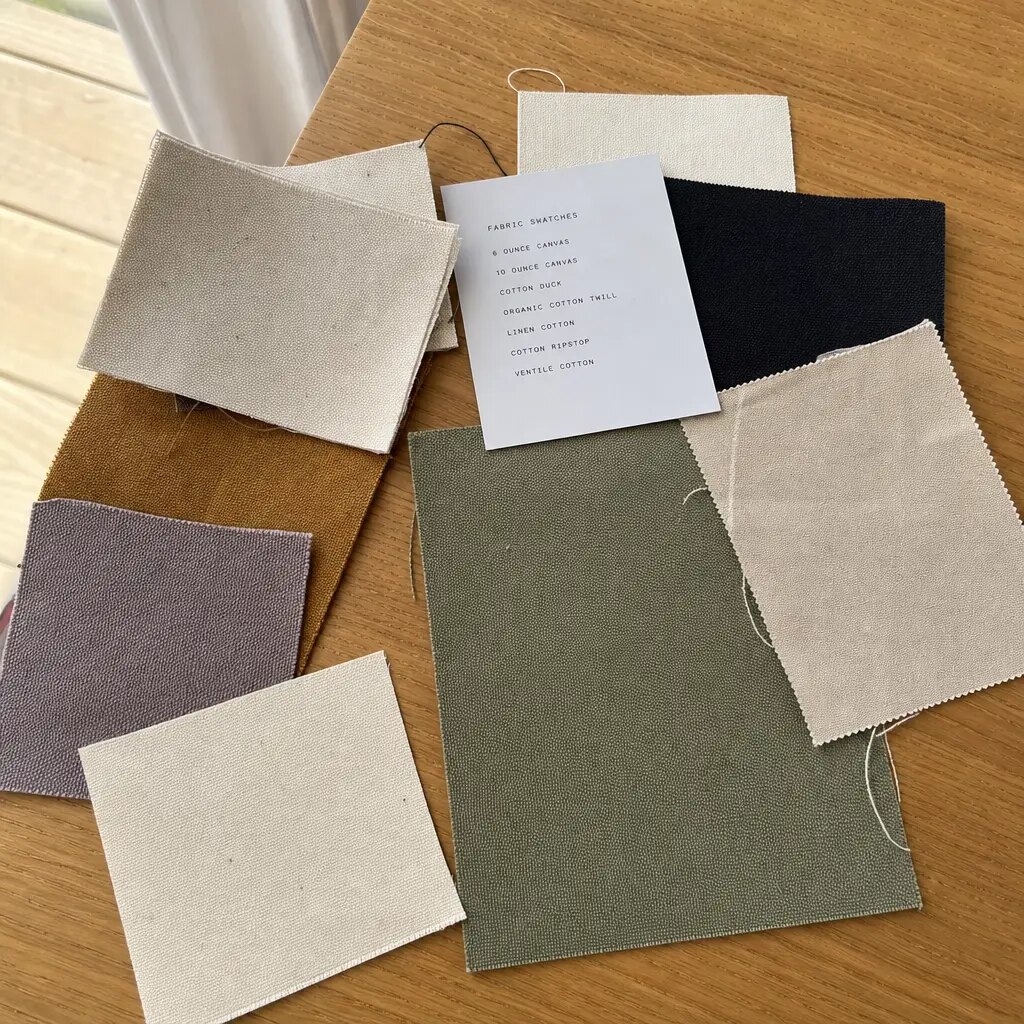
Fabric weight is one of the clearest cost drivers. Many buyers write 'heavy canvas wine carrier' in the RFQ, then receive quotes that cannot be compared. One supplier may price 8oz canvas, another may price 12oz, and a third may use recycled cotton blend with a different hand feel. For wine carriers, the usual workable range is 10oz to 14oz canvas, roughly 340 to 475 GSM depending on weave and finishing.
For most craft fair programs, 10oz or 12oz canvas is the commercial middle ground. It has enough body for a bottle carrier while remaining foldable and economical to ship. A 14oz option can be right for premium retail, winery gift packs, or reusable market carriers, but it increases fabric cost, sewing resistance, carton weight, and sometimes needle marks at thick seams.
- 8oz canvas: usually too light for premium wine retail unless used for a simple sleeve or giveaway bag.
- 10oz canvas: good for cost-sensitive one-bottle and light two-bottle programs.
- 12oz canvas: strong all-purpose choice for branded retail wine carriers.
- 14oz canvas: premium feel, better structure, higher unit and freight cost.
- Dyed canvas: attractive for brand color, but needs colorfastness and shade-lot control.
Control Construction Details That Affect Safety
The loaded weight of glass wine bottles exposes weak construction quickly. A standard 750 ml bottle can weigh around 1.2 to 1.6 kg depending on glass thickness and fill. A two-bottle carrier may carry more than 3 kg before adding the bag weight itself. The RFQ should define handle length, handle material, reinforcement method, bottom width, divider design, and seam allowance.
Handle stitching deserves special attention. A neat-looking stitch line is not the same as a load-bearing handle. For one-bottle carriers, reinforced box stitching or bar-tacks are usually adequate. For two-bottle and multi-bottle styles, the handle should be tested with loaded bottles, not only pulled by hand during sample review.
- Specify finished size using bottle diameter and height, not only flat bag dimensions.
- Require bar-tack or box-stitch reinforcement at handle attachment points.
- Use a wider base for two-bottle carriers so bottles sit upright on a booth table.
- For dividers, define whether the divider is sewn into the side seam, bottom seam, or removable.
- Avoid narrow handles on heavier styles; they cut into the hand and reduce perceived quality.
Pick A Print Method That Fits Canvas
Screen printing is usually the best starting point for custom canvas wine carriers in bulk. It handles solid logos well, looks natural on cotton canvas, and gives stable pricing at production quantities. For one to three color artwork, it is generally easier to control than digital methods on rough fabric. The buyer should provide Pantone references, artwork size, placement, and whether the print must remain visible when a bottle is loaded.
Heat transfer can work for small detailed artwork or full-color event graphics, but it changes the surface feel. On rustic canvas wine carriers, a glossy transfer may look less premium than a clean one-color screen print. Embroidery can be attractive on heavier canvas, but it adds cost and may distort lighter fabric unless backing and stitch density are controlled.
- Screen print: best for solid logos, event marks, winery names, and simple illustrations.
- Heat transfer: useful for small detail or multiple colors, but test gloss and wash resistance.
- Embroidery: premium look on heavier canvas, but quote stitch count and backing separately.
- Woven label: good for repeat retail ranges where the label becomes part of the product identity.
- Print placement: approve on a filled sample, not only on a flat empty carrier.
Use Samples To Lock Price And Risk
A pre-production sample is not only a design approval. It is the physical reference for fabric weight, shrinkage, hand feel, bottle fit, print color, handle comfort, divider performance, stitching, and packing fold. If the buyer approves only a digital proof, the factory may still be working with assumptions about thickness, print position, and sewing method.
For craft fair wine carriers, sample review should include a loaded-use test. Place the intended bottle inside, lift the carrier repeatedly, set it on a flat table, and look at how the print panel behaves. If the logo bends around the bottle or the divider collapses, the issue should be corrected before bulk cutting begins.
- Approve actual fabric weight and color, not a close substitute, for production reference.
- Measure finished size after the sample is sewn, not only before sewing.
- Load the sample with the target bottle type and photograph front, side, bottom, and handle points.
- Rub the print lightly after curing and after folding to identify cracking or ink transfer.
- Keep the approved sample sealed or signed so final inspection has a clear reference.
Separate Unit Price From Landed Cost
The cheapest unit price is not always the lowest landed cost. Canvas wine carriers are bulkier than flat cotton drawstring pouches and heavier than non-woven promotional bags. Fabric weight, handle thickness, divider structure, and carton compression all affect freight. A supplier quoting a lower unit price with inefficient carton packing may lose the advantage once ocean freight, local delivery, storage, and fair distribution are included.
Buyers should request carton dimensions and weights with every price break. This allows procurement teams to compare cost per sellable carrier, cost per carton, pallet count, and booth distribution cost. For distributors, carton size also affects warehouse handling and parcel replenishment to small retailers.
- Compare EXW or FOB unit price separately from estimated freight and local charges.
- Request pieces per carton, carton size, gross weight, and net weight before award.
- Calculate cost per usable piece after expected defect allowance and inspection results.
- For retail programs, include label, barcode, inner packing, and repacking cost where needed.
- For fair events, consider carton handling: vendors may prefer smaller cartons even if freight is slightly higher.
Packing Plan For Craft Fair Distribution
Packing is often decided too late. For craft fairs, the ideal packing plan depends on how the carriers reach the booth. A winery may want 50 pieces per carton so staff can carry cartons easily. A distributor may prefer 100 pieces per carton to reduce carton count. A retail buyer may require inner packs of 10 or 25 pieces for store allocation.
Printed canvas should not be crushed aggressively. Heavy compression can save carton volume, but it may leave fold lines through the logo or create uneven creasing on the front panel. If the carrier is intended for retail sale rather than free giveaway, a cleaner fold and more controlled carton loading may be worth the small freight increase.
- Define flat pack, half-fold, or shaped packing before final quote.
- Use inner polybags or paper bands only if they match the retail or event handling process.
- Mark cartons by style, artwork, color, and quantity to prevent booth allocation errors.
- Avoid mixing multiple logos in one carton unless the distribution plan requires it.
- For export cartons, specify dry, clean, double-wall cartons if weight is high.
Lead Time Risk Is Usually In The Details
Production lead time should be counted from final sample approval and deposit, not from the first email inquiry. A typical schedule includes artwork review, quote confirmation, sample making, sample freight, revision if needed, material booking, bulk cutting, printing, sewing, trimming, inspection, packing, and export handoff. Each artwork split or fabric color can add coordination time.
Craft fair orders are often tied to fixed event dates. That makes late artwork and slow sample approval expensive. A realistic buyer schedule should lock the construction first, then print artwork, then packing. Changing bottle capacity or fabric weight after sample approval can reopen costing and delay bulk production.
- Reserve time for physical sample shipping, especially when print color and fabric weight matter.
- Confirm whether printing happens before or after sewing; this affects correction options.
- Set a final artwork lock date and avoid late logo version changes.
- Schedule inspection before the required vessel closing date or domestic dispatch date.
- For seasonal fairs, plan replenishment early because small urgent orders rarely receive best bulk pricing.
Quote Data That Makes Suppliers Comparable
A useful quote should show the commercial logic behind the price. Procurement teams should not accept a one-line unit price for 'canvas wine bag'. The quote should list fabric weight, material composition, finished size, capacity, handle specification, print method, number of colors, setup charges, sample charges, carton packing, lead time, payment terms, and trade terms.
When comparing suppliers, normalize the quote before ranking. If one factory includes screen charges and another lists them separately, move both into the same cost model. If one supplier quotes FOB and another quotes EXW, add inland transport and export handling before comparison. This is where many small price differences disappear.
- Quote line should include fabric weight in oz or GSM and whether it is cotton, recycled cotton, or blend.
- Decoration should list print size, color count, setup cost, and any artwork limitation.
- MOQ should be stated by style, color, and design, not only total order quantity.
- Packing data should include pieces per carton, carton size, gross weight, and carton marks.
- Commercial terms should define sample fee, tooling or screen fee, payment terms, lead time, and Incoterms.
Specification comparison for buyers
| Spec decision | Recommended option | When it fits | Buyer risk to check |
|---|---|---|---|
| Fabric weight for fair retail use | 10oz to 12oz cotton canvas, about 340-410 GSM | Good balance for wine carrier body strength, foldability, and reasonable freight cost | Below 10oz may sag around two bottles; above 14oz increases unit cost and carton weight quickly |
| Bottle capacity | One-bottle or two-bottle carrier before moving to four or six bottles | Best for craft fairs where buyers carry purchases by hand and vendors need compact booth storage | Multi-bottle styles need divider strength testing and higher handle pull requirements |
| Print method | Screen print for one to three solid colors; heat transfer only for small detailed art | Works for logos, farm names, wine shop branding, and event artwork on natural canvas | Heavy ink coverage can crack on folded panels; heat transfer can look too glossy for rustic retail programs |
| Decoration position | Centered front print, 80-120 mm wide for one-bottle bags and 120-180 mm for two-bottle carriers | Keeps the logo visible when the bottle is loaded and reduces distortion near seams | Artwork too close to side seams or bottom fold may shift after sewing or look crooked when filled |
| Bulk pricing route | Direct factory quote for 1,000+ pieces; distributor quote for smaller urgent lots | Direct route improves control over fabric, logo, and packing; distributor route helps when deadline is tight | Distributor stock may not match your requested GSM, handle length, or carton packing exactly |
| MOQ strategy | Combine colorways or print versions only after confirming shared fabric and construction | Useful for craft fair assortments across wineries, makers, or seasonal events | Too many artwork splits can erase quantity savings because screens, setup time, and packing lists multiply |
| Handle construction | Self-fabric or cotton webbing handles with bar-tack reinforcement | Needed for loaded wine bottles and repeated booth handling | Single straight stitch without reinforcement can fail during fair use, especially on two-bottle carriers |
| Packing plan | Flat packed, 50-100 pieces per export carton with inner polybag by agreed ratio | Best for booth vendors and retail buyers who need easy counting and low carton damage | Over-compressed packing may crease printed panels; loose packing increases carton volume and freight cost |
Buyer checklist before sampling
- Define one-bottle, two-bottle, four-bottle, or six-bottle capacity before requesting pricing.
- State fabric weight in oz or GSM, not only 'canvas wine bag'.
- Provide loaded bottle size, including diameter and height, for divider and handle testing.
- Specify print method, number of colors, print size, and artwork position on the panel.
- Separate required order quantity from possible annual volume so the factory can price both honestly.
- Request MOQ by style, fabric color, print design, and carton mark, not only total quantity.
- Approve a physical pre-production sample with actual fabric, stitching, handle, divider, and logo.
- Set acceptance criteria for print color tolerance, seam allowance, handle pull, and carton packing.
- Confirm whether bags are retail-ready, event-giveaway packed, or bulk packed for vendor repacking.
- Ask for carton dimensions, gross weight, net weight, and pieces per carton before comparing freight quotes.
Factory quote questions to send
- What is your MOQ by carrier style, fabric weight, fabric color, and print design?
- Can you quote 10oz, 12oz, and 14oz canvas separately with the same construction so we can compare cost and carton weight?
- What is the actual GSM tolerance you can control for this canvas, and will it be listed on the proforma invoice or spec sheet?
- Which print method do you recommend for our artwork on natural canvas, and what are the setup charges by color or screen?
- What is the maximum print area before the panel needs extra curing time or risks cracking after folding?
- How will the handles be stitched, and what pull test weight do you use for one-bottle and two-bottle carriers?
- For divided carriers, what material is used for the divider and how is it secured to the bottom or side panels?
- Can you provide carton dimensions, gross weight, and packing ratio for each quoted quantity break?
- What sample cost, sample lead time, and revision charge apply if the first sample needs construction changes?
- What is the production lead time after sample approval and deposit, and when must final artwork be locked?
Quality-control points to confirm
- Fabric weight should match the approved sample within the agreed GSM tolerance, commonly plus or minus 5 percent unless otherwise stated.
- Finished size should stay within the approved tolerance, usually plus or minus 5 mm for small wine carriers and plus or minus 10 mm for larger multi-bottle styles.
- Handle attachment must pass the agreed pull test without stitch popping, fabric tearing, or visible handle distortion.
- Divider panels must hold bottle position without collapsing when the carrier is lifted and set down repeatedly.
- Print color should match the approved strike-off or Pantone target within an agreed commercial tolerance on natural canvas.
- Logo position should be centered and level relative to the front panel, not measured only from an unfinished cut panel.
- Seams should be clean with no skipped stitches, loose threads, open corners, or sharp thread knots inside the bottle compartment.
- Cartons should match the approved packing method, with correct pieces per carton, carton marks, and dry export-grade cartons.
- AQL inspection should include loaded bottle fit, handle pull, print rub, seam strength, carton count, and barcode or label verification where applicable.