Start With the Bakery Use Case, Not the Bag Photo
Custom canvas wine carriers can look simple in a supplier catalog. For artisan bakeries, they rarely stay simple in real use. One program may pair wine with a baguette sleeve. Another may sell cider with pastry boxes, olive oil with sourdough, or two glass bottles inside a holiday hamper. In procurement terms, the carrier is not just a promotional item. It is load-bearing secondary packaging, a retail presentation piece, and often part of the customer’s gift experience.
That is where sourcing mistakes usually begin. A light stock carrier can photograph almost the same as a reinforced made-to-order carrier, especially before anything is loaded inside. The differences appear at the counter: handles stretch, bottles lean, dividers collapse, bottom seams twist, prints crack on folds, or natural canvas arrives with visible stains. These are small defects on paper, but they feel large when the bakery is selling a premium bundle.
A stronger bulk pricing plan starts by naming the commercial role of the carrier before asking for a unit price. A paid retail SKU needs cleaner finishing, barcode control, and stricter visual standards. A gift-with-purchase might allow simpler packing, but it still needs safe handle strength. A corporate holiday program may need exact carton marks, store allocation, and repeatable reorder pricing. The RFQ should make those differences visible.
- Map each carrier format to one selling role: checkout add-on, hamper component, distributor SKU, tasting event pack, or corporate gift carrier.
- Use actual filled product weights, including wine, cider, olive oil, preserves, bottled coffee, sauces, sparkling drinks, or jars.
- Treat glass separation, handle strength, and bottom stability as required specs for two-bottle formats.
- Decide whether the carrier is a resale product or secondary packaging, because labeling and QC expectations change.
- Build the RFQ around real handling points: bakery display shelf, packing bench, customer carry, warehouse carton, and shipment route.
Build a Pricing Grid Before You Negotiate
A useful custom canvas wine carriers bulk pricing plan for artisan bakeries should show exactly what changes when quantity changes. If procurement asks for one quote at one quantity, the supplier has too much room to assume. One factory may quote a two-bottle carrier with a stitched divider, reinforced handles, and export cartons. Another may quote a plain sleeve with basic stitching, no divider, and minimal packing. The lower unit price may not be a better price at all.
Ask for 500, 1,000, 2,500, and 5,000 pieces using the same specification. Those tiers are practical because they separate pilot orders, multi-store programs, distributor sell-in, and annual planning. The important part is discipline: the finished size, fabric weight, print method, handle construction, divider, packing method, incoterm, and shipment point must stay the same across tiers. If any of those details change, the tier is not a volume comparison; it is a new product.
Separate recurring and non-recurring costs early. Screen charges, sample fees, artwork cleanup, lab dips, barcode setup, hangtag tooling, carton labeling, and inspection preparation can distort the first-order price. For repeat seasonal bakery programs, procurement often needs two numbers: the launch cost and the repeat-order unit cost after artwork, screens, patterns, and approved samples are already in place.
- Request columns for quantity, unit price, sample cost, screen charge, accessory cost, packing cost, lead time, incoterm, and price validity date.
- Require the same spec across all tiers so price breaks reflect volume instead of hidden material reductions.
- Ask what drives the MOQ: fabric roll minimum, dye lot, cutting efficiency, print setup, labor scheduling, or packing material minimum.
- Separate first-order cost from repeat-order cost when screens, patterns, or approved samples can be reused.
- For multi-location bakeries, compare one shared carrier body with separate labels or prints against fully separate productions.
Turn Bottle Fit Into Measurable Specs
The RFQ needs to translate the bakery’s product mix into measurements a factory can cut and sew. For a single 750 ml wine bottle, buyers often start near 10-11 cm of internal width, 8-10 cm of depth or gusset, and 32-36 cm of height, depending on bottle shape and how much neck should remain visible. Those are planning ranges, not final engineering rules. Burgundy-style bottles, cider bottles, olive oil bottles, sparkling bottles, and jars can all require more room than a standard narrow wine bottle.
For two-bottle carriers, usable compartment width matters more than total outside width. A carrier can meet the quoted outside dimension and still fail if the divider steals too much space or shifts during sewing. Ask the supplier to confirm how width, height, gusset, divider height, and handle drop will be measured. Reference points should be fixed seams, gusset folds, or agreed construction points rather than uneven raw fabric edges.
Fabric weight should be stated in both ounces and GSM. As a practical sourcing range, 10 oz to 12 oz cotton canvas, approximately 340-410 GSM depending on weave and finishing, suits many single and two-bottle bakery programs. Lighter 8 oz canvas may work for low-cost single-bottle promotions. Heavier 14 oz canvas can feel premium, but it increases material cost, carton weight, folding bulk, and sewing difficulty.
- Define finished body size, not only flat panel size, because gussets and seam allowances reduce usable space.
- State usable compartment width for two-bottle carriers and require testing with the widest real bottle.
- Specify canvas in oz/yd² and GSM, plus finished piece weight in grams for quote comparison.
- Set body tolerance, handle drop tolerance, divider position tolerance, and print placement tolerance in the purchase order.
- Avoid terms such as heavy canvas, premium stitching, or standard bottle unless they are tied to measurements.
Choose Fabric Finish With QC in Mind
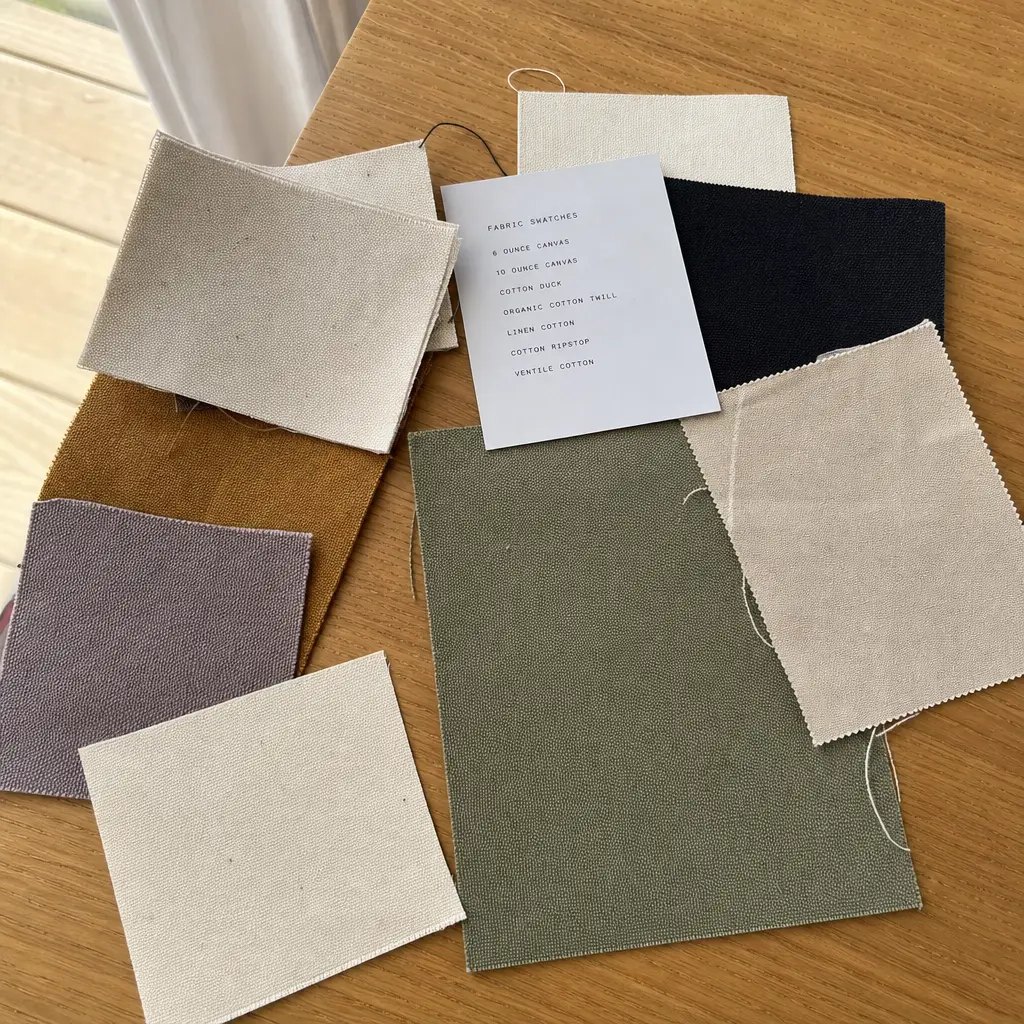
Natural cotton canvas is popular because it fits the visual language of artisan bakeries: rustic, reusable, market-style, and warm. It pairs well with sourdough, patisserie, farm shop displays, wine pairings, olive oil sets, and holiday baskets. The tradeoff is visibility. Natural canvas can show cotton flecks, slubs, oil marks, dust, handling stains, and shade variation more clearly than darker dyed fabric. Procurement should define acceptable natural variation before bulk cutting begins.
Bleached canvas gives a cleaner print background and can make bakery logos look sharper, especially when artwork uses fine text or lighter colors. Dyed canvas can support strong brand identity, but it adds more control points: lab dip approval, dye-lot consistency, colorfastness expectations, and often higher MOQ. If brand color matters, do not approve by photo alone. Approve a physical swatch or lab dip under consistent lighting, then keep that reference for inspection.
Shrinkage and finishing also affect repeat orders. Washed or pre-shrunk canvas may be more dimensionally stable, but it can cost more and usually has a softer handfeel. Unwashed canvas can be fine when the carrier is not intended for laundering, provided the factory cuts and sews to the approved finished size. For fair quote comparison, request both fabric weight and finished carrier weight; two suppliers can quote the same nominal canvas but use different fabric consumption and reinforcement.
- 8 oz canvas: suitable for low-cost single-bottle promotions, but often too soft for premium structure or two-bottle glass loads.
- 10 oz canvas: balanced option for single-bottle carriers and moderate bakery gift programs.
- 12 oz canvas: stronger structure for two-bottle carriers, corporate gifting, and reusable retail presentation.
- 14 oz canvas: premium handfeel with higher material cost, freight weight, folding bulk, and sewing complexity.
- Natural canvas: strong bakery aesthetic but requires inspection for stain, slub, odor, dirt, and shade variation.
- Dyed canvas: useful for brand color but requires lab dip approval, dye-lot control, and colorfastness expectations.
Construction Details Drive Both Cost and Safety
A canvas wine carrier may have only a few visible parts, but small construction decisions change the price and the risk. The body can be a flat sleeve, a side-gusset carrier, a bottom-gusset carrier, or a structured two-bottle carrier with an internal divider. Each version changes fabric consumption, cutting efficiency, sewing operations, inspection time, carton volume, and how the carrier behaves when loaded.
Single-bottle carriers work well as checkout add-ons, tasting-room gifts, and wine-and-bread pairing packaging. They should fit snugly without forcing the customer to push the bottle into place. A bottom gusset helps the carrier stand upright on a bakery shelf or packing bench. If the program includes wide shoulders, olive oil bottles, cider bottles, or irregular jars, ask the supplier to adjust the pattern instead of forcing the product into a narrow standard template.
Two-bottle carriers need more control because glass-to-glass contact is a real customer-experience issue. A divider should reduce bottle contact and keep the load from leaning heavily to one side. Define divider height, divider material, attachment points, seam allowance, and stitch method. Handle construction also matters. Self-fabric handles look coordinated and natural; cotton webbing handles can offer more consistent thickness and grip. Reinforcement may include boxed cross-stitching, bar-tack style stitching, extra stitch rows, or patches at stress points.
- Define finished width, height, side gusset, bottom gusset, seam allowance, and usable internal space.
- State whether the filled carrier must stand upright on a shelf, gift table, packing bench, or event display.
- Specify divider height, divider fabric, attachment points, stitch pattern, and maximum acceptable movement.
- Require handle width, handle drop, attachment length, stitch pattern, thread color, and reinforcement method.
- Ask suppliers to flag construction changes needed for wide olive oil bottles, cider bottles, sparkling bottles, or jars.
- Approve reinforcement before sampling; adding it after bulk cutting may require pattern changes and cost revision.
Make Bakery Artwork Printable on Canvas
Screen printing is usually the most practical decoration method for bulk custom canvas wine carriers, especially when the artwork uses one to three solid colors. It offers predictable setup cost, repeatable output, and good durability when ink is cured correctly. Still, canvas is not coated paper. Many bakery logos include wheat lines, hand-drawn icons, small serif text, distressed marks, or fine borders. Those details can fill in or lose definition on coarse cotton unless the artwork is simplified.
Heat transfer can handle more detail, gradients, or short-run seasonal graphics. Review it carefully before approval because the handfeel, edge appearance, fold behavior, and aging profile differ from ink printed directly onto fabric. Embroidery can look premium on thick canvas, but small lettering and detailed marks may lose sharpness. Woven labels are useful when one shared carrier body needs to support several bakery brands, store locations, or private-label customers.
The RFQ should include vector artwork, color references, print dimensions, placement from fixed seams, and the approval process. Ask the supplier to confirm minimum line thickness and minimum text height based on the actual canvas texture. A strike-off on production-intended fabric is more reliable than a digital mockup because weave texture, ink absorption, and curing affect edge sharpness and color density.
- Use screen print for solid bakery logos, simple seasonal graphics, and repeat bulk orders.
- Use heat transfer only after reviewing handfeel, edge finish, fold behavior, and rub resistance.
- Use woven labels when several bakery locations share one carrier body but need different branding.
- Keep prints away from heavy seams, bottom folds, and handle attachment zones to prevent distortion.
- Approve print size and placement on the sewn carrier, not only on a flat PDF layout.
- Ask for dry rub, wet rub, and light fold checks when ink coverage is dense or dark.
Plan MOQ Around What Must Vary
MOQ is rarely one fixed number. It usually comes from several constraints: fabric roll length, dye batch minimum, cutting efficiency, print setup, sewing line planning, packing material minimum, and export carton preparation. A natural canvas carrier with one screen print may support a lower MOQ than a dyed carrier with four artwork versions, individual barcode labels, and store allocation cartons.
For a single artisan bakery, the simplest first production is one size, natural canvas, one front print, flat bulk packing, and one shipment. For a growing bakery group, the better structure may be one common carrier body with different woven labels, hangtags, or print runs for each location. For a distributor, efficiency usually comes from standardized sizes, repeatable construction, barcode control, and seasonal artwork windows.
The procurement question is not only how low the MOQ can go. It is what can remain common without weakening the selling plan. If every location requests a different fabric color, size, handle, print color, and packing method, the order becomes many small productions. If the fabric, body pattern, handle construction, and carton plan stay common, suppliers can plan production more efficiently and quote with fewer buffers.
- Lowest-complexity tier: one size, one fabric color, one artwork, one packing method, and one shipment.
- Moderate tier: one shared body with two to four artwork versions, labels, or seasonal hangtags.
- Higher tier: single-bottle and two-bottle formats using the same fabric and coordinated packing rules.
- Distributor tier: standardized construction with barcode control, SKU carton marks, and repeat-order pricing.
- Avoid small split quantities by artwork unless setup charges and minimum print runs are confirmed.
- Ask whether overrun or underrun tolerance applies to printed and cut-to-order goods.
Use Samples to Rehearse Real Bakery Handling
A sample is not just a visual approval. It should prove that the carrier works with the bakery’s actual products. Load it with the real filled wine bottle, cider bottle, olive oil bottle, preserve jar, bottled coffee, or two-bottle combination. Check insertion, upright stability, handle comfort, divider behavior, and whether the printed panel wrinkles when the carrier is full.
Sample approval should lock the production standard. Ideally, keep one signed physical sample. If that is not practical, maintain a dated approval record with photos, measurements, fabric weight, finished piece weight, print references, construction notes, and packing details. Approving only a photo is risky because it does not confirm handfeel, handle thickness, divider stiffness, print curing, seam strength, or true color.
For new construction, use a sequence of prototype sample, revised sample if needed, and pre-production sample made with bulk-intended fabric and printing. If the timeline is compressed for a seasonal launch, some steps may be combined, but the buyer should not skip bottle fit, handle reinforcement, divider construction, print placement, and packing checks. The approved sample must represent mass production, not a showroom version made from cleaner fabric or different stitching.
- Measure finished width, height, side gusset, bottom gusset, divider height, handle width, and handle drop from fixed seam points.
- Load the sample with the heaviest intended product combination and inspect handle stress points after carrying.
- Check whether two glass bottles touch, knock, or lean excessively during normal hand carry.
- Fold and rub the print area to confirm curing, flexibility, and resistance to visible cracking.
- Photograph approved construction details including divider, gusset, handle stitching, label placement, and packing.
- Record approved tolerances so production teams and inspectors do not rely on memory or supplier interpretation.
Control Landed Cost Through Packing Details
Unit price is only one part of the buying decision. Canvas wine carriers are bulkier than many small textile accessories, and packing method can change freight cost. A supplier with a slightly higher unit price may still produce a better landed cost if cartons are efficient, clean, and within warehouse handling limits. A low unit price may become expensive if it excludes dividers, barcode labels, inspection support, or realistic export packing.
A complete quote should state incoterm, named port or delivery point, sample lead time, bulk production lead time after approval, carton dimensions, pieces per carton, net weight, gross weight, and estimated cubic meters per 1,000 pieces. Importers and distributors should also confirm carton marks, SKU labels, barcode stickers, pallet requirements, store allocation packing, and inspection booking support.
Flat packing is usually efficient for export because it reduces carton volume and keeps printed panels controlled. Too much compression, however, can create creases across the print, flatten handles poorly, or mark natural canvas. Loose packing can increase freight volume and abrasion. If carriers are sold as retail-ready items, the buyer may need hangtags, paper bands, barcode labels, or individual polybags. Each accessory changes cost, packing speed, carton count, and sustainability positioning.
- Compare FOB, EXW, and delivered pricing only after confirming exactly what each incoterm includes.
- Request cubic meters per 1,000 pieces so logistics can estimate freight impact across quantity tiers.
- Separate unit price from screen charges, sample fees, hangtags, barcode labels, and special packing labor.
- Set carton quantity, carton size, carton gross weight, and carton marks before production packing begins.
- Use individual polybags only when needed for retail protection or moisture control; paper bands may better match bakery positioning.
- Inspect cartons for cleanliness, dryness, sealing quality, crushed corners, correct quantity, and correct SKU labeling.
Write the QC Plan Before Bulk Production
Quality control for canvas wine carriers should be measurable and written into the purchase order. The inspection plan should cover fabric, measurements, stitching, printing, load performance, accessories, and packing. Phrases such as good quality or premium finish are not enough for a factory, inspector, or procurement file. Define the approved sample, tolerances, defect categories, inspection timing, and corrective action process before production starts.
For fabric, check weight, color, weave defects, stains, slubs beyond agreed tolerance, oil marks, and odor. Natural canvas can include small cotton specks or texture variation, so the buyer should separate acceptable character from visible defects. For measurements, inspect from fixed reference points. For stitching, check seam strength, skipped stitches, thread breaks, seam allowance, handle attachment, divider attachment, loose threads, and stress points.
For printing, inspect placement, color, edge sharpness, ink coverage, curing, rub resistance, cracking, and contamination. For load performance, test with filled product weight plus an agreed handling margin. The test does not have to be destructive unless specified, but it should reveal weak handles, seam opening, or divider failure before shipment. Packing inspection should verify correct quantity, carton marks, barcode labels, carton strength, moisture protection, and mixed-carton rules.
- Use an approved sample as the standard for fabric handfeel, print appearance, construction, and packing.
- Classify critical defects such as broken handles, open stress seams, unsafe divider failure, wrong artwork, or missing divider.
- Classify major defects such as visible stains, print misplacement, severe color mismatch, skipped stitches, wrong size, or wrong packing.
- Classify minor defects such as small loose threads or slight natural fabric variation within agreed tolerance.
- Measure a sample set across cartons, not only the top layer of one carton, to catch cutting or sewing drift.
- Document inspection results with defect photos, measurement tables, carton checks, load-test notes, and rework confirmation.
Specification comparison for buyers
| Procurement decision | Recommended buying spec | Best fit for artisan bakery programs | Quote or QC risk to control |
|---|---|---|---|
| Supplier route | Direct factory order for 500-5,000+ pieces when size, fabric, artwork, packing, inspection access, and shipment window are already defined | Bakery groups, importers, gift distributors, and private-label packaging buyers planning repeat seasonal programs | Confirm whether divider, handle reinforcement, carton marks, export cartons, sample revisions, and inspection support are included in the base quote |
| Supplier route | Sourcing agent or trading company when consolidating wine carriers with bread bags, totes, aprons, cooler bags, retail labels, or mixed cotton packaging SKUs | Buyers managing several factories, mixed shipment dates, or multi-category bakery packaging programs | Require factory disclosure, production location, fabric source, inspection location, defect responsibility, consolidation fees, and shipment handoff rules |
| Supplier route | Domestic decorator using stock blanks for under-300-piece urgent launches, local event tests, or late artwork approvals | Pop-ups, tastings, PR gifting, limited holiday artwork, or last-minute market activations | Stock blanks may have fixed print areas, lighter fabric, no divider, weaker handle attachment, and inconsistent size availability |
| Quantity tier | Quote 500, 1,000, 2,500, and 5,000 pieces using the same specification, packing method, incoterm, and shipment point | Budget planning, annual gifting forecasts, distributor sell-in, reorder negotiation, and seasonal cash-flow modeling | Do not compare tiers if fabric weight, print method, divider, packing, or handle construction changes between quantities |
| Fabric weight | 10 oz to 12 oz cotton canvas, approximately 340-410 GSM depending on weave and finishing, for most single and two-bottle programs | Premium bakery retail display, wine-and-bread gifts, olive-oil sets, cider packs, tasting bundles, and corporate hampers | Too light collapses around glass; too heavy raises material cost, sewing difficulty, carton weight, freight cost, and crease risk |
| Dimensional tolerance | Finished body tolerance usually +/-1 cm; handle drop +/-1 cm; print placement +/-5 mm to +/-10 mm from agreed seams or reference points | Programs requiring reliable bottle fit, consistent shelf presentation, and repeatable reorders across seasons | Bottle fit may fail if tolerance is measured from raw fabric edges rather than finished seams, gusset folds, or divider points |
| Fabric finish | Natural unbleached canvas for rustic bakery branding; bleached or dyed canvas only with lab dip, colorfastness, and dye-lot expectations | Farm shop, sourdough, patisserie, wine pairing, olive oil, cider, picnic, and holiday gift positioning | Natural canvas shows stains and slubs; dyed canvas needs dye-lot control and may raise MOQ or extend sampling time |
| Carrier format | Single-bottle with gusset for checkout add-ons; two-bottle with stitched divider and reinforced handle points for gift sets | Single bottle for impulse pairing sales; two bottle for holiday, corporate, hamper, or distributor programs | Divider height, seam strength, handle stress points, and bottom stability must be tested with actual filled bottles |
| Branding method | Screen print for 1-3 solid colors; woven label for shared bodies; heat transfer for detailed or low-volume artwork after durability review | Repeat bakery logos, seasonal graphics, private-label programs, and multi-location bakery groups | Fine lines can fill on canvas; dense ink can crack if under-cured; transfer edges may feel less premium |
Buyer checklist before sampling
- Define the selling role: paid retail item, gift-with-purchase, wine-and-bread bundle, olive-oil set, cider carrier, corporate hamper component, tasting event pack, or distributor resale SKU.
- Measure the widest and tallest filled product, including closure, label texture, shoulder shape, and filled weight; do not assume all 750 ml bottles share the same diameter.
- Specify finished dimensions: width, height, side gusset, bottom gusset, divider height, usable internal width per bottle, handle width, and handle drop.
- State fabric weight in both oz/yd² and GSM, fabric finish, color standard, shrinkage expectation, and whether the fabric is natural, bleached, dyed, washed, or pre-shrunk.
- Request finished bag weight in grams per piece so procurement can compare material value, freight impact, and supplier consistency across quotes.
- Attach vector artwork with Pantone or other color references, print size, print location, placement tolerance, and simplified backup artwork for fine-line bakery logos.
- Require the supplier to identify the print method, maximum print area, screen charges, curing process, and whether a strike-off on actual canvas is included before bulk printing.
- List handle construction: self-fabric or webbing, width, length, drop, stitch pattern, reinforcement patch if used, thread color, and practical load-test requirement.
- Confirm whether each piece needs internal divider, reinforced bottom, hangtag, barcode label, paper band, individual polybag, master carton label, or store allocation pack.
- Ask for MOQ by fabric color, carrier size, artwork version, print color count, packing method, and shipment, not only one headline MOQ.
Factory quote questions to send
- What canvas weight are you quoting in oz/yd² and GSM, and what tolerance can you hold for bulk fabric and finished pieces?
- Is the fabric greige, natural, bleached, dyed, washed, or pre-shrunk, and what shrinkage range should we expect after finishing?
- What is the MOQ for one fabric color, one carrier size, one print design, one print color count, one packing method, and one shipment? Please separate each MOQ driver.
- Can you quote 500, 1,000, 2,500, and 5,000 pieces using the same construction, fabric, print method, packing, incoterm, and shipment point?
- What finished dimensions do you recommend for our bottle measurements, and from which reference points will width, height, gusset, divider height, and handle drop be measured?
- What handle construction is included in the base price, and what is the upcharge for boxed cross-stitch, bar-tack reinforcement, webbing handles, or reinforcement patches?
- For two-bottle carriers, what divider height, material, attachment points, seam allowance, and stitch method are included in the quote?
- Which print method do you recommend for our artwork, what is the maximum printable area on the sewn carrier, and what minimum line thickness or text height should we follow?
- Does the quotation include screen charges, print strike-off, lab dip if dyed, pre-production sample, hangtag, barcode label, individual packing, and export carton marks?
- What is your normal dimensional tolerance for body size, gusset, handle drop, divider position, and print placement?
Quality-control points to confirm
- Fabric weight should be checked from bulk fabric or cut panels and compared with the approved tolerance in oz/yd² and GSM.
- Finished size tolerance should normally be controlled within +/-1 cm for body dimensions unless bottle fit requires tighter control.
- Handle drop tolerance should normally be controlled within +/-1 cm so hand-carry feel and display appearance remain consistent.
- Print placement should be measured from fixed seams, gusset folds, or handle reference points rather than uneven raw fabric edges.
- Bottle fit should be tested with the buyer's widest and heaviest intended bottle or jar combination, not only an empty standard wine bottle.
- Print color should be compared against the approved Pantone target or signed strike-off under consistent lighting, preferably D65 or a defined light booth setting.
- Ink curing should be checked by dry rub, wet rub, tape pull where appropriate, and light folding around the printed area.
- Handle attachment should pass the agreed practical load test using filled product weight plus a handling margin, with no tearing, seam opening, or stitch failure.
- Stitching should be checked for skipped stitches, broken thread, loose ends, uneven seam allowance, and weak stress points near handles, dividers, and gussets.
- Divider seams should be straight, secure, and tall enough to reduce glass-to-glass contact in two-bottle carriers.