Why subscription-box buyers need a different QC lens
A custom canvas wine carrier for subscription boxes is not judged the same way as a trade show tote or a retail gift bag. The buyer is usually balancing three things at once: bottle protection, fulfillment speed, and a presentation standard that looks intentional when the customer opens the box. If the carrier arrives too soft, too bulky, or too inconsistent in print, the item may still function but it will drag down the entire unboxing experience.
That is why the quality inspection checklist should start with use case, not decoration. A carrier that works in a boutique gift box may fail in high-volume subscription packing if the seams twist, the handles collapse, or the folded size causes carton count issues. The right checklist focuses on what the warehouse, the brand team, and the customer all see.
- Define whether the carrier is a gift insert, an outer gift bag, or the primary bottle holder.
- Match QC to the final bottle size, not a generic wine bottle template.
- Treat folding behavior and carton count as production-critical, not afterthoughts.
Start with fabric weight, hand feel, and structure
For most subscription programs, 12 oz to 14 oz canvas is the practical range. Lighter fabric can save cost, but it often feels too limp unless the carrier has a strong insert or the pack-out box adds structure. Heavier fabric improves body and shelf appeal, yet it also pushes up freight weight and can make flat packing less efficient. The correct answer depends on whether the carrier is meant to look premium on arrival or simply hold the bottle safely inside a larger kit.
Ask the supplier how the weight is measured. Some factories quote raw fabric weight, while others quote finished carrier weight after dyeing, printing, cutting, and sewing. That difference matters because a quote can look competitive on paper and still arrive with a softer, thinner hand feel than the approved sample. A buyer should also define tolerance in the RFQ so the factory knows whether small variation is acceptable or not.
- Use finished weight or finished GSM in the quote, not only raw canvas weight.
- Set a tolerance band in writing; otherwise the factory may ship lighter fabric to control cost.
- If the carrier must stand upright, require a sample with the actual bottle inside.
Choose the right print method for the brand and the carton
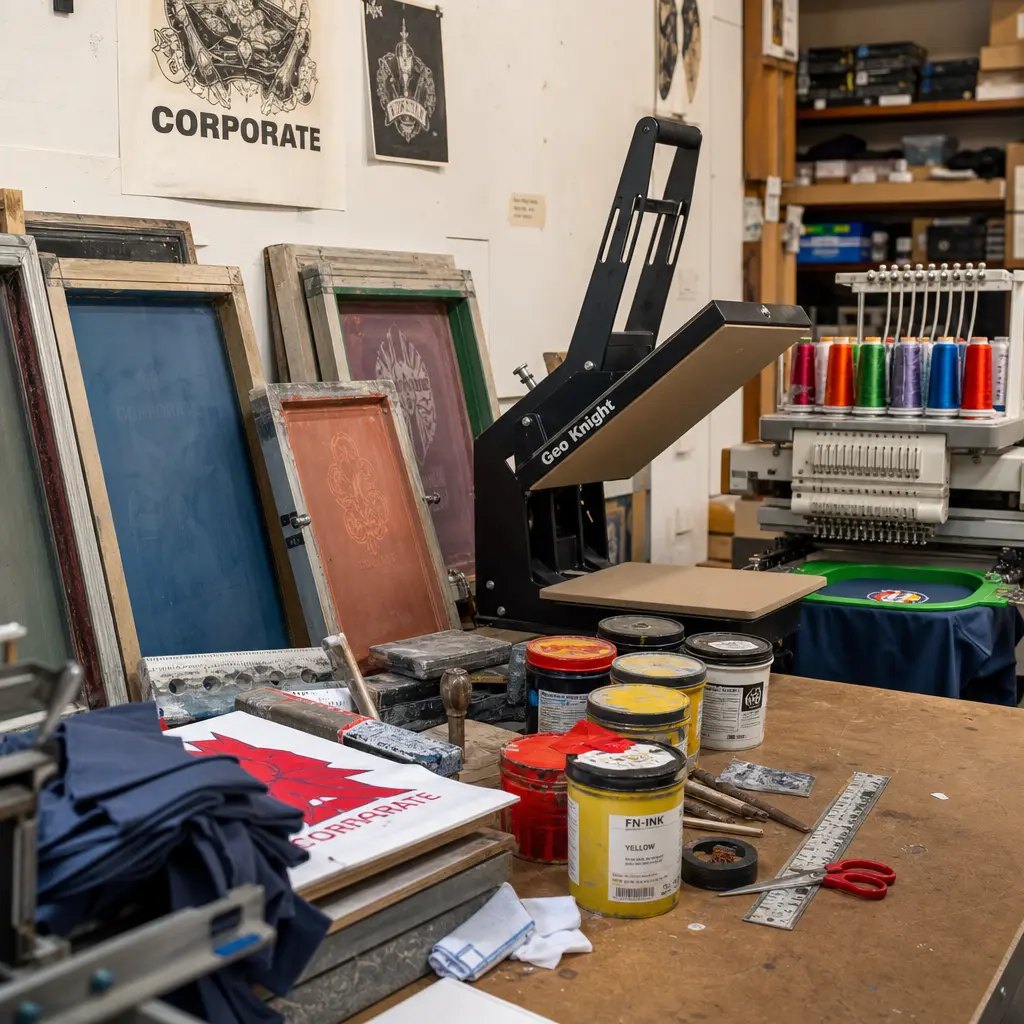
Print method is one of the biggest drivers of quality perception in a subscription box. Screen printing gives strong color and a clean edge for simple logos, but it needs correct ink curing and stable registration. Heat transfer can work for detailed art or short runs, but it may feel less integrated into the fabric and can become a failure point if the adhesive system is weak. Woven labels, sewn patches, or embossed side labels are better when the brand wants a quieter, more premium look.
For wine carriers, the print should survive handling, folding, and repeated touch. A logo that cracks during packing or rubs off on adjacent items creates a cheap impression and may trigger complaints even if the carrier is technically usable. Specify exact logo placement, maximum print size, and color control before bulk starts. If the supplier cannot show print samples under normal warehouse lighting, the quote is not ready for decision-making.
- Screen print suits bold, low-color branding and repeat orders.
- Woven labels suit premium programs where durability matters more than large graphics.
- Require a signed color reference if your brand palette is strict.
Compare sourcing routes before you compare unit price
The cheapest quote is often the one with the least control. A direct factory usually gives the best visibility into fabric sourcing, stitching, and line-level QC, especially when the wine carrier has custom dimensions or special packing rules. An agent or trading company can be useful when communication is the main issue, but the buyer should still demand factory photos, production references, and in-line inspection details. For subscription boxes, traceability matters because small defects multiply across thousands of units.
The better question is not whether the supplier is cheap, but whether the supplier is set up to repeat the same carrier consistently. If they specialize in totes but are new to wine carriers, the seam structure, handle position, and bottle fit may need more sample rounds. That is acceptable if the timeline allows it. If the launch date is fixed, use the sourcing route that already knows this product category.
- Direct factory: best for custom structure, lower long-term cost, and better sample control.
- Trading route: useful when the buyer needs faster communication or multi-category consolidation.
- Specialist supplier: often the safest choice if they already make bottle carriers weekly.
Use supplier evidence, not promises, in the quote review
A clean quote should show how the supplier will make the carrier, not just what they will charge. Ask for fabric origin, weight, print method, handle reinforcement, packing method, and carton size. If any of those items are missing, the unit price is hard to compare. Two suppliers may both quote a canvas wine carrier at similar cost, but one may include a stronger base seam, a better print cure, and a more efficient carton count.
The most useful quote evidence is specific and visual. Request photos of the actual fabric swatch, the print test, the stitch detail at the handle root, and a packing photo from a similar order. If the supplier cannot show those basics, the buyer is relying on hope. In subscription-box sourcing, hope is not a QC plan.
- Ask for line-item pricing on fabric, print, sewing, packing, and extra insert pieces.
- Request actual carton dimensions to estimate freight accurately.
- Keep a record of the approved sample photo set for future reorders.
Set acceptance criteria for the sample stage
The sample stage should prove fit, appearance, and packability, not just basic workmanship. Place the intended bottle in the carrier and make sure the neck height, gusset depth, and handle drop all work together. A carrier that fits on the table may still be too tight once a label, neck wrap, or protective sleeve is added. This is where buyers catch expensive mistakes before bulk production starts.
For approval, compare the sample under normal warehouse lighting and, if possible, under retail display lighting. Inspect logo placement, seam symmetry, edge finishing, and folding behavior. If the sample shows any uncertainty, do not convert it to bulk approval. Ask for a revised sample or a defined correction note and keep the old sample only as a reference of what to avoid.
- Approve size with real bottle dimensions plus packaging extras.
- Inspect sample stitching inside and outside, not only the visible face.
- Confirm the sample folds cleanly to the agreed pack-out format.
Build the QC checklist around measurable defects
A useful QC checklist needs clear pass-fail criteria. For canvas wine carriers, the highest-risk defects are not abstract. They are seam slippage, weak handle joints, print misalignment, oil stains, loose threads, and count errors in carton packing. If the supplier uses vague language like “minor defects acceptable,” the buyer should push for measurable limits and photo examples. That removes arguments later.
Use an inspection approach that reflects how the goods will be received. Randomly open cartons, count pieces, measure key dimensions, and test a sample bottle in each style or color. If the carrier is part of a subscription box, the warehouse may be inserting it at speed, so even a small dimensional drift can slow packing. Tight enough QC prevents both returns and line stoppage.
- Hold seam quality to a signed sample and reject visibly uneven topstitching.
- Check for print offset, weak ink cure, and color shift across cartons.
- Measure handles and opening width if the carrier must be packed by machine or by a fixed workflow.
Packaging details affect both damage rate and labor cost
Packing is where many otherwise good carriers lose value. If the bags are folded inconsistently, the warehouse loses time counting and flattening them. If the cartons are overfilled, the canvas creases hard and the print can crack at the fold. If the cartons are underprotected, moisture and compression create visible defects before the boxes reach the fulfillment center. Buyers should treat packaging spec as part of product quality, not just logistics.
For subscription boxes, flat packing is usually the most efficient route, but it needs a defined fold sequence and carton count. Ask for inner polybag or moisture paper only if needed; otherwise extra packaging can raise cost and waste. The master carton should be labeled with style, color, quantity, PO number, and country of origin in a way that matches the warehouse receiving process. That reduces rework at intake.
- Define the fold direction and final packed dimensions before bulk sewing.
- Use moisture protection when shipping through humid lanes or sea freight.
- Require clear master carton labels that match the purchase order exactly.
Plan lead time around sample approval and material booking
The timeline for custom canvas wine carriers is often longer than buyers expect because print, sewing, and packing each need their own slot. A realistic sample cycle is often 7 to 10 days, but that can stretch if the artwork changes or if the supplier must source a specific canvas weight. Bulk production commonly sits in the 25 to 40 day range, depending on complexity, season, and queue position. The important part is to know where the clock starts.
Some factories start lead time when they receive the deposit; others start after artwork approval or after sample sign-off. That difference can shift the schedule by a week or more. In a subscription-box launch, a one-week delay can create freight pressure and force costly air shipment. Put the start point in writing and ask for a milestone schedule covering material booking, printing, sewing, final QC, and handoff.
- Separate sample lead time from bulk lead time in the quote.
- Ask what happens if artwork changes after sampling.
- Build buffer time for carton approval and freight booking.
Use landed-cost math before you select the supplier
Unit price alone does not tell you the true cost of a custom canvas wine carrier. Canvas weight changes freight, print method changes labor, and packing density changes carton cost. A supplier that quotes slightly higher per unit may still win on landed cost if the carrier packs flatter, ships denser, and arrives with fewer rejects. Buyers should compare the full route from factory to distribution center, not just the ex-works line.
A simple landed-cost review should include product price, sample amortization, carton and inner packaging, inland handling, ocean or air freight, duty, and expected defect allowance. If the supplier can provide accurate carton dimensions and carton count, freight forecasting becomes much more reliable. That is especially important for subscription programs where recurring monthly volume depends on stable landed cost.
- Compare cartons per pallet and pieces per carton, not only unit pricing.
- Include defect allowance in the sourcing math if quality variation is common.
- Use the approved sample to estimate realistic freight density.
Specification comparison for buyers
| Spec decision | Recommended option | When it fits | Buyer risk to check |
|---|---|---|---|
| Fabric weight | 12 oz to 14 oz canvas, measured after finishing | Most subscription boxes need enough body to protect glass and keep the carrier upright in unboxing | Some suppliers quote greige weight or pre-wash GSM; confirm finished weight and tolerance |
| Construction method | Single-layer canvas with reinforced base and bound top edge | Good for lower landed cost and moderate bottle protection when the insert box already adds structure | Weak base seams or no bar-tacks can fail during fulfillment packing |
| Print method | Screen print or heat transfer for bold logos; woven label for restrained branding | Screen print works for simple spot-color art and repeat orders; woven labels suit premium brand language | Ink cracking, low cure temperature, and poor wash resistance reduce shelf life and perceived value |
| Closure style | Open-top with bottle divider or drawstring tie where needed | Open-top suits fast packing; tie closure reduces bottle movement for direct-to-consumer shipping | Loose closures can slow pick-and-pack or scuff the bottle neck area |
| Handle reinforcement | Cross-stitch plus box-X reinforcement at stress points | Best for 1-2 bottle carriers used by subscription services and gift programs | Short stitch length or thin thread causes handle pull-out under repeated use |
| Lining or padding | Light lining only, unless the box ships long-distance or includes glass accessory packs | Use when the carrier is a secondary gift layer rather than the only protection | Over-specifying lining increases cost and may complicate folding and carton count |
| Supplier route | Direct factory with sample-room approval and in-line inspection plan | Best for repeat programs, custom sizing, and tighter cost control | Agents may improve communication but can hide factory-level quality variation or add margin |
| Carton pack-out | Flat-packed with count labels, size stickers, and moisture protection | Fits subscription box fulfillment and lowers volumetric freight | Poor carton compression can create wrinkles, miscounts, and corner abrasion |
| Lead time logic | Sample 7-10 days, bulk 25-40 days depending on print and season | Works when launch dates allow a normal approval cycle and freight booking window | Rush orders often skip curing, fit confirmation, or carton tests |
Buyer checklist before sampling
- Confirm finished fabric weight, canvas count, or GSM after dyeing/printing, not only the raw fabric spec.
- Approve the bottle fit with actual bottle dimensions plus any insert, divider, or carton sleeve used in the subscription box.
- Define print method, logo size, PMS match tolerance, and wash or rub expectation before sampling.
- Require seam reinforcement details at handle roots, base seams, and stress corners with photos in the sample report.
- Lock carton pack quantity, master carton dimensions, moisture protection, and label placement before bulk approval.
- Set acceptable defect limits for staining, loose threads, print misalignment, needle damage, and odor.
- Get a pre-production sample and a sealed top-bulk reference sample signed by both sides.
- Ask for production lead time split by material booking, printing, sewing, packing, and freight handoff.
Factory quote questions to send
- Is your quote based on finished canvas weight or greige fabric weight, and what tolerance do you hold on the final carrier?
- What print method is included, how many colors are covered, and what happens to price if the logo changes size or position?
- What seam reinforcement do you use at the handle and base, and can you show a sample photo from the production line?
- What is the MOQ by color and by artwork version, and can mixed colors or mixed prints share one production lot?
- What are your sample costs, sample lead time, and whether the approved sample can become the top-bulk reference?
- How do you pack the carriers inside the master carton to prevent creasing, staining, and count errors?
- What is your standard bulk lead time, and where does the clock start: artwork approval, sample approval, or deposit receipt?
- What inspection standard do you use for appearance, dimensions, stitch quality, and carton count before shipment?
Quality-control points to confirm
- Fabric weight tolerance: agree a practical band, such as plus or minus 5% on finished weight, and reject any lot that feels visibly lighter than the approved sample.
- Dimensions: measure height, width, gusset, and handle drop on at least five cartons per lot; hold to a narrow tolerance if the carrier must fit a retail sleeve.
- Stitching: inspect handle joins, side seams, and base seams for skipped stitches, broken thread, loose knots, and weak backtacks.
- Print quality: compare to the signed sample under daylight-style lighting; reject ghosting, pinholes, blurry edges, or color drift that changes the brand look.
- Odor and cleanliness: open cartons at random and reject mildew smell, oil marks, chalk residue, or needle debris.
- Functionality: test bottle insertion and removal with the target bottle size plus any label or neck wrap used by the subscription program.
- Packing count: verify carton count, inner pack consistency, and label match against the packing list; stop shipment for count mismatch.
- Carton condition: check compression, corner crush, and moisture protection, especially if goods move by sea freight or through humid warehouses.