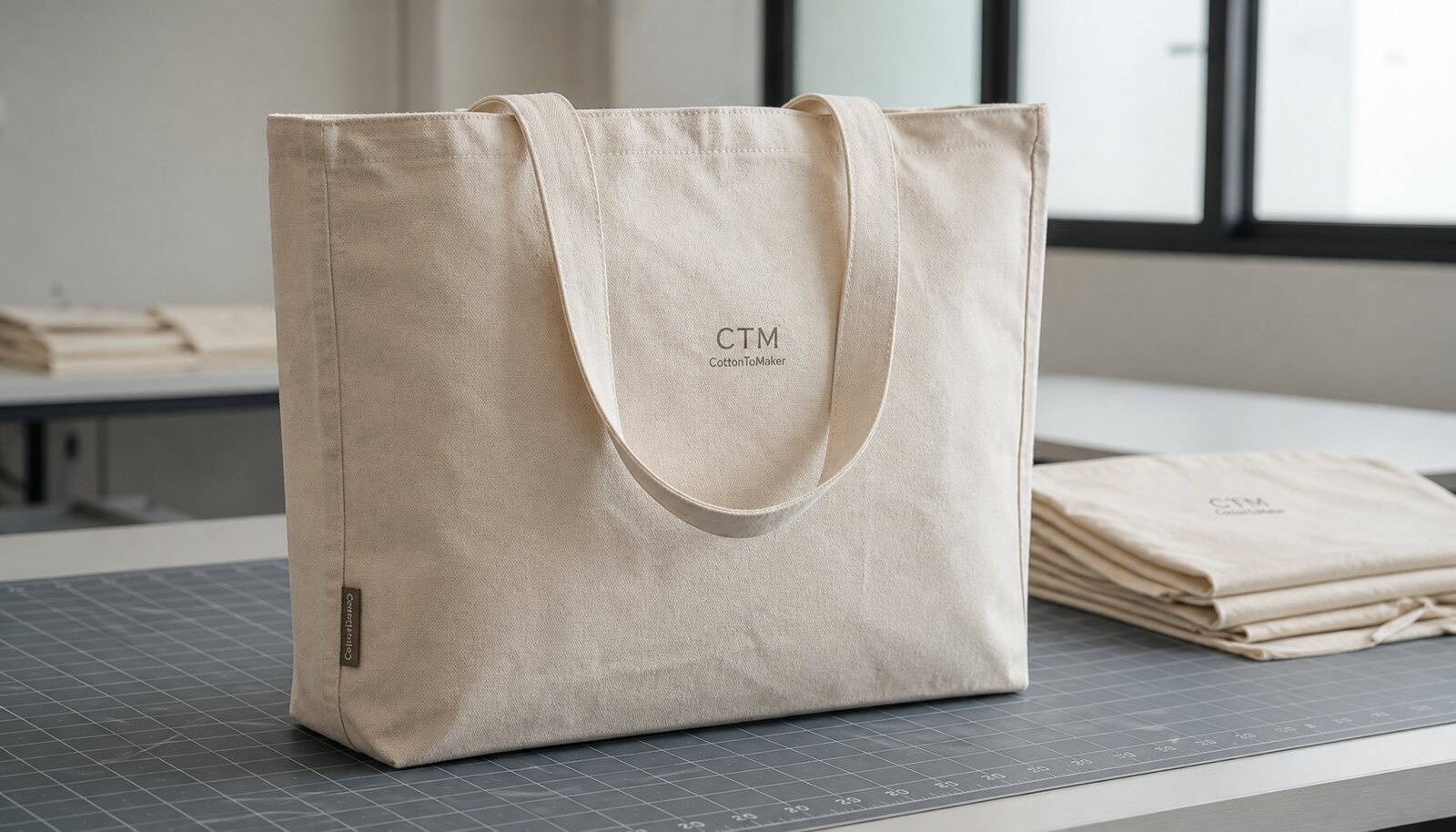
Why subscription box totes need a different buying spec
A tote for subscription boxes is not the same as a tote for retail shelf display or event giveaway. It has to fit inside a packed box, survive transit, and still feel intentional when the customer opens the shipment. That means the buying brief needs to define size, foldability, print durability, and pack-out efficiency together. If you only write a logo and quantity on the RFQ, you invite quotes that look comparable on paper but behave very differently on the line.
For this use case, the best spec is usually a balance between presentation and cost. Buyers often overbuild the bag and then lose margin in freight, carton size, and handling labor. A cleaner approach is to define the bag around the subscription box dimensions, the unboxed customer experience, and the expected repeat use. The supplier should know whether the tote is a premium insert, a reusable resale item, or a practical carry bag that happens to ride inside the box.
- Tie bag dimensions to the inner box footprint so the tote does not create packing waste.
- Decide early whether the bag must fold flat, because that affects canvas weight and seam structure.
- Treat the tote as part of the unboxing system, not as a standalone promotional item.
Choose canvas weight with the final unit cost in mind
Canvas weight drives the biggest change in feel, durability, and cost. For most subscription box programs, 10 oz to 12 oz canvas is the practical range. Ten oz usually works for insert-style totes where the bag is meant to be used but not overloaded. Twelve oz gives a more substantial hand feel and better shape retention, but it will usually add raw material cost and can increase carton weight. Once you move into 14 oz or heavier, you are often paying for a more retail-like product than the box really needs.
Do not compare quotes only by bag size. A 12 oz bag with short handles, plain sewing, and a single small print may cost less in total than a 10 oz bag with lining, oversized artwork, and extra reinforcement. Ask the factory to state the cloth weight, fabric construction, and whether the quoted price assumes bleached, natural, or dyed canvas. Natural canvas is usually the most stable procurement choice because it avoids dye-lot variation, but it still needs a clear shade expectation so one batch does not look noticeably warmer or greyer than the sample.
- 10 oz canvas: good for lower-cost inserts, lighter contents, and high-volume programs.
- 12 oz canvas: better for premium boxes, stronger shape, and broader retail reuse.
- 14 oz or higher: consider only when the tote itself is a main-value item, not a pack-in.
Print method should match artwork complexity and repeat volume
Most subscription box programs should start with screen print unless the artwork is complex or the design changes often. Screen printing is usually the most predictable choice for one-color or two-color logos on canvas. It gives clean coverage, clear edges, and manageable tooling cost. If your order volume is steady and the art stays fixed, the unit economics are normally better than digital decoration. For simple logo programs, the main job is to control ink density and placement consistency, not chase novelty effects.
Heat transfer and digital printing can work, but they belong in narrower use cases. Use them when artwork has gradients, many colors, or variable personalization. The tradeoff is that the print feel may be less integrated with the fabric, and some methods perform poorly after repeated folding or abrasion. If the tote is going into a box with cosmetics, books, apparel, or samples, the customer will touch it immediately. That means the print must survive handling before it ever reaches retail-level use.
- Screen print: best for logos, flat colors, and repeat orders.
- Heat transfer: useful for detailed art, but verify adhesion and crack resistance.
- Embroidery: premium look, but usually less efficient for broad graphics and can distort lighter canvas.
Bulk pricing depends more on conversion cost than raw fabric alone
When buyers compare bulk pricing, they often focus on fabric weight and ignore conversion cost. In tote bags, conversion includes cutting, sewing, handle attachment, print setup, folding, carton packing, and in some cases side labeling. Two suppliers can quote the same GSM and still land at different prices because one has efficient sewing lines and another relies on manual rework. If you want a useful comparison, insist on a like-for-like quote structure and do not accept blended lump-sum pricing without a breakdown.
The best way to evaluate a quote is to request the same spec at multiple volume tiers and watch how each line item moves. A healthy program should show a clear drop as production volume increases, but not at the expense of quality assumptions. If the price falls sharply only because the supplier quietly reduces canvas weight, changes the print method, or removes packaging, the quote is not comparable. That is how teams approve the wrong order and spend the next cycle trying to recover margin through a redesign.
- Request volume breaks at 1,000, 3,000, 5,000, and 10,000 pieces.
- Ask for separate lines for bag body, print, label, packing, and freight handling where possible.
- Treat unusually low quotes as a spec review trigger, not a buying win.
MOQ logic should follow artwork, packing, and fabric availability
MOQ is not just a factory policy number. For custom canvas totes, MOQ is usually driven by fabric loom efficiency, print setup, sewing line changeover, and carton packing logic. If your art is one color and the tote is a standard natural canvas body, MOQ can be relatively low. Add special colors, custom labels, inner printing, or unusual dimensions, and the practical MOQ rises because the factory has to stop and reset more operations. Buyers should separate true minimum order quantity from the supplier's preferred economic batch size.
A strong quote will explain which part of the spec is driving the MOQ. If the supplier says the minimum is 3,000 pieces, ask whether that number applies to one print position, one fabric color, or the complete package with custom label and carton marks. That answer matters. For subscription box buyers, the most useful MOQ is the smallest lot that can still deliver stable dimensions, acceptable print alignment, and packaging consistency. Anything lower often increases rework, sample drift, and price creep.
- Standard natural canvas with one-color print usually supports lower MOQ than custom-dyed fabric.
- Custom woven labels, lining, or special handles usually push MOQ higher.
- If the supplier cannot explain the MOQ driver, the number is not yet procurement-grade.
Use a supplier-route comparison before you compare quotes line by line
The cheapest route is not always the lowest-risk route. For subscription boxes, a direct factory often gives better control over repeatability and packing, while a trading company may shorten sourcing time if your portfolio includes multiple bag types. Domestic printing can reduce transit risk, but the blank bag quality still has to be managed carefully. The right route depends on whether your biggest risk is lead time, quality drift, or too much internal coordination. Buyers who choose the wrong route usually discover the problem after sample approval, when the order is already locked to a calendar.
When you compare suppliers, look at what they can prove rather than what they claim. A factory that regularly produces canvas totes should be able to show recent seam photos, folding methods, print close-ups, and carton packing examples. A generalist vendor may sound flexible, but flexibility can hide weak process control. The goal is not to find the most impressive seller. It is to find the supplier whose operating model matches your order pattern, artwork stability, and target unit economics.
- Prefer direct factory sourcing when repeat orders and stable quality matter most.
- Use a trading company only if they add real coordination value or access to multiple manufacturing routes.
- Choose domestic finishing when speed matters more than the lowest landed cost.
Sampling should prove more than the logo placement
A proper sample review for custom canvas tote bags should test size, hand feel, stitch quality, print alignment, and fold behavior. Do not approve a sample just because the artwork looks correct. Measure the bag opening, body height, handle drop, and gusset, if used. Then inspect how the bag hangs when loaded with a realistic subscription weight. Many tote issues only show up when the bag is half full or packed into a box, which is exactly when your customer will notice them.
The right approval sequence is blank sample, artwork proof or strike-off, then pre-production sample. That order matters because it separates fabric approval from decoration approval. For one-color print on natural canvas, you want to see how the ink sits on the fabric grain and whether the placement remains centered after stitching. If the supplier skips the pre-production step or treats the first bulk unit as the sample, the risk moves directly to your receiving dock.
- Measure bag dimensions on a finished, flattened sample, not on a loose cut panel.
- Check handle symmetry and reinforcement stitching on both sides.
- Verify that printed art remains centered after the bag is turned and pressed.
Packing choices affect carton cost, fulfillment speed, and damage risk
Packing is where many tote orders lose money quietly. A bag that packs efficiently in a flat stack can reduce carton count, freight volume, and warehouse time. A bag that needs a polybag, tissue, card insert, or fold board may be justified for retail presentation, but those choices should be intentional. For subscription boxes, the packaging decision should match the unboxing sequence. If the tote is inserted into another carton, there is rarely a reason to overpack it individually unless contamination or print scuffing is a real issue.
Ask the factory how many pieces fit per inner bundle and per master carton, and whether the bags are folded with handles inside or outside the body. That detail changes packed height and edge crush risk. It also affects how quickly your fulfillment team can pick and stage units. Good packing is not only about protection. It is about receiving speed, warehouse ergonomics, and how much extra air you pay to move through the supply chain.
- Use the lightest packing method that still protects print and keeps the bag presentation clean.
- Confirm carton count, carton dimensions, and gross weight before freight booking.
- Make sure the folding method is repeatable and easy for the supplier to train on.
Protect the schedule by separating sampling, production, and freight risk
Lead time should be discussed as a chain, not a single number. Sampling, material booking, print setup, sewing, packing, inspection, and freight all carry different risks. A factory may quote a short lead time, but if fabric is not reserved or artwork is not approved early, the order slips anyway. For subscription box programs, the key date is often the box packing date, not the shipping date. That means you need a realistic buffer for both production and inbound receiving.
A practical schedule starts after sample approval and after all packaging decisions are locked. If you are coordinating with a subscription calendar, add time for any change management between art approval and bulk release. The biggest delay usually comes from late artwork revisions or changes to bag dimensions after the quote is already issued. The cleanest way to avoid that is to freeze the spec in writing and require the factory to restate it on the proforma invoice or order confirmation.
- Do not count inquiry time as production time.
- Add buffer for print approval, especially when artwork is color-sensitive.
- Plan freight separately from sewing lead time so one delay does not hide the other.
Write the RFQ so supplier quotes are actually comparable
A usable RFQ for custom canvas tote bags should do more than ask for a price. It should force the supplier to quote the same fabric weight, same dimensions, same print method, same packing method, and same delivery assumption. Without that, the lowest number often comes from a different spec rather than a better process. The RFQ should also state what is non-negotiable. For example, if the tote must fit a certain box size or must be packed in a specific carton count, say so directly instead of hoping the supplier infers it.
When quotes come back, compare them against the same decision points every time: fabric weight, handle length, reinforcement, print method, MOQ, sample path, packing, lead time, and freight assumption. If a supplier cannot answer those points clearly, they are not ready for a bulk order. The best procurement result is not a perfect tote. It is a tote spec that can be repeated, quoted cleanly, and reordered without re-litigating the basics.
- Include artwork file format, print placement, and acceptable color tolerance.
- State whether packaging must be retail-ready or only fulfillment-ready.
- Ask the supplier to confirm any exclusions in writing before you approve the PO.
Specification comparison for buyers
| Spec decision | Recommended option | When it fits | Buyer risk to check |
|---|---|---|---|
| Direct factory sourcing | Work with a tote factory that handles weaving, cutting, printing, and packing in one chain | Best when you need repeat orders, clear QC ownership, and stable bulk pricing across seasons | Confirm whether the factory actually controls print, sewing, and final packing or outsources the last steps |
| Trading company route | Use a sourcing agent or trading company with multiple tote suppliers | Useful when you need fast sampling, mixed product bundles, or help coordinating different factories | Watch for layered margin, inconsistent spec control, and quote gaps on packaging or freight handling |
| Domestic printer and decorator | Print locally, source blanks separately | Works for short runs, urgent launches, or programs where transit speed matters more than lowest unit cost | Check blank consistency, shrinkage after printing, and whether local finishing can match your target bag weight |
| Hybrid sourcing | Produce blanks offshore and print or insert locally | Good for subscription box programs with changing artwork or multiple regional fulfillment points | Make sure the blank tolerances are tight enough so local teams do not sort through rejects |
| Specialist tote factory | Choose a supplier that makes canvas bags every day rather than a general soft-goods factory | Best for buyers who care about handle strength, seam consistency, and repeatable packing dimensions | Ask for recent tote production photos, stitching details, and proof of similar GSM work |
| General promotional item supplier | Buy through a broad promo vendor that adds totes to a larger catalog | Fits simple giveaways or one-off campaigns where speed and convenience matter more than construction depth | Risk is weak spec ownership, vague fabric claims, and hidden substitution of lower-grade canvas |
| Low-MOQ workshop | Use a small workshop for very small initial batches | Works for pilot programs, regional tests, or founder-led subscription brands validating product-market fit | Check whether they can hold color, size, and print placement when volumes move beyond sample-stage output |
| High-volume export factory | Use an export-ready factory with formal QC and carton packing processes | Best when your forecast is steady and you need price breaks across 1,000 to 10,000-plus pieces | Verify carton count accuracy, compressed packing method, and realistic lead time under peak season load |
Buyer checklist before sampling
- Define the tote use case: insert item, reusable premium, or shipping-protection layer inside the box.
- Lock the bag size, handle drop, and canvas weight before requesting quotes.
- Request pricing at at least three breakpoints, usually 1,000, 3,000, and 5,000 pieces, with the same spec across all tiers.
- State the print method, print area, and number of colors so the supplier does not quote a different decoration assumption.
- Confirm packing format per box or master carton, including polybag use, insert cards, and carton count.
- Ask for a pre-production sample or photo proof against the exact artwork file before bulk release.
- Require seam, stitch, and print-placement tolerances in writing, not only a sample approval comment.
- Verify lead time from sample approval, not from the date of inquiry.
Factory quote questions to send
- What exact canvas GSM or oz weight are you quoting, and is that weight before or after printing and washing?
- What are your unit prices at 1,000, 3,000, 5,000, and 10,000 pieces, and what changes at each tier?
- Which print method are you quoting, and what is the maximum print size, color count, and registration tolerance?
- What is included in the unit price: handles, inner seams, labels, polybags, insert cards, carton packing, and carton marks?
- What sample type will you provide before bulk production: blank sample, strike-off, pre-production sample, or production-dyed sample?
- What is your standard lead time after sample approval, and what parts of the schedule are most likely to slip?
- What defect rate or inspection standard do you work to for seams, handle alignment, print clarity, and carton count?
- What freight terms are assumed in the quote, and which costs are excluded from the unit price?
Quality-control points to confirm
- Canvas weight matches the approved spec within the agreed tolerance, and the supplier can name the fabric basis used for the quote.
- Bag opening width, height, and gusset, if used, stay within the approved measurement range across the lot.
- Handle length, handle drop, and reinforcement stitching are consistent on both sides, with no twisting or uneven bar-tacks.
- Print placement sits inside the approved print zone, with clean edges, no ghosting, and no obvious shade shift across the batch.
- Seams are straight, no skipped stitches appear on load-bearing points, and the side seam does not pucker after turning.
- Color variation stays within an agreed visual range between pre-production sample and bulk run, especially for natural canvas.
- Carton count, inner packing method, and label information match the approved pack plan and retailer receiving rules.
- Units are free from oil marks, loose threads, broken stitches, needle holes, and foreign fiber contamination that would trigger box-level rejection.