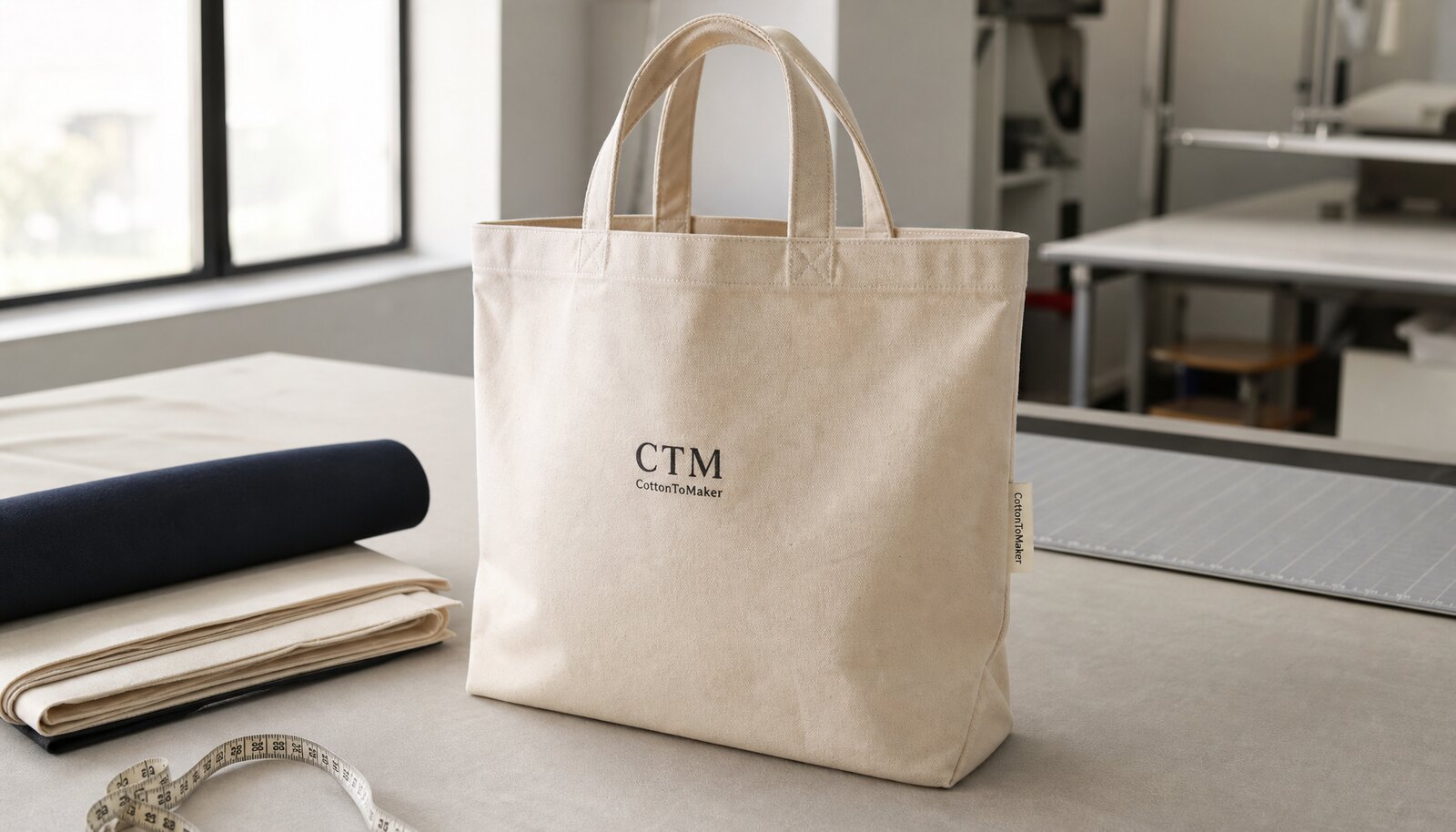
Start with the bottle, not the logo
Most wine tote programs fail for the same reason: the buyer begins with artwork and ends up discovering the bag does not actually suit the bottle. A wine bottle is tall, heavy, and unforgiving in a retail bag. If the opening is too tight, the label scuffs on the seam. If the base is too shallow, the bag tips when a customer sets it down. If the handles are short or weak, the tote stops feeling reusable after a few carries.
For custom canvas tote bags for wineries, the better starting point is the use case. A tasting-room impulse bag, a wine club gift, a festival giveaway, and a premium retail tote all need different construction. A single 750 ml bottle bag can be compact and simple. A two-bottle carrier needs a wider gusset and stronger handle attachment. A magnum gift bag usually needs more vertical clearance and a heavier fabric to hold its shape.
- Single-bottle carry bag: lower cost, simpler structure, ideal for point-of-sale packaging
- Two-bottle tote: needs wider gusset, stronger handles, and more body to protect glass
- Gift-set bag: may need a divider, insert, or reinforced base if bottles are paired with accessories
Use finished dimensions that match real bottle formats
A useful spec sheet should name the bottle format, not just the bag size. Standard 750 ml bottles vary enough in shoulder shape that a tote which fits a slim Bordeaux bottle may feel tight around a wider Burgundy shape. If your winery sells multiple labels, ask the supplier to test against the widest bottle in the line, not the average bottle. That avoids a design that works for one SKU and fails for the rest of the assortment.
Practical size examples help suppliers quote the same item. A single 750 ml bag often lands around 4.5 x 4.5 x 13.5 in usable space. Two bottles usually need something closer to 9 x 4.5 x 14 in, depending on the bottle diameter and whether you want a snug or relaxed fit. Magnum programs need extra height and a wider base. Always confirm the internal usable dimension, not just the cut size on a technical drawing.
- Ask for internal usable size and flat cut size in the same quote
- Check whether the opening can accommodate the widest label or shoulder shape
- Match base width to the bottle diameter so the tote does not tilt in the carton
- If the bag will be stacked in retail displays, ask for a self-standing sample
Canvas weight, weave, and color fastness matter more than most buyers expect
Canvas weight is the main driver of perceived quality, but it also affects durability, folding, and freight. Ten to twelve ounces is usually a practical range for standard wine retail and tasting-room use. If the bag is meant to carry two bottles or survive repeated reuse, 14 to 16 oz gives the tote more structure and better shelf presence. When suppliers quote different units, normalize the conversation immediately. Oz and GSM are both valid, but mixing them without conversion is how buyers end up comparing different fabrics as if they were the same.
Color choices need the same rigor. Natural canvas is forgiving and usually easier to source, but dyed canvas can make the bag feel more branded and premium. If you choose a dyed body, ask for colorfastness expectations in writing. For reusable retail bags, buyers should also decide whether the tote is spot-clean only or expected to be washable. If washing is part of the promise, request a sample wash test and define what failure looks like: obvious bleed, dimensional change, or print cracking.
- 10–12 oz: efficient for lighter retail gifting and lower unit cost
- 14–16 oz: better for premium shelf feel, reuse, and two-bottle loads
- Dyed canvas: requires a written colorfastness expectation before approval
- Washability: specify spot-clean only unless the supplier can prove wash performance
Choose the decoration method based on the art, not the quote line item
The right decoration method depends on the logo, the brand architecture, and how the bag will be sold. Screen print is usually the best fit for bold marks, one- or two-color logos, and medium to high volume. It keeps the unit cost manageable and usually gives a crisp result on canvas when the art is not overloaded with fine detail. If the logo relies on small type, a thin-line crest, or premium detailing, a woven label, patch, or embroidery may be a better production fit even if the unit price is higher.
A common sourcing mistake is approving artwork as if the canvas were a smooth coated surface. Heavy weave changes how edges read. Small negative spaces can fill in, and subtle gradients can look muddy. Ask the supplier to show the design at true size on the actual bag panel, with the logo placement measured from the seam and hem. For multi-brand winery groups, it also helps to define one primary decoration method and one backup method so reorders do not drift across different factories or vendors.
- Screen print: strongest value for simple marks and repeat orders
- Woven label or patch: good for premium resale and very small logos
- Embroidery: durable and upscale, but slower and not ideal for tiny text on thick canvas
- Reject art that only works on a PDF; approve art that works on the actual bag texture
Compare quotes by spec, not by headline price
Quote comparison gets messy when each factory prices a slightly different bag. One supplier may be including heavier canvas, reinforced handles, and retail polybagging while another is quoting a light body with bulk carton packing. Those are not equivalent offers. Before you compare price, make every supplier quote the same spec sheet: fabric weight, finished size, decoration method, handle style, and packing method. That is the only way to know whether a lower price is a real savings or just a weaker product.
MOQ also needs a practical reading. A supplier can often quote a low minimum for the base bag, but the number may change when you add a second print color, dyed canvas, a woven label, or retail-ready packing. If your winery has multiple labels, seasonal variants, or different bottle sets, ask for the MOQ by each variable. That makes it clear whether you are buying one program or three separate custom builds hidden under one line item.
- Require the quote to show unit price, setup, packing, and any optional extras separately
- Standardize the quote term, such as EXW or FOB, before comparing suppliers
- Ask what changes the MOQ: fabric color, print count, trim, or pack format
- Treat low MOQ offers cautiously if they reduce flexibility or hide setup fees
Sampling is a test of fit, not a courtesy approval
A sample should prove the tote works with the actual bottle and the actual finish. Do not approve an empty bag and assume the production run will be fine. Put the real bottle or bottle set inside the sample, check how the weight sits in the base, and see whether the neck rubs the upper seam. If the tote is for two bottles, test the exact pair your team plans to sell or gift. Even small differences in shoulder shape can change the way the bag behaves when it is full.
The most useful sample comments are precise. Instead of saying the bag feels off, say the handle drop is too short for shoulder carry, the print is 8 mm too low, the base does not sit flat, or the gusset pinches the bottle shoulder. That language gives the factory a direct correction path and helps prevent a second sample cycle. If you need to move quickly for a seasonal launch, set an internal approval deadline before the sample arrives so production does not stall while the factory waits for a decision.
- Test the bag with the widest bottle in the line, not just the easiest bottle
- Measure logo placement against the seam, not by eye
- Check handle feel when the bag is fully loaded, not empty
- Approve only after color, size, stitch quality, and pack method are all final
Use a QC plan with explicit tests and pass/fail rules
Quality control should be written like a production requirement, not a general inspection note. For winery totes, the key risks are fabric weight drift, weak handle stitching, poor print durability, and packing mistakes. The cleanest approach is to define one approved sample, then inspect bulk goods against that sample and against measurable tolerances. If the supplier can support it, ask for a pull test on the handles, a dry and wet rub test on the print, and a size check on random finished pieces before shipment.
You do not need a laboratory to set practical acceptance thresholds. A buyer-friendly standard might be: no open seams, no loose threads longer than 5 mm, no obvious color transfer on a white cloth after 10 firm rubs, and no more than 3% shrinkage after a wash test if washability is part of the spec. If the bag is meant to be retail-facing, add a check for stain-free fabric, centered artwork, and matching carton counts. The point is to make rejection criteria clear before the factory starts cutting.
- Create a measured sample reference with size, print placement, and handle length written down
- Set a clear load test using the intended bottle count and a minimum hold time
- Define rub and wash expectations for dyed or printed canvas before bulk production
- Reject bulk goods that drift outside the approved tolerance, even if the bags are visually close
Check compliance and sourcing details before the PO is signed
If the bags are going into retail channels, national distribution, or a chain wine program, sourcing questions need to go beyond stitching and color. Ask for the fabric composition, the country of origin, and any chemical or dye disclosures your channel requires. If the tote uses dyed canvas, a coated finish, or a water-repellent treatment, ask whether the finish includes any restricted substances the buyer needs to screen for. If you sell in the U.S., some retailers will also want a Prop 65-related disclosure workflow where applicable. In other regions, the buyer may need REACH or similar substance compliance support.
It is also worth confirming whether the factory can support the claims they make. If the supplier says the canvas is recycled, ask for the documentation tied to that claim. If a wine club program needs branded labels or hang tags, ask who prints them and whether the printer can match the same color standard as the bag body. Compliance is not just a legal check. It is a way to prevent a sourcing gap where the bag arrives on time but cannot be received by the customer because the paperwork is incomplete.
- Ask for material composition, country of origin, and dye or finish disclosures
- If the bag is claimed as recycled, request the supporting documentation
- Confirm whether the finish is spot-clean only, washable, or treated with a coating
- Make sure the factory can provide the documents your retailer or distributor needs
Pack for the warehouse you actually ship to
Packing choices can change labor and freight more than buyers expect. Bulk packing is usually the most efficient route for wholesale wine totes, especially when the destination is a warehouse or 3PL that can do its own labeling and kitting. Retail-ready packing, by contrast, makes sense when the bags go directly to tasting rooms or gift shops, but it should be priced and approved up front. If you need hang tags, barcode stickers, tissue, inserts, or dividers, those requirements belong in the quote, not in a late-stage email thread.
Carton design matters because canvas is bulky. Heavier fabric reduces the number of units per carton and changes the gross weight, which then changes freight planning and warehouse receiving. Ask the supplier for carton dimensions, gross weight, and palletization if the bags will move through a distribution center. If the warehouse has strict receiving rules, also ask for carton labels that match the SKU, quantity, and purchase order format exactly. Simple packing details are a common source of avoidable delays.
- Bulk pack for lower cost and simpler receiving
- Retail-ready pack only when the channel needs it, and price it separately
- Confirm carton counts, gross weight, and pallet pattern before shipment
- Make carton labels and SKU marks match the buyer’s receiving instructions
Lead time, reorders, and the final approval gate
The schedule usually slips before production ever starts. Artwork revisions, sample comments, and fabric confirmation are the real bottlenecks. If you are planning a harvest promotion, holiday wine club drop, or seasonal tasting-room launch, freeze the artwork early and give the supplier one clean approval path. Changing logo size after sampling often means a new screen, a new sample, or a delayed cut schedule. The same is true if you switch to a different dyed canvas or change the packing format after the sample has already been approved.
For a standard program, a sample lead time plus roughly 25 to 35 days after approval is a realistic planning framework, assuming no special fabric sourcing or unusual finishing. Reorders are easier when the original reference is clean. Keep the approved sample, the artwork file, the fabric reference, and the pack spec together so the second order can be matched to the first. The best reorder outcome is boring: same look, same fit, same carton count, no surprises.
- Approve artwork before fabric is reserved whenever possible
- Do not change print size, handle length, or pack format after sample signoff
- Keep one approved reference package for future reorders
- Add schedule buffer for seasonal launches, fabric dyeing, or embroidery
Specification comparison for buyers
| Spec decision | Recommended option | When it fits | Buyer risk to check |
|---|---|---|---|
| Fabric weight | 10–12 oz canvas for single-bottle retail gifting; 14–16 oz for two-bottle or premium reuse programs | Tasting rooms, wine club gifts, retail shelf bags | A light canvas stretches at the base and looks thin once a bottle is inside |
| Bag size | Single 750 ml bottle: about 4.5 x 4.5 x 13.5 in; two 750 ml bottles: about 9 x 4.5 x 14 in; magnum: about 5.5 x 5.5 x 15.5 in | Programs tied to standard Bordeaux, Burgundy, or magnum formats | Flat-cut size can look right on paper and still pinch the bottle neck or twist at the seam |
| Handle build | Self-fabric handles with boxed stitch or reinforced cross-stitch | Reusable retail sales and heavier bottle loads | Short handles or weak bartacks fail after repeated carry use |
| Print method | Screen print for bold one- or two-color logos; woven label, patch, or embroidery for premium marks | Simple winery branding, heritage labels, upscale gift sets | Fine type, gradients, or low-contrast art may blur, crack, or fill in on canvas |
| Color strategy | Natural, bleached, black, or dyed canvas matched to the brand palette | Retail programs with a fixed shelf identity | Dyed canvas needs colorfastness expectations written into the spec, not assumed |
| Finish and reuse | Spot-clean guidance by default; machine-wash only if the factory can prove the print and dye can handle it | Wine club bags, customer reuse, long-life merchandise | A washed tote that shrinks, bleeds, or wrinkles badly creates complaints after first use |
| Supplier route | Direct factory with artwork, packaging, and QC control | Repeat programs, custom sizing, branded retail lines | Poor communication can create spec drift between sample and bulk |
| MOQ structure | Base MOQ by fabric color, print color, and packing type, not just bag style | Multi-SKU winery assortments and seasonal programs | A low MOQ can hide higher setup fees or force fewer customization options |
| Packing route | Bulk packed in master cartons unless retail-ready packing is written in the PO | Wholesale distribution, warehouse receiving, 3PL fulfillment | Retail-ready packing without a written pack spec often triggers rework and labor charges |
Buyer checklist before sampling
- Define the bottle mix first: single 750 ml, two 750 ml bottles, half-bottle sets, or a magnum gift format. The gusset, base width, and handle load need to match the heaviest packed configuration, not the empty bag silhouette.
- Lock the fabric unit before you request quotes. Ask every supplier to quote the same measure, either oz or GSM, so 12 oz canvas is not being compared against a lighter fabric hidden behind a different unit.
- Write the finished size in both the flat cut spec and the usable internal size. For winery bags, the important dimension is whether the bottle can enter and exit without scraping the seam or forcing the neck against the opening.
- Set the color and finish expectation early. Natural canvas, bleached white, black, and dyed canvas all behave differently in print and wear, so ask for colorfastness information if the bag is not plain natural canvas.
- Pick the decoration method based on artwork complexity, not budget alone. Screen print is efficient for bold logos, but a woven label, patch, or embroidery can be the cleaner answer for small type or premium resale bags.
- Request a sewn sample or pre-production sample using the exact handle length, stitch pattern, print size, and packing format that will be used in bulk. A sample on different fabric or different trim is not a production approval.
- Test the bag with the actual wine bottles you plan to ship or sell. A tote that looks fine empty can fail once the glass shifts, especially on two-bottle formats or wide-Burgundy bottles.
- Specify the care instruction. If you expect reuse, say whether the bag is spot-clean only or machine-washable. If it must be washable, require no visible print bleed and no meaningful size change after the first wash test.
- Write the packing requirement in the quote: bulk pack, individual polybag, hang tag, barcode sticker, tissue insert, divider, or carton label. Do not let the supplier guess.
- Ask for total landed cost, not just the factory unit price. Include setup, sampling, packing, inland handling, export docs if needed, and freight to the receiving point or 3PL.
Factory quote questions to send
- What exact fabric weight and weave are you quoting, and can you confirm the unit in oz or GSM on the spec sheet?
- For a single 750 ml bottle, a two-bottle gift set, or a magnum format, what finished size do you recommend, and what internal usable dimension will the bag have?
- Which decoration method is included in the quote, and what line thickness, minimum text size, and color count can it reproduce cleanly?
- What is the MOQ by bag color, print color, and packaging type, and do setup charges change if we order multiple winery SKUs in one program?
- Can you provide a pre-production sample using the same fabric, handle length, seam construction, and label placement as bulk production?
- What are your standard tolerances for finished size, handle length, logo placement, and color variation between production lots?
- What test method do you use for handle strength, stitch quality, and print durability, and what is the pass/fail threshold?
- How are the bags packed for export or domestic warehouse receiving: bulk in cartons, polybagged, or retail-ready, and how many units per carton?
- Can you separate the quote into unit price, setup or screen charge, sample cost, packing cost, and any carton, export, or inland fees?
- If we reorder later, will you keep the same fabric reference, print reference, and label spec, or will we need to re-approve a new sample and shade?
Quality-control points to confirm
- Fabric weight matches the approved spec within the supplier’s stated tolerance, with no bait-and-switch to a lighter canvas.
- Canvas weave is even, with no thin streaks, contamination, or weak spots near the base, side seam, or handle attachment points.
- Finished dimensions are within the agreed tolerance, typically no more than about 3 mm on print placement and 5 mm on body dimensions unless the supplier states a different approved range.
- Handle stitching is secure and symmetric, with reinforced bartacks or boxed stitches and no loose thread tails at the top seam.
- Load test the filled bag with the intended bottle set for at least 5 minutes; handles should not slip, stitches should not open, and handle stretch should stay within the approved limit.
- Check print durability with a dry rub and light wet rub on the approved sample; for dyed or printed canvas, ask for a pass criterion such as no visible transfer to a white cloth after 10 firm rubs.
- If the bag is intended to be washable, run one wash cycle on a sample and check for shrinkage, bleeding, wrinkling, and print cracking; a common buyer threshold is no obvious bleed and no more than 3% shrinkage in any direction.
- Inspect color consistency across the lot under normal indoor light, especially for dyed canvas, because tone shift is common across dye lots.
- Confirm carton labels, SKU count, country of origin marking, and pack count before shipment; pallet marks should match the PO and receiving instructions.
- Open random cartons and inspect for stains, oil marks, odor, needle damage, bent hardware, or crushed corners that could point to handling or moisture issues.