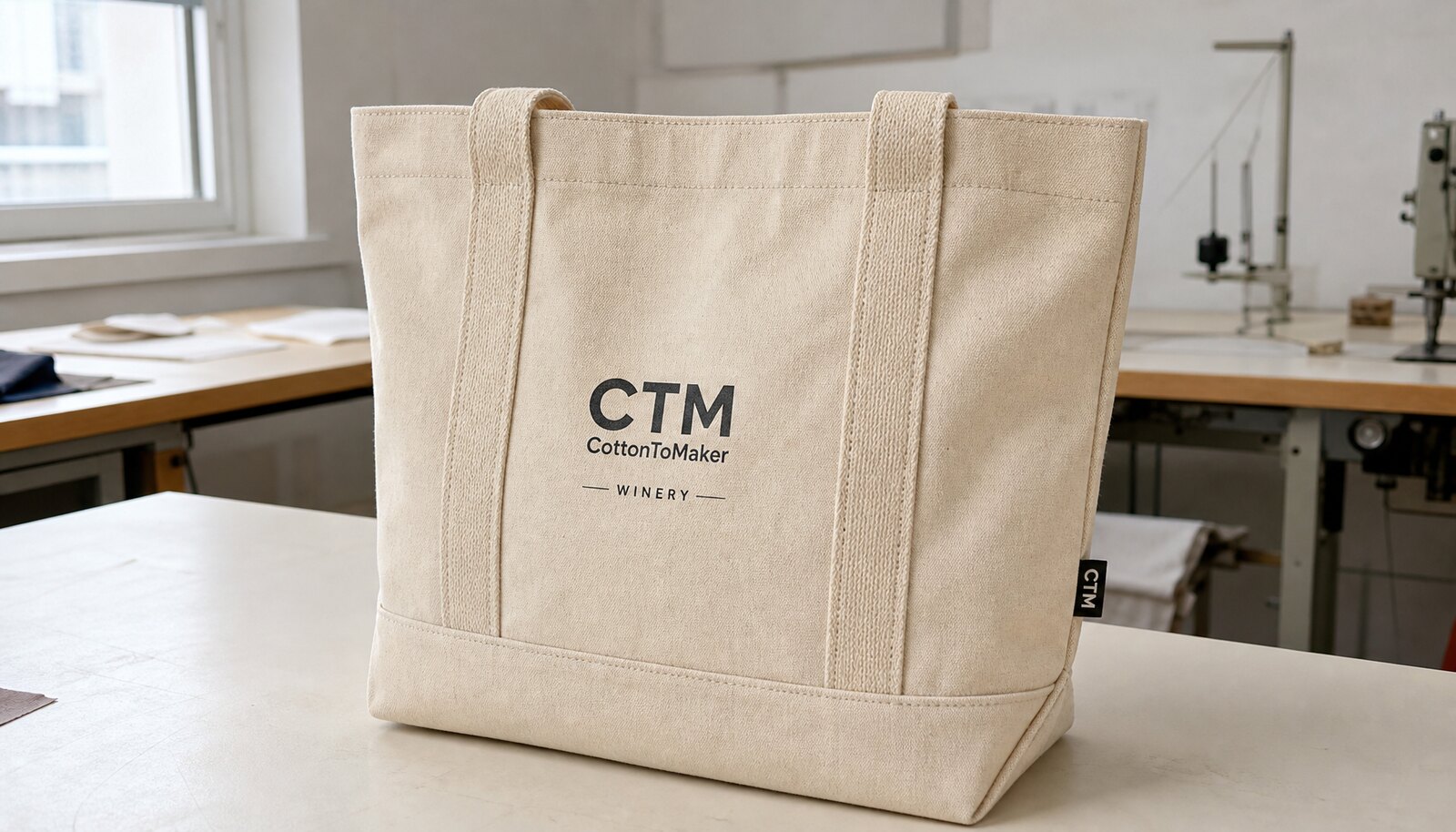
Why winery tote samples fail in practice
Winery tote bags are not standard promo totes. They often live in tasting rooms, gift shops, club orders, and holiday bundles, which means the buyer is judging appearance and carrying performance at the same time. A sample can look right on a table and still fail once it holds a bottle, a corkscrew set, or a boxed gift. That is why sample approval has to cover build quality, not just the logo.
The common mistake is approving a pretty first sample and assuming bulk production will follow automatically. It will not if the factory used a different canvas weight, a different print screen, or a cleaner sample-room assembly than the production line. The approval process should lock the spec that affects cost and function first, then the decoration, then the packing. If any of those three change later, the quote you compared is no longer the real quote.
- Treat the bag as a retail product, not only a logo carrier.
- Approve the sample against the final use case, especially bottle weight.
- Keep one approved reference sample in the buyer file before bulk release.
Set the build spec before you judge the logo
For winery use, canvas weight matters more than many buyers expect. A light 6 to 8 oz tote can work for giveaways, tasting room handouts, or light paper goods, but it starts to look cheap when it carries a bottle or a gift bundle. For a retail-ready wine tote, 10 to 12 oz canvas, roughly 340 to 410 GSM, is a safer base. If the bag will regularly carry two bottles or a heavy insert, move up in structure rather than trying to solve the problem with a stronger print.
The rest of the build should match that weight. Handles need enough width to spread load, usually with self-fabric or cotton webbing that is reinforced at the stress point. A simple X-box stitch or bartack at the handle root is more important than decorative stitching. For bottle carry, a gusset or base board can keep the bag upright and prevent the bottom from sagging out of shape in the tasting room.
- Use 10 to 12 oz canvas for premium retail and bottle-carry programs.
- Specify handle width, handle length, and handle drop instead of leaving them open.
- Ask whether the bag needs a base board, side gusset, or reinforced bottom seam.
Choose the decoration method for the artwork you actually have
The best decoration method depends on the artwork, not on the buyer's preference alone. Screen print is the most practical choice when the logo is one or two colors, bold, and intended to be repeated across a larger batch. It is economical, fast to approve, and easy to match on reorders when the screens are kept. Wineries that use a clean crest, wordmark, or simple vintage-style mark usually get the best value from this route.
If the artwork is detailed, textured, or meant to feel premium in a retail setting, a woven label or embroidery patch may be the better answer. That can work well for gift shop bags, club memberships, or limited releases, but the sample has to show the real hand feel and thickness. Fine serif text, gradients, and thin lines often disappear on textured canvas, so the sample should prove that the art still reads from normal viewing distance and does not distort when the bag folds.
- Use screen print for simple logos and repeatable large runs.
- Use woven labels or embroidery when the buyer wants a more premium retail look.
- Approve the sample under normal light, not only in a photo, because texture changes the visual result.
Use the right sample type or the approval is meaningless
A winery tote order usually passes through more than one sample stage. A sales sample may show the idea, but it is not enough for final approval if it was made elsewhere or with substitute materials. The sample that matters is the pre-production sample from the final factory line, made with the same fabric, thread, print method, and packing plan that will be used in bulk. If the buyer cannot trace the sample back to the production source, the approval has limited value.
The best practice is to keep the sample paper trail as tight as the physical one. Ask the supplier to note the fabric lot, the print method, the size spec, and the pack-out used for the approved sample. If the order is being handled by an agent or trading company, the factory name should be visible on the quote and on the sample record. Otherwise the buyer can approve a piece that the final maker cannot match at scale.
- Distinguish clearly between sales sample, pre-production sample, and top-of-production sample.
- Approve the final factory version, not a hand-finished display piece from another source.
- Keep a measured sample record with artwork, dimensions, and material notes.
Inspect the sample like a buyer, not like a gift recipient
A useful inspection starts with dimensions and symmetry. Measure the finished width, height, gusset, and handle drop against the approved sheet, then verify that the front and back panels hang evenly. Look for print location drift, especially if the art sits close to the top hem or side seam. On canvas, a small placement error can look larger than it is because the weave gives the eye a reference grid. Also look at the print under daylight, because the same ink can appear heavier or thinner under showroom lighting.
Then test the parts that will fail in use. If the tote is meant to carry bottles, load it with the real weight or a defined test weight and check the handle bite, bottom sag, and side seam stress. The bag should remain usable after the load is removed, not permanently distorted. If the sample smells strongly of solvent, oil, or damp storage, do not approve it until the factory explains the cause. Odor is not a cosmetic issue in wine retail; it affects how the bag is received by shoppers.
- Measure size, handle drop, gusset depth, and logo position before visual approval.
- Test the bag under realistic load if it will carry bottles or boxed gifts.
- Reject samples with odor, dampness, visible oil marks, or weak stress points.
Read the quote line by line so the sample matches the order
A clean quote for custom canvas tote bags should separate the pieces that drive cost. Unit price alone does not tell you much if the supplier hides setup charges, print screens, embroidery digitizing, packing, or courier fees in different lines. Compare fabric weight, print method, handle construction, carton pack count, and lead time on the same sheet. If one quote is cheaper because it uses a sales sample spec and another is higher because it uses the production spec, the low quote is not a real win.
MOQ logic should also be visible. For this category, the biggest cost jumps usually come from multiplying variables: multiple colors, multiple art versions, special handle materials, and different pack-outs. A single size with one artwork and one print position is easier to price and easier to reorder. When wineries want a seasonal release plus a tasting-room version plus a gift-shop version, it is often cheaper to standardize the body spec and change only the artwork or label than to create three separate constructions.
- Request separate lines for sample fee, setup charge, packing, and freight.
- Compare one-size, one-art, one-fabric quotes against multi-variant quotes.
- Make sure the MOQ reflects the real production run, not an optimistic placeholder.
Packing decisions affect retail damage and landed cost
Packing should be specified with the same care as the tote itself. A winery bag that will be resold in a gift shop may need an individual polybag, a barcode sticker, or a belly band so the retailer can hang or shelf it directly. A wholesale order sent to a distributor may be better off bulk packed to reduce labor and carton volume. The wrong packing choice can add handling cost at destination or cause scuffing, dust pickup, and moisture problems during transit.
Carton dimensions matter more than buyers often expect. Oversized cartons inflate freight and can crush soft canvas into a less attractive shape, while undersized cartons can create creasing around the print area. Ask for a packing mock-up or at least carton dimensions before approval, especially if the tote has a gusset or a structured base. For imported goods, the outer carton label and pack count need to match the PO exactly so receiving teams can count quickly without opening every box.
- Match the pack-out to the channel: wholesale, retail shelf, or direct fulfillment.
- Use carton sizes that protect the print and avoid unnecessary freight volume.
- Require carton marks, quantities, and item labels to match the order file.
Plan the schedule around sample sign-off, not hope
A realistic timeline starts with the approval path, not the shipment date. For a standard custom canvas tote, design confirmation, sample making, and internal review usually take longer than the first quote suggests. If the bag needs special dyeing, a custom woven label, imported webbing, or a revised pattern, the schedule should stretch accordingly. Wine buyers often underestimate this because the first sample looks simple. In production, small changes to canvas, thread, or print setup can add days or weeks.
The safest way to reduce schedule risk is to freeze the inputs early. That means final artwork, final dimensions, final fabric, and final packing before the sample is cut. If the supplier keeps moving those inputs, the approval loop never really ends and the bulk order starts late. For seasonal winery programs, especially harvest and holiday runs, the buyer should build a time buffer after sample sign-off so the factory can absorb normal production variation without missing the retail window.
- Start the clock from approved artwork and approved material spec, not from the first inquiry.
- Allow extra time for woven labels, special handles, or custom packing.
- Do not release bulk before the sample and the final spec sheet match exactly.
Approve only when the landed-cost math still works
The cheapest tote quote can become the most expensive landed product if freight, packing, and rework are ignored. Heavy canvas raises carton weight, and retail-ready packing adds volume, but that may still be worth it if the bag feels better in the hand and sells at a higher margin. For wineries, the bag is often part of the perceived gift value, so a slightly higher build cost can be justified if it protects the bottle, improves shelf appeal, and reduces buyer complaints.
Do the comparison at the landed level, not just at the ex-factory level. Include sample fees, production unit price, carton volume, freight mode, inland handling, and any destination labeling work. If the supplier proposes a lower GSM or a thinner handle to save a few cents, ask what happens to the bag in the tasting room and after the first heavy load. The right approval is the one that survives real use and still leaves the program margin intact.
- Compare ex-factory, packed, and landed cost before final sign-off.
- Weigh freight savings against damage risk and perceived quality.
- Use the approved sample as the cost baseline for future reorders.
Specification comparison for buyers
| Spec decision | Recommended option | When it fits | Buyer risk to check |
|---|---|---|---|
| Sample source | Pre-production sample from the final factory line | When the bulk order matters more than the first display sample | A sales sample from a different workshop can hide fabric, stitch, and print changes |
| Supplier route | Direct factory with documented sample traceability | When you need control over GSM, handles, and reinforcements | Higher MOQ and slower development if the factory is busy or partially outsourced |
| Supplier route | Trading company or sourcing agent with factory disclosure | When you need mixed SKUs or a smaller test run | The approved sample may not match the final sub-supplier unless the factory is fixed in writing |
| Fabric weight | 10 to 12 oz canvas, roughly 340 to 410 GSM | When the tote must feel premium and carry wine gift sets or bottles | Lower GSM can sag, show through, or fail handle pull tests |
| Decoration method | 1 to 2 color screen print for simple logos | When the art is flat, bold, and repeatable at scale | Fine lines, gradients, and small text can break up on textured canvas |
| Decoration method | Woven label or embroidery patch for premium retail | When the buyer wants a higher perceived value in tasting rooms | Extra cost, thicker hand feel, and longer sample timing |
| Packing route | Bulk packed with carton labels and moisture protection | When the bags are wholesale goods or inserted later at destination | Loose packing can scuff prints and create odor or humidity issues |
| Packing route | Individual polybag or belly band for shelf-ready retail | When the bags go straight to gift shops or DTC fulfillment | More labor, more packaging cost, and more carton volume in freight |
Buyer checklist before sampling
- Lock the finished size, gusset, and handle drop before the sample is built.
- Specify canvas weight in GSM or oz weight, not just "heavy canvas".
- Approve the exact logo placement with measurement from top seam and side seam.
- Confirm whether the sample uses the same fabric, thread, and print method as bulk production.
- Request the sample type in writing: sales sample, pre-production sample, or top-of-production sample.
- State the expected use case: single bottle, two-bottle carry, tasting room retail, or gift set bag.
- Define the acceptable size tolerance, print placement tolerance, and stitch standard.
- Agree on carton pack count, carton size, and whether the goods need retail labeling.
- Ask for a quote that separates sample cost, tooling, packing, and freight.
- Do not sign off on photos alone if the bag will carry bottles or heavy inserts.
Factory quote questions to send
- What is the exact fabric weight in GSM or oz, and what tolerance do you allow on bulk fabric?
- Is the sample made from the same bulk fabric, thread, and accessories you will use in production?
- What is the finished size, handle length, handle drop, and gusset depth in your production cut sheet?
- What decoration method do you recommend for this artwork, and what is the setup charge for it?
- How many colors, print positions, or logo elements are included in the quoted unit price?
- What is the MOQ per size, color, and artwork version?
- What is the sample fee, and does it include artwork setup, screen charges, or courier charges?
- How many pieces per carton, what are the carton dimensions, and do you include carton markings?
- What is the lead time from sample approval to shipment, and what delays change that schedule?
Quality-control points to confirm
- Fabric weight matches the approved spec within an agreed tolerance, ideally within 5 percent.
- Finished dimensions stay within about 1 cm on overall width, height, and gusset unless the buyer agrees otherwise.
- Handle drop and handle symmetry stay even enough that the bag hangs straight when loaded.
- Logo placement is centered and within a small placement tolerance, usually about 5 mm for simple front prints.
- Stitching is clean, with no skipped stitches, broken seams, loose thread ends, or weak handle attachment points.
- Reinforcement is visible and consistent at handle joins, base corners, and stress points.
- Print is sharp, fully cured, and free of smearing, pinholes, misregistration, or cracked edges after a light fold test.
- No oil stains, odor, damp cartons, dust contamination, or unfinished raw edges are present.
- Carton count, item labels, and outer marks match the purchase order and packing list.
- A load test is defined before approval, especially if the tote will carry wine bottles or heavier retail gifts.