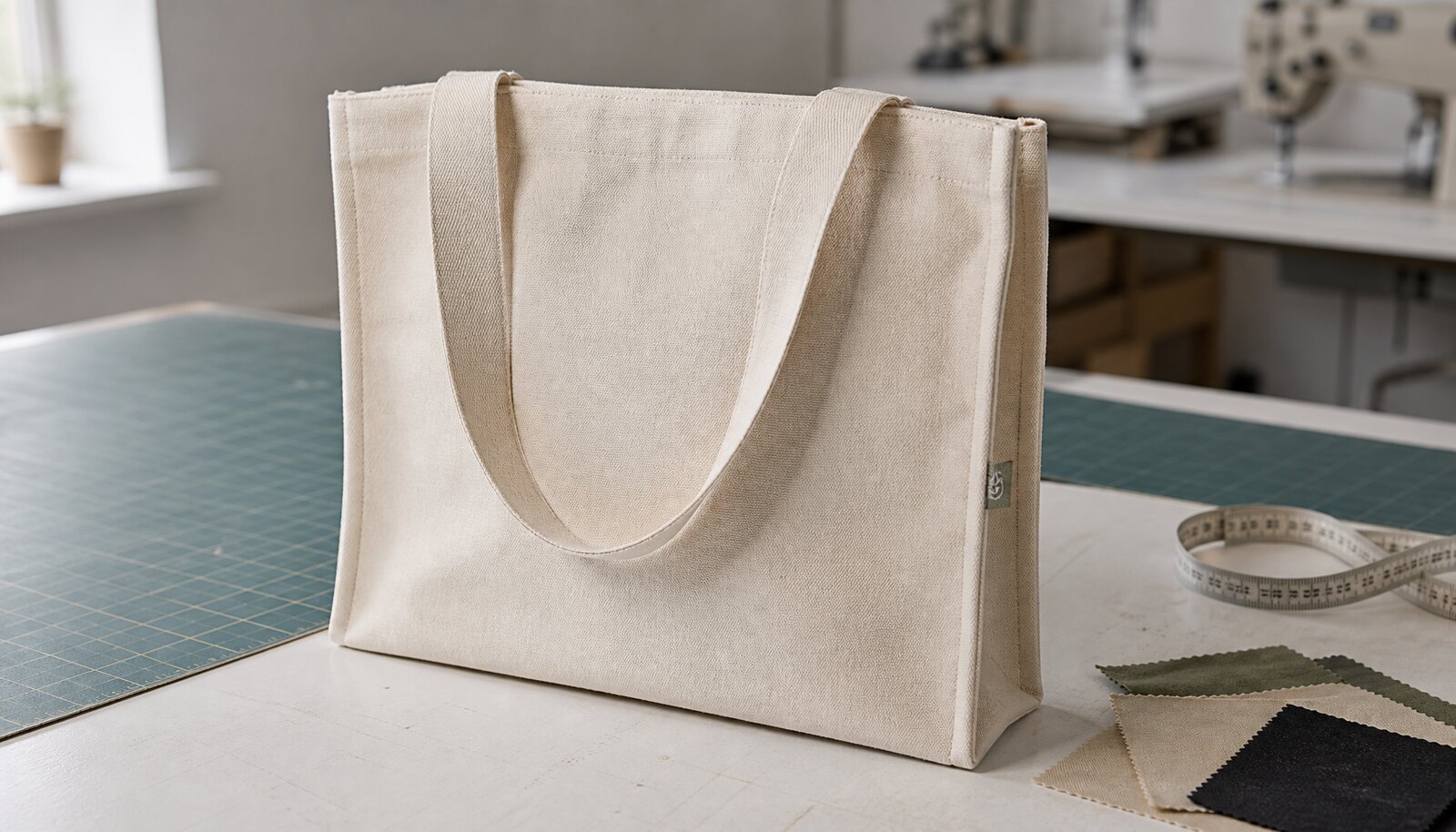
Start With the Use Case, Not the Tote
A winery tote is not a generic promotional bag. It may need to sell as retail merchandise, hold a single bottle with padding, support two bottles for a club gift, or sit in a tasting room where customers carry it out immediately after purchase. Each of those uses changes the price structure. If you only send a supplier a picture and the words custom canvas tote bags, the quote will usually come back against the cheapest possible interpretation of the spec. That quote is not wrong; it is just built on assumptions you did not control.
The fastest way to get a useful bulk pricing plan is to define the job first. State where the bag will be used, what it must carry, and how the customer will see it on shelf or in hand. If the bag has to support a heavier bottle set, the factory needs to know that before it chooses fabric weight, handle reinforcement, seam allowance, and carton load. If it is mainly a tasting-room accessory, you can hold the construction simple and spend more of the budget on print quality and finishing.
- Tasting room retail: prioritize clean finish, easy folding, and a print that looks good at arm's length.
- Wine club gift: prioritize bottle protection, handle strength, and stable packaging.
- Event giveaway: prioritize lower unit cost, fast production, and simple one-color branding.
- Retail resale: prioritize shelf appearance, consistent color, barcode placement, and carton efficiency.
Choose the Right Canvas Weight
For winery programs, the most useful starting point is usually 10-12 oz canvas, which lands roughly in the 340-400 gsm range depending on weave and finish. A lighter 8 oz bag can work for short-hand carry, but it starts to feel thin once a glass bottle or a small gift set goes inside. A 12 oz bag gives you a more stable body, better seam structure, and a better chance of surviving repeated use in retail. If the tote is expected to carry two bottles or a heavier souvenir set, many buyers move up again, because the cost of a weak bag is higher than the cost of a slightly heavier one.
Do not let the quote compare weight alone. The fabric is only part of the story. Yarn quality, weave density, pre-shrinking, and dye process all affect how the tote looks after sewing and after use. Natural canvas often gives a better value signal for winery branding because it feels honest and rustic, but the surface can vary more from lot to lot. If you need a very consistent retail line, lock the approved shade and weight range with a physical sample, not only a written spec. The factory needs a reference for the body fabric, and procurement needs a tolerance band that can be enforced later.
- 8 oz / about 280-300 gsm: suitable for light giveaways, not ideal for bottle weight.
- 10 oz / about 340 gsm: good base level for tasting room retail and lighter carry use.
- 12 oz / about 400 gsm: safer for heavier gifting, better shape retention, and stronger shelf presence.
- 14 oz and above: useful when the bag is part of a premium gift set or needs a more structured look.
Pick Decoration That Holds Up
For bulk pricing, screen print is still the default winner when the artwork is simple. A one-color logo on natural canvas is fast to produce, easy to repeat, and usually the cleanest way to keep the unit price under control. It also gives the buyer a simpler approval path because the factory is not juggling complex gradients or delicate registration. If the winery brand uses a strong wordmark or a single symbol, screen print is normally the best cost-to-impact option. For premium collections, a small woven label on the side seam or a stitched patch can lift the bag without adding the cost of full-body decoration.
Embroidery sounds premium, but it is not always the right answer on canvas. It adds setup time, can distort lighter fabric, and is usually best kept to smaller marks rather than large logos. Heat transfer works for short runs or variable text, but it is not the first choice for a bag that will be used heavily or laundered often. The practical rule is simple: use the cheapest method that still matches the brand standard and the intended life of the bag. If the tote is a retail item, insist on a sample under real light, because artwork that looks sharp on screen can soften or shift once it hits the textile surface.
- Best value for bulk: one-color or two-color screen print with solid logo shapes.
- Best premium accent: woven side label or small sewn patch rather than large embroidery.
- Avoid for high-volume base program: full-bleed prints, fine gradients, and tiny reversed text.
- Approve color under daylight or a neutral light box, not only on a phone screen.
Use Supplier Route to Set the Price Floor
The sourcing route changes the price floor more than many buyers expect. A direct factory quote is usually the cleanest route for a stable winery program because the factory controls fabric cutting, sewing, and print setup in one place. That structure is easier to audit when you are comparing price breaks across volume. A trading company can still be the right answer for mixed SKUs, complicated consolidation, or a buyer that wants one contact for several product families. A local decorator can be useful for small or urgent runs, but the unit price usually climbs fast once the bag size, fabric weight, and print coverage move beyond a simple setup.
The mistake to avoid is comparing a factory quote against a quote that already hides local repacking, artwork handling, or inland freight. That makes the spreadsheet look better than the real landed cost. Ask the supplier to identify what is included and what is excluded. If they say the bag is quoted as FOB, then the quote should separate production, packaging, and export handling from the ocean or air leg. If they only offer DDP, make sure the carton count, shipping method, and destination duties are all fixed first. Otherwise the landed number will move when the freight assumptions move.
- Direct factory: best for repeat orders, tighter spec control, and meaningful price breaks.
- Trading company: useful when you need several styles or a broader procurement bundle.
- Local decorator: useful for very small quantity, urgent, or region-specific runs.
- Always compare the same incoterm and carton spec before judging the lowest quote.
Build the MOQ Around Setup Cost
MOQ is not just a factory rule; it is the point where setup cost stops dominating the order. For a winery tote with stock canvas and one-color print, a practical first tier often starts lower because the supplier can use existing fabric and a simple screen. Once you ask for custom fabric color, special dyeing, lining, zipper closure, or multiple print positions, the MOQ jumps because the factory has more setup, more material handling, and more chance of waste. That is why one supplier may quote 500 pieces while another pushes the same style to 3,000 pieces. They are not using the same production path.
The best buyer move is to ask for price tiers that show exactly where the step changes happen. A quote that only gives one number hides the economics that matter for planning. You need to know whether 1,000 pieces is only slightly more expensive than 500, or whether 3,000 pieces unlocks a much better landed cost. This is especially important for wineries that reorder in seasonal waves. If you expect a fall release and a spring restock, it can be smarter to place a slightly larger first order if that drops the average cost enough to cover the forecasted restock.
- Lower MOQ usually means stock canvas, simple print, standard size, and basic folding.
- Higher MOQ usually appears when you add custom color, lining, hardware, or special packing.
- Ask for the price at 500, 1,000, 3,000, 5,000, and 10,000 pieces if the supplier is serious about bulk business.
- If the quote does not show setup fees separately, the MOQ logic is probably hidden inside the unit price.
Approve Samples Against Clear Tolerances
A good sample process prevents more damage than any post-shipment inspection. For custom canvas tote bags for wineries bulk pricing plan decisions, the right sequence is usually fabric swatch, print strike-off, then pre-production sample with final packing. A swatch tells you the handfeel and color of the body fabric. A strike-off tells you whether the logo will reproduce cleanly. The pre-production sample is the real checkpoint because it should show the final fabric, stitching, reinforcement, labels, and folding method. If the supplier wants to skip directly to production, that is a risk signal, not a speed gain.
Put tolerances in writing before approval. For this type of bag, a finished size tolerance of about plus or minus 1 cm is reasonable, but the handle length, print placement, and stitch quality should be tighter. The sample should also pass a load test that matches the winery use case, not a generic textile check. If the tote is supposed to hold a bottle, load it with the target weight plus a margin and see whether the seams shift, the handles twist, or the body wallows. One failed sample is cheap; 5,000 bad bags are not.
- Approve the body fabric, print, stitch, label, and folding method before bulk starts.
- Measure size, handle length, and print position against the sealed sample.
- Look for loose threads, seam puckering, weak bartacks, and odor from packaging or finish.
- Test the bag with real bottle weight, not only with an empty visual inspection.
Pack for Shelf, Club, or Shipment
Packing changes both the quote and the end-user experience. A wholesale winery program often ships more efficiently in bulk folds inside master cartons, with each piece nested to save carton volume. That is the lowest-cost route and usually the right answer for distribution or warehouse stock. If the tote is going straight to retail, then individual folding, barcode stickers, hangtags, and cleaner carton marks may be worth the added packing cost because they reduce store labor. The right decision depends on who touches the bag after it lands.
For club gifts or bundled wine sets, the packing standard needs to protect the tote shape as well as the print. A badly folded bag can crease the logo, weaken the handle fold, or take a set that looks careless on arrival. Carton dimensions matter as much as bag price because freight charges are tied to volume and weight. If the factory sends a quote without carton sizes, the landed cost is incomplete. Ask for the packed quantity per carton, gross weight, and the fold method. Those three numbers often explain why one quote looks cheap at the factory gate and expensive once it is on the water.
- Bulk pack: best for distributor stock and warehouse-forward programs.
- Retail pack: use barcode labels, clean folds, and consistent carton marks.
- Club gift pack: protect the logo face and handle shape during transport.
- Always include carton dimensions in the quote comparison because freight can change the true cost quickly.
Plan Lead Time Around Seasonal Winery Demand
Wineries often buy on a seasonal rhythm, which makes schedule risk more important than it looks on paper. The usual production chain is fabric confirmation, sample approval, bulk sewing, packing, then freight booking. Even when a supplier is efficient, artwork changes, shade approvals, or packaging revisions can push the timeline. If you are launching for a tasting room refresh or a harvest-season campaign, build buffer time before the sell date. The wrong assumption is that a tote order can be rushed the same way a simple printed flyer can be rushed. Sewing and packing do not compress that easily without creating quality risk.
Holiday shutdowns and port congestion matter too. If the order is meant to land before a winery event or a retail promotion, you need to count backward from the in-store date, not from the date the PO is placed. Ocean freight is usually the cost-efficient route for larger orders, but only if the schedule can tolerate the transit window. Air freight can rescue a shortfall, yet it changes the economics fast and should be treated as an exception. The practical planning rule is to lock art and sample approval early, then order with enough time for production variance and shipping delay.
- Build time for sample approval into the schedule, not just bulk sewing.
- Treat holiday factory shutdowns and port delays as normal risks, not edge cases.
- Use ocean freight for planned replenishment and air only for urgent recovery stock.
- Place the order early enough that a reprint or rework does not threaten the launch date.
Compare Landed Cost Before You Pick a Quote
The cheapest factory price is not always the cheapest landed cost. For canvas tote bags, the real cost stack includes fabric, cutting, sewing, print setup, packing, carton volume, inland handling, export docs, freight, and import charges. If one supplier gives you a lower unit price by using a heavier carton or a larger fold size, the freight line can erase the savings. The buyer should compare the same carton dimensions, the same incoterm, and the same packing count before making a decision. Otherwise the quote comparison is only a spreadsheet exercise, not a procurement decision.
At larger volumes, small design choices become meaningful. A shift from 12 oz to 10 oz canvas can reduce cost, but only if the lower weight still supports bottle carry and does not reduce shelf appeal. A simpler print saves setup money, but it should not damage brand perception. A tighter packing method lowers freight, but it should not crush the bag shape. The right answer is usually not the cheapest spec. It is the spec that keeps the bag sellable, the reorder simple, and the total landed cost inside your target margin.
- Compare quotes on the same fabric weight, carton size, and shipping term.
- Do not let a low unit price hide high freight, oversize cartons, or extra packing labor.
- Balance unit cost against shelf value if the bag is being sold as retail merchandise.
- Use landed cost, not factory gate cost, for the final sourcing decision.
Write the RFQ So Quotes Are Comparable
A good RFQ removes guesswork. For winery totes, the RFQ should tell the supplier the bag size, canvas weight, color, print method, handle length, reinforcement points, packing format, and destination port. It should also name the target use case, because a bag for two bottles needs different construction than a bag for one bottle and a brochure. If you leave those details open, the factory will quote to the lowest defensible standard and then treat later changes as variations. That is how buyers end up with price disputes before production has even started.
The best RFQs also tell the supplier how the quote will be judged. If procurement will compare by FOB price, say so. If you need a DDP landed number, define the ship-to address and ask for the carton data. If artwork matters, ask for a separate setup line so you can see what is recurring and what is one-time. When the supplier knows the decision framework, the quote comes back cleaner, and the negotiation becomes about real tradeoffs instead of missing details.
- State the use case, not only the product type.
- List dimensions, canvas weight, print colors, handle specs, and packing method.
- Separate one-time setup charges from recurring unit costs.
- Tell the supplier how you will compare the offer so the numbers line up cleanly.
Specification comparison for buyers
| Spec decision | Recommended option | When it fits | Buyer risk to check |
|---|---|---|---|
| Fabric weight | 10-12 oz canvas, about 340-400 gsm, with a tight weave and stable dye lot | Most winery retail bags, tasting room sales, and one- or two-bottle carry use cases | Underweight fabric will sag, show seams, and feel cheap beside glass bottle packaging |
| Handle build | Self-fabric handles with X-box reinforcement and bartacks at the stress points | When the tote will be carried by hand or over the shoulder with wine bottles or gift sets | Weak handle joins fail before the body of the bag, even if the canvas itself looks strong |
| Print method | Single-color screen print for the base program; woven label or small embroidery for premium tiers | When unit cost matters and the artwork is simple, bold, and repeatable across replenishment orders | Too many colors or fine gradients raise setup cost and make color matching harder across batches |
| Closure and interior finish | Open top for the lowest price; snap button or zipper only when the channel needs more protection | Tasting rooms, event giveaways, and retail shelves where easy access matters more than closure | Extra hardware adds cost, more sewing operations, and more failure points in transit |
| Packing format | Bulk fold in master cartons for wholesale; individual polybag only for retail or e-commerce resale | When the buyer wants lower packing cost and can handle final merchandising in-house | Loose folding can create creases, and overpacked cartons can deform handles and prints |
| Supplier route | Direct factory for 3,000+ pcs with stable repeat specs; trading company for mixed SKUs or smaller launches; local decorator for very small urgent runs | When the order size and timeline match the route instead of forcing one supplier type to do everything | Hidden margin stacking, unclear responsibility, and inconsistent spec control can erase the unit-price advantage |
| Sample path | Blank fabric swatch, print strike-off, then pre-production sample with final packing | When the artwork, color, and construction need approval before mass production starts | Skipping the sample stage often turns into rework, delayed shipping, and avoidable stock write-offs |
| Freight term | FOB for clean supplier comparison; DDP only after carton size, weight, and destination duties are locked | When procurement needs a reliable landed-cost view instead of only a factory gate price | Comparing DDP against FOB without the same carton and shipping assumptions gives misleading quotes |
Buyer checklist before sampling
- State the end use clearly: tasting room retail, wine club gift, event giveaway, bottle carry, or bundled gift set.
- Lock the canvas weight target in oz and gsm, plus whether the fabric should be bleached, natural, or dyed.
- Define the tote size, gusset depth, handle length, and the bottle load the bag must carry without distortion.
- Send one artwork file in vector format and specify the number of print colors, placement, and Pantone targets if color matters.
- Tell the factory the packing method, carton target, and whether each bag needs a barcode, hangtag, or retail insert.
- Ask for the MOQ breakpoints by price tier, not just the first price, so you can see how volume changes the quote.
- Request a pre-production sample with real fabric, real printing, and final packing before you approve bulk.
- Confirm the incoterm, port, lead time, and any testing or compliance documents before comparing suppliers.
Factory quote questions to send
- What exact canvas weight, weave, and shrinkage allowance are you quoting for this winery tote?
- Is the unit price based on direct factory production, or does it include a trading margin?
- What is included in the quoted price: fabric, sewing, print setup, labels, inner packing, master cartons, and testing?
- What are the MOQ and price breaks at 500, 1,000, 3,000, 5,000, and 10,000 pcs?
- Which sample fees are refundable or deductible from the bulk order after approval?
- What tolerances do you hold for finished size, handle length, print position, and stitch quality?
- What is the lead time for the sample and for bulk production after PP approval?
- What are the carton dimensions, gross weight, and shipping term used in the quote?
Quality-control points to confirm
- Finished size should stay within the agreed tolerance, typically about plus or minus 1 cm on body dimensions.
- Handle length, handle symmetry, and handle reinforcement should match the sealed sample and carry the stated load without seam stress.
- Print registration should stay aligned, with no visible blur, pinholes, cracking, or color shift beyond the approved standard.
- Stitching must be even and secure, with no skipped stitches, loose threads, broken bartacks, or open seams at stress points.
- Fabric should match the approved gsm, handfeel, and shade, with no obvious weaving defects, stains, or weak spots.
- Cartons should pass the agreed stacking and compression standard, and the tote folds should not damage the print or handles.
- Packaging count must be exact, with the correct barcode, SKU label, or retail insert if those were part of the order.
- A load test should be defined in the RFQ, usually with the bag carrying the intended bottle weight plus a safety margin.