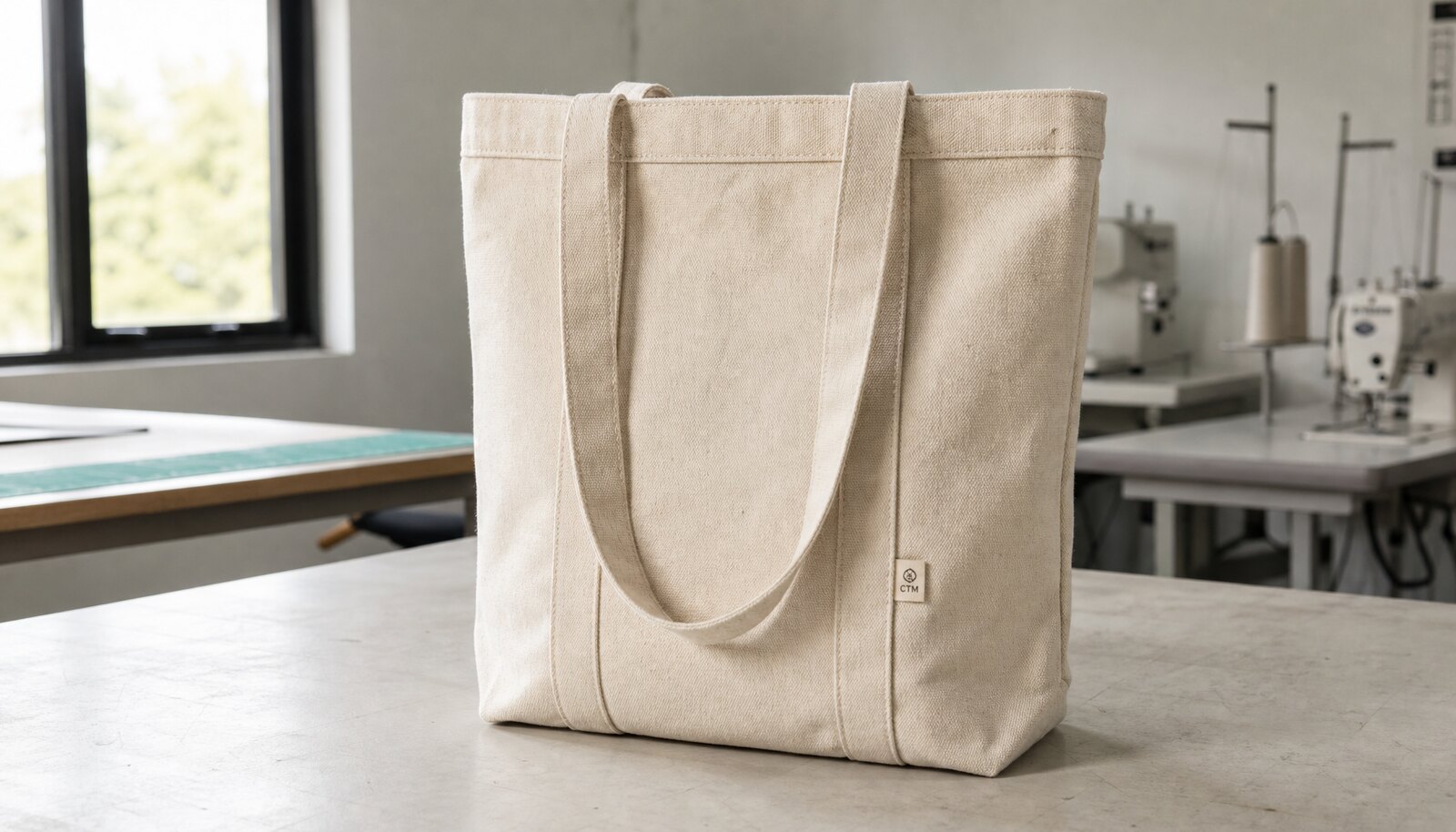
Why wellness brands need a different tote sourcing plan
Custom canvas tote bags for wellness brands are usually sold as a brand extension, not as a throwaway giveaway. That changes the sourcing logic. The bag must look calm, clean, and premium enough to sit beside skincare, supplements, yoga accessories, or spa retail, while still surviving repeated use. A buyer who treats it like a basic promo tote usually ends up with fabric that feels too thin, a print that cracks, or a label placement that does not support private label retail.
For this category, the sourcing plan should start with how the bag will be used: retail at checkout, bundling with a starter kit, event merchandising, or as an add-on gift with purchase. Each use case changes the spec. A tote that carries a glass bottle and journal needs more body and reinforcement than one used for lightweight merch inserts. If the use case is vague, supplier quotes will also be vague, and that makes comparison impossible.
- Retail wellness tote: prioritize hand feel, seam finish, and print quality.
- Bundle tote: prioritize carton efficiency, foldability, and consistent sizing.
- Gift-with-purchase tote: prioritize MOQ flexibility and predictable unit cost.
- Premium brand tote: prioritize label execution and fabric weight over the lowest price.
Start with fabric weight, weave, and finish
Canvas weight is the first decision that changes both perception and cost. For most wellness-brand tote programs, 12 oz cotton canvas is the practical baseline. It has enough body for retail presentation and screen printing without feeling overbuilt. If the bag must support heavier contents or sit in a premium retail setting, 14 oz usually gives a better drape and a more substantial hand feel. If your tote is strictly promotional, 10 oz can work, but it is easier to wrinkle, may show the contents through lighter colors, and often feels under-specced beside wellness packaging.
The weave and finish matter just as much as the weight. A tighter weave gives cleaner printing and less fabric distortion around logos. Natural canvas often varies slightly by lot, so the buyer should define acceptable shade range rather than demanding lab-grade uniformity. If the supplier offers pre-shrunk or washed canvas, ask whether the treatment changes final dimensions, print adhesion, or lead time. The cheaper route is not always the better landed-cost route once rework and rejection are counted.
- 12 oz: best all-rounder for wellness retail and private label programs.
- 14 oz: stronger shelf presence, better for premium pricing and repeated use.
- 10 oz: use only when price pressure is high and the bag carries light items.
- Natural canvas: allow controlled shade variation and define it in writing.
Choose the print method by artwork complexity and reorder plan
For most custom canvas tote bags for wellness brands, one-color screen printing is the cleanest commercial choice. It is usually the lowest-cost method with the most stable repeatability when the artwork is simple. It works especially well for logo-led wellness brands that use restrained type, small symbols, or a line art mark. If the artwork has gradients, multiple tones, or tiny fine details, the print method must be decided with the factory before quote comparison, not after sample approval.
Heat transfer can be useful for short runs with more detailed graphics, but it introduces different buyer risks: higher sensitivity to heat and wash, a less textile-like hand feel, and possible edge lift over time. A woven patch or sewn badge can look more premium for a private label program, but it raises sewing time and may limit minimum order flexibility. For a wellness brand that plans to reorder the same bag in waves, screen print is usually the most stable route unless the design demands otherwise.
- Screen print: best for simple logos, repeat orders, and controlled cost.
- Heat transfer: useful for small runs or detailed artwork, but confirm durability.
- Woven patch: premium look, but higher labor and more sewing control needed.
- Embroidery: limited use on canvas tote panels because it can distort lighter fabric.
Private label details that make the bag feel like your brand
Wellness buyers often focus on the exterior logo and forget the private label finish. That is a mistake. A bag that will be sold through retail or used in a brand launch should have at least one clear brand identifier beyond a front print. The simplest route is a woven side label or inside label combined with the main logo print. That gives the bag a more finished retail identity and helps with stock control if the tote is distributed through multiple channels.
The label spec should be fully defined. Buyers should state label size, fold type, thread color, placement, and whether the label is sewn into a side seam or top edge. If the label is placed too close to a stress point, the seam can look bulky. If it is too small or too low contrast, the private label effort is wasted. For wellness brands that use neutral palettes, a natural canvas bag with a tonal woven label often looks more credible than an oversized printed mark.
- Use a woven side label when the tote must support retail branding.
- Use an inside label when you want a cleaner exterior and less visual noise.
- Use a sewn-on patch when the brand position is premium and the artwork is simple.
- Avoid vague label instructions such as “small logo label” in the RFQ.
How MOQ affects unit price and factory attention
MOQ is not just a quantity line; it is a production behavior signal. At low MOQ, many factories will still quote, but the price often reflects more setup time per unit, less efficient fabric cutting, and less flexibility on label or print changes. For a first wellness launch, 500 to 1,000 pieces is a realistic testing range if the tote is standard size and uses one print color. If the design has multiple labels, a special handle length, or a complex pocket structure, MOQ can rise fast because the sewing line must slow down.
The buyer should compare MOQ by route, not just by supplier. A direct factory may offer better control and more stable reorders, but a trading company may appear more flexible on small batches. That flexibility can be expensive if the quote hides extra middle margin or if sample approvals take longer. When the order is likely to repeat, the right question is not “who is cheapest now?” but “who can reproduce the same tote without drifting on label placement, fabric shade, and print registration?”
- 500-1,000 pcs: common launch range for a simple private label tote.
- 1,000-3,000 pcs: better for price leverage and more efficient carton packing.
- Below 500 pcs: expect limited customization and higher unit cost.
- Complex labels or pockets can force the MOQ higher than the buyer expects.
Build the RFQ so quotes are actually comparable
A clean RFQ saves more money than aggressive bargaining. The buyer should specify finished size, fabric weight, handle length, print area, label type, packing method, and carton requirements in one document. Without those details, one supplier may quote a light promo tote while another quotes a heavier retail tote, and the unit prices will look misleadingly far apart. If the program is for a wellness brand, include the intended channel because retail-ready packing and barcode labeling can materially change labor cost.
For quote comparison, insist on visible line items where possible: fabric, cutting and sewing, print setup, print cost, label cost, packing, and freight assumptions. If a supplier gives only one lump sum, ask for a breakdown before shortlisting. A factory that cannot separate the cost drivers is often harder to manage during reorders or spec changes. The goal is not to force the factory into a spreadsheet; the goal is to reveal where the quote can move if you change one element.
- Define the tote size in finished dimensions, not just approximate inches.
- State whether the bag is open top, with pocket, or with closure.
- Specify print color count and artwork placement with a simple artwork sheet.
- Clarify whether barcodes, inserts, or retail stickers are required.
Supplier comparison: factory, trading company, and nearshore route
The best sourcing route depends on how stable the program is. If you are planning a one-off campaign, a flexible trading partner may be acceptable. If the tote will become a recurring private label item, a direct factory is usually the stronger option because it gives better control over fabric sourcing, sewing sequence, and repeatability. Nearshore suppliers can be attractive when lead time is tight or inventory is expensive, but their quote may be much higher and the available canvas weights may be narrower.
Use the table below to compare sourcing routes before you decide whether to send an RFQ. The important point is not only the unit price. It is the combination of sample discipline, MOQ behavior, print consistency, and the factory’s willingness to hold the same spec across repeat orders.
- Direct factory: best for repeat orders and spec control.
- Trading company: useful for small tests or multi-item programs.
- Nearshore supplier: useful when freight time or stock risk matters more than price.
Sample approval: what to look for before bulk production
The sample stage should prove three things: the tote looks right, it functions correctly, and it can be repeated. Do not sign off a sample just because the logo is in the right place. Lay the sample flat and measure width, height, and handle drop. Check whether the bag stands well, whether the seams pull unevenly, and whether the print sits cleanly on the weave. On a natural canvas tote, small texture variation is normal, but the sample should still feel balanced and intentional.
Private label buyers should also inspect label placement and finishing at the same time. A sewn side label should lie flat without twisting. A patch should not create hard edges that catch during folding. If the factory presents a pre-production sample, it should match the approved sample in fabric weight, print color, label position, and packing. Any substitution should be written down immediately. If the sample is only “close enough,” bulk risk rises fast.
- Measure finished size, handle length, and handle drop from the approved sample.
- Check print sharpness under normal light and at close inspection distance.
- Rub the print lightly and look for transfer, cracking, or uneven curing.
- Inspect label alignment, seam tension, and corner reinforcement.
Packing choices that affect freight and warehouse receiving
Packing is often ignored until cartons start arriving. For canvas tote bags, the cheapest workable route is usually bulk folding, optional polybag protection, and carton packing by fixed count. If the bag is retail-facing and will be shelf displayed, the buyer may need individual polybags with a barcode sticker or a simple insert card. That extra step increases labor and carton volume, so it should be part of the quote from day one. A supplier who leaves it out is not necessarily cheaper; they may just be quoting incomplete work.
For procurement teams, carton count and carton dimensions are not minor details. They affect ocean freight, palletization, warehouse receiving, and damage rate. Ask for the expected gross weight and carton size range before order release. If the tote is heavy canvas with a thick patch or inner pocket, the cartons may become too heavy for standard manual handling. If the bags are folded inconsistently, the carton count may look fine but the warehouse will reject the shipment for poor presentation or distorted labeling.
- Use a fixed carton count per SKU to simplify receiving.
- Keep carton dimensions aligned with your warehouse receiving rules.
- Add barcode stickers only when retail or fulfillment requires them.
- Confirm folding method so the tote opens cleanly after unpacking.
Lead time, risk points, and landed-cost comparison
A realistic schedule for a standard private label canvas tote usually includes sample development, sample approval, bulk production, and packing. For a simple one-color canvas tote, sample-to-approval can take 14 to 21 days if the factory is responsive and the artwork is final. Bulk production commonly takes another 25 to 40 days after sample sign-off. If the factory is starting from raw fabric dyeing or if the order lands in a busy period, lead time stretches quickly. Buyers should treat revision cycles as schedule risk, especially when handle length, label placement, or artwork size is still open.
Landed cost is where many tote programs get misread. A low ex-factory price can still lose once you add label labor, inner packaging, carton upgrades, freight volume, and rejection risk. For wellness brands, the cleaner comparison is often a landed-cost model across three routes: direct factory, trading company, and nearshore source. The supplier with the lowest quote is not always the best buy if the bag arrives with poor folding consistency, inconsistent canvas shade, or a print that fails QC.
- Treat sample revisions as a schedule reset, not a minor edit.
- Compare quote plus packing plus freight assumptions together.
- Watch gross weight and carton volume, not only unit price.
- Reserve extra time if the tote includes a patch, zipper, or multiple labels.
Specification comparison for buyers
| Supplier option | What to verify | Commercial advantage | Buyer risk to control |
|---|---|---|---|
| Direct sewing factory | fabric swatch, approved sample, seam close-ups, logo test photos, packing pilot, and final inspection evidence | Better sample-to-bulk control and faster production feedback | May be weaker on export paperwork or branded packing unless checked early |
| Trading company | Factory name, production photos, trim-source proof, and who owns QC decisions | Can coordinate small mixed orders and extra services | Markup can hide real factory capability and slow defect decisions |
| Specialized bag workshop | bag size, gusset, handle drop, seam allowance, stitch density, reinforcement patch, and loading expectation | More practical for detailed construction, trims, and repeat programs | Capacity may be limited during peak seasons |
| Low-price general supplier | 8-12 oz cotton canvas, 120-220 gsm cotton, recycled cotton, or blended fabric selected by use case and target price | Useful for simple promotional runs with loose specs | Material downgrades, weak packing, and vague inspection scope can erase savings |
| Retail-ready supplier | fold method, inner bundle, carton count, carton mark, moisture protection, SKU separation, and warehouse receiving needs | Can handle labels, SKU separation, carton marks, and receiving rules | Higher unit cost must be compared against reduced warehouse work |
| Compliance-focused supplier | Fabric records, labeling review, test plan, and production traceability | Safer for retail programs and repeat brand orders | Documentation claims need evidence, not only sales language |
| Local sample room plus bulk factory | Signed sample, bulk factory handoff, first-piece photos, and deviation owner | Good for complex branding before large production | Sample room quality may not match bulk line unless handoff is controlled |
Buyer checklist before sampling
- Final artwork file with Pantone references or a controlled print reference, plus confirmed print location and size
- Target fabric weight in oz or GSM, weave type, and acceptable shade tolerance for natural canvas
- Handle length, handle width, seam reinforcement, and stitch count expectation at stress points
- Private label method selected: woven label, printed neck label, side flag, or inside label
- Packing spec: polybag yes/no, barcode placement, carton quantity, carton mark format, and master carton size limit
- Target MOQ, target unit price range, and freight mode assumptions for landed-cost comparison
- Sample approval criteria for print registration, seam appearance, smell, fabric hand feel, and dimensions
- Lead time expectation for sample, pre-production, and bulk, including any peak-season constraints
Factory quote questions to send
- What canvas weight do you recommend for this tote size, and what finished GSM or oz will you actually cut and sew?
- Which print method is included in your quote, how many colors are priced, and what is the setup cost per artwork version?
- What is your MOQ by color, by print method, and by label type, and how does the unit price change at 500, 1,000, and 3,000 pieces?
- Can you share a pre-production sample photo set showing handle stitching, corner reinforcement, label placement, and print alignment?
- What packing is included in the quote, and what is the carton pack count, carton dimension estimate, and gross weight range?
- What is your standard lead time after sample approval, and what parts of the schedule are at risk if we revise artwork or dimensions?
- Do you have previous production references for natural canvas, printed totes, or private label tote programs of similar size and spec?
Quality-control points to confirm
- Fabric weight tolerance should be defined before production, not after. For example, a 12 oz target should not drift into visibly thin 10 oz stock unless approved in writing.
- Handle anchors should be reinforced at the stress points with consistent stitch length and no skipped stitches, loose thread, or puckering.
- Print registration must stay within an agreed tolerance so logos do not look blurred, crooked, or stretched on the finished panel.
- Bag opening and finished dimensions should be checked against the approved sample with a practical tolerance band, especially if the tote must fit a yoga mat, bottle, or retail insert.
- Natural canvas shade should be controlled by lot; small variation is normal, but a clear mismatch between sample and bulk should trigger review.
- Label placement, label size, and fold direction should match the approved sample because private label buyers often reject a bag for label inconsistency even when the tote itself is usable.
- Carton pack count, barcode label location, and outer carton marks should be verified before shipment to avoid warehouse receiving delays.