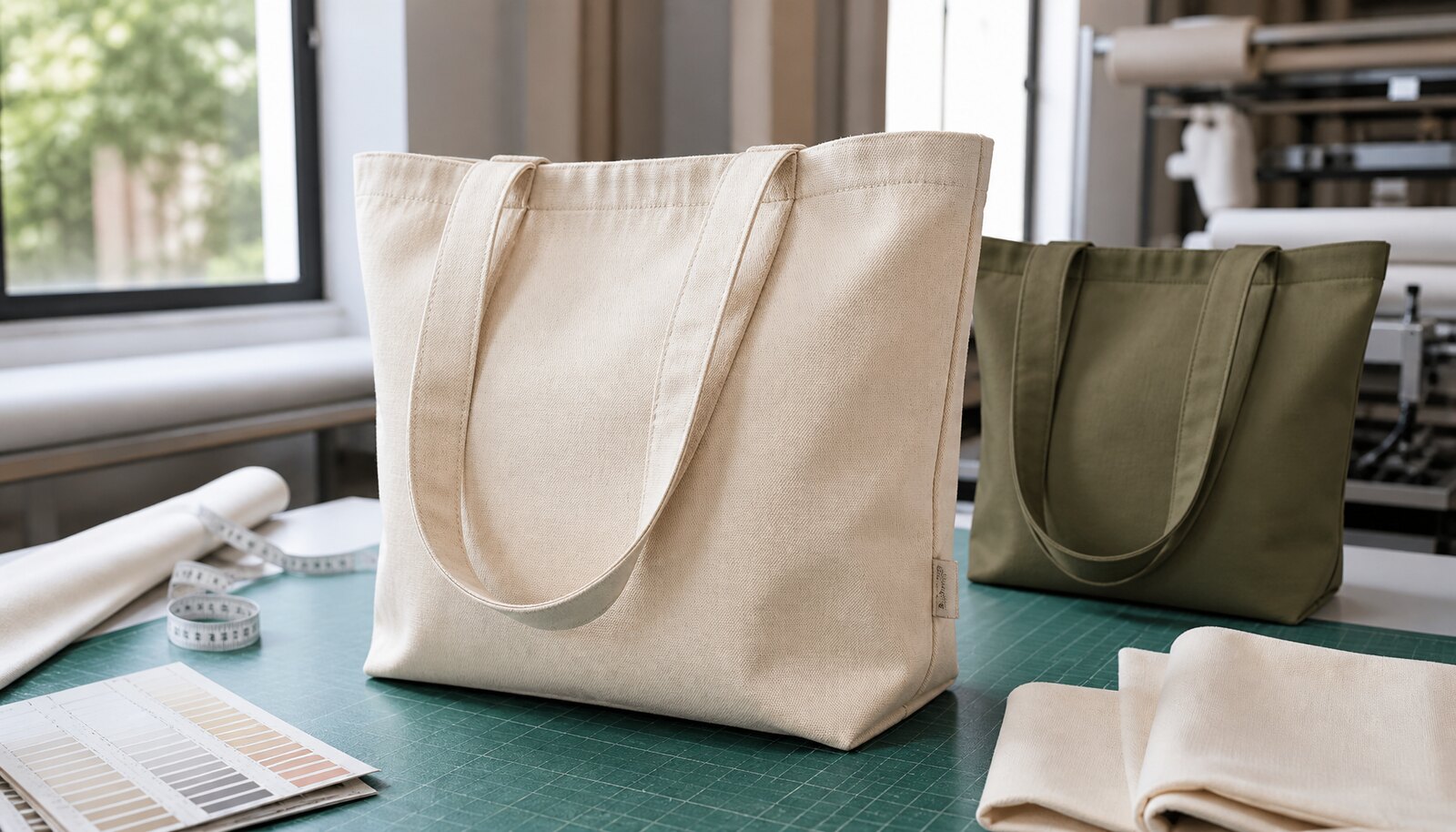
Start With the Buying Decision
A procurement guide is useful only if it supports an actual decision: request for quote, sample approval, order release, or final shipment acceptance. For custom canvas tote bags for wellness brands, the buyer should not start with generic adjectives such as premium, eco-friendly, or durable. Start with the use case, the target quantity, the intended fill weight, and the required presentation standard. Those four inputs determine almost everything else in the quote.
If the bag is for retail resale, the buyer usually needs a cleaner finish, tighter stitching, more consistent color, and a more controlled packing format. If the bag is for event kits or subscription packaging, unit cost and carton efficiency may matter more than shelf appearance. If the tote will carry bottles, jars, or heavier wellness items, handle reinforcement and seam strength become more important than decorative details.
The specification should separate what is fixed from what is negotiable. Fixed items are finished size, logo method, packing method, and delivery date. Negotiable items are fabric shade, interior finishing, and carton load count. That distinction helps suppliers quote faster and reduces the usual confusion where one factory prices a retail-ready bag and another prices a bulk-packed promo bag.
Use the first page of the RFQ to capture who approves what. If the buyer, brand team, and warehouse all have different expectations, put them in the same document before sampling starts. That avoids the common problem where the sample passes design review but fails receiving because the carton count, fold method, or label format was never specified.
For this category, the best outcome is not just a low unit price. It is a repeatable order that can be reordered with the same spec, the same finish, and the same inspection standard without renegotiating every detail.
- Define the end use before asking for pricing.
- State which details are fixed and which can change.
- Tie the RFQ to a single approval owner.
- Separate product specs from packing and freight requirements.
Choose Fabric With a Cost and Performance View
Canvas is not one material in practice. Buyers will see cotton canvas, recycled cotton, cotton-poly blends, and in some cases heavier washed finishes that change both hand feel and price. The practical question is not whether canvas sounds sustainable or premium. It is whether the cloth weight, texture, and dye behavior fit the brand use case and budget.
For a wellness brand that wants a substantial retail feel, 10 to 12 oz canvas is often easier to position than a very light cloth because it holds shape better and photographs more consistently. Lighter fabric can work for event giveaways or insert bags, but it tends to collapse, wrinkle, and show the contents more easily. Recycled cotton can support a sustainability narrative, but buyers need to accept more variation in shade and fiber appearance unless the supplier has a very controlled program.
Cost is driven by more than fabric weight. Dyeing, washing, pre-shrinking, special finishing, and waste from cutting larger pieces all change the final quote. A heavier bag may also increase sewing time and freight weight, so a simple unit-price comparison can be misleading. If two quotes differ by more than expected, ask whether the difference comes from cloth gsm, finishing, or a hidden reduction in construction detail.
The buyer should also ask whether the material has been pre-shrunk and how much dimensional change is expected after steam, wash, or storage. Canvas can change shape if the fabric is not stabilized properly. If the order will be used in retail packaging or photographed for e-commerce, dimensional consistency matters more than many teams realize.
Do not approve fabric from a catalog image alone. Ask for a swatch, then a cut-and-sewn sample using the exact cloth lot intended for bulk. That is the only practical way to see whether the weave, color depth, and finish are aligned with the brand standard.
- Compare quotes by fabric weight, finish, and shrinkage control, not unit price alone.
- Request swatches and a sewn sample from the same fabric lot.
- Accept more variation only when the brand can tolerate it in the final market.
- Treat dyeing, washing, and pre-shrinking as real cost drivers.
Specify Construction in Measurable Terms
Construction determines whether the tote feels sturdy or disposable. Buyers should specify finished dimensions, gusset depth, handle width, handle drop, seam allowance, and reinforcement details rather than relying on a phrase like strong construction. Those measures are easy for a factory to interpret and easy for QC to verify.
Handle attachment is usually one of the highest-risk areas. If the bag is intended to carry bottles, jars, or a bundled wellness kit, ask for reinforcement at the handle base and a stitch pattern that resists pull-out. Side seams should be clean, aligned, and free from twisting. A gusset should be wide enough for the intended contents, but not so wide that the bag becomes unstable when standing.
There are real tradeoffs here. A thicker seam or denser stitch pattern raises labor time and can create a stiffer hand feel. A larger gusset improves capacity but can increase fabric usage and carton volume. Buyers should decide which part of the product experience matters more before approving the sample. That decision belongs in the spec, not in the final production dispute.
It is also worth defining whether the tote must stand upright, fold flat, or remain light enough for mailer-style shipping. These are different performance goals. A bag that is built to look crisp on shelf may not pack as efficiently as a bag intended for warehouse distribution. If the factory is not told which one matters most, it will optimize for the default it knows best.
For repeat orders, record the approved measurements on the sample card. That turns the sample into a practical control document instead of a one-time visual reference that everyone interprets differently.
- Specify finished size, gusset, handle drop, and seam allowance.
- Add reinforcement requirements where the bag will bear real weight.
- Decide early whether shelf appearance or pack efficiency matters more.
- Keep an approved sample card with measured dimensions.
Match Decoration to the Fabric and Brand Positioning
Branding on canvas tote bags should be specified by method, not just by artwork file. Screen print, heat transfer, embroidery, woven label, and sewn patch each behave differently on canvas. A method that looks good in a mockup can fail in production if the cloth is too rough, the logo is too detailed, or the order volume is too small for the setup cost.
Screen print is usually the most cost-effective for simple graphics and larger runs, but it needs careful registration and ink control. Embroidery can create a premium look on smaller logos, though it adds thickness and may pucker lighter fabric. Woven labels and sewn patches are useful when the brand wants a subtle, durable finish without covering a large area of cloth. Heat transfer can work for small or complex art, but buyers should be cautious about crack resistance and long-term wear.
The placement spec should include exact location, size in millimeters or inches, color references, and any no-print zones around seams or handles. If the bag has a gusset or centered motif, include a clear front/back orientation and a decision on whether the logo must be centered to the bag body or to the handle line. Small ambiguity here creates a lot of avoidable rework.
Ask the supplier what can go wrong with the selected method on this exact fabric. A useful answer mentions ink bleed, edge fuzz, needle perforation, thread breakage, misalignment, or adhesion failure. If the response is only, “quality is good,” the buyer does not yet have enough information to approve the method.
For wellness brands, the graphic language is often minimalist. That makes execution quality more visible, not less. A simple logo with poor alignment looks worse than a dense graphic with minor variation, so the tolerance for placement and finish should be written before sampling begins.
- Specify the decoration method and the failure mode you want to avoid.
- Give exact logo placement and size requirements.
- Set no-print zones near seams, zippers, and handles.
- Choose subtle methods when the brand identity is minimal and clean.
Use Packing Rules as Part of the Product Spec
Packaging is part of the deliverable, not a separate administrative detail. A tote bag can pass sewing inspection and still fail the buyer's program if the packing format does not match warehouse or retail requirements. The spec should state fold direction, bundle count, carton count, inner protection, moisture protection, and carton labeling rules.
For direct-to-warehouse shipments, flat folding with a fixed bundle count usually improves receiving speed and reduces handling cost. For retail presentation or gifting programs, individual polybags, tissue inserts, or branded belly bands may be worth the added labor. The right answer depends on how the bags will be sold and unpacked, not on what the factory normally prefers.
Packing choices also affect damage risk. Loose bundles can pick up dust, crush easily, or become mixed with the wrong SKU. Overpacked cartons may deform the bag shape or cause wrinkling that is hard to reverse. If a carton must travel through multiple handling points, ask the supplier to show a packed-carton photo before production release. That photo should show count, orientation, and label text clearly enough for warehouse verification.
This is also the place to define barcode, SKU, and carton mark requirements. If the brand uses multiple colors, sizes, or kit variations, each carton should be distinguishable without opening it. A receiving team should not need to guess whether the carton contains the right style. The more complex the assortment, the more important this becomes.
Good packing specifications reduce hidden cost. They cut receiving disputes, make replenishment faster, and lower the chance that a perfectly made tote becomes a warehouse problem.
- Define fold method, bundle count, carton count, and carton markings.
- Choose retail-ready packing only when the channel needs it.
- Request a packed-carton photo before bulk release.
- Separate SKUs clearly if the order includes multiple colors or versions.
Break Down the Quote Like a Buyer, Not a Shopper
A usable quote separates the product from the extras. Ask the supplier to list the unit price, setup fees, sample charges, decoration fees, packing charges, carton labeling, and the freight term. Without that breakdown, the buyer cannot compare one factory to another because each one may be including a different scope.
The biggest pricing traps usually come from hidden scope differences. One supplier may quote a lighter fabric, another may omit inner packing, and a third may price a sample that is not made from the same cloth lot as production. A lower unit price can therefore hide a weaker product. The buyer should compare the same spec line by line before trying to negotiate.
MOQ is often tied to more than bag quantity. It may be driven by fabric procurement minimums, print setup efficiency, dye lot constraints, or the labor required to assemble and pack the order. If the buyer wants a lower MOQ, the tradeoff is often a higher unit price or fewer customization options. That relationship should be stated clearly so the team understands what is being bought.
Lead time should also be decomposed. A factory may quote ten days, but that number may assume instant artwork approval, immediate sample approval, and no changes to packing. In practice, the real schedule is usually fabric booking, sampling, approval, cutting, sewing, printing, packing, and final inspection. Ask for a timeline with dates or working days assigned to each stage.
For wellness brands with seasonal campaigns, the most valuable quote is the one that exposes the schedule risk early. It is better to discover a dye or approval bottleneck before deposit than after the artwork is already locked.
- Compare quotes only after separating product, setup, and packing costs.
- Ask what specifically drives MOQ.
- Request a stage-by-stage lead time, not a single promised delivery date.
- Treat a low quote as suspect until the scope matches the spec.
Approve Samples With Evidence, Not Just Comments
The sample process should create evidence that can be reused during production and shipment. For a tote bag, that means front, back, side, seam, handle, logo, inside, and packed-carton photos, plus a physical pre-production sample when the order is important or the design is new. A few good photos are helpful, but they do not replace a measured sample that can be held and inspected.
The approval file should record the sample version, the date, the fabric lot if known, and any approved deviations. If the buyer accepts a slightly different handle drop or a darker natural shade, that exception needs to be written down. Otherwise, the factory may treat the deviation as normal and the buyer may later classify it as a defect. Most disputes come from missing decisions, not from bad intent.
There should be a clear status for each sample round: approved, revise and resubmit, or approved with deviation. The first two are obvious. The third is where procurement discipline matters. A deviation can be acceptable, but only if the buyer understands the impact on appearance, function, and reordering consistency. That is especially important when the order will be repeated across multiple campaigns.
For better control, use a first-article sample after cutting and before mass sewing if the bag has unusual proportions, heavier contents, or a special print placement. That catches size and positioning problems before the full run is in process. It costs time up front, but it is cheaper than sorting finished goods later.
The approved sample should be stored with the RFQ and inspection documents. If a quality issue appears later, the team needs a single reference set, not a chain of emails with changing opinions.
- Require photo evidence and, for important orders, one physical approval sample.
- Write down every approved deviation.
- Use clear statuses: approved, revise, or approved with deviation.
- Keep the approved sample tied to the RFQ and inspection file.
Set QC Criteria That a Factory Can Actually Follow
Quality control for canvas totes should be written as measurable acceptance criteria. Define what counts as a major defect, minor defect, and critical defect. For example, a broken seam, missing handle attachment, or severe print failure should not be treated the same as a slight thread tail or a small dust mark. Without that separation, inspectors will make inconsistent calls and the factory will argue every rejection.
A practical QC plan normally includes incoming fabric checks, first-article verification, in-line checks, and final inspection. Incoming checks confirm the cloth color, weave, and any certification documents. First-article checks confirm that the cutting and sewing setup matches the approved sample. In-line checks catch recurring issues before the whole order is finished. Final inspection confirms count, appearance, and packing. If your buying team uses ISO 2859-1 or an AQL-based system, say so in the spec and align the defect categories to that standard.
The buyer should also set actual inspection targets, not just broad statements like good quality. Useful checks include finished size tolerance, handle symmetry, seam strength, logo placement, print registration, stain limits, thread trimming, and carton count accuracy. If the tote will be used to carry heavy items, add a load or stress test that reflects the real use case. It does not need to be overengineered, but it should be realistic.
Inspection photos should show the measurement point, not just a clean hero image. A photo of a bag on a table is not enough to verify handle drop or logo placement. Ask for close-ups of the stress points and the packing configuration, especially if the order contains multiple SKUs or branding variants.
A good QC system makes the factory’s responsibility visible. The supplier should know exactly what gets rejected, what can be reworked, and what requires buyer approval before shipment.
- Define major, minor, and critical defects before production starts.
- Use first-article, in-line, and final inspection as separate checkpoints.
- Request measurable photos for size, seam, and logo verification.
- Add a realistic load or stress check when the bag will carry weight.
Compare Suppliers on More Than Price
When two suppliers quote the same tote, the buyer should compare the evidence behind the price. Ask which cloth lot will be used, which decoration process is included, what packing method is standard, and whether the inspection scope is built into the quote. A supplier that answers these questions clearly is usually easier to manage than one that only offers a low figure and a vague promise.
Useful supplier evidence includes fabric swatches, production-line sample photos, close-ups of seams and print, carton packing photos, and any relevant certification paperwork. Do not treat these as paperwork for its own sake. They show whether the supplier can actually reproduce the approved sample at scale. A polished sales deck is less useful than proof that the production team has already handled the same material and finish.
The buyer should also ask who owns each production step. Some factories have a separate merchandiser, sewing line, print partner, and packing team. That is workable if the handoff points are clear. It becomes risky if no one can explain who verifies artwork accuracy or carton count. The best suppliers are not always the cheapest; they are the ones that can describe the control points without improvising.
Commercial terms matter too. Ask whether the quote is EXW, FOB, or another handover term, and whether freight, duties, or local delivery are excluded. If a quote looks materially lower than the others, the buyer should assume something is missing until proven otherwise. In sourcing, incomplete scope is a more common problem than outright overpricing.
A good comparison sheet should make it easy to choose between options based on risk, not instinct. Once the spec, sample, and QC rules are aligned, the least risky quote often becomes the strongest commercial choice.
- Compare suppliers on evidence, not just unit price.
- Ask who controls fabric, decoration, packing, and final release.
- Confirm the commercial term and what is excluded.
- Use the quote comparison to surface hidden scope gaps.
Release Production and Protect the Reorder
Before production release, the buyer should have one controlled package that includes the approved sample, final artwork, packing spec, inspection method, and any approved deviations. That package should be the only reference the factory uses to cut, sew, print, pack, and ship the order. If multiple versions circulate, the risk of mismatch rises fast.
The final pre-production checkpoint should confirm that the bulk fabric, decoration method, and packing materials match the approved sample. This matters because suppliers sometimes substitute a similar cloth, a different adhesive, or a faster packing method if the order is under schedule pressure. The buyer does not need to micromanage every step, but the factory should not change any control item without written approval.
After shipment, keep the release file with carton photos, packing list, inspection results, and any deviation approval. That record becomes the base for reorders and claim resolution. For wellness brands with recurring seasonal designs, this is especially important because the next purchase should not restart from scratch. The team should be able to open the file and see exactly what was approved, what was shipped, and what needs to be repeated.
The best final outcome is repeatability. A tote that looks right once is useful. A tote that can be sourced again with the same cloth, print quality, carton configuration, and inspection standard is what makes procurement efficient. That is the real purpose of a packaging specification guide: not more paperwork, but fewer surprises.
If the team can answer the obvious questions before the PO is issued, the order usually runs more smoothly. If those answers are still open after deposit, the project is already carrying avoidable risk.
- Release production only after one controlled spec package is approved.
- Do not allow material or method substitutions without written approval.
- Keep carton photos, inspection results, and packing records for reorder use.
- Treat repeatability as the real procurement goal.
Specification comparison for buyers
| Spec decision | Preferred buyer spec | When it fits | Tradeoff / risk to check |
|---|---|---|---|
| Fabric weight | 10-12 oz cotton canvas for retail presentation; 8-10 oz for lighter promo use; recycled cotton only when shade variation is acceptable | When the bag needs to feel substantial and hold shape | Heavier cloth raises unit cost, sewing time, and freight weight; recycled blends may vary more in shade and texture |
| Construction | Double-needle seams, reinforced handle stitching, and a gusset sized to the intended fill volume | When bags will be reused frequently or carry product kits | Underbuilt seams or weak handle anchoring can fail after repeated loading |
| Decoration method | Screen print for flat graphics, embroidery for premium logos, woven label for subtle branding, heat transfer only for short runs or complex art | When the artwork and fabric texture are matched to the method | Wrong method can crack, curl, pucker, or look low-end on textured canvas |
| Packing format | Flat fold with clean bundle count for warehouse shipments; individual polybag or tissue wrap only when shelf presentation requires it | When cartons need efficient receiving and low damage risk | Retail-ready packing increases labor, materials, and carton volume |
| Color control | Natural canvas or Pantone-matched dyed fabric with an agreed lab dip or strike-off | When brand color consistency matters across reorder cycles | Dyed fabric increases lead time and can create lot variation if approval is loose |
| Certification / claims | Only request certifications the supplier can document for the exact fabric, dye, or finish used | When sustainability claims appear on packaging or sell sheets | Unverified claim language creates compliance risk and quote confusion |
| Quality standard | AQL-based final inspection plus first-article and in-line checks | When shipment acceptance needs a defensible pass/fail method | Skipping a written standard makes defects subjective and disputes harder to resolve |
| Lead time driver | Clear approval path for fabric, artwork, sample, and packing before production starts | When the delivery window is fixed | Late spec changes usually extend lead time more than buyers expect |
Buyer checklist before sampling
- Define the end use first: retail, event giveaway, subscription packaging insert, or product carrier for a wellness kit.
- Lock the finished bag size, gusset depth, handle drop, and target load before asking for price.
- Specify fabric weight, fabric content, lining if any, and whether shade variation is acceptable.
- Choose the logo method based on durability, line count, and the texture of the canvas.
- Ask for a pre-production sample using the same fabric, trim, and print process that will be used in bulk.
- Confirm packing format, carton count, carton label text, and whether individual polybags are required.
- State size tolerances and visual acceptance thresholds in writing, not only in email comments.
- Request the supplier’s inspection method, sampling level, and defect classification before deposit.
- Record who approves each step: buyer, brand owner, factory, or third-party QC.
- Keep the approved sample, artwork version, and packing spec in one controlled file.
Factory quote questions to send
- What exact fabric weight, weave, and fiber content are included in your unit price?
- Is the quote based on cut size, finished size, or a post-sewing measurement?
- What changes to MOQ or unit price apply if we adjust handle length, gusset depth, or print colors?
- Which decoration method is included, and what setup fee or plate fee applies?
- Can you show a sample made from the same fabric and same decoration process?
- What is your acceptable size tolerance and stitch standard for this bag type?
- How do you classify major, minor, and critical defects during inspection?
- What packing method is included in the quote, and what costs extra?
- What is the actual production lead time after artwork and sample approval, not the estimated sales lead time?
- Can you provide the carton count, carton dimensions, and gross weight for freight planning?
Quality-control points to confirm
- Measure finished bag width, height, gusset, and handle drop against the approved sample and spec sheet.
- Check fabric weight, weave density, hand feel, and visible color variation before cutting starts.
- Inspect stitch density, seam alignment, reinforcement patches, and handle anchoring points on the first article.
- Review logo placement, registration, ink coverage, embroidery tension, edge sharpness, and color match.
- Test the bag with a realistic load target for the intended use case and look for seam opening or handle stretch.
- Check loose threads, stains, needle marks, puckering, print cracking, and fabric distortion under normal light.
- Verify fold method, bundle count, carton count, carton marks, and SKU separation before sealing cartons.
- Use an AQL-based final inspection if your buying team requires a formal standard; otherwise define the same pass/fail logic in writing.
- Keep a defect log with photos, quantities, and disposition: accept, rework, sort, or reject.
- Hold shipment until the final inspection report matches the approved sample and all deviations are signed off.