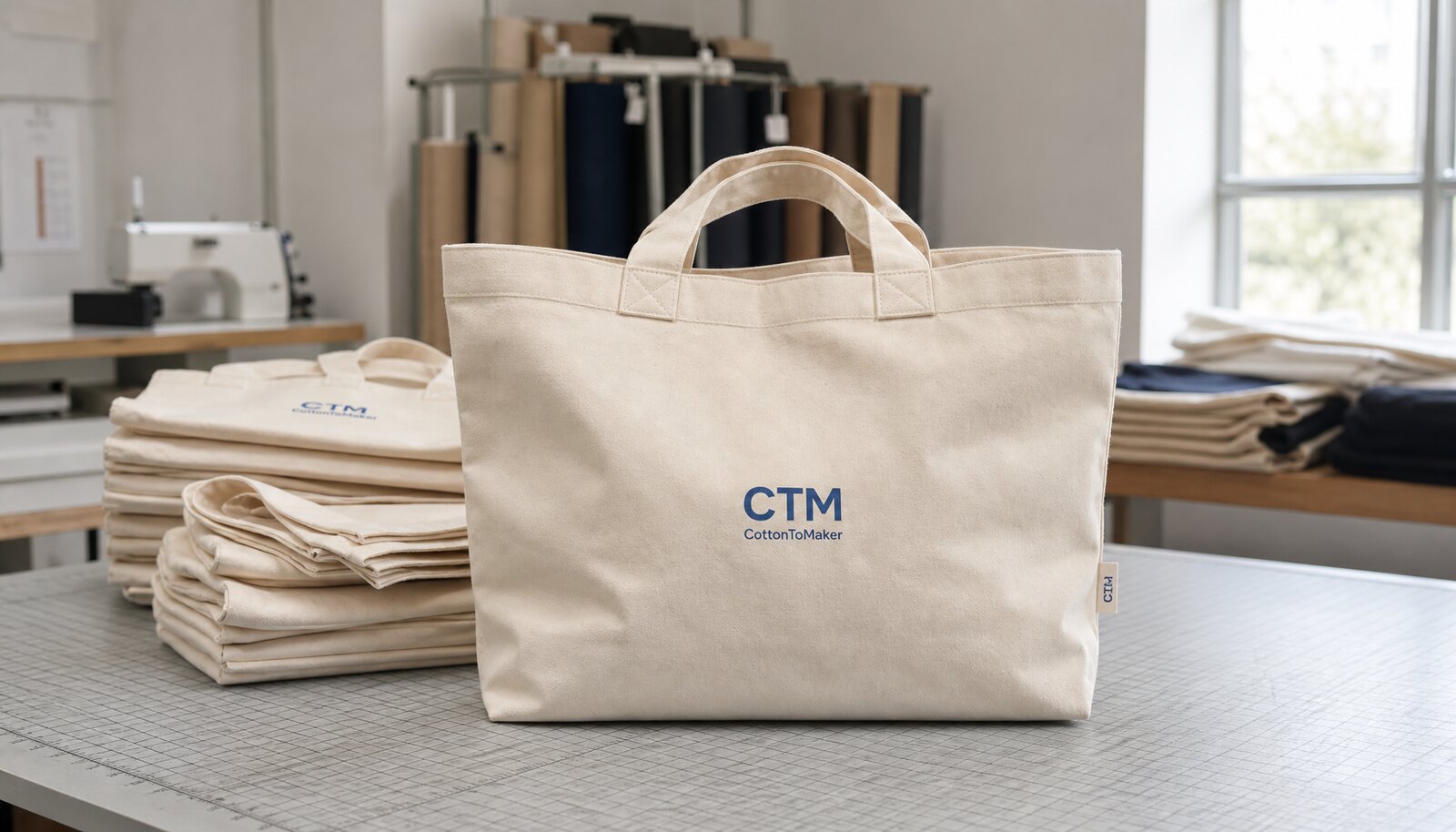
Why this reorder memo matters
A school tote bag reorder is not the same job as the first order. The first PO usually settles the logo, size, and fabric choice. The second and third POs decide whether the bag still works when enrollment changes, artwork gets updated, or the school store wants a different pack count. If you do not write the reorder memo clearly, every supplier will quote a slightly different interpretation of the same bag.
For schools, timing matters more than it does for many promo programs. Back-to-school windows, orientation weeks, alumni events, and bookstore launches all move on a fixed calendar. A supplier that is cheap on paper but weak on sample control can cost more once you factor in re-approval, reshipping, and missed distribution dates.
- Treat the approved sample as the legal baseline for the reorder, not the memory of the last purchase.
- Write down who receives the bags, how they are distributed, and whether the package needs to be retail-ready or bulk packed.
- Plan reorders around the school calendar, not around factory availability alone.
Lock the base spec before you ask for price
The fastest way to get clean quotes is to remove spec ambiguity. A canvas tote should be defined by finished size, fabric weight, weave, handle length, handle attachment style, print area, and packing method. If the bag is carrying books, notebooks, or event kits, do not let the supplier substitute a lighter fabric just because it looks similar in a photo. Ask for the fabric stated in GSM or ounce weight, and keep only one unit in the quote so you can compare vendors correctly.
For school use, a light event tote and a daily book tote are not the same product. A lighter 8 oz class canvas can work for handouts and soft goods, but a 10 oz to 12 oz class fabric is usually safer for books, notebooks, and student carry. If the bag will be washed, call out pre-shrunk fabric or a shrinkage tolerance in writing. If the bag will never be washed, you still need the supplier to define the acceptable size variance after sewing and finishing.
- State the finished size, not the cut size.
- State handle drop and handle width so the bag hangs correctly on a shoulder or hook.
- State whether you need a bottom gusset, side gusset, or a flat tote body.
Choose the right fabric weight and construction
Fabric weight should follow the carrying load, not the artwork budget. If the bag only holds brochures or a T-shirt, a lighter canvas may be enough. If it has to survive daily school use, thicker canvas, tighter stitching, and reinforced handle anchors are worth paying for. The extra cost is small compared with the cost of sagging bottoms, seam failures, or returns from parents and bookstore staff.
Construction details matter just as much as the fabric. A bag with a wider gusset stands better on a counter and holds more structured items, but it also changes the print surface and the carton count. Double-needle stitching at the side seams and handle anchors is a practical upgrade when the bags will be loaded and unloaded repeatedly. If the supplier cannot explain where the reinforcement is placed, the quote is too vague to trust.
- 8 oz class canvas is usually a lighter-use choice for events or giveaways.
- 10 oz class canvas is a practical middle ground for school stores and general campus carry.
- 12 oz class canvas is safer when the bag will carry books, binders, or heavy merch kits.
Use the right sourcing route for the reorder size
Not every reorder needs the same supplier model. A direct factory is usually the cleanest option when the spec is locked, because sewing, decoration, and packing can be controlled in one place. A trading company can help when you need market comparison quickly, but you have to know who actually makes the bag and who signs off on quality. A domestic decorator using imported blanks can solve an urgent delivery problem, but the unit price will usually be higher and the blank stock may not be stable.
If your school program repeats every year, the strongest setup is a factory that can reserve fabric and repeat the same golden sample. That keeps artwork, dimensions, and packing from drifting. For larger programs, a dual-source approach is worth considering, but only if both suppliers are forced to work from one approved sample and one written spec sheet. Without that discipline, two vendors will produce two versions of the same bag and the school staff will see the difference immediately.
- Use direct factory sourcing when repeatability and cost control matter most.
- Use a trading company when you need faster comparison across factories or regions.
- Use local overprint only when delivery speed matters more than unit cost and material control.
Read MOQ logic instead of treating it like a wall
MOQ is usually driven by setup economics, not by a supplier trying to be difficult. Cutting fabric, running sewing lines, preparing print screens or plates, and packing the order all have a fixed cost. Once those costs are spread over more bags, the unit price falls. That is why a reorder with the same fabric, same size, and same print often prices better than a new design order. If the school changes the logo, adds a second print location, or wants a different color binding, the factory is likely to reset the setup cost.
When you compare quotes, ask for price breaks at realistic volume levels. Many buyers think in terms of a single MOQ number, but the actual cost curve matters more. A quote should show where the price drops when quantity increases, and where the one-time charges stop repeating. If a supplier refuses to separate setup from piece price, it becomes hard to tell whether the bag is actually cheaper or just hidden behind tooling and sample fees.
- Separate recurring costs from one-time costs.
- Ask whether screens, plates, and labels are charged again on the reorder.
- Make sure all vendors quote the same fabric weight and the same packing unit.
Print method should match volume and artwork
For most school tote reorders, screen print is the default answer when the logo is one or two colors and the order volume is steady. It gives good cost control and holds up well if the factory cures the ink correctly. Heat transfer works when the logo has more colors or smaller quantities, but it needs more scrutiny on feel, cracking, and adhesion to the canvas weave. Embroidery can work for small premium logos on heavier canvas, but it changes both the cost and the hand of the bag, so it is not the first choice for every school program.
The art file has to match the print method. Fine type, gradients, and thin outlines that look fine on a monitor can fail on woven canvas. The supplier should quote from vector artwork, with Pantone references or an agreed visual standard for color. For reorders, keep the same logo placement, size, and print count unless the school has approved a change. A reorder is not the time to discover that the logo moved 12 mm to the left because someone used a different template.
- Ask for a strike-off or sample print on the actual fabric, not on paper.
- Define acceptable registration and color variation before mass production starts.
- If the logo has small text, force a test print before approving the full PO.
Use samples to catch the expensive mistakes
A pre-production sample is a decision gate, not a souvenir. It should answer three questions: does the bag match the approved dimensions, does the print look correct on actual canvas, and does the construction hold up under normal use? Keep one golden sample signed and dated, because that sample becomes the reference for the reorder. If the supplier sends a random sample that differs from the spec sheet, do not treat it as close enough. Rework is cheaper before bulk sewing starts.
The sample review should be measured, not casual. Check the bag width, height, gusset, handle drop, seam line quality, and print placement against the written spec. Look at the front and back panels under normal light, because canvas can hide weak print coverage when the sample is photographed instead of inspected. If the school will hand out bags in a retail setting, also inspect the trim and top edge finish. A tote that looks fine from six feet away can still be wrong at the point of sale.
- Measure the sample with a tape, not just by eye.
- Keep the approved sample and photo record with the purchase file.
- Reject a sample that hides sloppy stitching behind good printing.
Packing should fit the school distribution model
Packing is often treated as a minor line item, but for schools it can change the entire receiving process. If the bags are going into a bookstore or campus store, retail-ready packing may be worth the extra labor. If the bags are going straight to an events team or district warehouse, flat-packed bulk cartons are usually more efficient. The buyer should decide whether individual polybags are needed, whether moisture protection matters, and how the receiving team will count and sort the order.
Carton labeling should make the reorder easy to receive. Each carton should carry the PO number, bag style, color, quantity, and campus or department code if the order is split. If the school uses barcode scanning or internal stock codes, include them on the carton mark and the packing list. For multi-campus deliveries, write the carton allocation clearly so the warehouse does not have to re-sort the shipment by hand.
- Use bulk packing when speed and storage efficiency matter more than presentation.
- Use individual polybags when the bags go into retail shelves or kits.
- Keep carton counts practical for the receiving team, not just for factory convenience.
Plan the reorder calendar around real risk
Typical lead time is not just factory sewing time. A real reorder schedule has sample approval, material reservation, production, packing, freight, customs, and local receiving. If any of those steps are squeezed, the bag arrives on time only on the factory calendar. Schools usually need the goods before the event, not just before the ship date. That is why the reorder memo should work backward from the distribution deadline and include a buffer for approvals and transit.
The most common schedule failures are not sewing delays. They are late artwork changes, unavailable fabric, and last-minute quantity changes from the buyer side. If the school wants the same bag every season, reserve fabric early and keep the artwork unchanged. If the logo must change, budget extra time for a new print setup and sample review. A reorder that looks simple can become a new production run the moment somebody asks for a color tweak or a different label.
- Back-plan from the school opening date or event date, not from the PO date.
- Reserve approval time for art, sample, and carton mark review.
- Keep an emergency buffer for freight disruption or warehouse delays.
Compare quotes on landed cost, not just unit price
The cheapest unit price is often not the cheapest delivered bag. Compare the full landed cost: body price, print setup, sample fee, packing, freight, duty, and domestic delivery. Then compare the hidden costs of delay, re-approval, and extra receiving labor. A supplier that gives a clean, fully itemized quote may look more expensive on the first page, but the real delivered cost can be lower once the order reaches the school or warehouse in one piece.
When you compare vendors, force every quote onto the same basis. Same fabric weight, same print count, same carton pack, same Incoterm, and same delivery window. If one vendor is quoting FOB and another is quoting DDP, the numbers are not comparable. Ask for a single line that shows the recurring piece price and a separate line that shows all setup and sample charges. That is the only way to tell whether a reorder is truly a reorder or just a new project with an old logo.
- Compare on the same spec sheet, not on verbal descriptions.
- Separate one-time tooling and sampling from recurring bag cost.
- Include freight and receiving labor when the bags are shipped to multiple campuses.
Specification comparison for buyers
| Spec decision | Recommended option | When it fits | Buyer risk to check |
|---|---|---|---|
| Direct factory with in-house sewing and print | Single-source cut-and-sew plus decoration | Stable artwork, repeat school programs, larger reorders | Verify that printing, labeling, and packing are truly in-house, not subcontracted |
| Factory that outsources decoration | One supplier managing sewing and a print partner | Simple logos and moderate volumes | Print quality and schedule can drift if the subcontractor changes |
| Trading company quoting several factories | Aggregator for market comparison | When internal sourcing time is limited and you need fast benchmarking | Confirm the actual factory, QC ownership, and whether margin is hidden in the quote |
| Domestic decorator using imported blanks | Local print on ready-made tote blanks | Urgent school events or short replenishment runs | Blank stock can disappear, and landed unit cost is usually higher |
| Stock blank plus local overprint | Fastest low-MOQ route | Pilot order, new design test, uncertain demand | Limited size and color control, weaker spec consistency |
| Fully custom cut-and-sew reorder with reserved fabric | Repeatable annual program with locked materials | Back-to-school programs, alumni stores, campus retail | Watch fabric storage terms, dye lot drift, and reserve-release timing |
| Dual-source primary and backup supplier | Two approved suppliers against one golden sample | Large accounts that cannot miss delivery windows | Spec drift between vendors unless dimensions, artwork, and packing are frozen |
| Sample-first route before full PO | Pre-production sample review before mass production | New buyer, new logo, new bag shape, or new supplier | Sampling adds lead time, so do not compress the calendar after the sample is approved |
Buyer checklist before sampling
- Confirm the school use case first: handouts, bookstore retail, orientation kits, alumni merch, or book carry. The load target changes fabric weight, handle reinforcement, and gusset depth.
- Lock finished size, fabric GSM or ounce weight, handle length, handle drop, print area, and artwork colors before asking for final pricing.
- Name the approved sample or last PO as the reference spec, and state whether the reorder must match it exactly or can accept small changes.
- Ask for separate pricing on body sewing, print setup, labels, sample charges, packing, and freight so you can compare quotes on the same basis.
- Set an overrun and underrun tolerance in the PO, especially if the school program depends on exact distribution counts.
- Approve one golden sample and keep it with measured dimensions, approved print art, and packing reference photos.
- Confirm carton count, carton marks, and whether goods ship flat-packed, polybagged, or retail-ready.
- Build in time for sample review, freight, customs, and school receiving, not just factory production days.
Factory quote questions to send
- What exact fabric weight are you quoting, and is it stated in GSM or oz per square yard?
- Is the print done in-house, or is it subcontracted after sewing?
- What is the MOQ by size, artwork color count, and fabric color?
- Which charges are one-time setup costs, such as screens, plates, labels, or sample fees?
- What pre-production sample will you send, and what does it prove before bulk production starts?
- What tolerances do you apply for finished size, handle length, print placement, and stitch quality?
- What packing format is included: flat pack, polybag, inner carton, or master carton?
- What lead time applies after sample approval, and what changes if the fabric is not in stock?
- Which Incoterm are you quoting, and what freight or domestic delivery costs are excluded?
- Can you hold fabric or trim for a repeat order if we plan a seasonal reorder cycle?
Quality-control points to confirm
- Fabric weight matches the agreed GSM or ounce weight, with no unexplained substitution to a lighter cloth.
- Finished dimensions stay within the agreed tolerance for width, height, and gusset depth.
- Handle length and handle drop match the approved sample so the tote hangs correctly on shoulders and hooks.
- Stitching at handle anchors, side seams, and bottom seams is even, secure, and free of skipped stitches or loose thread ends.
- Print placement, registration, and color match the signed-off sample, with no obvious shift, blur, or wash-out on the actual canvas.
- If the order needs a load test, the PO should define the test weight and number of lifts so the factory is not guessing.
- Bags arrive clean, dry, odor-free, and free of oil marks, needle damage, and broken fibers.
- Carton counts, carton labels, and any barcode or school code match the packing list exactly.