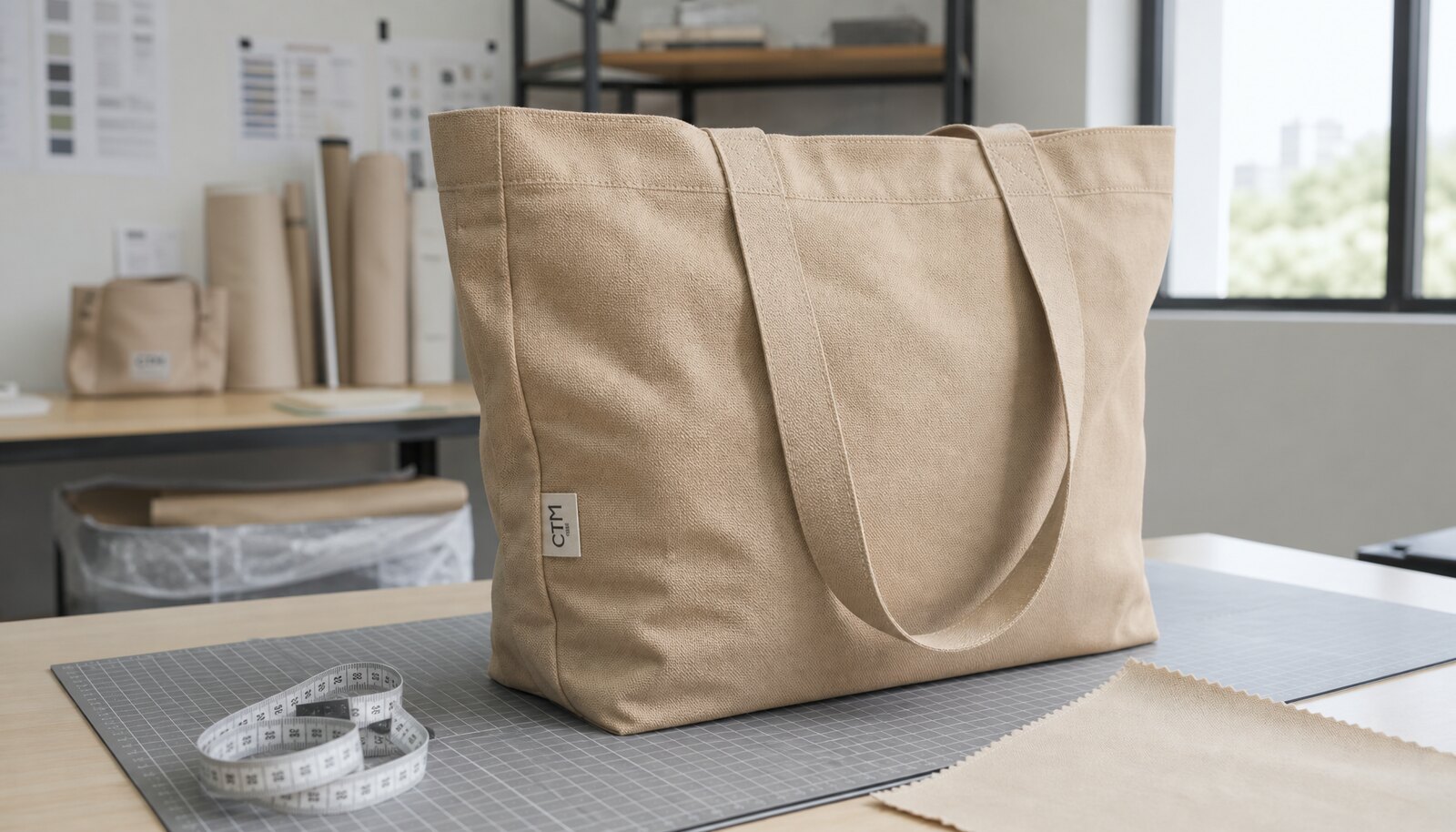
Why retail chain tote programs fail in inspection
Most canvas tote problems do not start with the artwork. They start with a vague spec, a rushed sample approval, or a supplier that quotes one thing and ships another. For retail chains, a tote bag is not a craft item. It is a repeatable product that has to survive receiving, shelf handling, customer use, and the complaints process when a single defect reaches multiple stores. The inspection checklist needs to protect the launch, not just the piece of fabric.
The common failure points are predictable: fabric that is lighter than promised, handles that are not reinforced enough for real carry weight, print that shifts after packing, and cartons that arrive with labels the DC cannot scan. If you build the quality review around those risks, you reduce most of the expensive surprises. That is the practical value of a custom canvas tote bags for retail chains quality inspection checklist: it turns a broad buying request into measurable acceptance criteria.
- Treat the tote as a retail supply item, not a sample room accessory.
- Write the defect list before PO release, not after production starts.
- Separate visual approval from load and packing approval.
Start with one clear tote spec
A good tote specification starts with use case, then works backward to fabric and construction. A checkout giveaway, a paid retail tote, and a premium merchandise bag do not need the same GSM or handle build. If the bag will be folded, displayed, and reused many times, 12oz to 14oz canvas is often a sensible base. If the buyer wants a heavier hand feel or higher perceived value, 16oz may be justified, but it also increases cost and can slow sewing if the factory is not set up for it.
Do not let the spec stop at the fabric name. State the finished dimensions, gusset depth, handle length, handle drop, print area, and whether the body is natural, dyed, or washed. If the retail chain wants a clean shelf look, the handle drop matters as much as the artwork because it affects how the bag hangs. The best RFQs include a line drawing or measurement sheet so the factory is quoting the same product the merchandiser expects to receive.
- Lock width, height, gusset, and handle drop in millimeters or inches.
- Define the intended load so the seam and handle reinforcement can be sized correctly.
- Avoid vague phrases like 'heavy canvas' unless they are tied to GSM and weave density.
Compare sourcing routes before you compare prices
Retail buyers often compare quotes without comparing sourcing routes, which is how cheap quotes become expensive problems. A direct factory with sewing and printing in-house usually gives better control over consistency, but only if the buyer verifies that the named factory actually owns the line. A trading company may be easier to work with on coordination, but it can hide where the work is really done. A domestic decorator can be useful for urgent replenishment or very small runs, yet the price often rises fast once the bag needs custom fabric or more complex finishing.
For chain programs, the right route is the one that can repeat the same bag across seasons without drift. Ask for current production photos, line capacity, sample room evidence, and a simple process map. If the supplier cannot show how fabric moves through cutting, printing, sewing, inspection, and packing, then you do not yet know who owns quality. The comparison table in this article is meant to separate those routes from the spec itself, because a lower unit quote is meaningless if the sourcing model cannot support retail controls.
- Direct factory works best when the same bag will be reordered.
- Trading companies can be acceptable if they disclose the actual factory and QC flow.
- Domestic decorators are often faster, but usually not the best landed-cost option for repeat bulk orders.
Understand what drives cost and MOQ
Canvas tote pricing is usually driven by five things: fabric weight, print complexity, sewing labor, packing style, and order quantity. Fabric weight matters because heavier canvas uses more material and more sewing force. Print complexity matters because one-color screen print is a very different process from a multi-color, tight-registration artwork. Packing matters because a retail-ready unit with barcode, insert, and individual polybag costs more than a simple bulk fold. MOQ exists because setup time and waste have to be absorbed somewhere, and low-volume orders push that burden into the unit price.
The fastest way to compare quotes is to ask each factory to separate base bag cost, print cost, packing cost, sample cost, and any surcharge for rush work or special finishing. If one supplier is cheaper only because they assumed a looser size tolerance, a lighter fabric, or no carton labeling, that quote is not comparable. For retail chains, the most reliable buying model is often a small number of stable SKUs with clear artwork variants, not a long list of one-off sizes that force the factory to reset the line constantly.
- One-color screen print on natural canvas usually gives the best cost-to-quality ratio.
- Dyed canvas, wash effects, embroidery, and zippers raise both MOQ pressure and defect risk.
- Ask for cost breaks at multiple quantity tiers so you can see where the price curve actually changes.
Approve samples like a buyer, not like a designer
A sample is only useful if it predicts mass production. That means the buyer has to test the sample under realistic conditions, not just approve the look on a desk. Measure the body size, handle drop, and print placement with a ruler. Check the bag under bright neutral light, then under the store lighting type it will actually face. If the bag is meant to carry product or catalog packs, load it to the target weight and watch the handles, top seam, and bottom panel. A photo approval is not enough for a sewn item with multiple variables.
Once the preproduction sample is approved, keep a sealed gold sample and treat it as the reference for the whole run. The gold sample matters when the factory changes operators or fabric lot and thinks the difference is minor. For chain buyers, the approved sample should also include the final packing method, not just the bag body. That gives the receiving team a physical reference for fold direction, carton marks, barcode position, and the way the product should look when opened from master cartons.
- Measure size, handle drop, and print placement on the sample, not by eye only.
- Load-test the bag before approval if it will carry real product weight.
- Sign and retain one gold sample with the final packing format attached.
Set QC thresholds before the line starts
Factory inspection becomes much more useful when the thresholds are written down before production. For custom canvas totes, the usual major defect list should cover wrong fabric weight, wrong size, weak handle attachment, broken seam, print misplacement, poor color match beyond the agreed tolerance, and packaging that does not match the order sheet. Minor defects can include loose threads, slight fold marks, or small cosmetic flaws that do not affect function or retail presentation. If you do not define those categories, the factory will define them for you, and their standard may be far more tolerant than the retailer's.
A practical control plan usually includes inline checks while the first pieces are being sewn, then a final inspection near packing. For larger retail chains, a final AQL 2.5 for major defects and 4.0 for minor defects is a common working point, but the exact level should be set against the chain's tolerance for returns and shelf complaints. Do not rely on the final audit alone. If the print is drifting or the handle reinforcement is inconsistent on day one, the batch should be adjusted before dozens of cartons are closed.
- Use agreed tolerances for size, color, and print placement.
- Define which issues are rework, which are reject, and which are acceptable only with buyer sign-off.
- Inspect early pieces from each production shift, not just the last cartons.
Packing can create or prevent retail problems
Packing is one of the most underrated causes of retail chain friction. A bag can pass sewing inspection and still fail receiving because the carton labels are wrong, the pack count is off, or the product is folded in a way that crushes the print. If the tote is being shipped to a distribution center, the carton spec should be part of the commercial agreement, not an afterthought. The buyer should know the carton dimensions, carton weight limit, inner pack count, and outer mark format before production starts.
If the tote is going directly to store shelves or a retail-ready warehouse process, the packing detail becomes even more important. Some buyers need individual polybags, some need barcode stickers on the polybag, and some want the product folded to a specific face size so the front panel is visible on opening. A clean packing spec reduces receiving time and avoids store teams re-folding product in a way that damages print or creates inconsistent shelf presentation. The supply chain cost of poor packing is usually much higher than the packing material itself.
- Specify fold method, carton count, and label layout in the RFQ.
- Confirm whether the retailer wants retail-ready pack or bulk export pack.
- Protect printed areas from hard folds, crease lines, and carton compression.
Control lead time before you commit to a launch date
Lead time on tote bags is not just sewing time. It includes fabric procurement, print setup, sample confirmation, cutting, sewing, inspection, packing, and export booking. A straightforward order with stock canvas and a simple print can move quickly, but dyed fabric, special wash effects, or embroidery can add several weeks. For retail chain launches, the true risk is not the factory calendar alone. It is whether the fabric and packaging components are already locked when the PO lands. If they are not, the schedule can slip even if the sewing line is open.
The safest launch plan is to freeze the spec early and avoid artwork changes after sample approval. If the chain rollout is phased, split the shipment into a pilot lot and a main replenishment lot so store feedback does not block the entire program. Seasonal orders also need buffer time because canvas, thread, labels, and carton suppliers can all get congested at the same time. A buyer who wants a reliable launch should ask the factory not just for a ship date, but for the milestone dates that lead to that ship date.
- Separate fabric booking, sample approval, and bulk production in the schedule.
- Add buffer time for peak season, holiday traffic, and export congestion.
- Freeze artwork and packing details before the first bulk pieces are cut.
Compare quotes by landed cost, not by factory price
A low factory quote can hide more than it reveals. One supplier may omit carton labeling, another may assume bulk packing when the retailer needs retail-ready units, and a third may be quoting a lighter fabric than the spec requires. Compare quotes line by line: fabric, printing, sewing, handles, closure, labels, packing, sample fees, and inspection. Then add freight, duty, inland handling, and any rework risk if the factory has a weak QC history. That is the actual buying number the procurement team needs.
The cleanest quote comparison uses the same assumptions across every supplier. Send the same drawing, the same GSM, the same print method, the same pack format, and the same delivery window. If a supplier asks clarifying questions, that is often a good sign because it means they are not filling gaps with guesswork. A quote that is too clean, too fast, and too cheap often means some part of the spec was not priced. For retail chains, that hidden gap usually appears later as a dispute, a delay, or a batch of bags that needs to be reworked.
- Compare the full cost stack, not the headline unit price.
- Make every supplier quote the same spec assumptions.
- Treat missing detail in a quote as a risk, not a savings opportunity.
Write the RFQ so the factory cannot quote loosely
A strong RFQ makes it hard for the supplier to quote the wrong bag. Include the target use, finished size, canvas weight, fabric color, print method, logo placement, handle construction, closure, packing format, label requirements, and delivery timeline. Add a simple technical drawing if possible. If the product will be repeated across store waves or seasonal drops, say so upfront. Factories often quote more carefully when they know the program is intended for a chain, because repeatability matters more than a one-time low price.
The RFQ should also force the supplier to tell you what they need to hold steady during production. Ask which component has the longest lead time, what tolerance they can guarantee, and what happens if the fabric lot shifts. Good suppliers are specific about where risk sits. Poor suppliers stay generic and promise everything. For a retail buyer, the right response is not just a quote, but a quote that proves the factory understood the inspection standard, the packing standard, and the schedule reality.
- Attach a drawing, a sample photo, or a dimension sheet to the RFQ.
- Ask for separate pricing by option if the bag can be made in more than one spec.
- Require the supplier to restate the spec in their own words before production starts.
Specification comparison for buyers
| Spec decision | Recommended option | When it fits | Buyer risk to check |
|---|---|---|---|
| Sourcing route | Direct factory with in-house sewing and printing | Best for repeat retail programs, stable specs, and tighter accountability on defect control | Risk if sewing, print, or packing are quietly outsourced and the quote hides that split |
| Fabric weight | 12oz to 14oz canvas for most chain programs, 16oz for premium or heavy-carry use | Fits checkout bags, merch totes, and mid-tier retail gifting without overbuilding the product | Risk if the supplier quotes GSM but the weave is loose or the yarn count is weak |
| Print method | Screen print for one to two spot colors, transfer for short runs with detail, woven label for low-ink premium branding | Best when artwork complexity and order size are matched to the print method | Risk if color, placement, and rub resistance are not locked before bulk production |
| Handle construction | Self-fabric handles with X-box or bartack reinforcement, or webbing for heavier loads | Works for store traffic, repeated carrying, and retail display handling | Risk if handle drop is not measured and the bag feels wrong on shelf or in hand |
| Closure | Open top for value and speed, snap or zipper for premium retail programs | Use open top for low-cost merchandising or closure when presentation and theft control matter | Risk if added closure raises lead time, packing complexity, or failure points |
| Sample route | Preproduction sample plus a sealed gold sample | Needed for chain approvals, multi-store rollouts, and repeat purchase consistency | Risk if only digital approval is used and the sewn product arrives off-spec |
| Packing route | Bulk pack with carton labels, with retail-ready polybag, insert, or barcode only when required | Best when the retailer receives cartons through a DC and wants efficient unpacking | Risk if the buyer needs retail compliance but the factory packs for export only |
| QC route | Inline inspection plus final AQL 2.5 for major defects and 4.0 for minor defects | Best for programs where one bad carton can create a store-level complaint | Risk if the factory relies on end-only inspection after most defects are already sewn in |
Buyer checklist before sampling
- Define the end use first: checkout giveaway, paid retail tote, merch bag, or premium gift, because the target load and finish change the spec.
- Lock the fabric spec in writing with GSM, weave density, color, and whether the cloth is greige, dyed, or washed.
- State the finished size with width, height, gusset, and handle drop, not just a rough bag size.
- Choose the print method based on artwork and order volume, then fix Pantone, placement, and print area before sampling.
- Set a load target and seam requirement so the factory knows what the bag must carry without handle failure.
- Approve a physical preproduction sample under normal retail lighting and keep one signed gold sample for comparison.
- Confirm packing instructions for retail DC receiving, including fold method, carton count, barcode, and outer marks.
- Ask how the factory handles fabric lot changes, print reruns, and replacement parts if the order is split across shipments.
- Request the inspection standard in writing, including defect categories, AQL level, and who signs the final release.
- Compare landed cost, not unit price alone, because freight, duty, carton spec, and rework risk change the real number.
Factory quote questions to send
- What exact canvas spec are you quoting, including GSM, weave density, yarn type, and whether the fabric is pre-shrunk or washed?
- Is sewing, printing, and packing done in-house? If any step is outsourced, which step and who controls that process?
- What is the MOQ per color, per print design, and per packing style, and how does that change if we add a second print color?
- What size and handle tolerances do you guarantee on bulk goods, and what defect levels trigger rework or replacement?
- Can you provide a preproduction sample, a sealed gold sample, and a photo record of the approved sample before mass production?
- What packing options are available for retail chains, including inner polybag, barcode label, insert card, and carton configuration?
- What is the full lead time from sample approval and deposit to shipment, and what parts of that timeline are material-dependent?
- What inspection standard do you apply before shipment, and can you share a recent internal or third-party inspection report format?
Quality-control points to confirm
- Fabric weight should stay within the agreed GSM range, and the weave should feel even with no weak, thin, or open areas.
- Finished dimensions should stay within the agreed tolerance for width, height, gusset, and handle drop across the batch.
- Seams should be straight, tension should be consistent, and stress points should have bartacks or X-box reinforcement where specified.
- Handles should be symmetrical, securely attached, and able to hold the agreed load target without seam pop or stitch breakage.
- Print placement should match the approved sample, with clear edges, correct color density, and no obvious misregistration.
- Rub resistance should be acceptable for the chosen print method, especially on retail bags that will be handled repeatedly.
- No loose threads, stains, oil marks, broken needles, fabric holes, or folded damage should appear on visible panels.
- Carton count, carton marks, barcode labels, and packing configuration should match the approved packing sheet exactly.
- If the order is split, shade variation and component variation should stay within the retailer's acceptable display range.
- Random load testing should confirm that the bag carries the agreed weight without handle tear, seam failure, or bottom distortion.