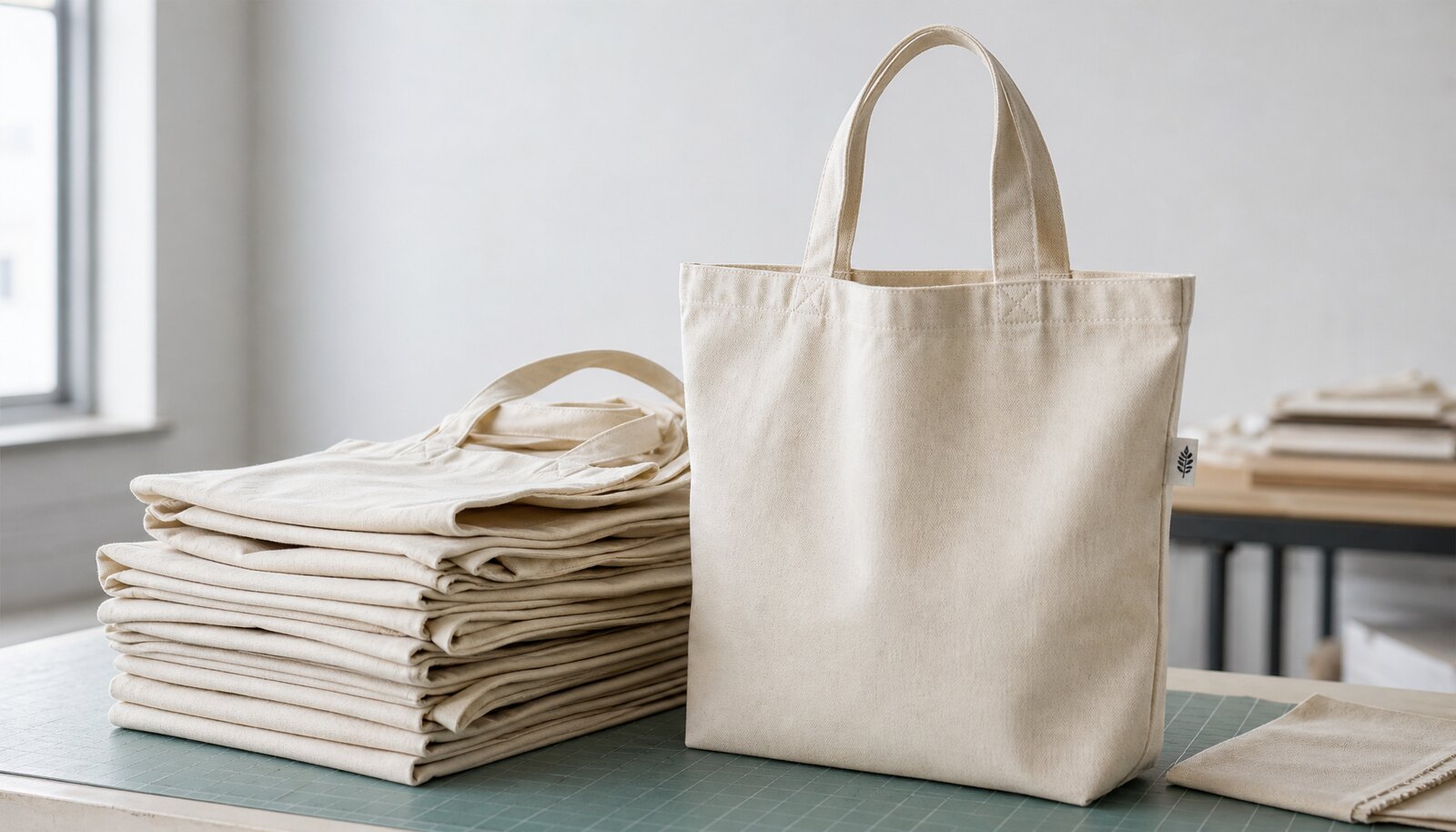
Why museums source canvas totes differently from standard promo bags
A museum tote is rarely a single-purpose giveaway. It can be a retail product, a membership gift, a visitor carry bag, a shop display item, and a walking brand touchpoint all at once. That changes the buying logic. Procurement teams are not just comparing sewn bags. They are comparing how well each option supports merchandising, visitor convenience, exhibit branding, and warehouse handling. A tote that feels flimsy on the shelf or fails under books quickly becomes a problem for both the retail team and the finance team.
The most common mistake is treating the bag as a low-value promo item and leaving the spec too loose. In practice, museum buyers usually need tighter control than a basic event bag because the tote is visible in public, sold in a retail environment, and often reordered around exhibitions or seasonal campaigns. That means repeatability matters: consistent fabric shade, consistent print placement, and consistent carton packing can matter more than shaving a few cents off the bag price. If the tote is going through a museum shop, the packaging format also needs to work for shelf display and back-of-house receiving, not just for the factory. In other words, this is a small item with a surprisingly complex supply chain.
A useful way to frame the purchase is to separate the spec into three layers: product performance, retail presentation, and channel logistics. Product performance covers fabric, seams, handles, and print durability. Retail presentation covers logo visibility, fold quality, and packaging. Channel logistics covers carton count, freight density, and whether the tote can move from port to warehouse to store without repacking. Once those layers are defined, the supplier conversation becomes much easier to manage.
- Buy for use case first, then price: a tote for books has a different spec than a tote for event handouts.
- Treat packaging as part of the product, because it affects shelf readiness, damage risk, and freight.
- Plan for reorders from the start; a one-off sample that cannot be repeated is not a viable museum supply chain.
How to choose fabric weight, weave, and finish without overbuying
For most museum retail programs, 10 oz to 12 oz canvas, or roughly 340 to 410 GSM, is the practical starting point. That range tends to feel substantial in hand, holds up well for books and catalogs, and still sews efficiently enough to keep unit cost in check. If the bag will carry heavier merchandise or needs a more premium, structured feel, you can move upward, but every increase in fabric weight should be justified with an actual use case. A heavier bag also changes freight math: higher carton weight can raise transport cost and warehouse handling effort, which matters when orders are shipped to multiple museum branches.
Do not write 'canvas' alone in the RFQ. Suppliers interpret that word differently depending on the market and their own machine setup. Instead, specify the fabric weight, weave style, desired hand feel, color family, and whether the fabric should be natural, bleached, dyed, or prewashed. If your brand tolerates the visual texture of undyed cotton, say so explicitly; natural canvas often contains flecks and fiber variation that are normal, but buyers should approve that look before mass production. If the museum wants a smoother print surface, ask whether the supplier can provide a tighter weave or a surface treatment that supports cleaner artwork transfer. That decision affects not just appearance but also print cost and reject rate.
It is also worth clarifying shrinkage expectations. Canvas can change size after sewing, pressing, or light washing depending on the fiber and finish. For a retail tote, the issue is not lab-style perfection. The issue is whether the bag remains square, whether the gusset stays consistent, and whether the final dimensions still match shelf and packing requirements. Ask the factory how they control shrinkage and whether the quoted size is pre-production or finished-goods size. A buyer who defines these points early will usually avoid a lot of back-and-forth after the first sample arrives.
- 10 oz canvas: good for lighter retail totes, lower freight, and tighter budgets.
- 12 oz canvas: better for books, catalogs, and a more premium in-store feel.
- 14 oz and above: use only when load strength or luxury positioning clearly justifies the extra cost.
- If the canvas is natural, ask how visible flecks, slubs, and shade variation will be controlled from lot to lot.
Print method selection should follow artwork complexity and reorder plan
Museum logos are often deceptively simple: a wordmark, a line-based emblem, or a short commemorative slogan. That is why screen printing is usually the best fit for standard custom canvas tote bags for museums. It gives solid coverage, good durability, and reasonable setup economics when the same design will be reordered. If the artwork is one or two solid colors, the bag will usually look cleaner and cost less with screen print than with more flexible digital methods. The supplier can also manage repeat color matching more easily when the process is stable.
When the art is more complex, the buying decision changes. Fine typography, gradients, photographic elements, or multiple small color fields may justify heat transfer or digital printing, especially for short runs or limited edition exhibit merch. Those methods can be useful, but they should not be chosen out of convenience alone. Buyers need to ask how the print feels on canvas, how it behaves after handling, whether the edges crack, and whether the color still holds against the natural background of the fabric. If the tote is intended for retail sale, the print must withstand public use and repeated folding better than a one-off event handout would need to.
The best RFQ includes more than an artwork file. It should specify print placement, print width and height, Pantone references if relevant, number of colors, and a clear approval reference such as a strike-off or pre-production sample. If the museum is strict on brand color, ask whether the factory can hit a Pantone target on textured canvas or whether a visual match is the realistic benchmark. That small distinction prevents unrealistic promises and gives procurement a more defensible comparison when quotes come back.
The right question is not 'what print method is cheapest?' It is 'which print method gives the acceptable mix of appearance, durability, reorder stability, and unit economics for this exact museum program?' For most simple retail totes, screen printing remains the default starting point. The other methods are exceptions that should be justified by artwork or volume, not by vague preference.
- Screen print: strongest choice for 1 to 2 colors, stable repeat orders, and visible retail shelf presentation.
- Heat transfer: useful for low volume and detailed art, but test cracking, surface feel, and edge lift.
- Digital print: suitable for complex imagery, but confirm color stability and the final look on actual canvas, not on a screen mockup.
- Ask for a strike-off on production fabric before approving the whole order.
A real packaging comparison for museums: material, labor, and channel fit
Sustainable packaging is often discussed as if the material label tells the whole story. It does not. For procurement, the correct comparison is broader: What is the packaging made of? How much labor does it add? Does it increase cube and freight? Does it reduce damage and repacking at the museum or warehouse? A paper belly band may look cleaner and feel more on-brand than a polybag, but if it wrinkles, shifts during transport, or slows packing, the total cost can be higher than expected. Likewise, a retail sleeve can improve presentation but add material, handling, and waste if it is not truly needed for the channel.
For museum buyers, the best packaging route is usually the lightest one that still protects shape and supports the sales channel. Bulk-packed totes in labeled cartons are often the most efficient for back-of-house receiving and multi-location distribution. If the bags are sold from a store wall or placed in a gift shop display, a kraft belly band or simple recycled paper sleeve may be the right middle ground. Those options can keep the product looking retail-ready without multiplying inbound cube or unpacking labor. But the packaging should be chosen by channel, not by a generic sustainability slogan.
There is also a sourcing caution here: do not accept broad claims like 'eco packaging' without material detail. Ask for the exact substrate, basis weight, finish, and how the packaging is printed or glued. If the supplier says recycled content, ask for the actual percentage and whether that statement applies to the paper, the film, the carton, or the insert. Buyers do not need a laboratory report in every order, but they do need a spec sheet that can survive internal procurement review. This is especially important for museums, where packaging often becomes part of the visitor-facing brand story.
A simple comparison rule helps. If the tote moves through a warehouse and then a retail shelf, choose the least complex packaging that protects the bag shape. If it ships direct to consumer, consider whether a sleeve or insert improves unboxing enough to justify the added labor. If the tote is a low-cost visitor bag, bulk packing is usually the most sensible route. The packaging should match the selling path, not the other way around.
- Bulk carton packing: lowest cost and easiest for warehouse receiving.
- Kraft belly band or sleeve: better for shelf display when a branded, paper-based presentation is useful.
- Recycled poly mailer or protective bag: reserve for moisture-sensitive transit or e-commerce channels where the bag ships individually.
- Avoid packaging that creates waste through damage, repacking, or oversized cartons.
Supplier route comparison: direct factory, trading company, or local converter
The supplier route changes more than communication style. It changes visibility into fabric sourcing, print control, QC accountability, and schedule risk. A direct factory is usually the strongest option when the museum needs repeatability, line-of-sight on production, and stronger leverage on sample approvals. If the buyer plans to reorder the same tote across exhibitions or stores, direct factory sourcing helps preserve the same fabric lot logic, the same print screen setup, and the same carton packing method. That makes future comparison much easier.
A trading company can still be useful when the museum wants one point of contact or needs a broader bundle of items in the same purchase. The tradeoff is visibility. If the buyer cannot see who actually cuts, sews, prints, and packs the totes, problem-solving gets slower when a shipment comes in with shade or stitching issues. For procurement, the key question is whether the intermediary is truly adding value through coordination or simply adding margin and an extra communication layer. Ask who owns the artwork approval, who signs off on in-line QC, and who will be responsible if the fabric or print spec drifts.
A local converter or decorator can make sense when lead time is very tight, when the order volume is modest, or when domestic compliance and shorter transit are more important than the lowest unit price. But for a durable museum retail program, the buyer should compare local and offshore offers on total landed cost, not just ex-works price. That means including freight, packaging, receiving labor, and expected reorder behavior. The cheapest unit quote can lose once the hidden handling costs are counted.
The practical evaluation method is simple. Ask each supplier route for the same tech pack, the same artwork, the same packaging spec, and the same carton count. Then compare not only price but also sample clarity, QC reporting, and willingness to commit to repeatability. That comparison reveals much more than a generic 'factory versus trader' debate.
- Direct factory: best for repeat orders, faster root-cause analysis, and stronger spec control.
- Trading company: useful if it truly coordinates multiple elements, but verify the real factory and QC responsibility.
- Local converter: can help with speed and communication, but unit cost is often higher for larger retail runs.
- Always compare routes on landed cost and repeatability, not only on ex-works price.
MOQ, pricing tiers, and what they reveal about real production cost
MOQ is not just a policy number. It reflects how much setup work the factory must absorb before the first tote is sewn. Fabric cutting, screen preparation, label insertion, color matching, and packing all create fixed work that has to be amortized over the order. That is why a standard natural canvas tote with one simple print often has a much more accessible MOQ than a dyed bag with custom labels and retail-ready packaging. For museum buyers, the real question is not whether the MOQ is low. It is whether the MOQ supports the merchandising plan without creating hidden cost.
For standard museum retail tote programs, a workable starting point is often 500 to 1,000 pieces per design, assuming the tote is a common size and the artwork is straightforward. If the project includes multiple print colors, special dyeing, woven labels, zipper closures, or unusual packaging, the MOQ may rise. That does not always mean the supplier is difficult; it often means the factory is telling you the truth about machine setup and material allocation. Buyers should be cautious of very low MOQ offers that sound too easy. Those offers can come with higher per-unit cost, less control over fabric batch consistency, or fewer options for customization later.
A good procurement habit is to structure the line-up so the factory can run efficiently. For example, if the museum wants several SKUs, it may be cheaper to keep the same base fabric, same body size, and same print platform while varying only the insert card or packaging. That keeps the sewing and print line simple and makes reorder management easier. In many cases, the goal is not to force one tote to do everything. It is to build one reliable tote platform that can support several merchandising messages.
When comparing quotes, ask the supplier to show how price changes as quantity rises. A proper tiered quote helps you see where setup charges are spread and whether a slightly larger order could significantly improve unit cost. For buyers managing seasonal budgets, that visibility is useful because it supports a more realistic forecast and reduces the chance of undershooting or overbuying.
- Single design, single colorway: simplest path and usually best pricing.
- Multiple print colors or placements: expect extra setup and inspection time.
- Custom labels, closures, dyeing, or special packaging: plan for higher MOQ and longer lead time.
- Request tiered pricing so you can see where unit cost actually improves.
How to compare quotes so the lowest number does not win by mistake
A quote is only useful when it is comparable. Too often, one supplier quotes a bare bag while another quotes a packed retail-ready tote, and procurement ends up comparing two different products. The fix is to force a common quoting structure. Every supplier should quote the same fabric weight, bag size, print method, packaging format, carton count, and delivery term. If the museum wants a final landed cost comparison, ask for the same assumptions across all bids, including freight method and any local handling fees where applicable.
The quote should also say what is excluded. That is where the hidden cost usually lives. If artwork separation, screen charges, color matching, label insertion, barcode stickers, or carton over-labeling are not included, those items need to be visible. If the supplier is quoting FOB only, the buyer should not mistake that for delivered cost. Museums frequently receive goods into central warehousing or multiple retail locations, so packaging and carton spec can affect incoming labor more than the bag price itself. A low unit price with poor carton efficiency may be the most expensive option once receiving time is counted.
A strong quote also exposes risk. Ask the supplier whether the quoted lead time assumes fabric on hand, whether it depends on lab dip approval, and whether the timeline changes if packaging is customized. Those details matter because museum launches are often tied to exhibition dates, seasonal retail windows, or membership campaigns. A quote that looks attractive but misses the launch date is not a commercial win. Procurement should be comparing deliverable timelines, not just price tags.
When the quotes come back, separate them into three buckets: product cost, packaging cost, and logistics cost. This makes supplier differences easier to explain internally and helps the buyer identify where savings are real. Often, the best negotiation point is not the tote body itself but the packaging format or the carton loading pattern. That is where the hidden cost can be reduced without weakening the product.
- Ask every supplier to quote the same spec, not just the same artwork.
- Require separate line items for bag body, print, packaging, samples, and setup.
- Compare delivered cost, not just FOB or ex-works price.
- Flag anything that changes the timeline: fabric sourcing, color approval, label work, or special packing.
Sample approval: what to inspect before you release bulk production
Museum buyers should treat sample approval as a production rehearsal, not a visual courtesy step. A sample that looks good in a photo can still fail when measured, folded, packed, or carried. Start with a blank sample if the design is new. That lets you verify body shape, gusset depth, handle length, and seam behavior before artwork complicates the picture. Then review a printed sample on actual canvas to confirm placement, opacity, and color on the real fabric surface. For larger orders or sensitive artwork, a pre-production sample should be the final gate before bulk approval.
The sample should be checked with the same kind of scrutiny you would apply to the full order. Measure the body width, height, gusset, and handle drop. Confirm that the tote stands properly if that matters to the product presentation. Check whether the print is centered relative to the bag, not just relative to the panel. On natural canvas, small shift errors are more visible than buyers expect, especially when the bag is displayed in stacks or on hooks. Packaging needs the same treatment: fold direction, band placement, and carton count should all be visible on the sample or sample pack.
Museums should also ask how the supplier wants the sample approved. A photo approval by email is often not enough for a retail item. A controlled approval process with marked reference dimensions, artwork file version, and packaging instruction is much safer. If possible, the buyer should keep one signed sample or a fully documented approval record so reorder issues can be resolved against a clear reference. That kind of discipline saves time later when a second production run needs to match the first.
A good sample review is practical, not ceremonial. If the tote will be sold to visitors, carried through galleries, or shipped as ecommerce merchandise, the sample should be judged in the context of actual use, not just on a table in a sample room.
- Approve size against a measured spec sheet, not a photo alone.
- Inspect print opacity and edge sharpness on actual canvas texture.
- Review folding and packaging because retail presentation depends on it.
- Keep a documented approval record for reorder consistency.
Quality control standards that are specific enough for bulk buying
A serious bulk order needs clear QC thresholds. If the acceptance criteria are vague, the factory will grade the product by its own internal standard, which may not match museum expectations. For canvas totes, the highest-risk areas are size accuracy, stitching, handle reinforcement, print placement, and carton packing. The QC language does not need to be overly technical, but it should be specific enough that a line inspector can actually use it. For example, instead of saying 'good stitching,' define stitch consistency, seam security, and the points where loose threads become rejectable.
Set tolerances before production starts. That means telling the supplier what range is acceptable for finished dimensions, how much print shift is allowed, and what constitutes a reject for visible defects. If the tote includes a woven label, side tag, or insert card, specify placement and trim quality as well. Loose threads, oil stains, misaligned labels, and crooked hems should be counted as defects, not minor imperfections. For a retail tote, those issues are visible to customers and can trigger a markdown or return even when the bag is functionally usable.
If you want a robust QC plan, ask for in-line checks and final inspection controls. In-line inspection can catch panel miscuts, stitch drift, and print issues before the whole batch is complete. Final inspection should verify quantity, carton labeling, folding method, and packaging accuracy. For medium and larger orders, the buyer may also want a simple AQL-based sampling plan or an agreed inspection rate, even if the exact statistical method varies by supplier. The point is to define what the factory must measure and what happens if the lot falls outside the agreed standard.
The practical standard for museum procurement is simple: if the defect is visible to a shopper, it should be visible to the QC plan. That includes crooked print, uneven handles, stained canvas, and packing errors that affect shelf readiness or direct-to-store receipt.
- Define finished-size tolerances in writing before bulk production starts.
- Set a reject rule for loose stitches, oil stains, broken threads, and obvious weave flaws.
- Require centerline checks for print placement and handle alignment.
- Inspect carton count, carton labels, and folding method as part of final QC, not as an afterthought.
- Use an agreed sample plan or AQL approach for larger orders if you need more disciplined acceptance rules.
Landed cost logic: where the museum really spends money
Procurement teams often anchor on the tote unit price, but landed cost usually tells a different story. A slightly cheaper bag can become more expensive once packing, freight, receiving labor, and damage rates are included. Heavier canvas increases carton weight. Retail packaging increases cube. Loose internal packing may save a little on materials but create more labor at the warehouse or store. When the order is going to several museum locations, the final handling cost can matter as much as the purchase cost.
A practical landed-cost comparison should include four layers: the factory unit price, the packaging add-on, the freight or shipping cost, and the receiving or unpacking burden. If the totes are distributed to stores, ask whether each carton can be labeled for the receiving team and whether the pack count matches the way the museum orders inventory. If the bags are sold online, ask whether the packaging format reduces damage and whether it supports efficient pick-and-pack. In many programs, the best value is not the thickest tote or the most elaborate sleeve, but the tote that ships efficiently and arrives ready to sell.
There is also a reorder effect. A bag that is easy to reproduce with the same fabric, print, and packing format is usually cheaper over time than a slightly cheaper first-run bag that requires new decisions every season. Procurement should therefore look beyond first order price and ask how stable the spec will be across a 12-month buying cycle. For museums, that stability can be worth real money because exhibition merch and shop products tend to have recurring demand patterns.
If you need one simple rule, use this: compare the cheapest bag, the best-presented bag, and the easiest-to-receive bag as three separate scenarios. The right choice is often the bag that performs well in the channel you actually use most, not the one that looks best in a quote sheet.
- Freight density can erase a small unit-price advantage.
- Packaging adds not only material cost but also cube and labor cost.
- Receiving-friendly carton counts and labels can save money downstream.
- Reorder stability often matters more than the first-run unit discount.
Specification comparison for buyers
| Decision area | Recommended option | Best fit for museum buyers | Buyer risk to verify |
|---|---|---|---|
| Fabric weight | 10 oz to 12 oz canvas, about 340 to 410 GSM | Retail totes, visitor carry bags, member gifts, and museum shop merchandise that should feel substantial without becoming too heavy | Light fabric can sag after printing; overly heavy fabric raises unit price, sew time, and freight |
| Weave and finish | Tight plain weave, natural or bleached finish, with shrinkage range confirmed in writing | When the bag must hold books, catalogs, and boxed souvenirs while keeping print edges clean | Loose weave can blur print detail and create uneven panel shape after sewing or pressing |
| Bag build | Stitched side gusset, reinforced stress points, and top hem with clean corner finish | For museum shops that need totes to carry heavy paper goods and survive repeated use | Weak stitch density, poor bar-tacks, or uneven gussets lead to early failure and returns |
| Print method | Screen print for simple logos; heat transfer or digital print only for low volume or complex art | When the design is one to two colors and the buyer wants repeatable retail inventory | Wrong method selection can cause cracking, washout, poor opacity, or expensive setup that never pays back |
| Packaging route | Bulk-packed cartons with size labels and carton marks; add paper band, sleeve, or insert only when channel needs it | For back-of-house storage, multi-site distribution, ecommerce fulfillment, or low-touch receiving | Decorative packaging can add labor, cube, and damage risk without improving sell-through |
| Supplier route | Direct factory with sample room and in-house or tightly managed print team | When the museum needs repeat orders, stable shade control, and clear QC visibility | A middle layer can obscure the real factory, complicate root-cause analysis, and weaken schedule control |
| MOQ structure | 500 to 1,000 pcs per design for standard canvas; higher for dyeing, labels, closures, or custom packing | Good for museum stores testing a new SKU, seasonal exhibit line, or member-exclusive product | Very low MOQ may hide higher unit pricing, limited fabric allocation, or weaker shade consistency |
| Handle spec | Self-fabric handles or cotton webbing in 25 to 30 mm width with measured drop length | For bookstore-style totes that need to carry catalogs, catalogs in sleeves, and daily-use purchases | Wrong handle width or stitch count can make straps twist, cut into hands, or tear under load |
| Closure decision | Open-top for standard retail; zipper, snap, or magnetic closure only when product protection justifies it | For premium gift sets, transit-sensitive items, or higher-value merchandise | Closures add cost, sew complexity, and more inspection points |
Buyer checklist before sampling
- Define the tote use case first: retail souvenir, member gift, exhibit launch item, online store product, or visitor carry bag.
- State fabric weight in GSM or ounces, plus finish, color, and whether the buyer accepts natural flecks or visible slubs.
- Match the print method to the artwork complexity, color count, and reorder plan; do not force one method across all designs.
- Confirm handle length, width, stitch count, and bar-tack reinforcement because museum bags often carry books and catalogs.
- Set packaging format by channel: bulk carton, paper band, retail sleeve, insert card, or polybag only if required by the sales channel.
- Ask for a blank sample, printed sample, and if needed a pre-production sample on final fabric before mass approval.
- Request carton dimensions, carton count per size/color, and gross weight to estimate freight, warehousing, and store receiving labor.
- Define acceptable variation for canvas shade, print registration, stitch quality, and measurements before the PO is issued.
- Agree in writing on defect thresholds, rework rules, and overage/shortage tolerance so the supplier knows what 'pass' means.
- Request photos or video of in-line packing and final carton sealing when the order is for multiple museum sites or direct-to-store delivery.
Factory quote questions to send
- What exact fabric weight, weave construction, and shrinkage range are you quoting for each tote size?
- Is the canvas pre-shrunk, and if not, what dimensional change should we expect after sewing and pressing?
- Which print method is included in the unit price, what is the setup charge per color, and what is the repeat-order charge if any?
- What is your MOQ by size, color, print design, and packaging format, and can mixed-size packing change the price?
- Can you separate pricing for bulk packing, paper belly band, kraft sleeve, retail insert card, and individual polybag?
- What handle material, width, length, and reinforcement stitch pattern are included in the quote?
- What is your standard lead time after sample approval, and which steps are most likely to move during peak season?
- What QC checks do you perform before shipment, and can you share in-line or final inspection photos from the actual order?
- How are carton dimensions, carton marks, and SKU labels arranged for museum warehouse receiving or direct-to-store delivery?
- What sample stages are available before production: blank sample, printed sample, pre-production sample, and top-of-production sample?
Quality-control points to confirm
- Fabric weight must match the approved spec, with an agreed tolerance and measurement method stated in the tech pack or PO.
- Canvas shade should fall within the approved lot range; natural fabric should not show major variation across cartons beyond the agreed tolerance.
- Bag dimensions, gusset depth, handle length, and handle drop should be checked on a sample plan rather than by visual estimate only.
- Stitch density must be consistent on side seams, top hem, and handle anchor points; loose tension, skipped stitches, and needle damage are rejectable.
- Bar-tacks or stress reinforcement must be centered and secure, especially on bags expected to carry books or boxed goods.
- Print placement must stay within the approved centerline and top edge reference; registration, opacity, and edge sharpness should match the strike-off.
- If the design includes small text or fine lines, define a minimum legibility standard and reject smudging, fill-in, or halation.
- Thread trimming must be clean; long tails, oil marks, fabric stains, and loose lint are not acceptable on retail-ready stock.
- Folding method must match the packing spec so the bag opens cleanly for shelf display or ecommerce fulfillment.
- Cartons must be labeled with SKU, color, quantity, purchase order number, and destination marks that match the receiving system.